
ᐅ Mechanical Ventilation with Heat Recovery – Planning the Locations for Supply and Exhaust Air
Created on: 5 May 2021 02:01
M
mwinkelm
Hello everyone,
The planning for our semi-detached house is becoming more concrete. Now we need to determine the positions of the outlets for the central mechanical ventilation system with heat recovery.
I have read quite a bit on the topic and tried to consider the usual best practices. However, it is quite overwhelming at first and leaves some uncertainty. That’s why I would appreciate it if you could take a look based on your experience.
In general, everything is initially planned as ceiling outlets. However, the concept of displacement ventilation also makes sense to me, so wall outlets near the floor for the supply air could also be considered. What are your thoughts on this?
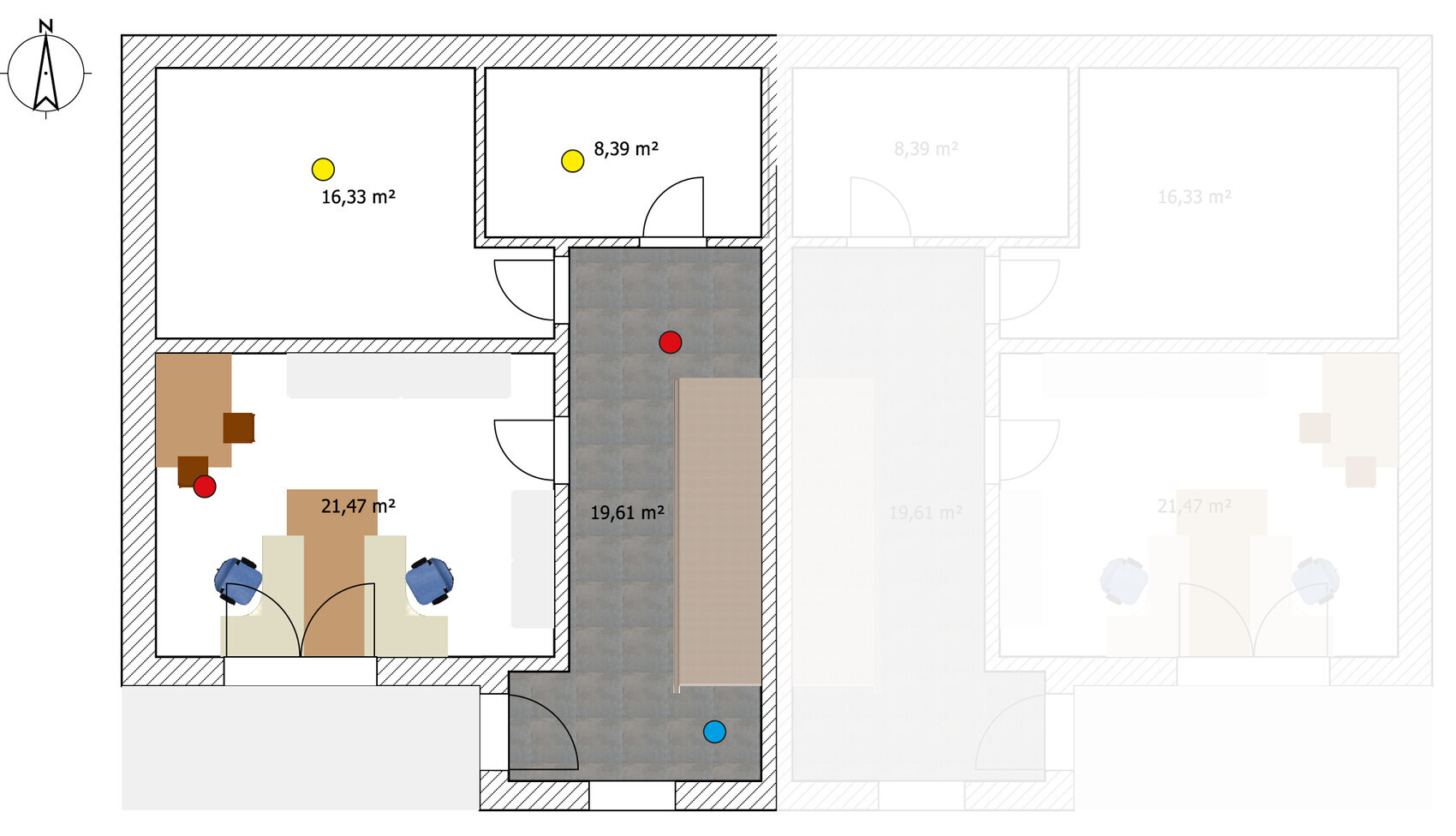
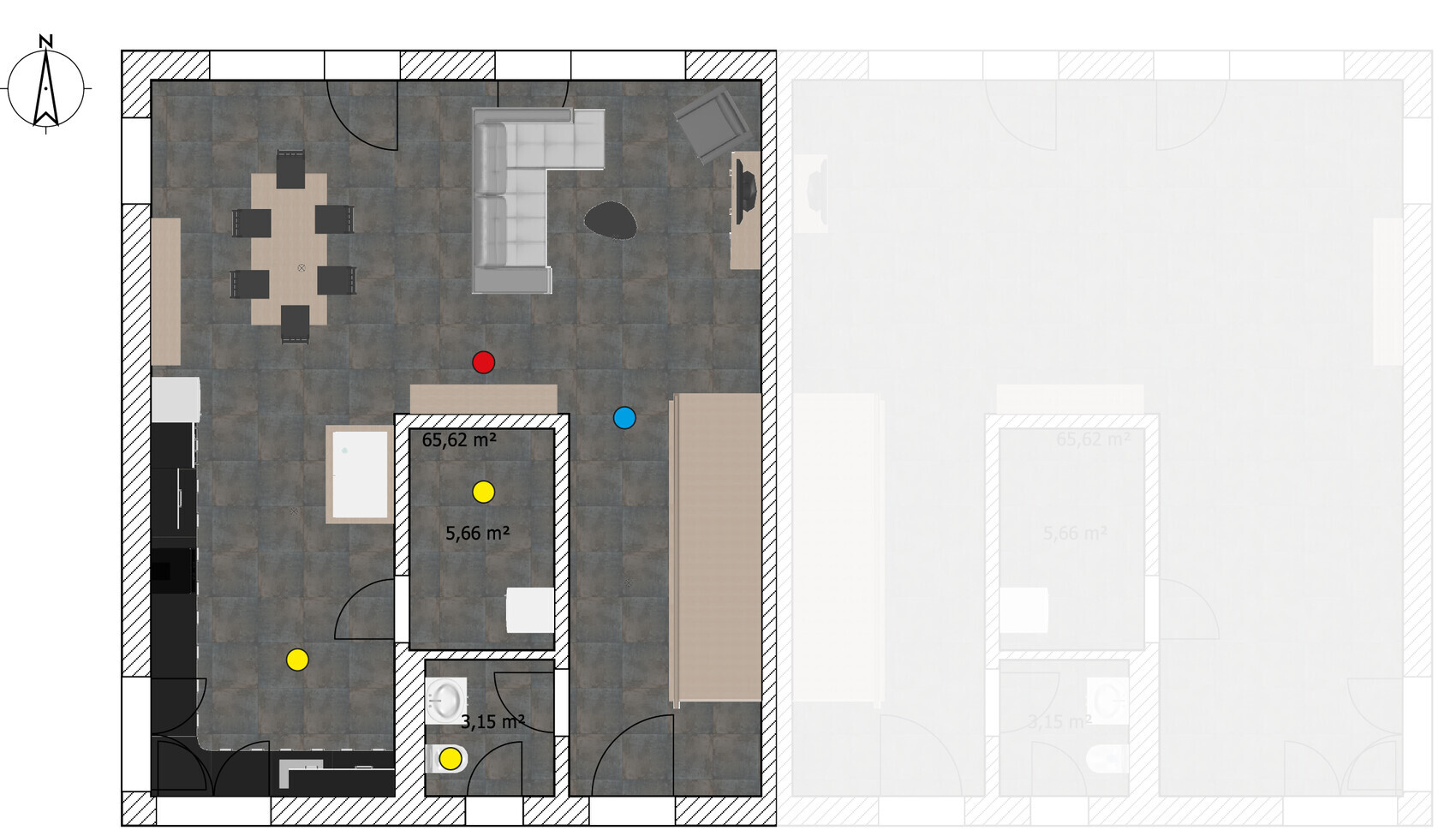
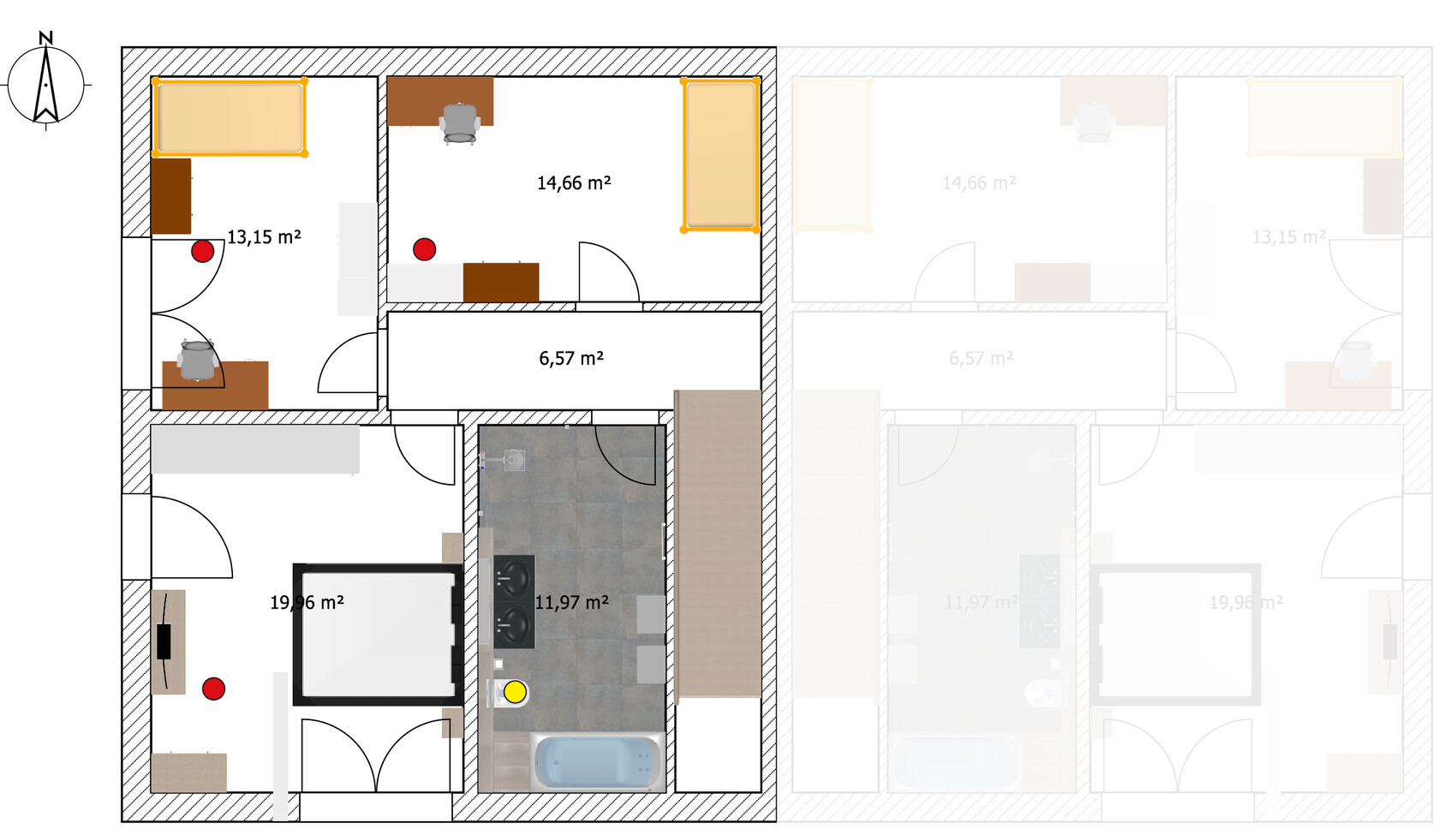
Yellow dots = Extract air
Red dots = Supply air
Blue dots = Alternative supply air (as a possible alternative position for the same room instead of the red dot)
Ground floor:
Upper floor:
Attic floor:
Thank you very much in advance!
Markus
The planning for our semi-detached house is becoming more concrete. Now we need to determine the positions of the outlets for the central mechanical ventilation system with heat recovery.
I have read quite a bit on the topic and tried to consider the usual best practices. However, it is quite overwhelming at first and leaves some uncertainty. That’s why I would appreciate it if you could take a look based on your experience.
In general, everything is initially planned as ceiling outlets. However, the concept of displacement ventilation also makes sense to me, so wall outlets near the floor for the supply air could also be considered. What are your thoughts on this?
Yellow dots = Extract air
Red dots = Supply air
Blue dots = Alternative supply air (as a possible alternative position for the same room instead of the red dot)
Ground floor:
- The additional table indicated in the office will ultimately not be placed there.
- I am unsure whether the supply air in the hallway should preferably be near the front door or not.
Upper floor:
- The alternative supply air position is meant to better cover the hallway area. Or is this not relevant, and is it more important that air is supplied directly into the dining/living area?
- Would it be better to have two outlets in the large living and dining area to minimize noise?
Attic floor:
- The children’s rooms are a bit of a headache because it is very difficult to predict exactly how the furniture will be arranged at this stage.
- In the slightly larger children’s room, I’m also not certain about the door position yet. It might be placed all the way to the left (opposite the bedroom door). In that case, the supply air would need to be located elsewhere.
Thank you very much in advance!
Markus

We currently have all the vents installed in the ceilings and plan to do the same in the next house. Regarding the planning, the architect—who is also an expert in mechanical ventilation with heat recovery—made an initial proposal. We then informed him about which vents we wanted to have relocated, also due to other equipment on the ceiling. Additionally, some of our rooms have both supply and exhaust air for soundproofing reasons, which was not considered in the first proposal. Based on this, the installer carried out the calculations and designed the system. This is how I would always proceed, as it prevents conflicts with planned furniture placement and ensures that the distribution is initially based on established best practices, which might not be the case if the client provides the specifications.
K1300S schrieb:
Also, in our building there are rooms that require both supply and exhaust air for soundproofing reasons, which wasn’t taken into account in the initial plan. Interesting point!
Unfortunately, I wasn’t aware of this possibility beforehand, so it was not considered.
Actually, the planned gaps under the doors worry me the most and, at least in theory, rank high on the disadvantages list for the controlled ventilation system. 🙁
K1300S schrieb:
That’s exactly how I would do it again, since that avoids conflicts with the planned furnishing and ensures the distribution is initially based on known best practices... Well, strictly speaking, ceiling outlets also need to be coordinated with the furniture layout.
Clearances from taller cabinets and avoiding placing them directly above areas where people frequently stay should be taken into account.
So, everything has pros and cons! For example, a supply air outlet in the floor in front of a window is easier to plan for, since you can be certain no furniture will be placed there.
netuser schrieb:
Actually, the planned gaps under the doors worry me the most and, at least in theory, they top the list of disadvantages for the controlled mechanical ventilation system. But you also have those gaps with regular doors even without controlled mechanical ventilation. Only if you use drop-down seals or higher-quality soundproof doors does the gap disappear.
netuser schrieb:
Well, strictly speaking, the ceiling outlets also need to be coordinated with the furniture layout. They are, but we initially started with the architect’s "standard proposal."
K1300S schrieb:
You also have that gap even without controlled residential ventilation when using standard doors. Only when you use drop-down seals or higher-quality soundproof doors does the gap disappear. If I understand correctly, the gap is somewhat larger when using controlled residential ventilation?
Similar topics