
Hello everyone,
I hope to get some good advice here. Our tiler was supposed to install a level-access shower in our bathroom (a timber-framed house with only soil excavation underneath) that is fully tiled. Now he has finished, the channel and tiles are in place. However, the slope is not directed towards the drain but towards the bathroom door. I would like to find a practical solution to fix this.
We have considered several options: removing the bottom row of tiles, sealing everything, and installing a shallow tray. Or using a shower board made of polystyrene with a waterproof membrane already attached, placing it on the tiles, sealing it, and then creating a new screed. But I’m still not convinced if that will work. Do you have any advice on how to solve this properly, so I won’t have water issues later on?
Thanks for your help and best regards,
Rocco
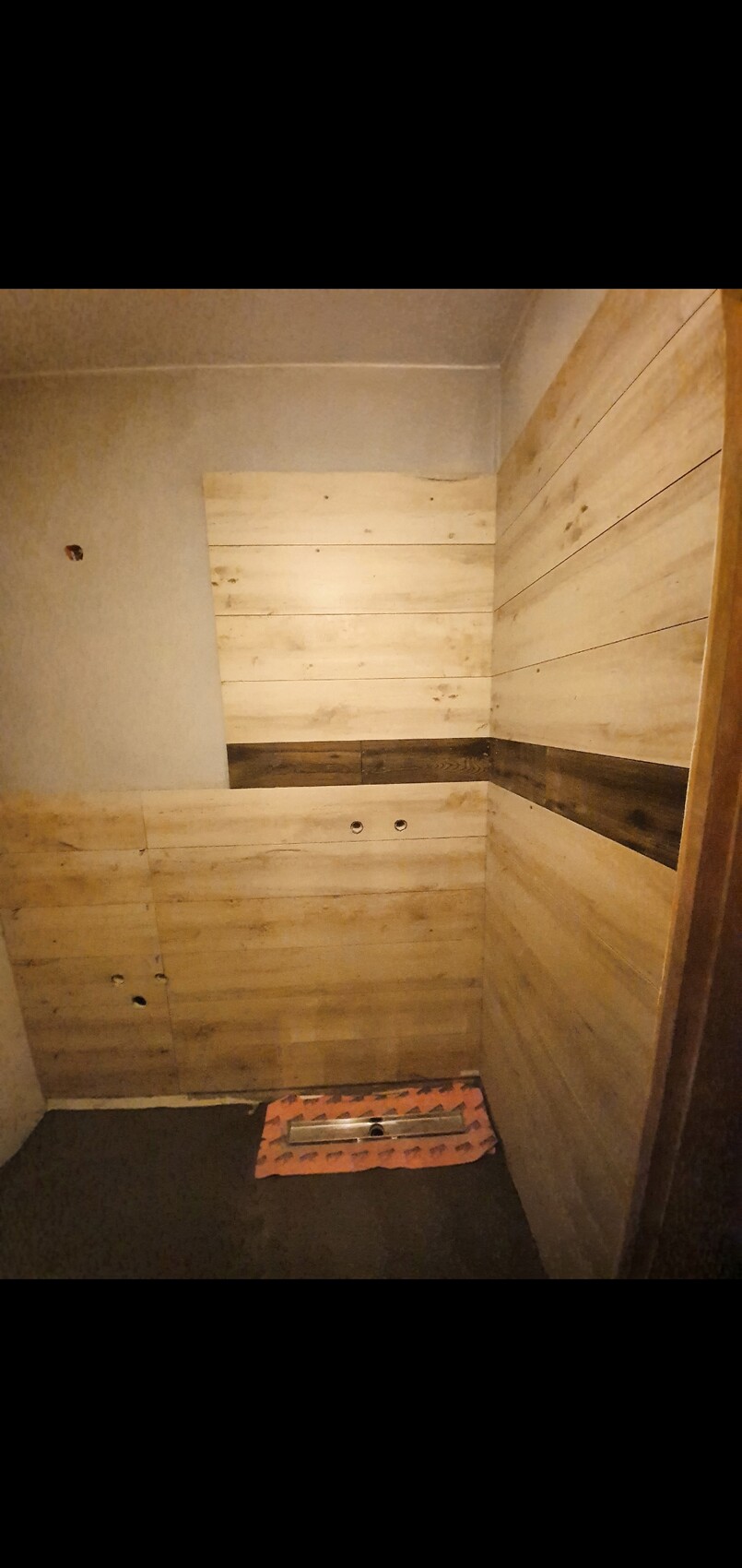
I hope to get some good advice here. Our tiler was supposed to install a level-access shower in our bathroom (a timber-framed house with only soil excavation underneath) that is fully tiled. Now he has finished, the channel and tiles are in place. However, the slope is not directed towards the drain but towards the bathroom door. I would like to find a practical solution to fix this.
We have considered several options: removing the bottom row of tiles, sealing everything, and installing a shallow tray. Or using a shower board made of polystyrene with a waterproof membrane already attached, placing it on the tiles, sealing it, and then creating a new screed. But I’m still not convinced if that will work. Do you have any advice on how to solve this properly, so I won’t have water issues later on?
Thanks for your help and best regards,
Rocco
C
chand198618 Apr 2021 08:18Hausbau0815 schrieb:
The opposing stance appears immediately because the craftsman fears additional work and generally wants to avoid it from the start. It is very natural to want to avoid extra work, even if it is not very professional. But a “front” usually only develops later if the request for correction is ignored. For comments like it was always like that before, one doesn’t confront but rather smiles it off and refers to the specific agreement about how the trade should be executed.
In the OP’s case, the floor needs to be redone – there is no other option. If the tiler has otherwise done a good job, it would be in both parties’ interest for him to do it. That he is reluctant to do so is understandable.
 Hausbau081518 Apr 2021 08:22
chand1986 schrieb:
In the case of the original poster, the floor must be redone – there is no other option. If the tiler otherwise did a good job, it would be in both parties' interest for him to do this. That he doesn’t want to do it – that’s irrelevant. The tiler should have raised a complaint about the previous trade’s work.
"Once again, a higher regional court (3 U 814/14) has emphasized that every craft business is obligated to inspect prior work. If defects are identified, they must be reported to the client in writing."
C
chand198618 Apr 2021 08:26Hausbau0815 schrieb:
The tiler should have raised the issue with the previous contractor.If everyone does that, it leads to a deadlock. Legal disputes are often far removed from common sense. In this case, a leveling compound might have been sufficient instead of passing the responsibility for the correction on to the predecessor. That is exactly why the advice is to let the tiler fix it if possible and if they are willing and able. If now the previous contractor has to be involved, the process repeated, and then the tiler comes back and does what they could have done earlier, it may be legally safe but it is not effective at all.H
hampshire18 Apr 2021 09:04Hausbau0815 schrieb:
Which tradesperson admits to mistakes? I don’t know any. That’s unfortunate. On our construction site, open communication about mistakes and misunderstandings was completely normal—and there are few construction sites without errors.
Hausbau0815 schrieb:
When I asked why, I was then rudely told... This is a classic example of communication breakdown when dealing with mistakes. When you ask "why," you almost always get an explanation—of course, because people answer questions as they are asked. Since the other person already knows the outcome is not what was wanted and suspects their answer will be unsatisfactory, they tend to give a response that is difficult to challenge or that shuts down further discussion—for example, by pointing to their experience or making some assertion.
When you ask, "how can we now make sure that..." the chances greatly increase that the conversation shifts away from the cause of the problem and focuses on finding a solution.
This doesn’t always work, but it is often successful, whereas the "why question" almost regularly leads to problems when bringing up mistakes.
S
Strahleman18 Apr 2021 09:31hampshire schrieb:
When asking "how do we make sure that...", the focus often shifts away from discussing how the problem originated and instead moves directly to finding a solution. I can only confirm this from my experience. In our case, the plumber made a mistake that needed to be fixed quickly (since the plasterer was already waiting and the bricklaying still had to be done). I was naturally frustrated at home (not in front of the installer) about the error but immediately thought of a possible solution. The next day, I pointed out the incorrect installation to the installer and directly suggested an alternative (which he had in mind as well, so it was a quick confirmation for him that I agreed with this solution). This way, the defect was fixed promptly and without issues, and the relationship with the installer remains good. In my opinion, having a good relationship with the tradespeople is important in general. Besides showing appreciation, occasional snacks or free drinks on site can go a long way.
Of course, this might not help the original poster much here, since the only solution seems to be removing the tiles and correcting the floor. However, I wouldn’t necessarily blame the tiler; I would communicate this as well, since their work was good but unfortunately done on an incorrectly prepared floor (at least based on what can be seen in the photo).
Hausbau0815 schrieb:
The tiler should have pointed out the work done by the previous tradesperson.I agree.chand1986 schrieb:
If everyone did that, it would lead to a standstill. Legal disputes are often far from common sense. In this case, a leveling compound might have been a better solution instead of blaming the previous contractor for the corrections.Using a leveling compound also has drawbacks because it raises the entire floor and creates a small step at the door. A skilled professional should have addressed this issue beforehand, at least to factor in the additional cost for floor leveling.Similar topics