
Hello everyone,
I hope to get some good advice here. Our tiler was supposed to install a level-access shower in our bathroom (a timber-framed house with only soil excavation underneath) that is fully tiled. Now he has finished, the channel and tiles are in place. However, the slope is not directed towards the drain but towards the bathroom door. I would like to find a practical solution to fix this.
We have considered several options: removing the bottom row of tiles, sealing everything, and installing a shallow tray. Or using a shower board made of polystyrene with a waterproof membrane already attached, placing it on the tiles, sealing it, and then creating a new screed. But I’m still not convinced if that will work. Do you have any advice on how to solve this properly, so I won’t have water issues later on?
Thanks for your help and best regards,
Rocco
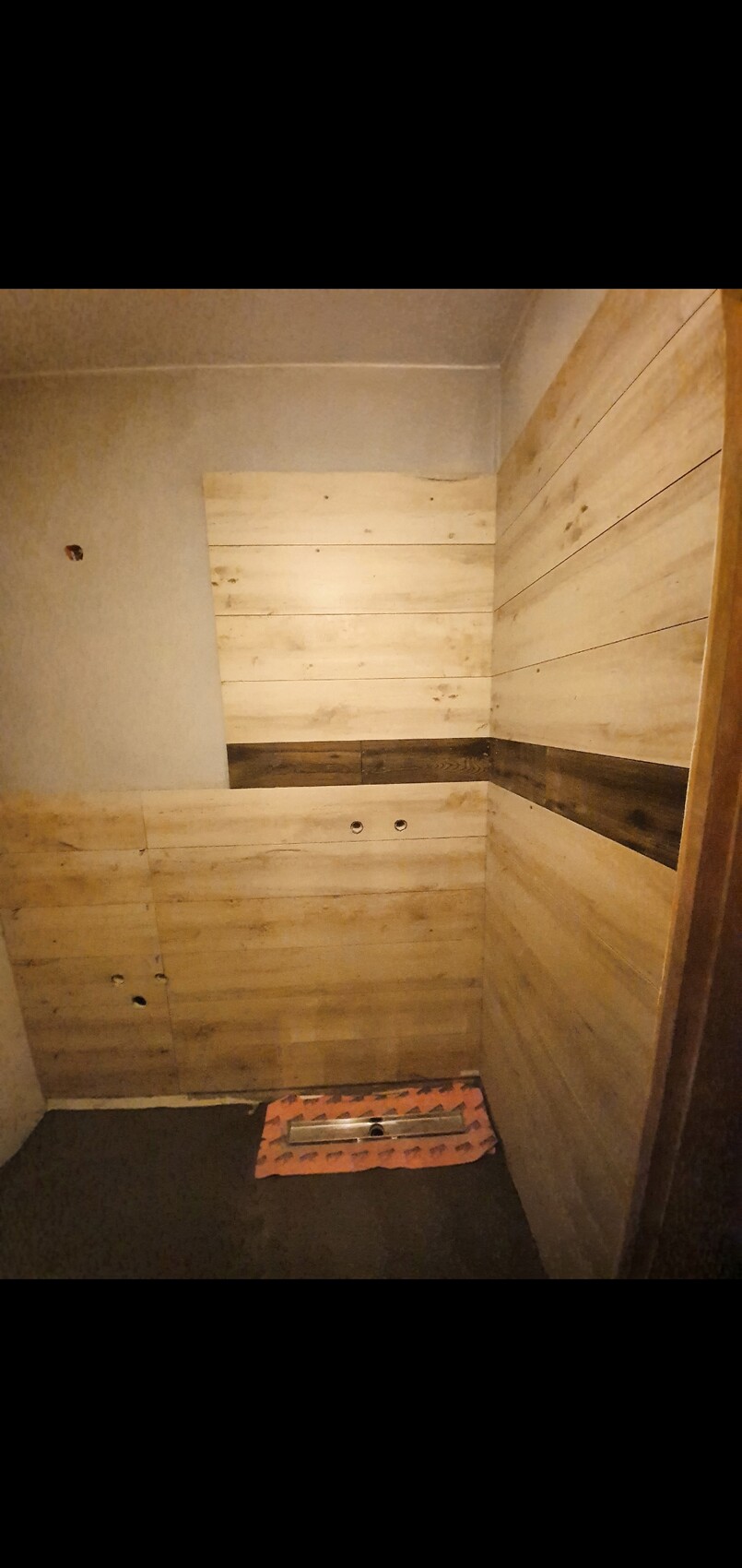
I hope to get some good advice here. Our tiler was supposed to install a level-access shower in our bathroom (a timber-framed house with only soil excavation underneath) that is fully tiled. Now he has finished, the channel and tiles are in place. However, the slope is not directed towards the drain but towards the bathroom door. I would like to find a practical solution to fix this.
We have considered several options: removing the bottom row of tiles, sealing everything, and installing a shallow tray. Or using a shower board made of polystyrene with a waterproof membrane already attached, placing it on the tiles, sealing it, and then creating a new screed. But I’m still not convinced if that will work. Do you have any advice on how to solve this properly, so I won’t have water issues later on?
Thanks for your help and best regards,
Rocco
X
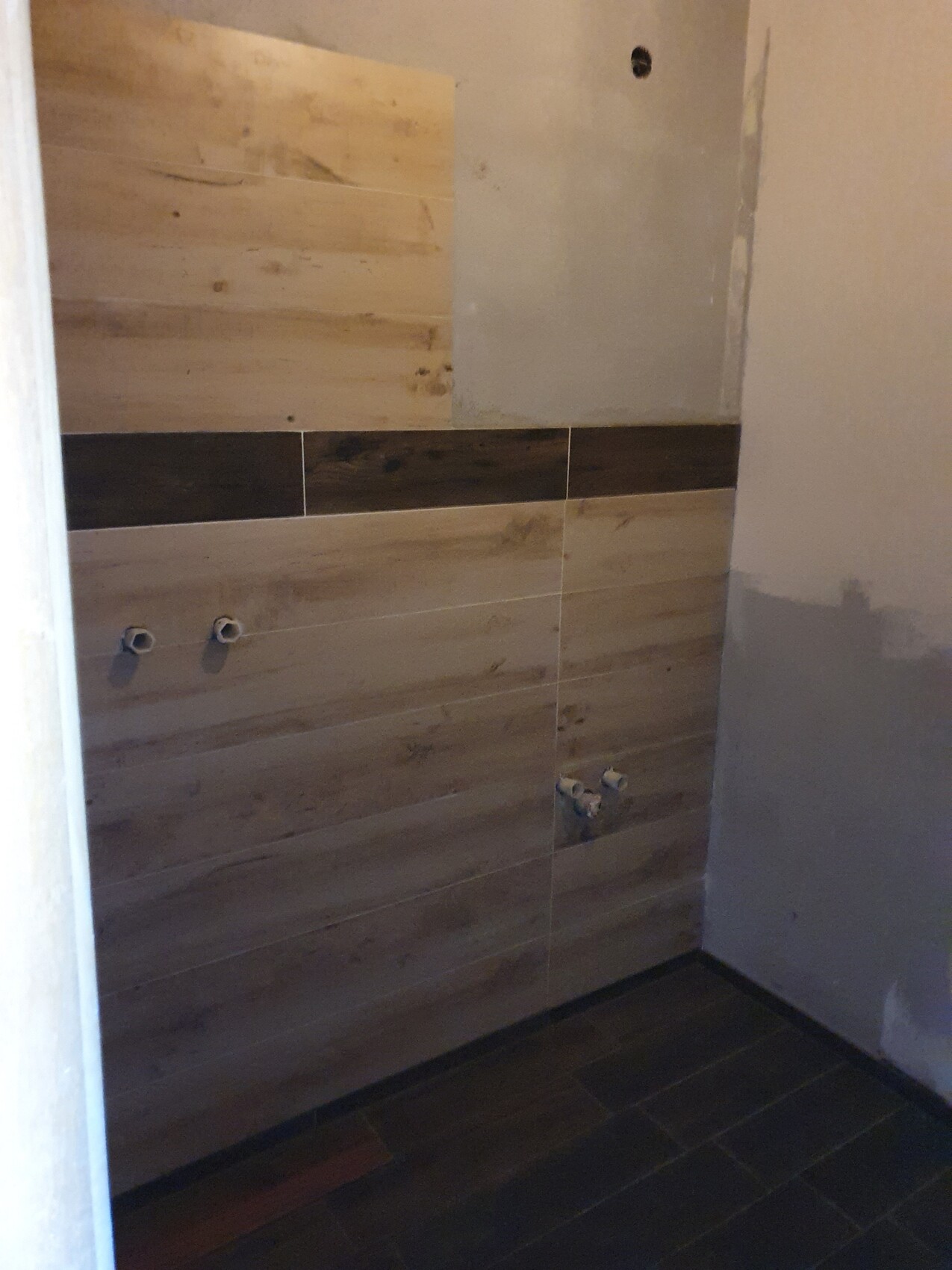
Xricky22x14 Apr 2021 07:25Here is a picture of the current condition
H
hampshire14 Apr 2021 07:38There is only one acceptable solution here: redo it as originally planned. It’s a pity, because apart from the slope, the workmanship looks good. Stay firm in your demand while also acknowledging the quality of the installation work. Such an error is hard to understand, but it’s no reason for rudeness.
M
Myrna_Loy14 Apr 2021 09:08hampshire schrieb:
There is only one acceptable solution here: redo it as originally planned. It’s a shame, because apart from the slope, the workmanship looks good. Stay firm in your demand while acknowledging the craftsman’s installation effort. Such an error is difficult to understand, but it’s no reason to be disrespectful. I agree. The contractor will have to treat this as a learning experience. I’m happy to be flexible in seeking good solutions when there are deviations from the plan during construction—and when the solution is convincing. But you wanted tiles, not a shower tray. And no botched fixes. The project was not an overly complex planning task where something could easily be overlooked.
How is the shower tray supposed to work?
I’m imagining a tray about 10 cm (4 inches) high. Terrible 😱
For a really shallow—ideally level—tray, you’d have to chisel out the area again, and it’s questionable whether it can still be properly connected now.
In short: Which specific tray model does the contractor recommend?
I agree. Do it new.
I’m imagining a tray about 10 cm (4 inches) high. Terrible 😱
For a really shallow—ideally level—tray, you’d have to chisel out the area again, and it’s questionable whether it can still be properly connected now.
In short: Which specific tray model does the contractor recommend?
Myrna_Loy schrieb:
The contractor will have to chalk that up as a learning experience.
I agree. Do it new.
H
hampshire14 Apr 2021 09:51Schelli schrieb:
This is once again a rare piece of nonsense. But in a way, it also highlights that you can never be careful enough. Simply unfortunate and stressful. The stress does not come from the fact that mistakes happen, but from how they are handled. Often, this begins with accusatory language that turns project partners into opponents—unwise when the goal is project success together. Construction mistakes are much easier to fix than a broken level of communication. Firm positions on the content can be enforced more effectively and with fewer consequences on a good communication level than by raising voices or involving lawyers. And it is less stressful for everyone involved.
Anyone who believes they as a client can truly pay attention to and control everything vastly overestimates themselves and will always end up in opposition to their service providers—maybe not legally or financially, but certainly mentally and in terms of quality.