
ᐅ Removing old flooring in an existing building. The adhesive just won’t come off.
Created on: 8 Apr 2021 19:47
S
shooty76
Hello,
we are currently renovating a 68-year-old building. Everything is going well except for one room, which is causing problems. There was a PVC floor covering with a fabric backing glued down.
Now, in some areas, the adhesive is coming off the floor, while in others it is firmly stuck, and I can only scrape off the fabric.
Laminate flooring with 10mm (¾ inch) impact sound insulation will be installed on top (to even out differences with the adjacent room). The adhesive layer is probably about 1mm (0.04 inch) thick. That’s not an issue. I’m just a bit concerned about leaving the old nasty adhesive under the sound insulation. Is that a serious problem?
I’ve tried using paint stripper and adhesive remover, but neither worked at all.
Would you just ignore the adhesive? Or does anyone have advice on how to remove it?
Thank you very much
Christian
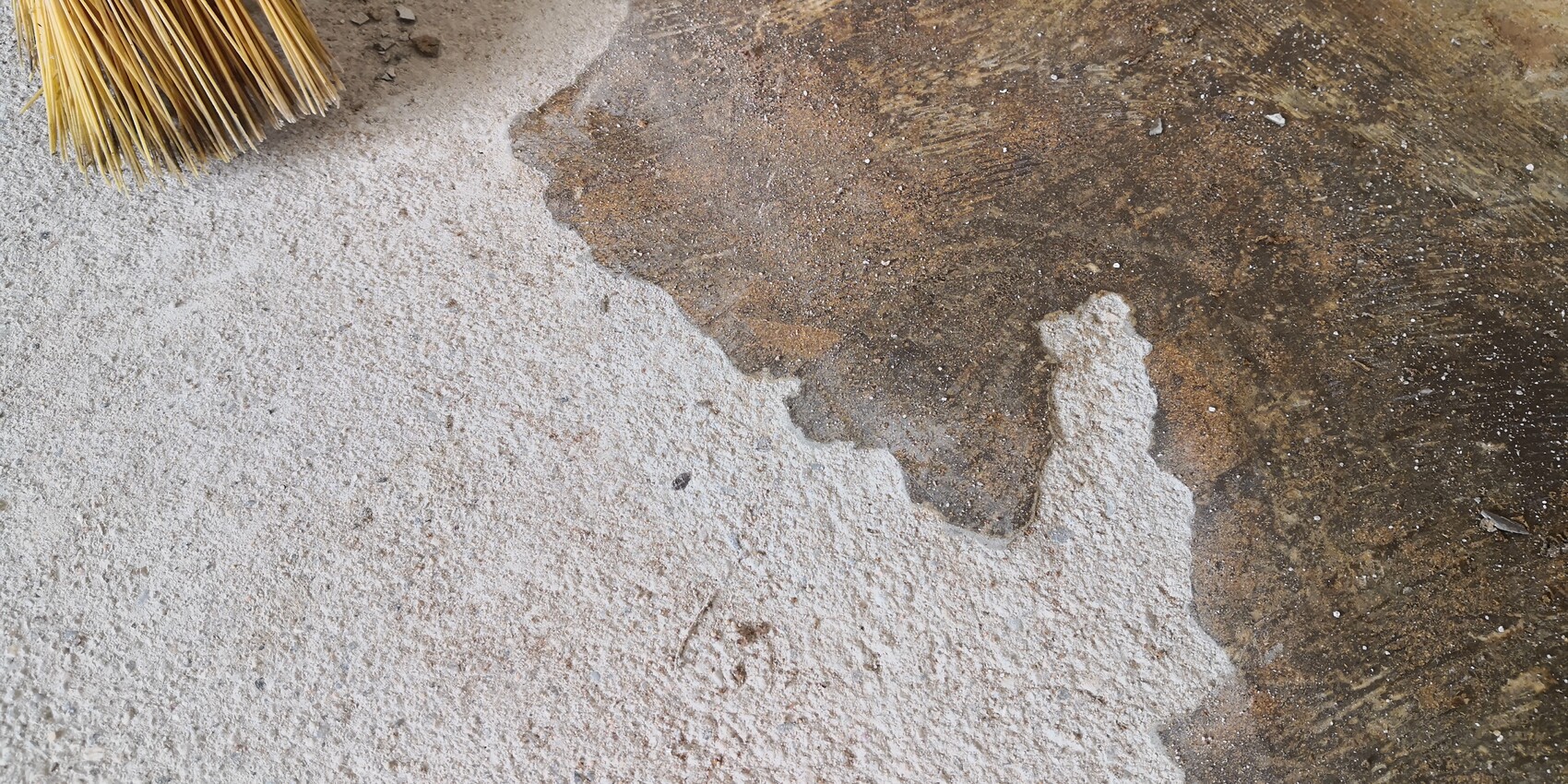
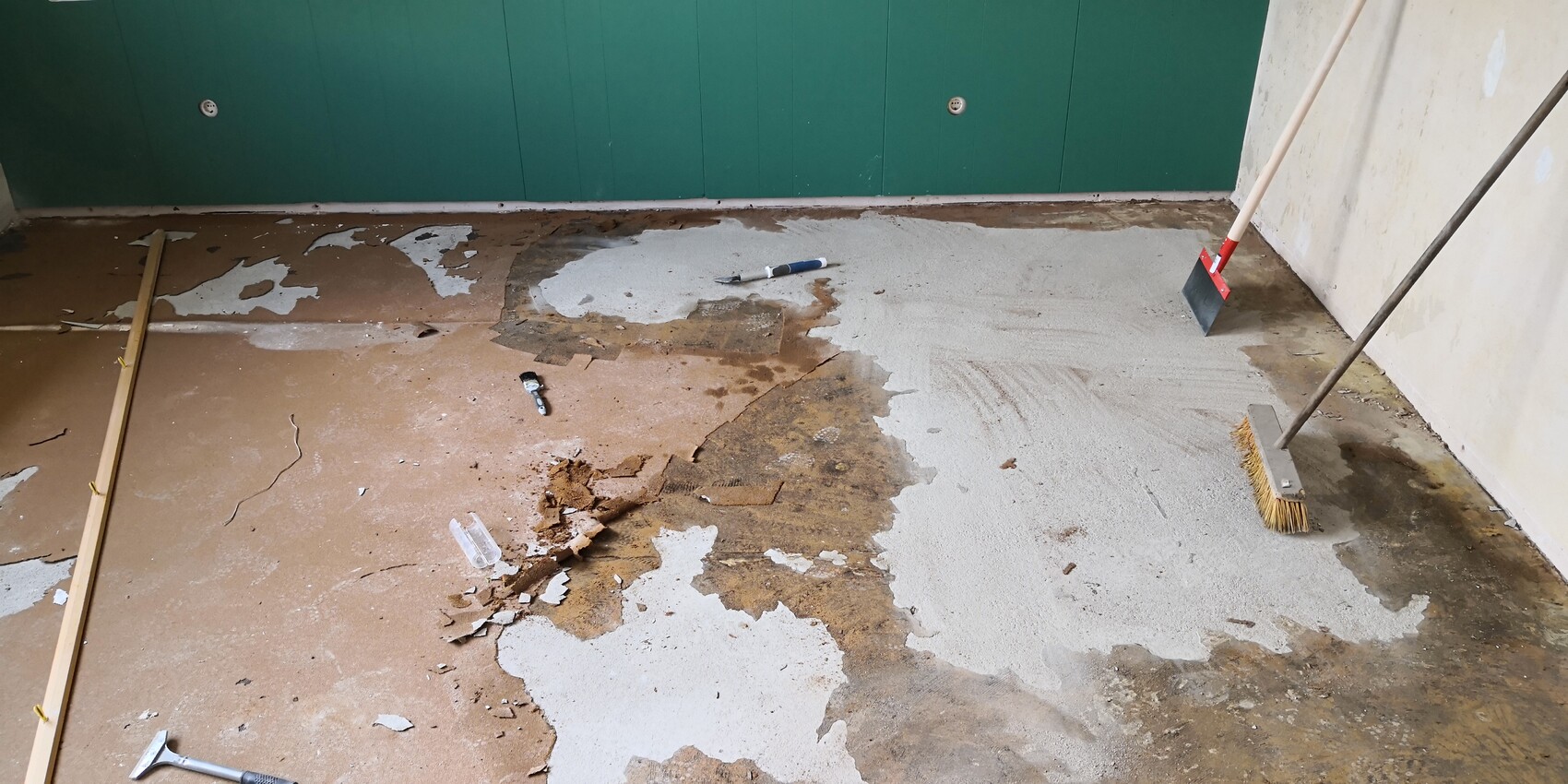
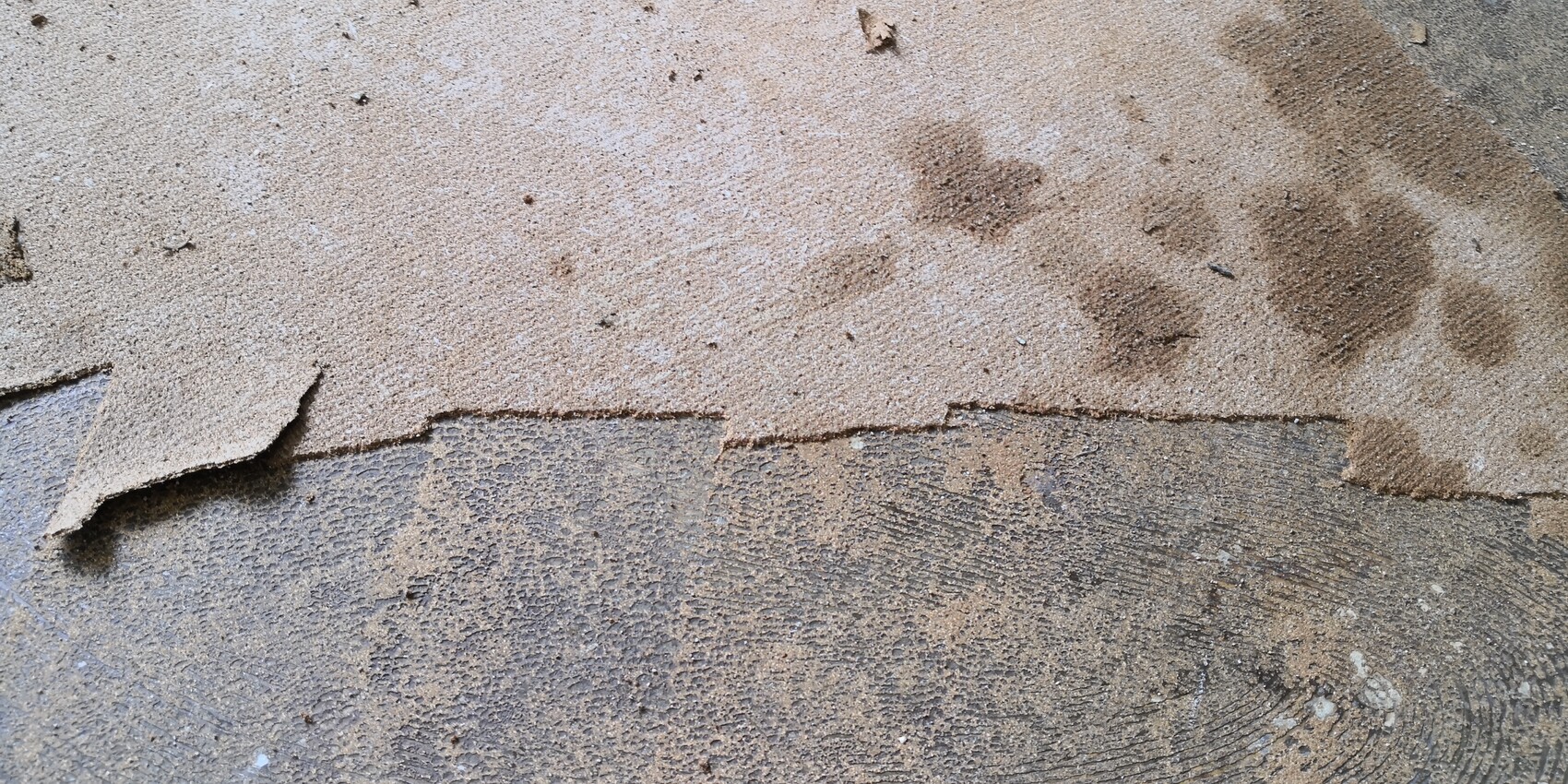
we are currently renovating a 68-year-old building. Everything is going well except for one room, which is causing problems. There was a PVC floor covering with a fabric backing glued down.
Now, in some areas, the adhesive is coming off the floor, while in others it is firmly stuck, and I can only scrape off the fabric.
Laminate flooring with 10mm (¾ inch) impact sound insulation will be installed on top (to even out differences with the adjacent room). The adhesive layer is probably about 1mm (0.04 inch) thick. That’s not an issue. I’m just a bit concerned about leaving the old nasty adhesive under the sound insulation. Is that a serious problem?
I’ve tried using paint stripper and adhesive remover, but neither worked at all.
Would you just ignore the adhesive? Or does anyone have advice on how to remove it?
Thank you very much
Christian
I started looking into the topic a bit later than I should have. It’s possible that the adhesive contains asbestos. I’m sending a sample to the lab for testing and will only enter the room wearing an FFP3 mask. If it does contain asbestos, which is unfortunately likely, I will hire a specialized company. For such a small room, it will probably cost me around 1000€ (about 1100 USD). But that’s just how it is in this case.

Dear everyone, all I can say is: "Let’s keep things in perspective!"
Otherwise, we might soon see a post suggesting that the adhesive layer contains malaria.
What do we see in the pictures from "shooty76"?
We see that the last flooring layer, applied with the appropriate notched trowel adhesive, was installed on a layer of leveling compound.
This leveling compound layer is separating from another, darker-colored leveling compound layer underneath.
This means that the then-new screed was reworked with a leveling compound, the (first) floor covering was laid on top, and then later removed.
Even at that time, nobody wanted to invest the effort to remove the first leveling compound layer from the screed.
So, most of the adhesive ridges were removed, but some traces are still visible.
Then, a second leveling compound layer was applied over this surface, which after the installation of the last floor covering and years of use no longer properly adheres to the lower leveling compound layer.
What this means for the upcoming floor installation:
All leveling compound layers must be ground down until the aggregate of the screed is exposed!
Dust must be thoroughly vacuumed, the entire surface primed, and then completely re-leveled with a thickness of about 2mm (0.08 inches). It is also likely that isolated cracks in the screed will appear here and there, which should either be sealed with resin or covered with a suitable glass fiber mesh strip before leveling (the latter is not strictly according to best practice but is common in the industry).
Any other approach planned will not be effective and will not lead to a successful (damage-free) new installation!
You can see (perhaps) that there are trades in construction that require professional knowledge in order to succeed.
Professional expertise can never be replaced by overestimating one’s own DIY skills.
Of course, you can hire a specialist company for the demolition work. Grinding costs about 7.50 €/m² (roughly $7.50 per square meter).
But for $1,000 (unless the room is over 130m² (1,400 sq ft)), any flooring company would be happy to do the job….
-------------------
Wishing you success, KlaRa
Otherwise, we might soon see a post suggesting that the adhesive layer contains malaria.
What do we see in the pictures from "shooty76"?
We see that the last flooring layer, applied with the appropriate notched trowel adhesive, was installed on a layer of leveling compound.
This leveling compound layer is separating from another, darker-colored leveling compound layer underneath.
This means that the then-new screed was reworked with a leveling compound, the (first) floor covering was laid on top, and then later removed.
Even at that time, nobody wanted to invest the effort to remove the first leveling compound layer from the screed.
So, most of the adhesive ridges were removed, but some traces are still visible.
Then, a second leveling compound layer was applied over this surface, which after the installation of the last floor covering and years of use no longer properly adheres to the lower leveling compound layer.
What this means for the upcoming floor installation:
All leveling compound layers must be ground down until the aggregate of the screed is exposed!
Dust must be thoroughly vacuumed, the entire surface primed, and then completely re-leveled with a thickness of about 2mm (0.08 inches). It is also likely that isolated cracks in the screed will appear here and there, which should either be sealed with resin or covered with a suitable glass fiber mesh strip before leveling (the latter is not strictly according to best practice but is common in the industry).
Any other approach planned will not be effective and will not lead to a successful (damage-free) new installation!
You can see (perhaps) that there are trades in construction that require professional knowledge in order to succeed.
Professional expertise can never be replaced by overestimating one’s own DIY skills.
Of course, you can hire a specialist company for the demolition work. Grinding costs about 7.50 €/m² (roughly $7.50 per square meter).
But for $1,000 (unless the room is over 130m² (1,400 sq ft)), any flooring company would be happy to do the job….
-------------------
Wishing you success, KlaRa
Thank you very much for the numerous responses.
However, according to the seller, this is the original floor covering. It should have lasted 50 years then—can that be possible? It didn’t look that bad either.
I really fear that the adhesive is something very nasty. When you scrape off the mesh, you can see grooves in the black layer above the screed. Similar to the grooves you get with tile adhesive. I’m quite sure that this is glue, and PVC was then laid on top of it.
In any case, I’m not daring to use any sanding machine on the black stuff.
I’ll get back to you when the lab results come in. Hopefully, KlaRa is right and it’s really harmless.
Has anyone else ever encountered similarly unpleasant surprises when removing flooring?
However, according to the seller, this is the original floor covering. It should have lasted 50 years then—can that be possible? It didn’t look that bad either.
I really fear that the adhesive is something very nasty. When you scrape off the mesh, you can see grooves in the black layer above the screed. Similar to the grooves you get with tile adhesive. I’m quite sure that this is glue, and PVC was then laid on top of it.
In any case, I’m not daring to use any sanding machine on the black stuff.
I’ll get back to you when the lab results come in. Hopefully, KlaRa is right and it’s really harmless.
Has anyone else ever encountered similarly unpleasant surprises when removing flooring?
S
Selber machen3 Aug 2021 10:10shooty76 schrieb:
Thank you very much for the numerous responses.
However, as the seller told me, this is the original floor covering. It would have had to last 50 years—can that really be the case? It didn’t actually look that bad.
I really do fear, though, that the adhesive is some really nasty stuff. When you scrape off the mesh, you can see that the black layer above the screed has grooves in it, similar to the grooves you get with tile adhesive. I’m pretty sure that’s adhesive, and PVC was laid on top of it.
In any case, I’m not going near that black stuff with any sanding machine.
I’ll report back as soon as the lab results come in. Hopefully KlaRa is right and it’s actually harmless.
Has anyone ever had similarly unpleasant surprises when removing flooring? What happened next!?
We’re soon facing the same problem!
Similar topics