
Hello everyone,
I am new here and currently building with a construction company. Today, an acquaintance of ours visited the site to measure the front door because we are not having it installed by the construction company but obtaining it from him and his employer. This acquaintance, who is also a window installer, criticized the windows installed by the construction company. He believed that sealing tape should be applied around the entire window frame. In our entire house and in other houses built by this company, it is only applied at the bottom. I have attached a photo. Now we are uncertain whether this installation method is still correct and whether window installers simply use different installation methods, which might still be acceptable. Additionally, he thought that for large windows, a bracket should have been installed in the middle. At the moment, the window can be wobbled with moderate force at the central mullion. Any information on this would be appreciated!
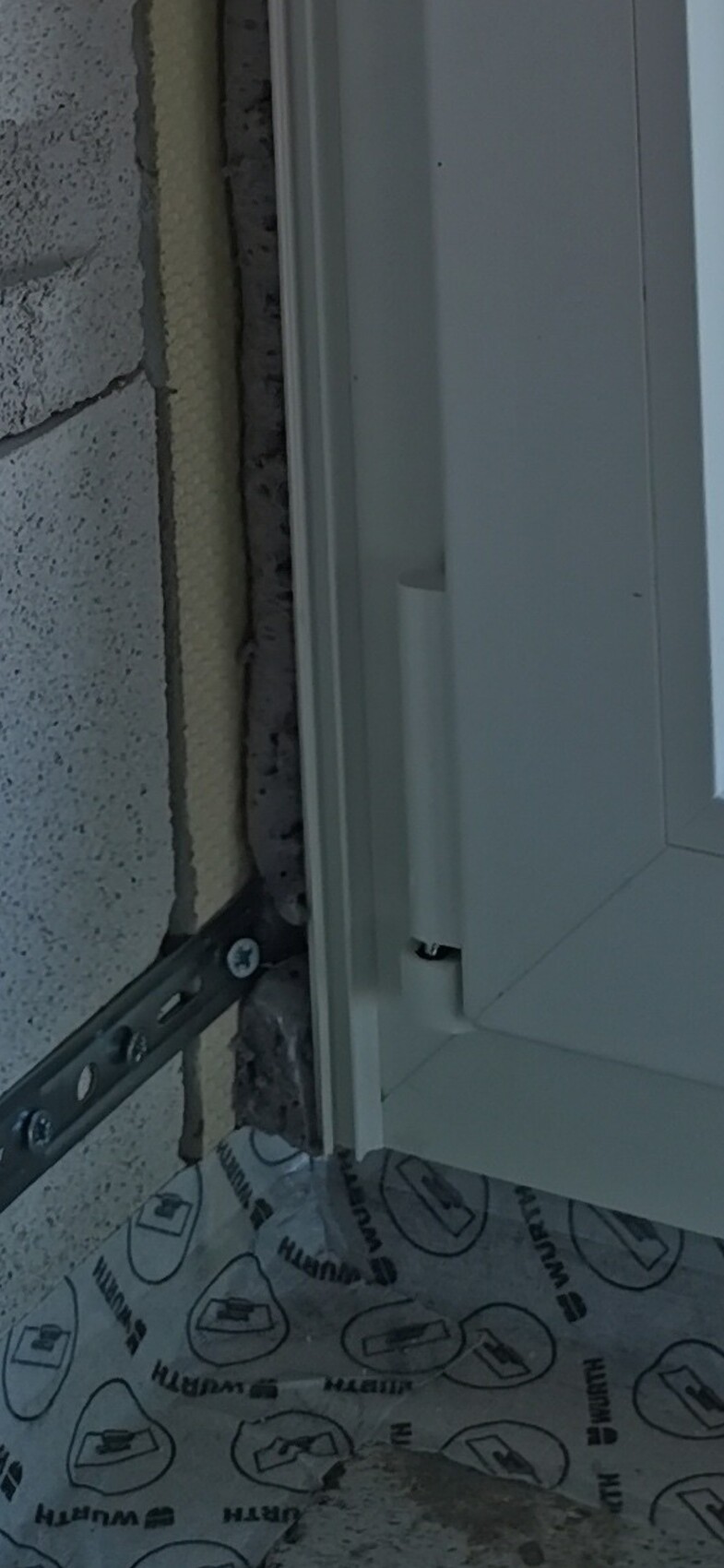
I am new here and currently building with a construction company. Today, an acquaintance of ours visited the site to measure the front door because we are not having it installed by the construction company but obtaining it from him and his employer. This acquaintance, who is also a window installer, criticized the windows installed by the construction company. He believed that sealing tape should be applied around the entire window frame. In our entire house and in other houses built by this company, it is only applied at the bottom. I have attached a photo. Now we are uncertain whether this installation method is still correct and whether window installers simply use different installation methods, which might still be acceptable. Additionally, he thought that for large windows, a bracket should have been installed in the middle. At the moment, the window can be wobbled with moderate force at the central mullion. Any information on this would be appreciated!
K
Klappradl2 Apr 2021 17:08The tape is intended to create an airtight seal on the joints facing inward. However, this can also be done with the installed plaster stop beads. The problem lies in the corners at the transition between the sealing tape and the plaster stop bead. In my opinion, the sealing tape is not applied high enough. The mounting anchors used are perfectly fine.
M
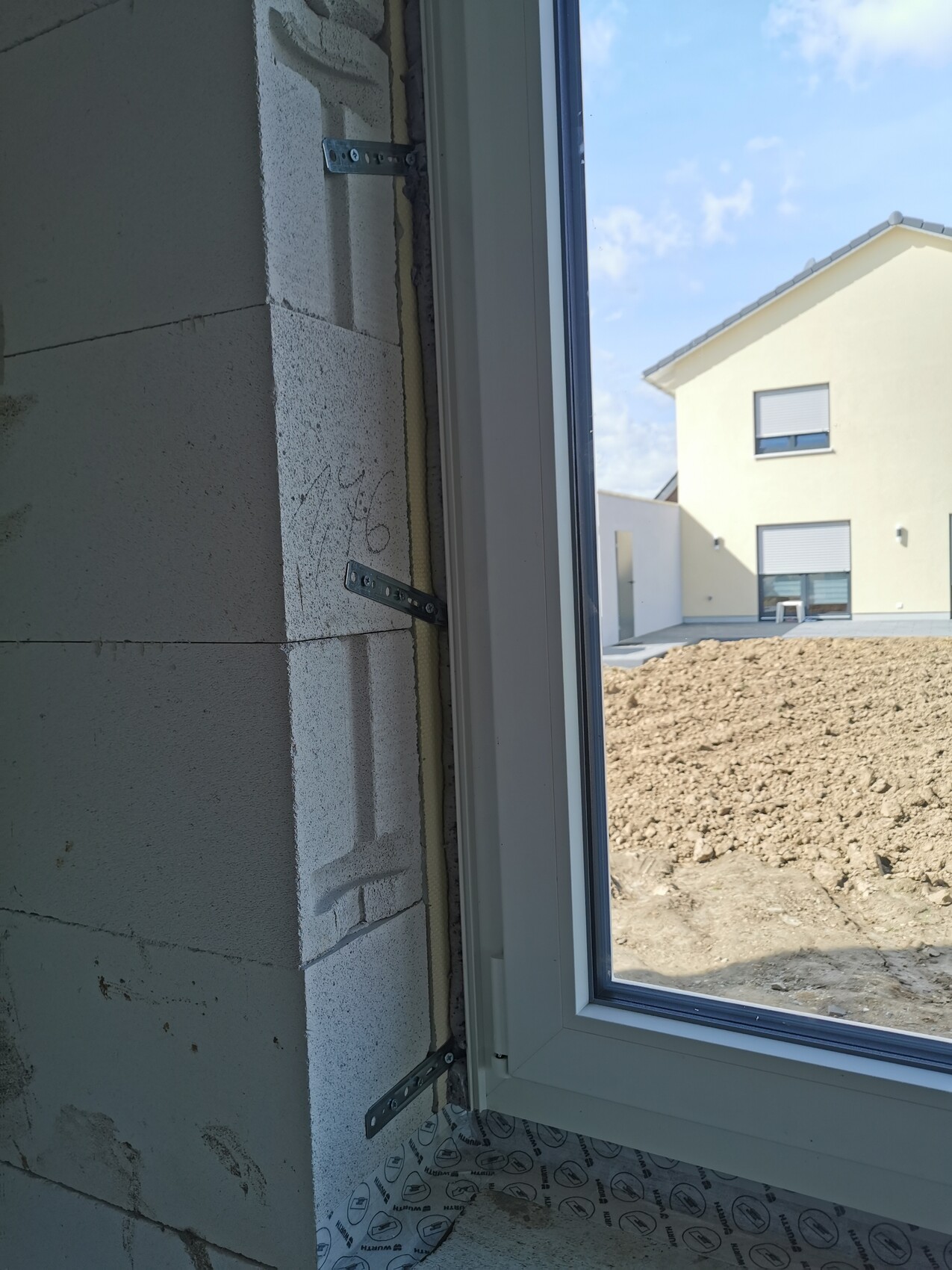
manuwel932 Apr 2021 17:39Thank you in advance for your responses! Unfortunately, due to time constraints, I haven’t been around for a few days, so there is no new picture, but I have attached the original one in its proper format.
M
marco24032 Apr 2021 19:03Klappradl schrieb:
The tape is supposed to seal the joints airtight from the inside. However, this can also be done with the applied plaster stop beads. The problem lies in the corners at the transition between the sealing tape and the plaster stop bead. In my opinion, the sealing tape is not applied high enough. The mounting anchors used are perfectly fine. However, the wall anchors are not suitable for installation in the insulation layer. Take a close look at the picture; one screw is fastened into the expanded polystyrene (EPS) insulation. My windows were installed the same way, and an inspector had to first explain to the window installer how a window must be anchored in the insulation layer. How is the load transfer handled downward? I assume it is just foam as well.
M
manuwel932 Apr 2021 21:34I believe that only the underside was insulated with spray foam. I couldn’t check exactly because of the sealing tape. This assumption seems likely since the middle mullion (double window) can be pushed back and forth with moderate force. By the way, the house has, or will have, a brick veneer.
K
knalltüte2 Apr 2021 21:46I believe the appropriate airtightness on the interior can still be achieved this way. If the reveal boards are installed within the APU profiles (the profiles, behind the reveal boards, contain an expanding sealing tape), the joints on the left, right, and top should be fine. The connection at the bottom to the already glued sealing tape on the side of the reveal boards must then be carefully sealed with a suitable sealing tape.
It’s good if there are no gaps directly at the windows later on (between the reveal and the reveal boards / window), as that is exactly where condensate could form.
I’m currently more concerned about the fastening. Try unscrewing one of the screws. From the head, it looks like some long Spax screw that was driven into the masonry. It’s already been mentioned that screwing directly into EPS/Styrodur (expanded polystyrene/polyisocyanurate foam) is a bad idea. Once again, “real experts” at work with the brain left at home 😡
We can’t see how the fastening is done at the bottom.
It’s good if there are no gaps directly at the windows later on (between the reveal and the reveal boards / window), as that is exactly where condensate could form.
I’m currently more concerned about the fastening. Try unscrewing one of the screws. From the head, it looks like some long Spax screw that was driven into the masonry. It’s already been mentioned that screwing directly into EPS/Styrodur (expanded polystyrene/polyisocyanurate foam) is a bad idea. Once again, “real experts” at work with the brain left at home 😡
We can’t see how the fastening is done at the bottom.
 SchwalbenFahre2 Apr 2021 21:56
Your stone is very soft and porous.
If they only applied foam insulation at the bottom and did not install fall protection brackets,
there will be problems later on.
It is better to involve an expert immediately.
Such a window installation is shoddy workmanship.
If they only applied foam insulation at the bottom and did not install fall protection brackets,
there will be problems later on.
It is better to involve an expert immediately.
Such a window installation is shoddy workmanship.
Similar topics