
ᐅ Floor Plan Design for a Single-Family Home without a Basement / 4-Person Household
Created on: 21 Dec 2020 20:23
M
Mr.Graves138
Hello dear forum,
what do the experts say about the following floor plan (especially regarding the questions described below)? Does anything stand out to you as something that should definitely be avoided?
Thank you in advance
Development Plan / Restrictions
Plot size: 447m² (5400 sq ft)
Slope: no, but the plot slopes down about 80cm (31 inches) from the street and needs to be filled
Site coverage ratio 0.4
Floor area ratio 0.4
Building envelope, building line, building boundary
Border development: see attachment
Number of parking spaces: single garage + 2 outdoor parking spaces
Number of floors: 1.5 (only 1 full floor = ground floor)
Roof type: gable roof
Orientation: north/south
Maximum heights / limits: ridge height 5.30m (17 ft 5 in); wall height 5.60m (18 ft 5 in); full height 10.80m (35 ft 5 in); storey height 7.70m (25 ft 3 in)
Homeowners’ Requirements
Style, roof shape, building type: solid house, gable roof approx. 37° pitch, knee wall approx. 95cm (37 inches)
Basement, floors: no basement, 1.5 floors
Number of occupants, ages: 4 (parents 32 and 29, children 5 and 1)
Room requirements ground floor / upper floor: ground floor 90m² (970 sq ft), upper floor 80m² (860 sq ft)
Office: family use or home office? both
Guests per year: 6
Open or closed architecture: closed? see floor plan
Conservative or modern construction: modern
Open kitchen, cooking island: open, with seating (bar)
Number of dining seats: 6-8
Fireplace: no
Music / stereo wall: no
Balcony, roof terrace: no balcony, terrace on ground floor
Garage, carport: single garage, possibly carport for 2 spaces
Utility garden, greenhouse: no
Further wishes / special features: photovoltaic system, half-turned narrow-wing staircase with landing, alternatively solid stair
House Design
Planning by: general contractor and DIY
What do you especially like? Large living/dining area, open kitchen, many storage rooms, large walk-in shower
What do you not like? Why? A lot of space is lost through the hallway/corridor. Perhaps the rooms could be arranged more space-efficiently?
Price estimate according to architect/planner: 400,000 without ancillary construction costs
Personal price limit for the house, incl. equipment: 430,000 without ancillary construction costs
Preferred heating system: air-to-water heat pump with cooling function and underfloor heating
If you had to compromise, on which details / extra features
-can you do without: walk-in closet in the master bedroom, glass sliding door in living/dining room, possibly smaller utility room, cooling function of the air-to-water heat pump
-can’t do without: large living/dining room with open kitchen, spacious shower, storage rooms and attic storage
Why was the design developed like this?
The general contractor planned the house at 10.5m x 8.50m (34 ft 5 in x 28 ft) with basement (waterproof concrete). Because of the groundwater level, the house would be about 80cm (31 inches) higher than the street, knee wall 1.20m (47 inches), attic height only 1.20m (47 inches). A staircase to the house entrance would be necessary. Due to the small rooms and expensive basement, I designed a floor plan without a basement myself. I increased the living room width from 3.85m to 4.50m (from 12 ft 7 in to 14 ft 9 in).
What is the most important / fundamental question about the floor plan in 130 characters?
How can I make the room layout and arrangement more efficient? How and where can I save space? The hallway on the ground floor takes up a lot of square meters, even though it is only 1.25m (49 inches) wide. One reason is the large staircase, but also the long corridor consumes space and feels somewhat narrow. Is it possible to cleverly reduce the living space from currently about 170m² (1,830 sq ft) to 160m² (1,720 sq ft) or less? Different staircase? Move the entrance door? Is there an effective alternative to the cooling function of the underfloor heating? The goal is to save costs through optimization.
I appreciate every opinion, suggestion, and sketch!
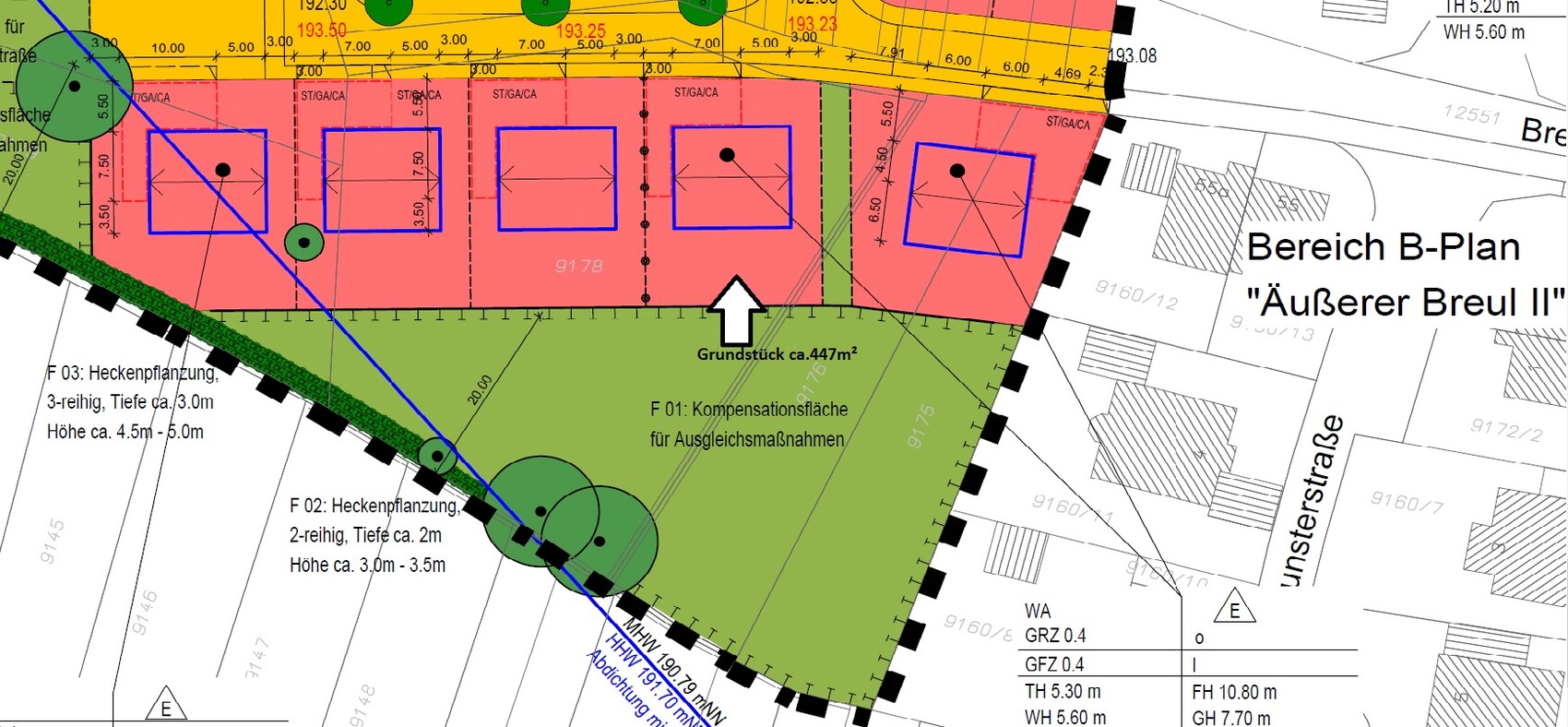
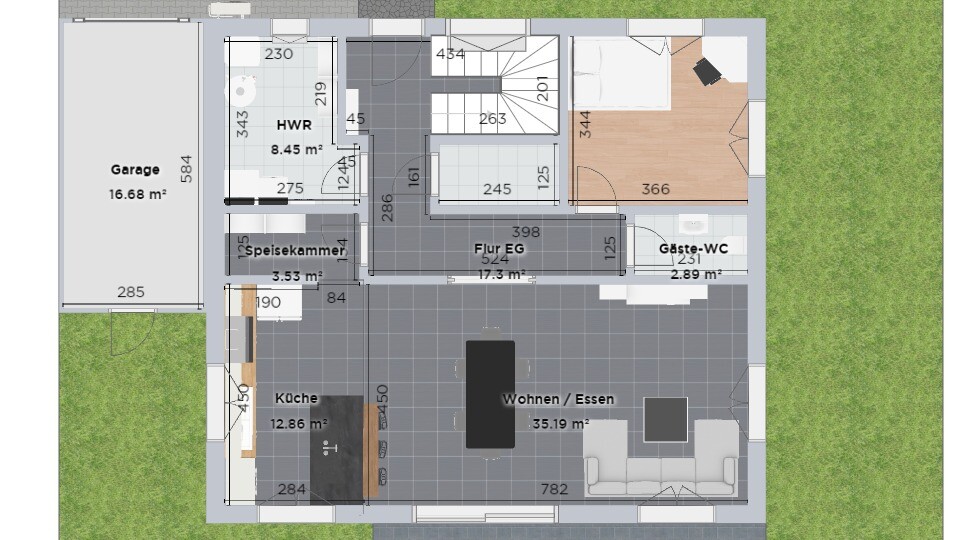
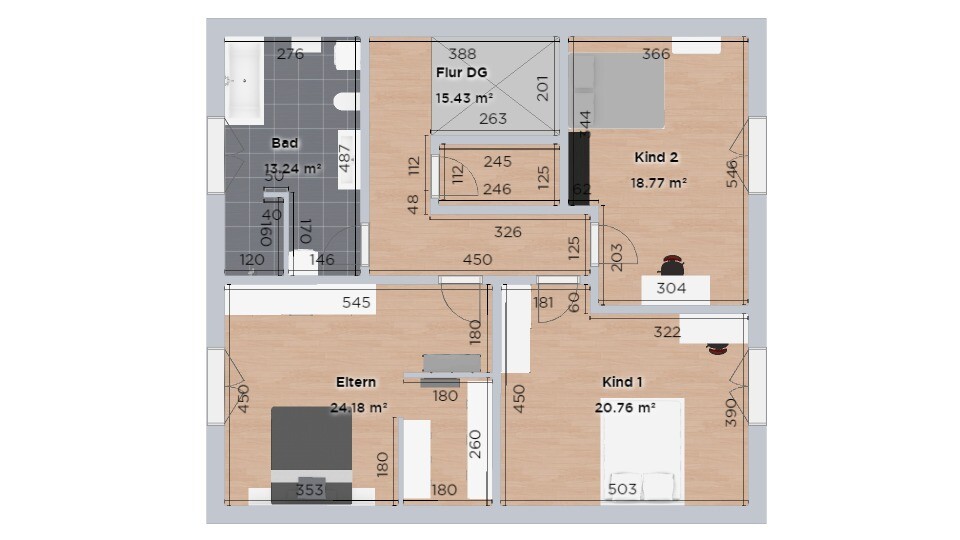
what do the experts say about the following floor plan (especially regarding the questions described below)? Does anything stand out to you as something that should definitely be avoided?
Thank you in advance
Development Plan / Restrictions
Plot size: 447m² (5400 sq ft)
Slope: no, but the plot slopes down about 80cm (31 inches) from the street and needs to be filled
Site coverage ratio 0.4
Floor area ratio 0.4
Building envelope, building line, building boundary
Border development: see attachment
Number of parking spaces: single garage + 2 outdoor parking spaces
Number of floors: 1.5 (only 1 full floor = ground floor)
Roof type: gable roof
Orientation: north/south
Maximum heights / limits: ridge height 5.30m (17 ft 5 in); wall height 5.60m (18 ft 5 in); full height 10.80m (35 ft 5 in); storey height 7.70m (25 ft 3 in)
Homeowners’ Requirements
Style, roof shape, building type: solid house, gable roof approx. 37° pitch, knee wall approx. 95cm (37 inches)
Basement, floors: no basement, 1.5 floors
Number of occupants, ages: 4 (parents 32 and 29, children 5 and 1)
Room requirements ground floor / upper floor: ground floor 90m² (970 sq ft), upper floor 80m² (860 sq ft)
Office: family use or home office? both
Guests per year: 6
Open or closed architecture: closed? see floor plan
Conservative or modern construction: modern
Open kitchen, cooking island: open, with seating (bar)
Number of dining seats: 6-8
Fireplace: no
Music / stereo wall: no
Balcony, roof terrace: no balcony, terrace on ground floor
Garage, carport: single garage, possibly carport for 2 spaces
Utility garden, greenhouse: no
Further wishes / special features: photovoltaic system, half-turned narrow-wing staircase with landing, alternatively solid stair
House Design
Planning by: general contractor and DIY
What do you especially like? Large living/dining area, open kitchen, many storage rooms, large walk-in shower
What do you not like? Why? A lot of space is lost through the hallway/corridor. Perhaps the rooms could be arranged more space-efficiently?
Price estimate according to architect/planner: 400,000 without ancillary construction costs
Personal price limit for the house, incl. equipment: 430,000 without ancillary construction costs
Preferred heating system: air-to-water heat pump with cooling function and underfloor heating
If you had to compromise, on which details / extra features
-can you do without: walk-in closet in the master bedroom, glass sliding door in living/dining room, possibly smaller utility room, cooling function of the air-to-water heat pump
-can’t do without: large living/dining room with open kitchen, spacious shower, storage rooms and attic storage
Why was the design developed like this?
The general contractor planned the house at 10.5m x 8.50m (34 ft 5 in x 28 ft) with basement (waterproof concrete). Because of the groundwater level, the house would be about 80cm (31 inches) higher than the street, knee wall 1.20m (47 inches), attic height only 1.20m (47 inches). A staircase to the house entrance would be necessary. Due to the small rooms and expensive basement, I designed a floor plan without a basement myself. I increased the living room width from 3.85m to 4.50m (from 12 ft 7 in to 14 ft 9 in).
What is the most important / fundamental question about the floor plan in 130 characters?
How can I make the room layout and arrangement more efficient? How and where can I save space? The hallway on the ground floor takes up a lot of square meters, even though it is only 1.25m (49 inches) wide. One reason is the large staircase, but also the long corridor consumes space and feels somewhat narrow. Is it possible to cleverly reduce the living space from currently about 170m² (1,830 sq ft) to 160m² (1,720 sq ft) or less? Different staircase? Move the entrance door? Is there an effective alternative to the cooling function of the underfloor heating? The goal is to save costs through optimization.
I appreciate every opinion, suggestion, and sketch!
M
Mr.Graves1389 Mar 2021 20:26chrisw81 schrieb:
It already looks really good!
Would additional double casement windows on the upper floor in all rooms be useful, or were they just not included in the plans?
We also have a kitchen counter like that but ended up not using bar stools because the dining table is right next to it, and we didn’t miss them. Otherwise, I think it would be "too much" and too many chairs at once. We have shelves partly with doors facing the dining area, so you can also store items you might need frequently for meals.
Does a 2.79 m² (30 sq ft) storage room make sense? Your bedroom is quite large, so maybe take some space from there? We have a 6 m² (65 sq ft) storage room upstairs and I wouldn’t want it any smaller—that wouldn’t be very useful... The double casement window is only planned in the bathroom above the toilet. The south-facing roof will be fully covered with photovoltaic panels, so no double casement window there. The storage room is small but should be enough to store a 40 cm (16 inch) shelf for cleaning supplies, a laundry basket, and a vacuum cleaner.
Only the guest room makes me a bit uneasy, on the west side where the carport is located. The next few weeks will focus on the detailed construction planning.
M
Mr.Graves13830 Mar 2021 12:44Hello everyone,
Attached are the current plans for the building permit / planning permission application.
Unfortunately, the bathroom window had to be reduced in size, and there is now a large shaft in the pantry for ventilation, heating, electricity, etc.
Would it be better to move the shaft to the utility room / technical room?
Do you have any other suggestions for improvements?
Thanks in advance!
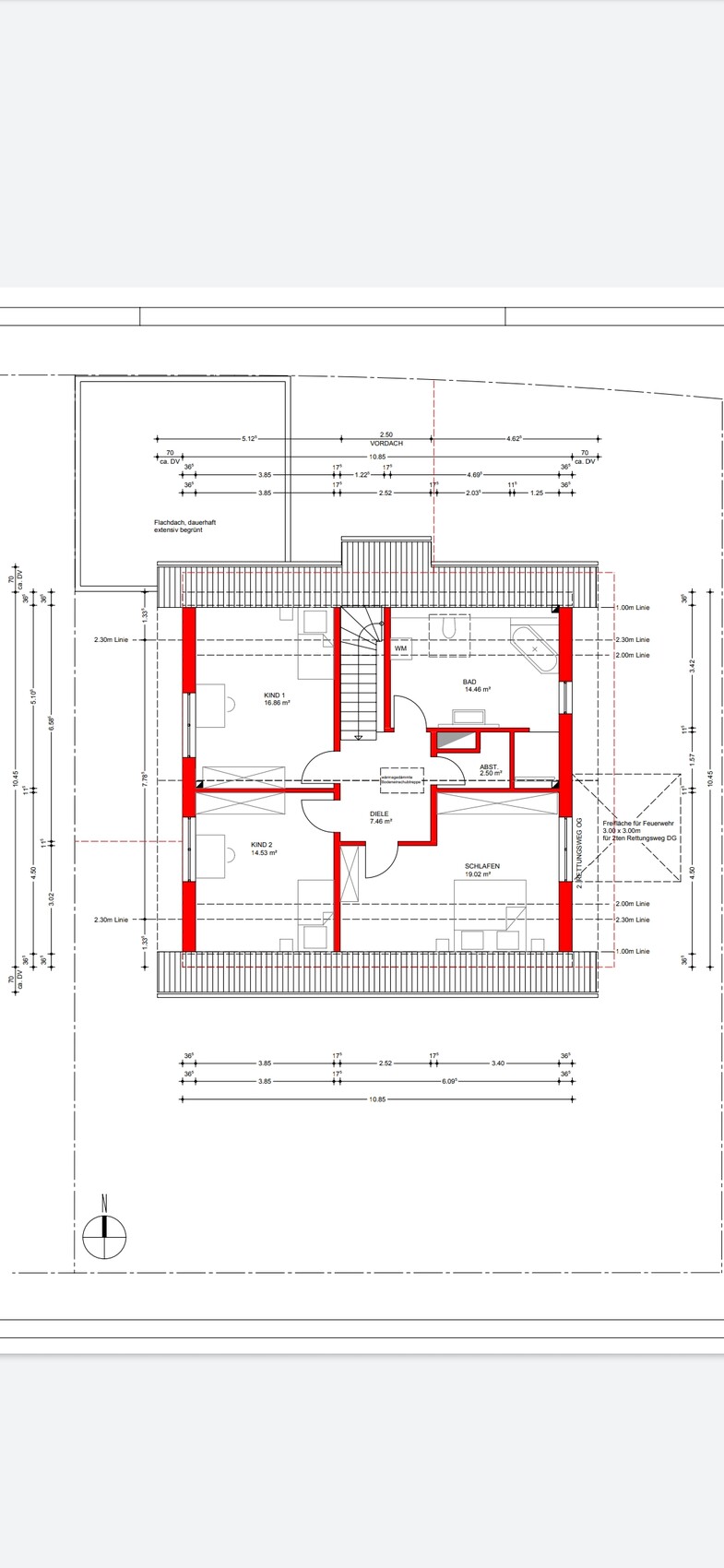
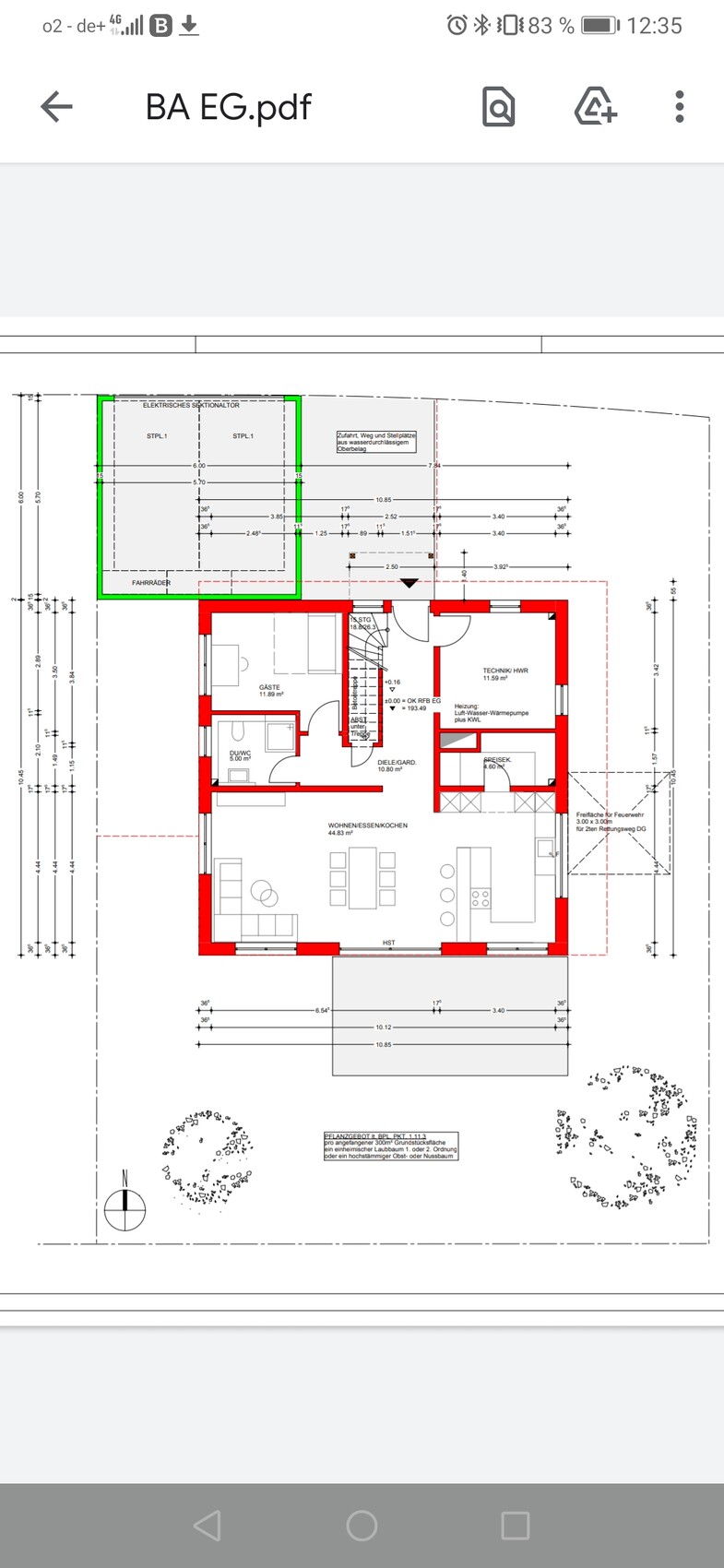
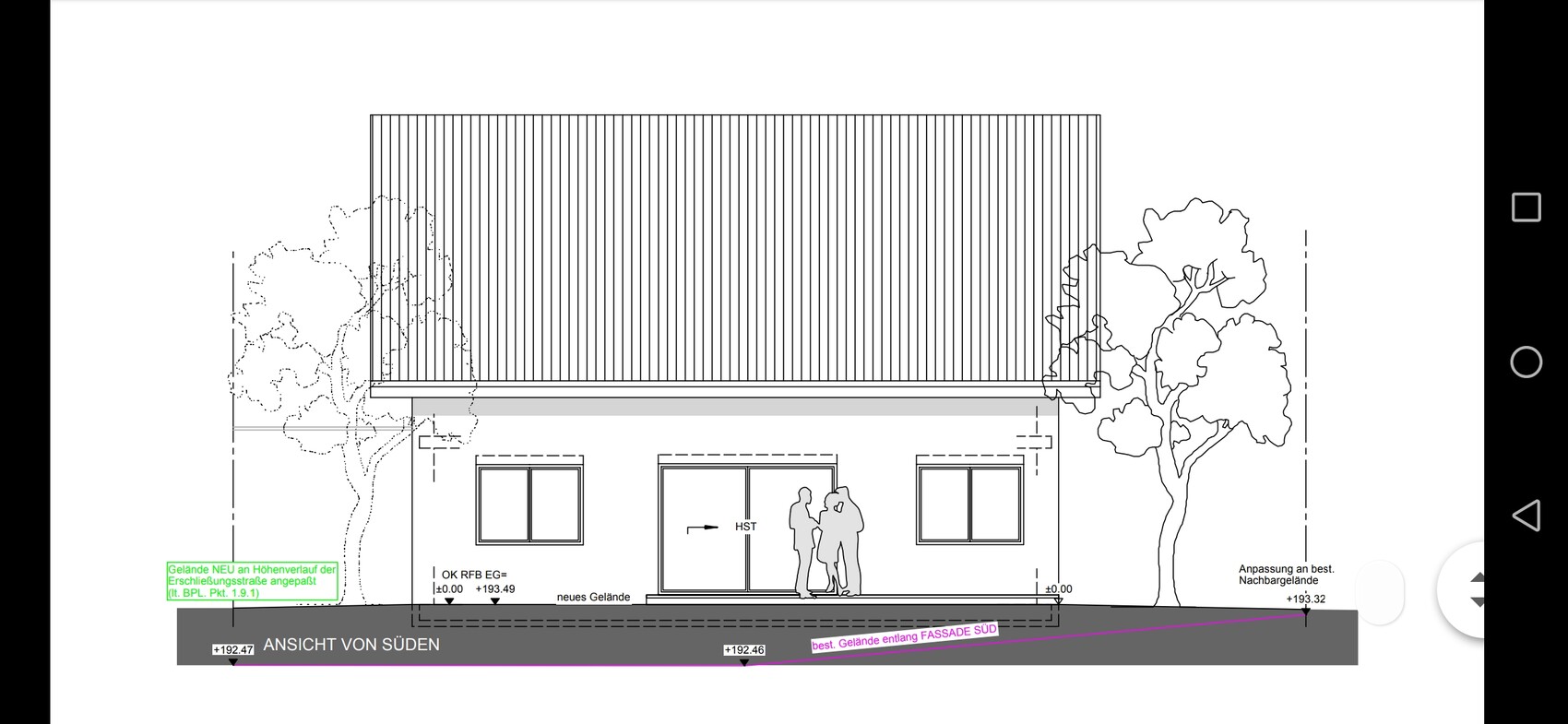
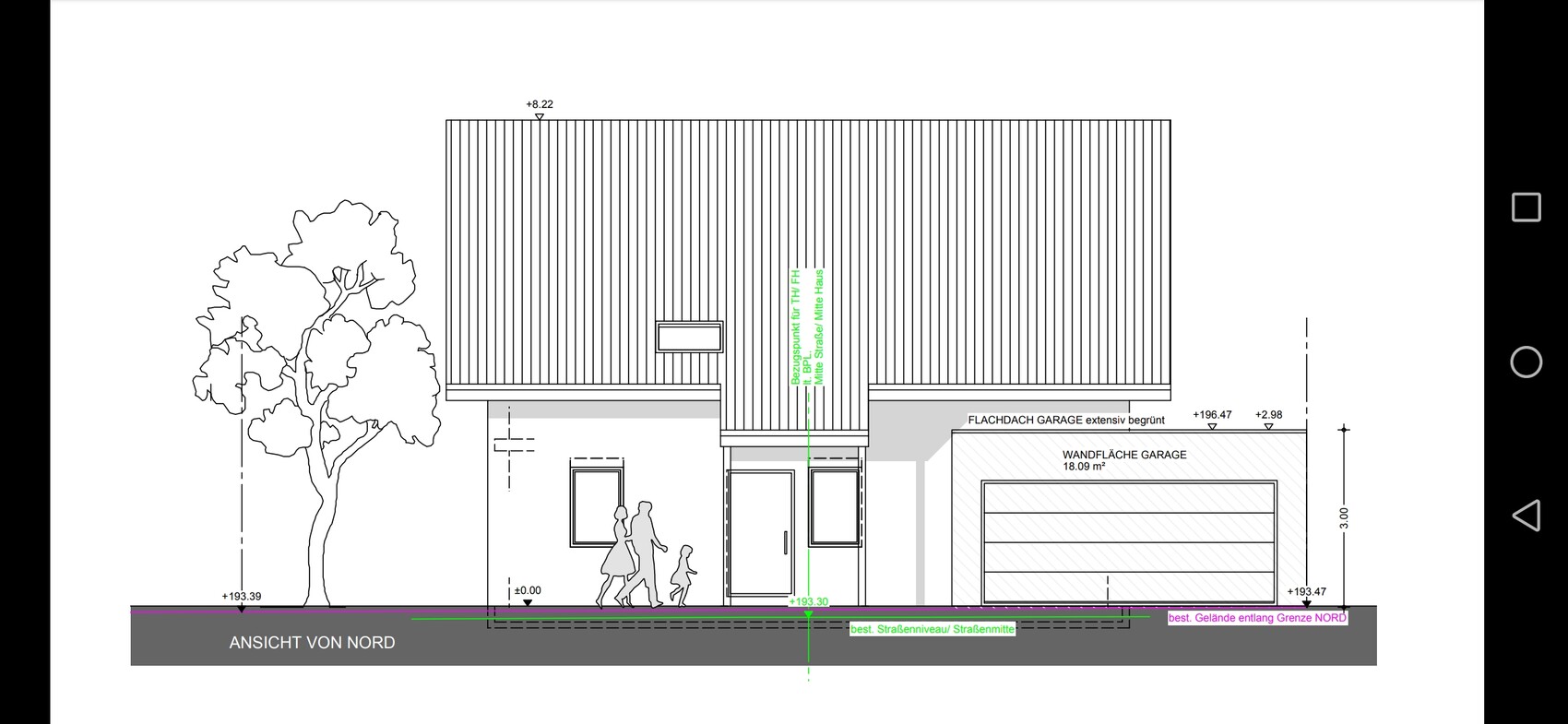
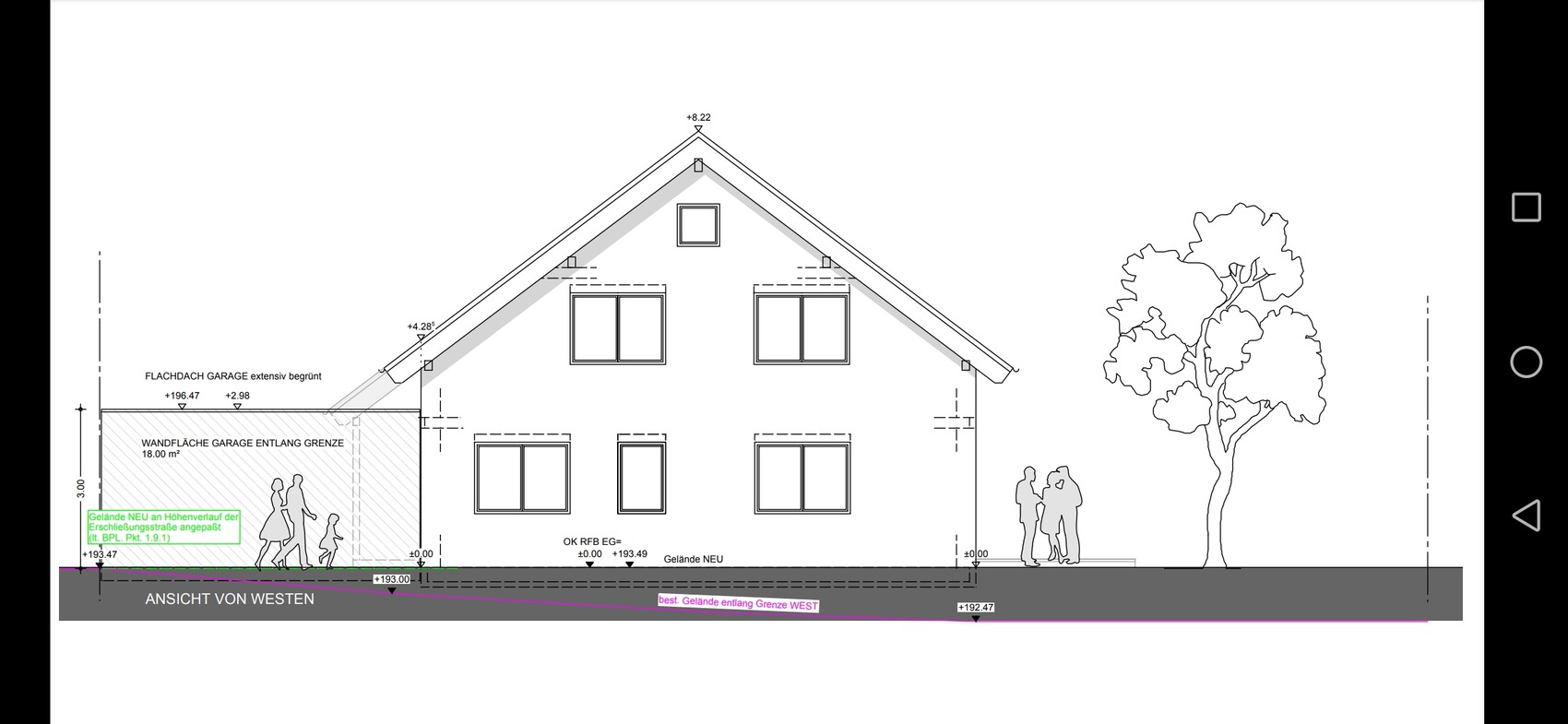
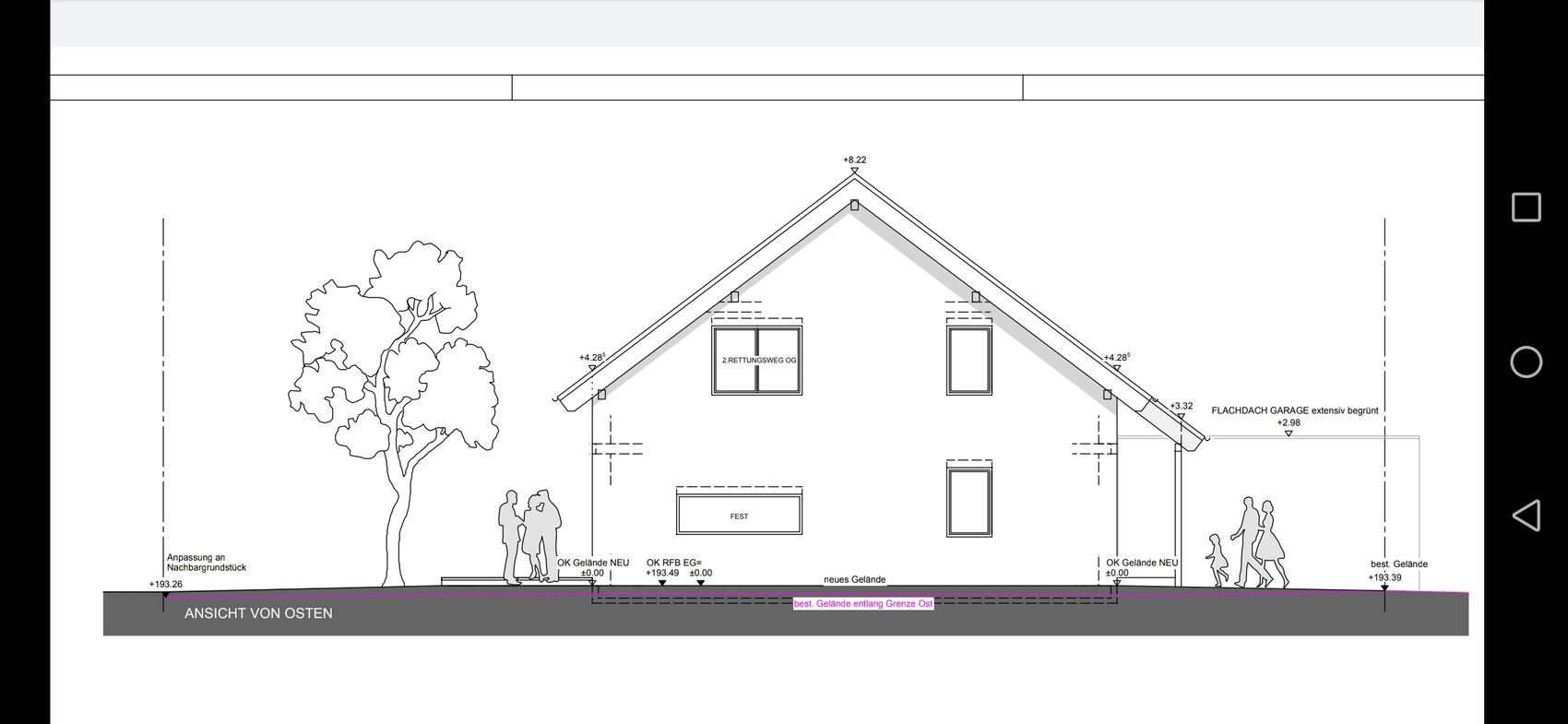
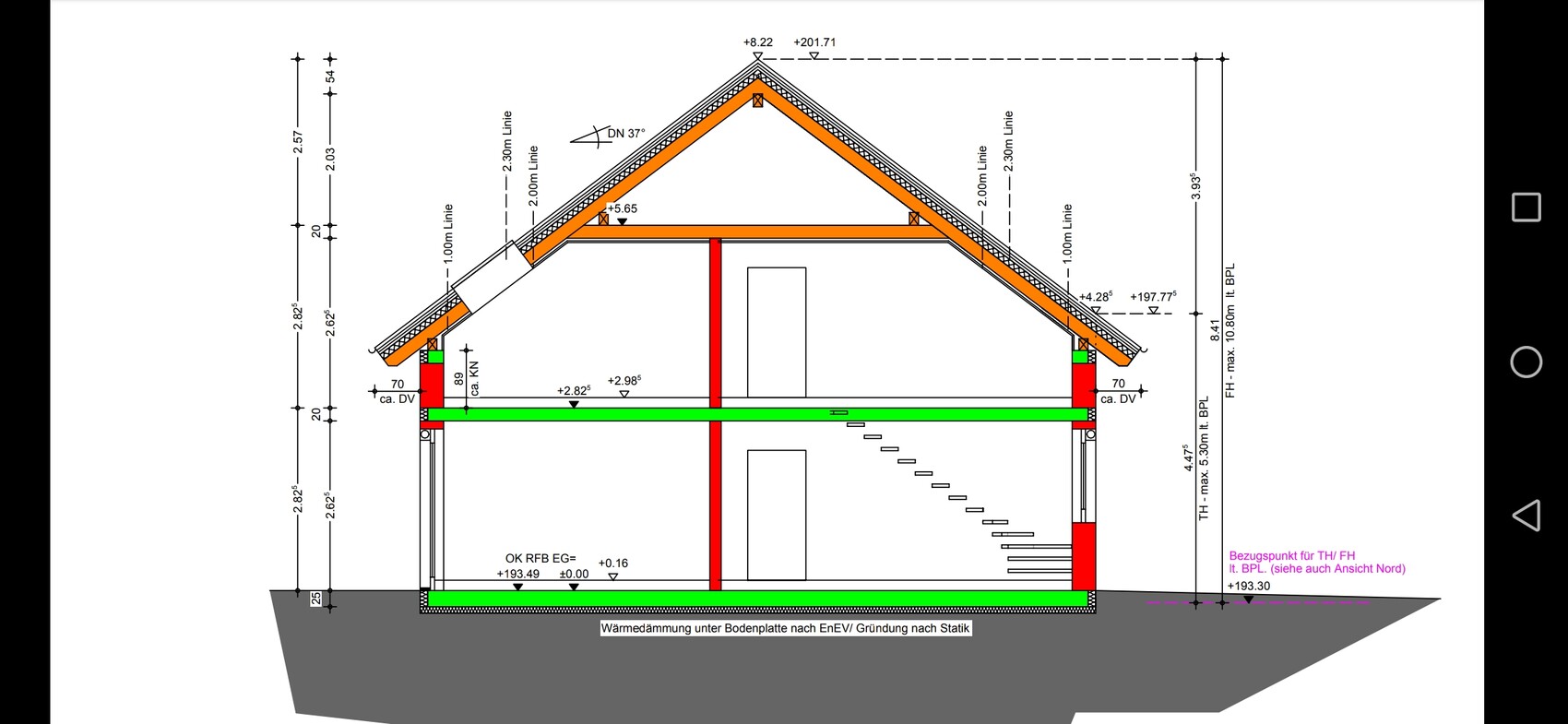
Attached are the current plans for the building permit / planning permission application.
Unfortunately, the bathroom window had to be reduced in size, and there is now a large shaft in the pantry for ventilation, heating, electricity, etc.
Would it be better to move the shaft to the utility room / technical room?
Do you have any other suggestions for improvements?
Thanks in advance!

Mr.Graves138 schrieb:
Unfortunately, the bathroom window had to be reduced in size, and there is now a large shaft in the pantry for ventilation, heating, electrical, etc.
Should I have the shaft relocated to the utility/technical room? I would suggest changing the window format instead, matching it to the kitchen window while reconsidering whether a bathroom window really needs a roller shutter. Where did this large shaft suddenly come from—do you have a main contractor with many subcontractors and little detailed planning who wants to leave room for improvisation? Why is the shaft fully masonry on all sides? In my opinion, it should not be relocated. What do the red and green markings represent in the plans?
https://www.instagram.com/11antgmxde/
https://www.linkedin.com/company/bauen-jetzt/
I think it’s all quite nice, with beautiful, clear rooms.
But I really don’t like the open-plan area. The kitchen takes away space from the living room corner; the dining table also leans into the lounge area, not just from the entrance perspective. I would take at least 60cm (24 inches) from the kitchen, shift everything to the right, and thus give the living room at least an extra 60cm (24 inches) for the sofa. Currently, about 2.40m (7 ft 10 in) for a sofa is quite cramped.
But I really don’t like the open-plan area. The kitchen takes away space from the living room corner; the dining table also leans into the lounge area, not just from the entrance perspective. I would take at least 60cm (24 inches) from the kitchen, shift everything to the right, and thus give the living room at least an extra 60cm (24 inches) for the sofa. Currently, about 2.40m (7 ft 10 in) for a sofa is quite cramped.
I always round up to the nearest full meter. The dining table should be aligned with the window and the door. A large kitchen is nice, but it should blend in harmoniously. The space is available for that. The bedroom can give up some space toward the storage room, and the utility room can give some space to the wardrobe.
M
Mr.Graves13830 Mar 2021 16:3011ant schrieb:
Rather change the window style to match the one in the kitchen, and reconsider whether a bathroom window really needs a roller shutter. Where does this large shaft suddenly come from – do you have a general contractor with many subcontractors and little detailed planning, trying to allow room for a lot of improvisation? Why is the shaft fully built with masonry on all sides? In my opinion, it should not be installed like that. What do the red and green colors symbolize in the plans? 1. If I copy the wide kitchen window into the bathroom, I’d end up with a window in the shower?! 😀 Or what exactly do you mean? Roller shutters can be omitted in the bathroom and the cost deducted accordingly.
2. Reputable regional general contractor with over 50 employees covering own trades (70%) and a few subcontractors (30%).
3. The shaft is needed for the mechanical ventilation system, and its size will be adjusted during the detailed design phase. I will question tomorrow whether it needs to be masonry-built. Thanks for that.
4. Which view do you mean with red and green? Terrain height, foundation slab? For example, the garage is marked in green.
Similar topics