
ᐅ Floor Plan Design for a Single-Family Home of Approximately 170 m² on a Narrow 750 m² Plot
Created on: 16 Mar 2021 11:35
R
ReneWie
Development Plan / Restrictions
Plot size: 750 m² (8,072 sq ft), 18 x 42 m (59 x 138 ft)
Slope: no, flat
Floor area ratio (FAR): 0.25
Plot ratio: 0.5
Building envelope, building line and boundary: 3 m (10 ft) from all sides
Edge development:
Number of parking spaces: minimum 2
Number of floors: 2
Roof type: gable, hip 25-45°
Architectural style: modern
Orientation: no requirement
Maximum heights / limits: 10 m (33 ft) according to development plan
Other specifications
Requirements of the Homeowners
Style, roof type, building type: solid construction, modern, gable roof, single-family home
Basement, floors: no basement, 1.5 floors
Number of occupants, age: currently 2 (both 32)
Space requirements ground floor (GF), upper floor (UF): 90 + 80 m² (970 + 860 sq ft)
Office: family use or home office?: home office upstairs
Occasional overnight guests: rare
Open or closed layout: open
Conservative or modern construction: mix
Open kitchen, kitchen island: open kitchen, no island planned so far
Number of dining seats: minimum 6 seats
Fireplace: light masonry heater
Music / stereo wall: no
Balcony, roof terrace: no
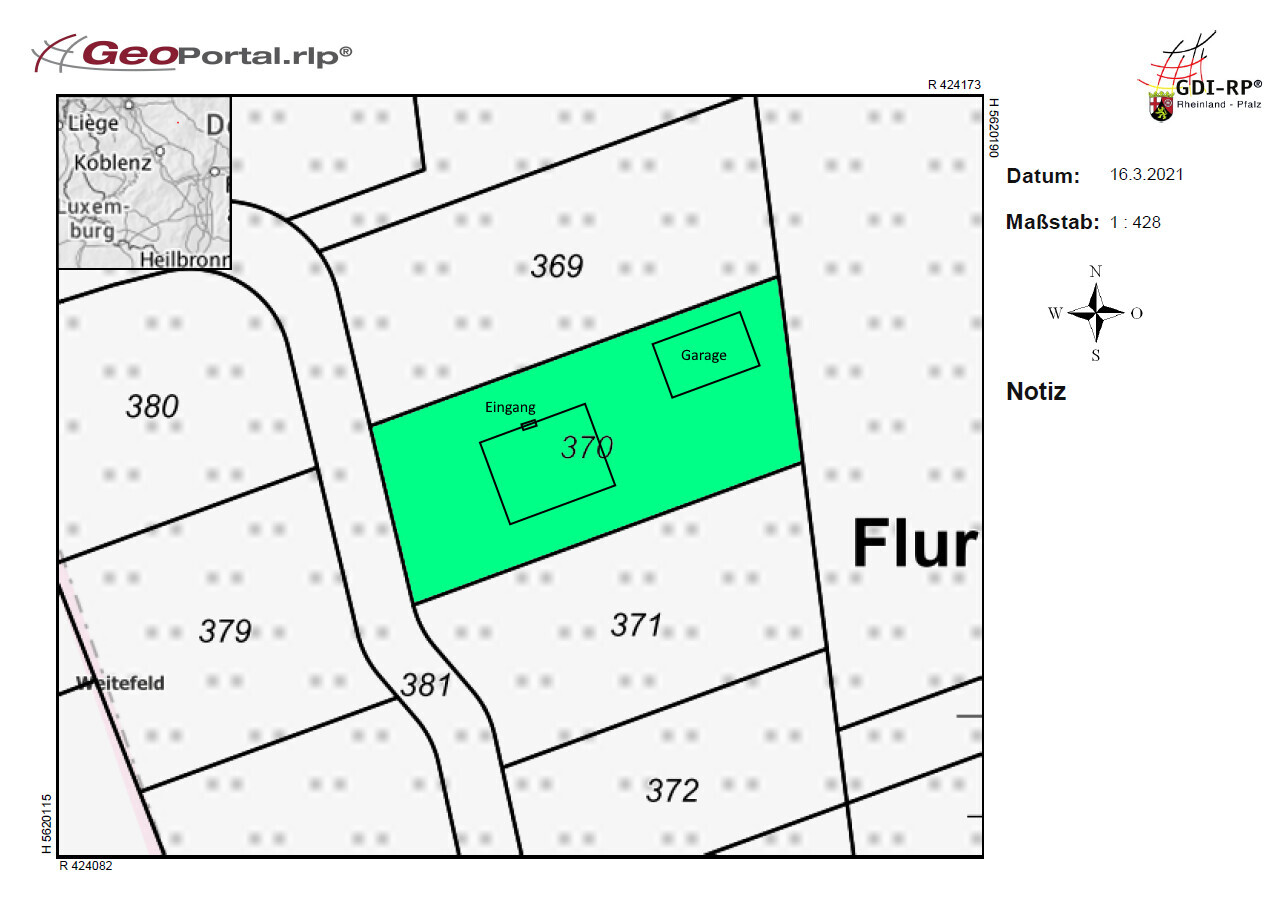
Garage, carport: planned, at the rear of the property
Utility garden, greenhouse: preferably a utility garden behind the house
Additional wishes / special features / daily routine, including reasons for choices or exclusions:
- Large open living/dining area with southern exposure.
- Large terrace at the front of the house, accessible from kitchen/dining area.
- Garage not in front of the house to preserve sunny space 🙂 — driveway located north beside the house instead.
- Minimum roof pitch on the upper floor.
- Possibility to reduce living room size later to create a bedroom (planned door in front of guest WC).
- TV area rather small, as we’re not typical couch potatoes :-D
- Office with dormer window.
House Design
Designer:
- Do-it-Yourself: based on a prefabricated house provider’s plan template
What do you particularly like? Why?
- House set back 10 m (33 ft) from the street, large living area due to frequent visits from a large family.
What do you dislike? Why?
- Possibly the kitchen is too small.
- Possibly insufficient storage space.
Price estimate from architect/planner: appointment pending
Personal budget limit for house including fittings: 350,000 (planned DIY for electrical, flooring, heating, plumbing)
Preferred heating technology: geothermal heat, possibly solar thermal support
If You Have to Give Up Something, which details/features
- can be foregone:
- direct access from living room to outside
- cannot be foregone:
- terrace access
Why has the design turned out as it is? e.g.
- Everything was placed on the ground floor with the option to create an additional room later by adding a wall in today’s living room (door in front of guest WC in living room).
- Large terrace at the front of the house is important and there is enough space.
What is the most important/basic question about the floor plan summarized in 130 characters?
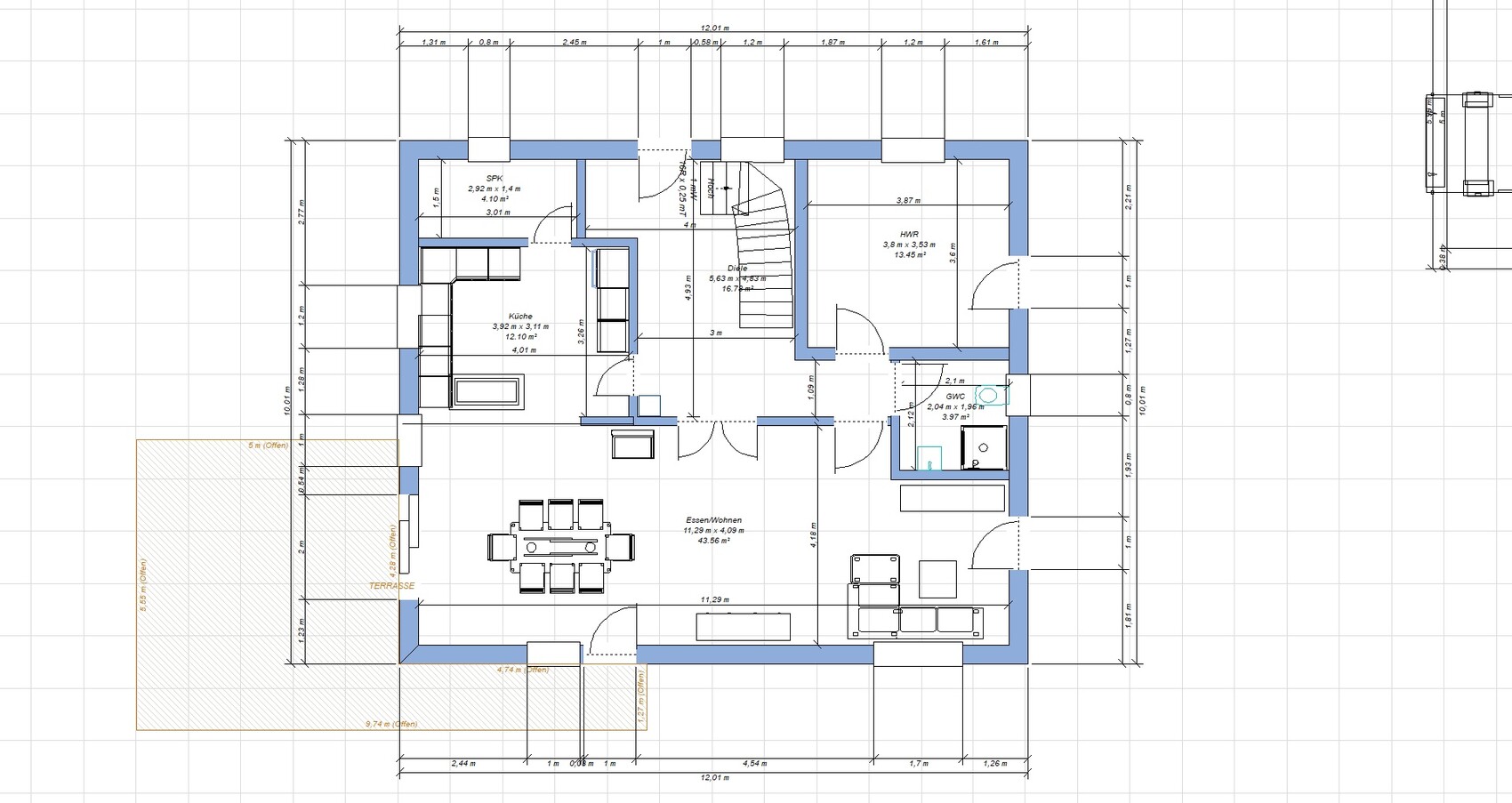
Are there issues with the size of the utility room if washing machine, dryer, technical equipment, and storage space are included?
Is the guest WC with shower sufficiently large?
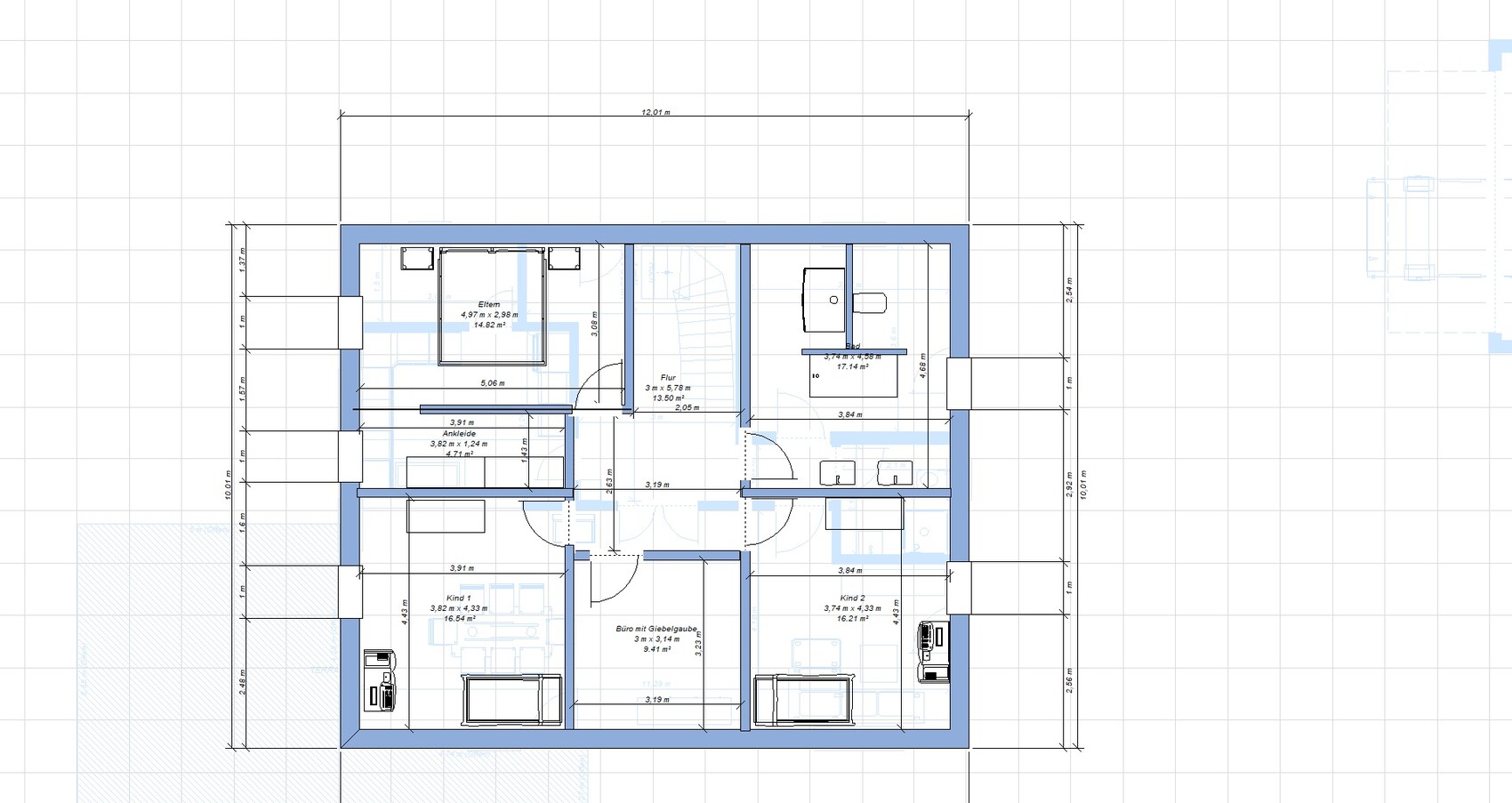
Do the room sizes appear reasonable?
Plot size: 750 m² (8,072 sq ft), 18 x 42 m (59 x 138 ft)
Slope: no, flat
Floor area ratio (FAR): 0.25
Plot ratio: 0.5
Building envelope, building line and boundary: 3 m (10 ft) from all sides
Edge development:
Number of parking spaces: minimum 2
Number of floors: 2
Roof type: gable, hip 25-45°
Architectural style: modern
Orientation: no requirement
Maximum heights / limits: 10 m (33 ft) according to development plan
Other specifications
Requirements of the Homeowners
Style, roof type, building type: solid construction, modern, gable roof, single-family home
Basement, floors: no basement, 1.5 floors
Number of occupants, age: currently 2 (both 32)
Space requirements ground floor (GF), upper floor (UF): 90 + 80 m² (970 + 860 sq ft)
Office: family use or home office?: home office upstairs
Occasional overnight guests: rare
Open or closed layout: open
Conservative or modern construction: mix
Open kitchen, kitchen island: open kitchen, no island planned so far
Number of dining seats: minimum 6 seats
Fireplace: light masonry heater
Music / stereo wall: no
Balcony, roof terrace: no
Garage, carport: planned, at the rear of the property
Utility garden, greenhouse: preferably a utility garden behind the house
Additional wishes / special features / daily routine, including reasons for choices or exclusions:
- Large open living/dining area with southern exposure.
- Large terrace at the front of the house, accessible from kitchen/dining area.
- Garage not in front of the house to preserve sunny space 🙂 — driveway located north beside the house instead.
- Minimum roof pitch on the upper floor.
- Possibility to reduce living room size later to create a bedroom (planned door in front of guest WC).
- TV area rather small, as we’re not typical couch potatoes :-D
- Office with dormer window.
House Design
Designer:
- Do-it-Yourself: based on a prefabricated house provider’s plan template
What do you particularly like? Why?
- House set back 10 m (33 ft) from the street, large living area due to frequent visits from a large family.
What do you dislike? Why?
- Possibly the kitchen is too small.
- Possibly insufficient storage space.
Price estimate from architect/planner: appointment pending
Personal budget limit for house including fittings: 350,000 (planned DIY for electrical, flooring, heating, plumbing)
Preferred heating technology: geothermal heat, possibly solar thermal support
If You Have to Give Up Something, which details/features
- can be foregone:
- direct access from living room to outside
- cannot be foregone:
- terrace access
Why has the design turned out as it is? e.g.
- Everything was placed on the ground floor with the option to create an additional room later by adding a wall in today’s living room (door in front of guest WC in living room).
- Large terrace at the front of the house is important and there is enough space.
What is the most important/basic question about the floor plan summarized in 130 characters?
Are there issues with the size of the utility room if washing machine, dryer, technical equipment, and storage space are included?
Is the guest WC with shower sufficiently large?
Do the room sizes appear reasonable?
Hi,
You have some conceptual misunderstandings that negatively affect the design. I will explain shortly.
I appreciate that you are engaging in the discussion and responding here.
First:
How is two-story construction regulated in RP? According to your information, you have to build two stories, but the house is declared as one-and-a-half-story, which, strictly speaking, does not exist. This needs to be checked, and depending on whether or how a knee wall is involved, for example, the shower might have to be adjusted.
Budget: quite tight. What do you mean by "planned owner participation: electrical work, flooring, heating, water"? The entire installation?
Are you planning to build with Weberhaus? That is a prefabricated house... can owner participation be done so freely? Or are you just using it as a template?
I am a bit confused because the Weberhaus Balance 300 looks quite different externally on their website than the floor plan shown on page 3. With your extension to 10 meters (about 33 feet) instead of 9.50, you are just above 190sqm (about 2045 sqft), whereas 170sqm (about 1830 sqft) is planned...? I found the city villa model. I don’t see any issue with a gable roof and a knee wall close to 2 meters (about 6.5 feet).
About the design:
At first glance, I see some discrepancies regarding walls stacked on top of each other. For timber framing this might not be that critical, but I’m not sure. There are also load-bearing beams.
The windows seem placed rather arbitrarily; the result will be a house that does not have the carefully considered external elegance of the Weberhaus model.
The windows are also too sparse for the room sizes.
The fireplace is not shown on the upper floor plan (what exactly is a "light masonry stove"?)
Regarding your conceptual knots:
a) Sunny spot
If the garage is at the front, i.e. on the west corner, there will still be enough sun in the living room during the day. What really blocks your western sunshine is the pantry!
The plot will offer plenty of sunny places. However, consider whether a sunny spot exactly where a garage could ideally be positioned, with a view of a very expensive and long driveway running north, really warms your heart. I would prefer the view of the field without a carport or garage.
Sunny spot: the terrace comes to mind here. If the plot is 18 meters (about 59 feet) wide and you want to drive past the house on the north side, then you will need a comfortable 4 meters (about 13 feet), including the stair landing. If there is hedge planting toward the neighbor (pray that you can share it), it reduces the setback from 5 meters (about 16 feet) to only 4.5 meters (about 15 feet). Then you plan a 10-meter (about 33-foot) wide house (very large) and your terrace ends up practically on the neighbor’s driveway… sorry, right next to the driveway. The question is, are you even allowed to build the terrace on the boundary? In our place, that is not permitted. And if allowed, do you really want to?
→ slim house on a slim plot.
→ There is light even in the shade.
→ A pantry on the west side does not take away southern sunlight.
b) Access "behind the house"
As said before: you are sacrificing a nice view of the field.
A smart builder uses a carport also as a windbreak and plans an extra meter (about 3 feet) to walk or drive through the carport.
Apart from that: planting 120sqm (about 1290 sqft) costs four times as much as 30sqm (about 320 sqft)... the question is how long you will spend shoveling snow.
You also have access all around the house from the entire street side.
You can always get behind the house!
c) Living room reduction
There is a difference between giving an office or guest room a 20-30 cm (8-12 inch) recess or taking about 3 sqm (about 32 sqft) out of the living room corner, which reduces the living area by about 25% and makes it almost unusable as a living room.
If there are children, will the sofa then be moved? Where? Opposite the double door? Opposite the single door? Two doors side by side?
You completely limit yourself with this niche solution; moving the furniture won’t work because of the doors...
The idea of dividing the room also stumbles. I assume it is planned for an elderly bedroom? Try to furnish the room with a double bed and a wardrobe. You will run into tight corners and narrow passages like in the shower WC. This is not suitable for aging; more likely you will bump your toes on corners and edges near the bed, that corner, the hallway in front of the utility room, the shower WC, and its door.
There is no all-in-one perfect solution. Plan uncompromisingly for the next 30 years with a comfortable room and not one where you can barely place anything without bumping your calves. Even if you are not couch potatoes: sometimes you just want to relax, lie on the sofa, kids want to cuddle, etc. And before you move downstairs due to age, there are many years when the couch is the favored place.
Regarding the floor plan:
No. You could even take 2-3 sqm (21-32 sqft) from it for the shower WC. However, I would also reserve a small storage room upstairs, or if necessary, the office or a large closet for suitcases, decorations, etc.
Just barely. Not for aging.
Not too small, but I find it quite awkward. The tall cabinets are disconnected from the U-shape kitchen.
- Cloakroom directly by the front door restricts movement when arriving home.
- Pantry in the golden west
- Kitchen lacks unity
- Living room nearly unusable for furnishing, practically unusable.
- Two doors side by side into the same room is bad planning (see above)
- Bathroom: T-shaped layout is disproportionately wide, but acceptable.
- Only the utility room door is well placed (behind it there is space for a cupboard). The office door can be moved.
- Dressing room just consumes space and walls. Wardrobe in front of window. With 1.43m (4.7 feet) width and a placed wardrobe, about 75 cm (30 inches) remain as passage width → one-way street with no turning possibility.
Long story short: I would build a narrower house. Everything else would feel too cramped for me.
Garage: driveway on the left, then turn and drive into the perpendicular garage. This also provides privacy for the west terrace. And yes, the sun still comes there.
Edit:
Pantry in the north, utility room in the front → plumbing runs!
You have some conceptual misunderstandings that negatively affect the design. I will explain shortly.
I appreciate that you are engaging in the discussion and responding here.
First:
ReneWie schrieb:
- as little roof pitch as possible on the upper floor
How is two-story construction regulated in RP? According to your information, you have to build two stories, but the house is declared as one-and-a-half-story, which, strictly speaking, does not exist. This needs to be checked, and depending on whether or how a knee wall is involved, for example, the shower might have to be adjusted.
Budget: quite tight. What do you mean by "planned owner participation: electrical work, flooring, heating, water"? The entire installation?
ReneWie schrieb:
This is a Weberhaus Balance 300.
Are you planning to build with Weberhaus? That is a prefabricated house... can owner participation be done so freely? Or are you just using it as a template?
I am a bit confused because the Weberhaus Balance 300 looks quite different externally on their website than the floor plan shown on page 3. With your extension to 10 meters (about 33 feet) instead of 9.50, you are just above 190sqm (about 2045 sqft), whereas 170sqm (about 1830 sqft) is planned...? I found the city villa model. I don’t see any issue with a gable roof and a knee wall close to 2 meters (about 6.5 feet).
About the design:
At first glance, I see some discrepancies regarding walls stacked on top of each other. For timber framing this might not be that critical, but I’m not sure. There are also load-bearing beams.
The windows seem placed rather arbitrarily; the result will be a house that does not have the carefully considered external elegance of the Weberhaus model.
The windows are also too sparse for the room sizes.
ReneWie schrieb:
Fireplace: light masonry stove
The fireplace is not shown on the upper floor plan (what exactly is a "light masonry stove"?)
Regarding your conceptual knots:
a) Sunny spot
ReneWie schrieb:
- No garage in front of the house because this would take away the sunny spot → driveway planned on the north side next to the house
ReneWie schrieb:
Only if the garage is in front of the house do we get less sun inside
If the garage is at the front, i.e. on the west corner, there will still be enough sun in the living room during the day. What really blocks your western sunshine is the pantry!
The plot will offer plenty of sunny places. However, consider whether a sunny spot exactly where a garage could ideally be positioned, with a view of a very expensive and long driveway running north, really warms your heart. I would prefer the view of the field without a carport or garage.
Sunny spot: the terrace comes to mind here. If the plot is 18 meters (about 59 feet) wide and you want to drive past the house on the north side, then you will need a comfortable 4 meters (about 13 feet), including the stair landing. If there is hedge planting toward the neighbor (pray that you can share it), it reduces the setback from 5 meters (about 16 feet) to only 4.5 meters (about 15 feet). Then you plan a 10-meter (about 33-foot) wide house (very large) and your terrace ends up practically on the neighbor’s driveway… sorry, right next to the driveway. The question is, are you even allowed to build the terrace on the boundary? In our place, that is not permitted. And if allowed, do you really want to?
→ slim house on a slim plot.
→ There is light even in the shade.
→ A pantry on the west side does not take away southern sunlight.
b) Access "behind the house"
ReneWie schrieb:
However, this blocks access behind the house and takes up a lot of space at the front, e.g. with a parallel paved driveway.
As said before: you are sacrificing a nice view of the field.
A smart builder uses a carport also as a windbreak and plans an extra meter (about 3 feet) to walk or drive through the carport.
Apart from that: planting 120sqm (about 1290 sqft) costs four times as much as 30sqm (about 320 sqft)... the question is how long you will spend shoveling snow.
You also have access all around the house from the entire street side.
ReneWie schrieb:
Then we still can’t get behind the house,
You can always get behind the house!
ReneWie schrieb:
Garage, carport: yes, planned at the rear of the property
c) Living room reduction
ReneWie schrieb:
Option to reduce the living room later and convert it into a bedroom (planned door in front of guest WC)
ReneWie schrieb:
Later the option to create another room by adding a wall in the current living room, with a door in front of the guest WC in the living room
There is a difference between giving an office or guest room a 20-30 cm (8-12 inch) recess or taking about 3 sqm (about 32 sqft) out of the living room corner, which reduces the living area by about 25% and makes it almost unusable as a living room.
If there are children, will the sofa then be moved? Where? Opposite the double door? Opposite the single door? Two doors side by side?
You completely limit yourself with this niche solution; moving the furniture won’t work because of the doors...
The idea of dividing the room also stumbles. I assume it is planned for an elderly bedroom? Try to furnish the room with a double bed and a wardrobe. You will run into tight corners and narrow passages like in the shower WC. This is not suitable for aging; more likely you will bump your toes on corners and edges near the bed, that corner, the hallway in front of the utility room, the shower WC, and its door.
There is no all-in-one perfect solution. Plan uncompromisingly for the next 30 years with a comfortable room and not one where you can barely place anything without bumping your calves. Even if you are not couch potatoes: sometimes you just want to relax, lie on the sofa, kids want to cuddle, etc. And before you move downstairs due to age, there are many years when the couch is the favored place.
Regarding the floor plan:
ReneWie schrieb:
Are there issues with the size of the utility room if you want to accommodate washing machine, dryer, technical equipment, and storage space?
No. You could even take 2-3 sqm (21-32 sqft) from it for the shower WC. However, I would also reserve a small storage room upstairs, or if necessary, the office or a large closet for suitcases, decorations, etc.
ReneWie schrieb:
Is guest WC with shower sufficiently sized?
Just barely. Not for aging.
ReneWie schrieb:
- possibly kitchen too small
Not too small, but I find it quite awkward. The tall cabinets are disconnected from the U-shape kitchen.
- Cloakroom directly by the front door restricts movement when arriving home.
- Pantry in the golden west
- Kitchen lacks unity
- Living room nearly unusable for furnishing, practically unusable.
- Two doors side by side into the same room is bad planning (see above)
- Bathroom: T-shaped layout is disproportionately wide, but acceptable.
- Only the utility room door is well placed (behind it there is space for a cupboard). The office door can be moved.
- Dressing room just consumes space and walls. Wardrobe in front of window. With 1.43m (4.7 feet) width and a placed wardrobe, about 75 cm (30 inches) remain as passage width → one-way street with no turning possibility.
Long story short: I would build a narrower house. Everything else would feel too cramped for me.
Garage: driveway on the left, then turn and drive into the perpendicular garage. This also provides privacy for the west terrace. And yes, the sun still comes there.
Edit:
Pantry in the north, utility room in the front → plumbing runs!
11ant schrieb:
Wow, that makes the example floor plan largely unsuitable. How much knee wall height are you allowed?As icandoit mentioned, that is still flexible. As long as you stay under 10 m (33 feet) in height and follow the specified roof pitch, the limits are mostly just aesthetic 🙂I will answer in several stages.
According to the development plan, we can build up to two stories. The pitch of the roof inside the rooms does not imply a townhouse, but rather that the knee wall is around 1.2–1.40 meters (4–4.5 feet). I know of houses where there is almost no knee wall, which makes the rooms significantly smaller. We want to avoid that.
Because of my profession, I can carry out the electrical installation myself. The official inspection will then be done quickly.
Tiles and laminate will be installed by myself and family.
By heating, I mean the installation of the hydraulic system (pipes through the house, heating circuit distributor, floor insulation, stapling the underfloor heating beneath the screed, etc.). The connection of the actual heat pump and buffer tank must be performed by a specialist company.
Water refers to distributing the water connections inside the house, installing angle valves, etc. The main water connection will, of course, be handled by the water utility company.
We only used the plan as a template. Unfortunately, the images and floor plans often do not match across many companies.
I roughly calculated 170 m² (1,830 sq ft) by subtracting about 10-15% from the floor area due to the roof pitch.
ypg schrieb:
How is the two-story regulation handled in Rhineland-Palatinate? According to your information, you have to build two stories, but the house is declared as one-and-a-half stories, which strictly speaking does not exist. This needs to be checked, and then, depending on whether or how there is a knee wall, for example, the shower would need to be adjusted.
According to the development plan, we can build up to two stories. The pitch of the roof inside the rooms does not imply a townhouse, but rather that the knee wall is around 1.2–1.40 meters (4–4.5 feet). I know of houses where there is almost no knee wall, which makes the rooms significantly smaller. We want to avoid that.
ypg schrieb:
Budget: quite tight. What do you mean by the "planned own work: electrical, flooring, heating, water"? The entire installation?
Because of my profession, I can carry out the electrical installation myself. The official inspection will then be done quickly.
Tiles and laminate will be installed by myself and family.
By heating, I mean the installation of the hydraulic system (pipes through the house, heating circuit distributor, floor insulation, stapling the underfloor heating beneath the screed, etc.). The connection of the actual heat pump and buffer tank must be performed by a specialist company.
Water refers to distributing the water connections inside the house, installing angle valves, etc. The main water connection will, of course, be handled by the water utility company.
ypg schrieb:
Are you planning to build with Weberhaus? That is a prefabricated house... can you really perform own work on such a project? Or are you just using it as a reference?
I am a bit puzzled because the Weberhaus Balance 300 looks quite different on their website than the floor plan shown on page 3. With your enlargement to 10 meters instead of 9.5, you are just above 190 m² (2,045 sq ft), planned are 170 m² (1,830 sq ft)?... I found the townhouse. I see no problem with a gable roof and a knee wall close to 2 meters (6.5 feet).
We only used the plan as a template. Unfortunately, the images and floor plans often do not match across many companies.
I roughly calculated 170 m² (1,830 sq ft) by subtracting about 10-15% from the floor area due to the roof pitch.
ypg schrieb:
Regarding the design:
At first glance, I notice some discrepancies concerning walls that align vertically. This might not be so relevant for timber frame construction. I’m not sure. There are also load-bearing beams.
The windows seem placed rather arbitrarily: this will result in a different house that no longer has the thoughtfully elegant exterior like the Weberhaus.
The windows themselves are too sparse for the room sizes.
The fireplace is not shown on the upper floor (what is a light masonry heater?)
Okay, I have no knowledge about the structural engineering. The architect/structural engineer (an office) will certainly keep us in check. It could, of course, be that the Weberhaus timber frame method doesn’t require as much attention there.
The issue with the windows is correct. I think especially on the upper floor we need to improve that. Symmetry is just not that easy to achieve.
True, the chimney is missing on the upper floor. It should run along a wall in the corridor. A masonry heater stores the heat from fire and gases in its heat-retaining material and continuously releases it to the surroundings. These heaters come in various designs. For a new house, a smaller model is sufficient.
ypg schrieb:
Regarding your concerns:
c) Reduction of the living room size
There is a difference between giving an office or guest room a projection of 20/30 cm (8/12 inches) and reducing the living room by about 3 sqm (32 sq ft), which in this case shrinks the living room corner by approximately 25% and makes it nearly unusable as a living area.
If children are around, will the sofa then be moved? Where to? Opposite the double door? Opposite the single door? Two doors side by side?
This niche solution seriously restricts you; moving the sofa is not really an option because there will be doors.
The idea of separating the room is also problematic. I assume this is intended as a bedroom for older age? Try furnishing the room with a double bed and wardrobe first. You will encounter corners and narrow passageways similar to those in the shower and toilet. This is not age-friendly; rather, when moving carefully in older age, you will likely stub your toes on corners and edges at the bed, in this corner, in the hallway before the utility room, shower/toilet, and the door itself.
There is no perfect all-in-one solution. Plan uncompromisingly for the next 30 years with a comfortable living space — not a space where you can hardly put anything down without stubbing your shins. Even if you’re not couch potatoes: people sometimes just want to relax, lie down on the sofa, kids want to cuddle, etc. And before moving to the ground floor because of age, there will be many years where the couch is the preferred place.
I haven’t explained it well enough. The door to the living room (opposite the utility room) is intended to remain an option only by including a lintel in the masonry. This door will initially not be installed and only added if the room is separated to become an age-appropriate bedroom.
I will try virtual furnishing of the optional room; it might be tight.
I will also try to find another way to furnish the living room.
I need to think more about the other points.
I have attached another image regarding the terrace placement.

ReneWie schrieb:
According to the development plan, we can build up to two stories. The roof pitch inside the rooms doesn’t imply a townhouse style but rather that the knee wall (kniestock) is around 1.2–1.4 meters (4–4.5 feet) high. I know some houses where there is almost no knee wall at all, which makes the rooms much smaller. We want to avoid that. You say you’re allowed to build two stories, with a floor area ratio of 0.25 and a gross floor area ratio of 0.5, and have a comfortably steep height limit for the roof. While a “townhouse” is not strictly required here, it is definitely recommended—especially since it’s great to see someone thinking practically instead of going for excessively high knee walls. Personally, I would build a “townhouse” style with a 25° pitched roof. 1. The floor area ratio argues against space-consuming storage like a basement or attic. 2. The ratio of gross floor area ratio to floor area ratio of 2:1 clearly suggests the upper floor should be a full story. 3. Including a knee wall (meaning here a lowered roof slope on the upper floor) makes the roof structure (a rafter roof; a truss roof wouldn’t work here) more expensive, so the attic space somewhat offsets the cost. By the way, I’d recommend checking with Fingerhut next door to see what they can offer you.
ReneWie schrieb:
Symmetry is just not that simple. That’s absolutely fine: symmetry has no moral value and can be dismissed without any regrets.
ReneWie schrieb:
The door to the living room (opposite the utility room) should only be an option via a lintel in the masonry. This door should initially not exist, and only be added if the room is later converted into an accessible space for older occupants. With your current age of 32, you’ll probably renovate one or two more times before “old age” becomes relevant.
https://www.instagram.com/11antgmxde/
https://www.linkedin.com/company/bauen-jetzt/
Similar topics