
ᐅ Battening and purlins are developing mold in the new construction;
Created on: 22 Feb 2021 22:21
T
Typbau1Hello,
We are currently in the final stages of building a single-family house. The construction is managed by a developer, so we are not involved in the coordination or the specific work details.
However, shortly after the roof was installed, we noticed mold on some of the rafters. At that time, no screed or interior plaster had been applied yet. After informing the site manager, he treated the wood with a mold spray and declared everything to be fine.
During the winter, screed and interior plaster were applied. After a few weeks, we observed mold on the rafters/wood structure around the opening for the pull-down attic ladder. The site manager did not want to take any action until the drying phase was complete and the drywall installer finished the ceiling of the upper floor. Because the drying process did not progress well despite several daily ventilation sessions, one, then a second drying device was installed after a few weeks.
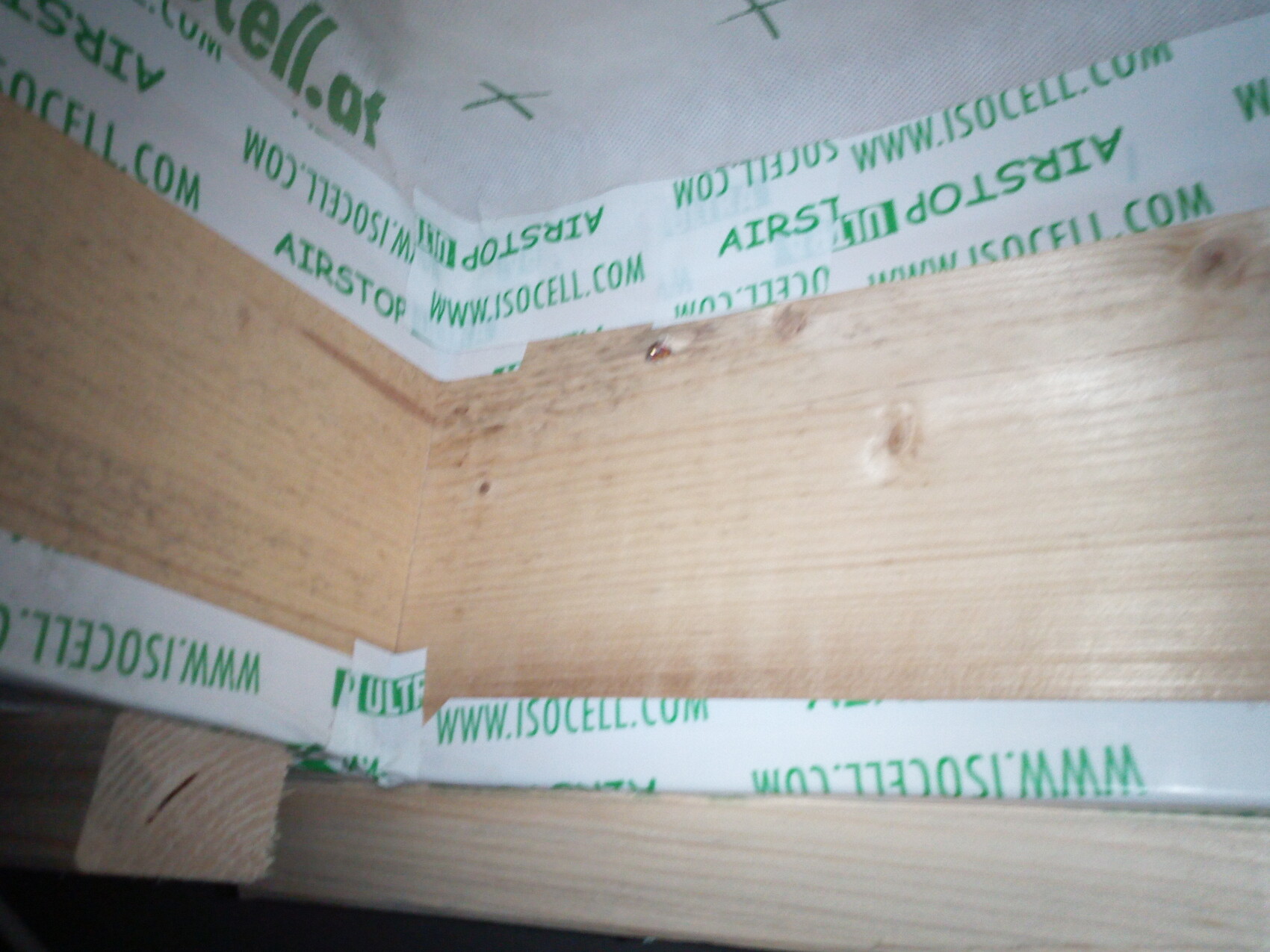
In the meantime, we have found additional mold in various spots on the battens under the vapor barrier foil, in several rooms. Furthermore, the main beam of our front porch (which extends into the entrance area and is still visible due to the lack of drywall) also shows significant mold.
The site manager assured me that the affected battens will be replaced and that the larger beams/rafters will be treated. The drywall installer began work today, but I am quite sure that the battens already covered by drywall have neither been replaced nor even treated.
Is mold concealed under drywall a persistent risk? Can I at least assume that treating the larger wood components with spray is sufficient? Or should I insist on removing the installed drywall and replacing the battens, as well as demanding other measures for the attic ladder opening and the front porch beam?
I have generally trusted the developer so far, but this whole issue and the apparent disregard for the promise to replace the battens worries me greatly! I would appreciate any advice.
Thank you in advance!
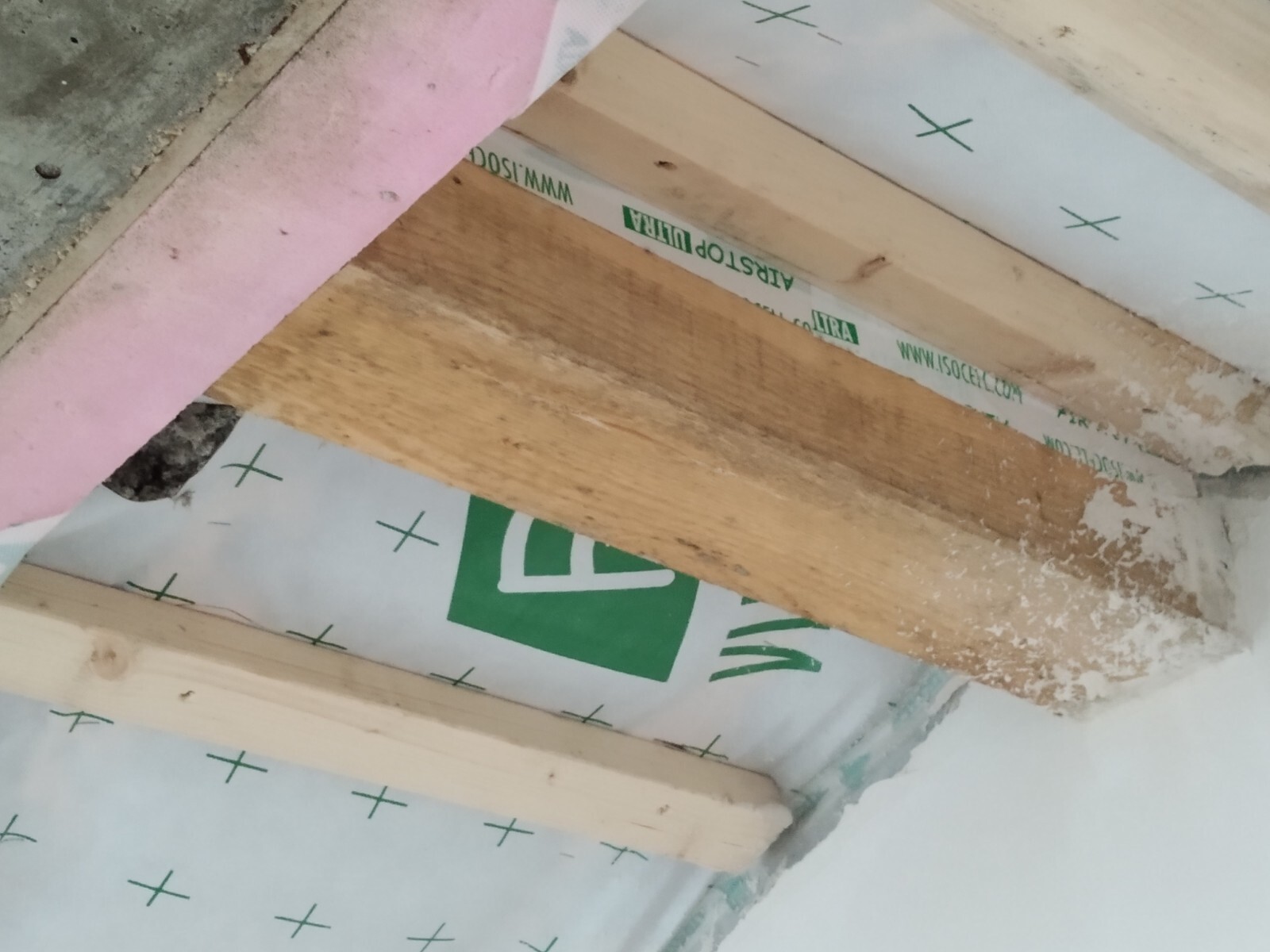
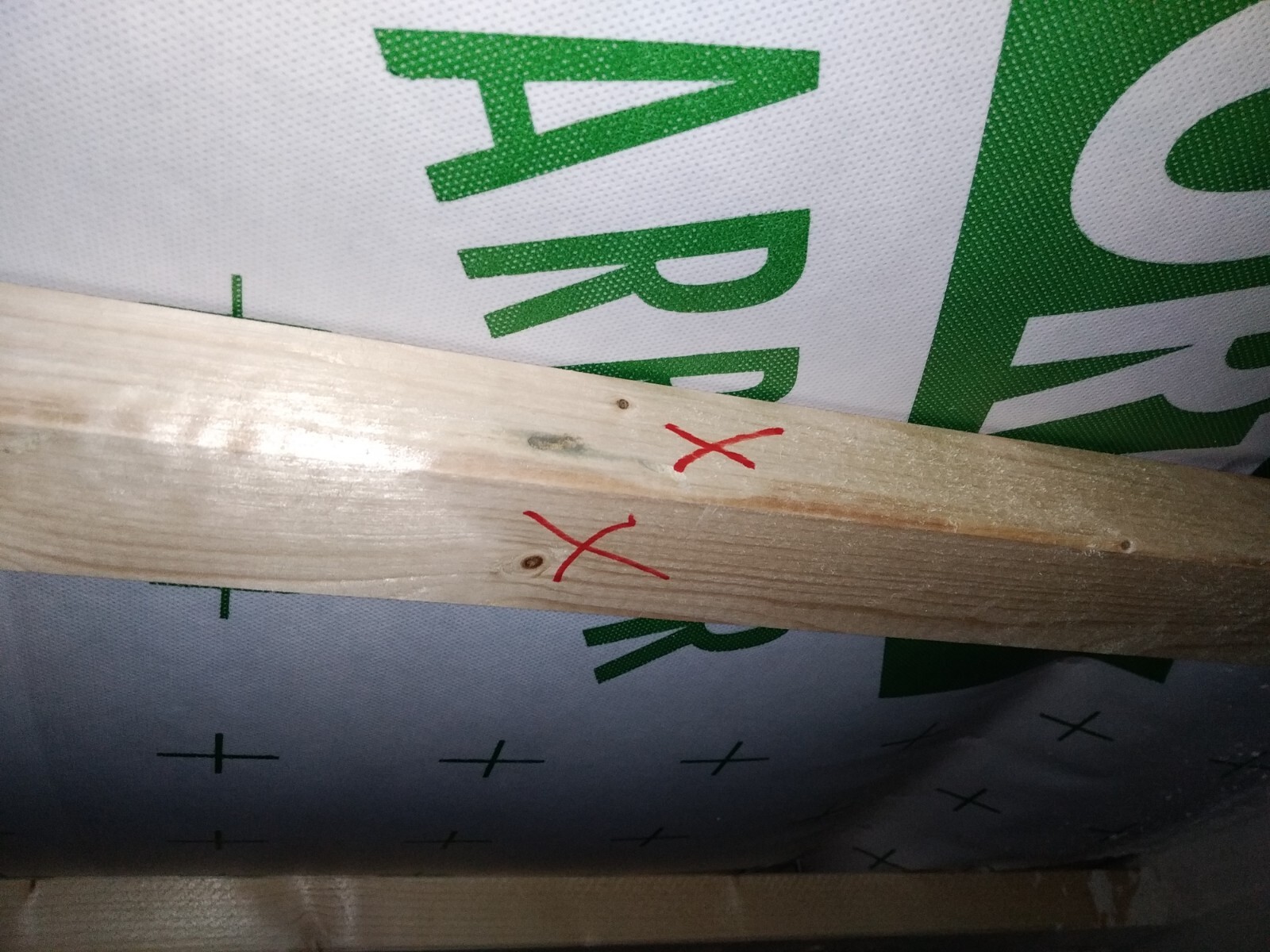
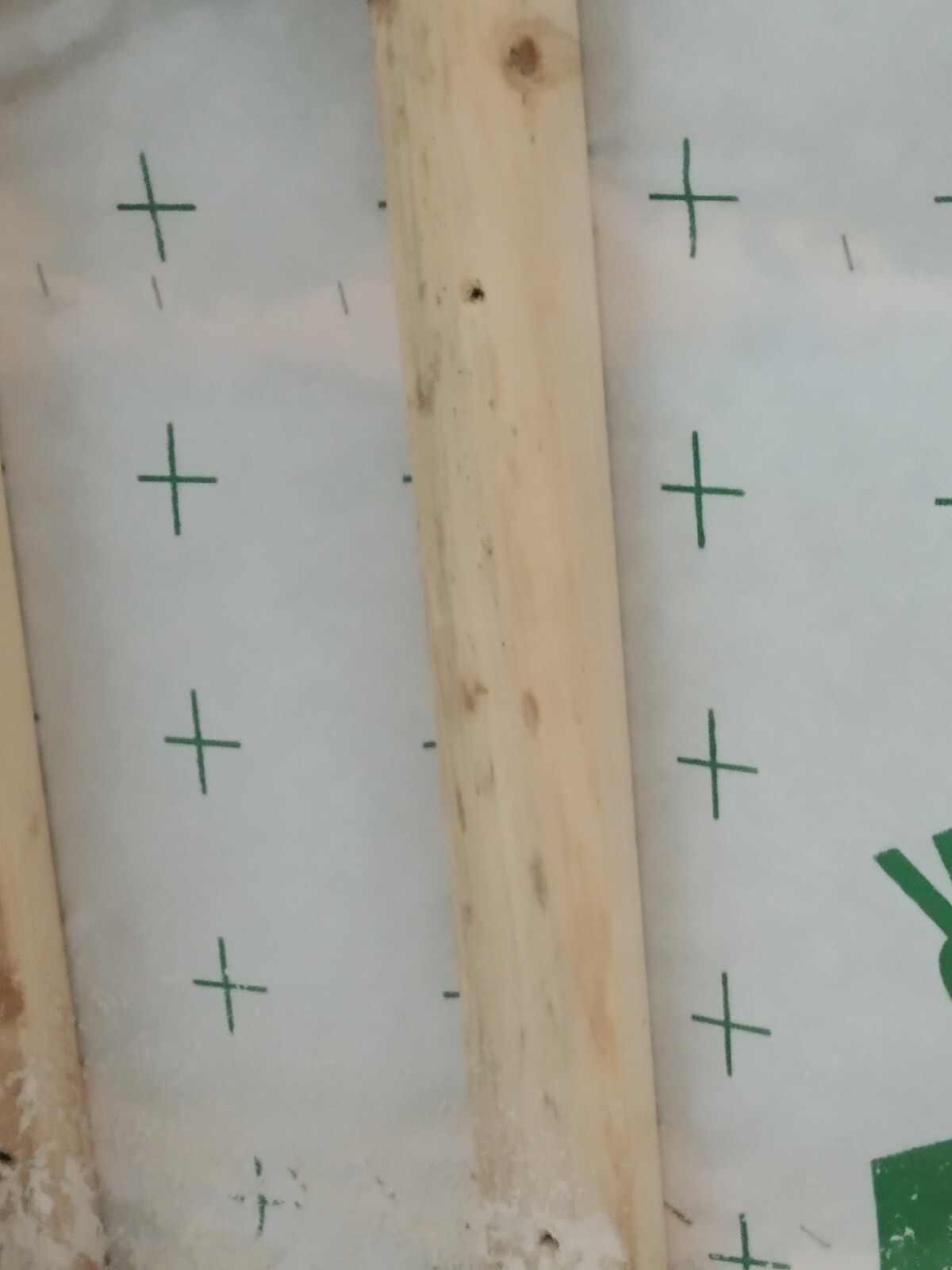
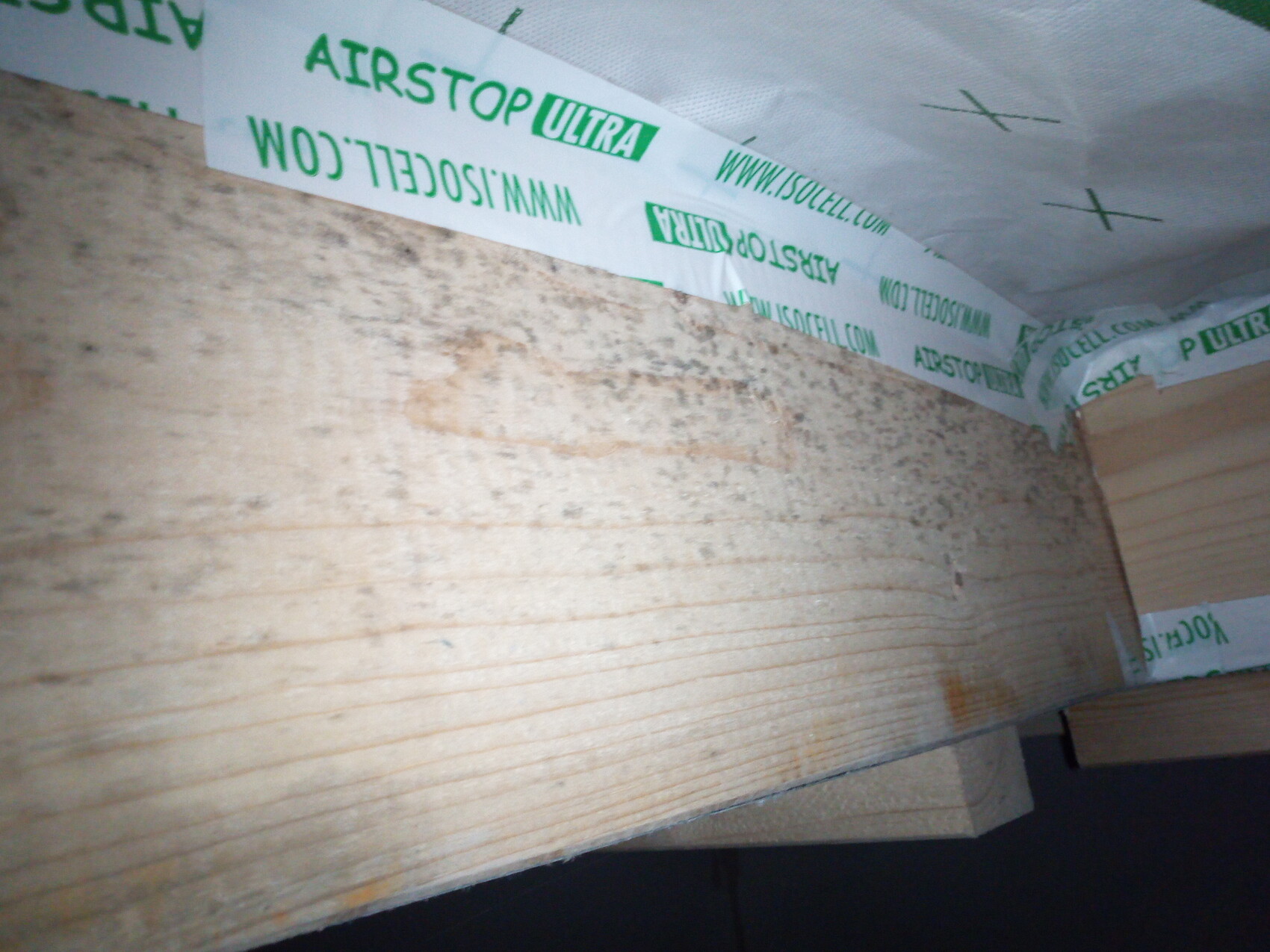
We are currently in the final stages of building a single-family house. The construction is managed by a developer, so we are not involved in the coordination or the specific work details.
However, shortly after the roof was installed, we noticed mold on some of the rafters. At that time, no screed or interior plaster had been applied yet. After informing the site manager, he treated the wood with a mold spray and declared everything to be fine.
During the winter, screed and interior plaster were applied. After a few weeks, we observed mold on the rafters/wood structure around the opening for the pull-down attic ladder. The site manager did not want to take any action until the drying phase was complete and the drywall installer finished the ceiling of the upper floor. Because the drying process did not progress well despite several daily ventilation sessions, one, then a second drying device was installed after a few weeks.
In the meantime, we have found additional mold in various spots on the battens under the vapor barrier foil, in several rooms. Furthermore, the main beam of our front porch (which extends into the entrance area and is still visible due to the lack of drywall) also shows significant mold.
The site manager assured me that the affected battens will be replaced and that the larger beams/rafters will be treated. The drywall installer began work today, but I am quite sure that the battens already covered by drywall have neither been replaced nor even treated.
Is mold concealed under drywall a persistent risk? Can I at least assume that treating the larger wood components with spray is sufficient? Or should I insist on removing the installed drywall and replacing the battens, as well as demanding other measures for the attic ladder opening and the front porch beam?
I have generally trusted the developer so far, but this whole issue and the apparent disregard for the promise to replace the battens worries me greatly! I would appreciate any advice.
Thank you in advance!
The installed wood likely had more than the recommended 20% moisture content. Glued laminated timber beams are usually delivered wrapped in plastic sheeting, which prevents drying.
As long as the moisture remains high, the problem will not improve.
What is the planned roof construction?
As long as the moisture remains high, the problem will not improve.
What is the planned roof construction?
icandoit schrieb:
The installed wood probably had more than the recommended 20% residual moisture content. Glulam beams are usually delivered wrapped in plastic film, which prevents drying.
As long as the moisture remains high, the problem will not change.
What is the planned roof structure? Thank you for the response.
The wood used in the porch was left outside for weeks during late autumn, exposed to rain with poor coverage in front of the construction site, and even after installation it remained uncovered for several more weeks, meaning it was continuously exposed to water and weather. So it was certainly quite wet.
The visible moisture has almost disappeared by now, and the plaster has finally nearly dried. This is why the drywall work has started.
As far as I can describe the roof structure with my limited knowledge:
It is a hip roof. From the inside out, the build-up is battens, vapor retarder, ceiling joists with blown-in cellulose insulation 24cm (9.5 inches). So the living space is insulated, but the roof is not insulated from above. Above that are rafters, a vapor-permeable membrane with battens, and clay roof tiles. This is what I can gather from the plans.
Drywall construction in the roof.
Gypsum board, membrane, roof frame with insulation, vapor-permeable protective layer, then battens, and finally tiles.
The vapor-permeable protective layer allows moisture to escape to the outside because the roof covering is ventilated from behind. The membrane prevents moisture from inside (living space) from passing to the outside. In the long term, the wood dries out.
Gypsum board, membrane, roof frame with insulation, vapor-permeable protective layer, then battens, and finally tiles.
The vapor-permeable protective layer allows moisture to escape to the outside because the roof covering is ventilated from behind. The membrane prevents moisture from inside (living space) from passing to the outside. In the long term, the wood dries out.
Similar topics