
ᐅ Mold Problem in a New Kitchen – How to Prevent It in the Future?
Created on: 14 Feb 2021 21:54
N
Nanopixel
In our kitchen, which was completely renovated in mid-2020, we have a problem with mold:
It became noticeable when water suddenly started leaking from under the refrigerator. At first, I thought it was a device malfunction, but that does not seem to be the case. We have a built-in refrigerator, and after removing the cabinet where it was installed, we discovered the problem: mold in the lower corner of the room and on the wall next to the refrigerator (see picture). There was even mold between the refrigerator and the built-in cabinet (picture 2). The entire right side wall of the appliance was covered with water droplets (picture 3).
Trusted tradespeople (tiler and plasterer) examined the situation and said it is condensed water caused by humidity. The air cannot circulate properly around this cabinet, which leads to this problem. In addition, the refrigerator is placed directly in the corner of the room against two exterior walls (northeast).
How should this problem be addressed? Removing the mold and thoroughly drying everything first seems obvious.
The tiler suggested installing ventilation openings in the wall above the refrigerator to help regulate humidity. I find that reasonable, but I am concerned that, since the cabinet is placed right next to the wall on the right side with only about 0.5 to 1 cm (0.2 to 0.4 inches) of space, condensation might still form there despite ventilation.
Are there any additional measures that could be taken here—perhaps filling the small cavity somehow?
Thanks in advance for any advice.
N
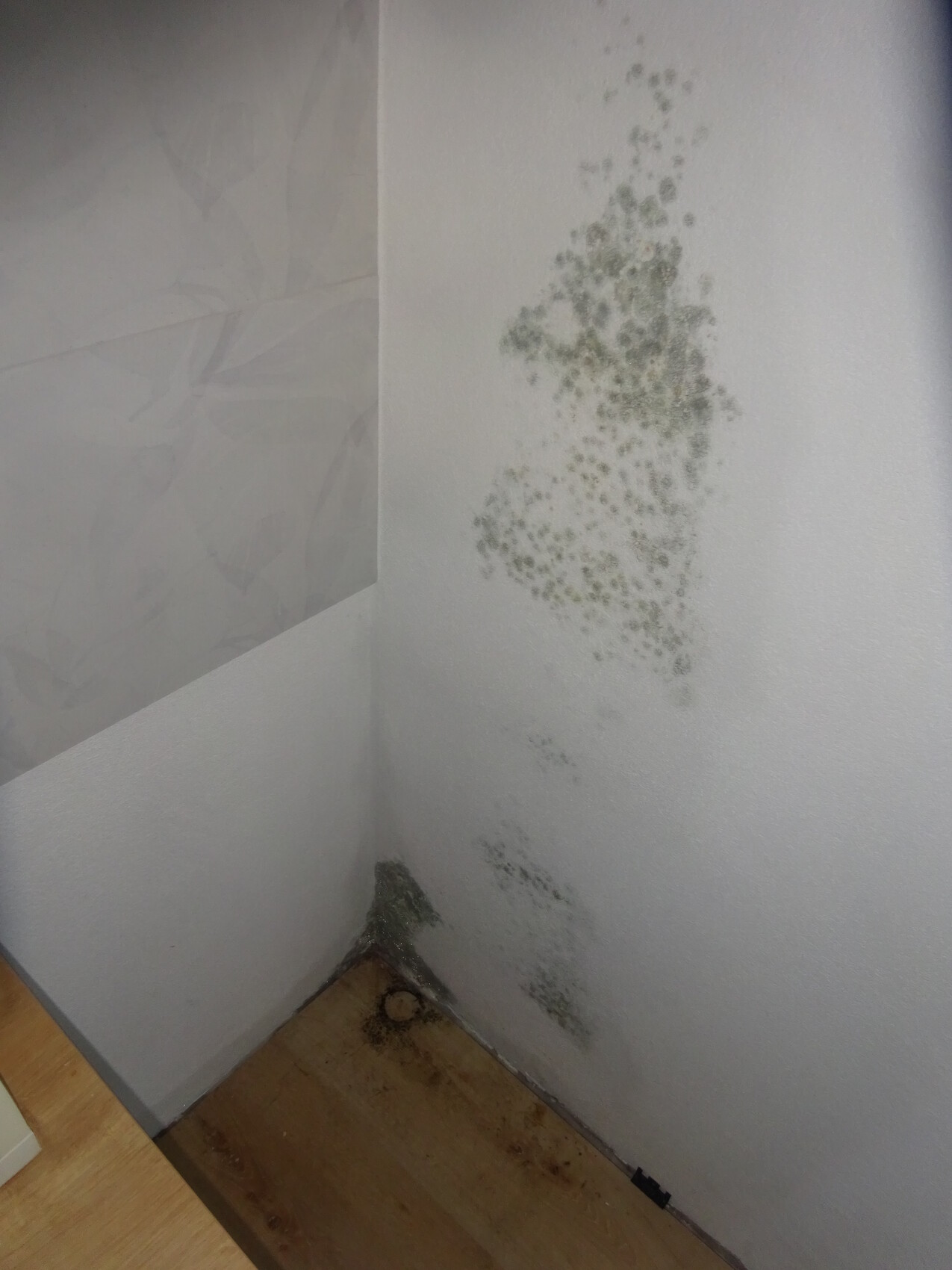
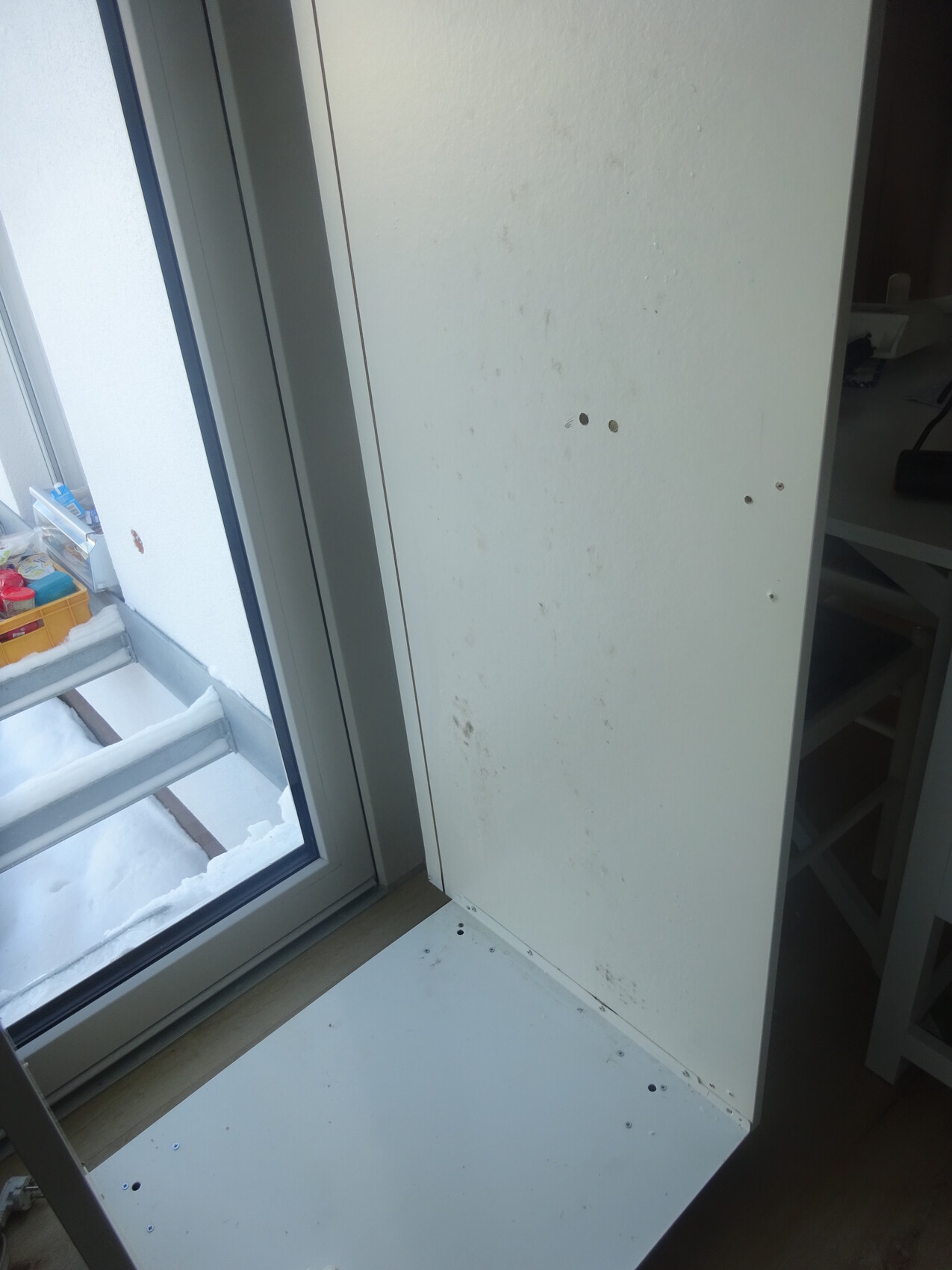
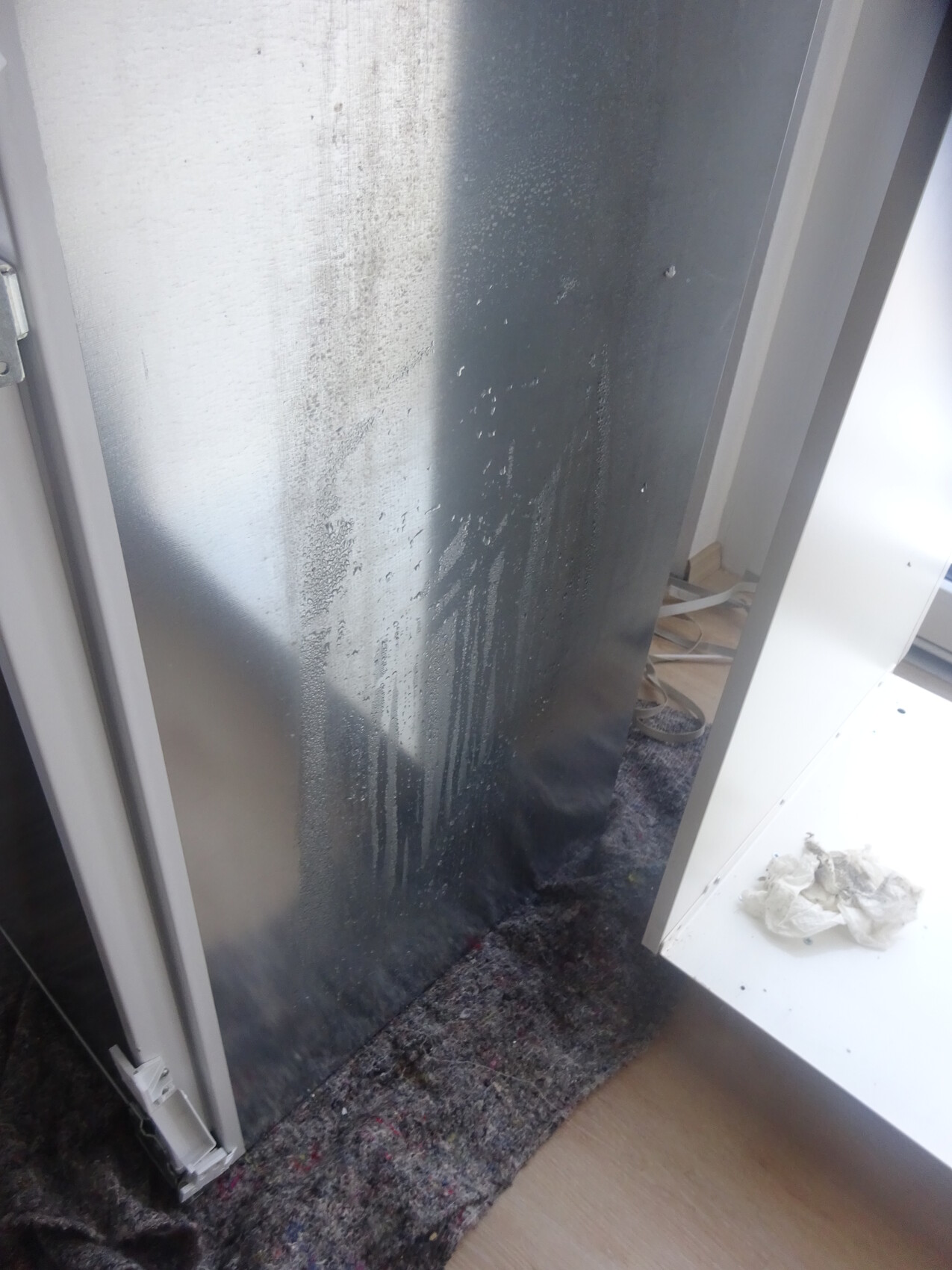
It became noticeable when water suddenly started leaking from under the refrigerator. At first, I thought it was a device malfunction, but that does not seem to be the case. We have a built-in refrigerator, and after removing the cabinet where it was installed, we discovered the problem: mold in the lower corner of the room and on the wall next to the refrigerator (see picture). There was even mold between the refrigerator and the built-in cabinet (picture 2). The entire right side wall of the appliance was covered with water droplets (picture 3).
Trusted tradespeople (tiler and plasterer) examined the situation and said it is condensed water caused by humidity. The air cannot circulate properly around this cabinet, which leads to this problem. In addition, the refrigerator is placed directly in the corner of the room against two exterior walls (northeast).
How should this problem be addressed? Removing the mold and thoroughly drying everything first seems obvious.
The tiler suggested installing ventilation openings in the wall above the refrigerator to help regulate humidity. I find that reasonable, but I am concerned that, since the cabinet is placed right next to the wall on the right side with only about 0.5 to 1 cm (0.2 to 0.4 inches) of space, condensation might still form there despite ventilation.
Are there any additional measures that could be taken here—perhaps filling the small cavity somehow?
Thanks in advance for any advice.
N
N
Nanopixel19 Feb 2021 15:53No.
The refrigerator has the heat exchanger at the back.
The refrigerator has the heat exchanger at the back.
W
WilderSueden19 Feb 2021 19:03guckuck2 schrieb:
You can find "PC case fans with power supply" on Amazon. Either really with a power supply or with a USB connection, which you can plug into any socket using the appropriate adapter. However, this will probably end up as a bit of a DIY project. PC fans mostly come in 80 and 120 millimeters (3 and 4.7 inches), and there isn’t that much space next to the fridge. Also, the smaller the fan, the louder it tends to be. You would need to build something that takes in a wide airflow and then pushes it through a narrow space, like some kind of funnel or similar setup.
WilderSueden schrieb:
That will probably end up as some kind of rough DIY solution. PC fans mainly come in 80mm (3 inches) and 120mm (4.7 inches), but there isn't that much space next to the fridge. Also, the smaller the fan, the louder it is. You would need to build something that pulls in air broadly and then pushes it through a narrower area, like a funnel or something. The idea was to install the fans at the bottom of the ventilation grill to push air in properly.
N
Nanopixel20 Feb 2021 14:24icandoit schrieb:
Is that a concrete floor?Yes, directly beneath the click vinyl flooring is the concrete screed.M
Myrna_Loy20 Feb 2021 16:37Tempering the wall in the area of the baseboards would also be an option and would specifically address the mold problem (corner of two uninsulated exterior walls). In the long term, I would otherwise expect mold to develop behind the other cabinets in the baseboard area as well.
Search for baseboard heating.
Search for baseboard heating.
Similar topics