
ᐅ Mold Problem in a New Kitchen – How to Prevent It in the Future?
Created on: 14 Feb 2021 21:54
N
Nanopixel
In our kitchen, which was completely renovated in mid-2020, we have a problem with mold:
It became noticeable when water suddenly started leaking from under the refrigerator. At first, I thought it was a device malfunction, but that does not seem to be the case. We have a built-in refrigerator, and after removing the cabinet where it was installed, we discovered the problem: mold in the lower corner of the room and on the wall next to the refrigerator (see picture). There was even mold between the refrigerator and the built-in cabinet (picture 2). The entire right side wall of the appliance was covered with water droplets (picture 3).
Trusted tradespeople (tiler and plasterer) examined the situation and said it is condensed water caused by humidity. The air cannot circulate properly around this cabinet, which leads to this problem. In addition, the refrigerator is placed directly in the corner of the room against two exterior walls (northeast).
How should this problem be addressed? Removing the mold and thoroughly drying everything first seems obvious.
The tiler suggested installing ventilation openings in the wall above the refrigerator to help regulate humidity. I find that reasonable, but I am concerned that, since the cabinet is placed right next to the wall on the right side with only about 0.5 to 1 cm (0.2 to 0.4 inches) of space, condensation might still form there despite ventilation.
Are there any additional measures that could be taken here—perhaps filling the small cavity somehow?
Thanks in advance for any advice.
N
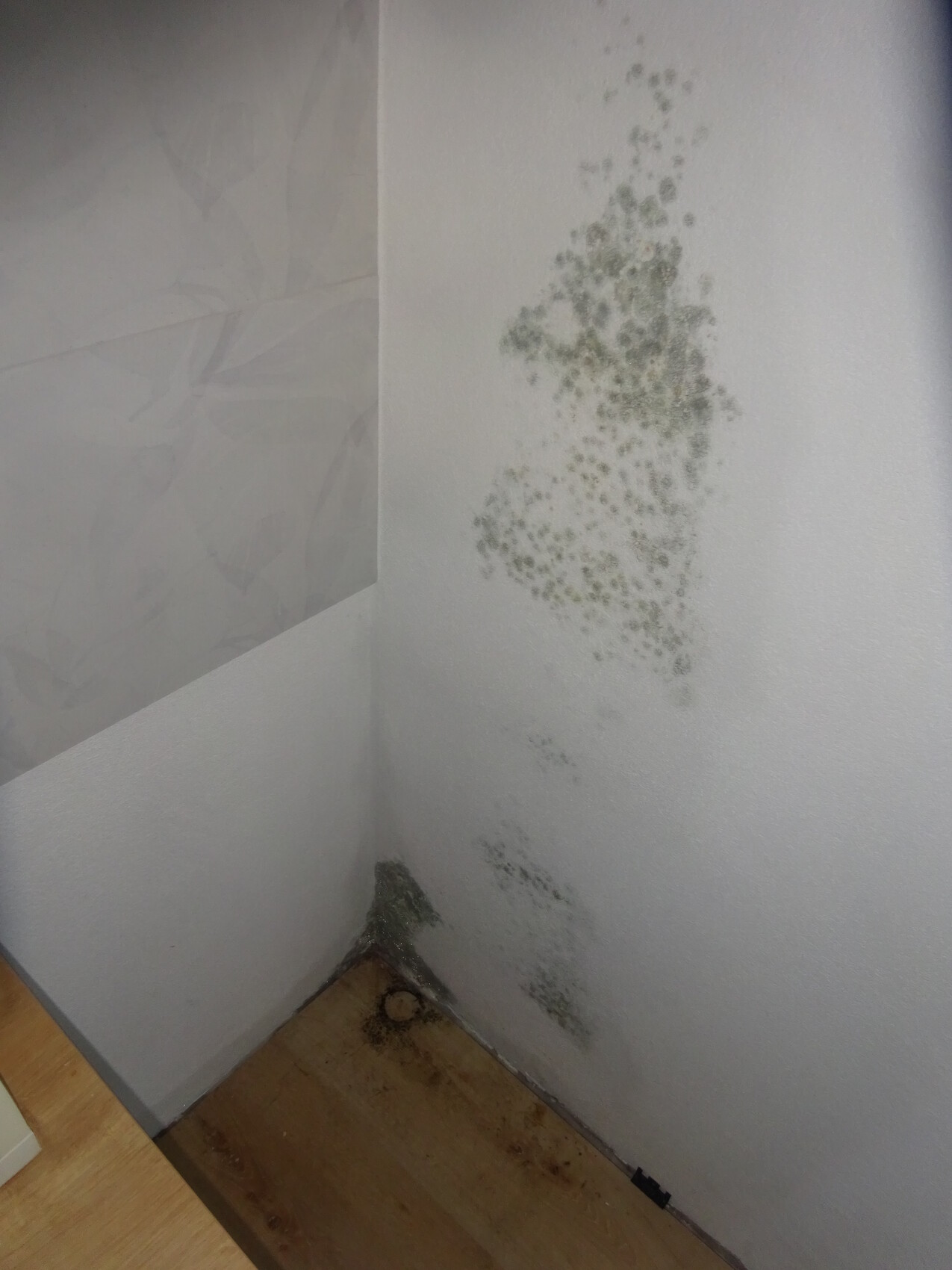
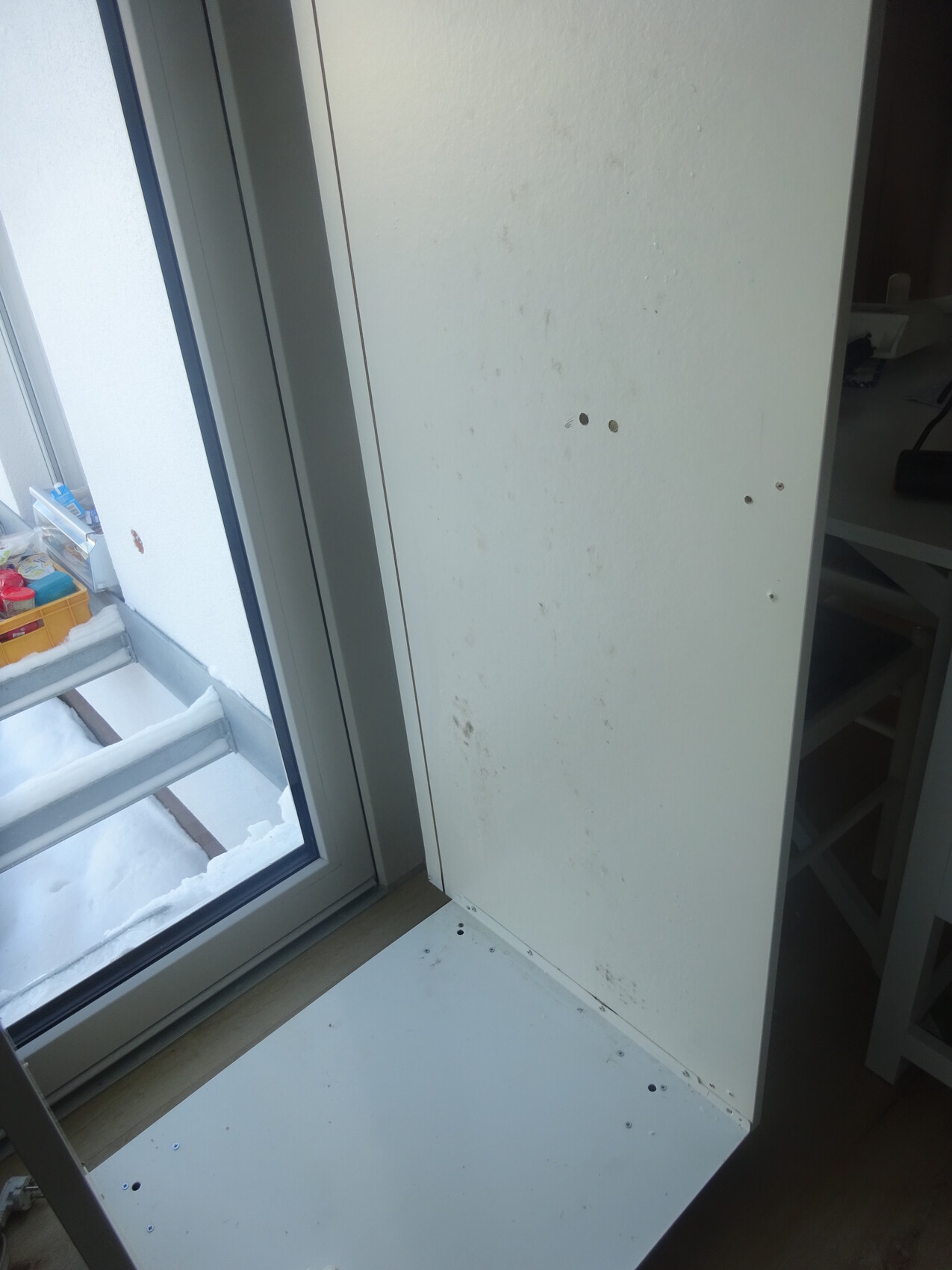
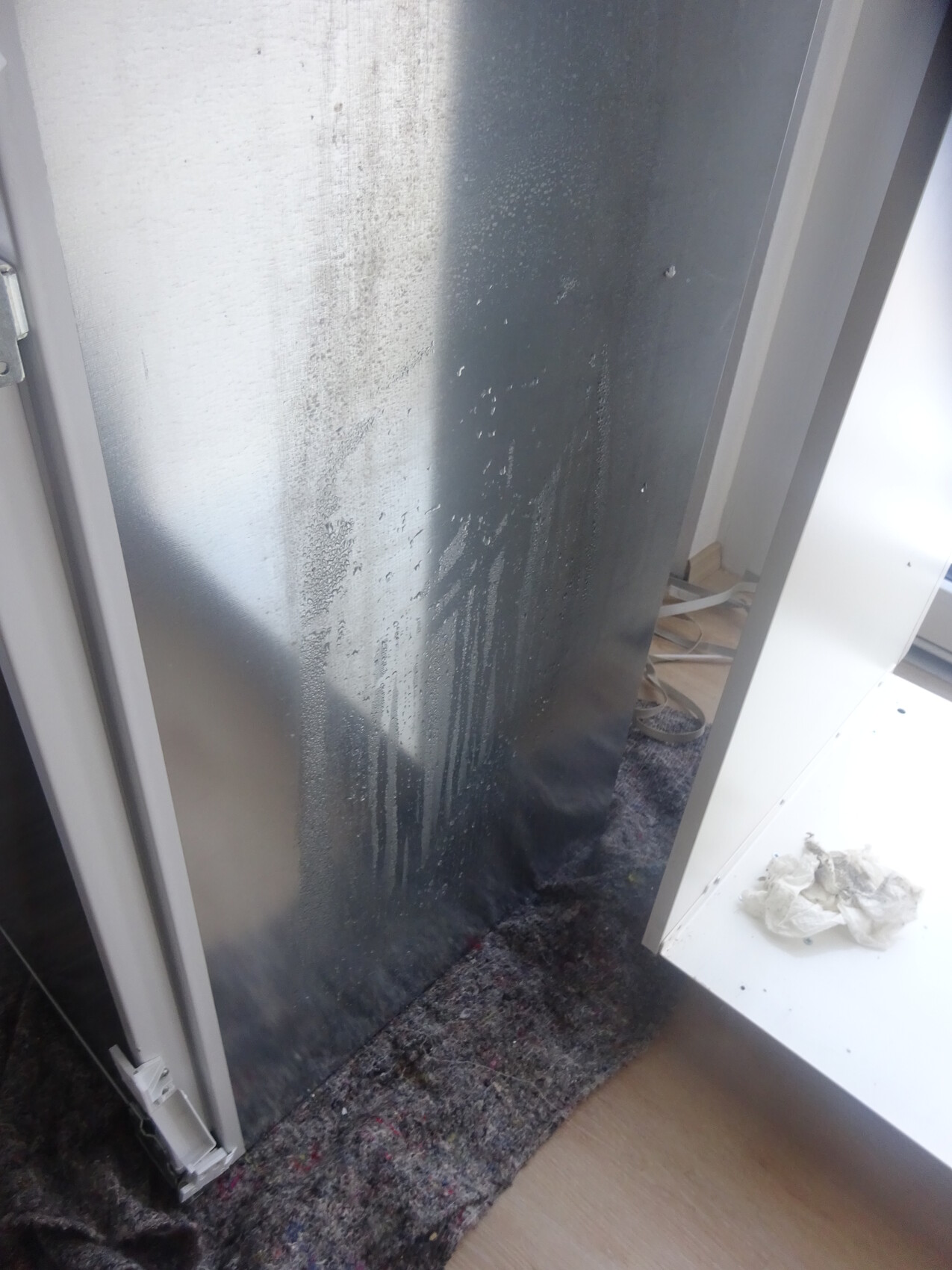
It became noticeable when water suddenly started leaking from under the refrigerator. At first, I thought it was a device malfunction, but that does not seem to be the case. We have a built-in refrigerator, and after removing the cabinet where it was installed, we discovered the problem: mold in the lower corner of the room and on the wall next to the refrigerator (see picture). There was even mold between the refrigerator and the built-in cabinet (picture 2). The entire right side wall of the appliance was covered with water droplets (picture 3).
Trusted tradespeople (tiler and plasterer) examined the situation and said it is condensed water caused by humidity. The air cannot circulate properly around this cabinet, which leads to this problem. In addition, the refrigerator is placed directly in the corner of the room against two exterior walls (northeast).
How should this problem be addressed? Removing the mold and thoroughly drying everything first seems obvious.
The tiler suggested installing ventilation openings in the wall above the refrigerator to help regulate humidity. I find that reasonable, but I am concerned that, since the cabinet is placed right next to the wall on the right side with only about 0.5 to 1 cm (0.2 to 0.4 inches) of space, condensation might still form there despite ventilation.
Are there any additional measures that could be taken here—perhaps filling the small cavity somehow?
Thanks in advance for any advice.
N
W
WilderSueden17 Feb 2021 22:45I believe buying a new refrigerator was already mentioned as an acceptable solution. It’s obviously not ideal, but I see few ways around it. Ultimately, the problem arises from too little space between the refrigerator and the wall. Any form of insulation makes the gap even tighter, and DIY solutions with computer fans are for those who enjoy tinkering. Remodeling the entire kitchen just for a refrigerator is also not a good option.
I would widen the gap by using a narrower refrigerator and additionally apply anti-mold paint.
I would widen the gap by using a narrower refrigerator and additionally apply anti-mold paint.
A
Alessandro18 Feb 2021 09:04talk to a professional.
In my opinion, a refrigerator should produce enough heat to keep the exterior walls free of condensation permanently.
Perhaps one solution would be to direct the waste heat not below, but above the refrigerator, so that the warm air heats the exterior walls along the entire height of the refrigerator.
Alternatively, improving air circulation with an opening at the top of the cabinet.
Just an idea...
In my opinion, a refrigerator should produce enough heat to keep the exterior walls free of condensation permanently.
Perhaps one solution would be to direct the waste heat not below, but above the refrigerator, so that the warm air heats the exterior walls along the entire height of the refrigerator.
Alternatively, improving air circulation with an opening at the top of the cabinet.
Just an idea...
N
Nanopixel18 Feb 2021 09:25parcus schrieb:
Are there any refrigerators narrower than a 60cm (24 inches) module? There are freestanding refrigerators with a width of 55cm (22 inches) that have the same usable volume as mine.
Alessandro schrieb:
In my opinion, a refrigerator should generate enough heat to keep the exterior walls free of condensation permanently. Where the heat exchanger is located—at the back—there was no mold. The wall molded to the right of the refrigerator and in the lower corner of the room (see picture in the first post), probably because no heat reaches these areas as warm air rises.
Alessandro schrieb:
Maybe it would help to direct the waste heat not below but above the refrigerator, so that the warm air warms the exterior walls along the entire height of the fridge. How exactly am I supposed to control where the waste heat goes? And what would be the purpose of warming the exterior wall ABOVE the refrigerator—there is no mold there...

Alessandro schrieb:
Maybe it would be a solution to place the waste heat not below but above the refrigerator, so that the warm air heats the outer walls along the entire height of the fridge.Question to the thread starter: I hope the cabinet above the refrigerator (at the back by the wall) is open, allowing air to enter through the vents at the bottom and exit at the top, right?
A
Alessandro18 Feb 2021 09:46A refrigerator generates heat that accumulates behind it. This heat needs to be dissipated to prevent warming up the refrigerator and increasing electricity costs. This is done through the ventilation grille located at the base.
It might be beneficial to install an additional grille at the top of the cabinet to improve air circulation and remove moisture.
It might be beneficial to install an additional grille at the top of the cabinet to improve air circulation and remove moisture.
Similar topics