
ᐅ Mold Problem in a New Kitchen – How to Prevent It in the Future?
Created on: 14 Feb 2021 21:54
N
Nanopixel
In our kitchen, which was completely renovated in mid-2020, we have a problem with mold:
It became noticeable when water suddenly started leaking from under the refrigerator. At first, I thought it was a device malfunction, but that does not seem to be the case. We have a built-in refrigerator, and after removing the cabinet where it was installed, we discovered the problem: mold in the lower corner of the room and on the wall next to the refrigerator (see picture). There was even mold between the refrigerator and the built-in cabinet (picture 2). The entire right side wall of the appliance was covered with water droplets (picture 3).
Trusted tradespeople (tiler and plasterer) examined the situation and said it is condensed water caused by humidity. The air cannot circulate properly around this cabinet, which leads to this problem. In addition, the refrigerator is placed directly in the corner of the room against two exterior walls (northeast).
How should this problem be addressed? Removing the mold and thoroughly drying everything first seems obvious.
The tiler suggested installing ventilation openings in the wall above the refrigerator to help regulate humidity. I find that reasonable, but I am concerned that, since the cabinet is placed right next to the wall on the right side with only about 0.5 to 1 cm (0.2 to 0.4 inches) of space, condensation might still form there despite ventilation.
Are there any additional measures that could be taken here—perhaps filling the small cavity somehow?
Thanks in advance for any advice.
N
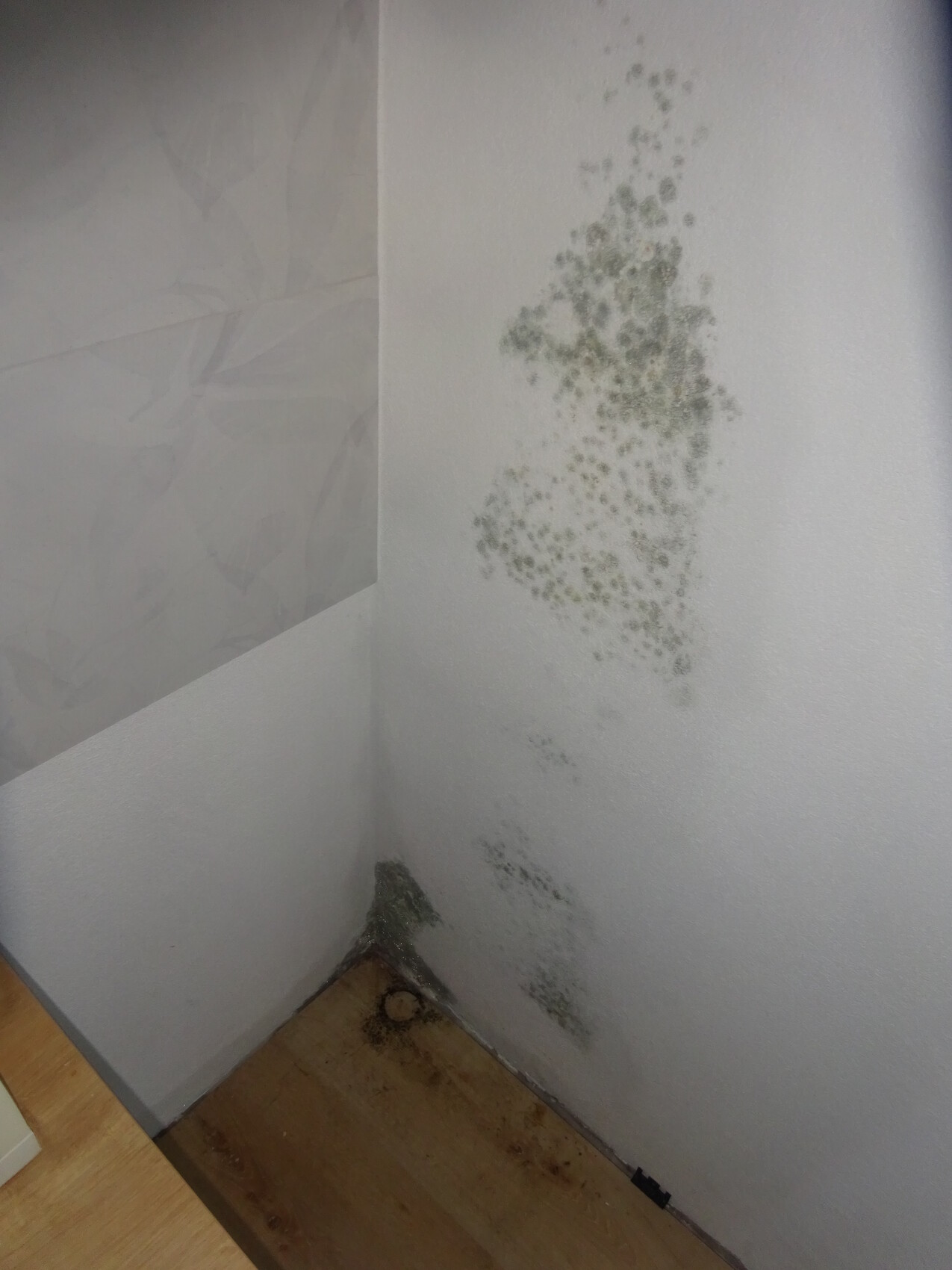
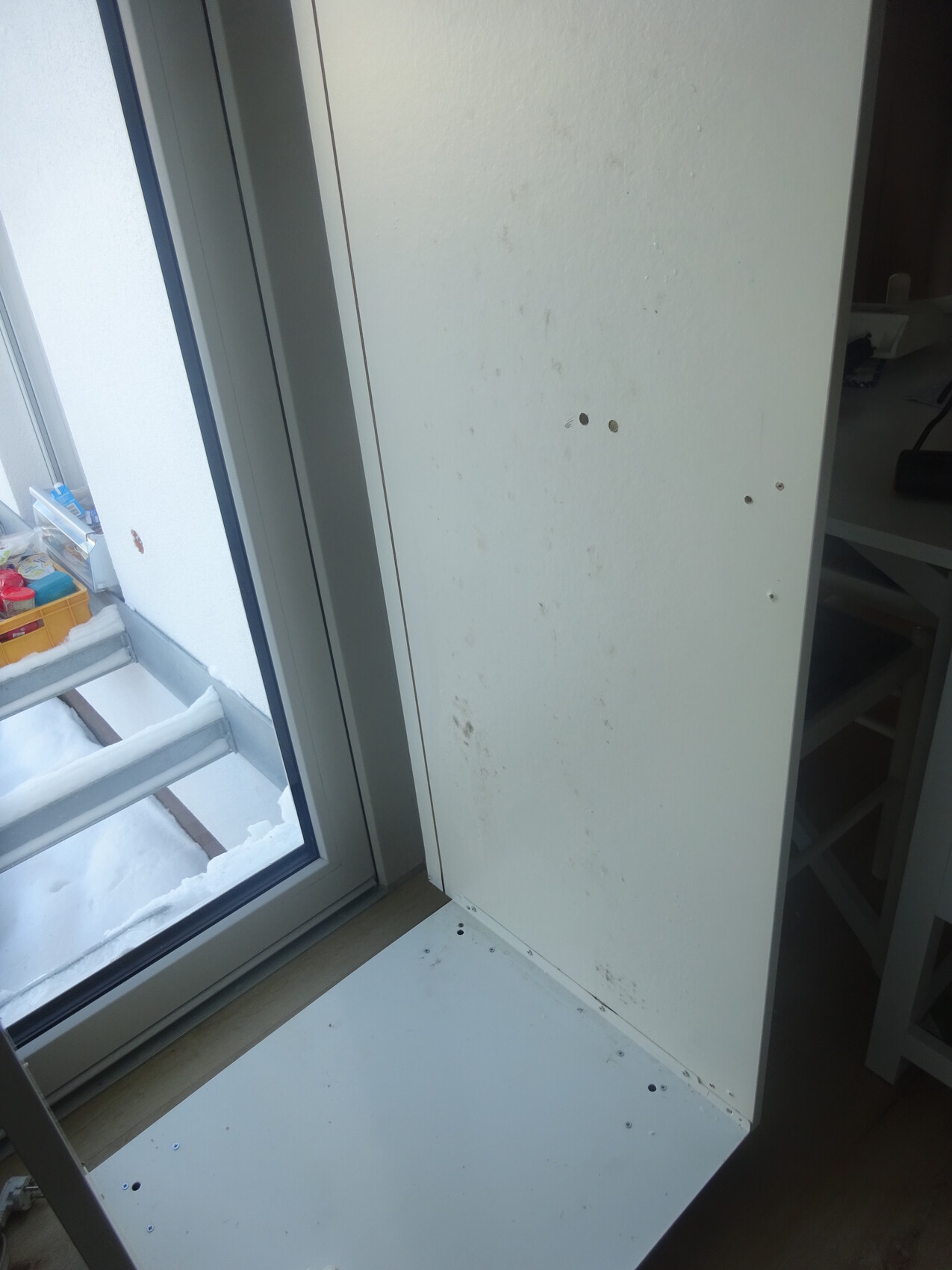
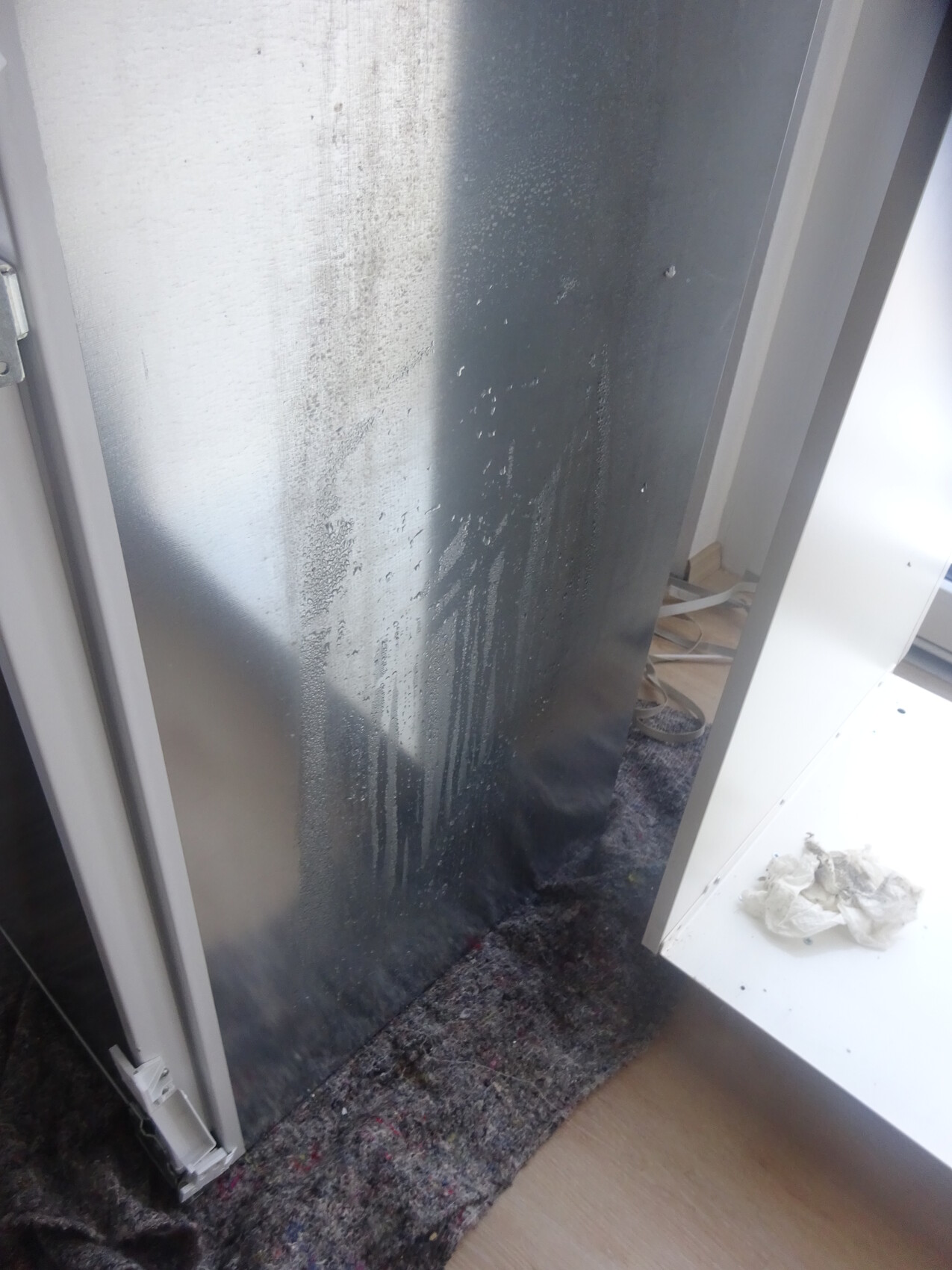
It became noticeable when water suddenly started leaking from under the refrigerator. At first, I thought it was a device malfunction, but that does not seem to be the case. We have a built-in refrigerator, and after removing the cabinet where it was installed, we discovered the problem: mold in the lower corner of the room and on the wall next to the refrigerator (see picture). There was even mold between the refrigerator and the built-in cabinet (picture 2). The entire right side wall of the appliance was covered with water droplets (picture 3).
Trusted tradespeople (tiler and plasterer) examined the situation and said it is condensed water caused by humidity. The air cannot circulate properly around this cabinet, which leads to this problem. In addition, the refrigerator is placed directly in the corner of the room against two exterior walls (northeast).
How should this problem be addressed? Removing the mold and thoroughly drying everything first seems obvious.
The tiler suggested installing ventilation openings in the wall above the refrigerator to help regulate humidity. I find that reasonable, but I am concerned that, since the cabinet is placed right next to the wall on the right side with only about 0.5 to 1 cm (0.2 to 0.4 inches) of space, condensation might still form there despite ventilation.
Are there any additional measures that could be taken here—perhaps filling the small cavity somehow?
Thanks in advance for any advice.
N
Nanopixel schrieb:
- Calculating the dew point with Ubakus – what?!Here is an example for 240mm (9.5 inches) calcium silicate brick.The hardest part is always selecting the right material.
It even provides a written explanation of the mold risk for the wall structure.
Nanopixel schrieb:
- Removing a side panel from the cabinet – how is the structure supposed to stand then??The cabinet base usually rests on supports.The remaining side panel is screwed half-height to the adjacent side panel and then it stays stable, even more stable than before.
To prevent the top panel from falling off, attach an angle bracket to the outer wall where the top panel rests or is screwed on.
For the doors, you need to install a suitable trim piece (240cm x 5cm x 1.6cm or similar), which is probably the most complex part of the modification.
Alternatively, you can remove about 95% of the side panel using a jigsaw, leaving only the front part for the hinges. Of course, the remaining parts must be screwed to the cabinet to avoid breakage.
N
Nanopixel17 Feb 2021 14:55OK, thanks for the explanations.
The problem with ubakus is that I have no idea what materials those are. The ones from last year could still be identified, but the rest from 1970 – no chance.
And the thing with removing the side wall... you only gain the thickness of the wall, about 1.5 cm (0.6 inches). Behind that is directly the cooling unit. So much effort just to widen the gap by 1.5 cm (0.6 inches)?
The problem with ubakus is that I have no idea what materials those are. The ones from last year could still be identified, but the rest from 1970 – no chance.
And the thing with removing the side wall... you only gain the thickness of the wall, about 1.5 cm (0.6 inches). Behind that is directly the cooling unit. So much effort just to widen the gap by 1.5 cm (0.6 inches)?
N
nordanney17 Feb 2021 15:20parcus schrieb:
There is simply no documentation or proof provided. How could there be, when nothing is specified?That doesn’t have to happen at all. We are just looking for possible solutions for the OP and indications of what might or might not make sense. Hiring a professional now and spending a lot of money, only to hear "move the refrigerator somewhere else," is not productive.@nordanney
If the result is incorrect, it’s useless.
I’m not familiar with the software either and couldn’t find any detailed information on the website.
It’s easy to test though, using the same structure: exterior plaster, brick, interior plaster, then once with 5cm (2 inches) of mineral wool with a thermal conductivity (WLG) of 0.035, and alternatively 5cm (2 inches) of wood wool insulation (HWL) with a WLG of 0.035.
Then compare the two results.
If the result is incorrect, it’s useless.
I’m not familiar with the software either and couldn’t find any detailed information on the website.
It’s easy to test though, using the same structure: exterior plaster, brick, interior plaster, then once with 5cm (2 inches) of mineral wool with a thermal conductivity (WLG) of 0.035, and alternatively 5cm (2 inches) of wood wool insulation (HWL) with a WLG of 0.035.
Then compare the two results.
Nanopixel schrieb:
So much effort just to widen the gap by 1.5cm (0.6 inches)?Yes, why not? Additionally, you can also chip off the plaster from the wall. You need to allow for air circulation, and for that, you need space. You also don’t want the simpler options, like moving the appliance away from the wall or buying a narrower unit 😉