
Hello everyone,
We bought a house built in 1909 in the Greater Stuttgart area that needs renovation because we liked the location and the plot. The plan was to completely renovate it. Now we are quite torn about whether building a new house makes more sense. Of course, I don’t expect this forum to make the decision for us 🙂 I just hope to get some input, as we are currently about 50/50 on both options.
In summary: The house can be renovated well, and all the experts who have inspected it have given positive feedback. The renovation is estimated to cost around €250,000. The question, however, is more of an economic nature: Does it really make sense to invest that much money into an old house? The plot and the zoning plan allow for a house about twice the current size. So the other idea is to demolish, build bigger, and rent out 1-2 units. The financing with the bank is also arranged. However, the potential risks of new construction and renting are causing us some concern.
I don’t want to overwhelm you with lots of details. I have summarized everything in a pros and cons list. I look forward to your input or gut feelings.
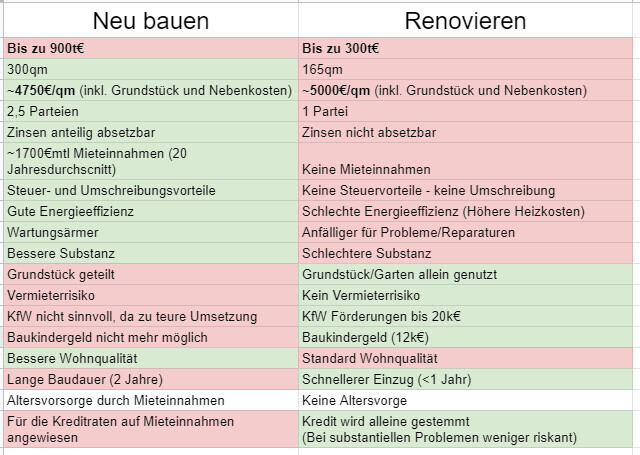
We bought a house built in 1909 in the Greater Stuttgart area that needs renovation because we liked the location and the plot. The plan was to completely renovate it. Now we are quite torn about whether building a new house makes more sense. Of course, I don’t expect this forum to make the decision for us 🙂 I just hope to get some input, as we are currently about 50/50 on both options.
In summary: The house can be renovated well, and all the experts who have inspected it have given positive feedback. The renovation is estimated to cost around €250,000. The question, however, is more of an economic nature: Does it really make sense to invest that much money into an old house? The plot and the zoning plan allow for a house about twice the current size. So the other idea is to demolish, build bigger, and rent out 1-2 units. The financing with the bank is also arranged. However, the potential risks of new construction and renting are causing us some concern.
I don’t want to overwhelm you with lots of details. I have summarized everything in a pros and cons list. I look forward to your input or gut feelings.
 Winniefred1 Feb 2021 16:59
Demolishing a 165m2 (1,776 sq ft) house in good condition is almost unjustifiable in itself, and certainly not economical if you look at it purely from a practical standpoint. On a less practical note... when I hear 1909 and that size of footprint, it definitely wasn’t a workers’ accommodation.
I am a big fan of older buildings—we live in one ourselves (mind you, in a house built for workers, so simple and small). This is a house-building forum, where many tend to favor new construction. But in this case, it really doesn’t make sense at all.
By the way, our semi-detached house from 1921, built in the post-war turmoil, has an exterior shell from 1993 and yet our additional costs are very low. Those depend, besides the condition and quality of the refurbishment, mainly on the occupants of the house.
In our neighborhood, no one has demolished and rebuilt their house so far. The houses were all built roughly between 1915 and 1935 and have all been renovated. At least, as far as I know, there haven’t been any demolitions.
I am a big fan of older buildings—we live in one ourselves (mind you, in a house built for workers, so simple and small). This is a house-building forum, where many tend to favor new construction. But in this case, it really doesn’t make sense at all.
By the way, our semi-detached house from 1921, built in the post-war turmoil, has an exterior shell from 1993 and yet our additional costs are very low. Those depend, besides the condition and quality of the refurbishment, mainly on the occupants of the house.
In our neighborhood, no one has demolished and rebuilt their house so far. The houses were all built roughly between 1915 and 1935 and have all been renovated. At least, as far as I know, there haven’t been any demolitions.

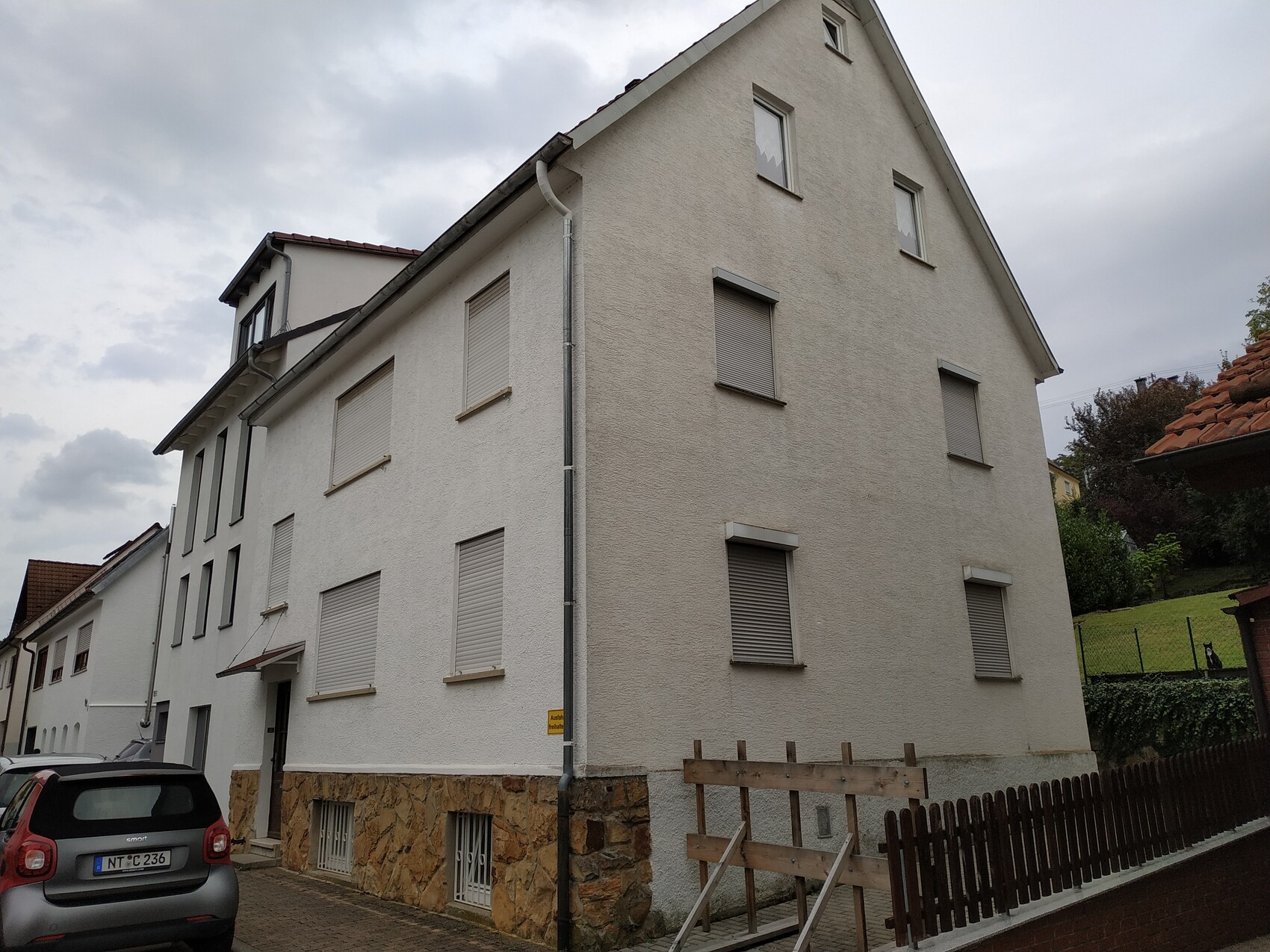
Please show the house itself instead of a table.
https://www.instagram.com/11antgmxde/
https://www.linkedin.com/company/bauen-jetzt/
https://www.instagram.com/11antgmxde/
https://www.linkedin.com/company/bauen-jetzt/
W
WilderSueden1 Feb 2021 19:06How long do you plan to wait until the additional costs for the demolition are recovered? Based on my rough calculation, with a rent of €1700 (~$1800) per month (~$20,400 per year) and total rental costs of €600,000 (~$640,000), it would take about 30 years. Interest rates and higher reserves for the larger house will probably balance out with rent increases. So, you have at least 25 years before the rental income actually benefits you. Meanwhile, you’ll have other tenants in the house, a smaller garden, and will likely have to compromise on the floor plan to accommodate three units.
With a renovation budget of €300,000 (~$320,000), almost everything except the walls would have to be removed anyway. There’s a lot you can improve in terms of energy efficiency and building services if you approach it correctly. You’re unlikely to face extremely high heating costs—those usually only happen with unrenovated houses. And if you manage to meet the KfW55 standard, you can qualify for more than just the €20,000 (~$21,500) subsidy.
With a renovation budget of €300,000 (~$320,000), almost everything except the walls would have to be removed anyway. There’s a lot you can improve in terms of energy efficiency and building services if you approach it correctly. You’re unlikely to face extremely high heating costs—those usually only happen with unrenovated houses. And if you manage to meet the KfW55 standard, you can qualify for more than just the €20,000 (~$21,500) subsidy.
I also notice many inconsistencies in the list. With a complete renovation, you essentially have a new building, offering the same quality of living. From a tax perspective, this is not quite correct either; currently, there are special depreciation allowances for energy-efficient measures. If you rent out part of the property, you can only claim deductions for that specific part. I have had a longstanding correspondence with the local tax office regarding this. Instead of having multiple tenants in one building, I would prefer to acquire a separate, small multi-family house or duplex when the opportunity arises, as it is less stressful.
Thank you for all the posts! It definitely sounds like renovation.
The drawbacks of building new (tenant issues, shared garden, much higher cost) have already been correctly identified. However, I don’t think I’ve fully conveyed the downsides of the old building yet.
It is a timber-frame house with cladding that really needs a complete renovation. On top of that, some hidden problems in the basement came to light after the purchase, which have made us reconsider our renovation plans:
Therefore, we are increasingly torn between building new or renovating. Since we cannot manage this on our own, we will need to rent out part of the property. As already correctly pointed out, that also carries many risks and is very expensive.
Renovation is definitely feasible. The house would look good afterward. But if after spending a few hundred thousand euros the basement gets wet again, the new beams rot, and a new build becomes necessary, that would be catastrophic.
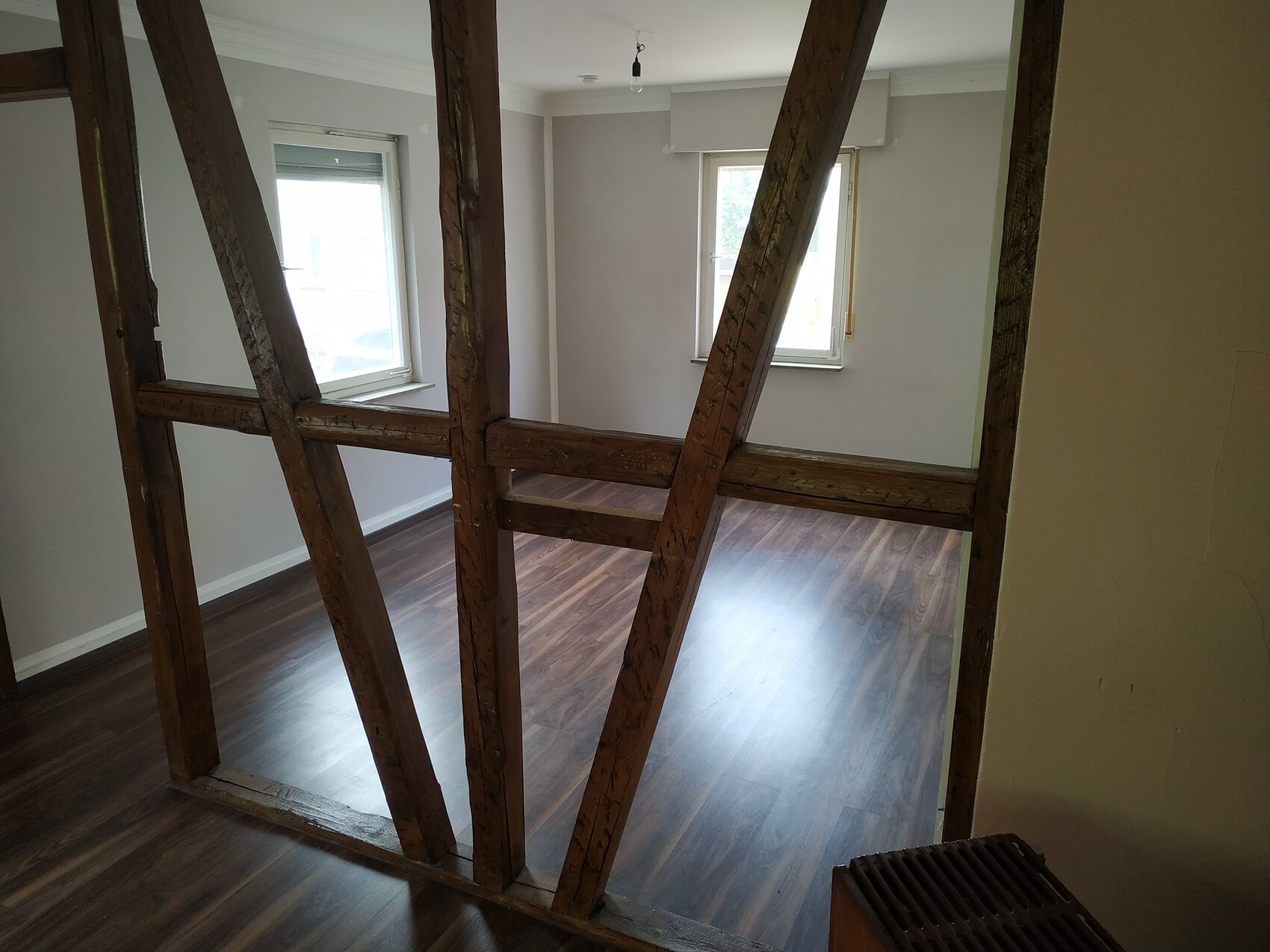
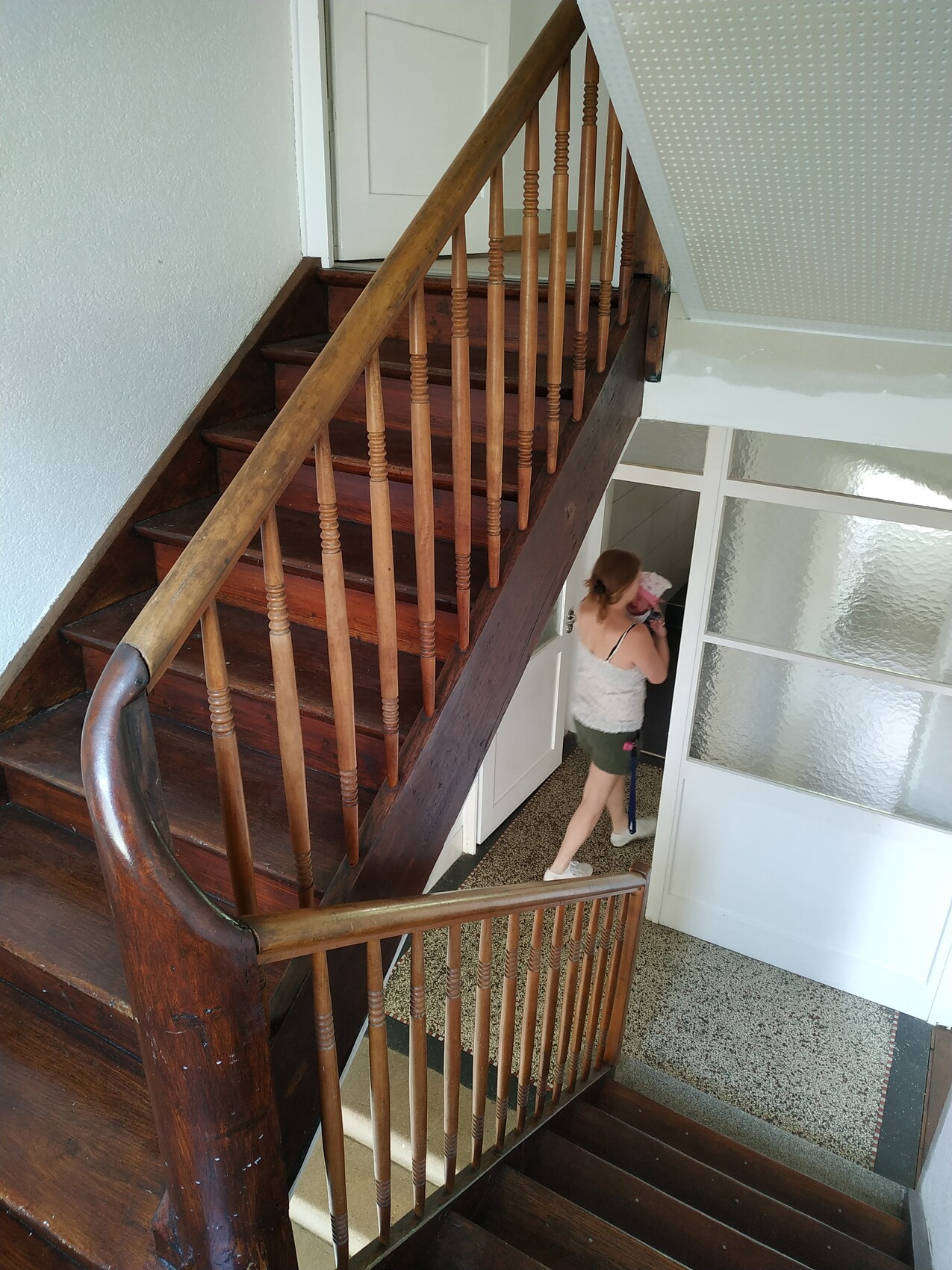
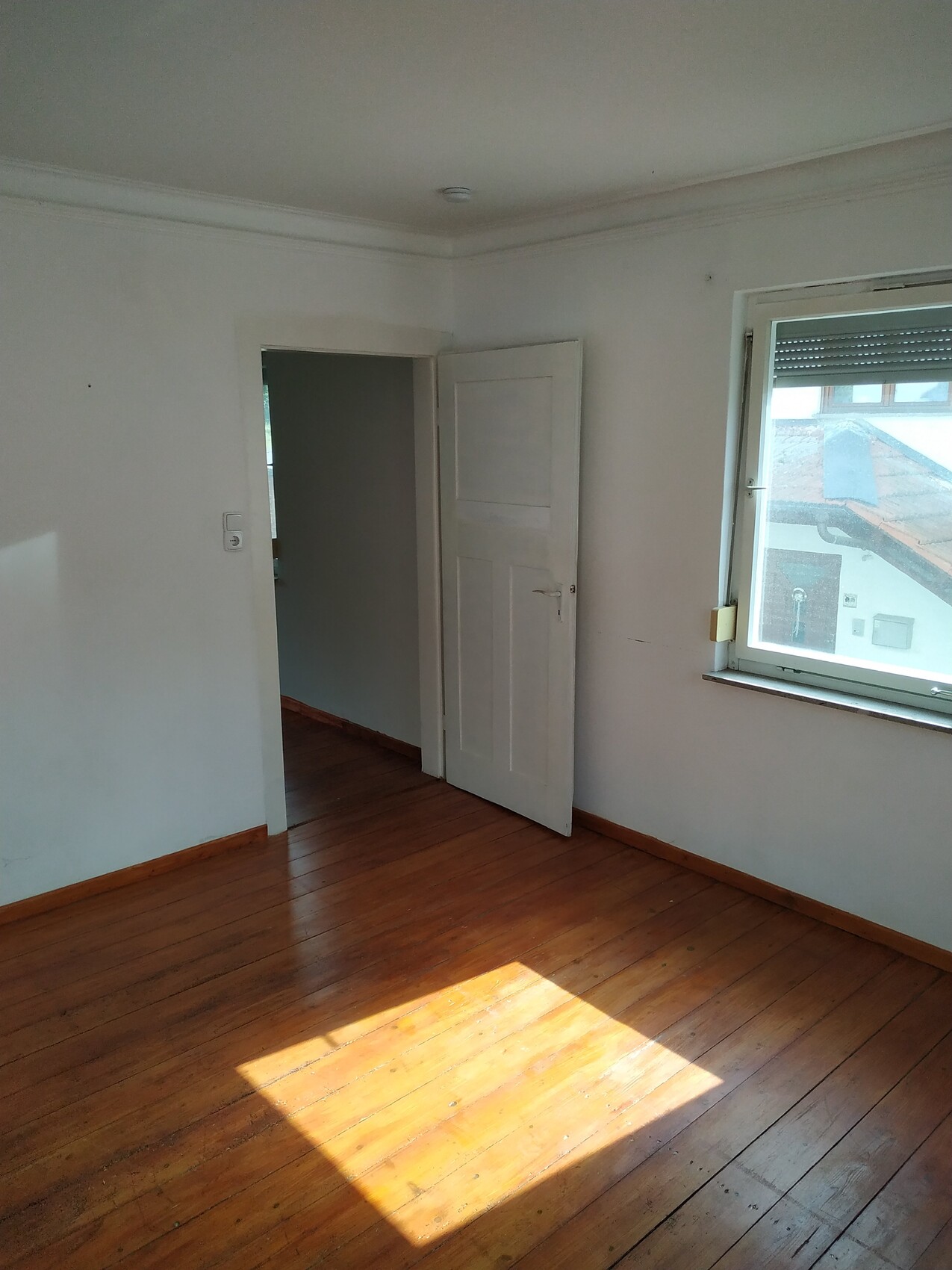
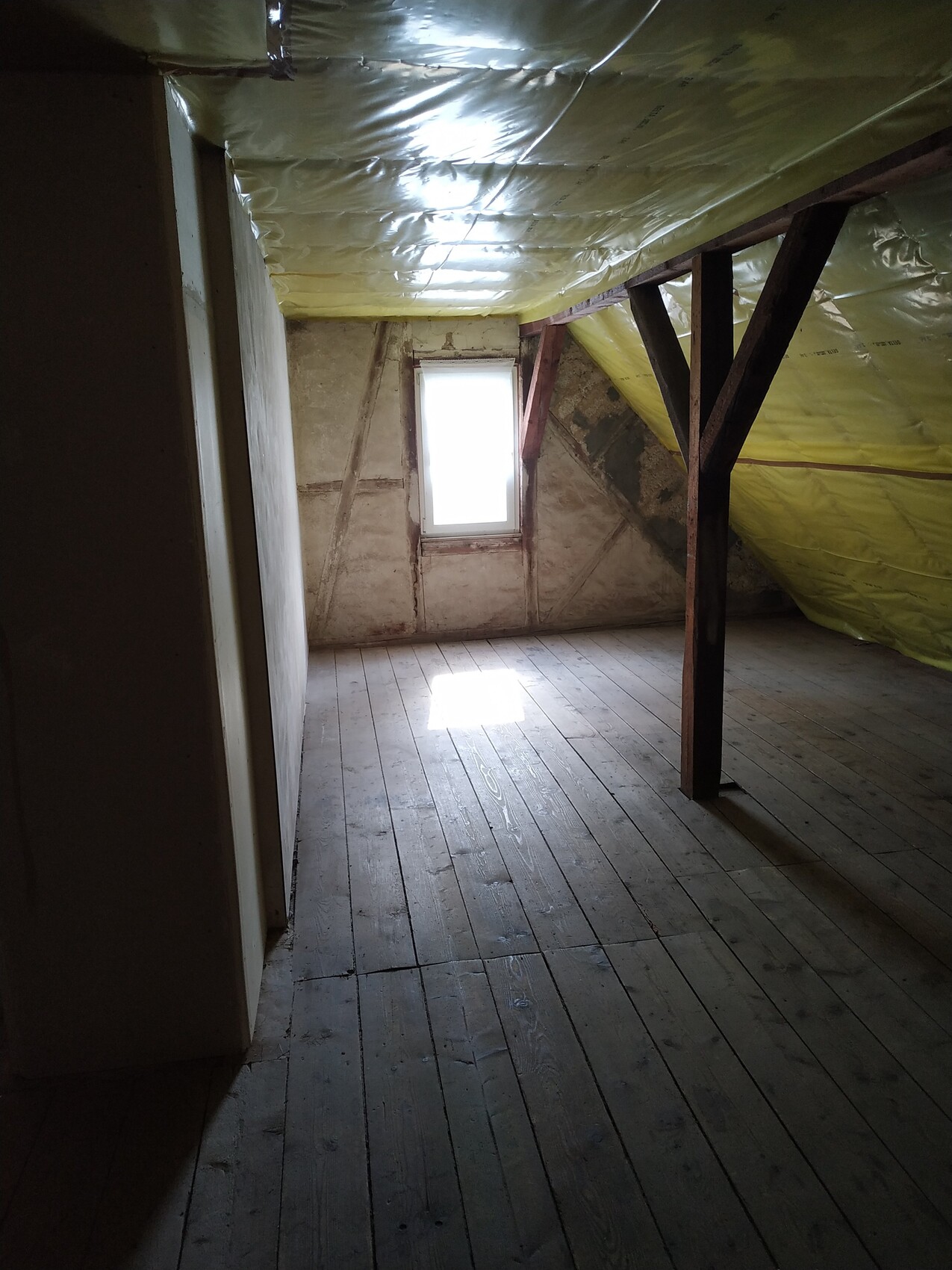
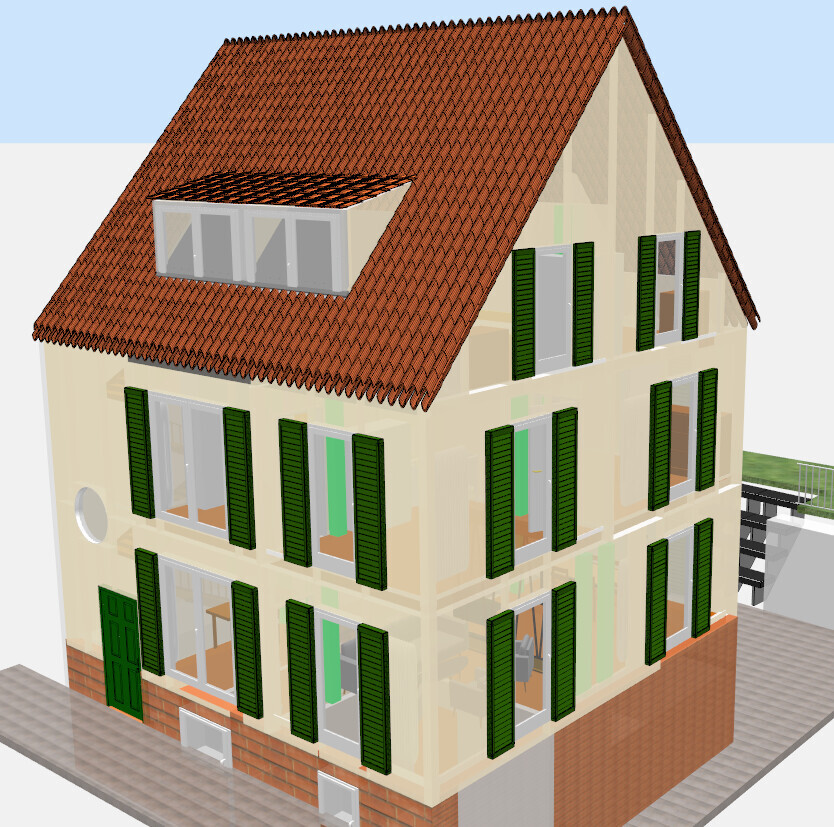
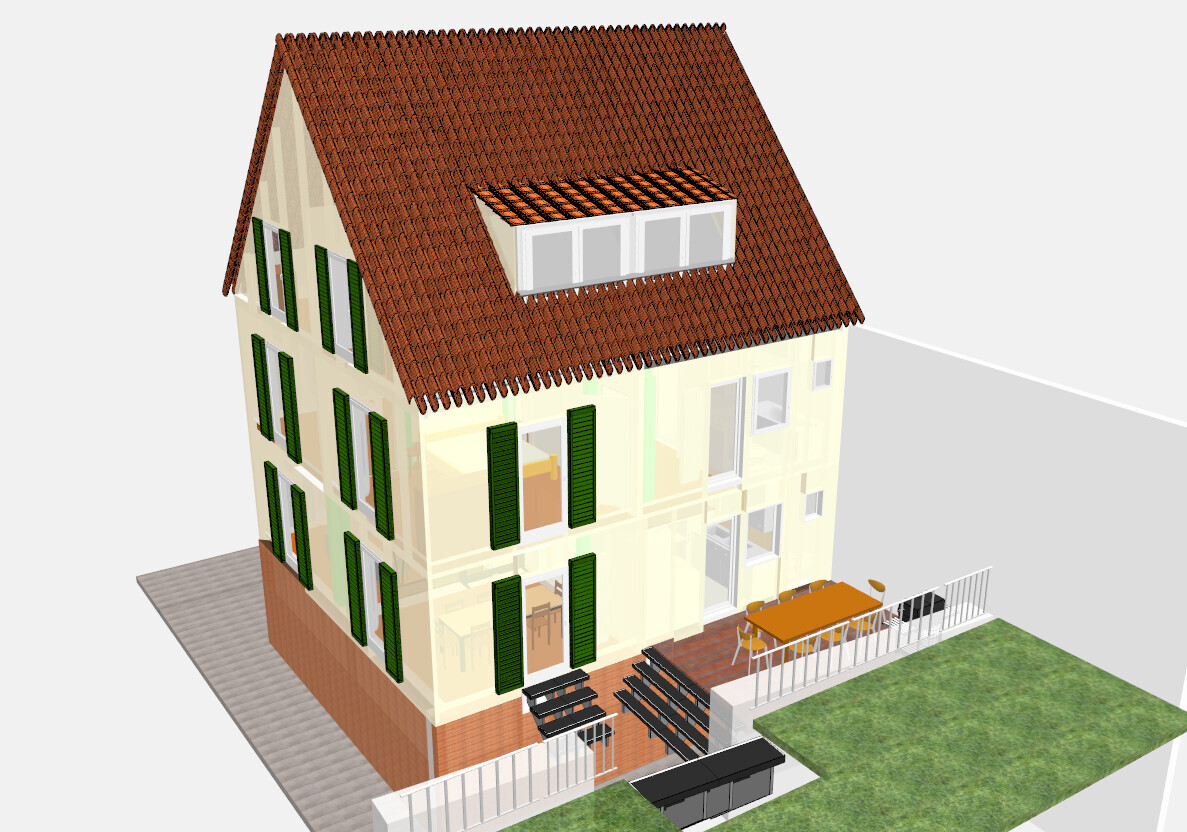
Attached are some photos of the house and the issues. (Terraced/semi-detached construction, footprint approx. 9x9m (30x30 feet), ceiling height just under 2.6m (8.5 feet), located on a sloped plot of 510m² (about 5,500 sq ft).)
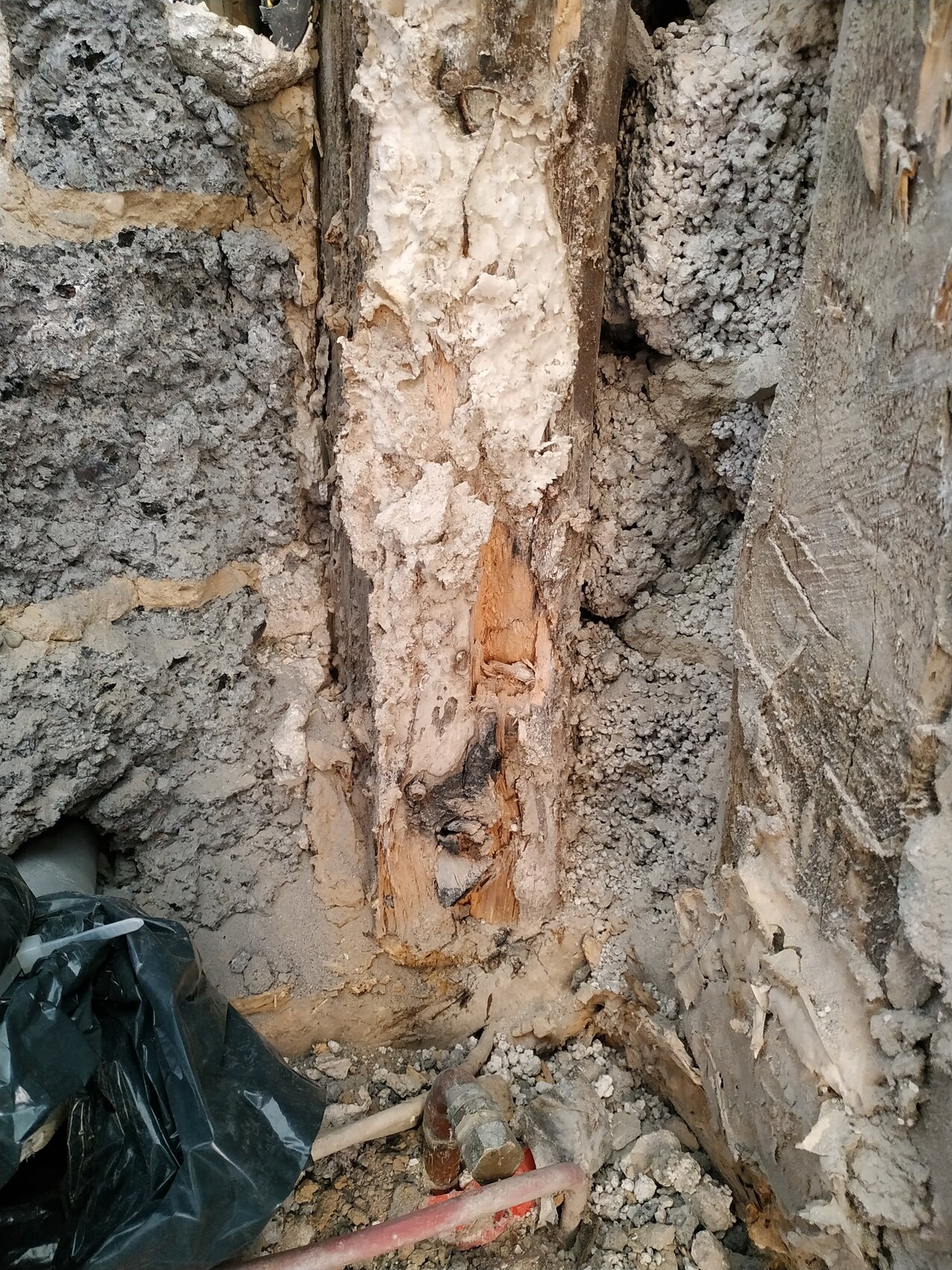
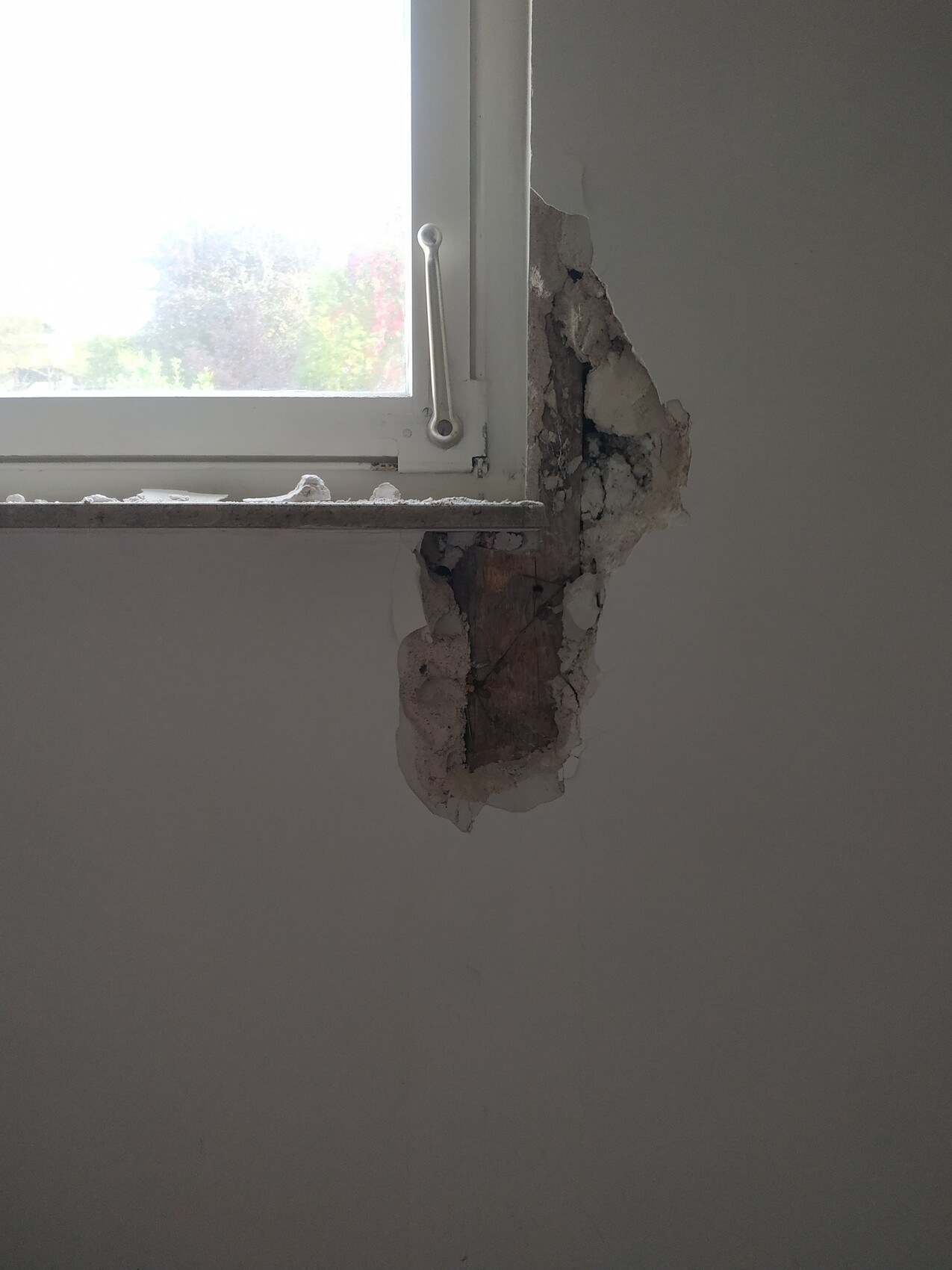
Now to some less pleasant pictures:
The drawbacks of building new (tenant issues, shared garden, much higher cost) have already been correctly identified. However, I don’t think I’ve fully conveyed the downsides of the old building yet.
It is a timber-frame house with cladding that really needs a complete renovation. On top of that, some hidden problems in the basement came to light after the purchase, which have made us reconsider our renovation plans:
- In the kitchen/bathroom area, some beams are rotted. The sill beams as well as support beams in an area of at least 3x3m (10x10 feet) need to be completely replaced, and walls rebuilt accordingly.
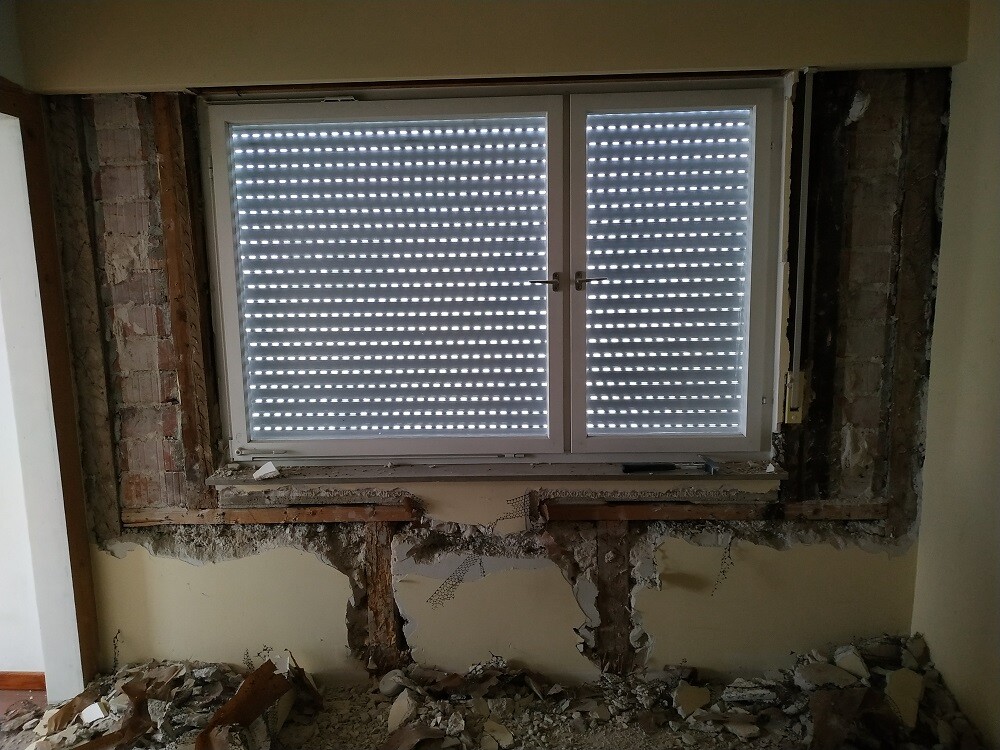
- An old owner from around the 1960s had the bright idea to install windows that are 10cm (4 inches) wider and to reduce the width of all support beams to the left and right of these windows by half in order to fit the window frames. Fortunately, the house hasn’t collapsed yet, but we will need to replace all of these support beams.
- Probably the same previous owner combined two single windows into one large window by cutting some side beams and moving the bottom part to the center (see pictures). So the structural frame and the load-bearing system need a complete overhaul.
- The vaulted basement is currently quite dry (inspectors didn’t find any issues) BUT: The neighbor recently mentioned that in the past the vaulted basement was partly submerged under water and the house smelled musty. We don’t know why this was the case, why it’s no longer happening, or if it could return in a few years. Likely this calls for a forensic building analysis. The fact is that these old basements are not built to be watertight, and I feel like we’re sitting on a powder keg. If in 3 years the basement needs expensive waterproofing, that would definitely blow the budget. This is the biggest concern we have about the renovation.
- Completely new electrical system
- Completely new plumbing (heating, hot/cold water, all bathrooms)
- Brand new windows
- New doors
- New insulation
- New exterior plaster/render
- New interior plaster
- Attic conversion
- Additional roof insulation
- New roof covering
- Dormers
- ...and everything else I may have forgotten.
Therefore, we are increasingly torn between building new or renovating. Since we cannot manage this on our own, we will need to rent out part of the property. As already correctly pointed out, that also carries many risks and is very expensive.
Renovation is definitely feasible. The house would look good afterward. But if after spending a few hundred thousand euros the basement gets wet again, the new beams rot, and a new build becomes necessary, that would be catastrophic.
Attached are some photos of the house and the issues. (Terraced/semi-detached construction, footprint approx. 9x9m (30x30 feet), ceiling height just under 2.6m (8.5 feet), located on a sloped plot of 510m² (about 5,500 sq ft).)
Now to some less pleasant pictures:
Similar topics