
ᐅ Cracks detected in the exterior concrete wall of the basement – what steps should be taken?
Created on: 17 Dec 2020 14:12
H
HeiniohnePlan
Hello gentlemen!
First of all, I hope you and your families have stayed safe through these challenging times!?
1. Yesterday, I noticed cracks in the concrete exterior wall of the basement at our construction site; please see the attached pictures:
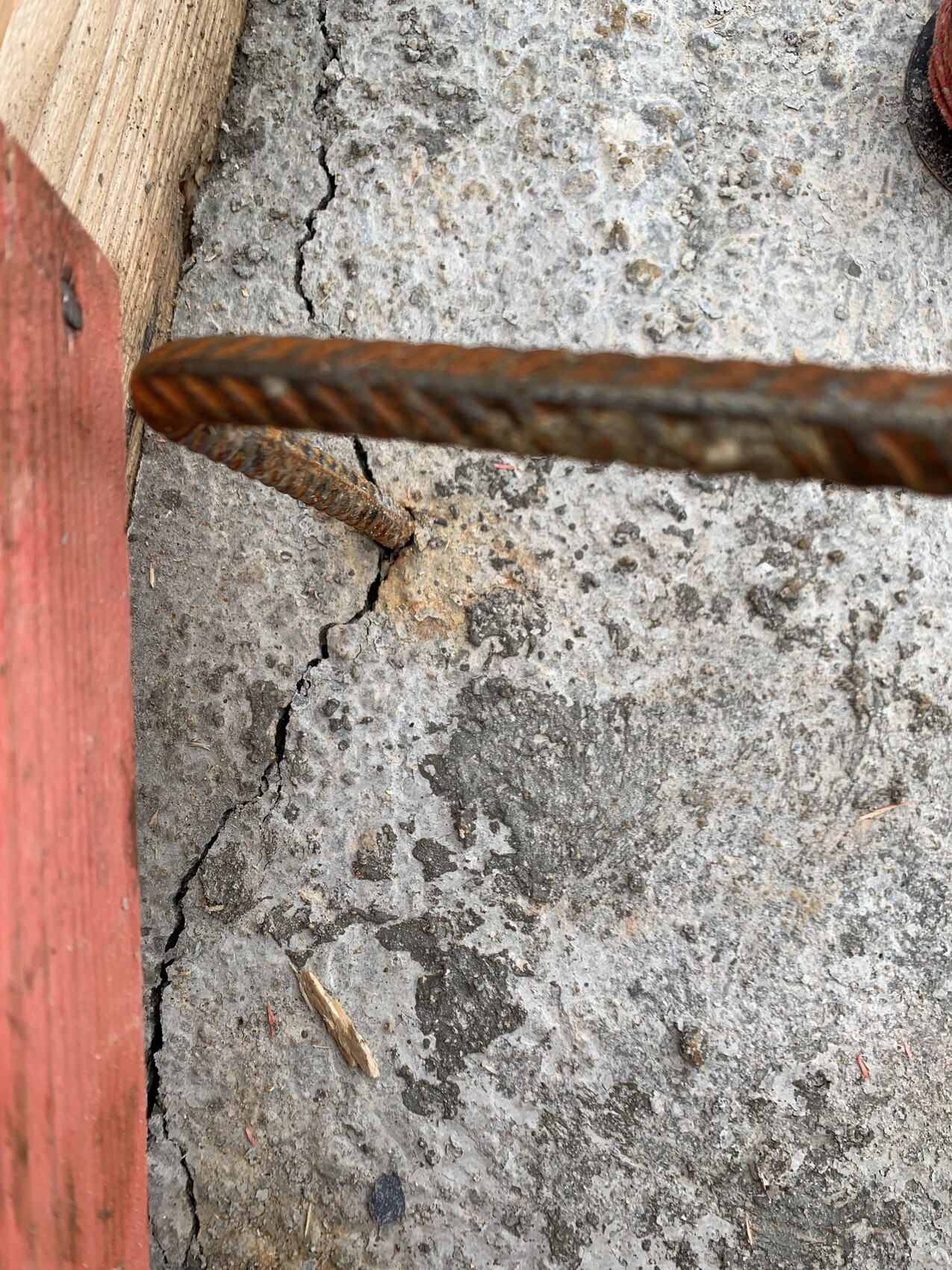
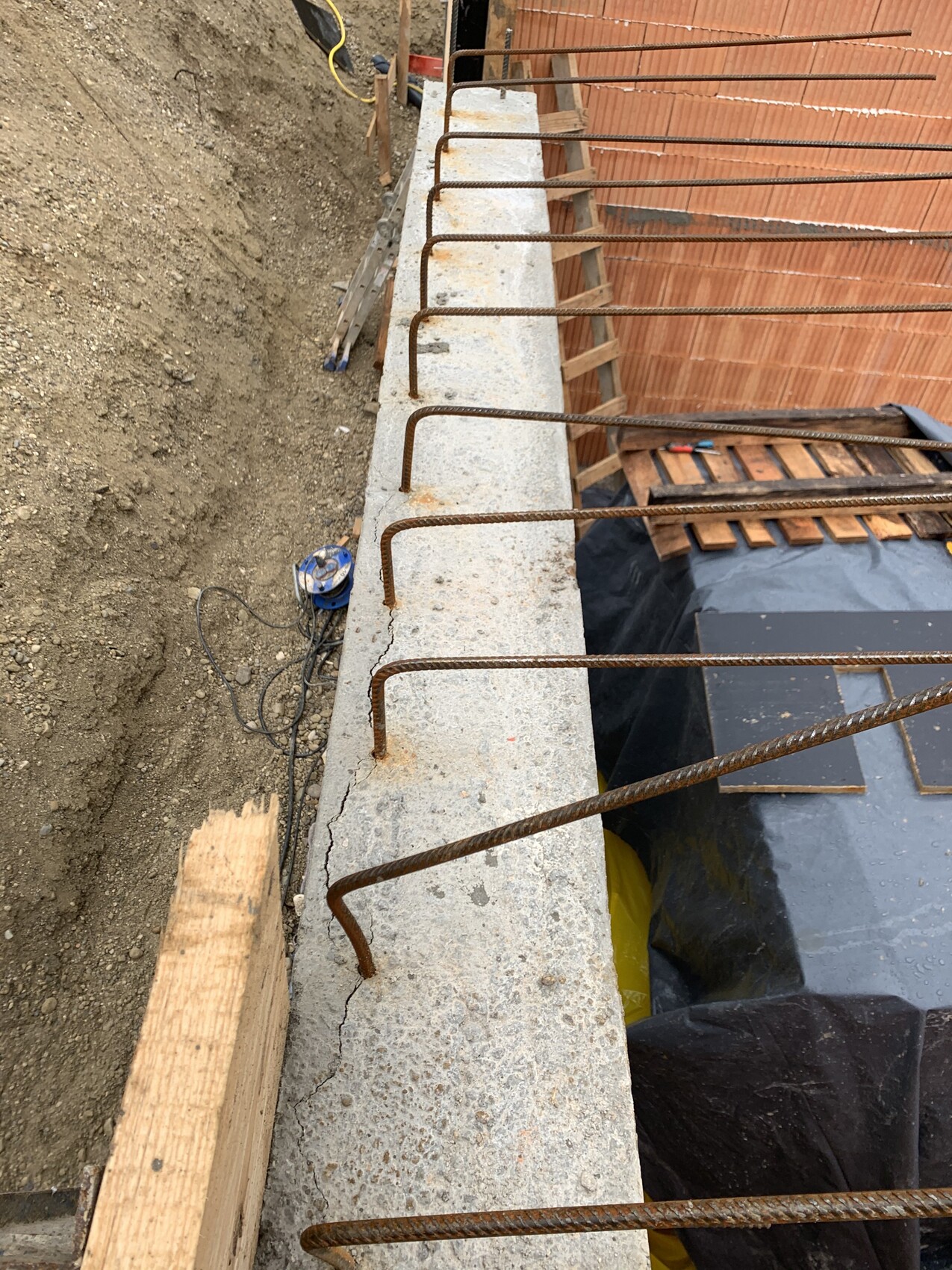

2. I have reported this, along with the pictures, to our site manager.
3. This was the reply:
“Good day Mr. xxx,
I have taken note of your pictures. As an immediate measure, the cracks will be covered to prevent water ingress.
When the basement ceiling is poured, the cracks will be sealed and should therefore no longer pose a problem.
However, I must point out that entering the construction site without supervision by the site management is not permitted for insurance reasons.
Please take this into consideration.”
4. What do the professionals think about this?
5. How should I proceed from here?
6. What should I reply or request?
Thanks in advance for your responses.
I wish you a happy and healthy holiday season!
First of all, I hope you and your families have stayed safe through these challenging times!?
1. Yesterday, I noticed cracks in the concrete exterior wall of the basement at our construction site; please see the attached pictures:
2. I have reported this, along with the pictures, to our site manager.
3. This was the reply:
“Good day Mr. xxx,
I have taken note of your pictures. As an immediate measure, the cracks will be covered to prevent water ingress.
When the basement ceiling is poured, the cracks will be sealed and should therefore no longer pose a problem.
However, I must point out that entering the construction site without supervision by the site management is not permitted for insurance reasons.
Please take this into consideration.”
4. What do the professionals think about this?
5. How should I proceed from here?
6. What should I reply or request?
Thanks in advance for your responses.
I wish you a happy and healthy holiday season!
Hello HeiniohnePlan
to ease your mind: (I am neither an expert nor a structural engineer, but I have built 3 houses) the only way to fix the poor workmanship is to dismantle the wall.
However, and this is realistic – I would chip away the loose concrete, protect the steel reinforcement against corrosion, install the formwork for the ceiling, and pour the concrete (preferably using plenty of plasticizer). This will encapsulate the wall and permanently eliminate the poor workmanship.
Steven
to ease your mind: (I am neither an expert nor a structural engineer, but I have built 3 houses) the only way to fix the poor workmanship is to dismantle the wall.
However, and this is realistic – I would chip away the loose concrete, protect the steel reinforcement against corrosion, install the formwork for the ceiling, and pour the concrete (preferably using plenty of plasticizer). This will encapsulate the wall and permanently eliminate the poor workmanship.
Steven
Steven schrieb:
Hello HeiniohnePlan
To put your mind at ease: (I am neither an expert nor a structural engineer, but I have built 3 houses) the only way to fix the poor workmanship is to dismantle the wall.
However, and this is realistic – I would remove the loose concrete, protect the reinforcement steel against corrosion, formwork the ceiling, and then pour the concrete (preferably with a lot of plasticizer). This will fully encase the wall and permanently fix the issue.
Steven That’s exactly right. If the original poster hadn’t noticed this, nothing would have been done.
In either case, a structural engineer is not required. The house will definitely not collapse because of this.
The general contractor (GC) would have accepted the work as defect-free.
However, at such an early stage, the relationship with the GC is now damaged. Good luck with the rest of the build.
Not having a site manager regularly inspect the construction site was simply not acceptable.
You can see the result in the GC’s latest response.
I would have visited the site myself and, if there was a defect, arranged an inspection appointment with the site manager. Then I would have politely asked what will be done about the cracks that were discovered by chance.
dab_dab schrieb:
I can't assess the construction details, but even if contractually agreed, the fact of being locked out of your own build would cause me serious concern... Not nice, but also not unusual. The original poster read and signed it themselves, as it is stated in the contract.

dab_dab schrieb:
I can’t judge the construction details, but even if it’s contractually regulated, the fact of being locked out of your own build would really cause me serious concerns... I agree, but it’s a tricky situation since it apparently was agreed upon contractually.
I would already be skeptical about such a clause in the contract: What motivates the general contractor (GC) not to want me on the construction site? According to their emails, it seems to be about safety risks.
Be that as it may, by entering the site again, the homeowner technically breaches the contract here and legally exposes themselves to claims if they even admit to it in emails (such as in defect notifications).
I would also recommend the approach suggested here: If the homeowner notices something on site, arrange an appointment with the site management and ideally document it with photos in their presence.
 HeiniohnePlan20 Jan 2021 08:40
OYEAH!
Thanks to all of you for your really helpful contributions @kati1337 @Zaba12 @icandoit @Steven @dab_dab
You are amazing!
1. The photo in the defect notice was taken from outside, through the construction fence.
2. That’s a good approach to just happen to see things during the agreed appointment. I will do it that way.
Of course, I will also drive by the construction site after work. It’s not about controlling; it’s about positive vibes. I want to watch my house being built as part of the construction process.
3. The notary (brother of a good friend, now a no-go) said back then regarding the house law paragraph that “the general contractor (GC) must be able to come onto the construction site and not have to check with us every time.”
I didn’t understand that I’m not allowed on my own property the other way around. I guess I’m just stupid. I think I will write that to him.
QUESTION: Is it possible to take action against the notary? Sure, notaries are almost untouchable, but realistically, is there really nothing you can do?
4. Yesterday my wife called the building supervisor after we had heard nothing from the GC or the supervisor about the defect notice—for over a week!
He was friendly on the phone and said he is also frustrated that the workers didn’t cover the wall with the cracks before Christmas.
Now we have an appointment next Thursday with an expert and the building supervisor.
5. I will probably play the smart guy there and suggest exactly what you @Steven wrote:
“I would chisel off the loose concrete, protect the rebar against corrosion, set up the formwork for the ceiling, and pour the concrete (preferably with a lot of plasticizer).”
Two questions about this:
5.1 Does the rust really have to be removed after such a short time? A little iron oxide is apparently good?
5.2 “With a lot of plasticizer”: Should the entire ceiling be poured with a lot of plasticizer or only the patched areas?
QUESTION:
6. After the defects are repaired, would you pay the full installment for the side walls and ceiling above the basement to the GC, or how is this usually handled?
7. Stay healthy, champs—I need you!
Thanks to all of you for your really helpful contributions @kati1337 @Zaba12 @icandoit @Steven @dab_dab
You are amazing!
1. The photo in the defect notice was taken from outside, through the construction fence.
2. That’s a good approach to just happen to see things during the agreed appointment. I will do it that way.
Of course, I will also drive by the construction site after work. It’s not about controlling; it’s about positive vibes. I want to watch my house being built as part of the construction process.
3. The notary (brother of a good friend, now a no-go) said back then regarding the house law paragraph that “the general contractor (GC) must be able to come onto the construction site and not have to check with us every time.”
I didn’t understand that I’m not allowed on my own property the other way around. I guess I’m just stupid. I think I will write that to him.
QUESTION: Is it possible to take action against the notary? Sure, notaries are almost untouchable, but realistically, is there really nothing you can do?
4. Yesterday my wife called the building supervisor after we had heard nothing from the GC or the supervisor about the defect notice—for over a week!
He was friendly on the phone and said he is also frustrated that the workers didn’t cover the wall with the cracks before Christmas.
Now we have an appointment next Thursday with an expert and the building supervisor.
5. I will probably play the smart guy there and suggest exactly what you @Steven wrote:
“I would chisel off the loose concrete, protect the rebar against corrosion, set up the formwork for the ceiling, and pour the concrete (preferably with a lot of plasticizer).”
Two questions about this:
5.1 Does the rust really have to be removed after such a short time? A little iron oxide is apparently good?
5.2 “With a lot of plasticizer”: Should the entire ceiling be poured with a lot of plasticizer or only the patched areas?
QUESTION:
6. After the defects are repaired, would you pay the full installment for the side walls and ceiling above the basement to the GC, or how is this usually handled?
7. Stay healthy, champs—I need you!
HeiniohnePlan schrieb:
3. The notary (brother of a good friend, now a no-go) said back then about the property law clause that "the general contractor must also be able to access the construction site without having to check with us every time." I didn’t realize that it meant I wasn’t allowed on my own property. I guess I’m just dumb. I think I’m going to write to him about this.
QUESTION: Is it possible to take action against the notary? Sure, notaries are like gods, but realistically, is there really nothing that can be done?
Was the notary involved in the contract with the construction company here? Or did you also buy the plot of land from them?
I’m a bit confused, as our notary only handled the land purchase.
Neither during the land transaction with the notary, nor in our building contract (which was without a notary), are there any property law clauses regulating who is allowed access to the land and when. So I’m surprised by that arrangement and how the notary is involved.
A notary should actually be impartial and factual. So if he had you sign this clause, I would expect a good notary to point out the consequences. Whether he can be held legally responsible if he didn’t do so, I can’t say.
Similar topics