
ᐅ Are large vertical joints in the structural shell still acceptable, or do they count as defects?
Created on: 14 Dec 2020 11:59
K
Kishihmen
Hello everyone,
In our house construction project managed by a general contractor, the masonry subcontractor was changed. The previous mason worked very neatly, but was replaced due to the slow pace of work (4 months for building the basement).
The new mason is now working very quickly, but in my opinion also quite roughly. In particular, I have noticed very large joints between the bricks. So my question to the experts is: Are these gaps in the masonry still within acceptable standards or even normal, or should we raise this issue directly with the mason or general contractor while the damage is still limited?
A few additional details:
- The building is a terraced house (row house)
- The walls are built with 36.5cm (14 inches) Poroton clay blocks
If I have forgotten any important information, please ask.
Thanks in advance for your assessment and support.
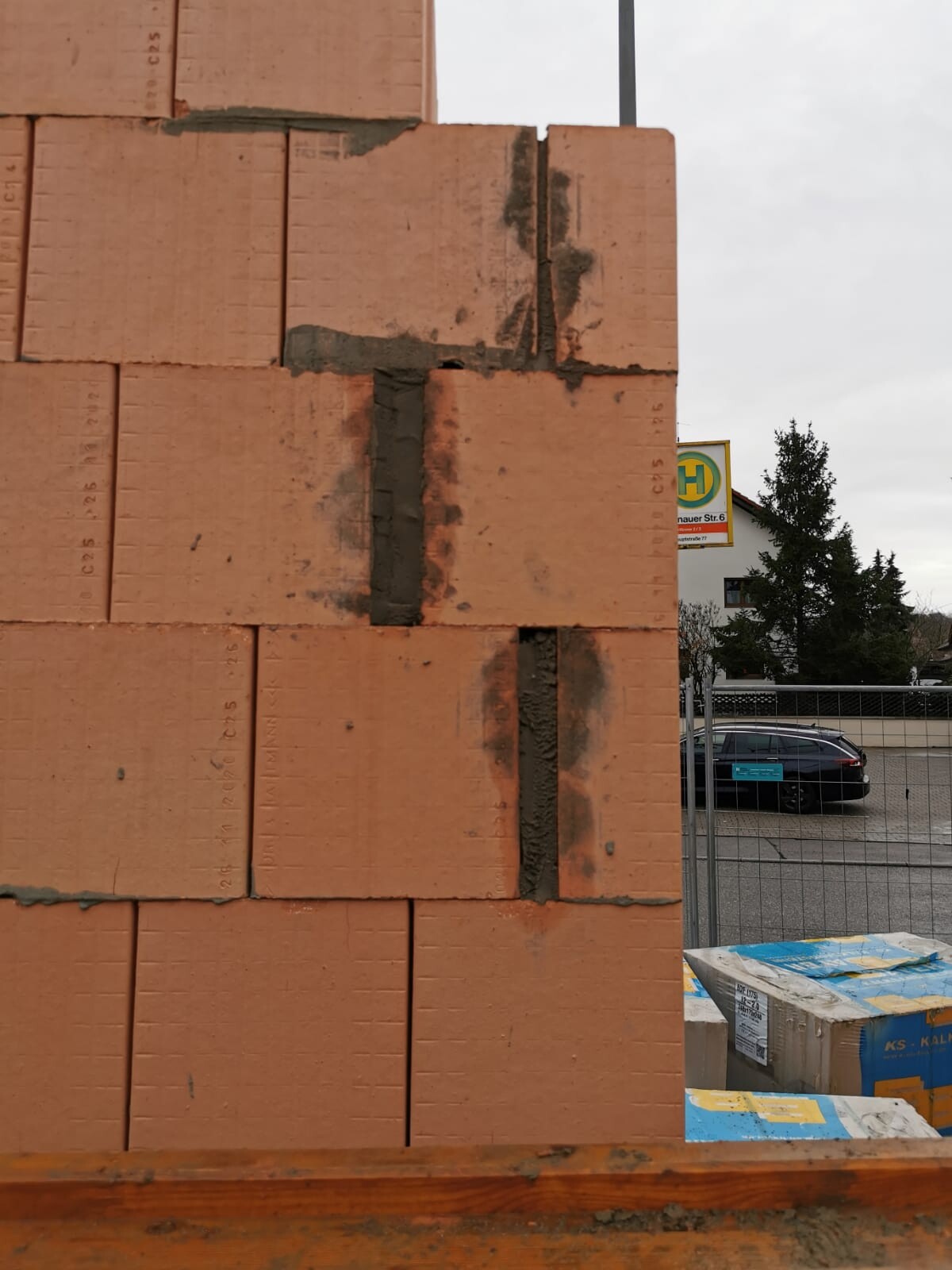
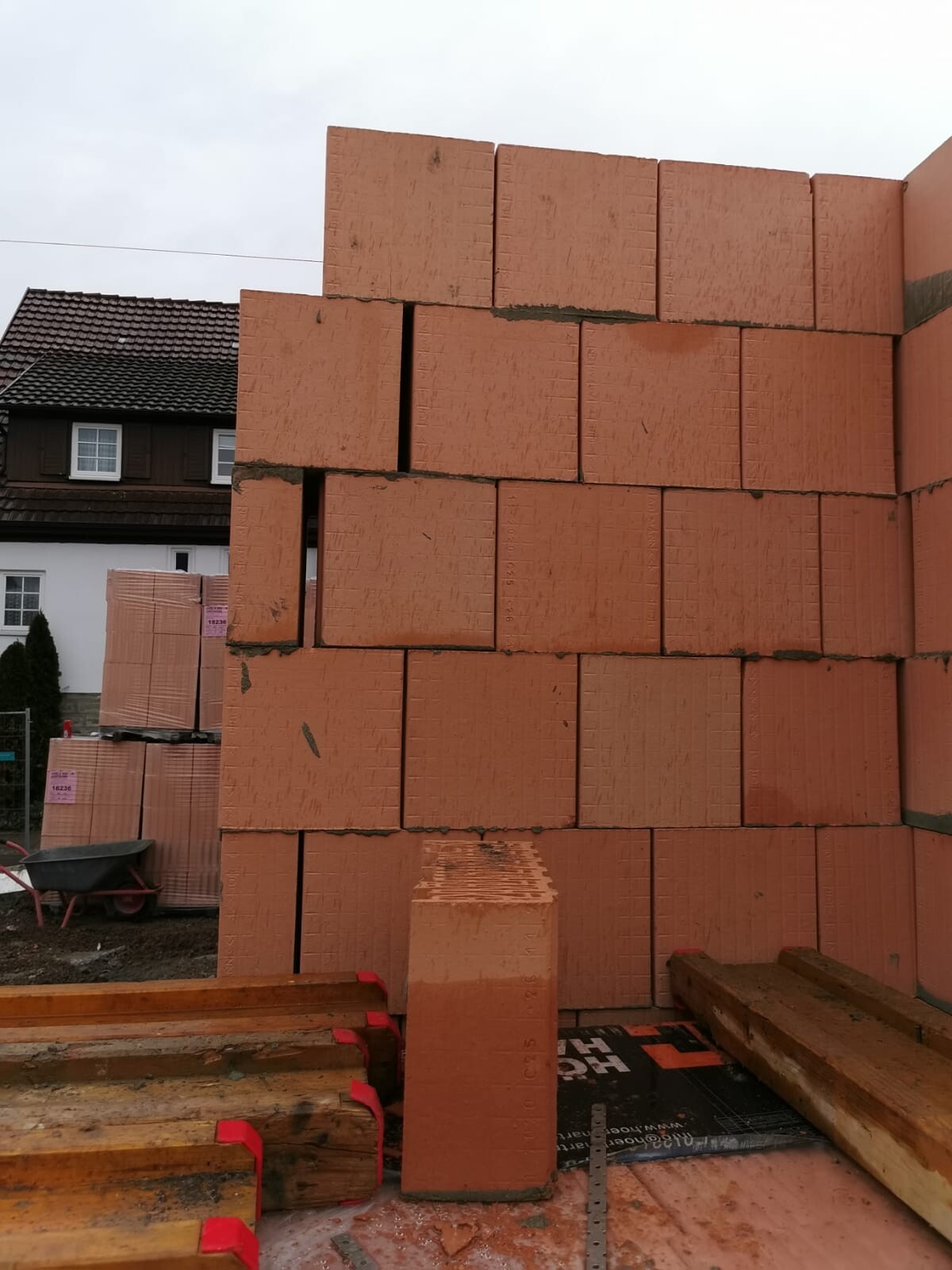
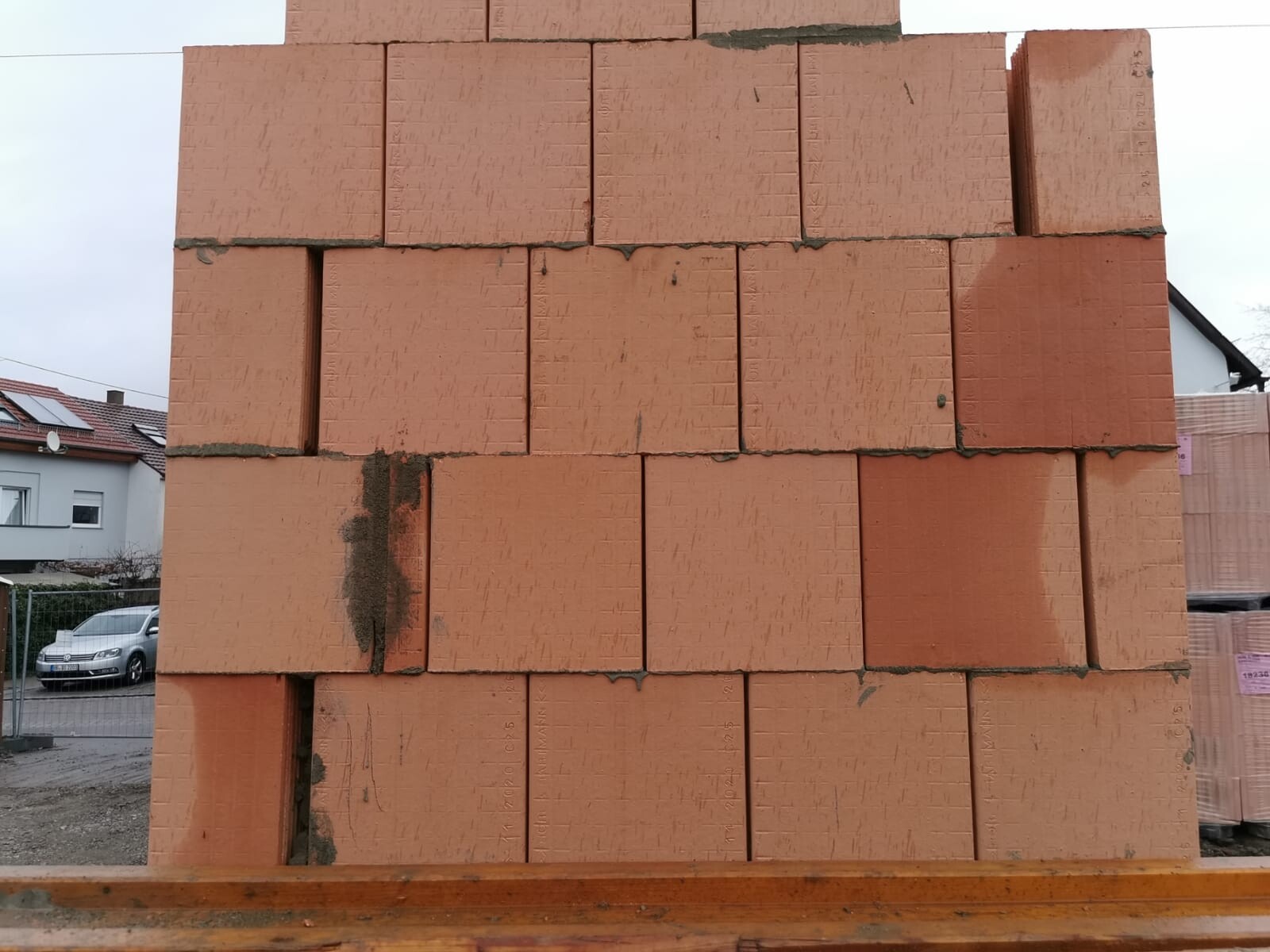
In our house construction project managed by a general contractor, the masonry subcontractor was changed. The previous mason worked very neatly, but was replaced due to the slow pace of work (4 months for building the basement).
The new mason is now working very quickly, but in my opinion also quite roughly. In particular, I have noticed very large joints between the bricks. So my question to the experts is: Are these gaps in the masonry still within acceptable standards or even normal, or should we raise this issue directly with the mason or general contractor while the damage is still limited?
A few additional details:
- The building is a terraced house (row house)
- The walls are built with 36.5cm (14 inches) Poroton clay blocks
If I have forgotten any important information, please ask.
Thanks in advance for your assessment and support.

K
knalltüte23 Dec 2020 21:55You Berliners will get your turn soon... As part of the effort to increase housing density in city centers, the old Berlin apartments with ceiling heights of 2.90m (9.5 feet) or more are simply being divided horizontally at half height 😎
I believe this is already in the planning stage; it’s probably already reported in the Postillion.
I believe this is already in the planning stage; it’s probably already reported in the Postillion.
W
WilderSueden23 Dec 2020 23:18Yes, it will definitely have been decided soon (please forgive my language, I am not as practiced in the future perfect tense since BER was completed 😉 )
K
Kishihmen12 Jan 2021 10:11So, I spoke with the shell builder again today. The plan to fill the missing 5cm (2 inches) is to form a shuttering and fill it with concrete, plus Styrofoam external insulation.
However, I am not sure to what extent this might later cause a risk of thermal bridges and mold. (The remaining wall is 36.5cm (14.4 inches) unfilled Poroton).
However, I am not sure to what extent this might later cause a risk of thermal bridges and mold. (The remaining wall is 36.5cm (14.4 inches) unfilled Poroton).

Kishihmen schrieb:
I’m not sure to what extent we might have issues with thermal bridges and mold later on here? (The rest of the wall is 36.5cm (14.4 inches) of unfilled Poroton) I share your concerns. Concrete plus external thermal insulation composite system (ETICS) has a different thermal transmittance than monolithic porous bricks.
Kishihmen schrieb:
So today I spoke again with the structural builder. The plan to make up the missing 5cm (2 inches) is to create a formwork and fill it with concrete (+ Styrodur external insulation). He should just borrow a block saw. Using a starter course as usual at the bottom, he could have better adjusted the height, but the top is manageable now too. But not this amateurish patchwork. Are you seriously working with the “butcher’s general contractor” from @Hausbau0815 – honestly, what does that guy do for a living?
https://www.instagram.com/11antgmxde/
https://www.linkedin.com/company/bauen-jetzt/
Similar topics