
ᐅ What to replace an oil heating system from 1989 in an old, characterful house with?
Created on: 9 Jan 2021 14:19
M
meowmeow
Hello dear forum,
we have an old timber-framed house in the Alpine foreland. Built around 1910 with an extension from the 1960s, the original building has a basement, the extension does not. The insulation is rather poor, and the windows are either double-glazed or old. A hailstorm completely destroyed our roof, so a new roof with good insulation has now been installed.
Currently, we have a Viessmann oil heating system from 1989 with a 2000l (528 gallons) oil tank in the basement, which has caused no major problems so far. The hot water is also centrally supplied by this system. With the old roof, we used about 1900-2500l (502-660 gallons) of oil in winter, depending on the season. With the new roof, we don’t have experience yet, but I expect some improvement. The house has about 115m2 (1238 square feet) of living space, heated by radiators.
Since the heating system is getting old and there are currently larger subsidy programs, we are considering modernization. From my research so far, a heat pump seems to be out of the question because we would need a better-insulated house and underfloor heating? Other types of electric heating seem even less economical?
The least invasive option would probably be a new condensing oil boiler, but these are not subsidized, so I could just wait until the old one breaks down?
A pellet heating system seems too complicated to operate? My mother will soon be 70 and often lives alone in the house. In her old age, I don’t want to put too much strain on her. We frequently visit with our child for several days, but mostly in summer. Also, the long transition phase with low heating loads appears to speak against a pellet system.
I can’t really estimate the costs for gas. A gas connection might be possible with the local supplier if the neighbors join in. We would need about 60-70m (197-230 feet) of gas pipeline on our own property. What costs should I roughly expect? Alternatively, a tank could be buried in the garden, but we are not very enthusiastic about that idea. We are somewhat confused by current politics: on the one hand, fossil fuels are supposed to become much more expensive to promote renewable energy, but on the other hand, gas condensing boilers are heavily subsidized?
For sentimental reasons, we could imagine installing a water-bearing wood stove in the living room. We already have a wood-burning stove in the kitchen where we occasionally cook, and which also provides some heating in winter.
However, it would have to connect to the same chimney currently used by the oil heating system – or the future gas heating system – and from what I understand, this is not allowed, so I might have to give up that dream, right?
We are considering a photovoltaic system on the roof, but we plan to remove the attic floor and renovate the upstairs room within about 5-10 years to get higher ceilings. This would also include adding a few skylights. I should probably wait for these renovation measures first.
What would you recommend? How should the new heating system be sized – I assume this can be calculated quite well based on previous energy consumption?
Thank you very much for your time and help!
we have an old timber-framed house in the Alpine foreland. Built around 1910 with an extension from the 1960s, the original building has a basement, the extension does not. The insulation is rather poor, and the windows are either double-glazed or old. A hailstorm completely destroyed our roof, so a new roof with good insulation has now been installed.
Currently, we have a Viessmann oil heating system from 1989 with a 2000l (528 gallons) oil tank in the basement, which has caused no major problems so far. The hot water is also centrally supplied by this system. With the old roof, we used about 1900-2500l (502-660 gallons) of oil in winter, depending on the season. With the new roof, we don’t have experience yet, but I expect some improvement. The house has about 115m2 (1238 square feet) of living space, heated by radiators.
Since the heating system is getting old and there are currently larger subsidy programs, we are considering modernization. From my research so far, a heat pump seems to be out of the question because we would need a better-insulated house and underfloor heating? Other types of electric heating seem even less economical?
The least invasive option would probably be a new condensing oil boiler, but these are not subsidized, so I could just wait until the old one breaks down?
A pellet heating system seems too complicated to operate? My mother will soon be 70 and often lives alone in the house. In her old age, I don’t want to put too much strain on her. We frequently visit with our child for several days, but mostly in summer. Also, the long transition phase with low heating loads appears to speak against a pellet system.
I can’t really estimate the costs for gas. A gas connection might be possible with the local supplier if the neighbors join in. We would need about 60-70m (197-230 feet) of gas pipeline on our own property. What costs should I roughly expect? Alternatively, a tank could be buried in the garden, but we are not very enthusiastic about that idea. We are somewhat confused by current politics: on the one hand, fossil fuels are supposed to become much more expensive to promote renewable energy, but on the other hand, gas condensing boilers are heavily subsidized?
For sentimental reasons, we could imagine installing a water-bearing wood stove in the living room. We already have a wood-burning stove in the kitchen where we occasionally cook, and which also provides some heating in winter.
However, it would have to connect to the same chimney currently used by the oil heating system – or the future gas heating system – and from what I understand, this is not allowed, so I might have to give up that dream, right?
We are considering a photovoltaic system on the roof, but we plan to remove the attic floor and renovate the upstairs room within about 5-10 years to get higher ceilings. This would also include adding a few skylights. I should probably wait for these renovation measures first.
What would you recommend? How should the new heating system be sized – I assume this can be calculated quite well based on previous energy consumption?
Thank you very much for your time and help!
 Schimi179110 Jan 2021 16:48
pagoni2020 schrieb:
...
That is exactly what you should closely examine, and that is where I have my doubts about a heat pump.
.. 😱 Are heat pumps really that unreliable?Schimi1791 schrieb:
😱 Are heat pumps really that unreliable?No, definitely not. They are not more maintenance-intensive than gas or oil heating systems. In fact, you can do a lot of the maintenance yourself. What is really tricky, however, is that you need to be careful during the planning stage. You also have to familiarize yourself with the settings. This can be quite challenging, but it is usually rewarded with very low operating costs and future-proof performance.
P
pagoni202010 Jan 2021 18:28Schimi1791 schrieb:
Are heat pumps really that unreliable? I never said that, and why would I criticize a technology that is widely used everywhere? Still, heat pumps have their drawbacks and issues, and they are not always the best fit. As @Joedreck describes, and as you can often read here, using a heat pump requires a certain level of interest to really understand the topic in depth. In my opinion, it’s not a typical plug-and-play product. For my mother’s situation, it wouldn’t be my choice. It’s also not my personal choice, because—unlike before—I have zero desire to deal with heating curves and all the other technical details. For me, a heating system just has to work and provide comfortable warmth, period!
I had an oil heating system in the house for 30 years and it did exactly that wonderfully; I rarely had to go into the boiler room to adjust anything, it simply worked. Currently, we have a gas boiler running on propane, and that also works perfectly fine without me needing to get involved.
Another point, which I read here quite often, is that many technicians only have basic knowledge about modern heat pumps, and usually only the manufacturer’s service technician can help. I’ve also heard of service fees of €500 (or more) for heat pump maintenance (without spare parts), which makes some people end up heating their entire homes with gas instead.
So I stand by my view: for my mother, or for any situation where I don’t live there full-time myself, a heat pump would not be an option for me.
Schimi179110 Jan 2021 20:22pagoni2020 schrieb:
...
For me, a heating system just has to work and provide comfortable warmth, period!
...Affirmative!pagoni2020 schrieb:
...
In my house, I had an oil heating system for 30 years, and it did exactly THAT wonderfully; I rarely had to go down to the boiler room to adjust anything—it just worked.
...Our oil heating system has been running—touch wood—without any complaints for over a year now! Great! If it weren’t for the CO2 tax, I probably wouldn’t be thinking about switching right now. At the moment, though, I think something new will be needed in the next few years. I was then thinking about gas, especially since I got the gas connection for free. Unfortunately, this is also subject to the CO2 tax. So currently, I’m leaning more toward pellets. I’m also not sure if a heat pump makes sense without photovoltaic panels.We’ll wait and see… no urgent need yet.
pagoni2020 schrieb:
...
I also read about service flat fees of €500 and more for a heat pump (excluding spare parts),
... 😱
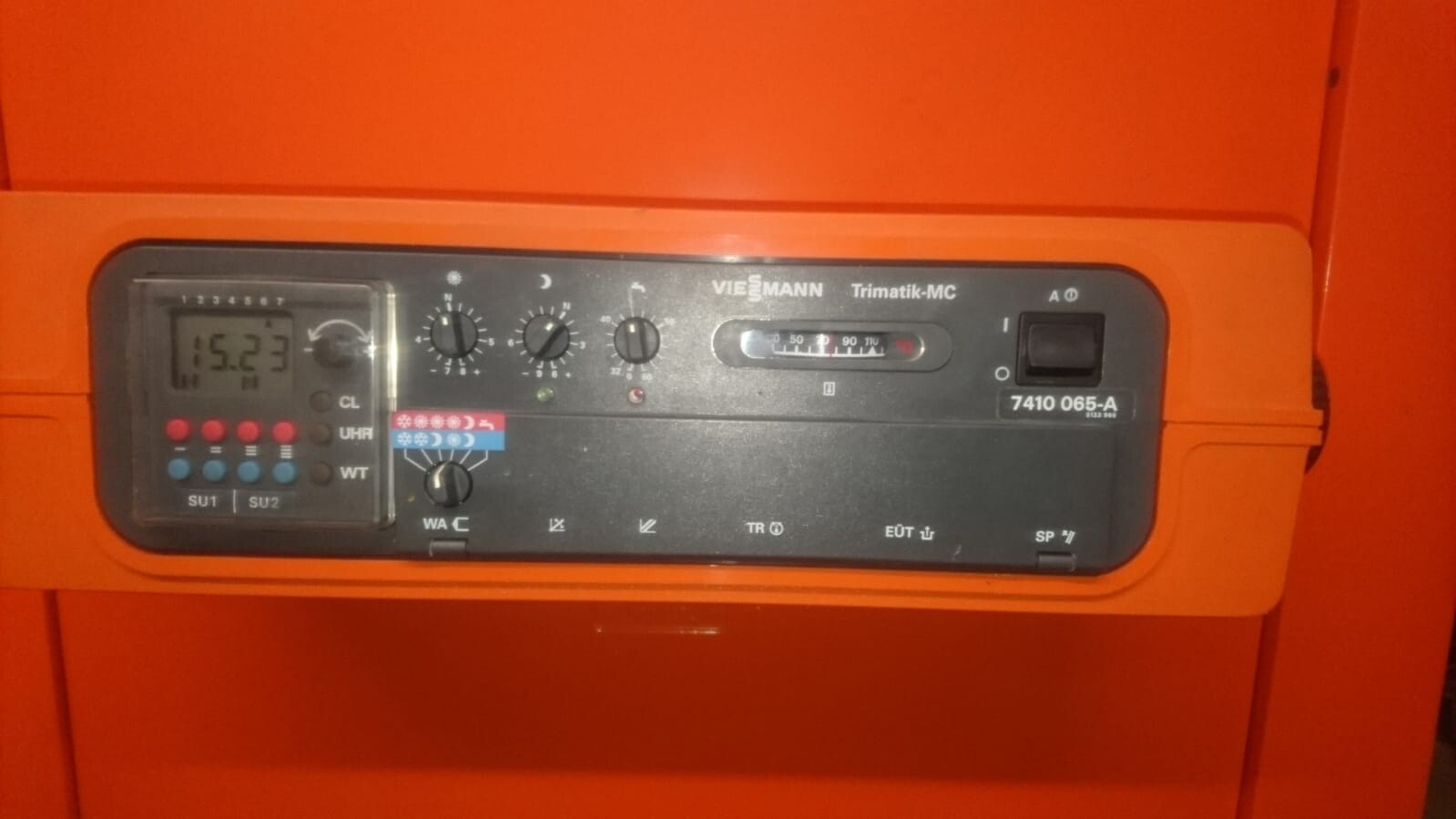
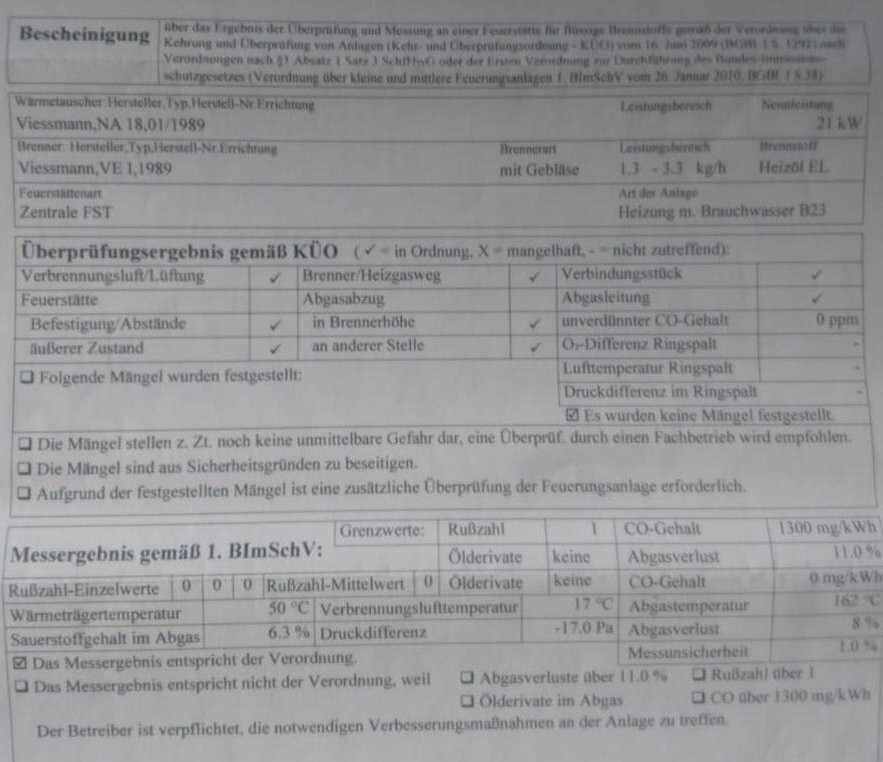
This is the current boiler; so far, no one has complained.
From my understanding, a heat pump still has an electric heater as a backup, since it comes with a heating element, right?
At least theoretically, we have the option to get a gas connection, but it will probably be quite expensive because about 60-70m (200-230 feet) of piping on our own property would be required. Does liquid gas from a tank have any advantages over a piped supply? For oil, we currently always have to pay extra for the smaller delivery truck because the access is quite narrow.
After a bit more research, I realize that a hydronic chimney combined with a heat pump is not as straightforward as I imagined. Also, it cannot be used during a power outage, so I would lose the redundancy? In that case, it might be wise to choose a chimney with a different storage technology, or is there a foolproof system that can preferably also handle power outages?

From my understanding, a heat pump still has an electric heater as a backup, since it comes with a heating element, right?
At least theoretically, we have the option to get a gas connection, but it will probably be quite expensive because about 60-70m (200-230 feet) of piping on our own property would be required. Does liquid gas from a tank have any advantages over a piped supply? For oil, we currently always have to pay extra for the smaller delivery truck because the access is quite narrow.
After a bit more research, I realize that a hydronic chimney combined with a heat pump is not as straightforward as I imagined. Also, it cannot be used during a power outage, so I would lose the redundancy? In that case, it might be wise to choose a chimney with a different storage technology, or is there a foolproof system that can preferably also handle power outages?
Similar topics