
So, the corona lockdown and the final phase of my career have some positive sides:
I have two small gem plots of land that are finally going to be built on (one for ourselves, one for our oldest son – here is the first one). We have negotiated the plot for a long time, also with an architect (hmm), and as someone who is slightly indecisive, I’m losing clear overview with all the alternatives: which basic form fits best for the plot and for us?
As a first step, it would be great to get some help from you. Then next would be our detailed planning.
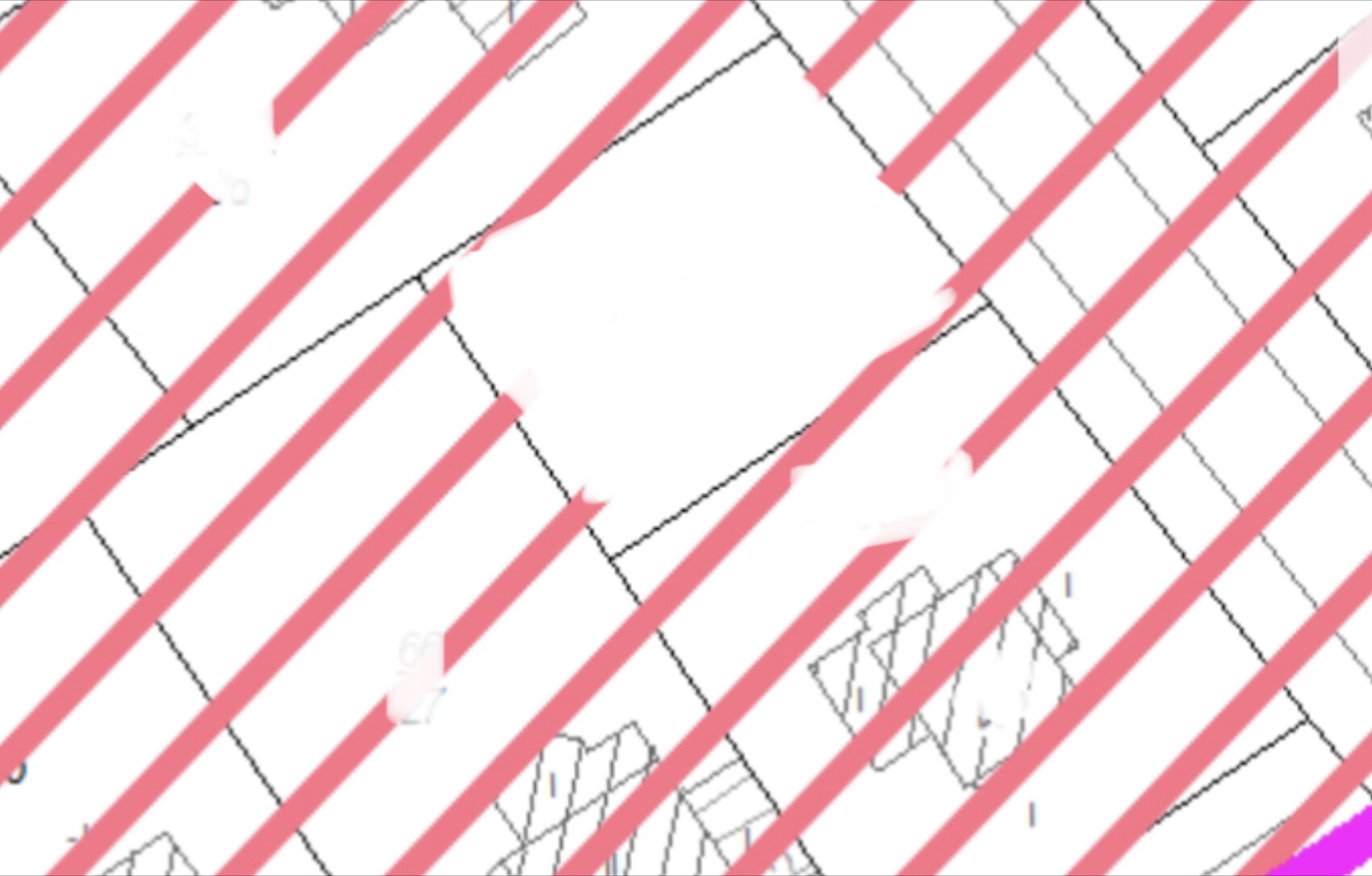
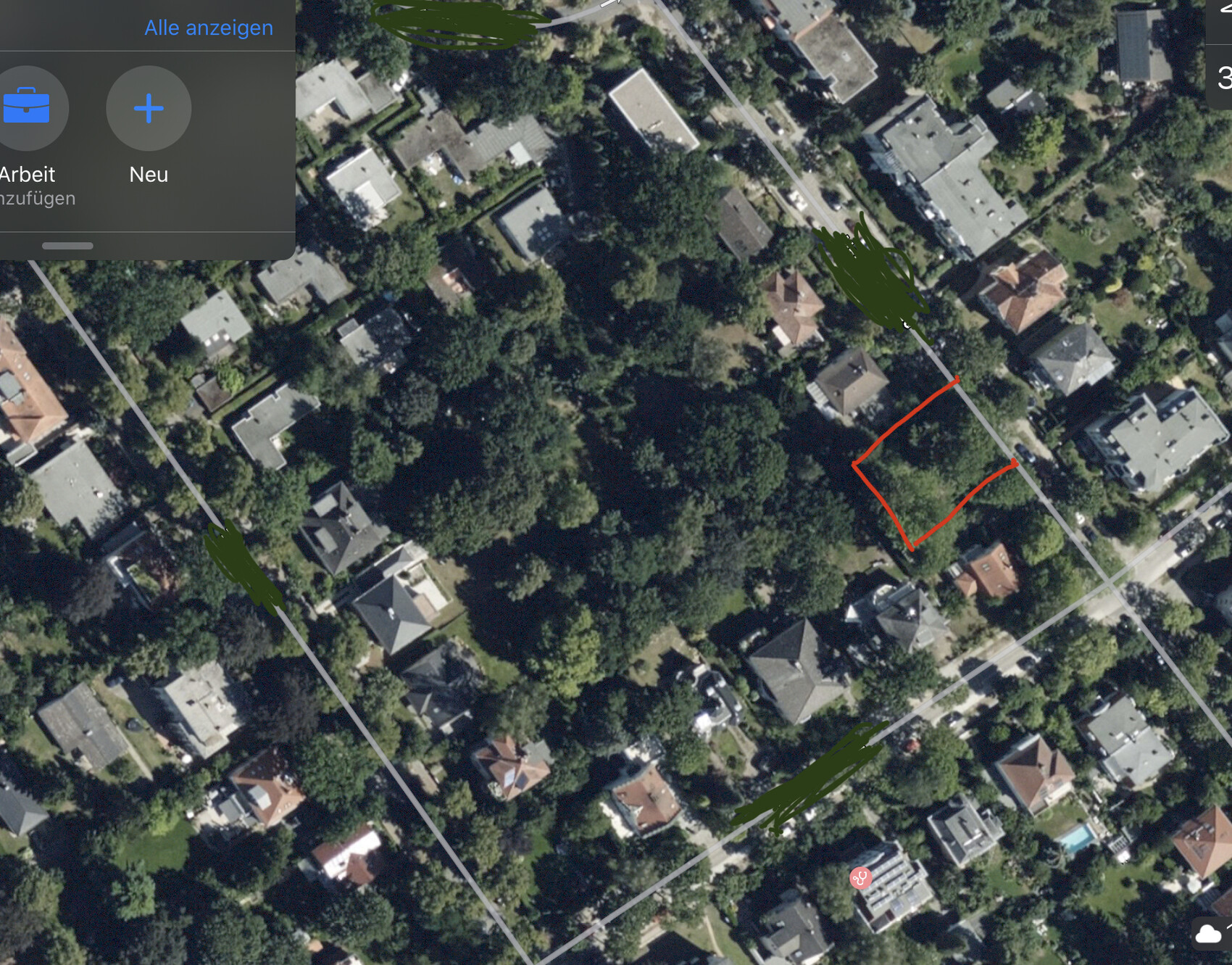
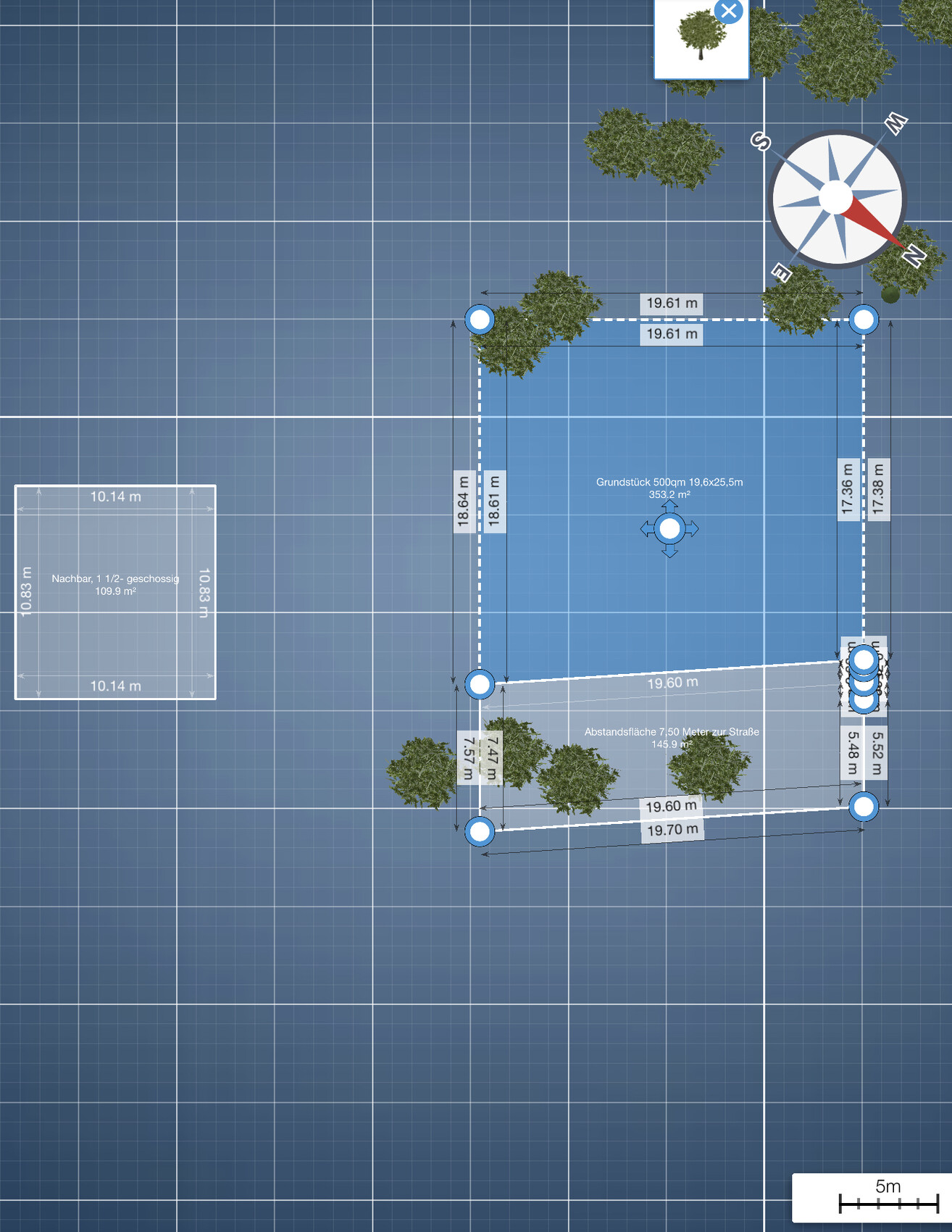
Plot size: 500m2 (5382 sq ft), southwest facing, 19.5m (64 ft) (street side) x 25.5m (84 ft); Berlin, very good location.
Very green inner area to the west, undevelopable. Quiet street.
Two challenges:
Front garden with 7.5 meters (25 ft) is very large,
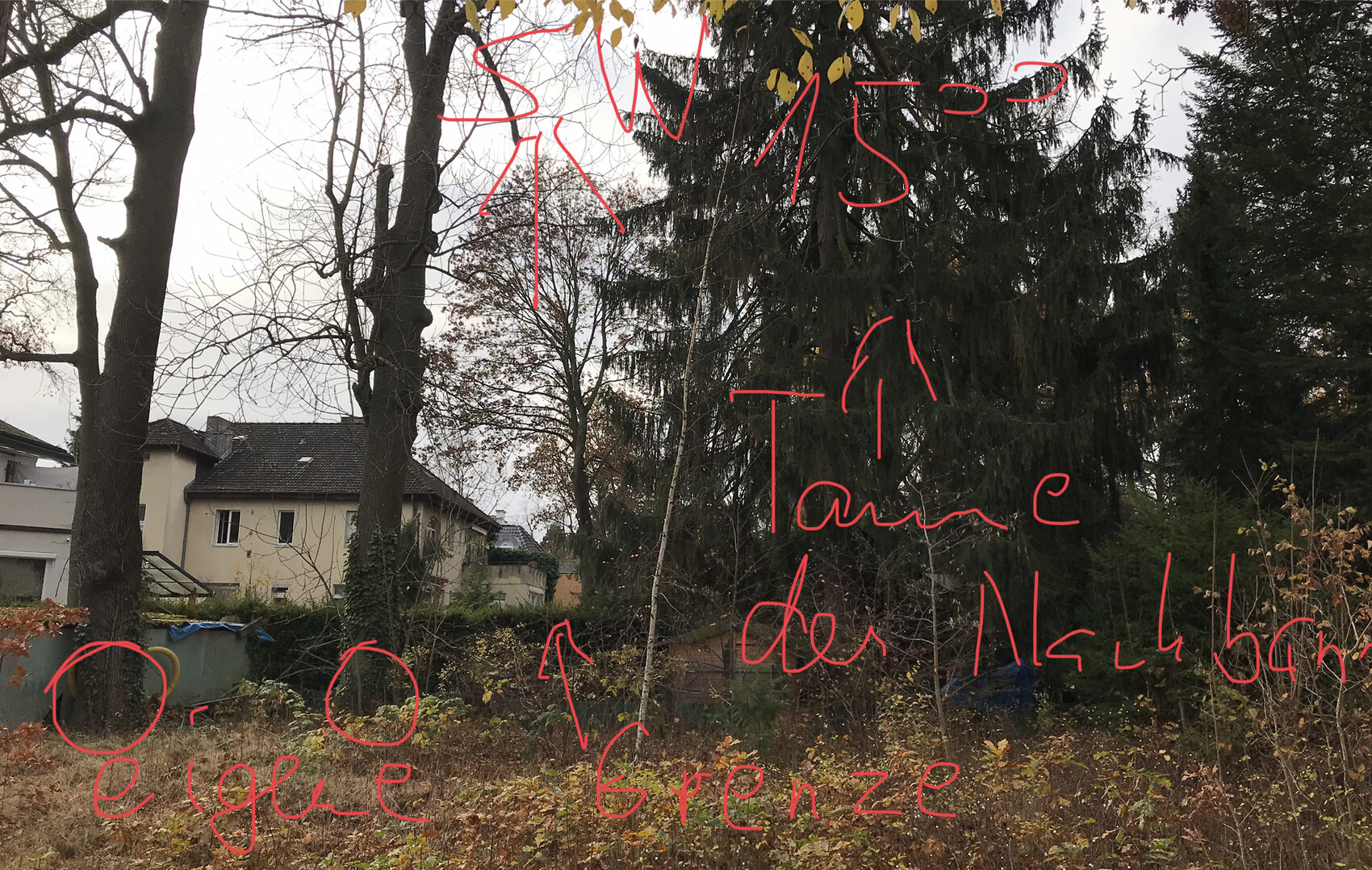
Huge spruce tree around 25-30m (82-98 ft) high almost directly on the western plot boundary at the neighbor’s in the northwest corner.
Slope: no
Plot ratio (site coverage ratio): 0.25
Floor area ratio (FAR): none, max 2 floors plus roof
Building envelope, building line and boundary: keep 7.5m (25 ft) clear to the street, no parking place there; 3m (10 ft) setback to the three neighbors
Number of parking spaces
Number of storeys: max 2 storeys plus roof
Roof shape: planning office considers flat roofs undesirable, but in the surroundings such a roof has been approved.
Other requirements: “fit in” with the neighborhood
Clients’ requirements:
Style, roof shape, building type: modern, but above all coherent and of high quality.
Basement, floors: basement technically difficult due to access and plot size; in the area, all houses have basements, mostly about 1 meter (3 ft) above ground. From our point of view, given the small plot, basement is inappropriate because of stairs leading to the small garden.
Two floors plus roof.
Number of occupants, ages: 3: father/mother/child, 60/51/12 years, father works from home.
Space requirements ground floor (GF), upper floor (UF): UF 3 rooms, a separate office room GF/UF conceivable but not mandatory. Steam sauna.
Office: family use or home office? Father’s home office.
Guest overnight stays per year: rare, child often.
Open or closed architecture: rather open, but more west and east as a unit, rather than east and kitchen (at the dining table homework, games, reading newspaper, etc.).
Conservative or modern construction: modern.
Open kitchen, cooking island: if it fits, but the dining table is actually the family center, even without eating, so a direct view of frying pans is not essential.
Number of dining seats: 5
Fireplace: rather yes, but in the last house it was pointless; abroad in France, however, it’s a dream.
Music/stereo wall: father is a music lover.
Balcony, roof terrace: rather yes.
Garage, carport: at least a carport on the right side (pardon: north side).
Utility garden, greenhouse: no.
Further wishes/particulars/daily routine, also reasons why some things should or should not be:
Preferably no “chocolate-box house” or “replacement villa.” But if conventional is better, that’s also OK.
Preliminary house plans
I am aware that we will probably need an architect and that the drafters from a construction company may not be enough. So far, we have not found one (who can plan eco-friendly construction).
Origin of the plans:
One from an architect, but with many promises contradicting the zoning plan, like a fitness studio in the basement with floor-level excavations up to the neighbor’s boundary.
- Planner from a construction company
- Do-it-yourself
What do you particularly like? Why?
Each has a first “draft” of a GF and UF, knowing that “draft” is a bit exaggerated.
In random order:
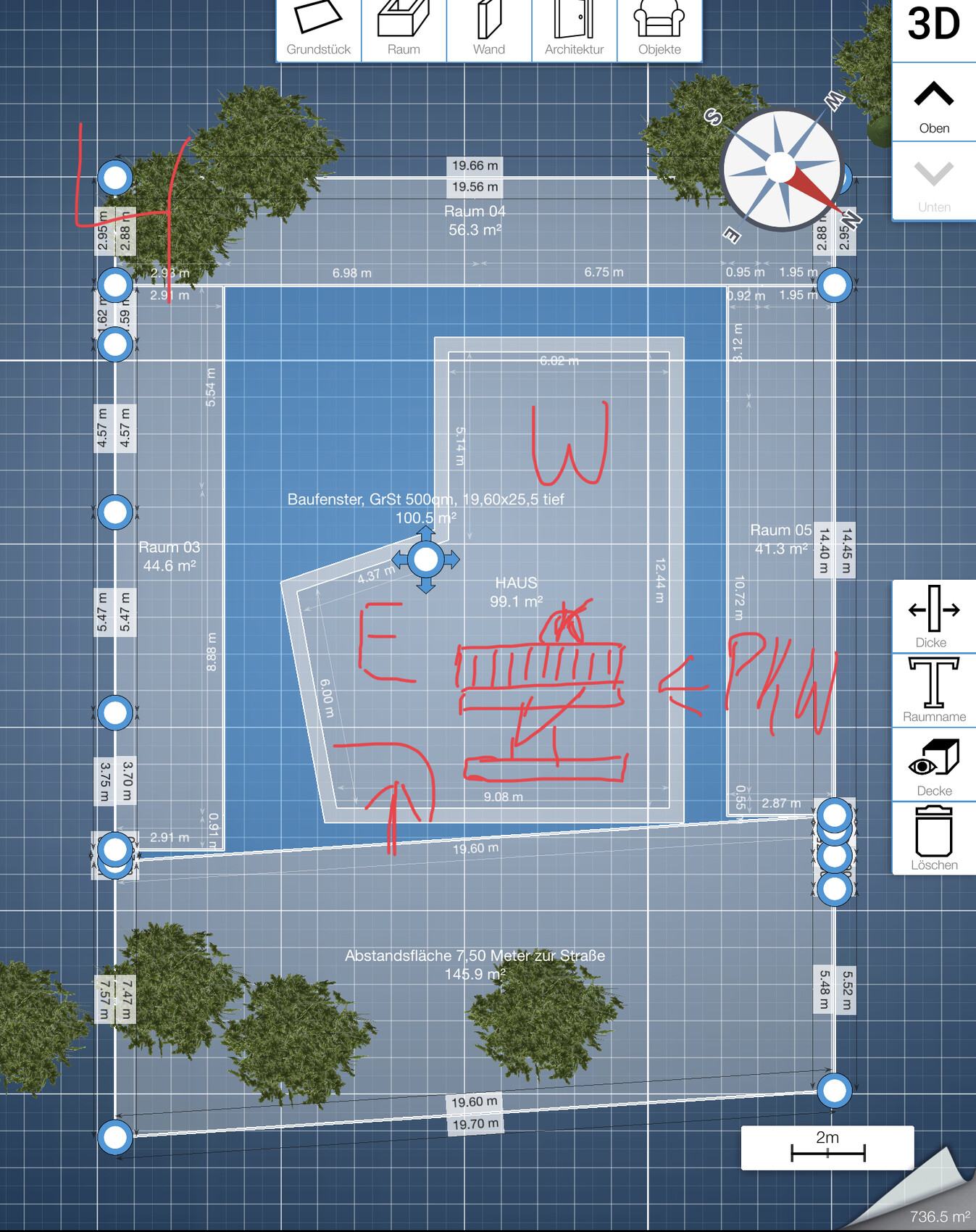
Draft 4 (angled): adapts to the sun, the opening of space from small at the entrance to large in the living room, the transitions, the flow of rooms kitchen-dining-living room, possibilities for terrace all around east/living room, great unconventional children’s room with terrace.
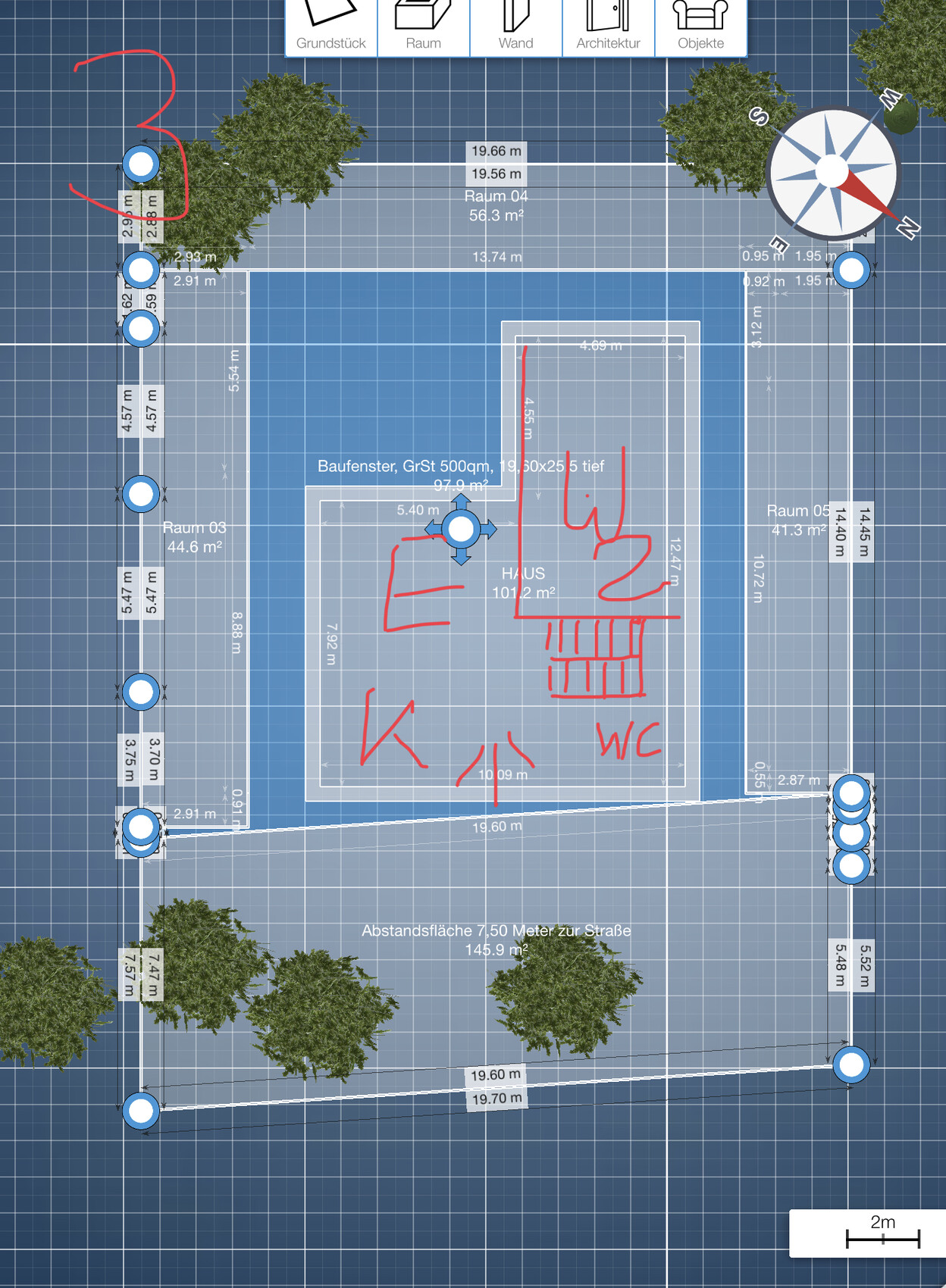
Draft 3: always works with L-shape kitchen-dining-living, lots of garden to the west, narrow side to the southeast neighbor.
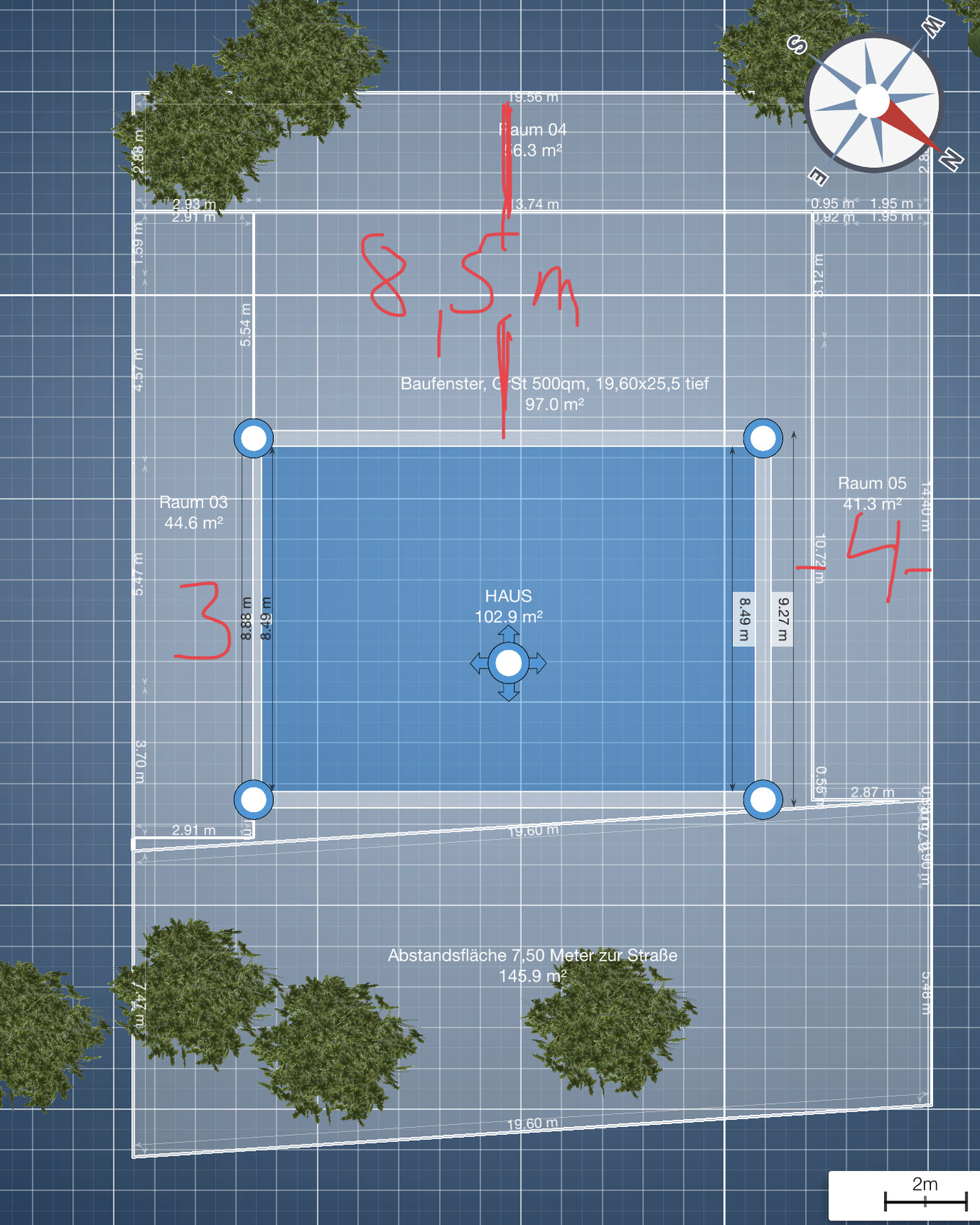
Draft 2 (corner): partly covered outdoor area, the neat UF, the UF terrace.
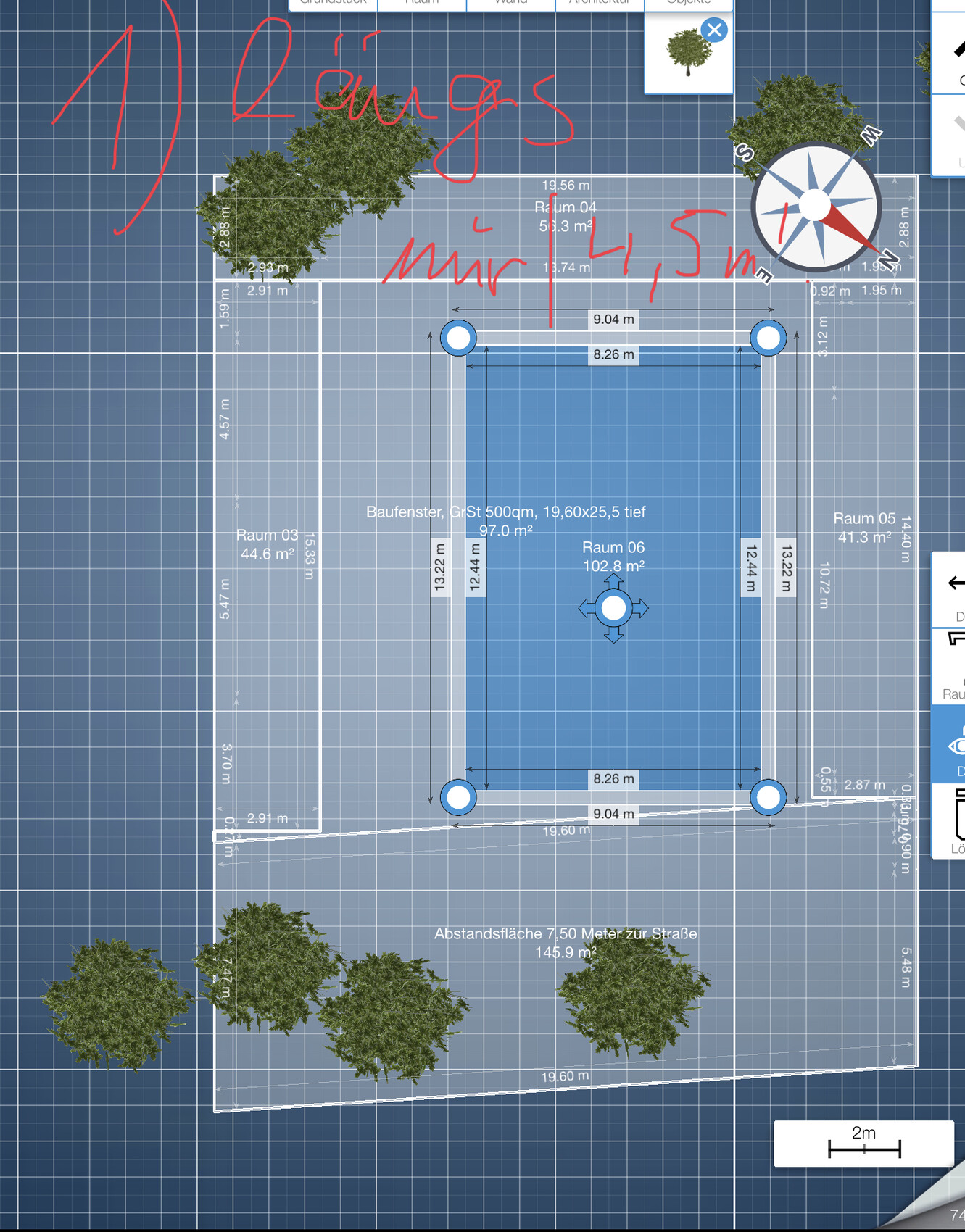
Draft 1 (“barn”): the aesthetic exterior, clear structure.
What do you not like? Why?
D4: kitchen too subordinate? Large living area needs subdivision… upstairs attractive but difficult.
D3: no structure of garden/terrace not derived from or shaped by house/plot.
D2: inside GF too fragmented? Kitchen not separated enough from dining area? UF not easy to design because of angle.
D1 barn: small garden to the west.
Price estimate according to architect/planner:
Personal price limit for the house, including equipment:
We have no fixed price limit; it should be appropriate to the (small) but valuable plot. I expect an all-in cost of about 700,000 euros (approx. 700 K€).
Preferred heating technology: geothermal.
If you have to give up something, which details/expansions could you?
- Can give up: basement,
- Cannot give up: light, 3m (10 ft) ceiling heights on GF, views of nature, ecologically flawless construction (minimized pollutants).
What is the most important/fundamental question about the floor plan summarized in 130 characters?
Which of the basic concepts should we pursue further for THIS plot? Or are there still too many options so we need to decide our favorite first?
Because of teenager: preferably smaller GF/UF and converted roof?
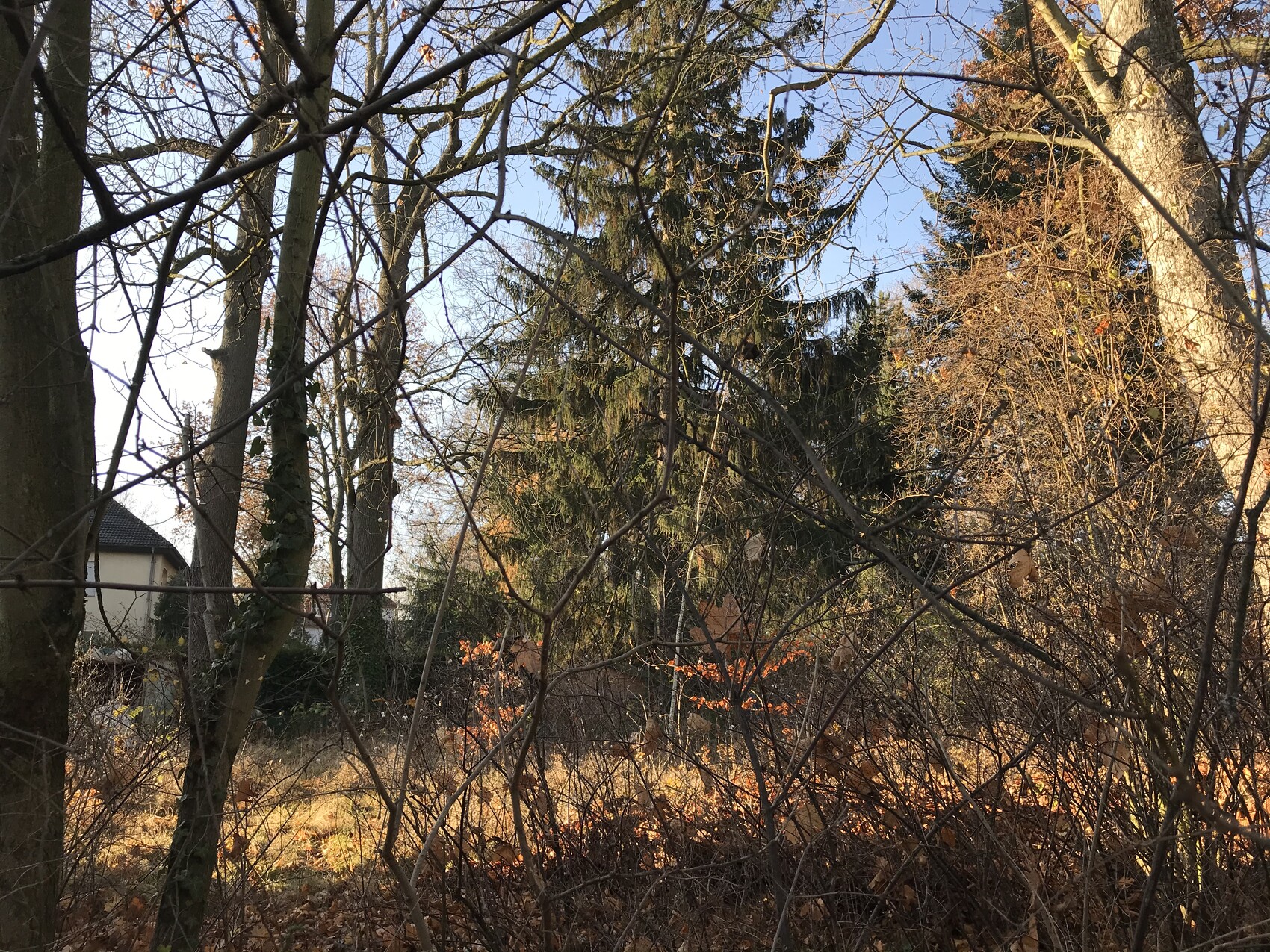
I have two small gem plots of land that are finally going to be built on (one for ourselves, one for our oldest son – here is the first one). We have negotiated the plot for a long time, also with an architect (hmm), and as someone who is slightly indecisive, I’m losing clear overview with all the alternatives: which basic form fits best for the plot and for us?
As a first step, it would be great to get some help from you. Then next would be our detailed planning.
Plot size: 500m2 (5382 sq ft), southwest facing, 19.5m (64 ft) (street side) x 25.5m (84 ft); Berlin, very good location.
Very green inner area to the west, undevelopable. Quiet street.
Two challenges:
Front garden with 7.5 meters (25 ft) is very large,
Huge spruce tree around 25-30m (82-98 ft) high almost directly on the western plot boundary at the neighbor’s in the northwest corner.
Slope: no
Plot ratio (site coverage ratio): 0.25
Floor area ratio (FAR): none, max 2 floors plus roof
Building envelope, building line and boundary: keep 7.5m (25 ft) clear to the street, no parking place there; 3m (10 ft) setback to the three neighbors
Number of parking spaces
Number of storeys: max 2 storeys plus roof
Roof shape: planning office considers flat roofs undesirable, but in the surroundings such a roof has been approved.
Other requirements: “fit in” with the neighborhood
Clients’ requirements:
Style, roof shape, building type: modern, but above all coherent and of high quality.
Basement, floors: basement technically difficult due to access and plot size; in the area, all houses have basements, mostly about 1 meter (3 ft) above ground. From our point of view, given the small plot, basement is inappropriate because of stairs leading to the small garden.
Two floors plus roof.
Number of occupants, ages: 3: father/mother/child, 60/51/12 years, father works from home.
Space requirements ground floor (GF), upper floor (UF): UF 3 rooms, a separate office room GF/UF conceivable but not mandatory. Steam sauna.
Office: family use or home office? Father’s home office.
Guest overnight stays per year: rare, child often.
Open or closed architecture: rather open, but more west and east as a unit, rather than east and kitchen (at the dining table homework, games, reading newspaper, etc.).
Conservative or modern construction: modern.
Open kitchen, cooking island: if it fits, but the dining table is actually the family center, even without eating, so a direct view of frying pans is not essential.
Number of dining seats: 5
Fireplace: rather yes, but in the last house it was pointless; abroad in France, however, it’s a dream.
Music/stereo wall: father is a music lover.
Balcony, roof terrace: rather yes.
Garage, carport: at least a carport on the right side (pardon: north side).
Utility garden, greenhouse: no.
Further wishes/particulars/daily routine, also reasons why some things should or should not be:
Preferably no “chocolate-box house” or “replacement villa.” But if conventional is better, that’s also OK.
Preliminary house plans
I am aware that we will probably need an architect and that the drafters from a construction company may not be enough. So far, we have not found one (who can plan eco-friendly construction).
Origin of the plans:
One from an architect, but with many promises contradicting the zoning plan, like a fitness studio in the basement with floor-level excavations up to the neighbor’s boundary.
- Planner from a construction company
- Do-it-yourself
What do you particularly like? Why?
Each has a first “draft” of a GF and UF, knowing that “draft” is a bit exaggerated.
In random order:
Draft 4 (angled): adapts to the sun, the opening of space from small at the entrance to large in the living room, the transitions, the flow of rooms kitchen-dining-living room, possibilities for terrace all around east/living room, great unconventional children’s room with terrace.
Draft 3: always works with L-shape kitchen-dining-living, lots of garden to the west, narrow side to the southeast neighbor.
Draft 2 (corner): partly covered outdoor area, the neat UF, the UF terrace.
Draft 1 (“barn”): the aesthetic exterior, clear structure.
What do you not like? Why?
D4: kitchen too subordinate? Large living area needs subdivision… upstairs attractive but difficult.
D3: no structure of garden/terrace not derived from or shaped by house/plot.
D2: inside GF too fragmented? Kitchen not separated enough from dining area? UF not easy to design because of angle.
D1 barn: small garden to the west.
Price estimate according to architect/planner:
Personal price limit for the house, including equipment:
We have no fixed price limit; it should be appropriate to the (small) but valuable plot. I expect an all-in cost of about 700,000 euros (approx. 700 K€).
Preferred heating technology: geothermal.
If you have to give up something, which details/expansions could you?
- Can give up: basement,
- Cannot give up: light, 3m (10 ft) ceiling heights on GF, views of nature, ecologically flawless construction (minimized pollutants).
What is the most important/fundamental question about the floor plan summarized in 130 characters?
Which of the basic concepts should we pursue further for THIS plot? Or are there still too many options so we need to decide our favorite first?
Because of teenager: preferably smaller GF/UF and converted roof?

UJS-Nord schrieb:
More to follow tomorrow.I’m curious. Where does the floor plan shape actually come from (why this particular one) – a sudden inspiration?https://www.instagram.com/11antgmxde/
https://www.linkedin.com/company/bauen-jetzt/
11ant schrieb:
Where does the floor plan shape actually come from (why this one in particular) – a sudden inspiration?No, “those who have visions should see a doctor” (Helmut Schmidt). 😉 If it were inspiration, I would have probably become an architect... :p
The long answer is best sent via private message, the short one in pictures: after decades in the automotive industry, I always found it disappointing that house design hasn’t undergone a similar evolution over the last 40 years as car design has... harsh, right angles, no open angles over 90 degrees, no dynamics, just static... “Ritter Sport design” – some call it an “instead-villa” 🙂... would anyone buy the first picture? As a car? Hardly. So why then as a house...
The angled window front in the dining area eliminates two right angles and replaces them with open angles, allowing a smooth transition between the dining and living areas...
The recessed parallel terrace on the first floor avoids the dreadful feeling when sitting on a garden terrace trapped in the corner between two 6.5-9.5m (21-31 feet) high brick walls at a right angle, and reduces the perceived height to a single story = 3.3m (11 feet).
If I keep writing, it would become the long private message answer 😀 ...
The origin goes back 15 years... a long story.
Are you sure you are correct in applying the design of car lights to house construction? I don’t see any connection there. You shouldn’t be so confident about that – you can’t twist everything to suit your idea. Certainly, design elements can also be altered, renewed, or integrated/added in architecture, but they need to fit appropriately.
ypg schrieb:
Are you sure it makes sense to apply the design of car lights to house construction? The taillights were used as an example, a quick way to illustrate the overall design concept and the change in design language. Angular shapes may age faster, while rounded ones may age more gracefully.
Every analogy has its possibilities and, of course, its limitations. What I mean is that there have been—and still are—times and opportunities in architecture when more than just right angles are used... whether a slanted wall fits well or not, or if something else would be better, is not decided by this alone.