
ᐅ Are large vertical joints in the structural shell still acceptable, or do they count as defects?
Created on: 14 Dec 2020 11:59
K
KishihmenK
Kishihmen14 Dec 2020 11:59Hello everyone,
In our house construction project managed by a general contractor, the masonry subcontractor was changed. The previous mason worked very neatly, but was replaced due to the slow pace of work (4 months for building the basement).
The new mason is now working very quickly, but in my opinion also quite roughly. In particular, I have noticed very large joints between the bricks. So my question to the experts is: Are these gaps in the masonry still within acceptable standards or even normal, or should we raise this issue directly with the mason or general contractor while the damage is still limited?
A few additional details:
- The building is a terraced house (row house)
- The walls are built with 36.5cm (14 inches) Poroton clay blocks
If I have forgotten any important information, please ask.
Thanks in advance for your assessment and support.
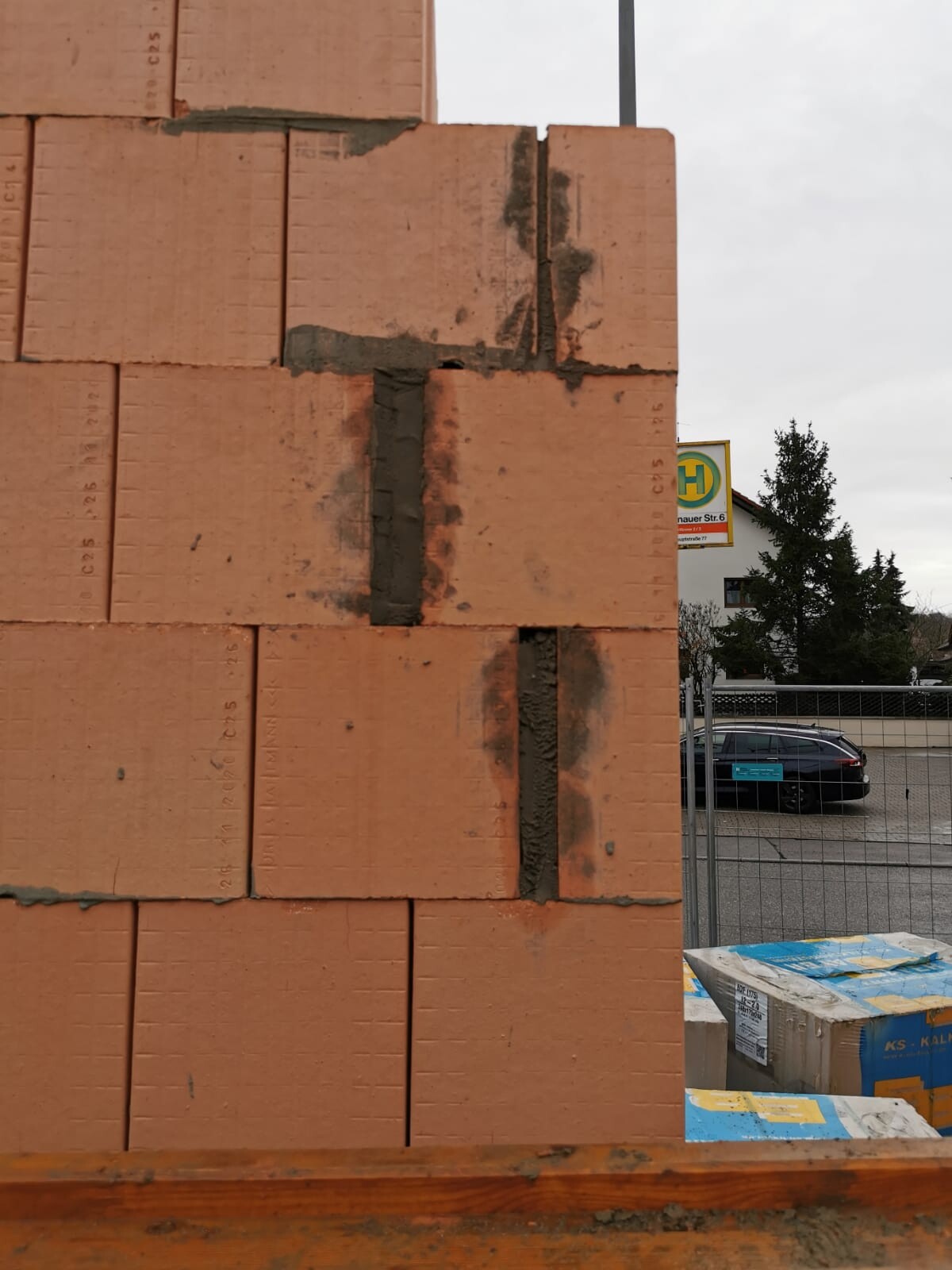
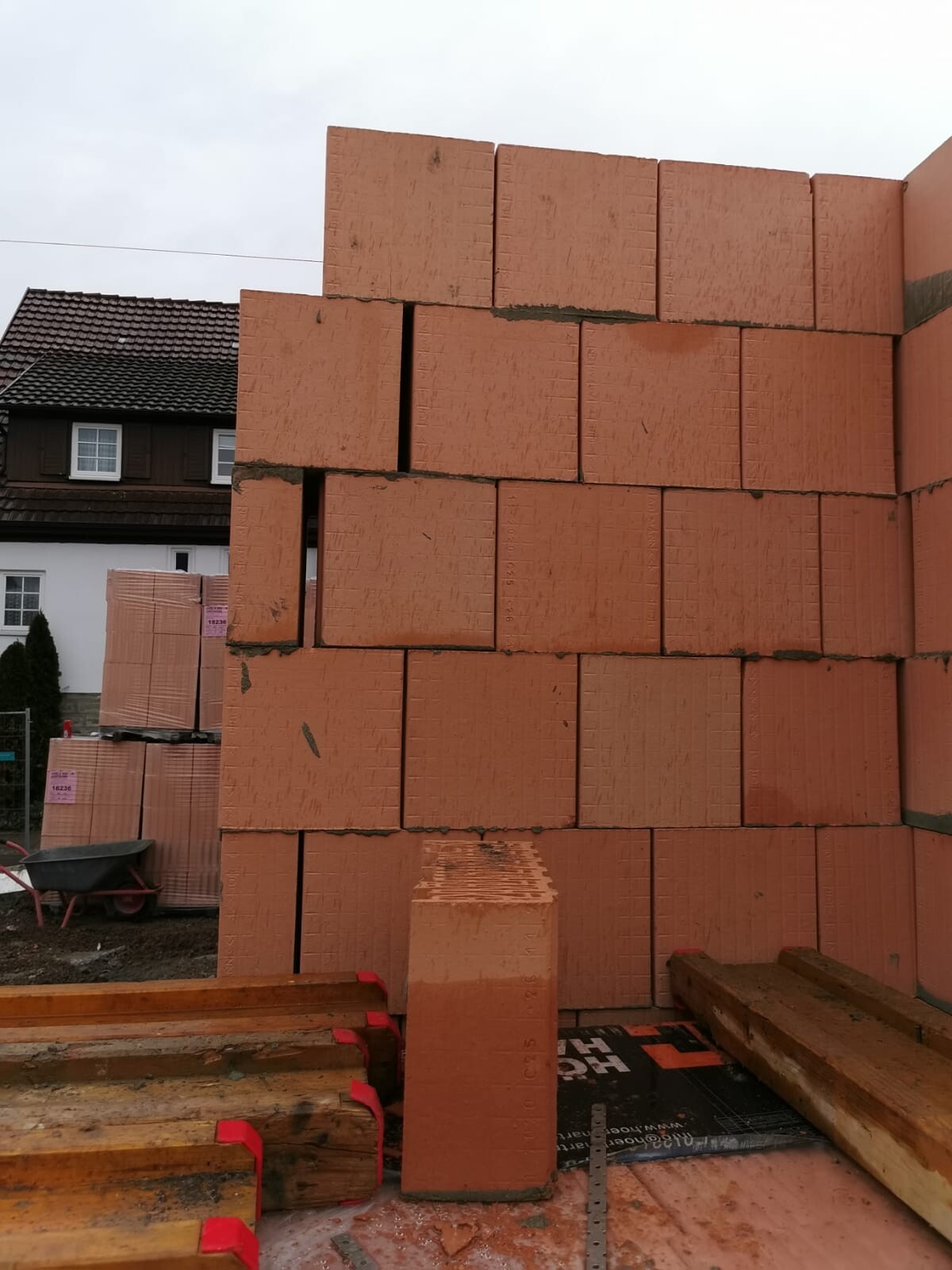
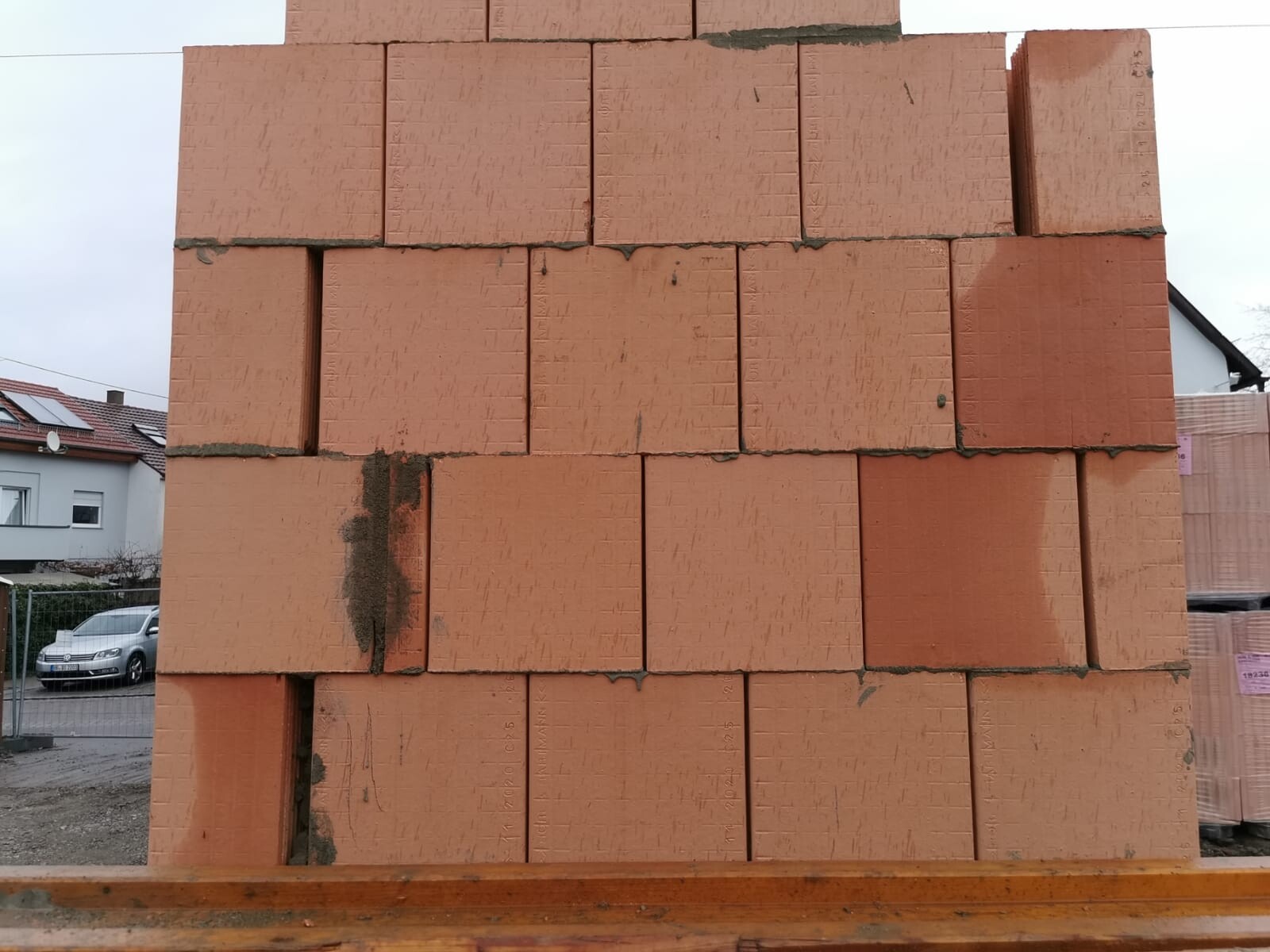
In our house construction project managed by a general contractor, the masonry subcontractor was changed. The previous mason worked very neatly, but was replaced due to the slow pace of work (4 months for building the basement).
The new mason is now working very quickly, but in my opinion also quite roughly. In particular, I have noticed very large joints between the bricks. So my question to the experts is: Are these gaps in the masonry still within acceptable standards or even normal, or should we raise this issue directly with the mason or general contractor while the damage is still limited?
A few additional details:
- The building is a terraced house (row house)
- The walls are built with 36.5cm (14 inches) Poroton clay blocks
If I have forgotten any important information, please ask.
Thanks in advance for your assessment and support.
G
goalkeeper14 Dec 2020 12:22Absolutely unacceptable. The site manager/general contractor should be called to the construction site immediately (see attachment).





Kishihmen schrieb:
After the previous shell builder worked very neatly, he has now been replaced due to his slow work pace (4 months to complete the basement).First: replaced by whom? And secondly: that was at least considerably faster than what will happen now – because this apprentice nonsense needs to be torn down immediately and the clown removed from the site right away. Did the old subcontractor perhaps work as fast as he was paid?goalkeeper schrieb:
Absolutely unacceptable. The site manager or general contractor should be called to the construction site immediately (see attachment).I couldn’t have put it better myself.Kishihmen schrieb:
Above all, I noticed the very large vertical joints. Therefore, a question for the professionals – are the gaps in the masonry still within the norm or even normal, or should we address and report this directly to the shell builder or general contractor while the damage is still limited?File a defect report in writing, including a work stoppage and a deadline for correction. If chamfers or voids occur—which can be avoided with good planning—they should first be minimized, and second, filled with mortar during the masonry work itself, not patched up afterward. The interlocking of the vertical joints is an essential part of the method when building with typically mortar-free vertical joints. Chamfers or voids must still be properly filled with suitable mortar (this is not automatically, and in fact quite rarely, the same mortar used for the horizontal bed joints of the blocks). So this is a very serious problem. And as I emphasized a few weeks ago—the video tutorials for processing the planar block systems are so clearly and simply explained, even with foreign language commentary, that even I, who only works in the office, could not possibly make such egregious mistakes as shown here. This guy is absolutely not qualified to do his job. Do you know the thread by @Hausbau2019? Because this really smells like a butcher mason *LOL*
https://www.instagram.com/11antgmxde/
https://www.linkedin.com/company/bauen-jetzt/
K
Kishihmen14 Dec 2020 13:08goalkeeper schrieb:
Absolutely unacceptable. Call the site manager/general contractor to the site immediately (see attachment). Thank you very much
11ant schrieb:
First: by whom? And second: that is still significantly faster than how things will proceed now – because these apprentice jokes need to be torn down immediately and the clown sent away from the construction site at once. Could it be that the old subcontractor worked as fast as he was paid?
I couldn’t have said it better myself.
Report the defects in writing, with a work stop and a deadline for correction. If bad workmanship cavities occur – which can be avoided with proper planning and coordination – then these must first be minimized and second, filled with mortar during the masonry work, not patched afterward with mortar. The interlocking of the vertical joints is an essential part of the masonry concept with normally mortar-free vertical joints. Bad workmanship cavities must also be filled with appropriate mortar (this is not automatically, and in fact is rarely, the same mortar used for the bed joints of the plan bricks). This is a very serious problem. And – as I emphasized a few weeks ago – the video tutorials for handling the plan brick systems are so clearly explained with audio commentary, even in foreign languages, that even I, as an office-based person, could not have done it so badly. The guy is absolutely not qualified to do his job.
Do you know the thread by @Hausbau2019? – there it also smells very much like butcher-style masonry *LOL* Thanks again here as well.
The old subcontractor was replaced by the general contractor. We had no influence on this.
I will read through the thread by @Hausbau2019 later.
Now I will talk to the structural builder later and then send a defect notice to the general contractor.
K
Kishihmen22 Dec 2020 17:01Hello everyone,
I just wanted to give a brief update on the outcome of our complaint.
The structural builder refers to the processing guidelines provided by the brick manufacturer. These state:
Closing gaps in vertical joints 15–50 mm (0.6–2 inches). Vertical joints up to 20 mm (0.8 inches) can be filled with insulating lightweight mortar (maxit Therm 825). Important: When plastering the masonry later, the mortar joints must be completely dry. Wide joints (40–50 mm / 1.6–2 inches) filled this way should be avoided but are occasionally tolerated.
Since none of our joints exceed 5 cm (2 inches) in width (our joints range between 3.5 and 4.8 cm (1.4 and 1.9 inches)), both the structural builder and the site manager have rejected any liability.
I just wanted to give a brief update on the outcome of our complaint.
The structural builder refers to the processing guidelines provided by the brick manufacturer. These state:
Closing gaps in vertical joints 15–50 mm (0.6–2 inches). Vertical joints up to 20 mm (0.8 inches) can be filled with insulating lightweight mortar (maxit Therm 825). Important: When plastering the masonry later, the mortar joints must be completely dry. Wide joints (40–50 mm / 1.6–2 inches) filled this way should be avoided but are occasionally tolerated.
Since none of our joints exceed 5 cm (2 inches) in width (our joints range between 3.5 and 4.8 cm (1.4 and 1.9 inches)), both the structural builder and the site manager have rejected any liability.
Similar topics