
ᐅ Concrete slab poured too large – it has now been cut down – is this acceptable?
Created on: 1 Oct 2020 09:22
S
Sporttasche
Hello dear experts,
We are just at the beginning of our build, and already the first issue has occurred. The concrete slab was poured too large! It’s actually surprising how something like this can happen, but it did (by the way, the slab was done by a very well-known company).
The slab is 16 cm (6.3 inches) too long on one side, and this also affects a recess for the bay window.
This was noticed during the slab inspection. We were told that it can happen (which was visibly embarrassing for the site manager) and that they would fix it. Yesterday, the slab was "cut back" by the mentioned 16 cm (6.3 inches). They used a type of cutting disc similar to those used in road construction to grind the slab. Since the slab is much thicker than the cutting depth of the disc, the rest was painstakingly removed with a pneumatic hammer. The area was then re-plastered.
Well, apparently everything is fine now, which I really hope is true. I am not an expert, so I would like to hear the opinions of professionals here.
In my view, it can’t be as good as if it had been poured correctly. Here, a component was opened up and patched. The frost protection edge (frost skirt) that was originally 50 cm (20 inches) is now only 34 cm (13 inches) high (they say a maximum of 20 cm (8 inches) is needed and that it’s always 50 cm (20 inches) because the excavator’s bucket makes 50 cm (20 inches) wide trenches).
I’m already upset that the build started like this and I really hope we won’t have problems because of it down the line.
Which expert can give me some advice on this topic? Thank you!
P.S. By the way, it’s a KFW40+ house with a matching slab.
We are just at the beginning of our build, and already the first issue has occurred. The concrete slab was poured too large! It’s actually surprising how something like this can happen, but it did (by the way, the slab was done by a very well-known company).
The slab is 16 cm (6.3 inches) too long on one side, and this also affects a recess for the bay window.
This was noticed during the slab inspection. We were told that it can happen (which was visibly embarrassing for the site manager) and that they would fix it. Yesterday, the slab was "cut back" by the mentioned 16 cm (6.3 inches). They used a type of cutting disc similar to those used in road construction to grind the slab. Since the slab is much thicker than the cutting depth of the disc, the rest was painstakingly removed with a pneumatic hammer. The area was then re-plastered.
Well, apparently everything is fine now, which I really hope is true. I am not an expert, so I would like to hear the opinions of professionals here.
In my view, it can’t be as good as if it had been poured correctly. Here, a component was opened up and patched. The frost protection edge (frost skirt) that was originally 50 cm (20 inches) is now only 34 cm (13 inches) high (they say a maximum of 20 cm (8 inches) is needed and that it’s always 50 cm (20 inches) because the excavator’s bucket makes 50 cm (20 inches) wide trenches).
I’m already upset that the build started like this and I really hope we won’t have problems because of it down the line.
Which expert can give me some advice on this topic? Thank you!
P.S. By the way, it’s a KFW40+ house with a matching slab.
Steven schrieb:
The structural engineer is not responsible for the correct placement of the reinforcement. He just said: it’s fine now.
Cut it off. Completely crazy.Not on-site operationally. However, the reinforcement drawings do come from the structural engineer, so he is indeed the appropriate authority to approve changes to them.
Excess foundation edges can be an issue, for example due to standing water. Water will collect on or against the structure later on. In my opinion, cutting it off is the usual procedure. Of course, with waterproofing to prevent rust. In this case, apparently applied in three layers — what else can be done beyond that?
S
Sporttasche12 Oct 2020 11:34I’m not sure if there is a problem again. I just measured the grounding conductor once more. The shortest distance to the outer edge is 29.5 cm (11.6 inches). However, the wall thickness of the house is 33.5 cm (13.2 inches).
Since I’m not familiar with this... what happens with these grounding conductors? What are they connected to? Or does it not matter if the exterior wall later rests on them?
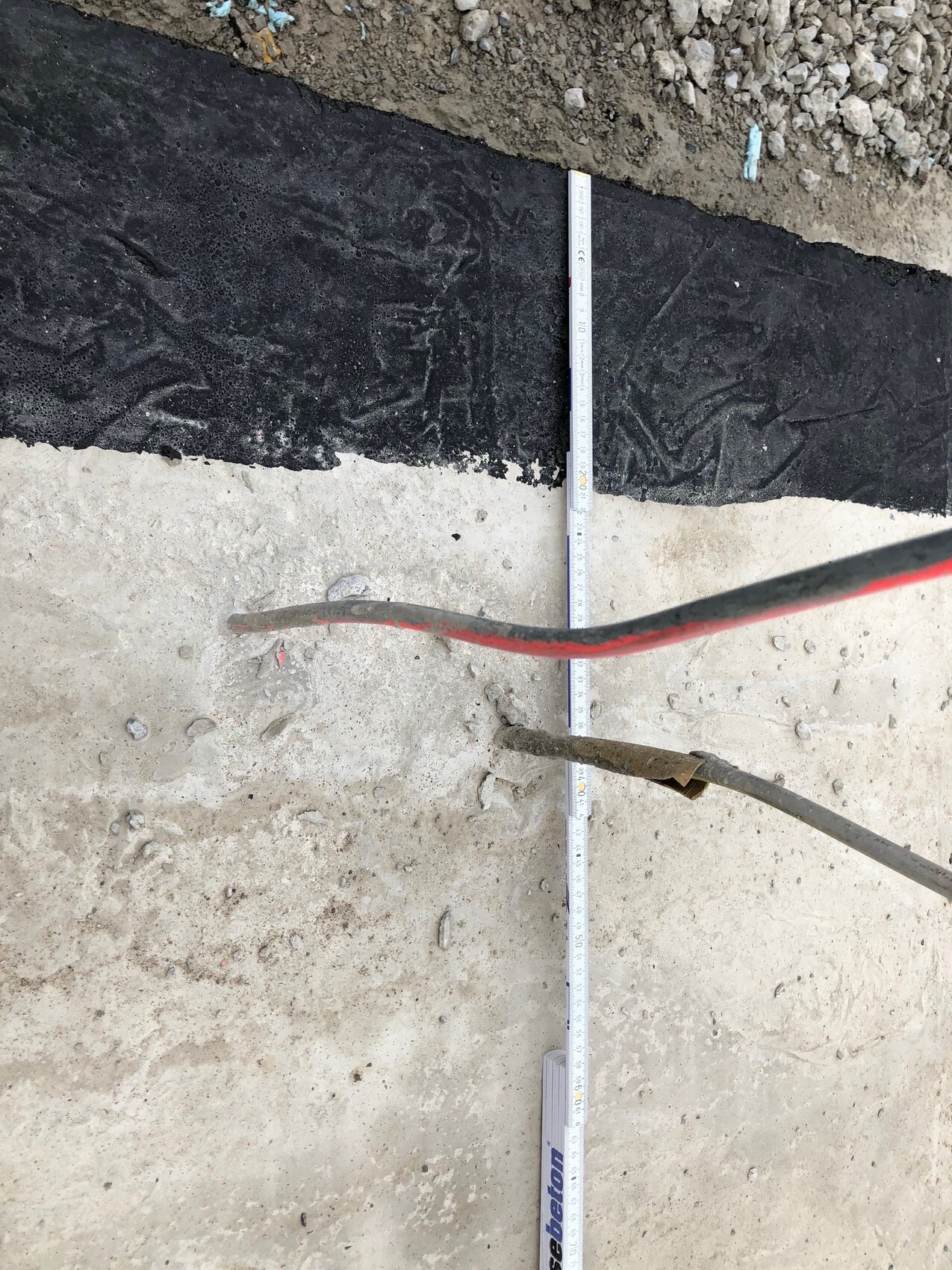
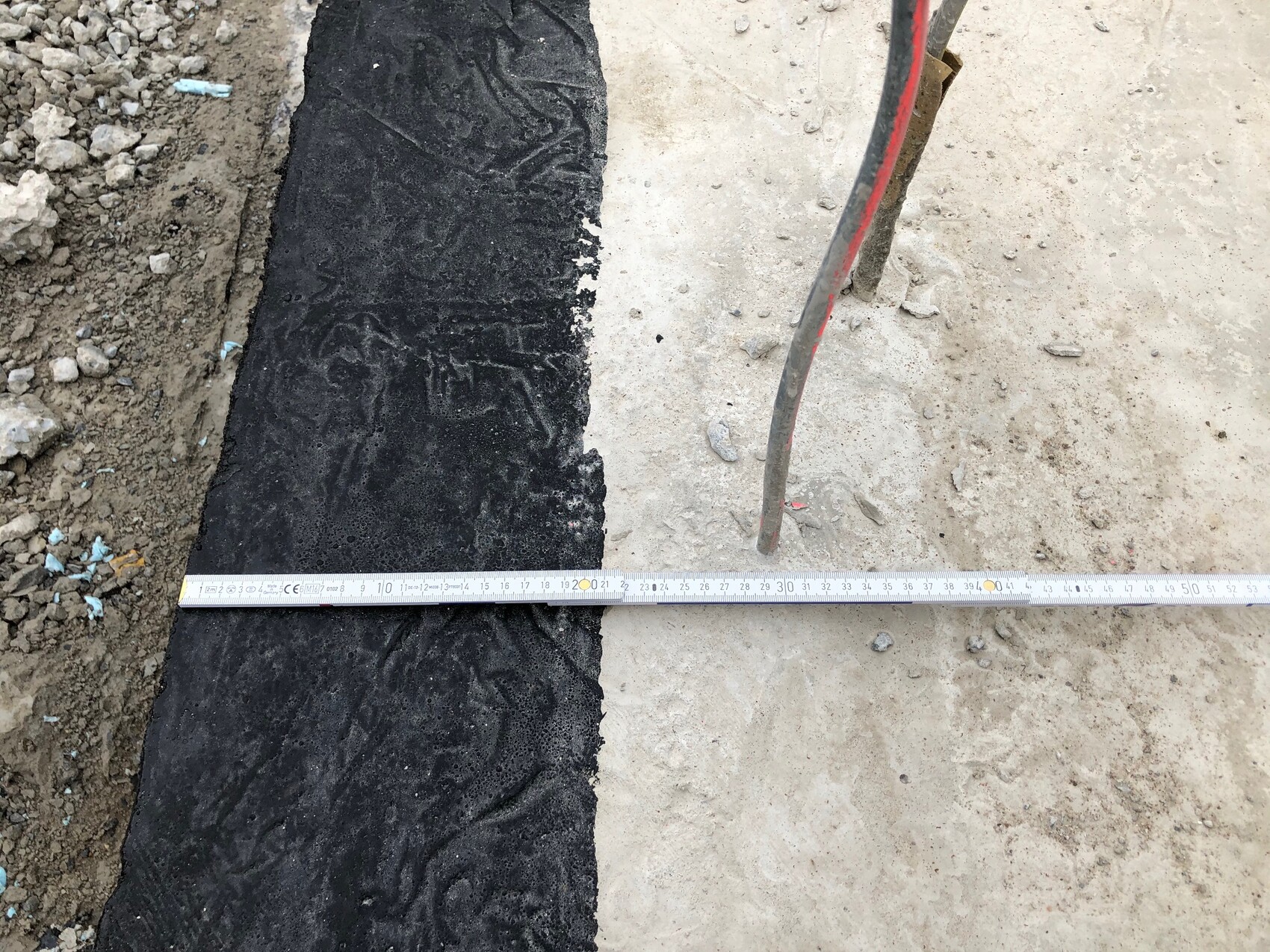
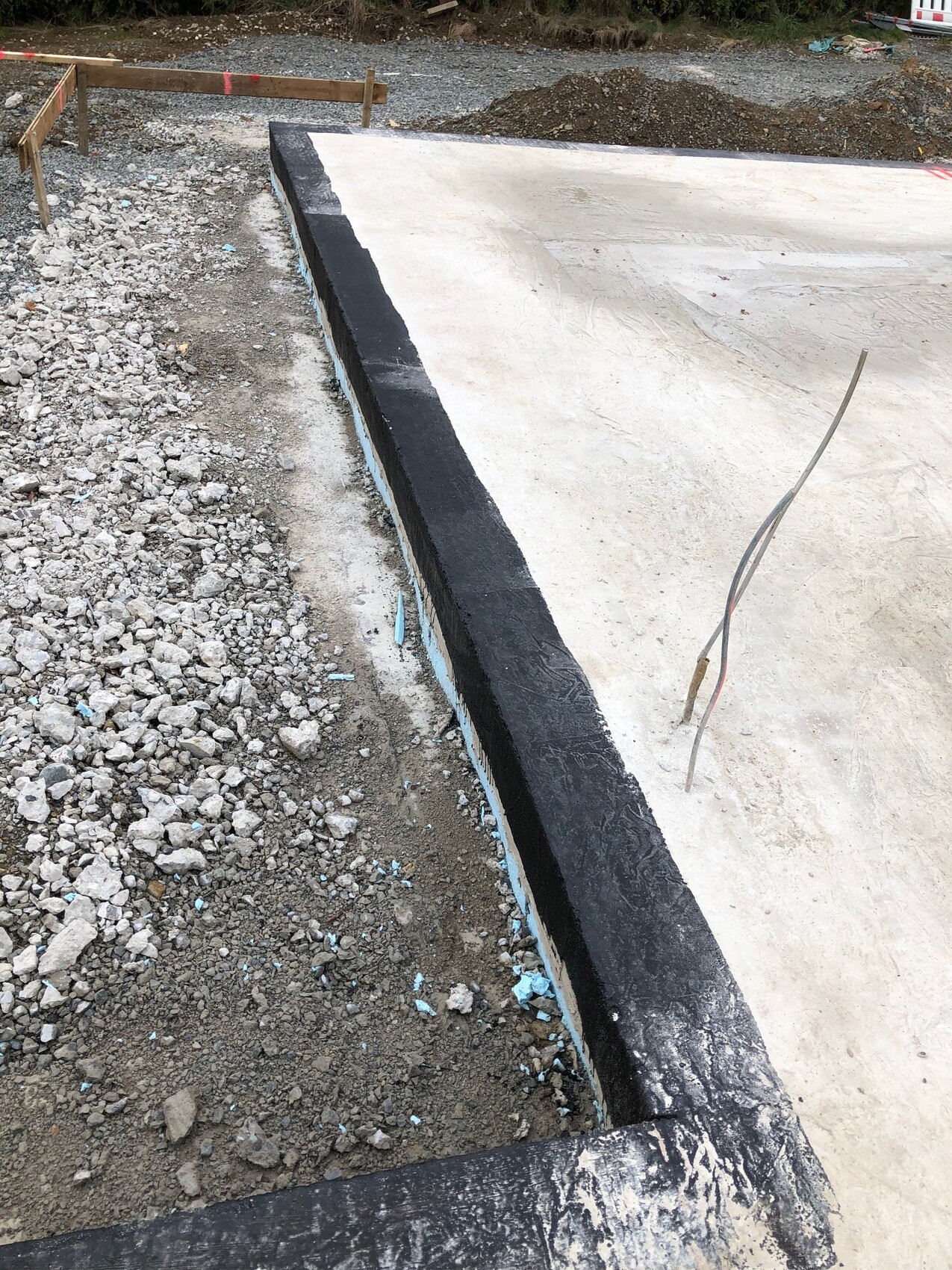
Since I’m not familiar with this... what happens with these grounding conductors? What are they connected to? Or does it not matter if the exterior wall later rests on them?
Sporttasche schrieb:
Or does it not matter if the exterior wall later "stands" on it?Hello SporttascheIt doesn't matter. The brick is slightly chamfered at the bottom, and the grounding conductor is passed through there.
Steven
S
Sporttasche12 Oct 2020 12:40Thanks for the reassurance...
How will a grounding rod be connected later on?
How will a grounding rod be connected later on?