
Hello,
could you please help me with the placement and selection of recessed ceiling downlights?
I get the impression that some users here have a lot of knowledge. This is a bit overwhelming for me.
It concerns recessed downlights in the precast concrete ceiling, whose positions I need to determine before the ceiling is installed. The holes cost 130 Euro each without the fixtures. I find that quite expensive and therefore don’t want to go overboard with spotlights in the house.
I would like to have recessed lights only in the ground floor hallway and cloakroom. I want good illumination and don’t want to plan too many or too few. I want to be on the safe side!
I deliberately don’t call them spots, because I don’t want directional lighting. As I have learned from posts here, I want a wider beam angle and therefore floodlights. Which manufacturers are good for this? I was thinking dimmable, as I do not plan any other lighting in the hallway besides the recessed downlights.
How would you position the lights, and how many do I need?
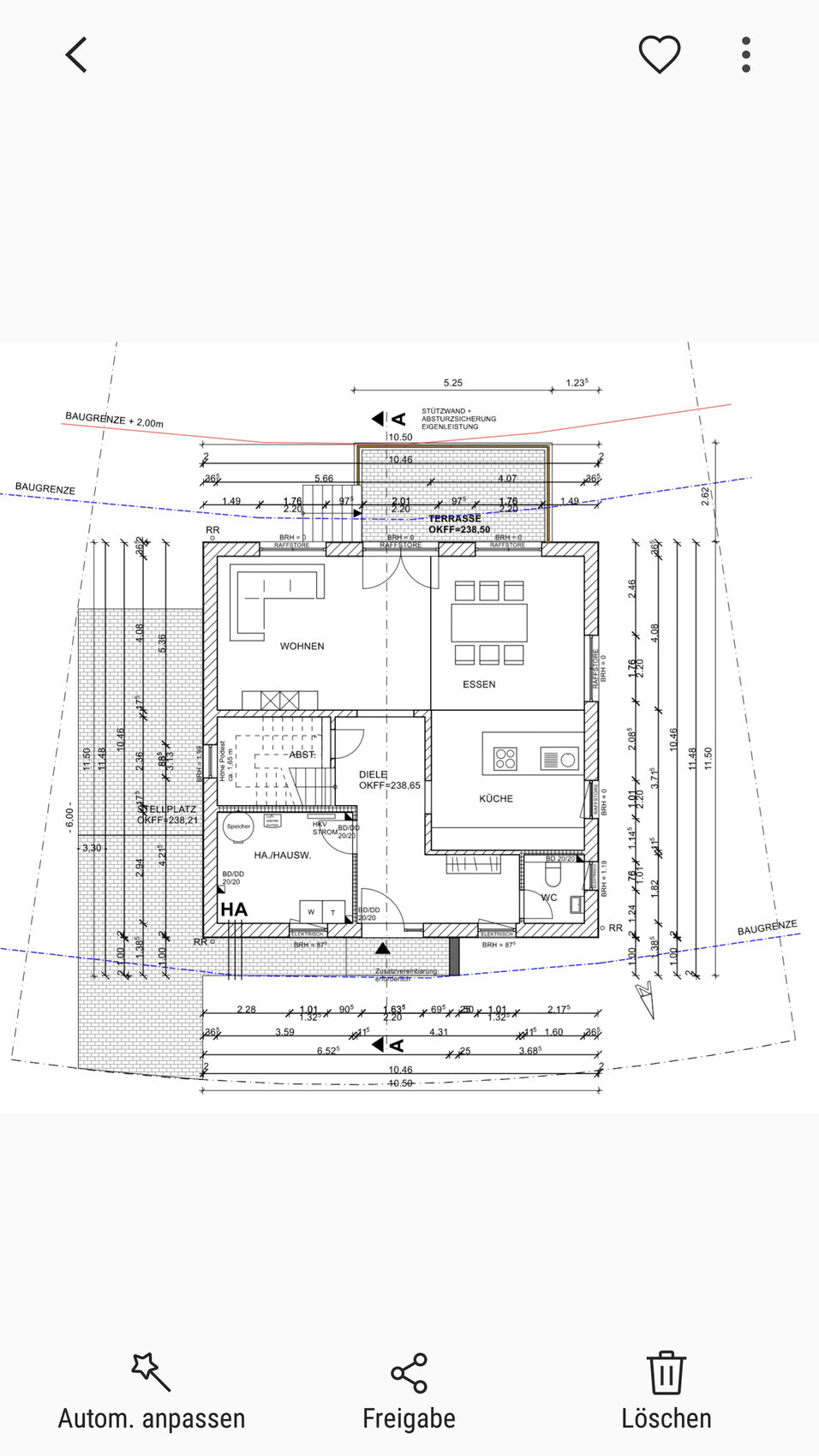
The hallway is 5.47 m (18 feet) long from the front door to the living room wall. The dimension from the utility room wall to the end of the cloakroom / WC wall is 4.31 m (14 feet). The wardrobe cabinets probably go up to the ceiling, which changes the center of the room. I read that when planning lighting, the room center is not defined wall to wall but from the cabinet front to the opposite wall.
Thank you very much in advance!!!
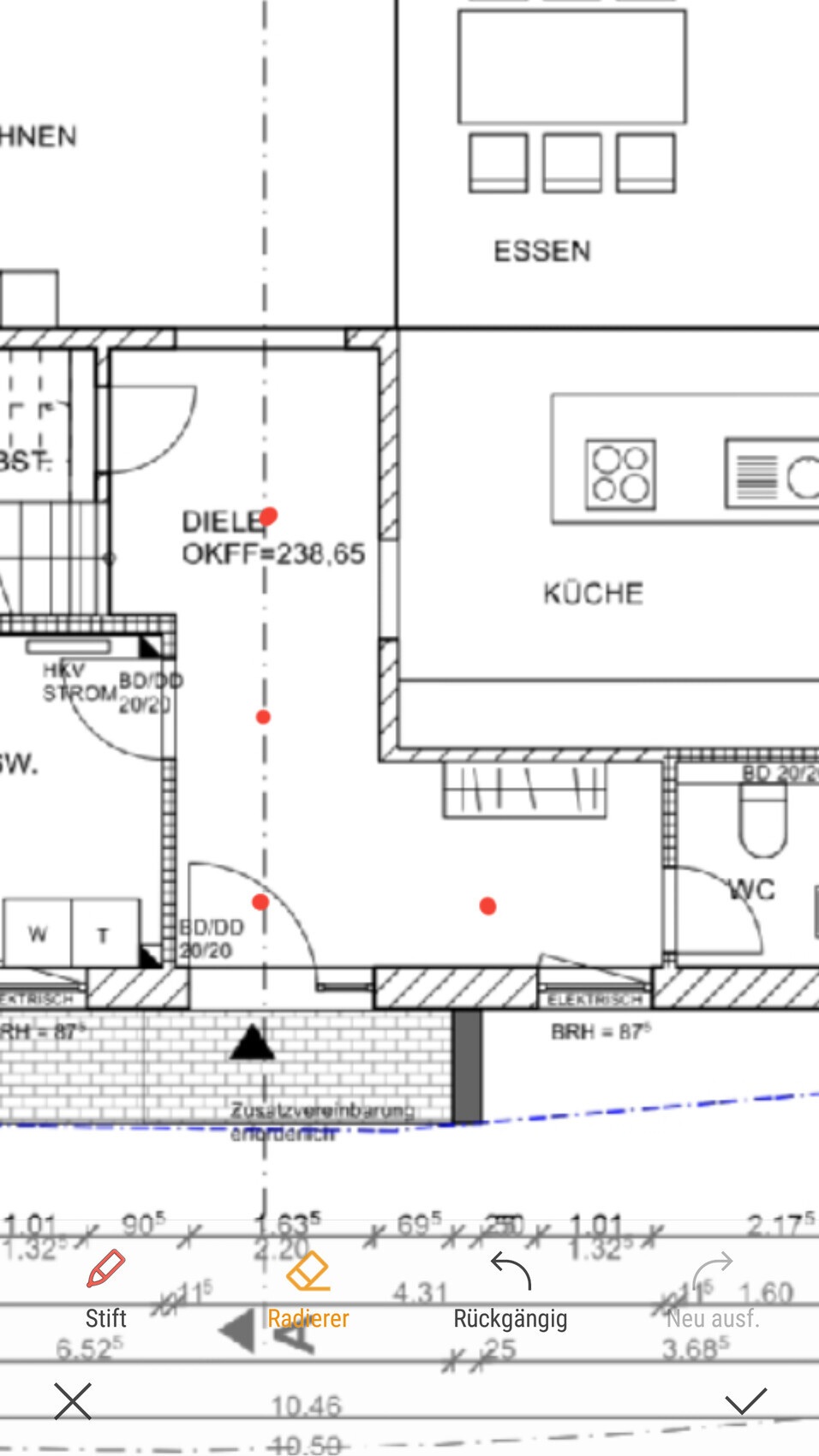
Attached is an idea of mine. Does this work like this?
could you please help me with the placement and selection of recessed ceiling downlights?
I get the impression that some users here have a lot of knowledge. This is a bit overwhelming for me.
It concerns recessed downlights in the precast concrete ceiling, whose positions I need to determine before the ceiling is installed. The holes cost 130 Euro each without the fixtures. I find that quite expensive and therefore don’t want to go overboard with spotlights in the house.
I would like to have recessed lights only in the ground floor hallway and cloakroom. I want good illumination and don’t want to plan too many or too few. I want to be on the safe side!
I deliberately don’t call them spots, because I don’t want directional lighting. As I have learned from posts here, I want a wider beam angle and therefore floodlights. Which manufacturers are good for this? I was thinking dimmable, as I do not plan any other lighting in the hallway besides the recessed downlights.
How would you position the lights, and how many do I need?
The hallway is 5.47 m (18 feet) long from the front door to the living room wall. The dimension from the utility room wall to the end of the cloakroom / WC wall is 4.31 m (14 feet). The wardrobe cabinets probably go up to the ceiling, which changes the center of the room. I read that when planning lighting, the room center is not defined wall to wall but from the cabinet front to the opposite wall.
Thank you very much in advance!!!
Attached is an idea of mine. Does this work like this?
H
hampshire4 Oct 2020 11:42Shiny86 schrieb:
I specifically avoid using the term spot lighting because I don’t want focused lighting.Thumbs up!I already like your planning, and the advice on positioning from @ypg is very helpful. Also, check out the tip from @Mycraft. I find the large-area daylight LED panels especially interesting, which are slowly becoming available now. Visit an exhibition where you can find this technology. On Google, using terms like Design, Post, and Cologne can help.
annab377 schrieb:
Isn’t the problem with the flat LED panels that you can’t replace the light source?That’s not an issue given their lifespan and long warranty. Also, the better panels can be repaired.annab377 schrieb:
If the hallway is too bright or too dark, you can’t swap them out to adjust the lighting.The panels are now standard flicker-free and dimmable—both brightness and color temperature.annab377 schrieb:
Which manufacturers produce affordable, good-quality LED panels?For the utility room, I used a fairly inexpensive unit from an online LED shop and was surprised at how well it works. For the guest bathroom, I built one myself because the format 1.25 x 1.45 meters (4 ft 1 in x 4 ft 9 in) wasn’t available to buy. I find the recently released daylight panels from CoreLux very impressive—they really look like a clear view of the sky, and the room lighting is like having a skylight. They were introduced earlier this month in Cologne and can be seen at the Design Post. I don’t know where to buy them yet. If they had been available last year, I would definitely have used these in 2-3 other locations instead of recessed ceiling lights.Interesting to see what new developments there have been in recent months.
I always thought the LED panels looked too industrial, like the lighting in open-plan offices.
Are there any pictures in this forum of more homely LED panels that don’t look like industrial lighting?
I always thought the LED panels looked too industrial, like the lighting in open-plan offices.
Are there any pictures in this forum of more homely LED panels that don’t look like industrial lighting?

annab377 schrieb:
I always thought the LED panels looked very industrial, like the lights you find in open-plan offices.You mean the large 60cm (24 inches) ones, etc.? But there are also 20cm (8 inches) and smaller sizes.Thanks in advance. I’ll provide proper measurements in centimeters (inches) later. Could you suggest suitable manufacturers and lamp models? How expensive are the high-quality lamps? I’m not familiar with these daylight lamps.
@ypg, so you would only install ceiling outlets and save yourself the 130 euros per recessed light fixture? Which lamps would you hang?
In hallways, people usually don’t hang pendant lights.
@ypg, so you would only install ceiling outlets and save yourself the 130 euros per recessed light fixture? Which lamps would you hang?
In hallways, people usually don’t hang pendant lights.
H
hampshire4 Oct 2020 17:13Shiny86 schrieb:
You usually don’t hang pendant lights in the hallway.It depends on the ceiling height.Similar topics