
Hello,
We had our house built in 2015. Of course, we ran into a lot of problems and ended up doing most of the work ourselves so that we could at least move in by 2017. At the end of 2019, our family grew with the arrival of two girls. Now the topic comes up: my home office will soon have to make way for a second children’s bedroom so that one of the girls can have her own room. The attic definitely has potential to create my new workspace. It is already insulated and the sloped ceilings are covered with OSB boards, over which I want to install ceiling panels. I think this looks better than painting the OSB boards, which gave us problems in the lower rooms.
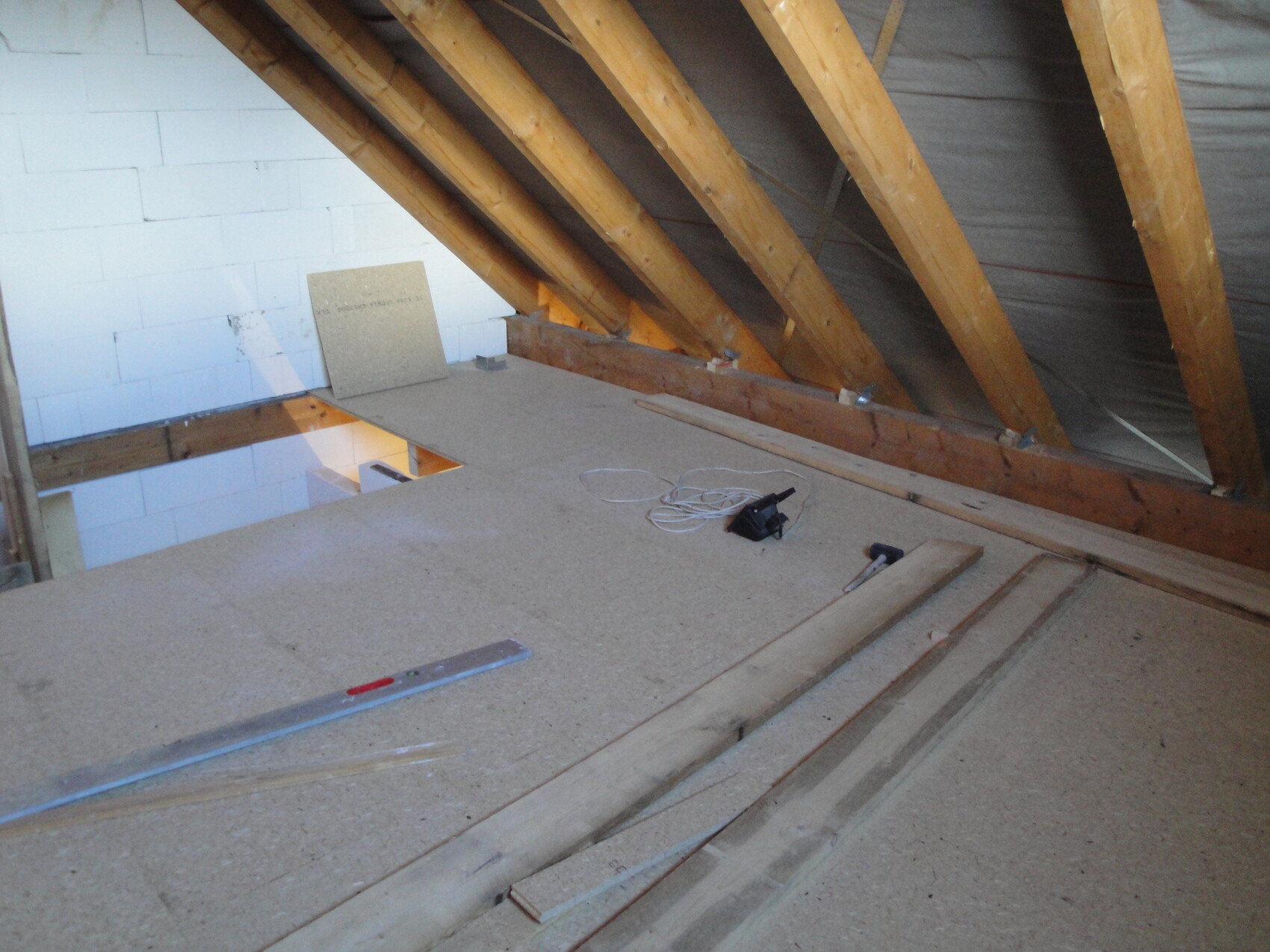
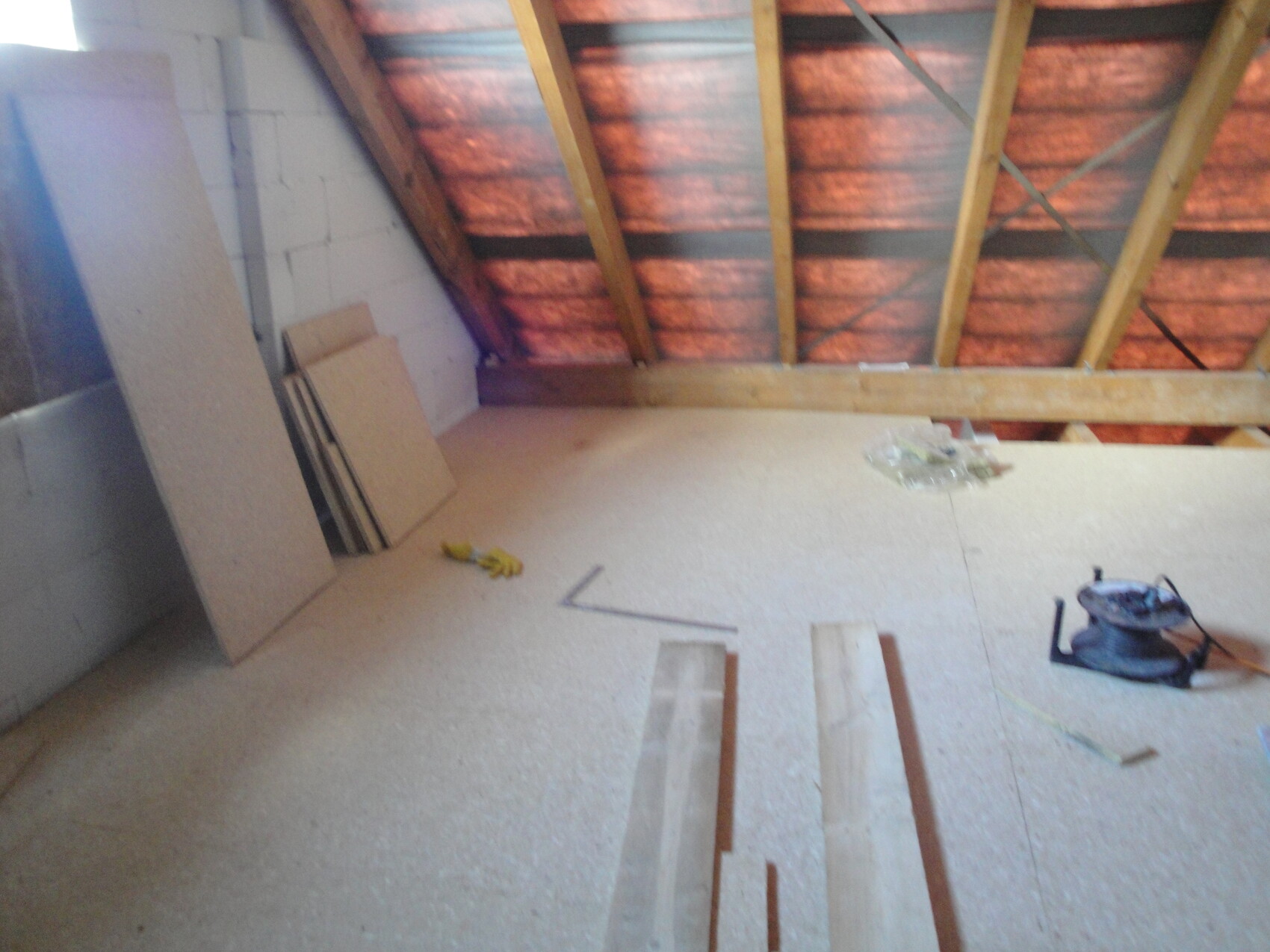
My biggest problem, and the reason I’m asking for your advice, is the attic floor. It is constructed with insulation between the joists and then thick chipboard panels on top. I think this is not sufficient because the floor has waves, meaning it is uneven. My question: Can I add a leveling compound over these chipboard panels and then install dry screed panels to lay laminate flooring on top, or would that be too much weight? I only have photos showing the joists from below before the insulation was installed between them, which might help. I can also measure the joist thickness if needed. It’s important for me to avoid causing structural problems or ending up “one floor lower” if the load is too much.
Maybe you can help me with this.
Best regards and thanks in advance,
Roady89
We had our house built in 2015. Of course, we ran into a lot of problems and ended up doing most of the work ourselves so that we could at least move in by 2017. At the end of 2019, our family grew with the arrival of two girls. Now the topic comes up: my home office will soon have to make way for a second children’s bedroom so that one of the girls can have her own room. The attic definitely has potential to create my new workspace. It is already insulated and the sloped ceilings are covered with OSB boards, over which I want to install ceiling panels. I think this looks better than painting the OSB boards, which gave us problems in the lower rooms.
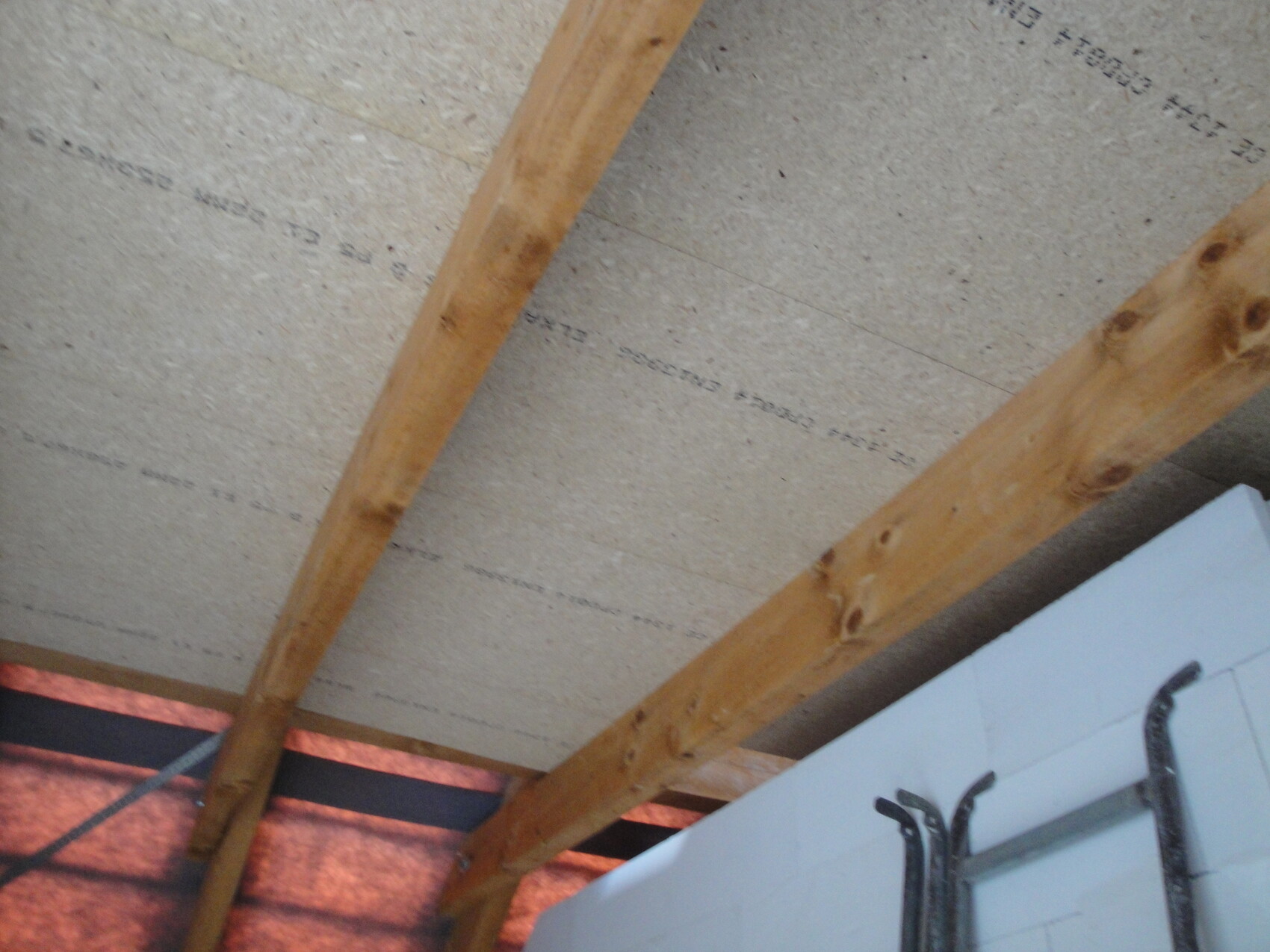
My biggest problem, and the reason I’m asking for your advice, is the attic floor. It is constructed with insulation between the joists and then thick chipboard panels on top. I think this is not sufficient because the floor has waves, meaning it is uneven. My question: Can I add a leveling compound over these chipboard panels and then install dry screed panels to lay laminate flooring on top, or would that be too much weight? I only have photos showing the joists from below before the insulation was installed between them, which might help. I can also measure the joist thickness if needed. It’s important for me to avoid causing structural problems or ending up “one floor lower” if the load is too much.
Maybe you can help me with this.
Best regards and thanks in advance,
Roady89

Nordlys schrieb:
Let me add a note of caution. In my opinion, using chipboard flooring is a design mistake. Underneath, there’s insulation that can definitely absorb moisture from below but cannot release it because of the chipboard. This creates a risk of mold. I recommend removing the chipboard, nailing on tongue-and-groove boards instead, as they are vapor-permeable. On top of the tongue-and-groove boards, lay carpet with a high natural fiber content. This way, you’ll have a warm and comfortable room. Karsten You have to imagine it like this: the picture shows the room from below—that’s the bedroom. Insulation wool was installed between the joists, then a vapor barrier, and finally 12mm (1/2 inch) thick OSB 3 panels, which we used to cover the sloped ceiling and ceiling in the bedroom. I like your idea of using tongue-and-groove boards, but the question is whether they will be able to support the weight later if a desk or a small wardrobe is placed there?
Nordlys schrieb:
It's no problem in our attic.The flooring definitely stands out, I really like it, I must say. What thickness are your tongue-and-groove boards? And what is the spacing of the joists underneath the tongue-and-groove boards?
 bauenmk202012 Sep 2020 17:12
Tongue-and-groove boards thicker than 19mm (3/4 inch). We have 19mm (3/4 inch), which is sufficient for storing boxes, cartons, etc. But for heavier furniture or people, I would recommend at least 22mm (7/8 inch).
Below the tongue-and-groove boards, I would install frame joists spaced less than 50cm (20 inches) apart.
You can initially build and test a section (1m x length of the tongue-and-groove boards in meters = test floor area in square meters) to see if it flexes too much.
A question about the picture:
Is that an unheated cold roof?
Below the tongue-and-groove boards, I would install frame joists spaced less than 50cm (20 inches) apart.
You can initially build and test a section (1m x length of the tongue-and-groove boards in meters = test floor area in square meters) to see if it flexes too much.
A question about the picture:
Is that an unheated cold roof?
Similar topics