

Hello,
We had our house built in 2015. Of course, we ran into a lot of problems and ended up doing most of the work ourselves so that we could at least move in by 2017. At the end of 2019, our family grew with the arrival of two girls. Now the topic comes up: my home office will soon have to make way for a second children’s bedroom so that one of the girls can have her own room. The attic definitely has potential to create my new workspace. It is already insulated and the sloped ceilings are covered with OSB boards, over which I want to install ceiling panels. I think this looks better than painting the OSB boards, which gave us problems in the lower rooms.
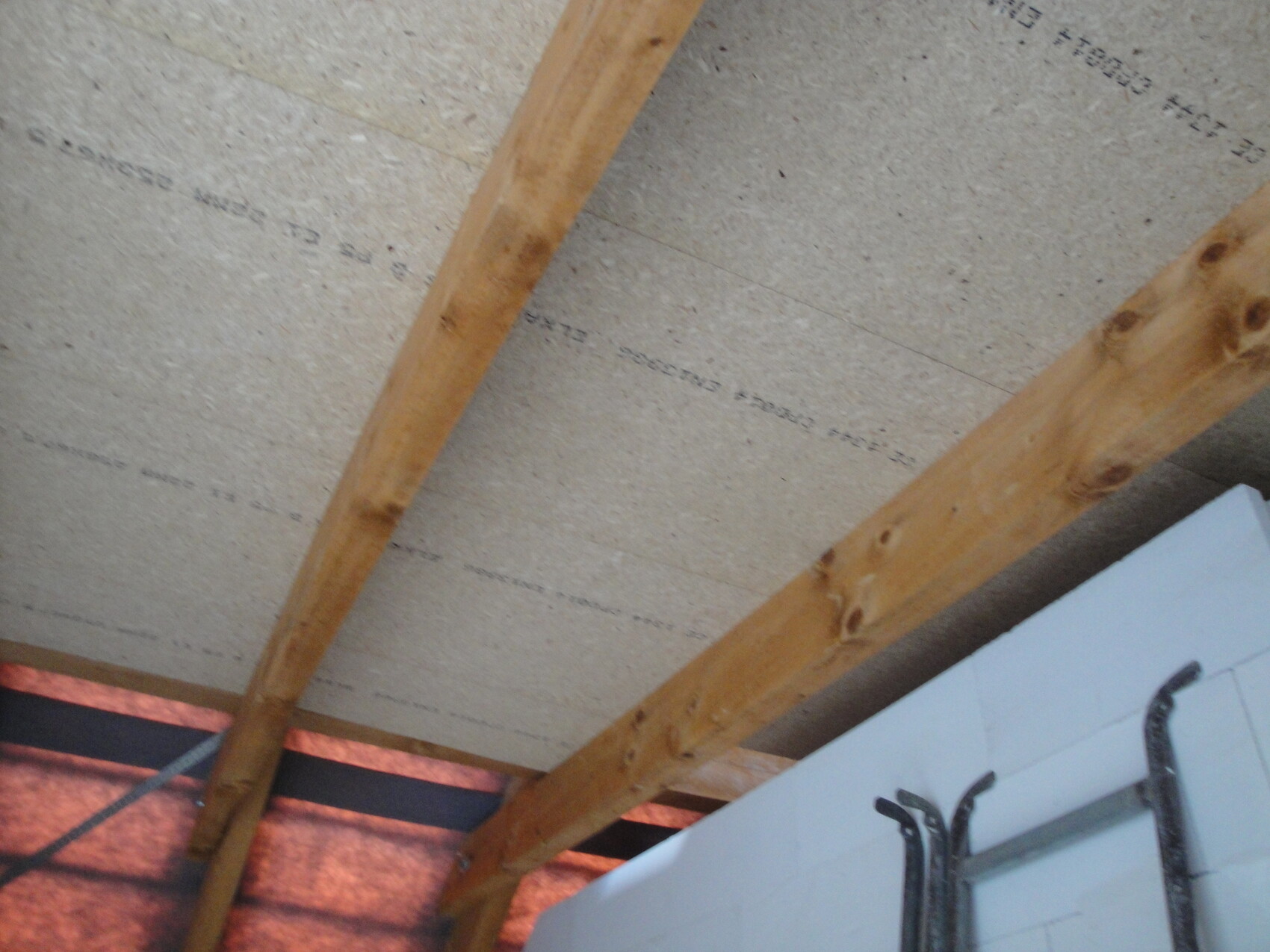
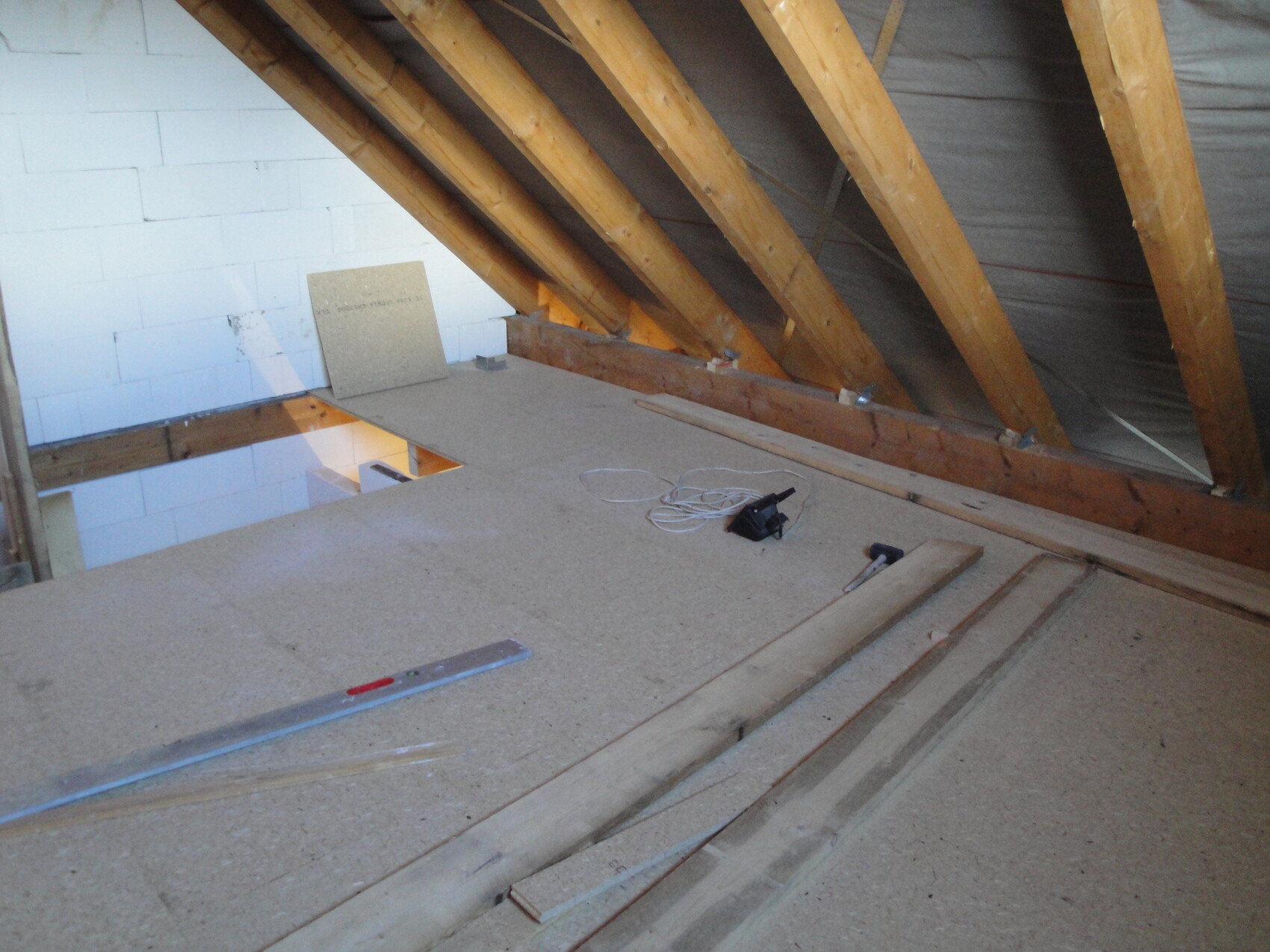
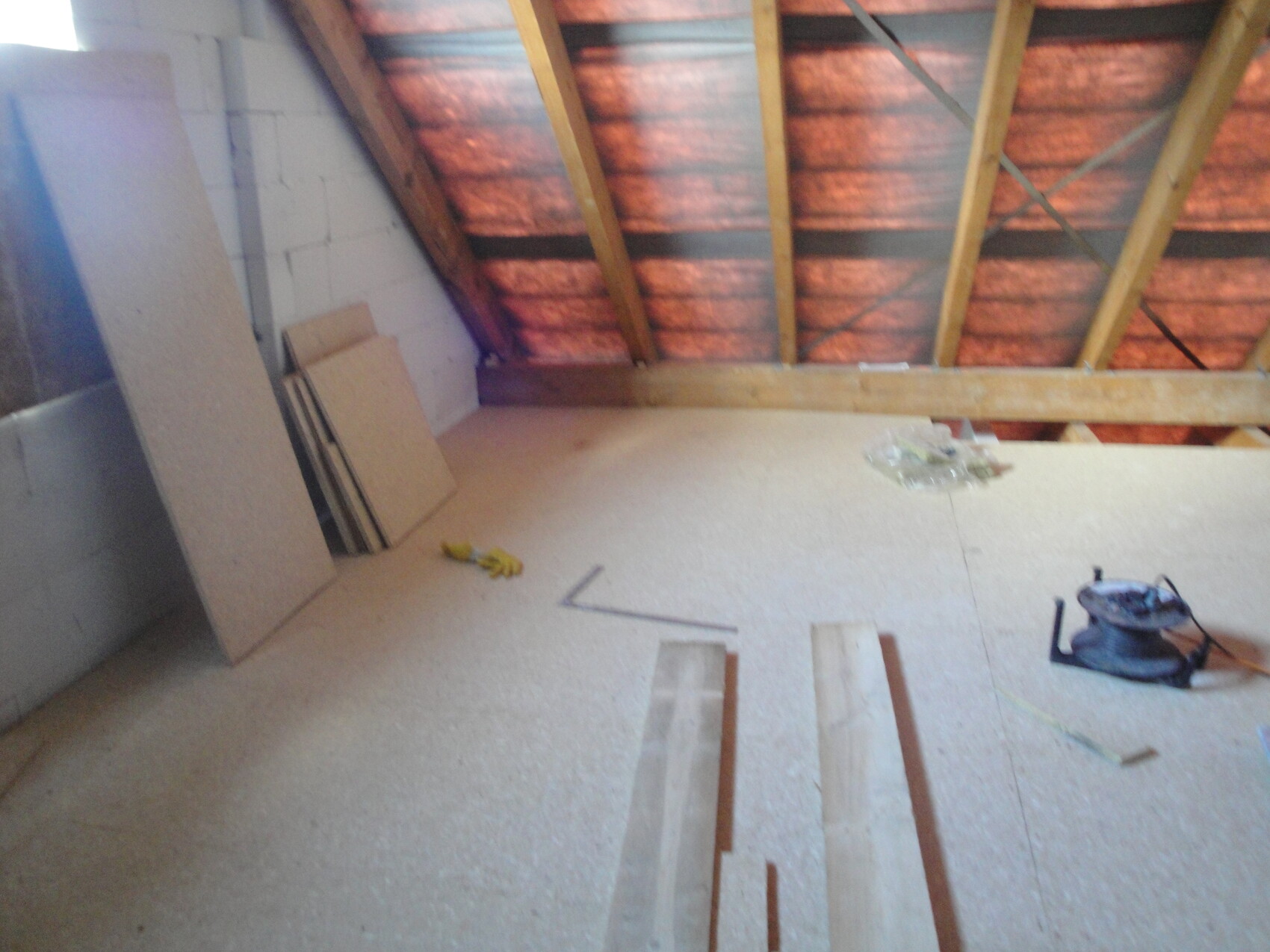
My biggest problem, and the reason I’m asking for your advice, is the attic floor. It is constructed with insulation between the joists and then thick chipboard panels on top. I think this is not sufficient because the floor has waves, meaning it is uneven. My question: Can I add a leveling compound over these chipboard panels and then install dry screed panels to lay laminate flooring on top, or would that be too much weight? I only have photos showing the joists from below before the insulation was installed between them, which might help. I can also measure the joist thickness if needed. It’s important for me to avoid causing structural problems or ending up “one floor lower” if the load is too much.
Maybe you can help me with this.
Best regards and thanks in advance,
Roady89
We had our house built in 2015. Of course, we ran into a lot of problems and ended up doing most of the work ourselves so that we could at least move in by 2017. At the end of 2019, our family grew with the arrival of two girls. Now the topic comes up: my home office will soon have to make way for a second children’s bedroom so that one of the girls can have her own room. The attic definitely has potential to create my new workspace. It is already insulated and the sloped ceilings are covered with OSB boards, over which I want to install ceiling panels. I think this looks better than painting the OSB boards, which gave us problems in the lower rooms.
My biggest problem, and the reason I’m asking for your advice, is the attic floor. It is constructed with insulation between the joists and then thick chipboard panels on top. I think this is not sufficient because the floor has waves, meaning it is uneven. My question: Can I add a leveling compound over these chipboard panels and then install dry screed panels to lay laminate flooring on top, or would that be too much weight? I only have photos showing the joists from below before the insulation was installed between them, which might help. I can also measure the joist thickness if needed. It’s important for me to avoid causing structural problems or ending up “one floor lower” if the load is too much.
Maybe you can help me with this.
Best regards and thanks in advance,
Roady89
 Winniefred11 Sep 2020 22:35
First of all, please add punctuation! I gave up after reading about one-third of the text.
Winniefred schrieb:
First of all, please use punctuation! I gave up after reading about one-third of the text. Sorry, I have a learning difficulty with spelling.....
My biggest issue, and where I would like to ask for your advice, concerns the floor in the attic. It is constructed with insulation placed between the joists, and then thick chipboard panels are supposed to form the floor. In my opinion, this is insufficient for the attic floor because the surface is uneven and has some waves.
My question is: can I apply a leveling compound on top of these chipboard panels and then lay dry screed panels before installing laminate flooring?
Or would that be too heavy? Unfortunately, I only have photos showing the wooden joists from below, with the chipboard panels installed above before the insulation was added in between. Perhaps this helps you, but I can also measure the joist thickness if needed. I still have a leftover cross-section. It is important for me to avoid ending up one floor lower if the load proves to be too much. Maybe you could help me with this.
I have now filtered out the main part of the text in question.
My question is: can I apply a leveling compound on top of these chipboard panels and then lay dry screed panels before installing laminate flooring?
Or would that be too heavy? Unfortunately, I only have photos showing the wooden joists from below, with the chipboard panels installed above before the insulation was added in between. Perhaps this helps you, but I can also measure the joist thickness if needed. I still have a leftover cross-section. It is important for me to avoid ending up one floor lower if the load proves to be too much. Maybe you could help me with this.
I have now filtered out the main part of the text in question.
Roady89 schrieb:
My question is, can I apply a leveling compound on these chipboards and then install dry screed panels on top before laying laminate flooring?Apply leveling compound first, then the floor covering. You won’t use the same thickness as the screed on the ground floor. It’s only 4-5mm (0.16-0.2 inches) thick at most. In my opinion, dry screed panels aren’t necessarily required.danixf schrieb:
Apply leveling compound first and then the floor covering. You won’t use the same thickness as the screed on the ground floor. It’s only 4-5mm (0.16-0.2 inches) thick at most. In my opinion, dry screed panels are not necessarily required.I have actually considered using leveling compound as well. I just hadn’t looked into it in detail because I’m not sure if it would provide enough impact sound insulation. For the dry screed panels, I was thinking of using ones with some insulation underneath, hoping that would reduce the sound of footsteps from above.
Similar topics