
ᐅ Towel wall heater with heat pump operating at low supply temperature (30 °C)
Created on: 3 Aug 2020 10:23
A
annab377
Hello everyone,
According to information online, most towel rail wall heaters are rated for a 75°C (167°F) supply temperature, which determines their wattage.
If you are planning a brine heat pump system with a low supply temperature—around 30°C (86°F)—does it even make sense to install such a towel rail wall heater if only 30°C is running through it? How have you dealt with this?
Or would it be better to forgo the heating function entirely and just hang a "dry towel rail" since 30°C in the heating system won’t really work?
If it’s possible to have this, would it then be a separate heating circuit solely for the towel rail wall heater?
Thanks and best regards
annab377
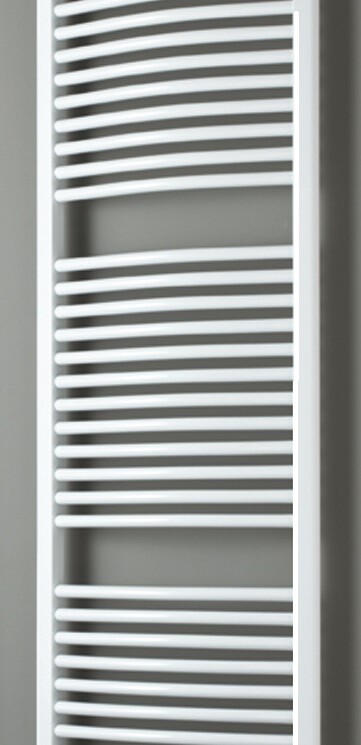
According to information online, most towel rail wall heaters are rated for a 75°C (167°F) supply temperature, which determines their wattage.
If you are planning a brine heat pump system with a low supply temperature—around 30°C (86°F)—does it even make sense to install such a towel rail wall heater if only 30°C is running through it? How have you dealt with this?
Or would it be better to forgo the heating function entirely and just hang a "dry towel rail" since 30°C in the heating system won’t really work?
If it’s possible to have this, would it then be a separate heating circuit solely for the towel rail wall heater?
Thanks and best regards
annab377
I don’t necessarily need it. I just think it’s a nice extra and wanted to ask if it’s really worth it with a heat pump heating system that has a low flow temperature. But I don’t understand why electric heating is recommended. I thought any electric heating should be avoided — I must have been mistaken.
However, I don’t actually need warm towels as a must-have. I thought you could support the underfloor heating a bit and potentially avoid an additional wall heater in the bathroom, since that would mean extra piping just for the bathroom, right?
However, I don’t actually need warm towels as a must-have. I thought you could support the underfloor heating a bit and potentially avoid an additional wall heater in the bathroom, since that would mean extra piping just for the bathroom, right?


It should be a practical combination.
In some cases, a local direct electric heating system can be much more economical than “just another pipe for the bathroom.”
Because it’s not just a pipe. If it is supposed to work properly, there is much more involved, and overall, that makes it less attractive.
In some cases, a local direct electric heating system can be much more economical than “just another pipe for the bathroom.”
Because it’s not just a pipe. If it is supposed to work properly, there is much more involved, and overall, that makes it less attractive.
T
T_im_Norden3 Aug 2020 11:12There are two reasons why you should not mix underfloor heating and radiators.
Radiators are made of metal and always introduce dirt into the underfloor heating circuit, which you want to avoid. Radiators also require a higher supply temperature to be effective, which contradicts the concept of underfloor heating that relies on low supply temperatures.
If you just want warm towels, use a heated towel rail with an electric cartridge. As long as it doesn’t run continuously at the highest setting, the energy consumption is hardly noticeable.
If you need more heating power in the bathroom, use either additional wall heating or an infrared mirror to temporarily raise the temperature.
Personally, I doubt that most people really notice a significant difference between 20°C (68°F) and 24°C (75°F) in the bathroom.
By the time the shower is running, it’s usually warm and humid anyway.
Radiators are made of metal and always introduce dirt into the underfloor heating circuit, which you want to avoid. Radiators also require a higher supply temperature to be effective, which contradicts the concept of underfloor heating that relies on low supply temperatures.
If you just want warm towels, use a heated towel rail with an electric cartridge. As long as it doesn’t run continuously at the highest setting, the energy consumption is hardly noticeable.
If you need more heating power in the bathroom, use either additional wall heating or an infrared mirror to temporarily raise the temperature.
Personally, I doubt that most people really notice a significant difference between 20°C (68°F) and 24°C (75°F) in the bathroom.
By the time the shower is running, it’s usually warm and humid anyway.

T_im_Norden schrieb:
Although personally, I doubt that most people actually notice a significant difference between 20 and 24 degrees Celsius in the bathroom.That’s a statement I don’t think can be left as is. Just ask your wife.
Mine notices every half degree change in the house when I adjust the heating, and in the bathroom, I can clearly feel whether it’s 21 or 23°C (70°F or 73°F).
@ annab377
Simply removing a heated radiator usually means that the bathroom won’t generate enough heat because of its size. To then reach a comfortable temperature, the flow temperature would have to be raised, which is inefficient.
Therefore, it’s better to create more heated surface area (for example, heated walls) or use the alternatives mentioned before.
Similar topics