
Hello everyone,
I need your help. We are planning a semi-detached house with 2 full stories and technical equipment in the attic space (most likely a heat pump, gas condensing boiler, controlled ventilation system with heat recovery, and air conditioning). Due to the floor plan, there is no other option. The rooms below the technical area are bedrooms. Access to the attic will probably only be via a retractable ladder.
Now I am concerned about access to the technical equipment, especially in case of replacement, as well as noise insulation.
I know it’s not ideal. My question is whether any of you have experience with such a setup and can offer me some advice.
Thanks and best regards,
Andreas
I need your help. We are planning a semi-detached house with 2 full stories and technical equipment in the attic space (most likely a heat pump, gas condensing boiler, controlled ventilation system with heat recovery, and air conditioning). Due to the floor plan, there is no other option. The rooms below the technical area are bedrooms. Access to the attic will probably only be via a retractable ladder.
Now I am concerned about access to the technical equipment, especially in case of replacement, as well as noise insulation.
I know it’s not ideal. My question is whether any of you have experience with such a setup and can offer me some advice.
Thanks and best regards,
Andreas

And how do you design such a system so that the airflow is not noticeably felt as a draft, and above all, so that the system operates silently? I do not want a constant noise source either in the sleeping area or the studio. The operating noise of an iMac is the maximum level of acceptability...

The iMac under load is *definitely* louder than the mechanical ventilation system. On the ground floor, we don’t hear the mechanical ventilation during the day at all; upstairs, it is slightly audible, but turning it down at night makes it almost inaudible. Draft? None at all. However, I would still plan very carefully if the mechanical ventilation system is to be installed in the attic.
P
pagoni20206 Jul 2020 22:41superzapp schrieb:
Hello,
we faced the same problem. As a solution, we planned a somewhat unconventional idea (not yet implemented but approved by the building authority).
An external technical building (our size is about 2.5 x 6–8m (8 ft 2 in x 20–26 ft)). If possible, very close to the main building. A basement would have been too expensive, and an attic too noisy :-(
Controlled residential ventilation is, of course, still located in a small utility room inside the house (e.g., PluggIt systems).
Boundary wall construction is possible if there is no fire hazard (i.e., no gas/oil).
Oh, and one more thing: No technician enjoys installing equipment under such conditions. My brother-in-law (a trained plumber, now a building services planner) says everyone would swear loudly, especially with an emergency staircase. Would you have some information about this external technical building? This is something we are currently considering to avoid a small building extension. What are the minimum requirements for such a room in terms of frost protection, proximity to the house, etc.?
In the attic, we would have about 150cm (5 ft) height plus a pull-down staircase. I can already hear the installer grumbling. Or it simply wouldn’t work.
K
knalltüte7 Jul 2020 09:56Hi,
our utility room is now directly adjacent to the house
(the original plan had a 1.5m (5 feet) distance from the house).
The wall will, of course, be insulated, but significantly less than the rest of the house. The wall thickness is a total of 21cm (8 inches). It will be built as a timber frame construction with mineral wool insulation and plaster
(the north wall will have brick cladding as it borders a footpath and bike path).
I believe the regulations for water and electrical connections require them to be frost-proof.
This could possibly be done more simply if necessary.
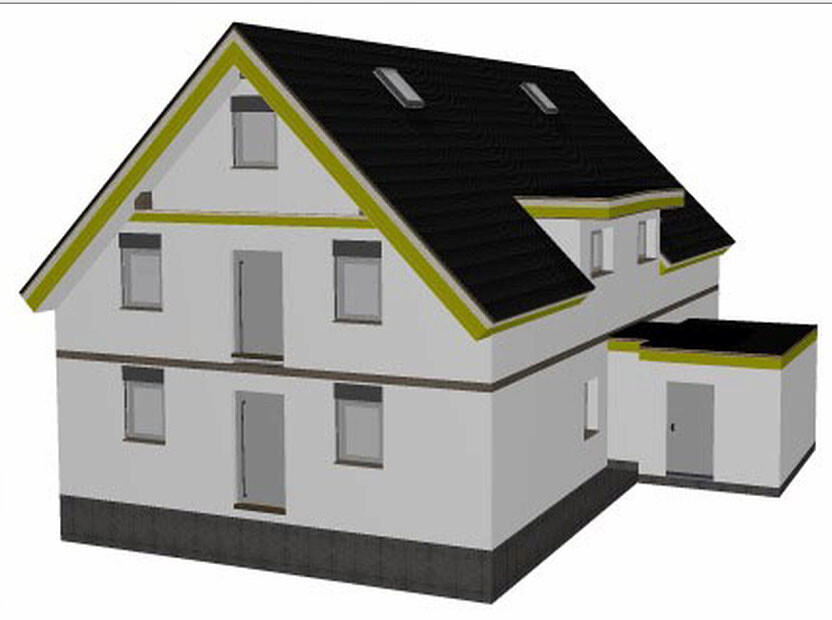
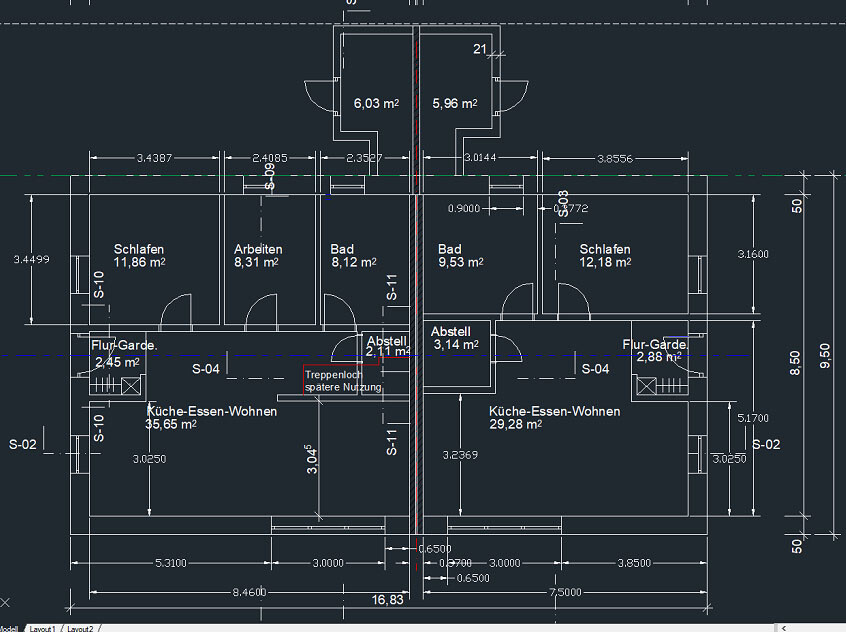
our utility room is now directly adjacent to the house
(the original plan had a 1.5m (5 feet) distance from the house).
The wall will, of course, be insulated, but significantly less than the rest of the house. The wall thickness is a total of 21cm (8 inches). It will be built as a timber frame construction with mineral wool insulation and plaster
(the north wall will have brick cladding as it borders a footpath and bike path).
I believe the regulations for water and electrical connections require them to be frost-proof.
This could possibly be done more simply if necessary.
Similar topics