
Hello everyone,
I have a few questions regarding sound insulation in a semi-detached house. I have already read a lot about noise issues in semi-detached homes.
The reason I need to deal with this is that after moving, we are now facing similar problems ourselves.
For the past two years, we lived in a semi-detached house (built in 2015) with neighbors who are a family with one child (2 years old). We did not have any noise problems there. Of course, you could hear the child crying loudly sometimes, but it was never really disturbing.
Now we have moved again, into another semi-detached house (built in 2020), and are plagued by many noise issues.
The house is very noisy. We hear a lot from the neighbors; here is what we hear from them:
- Normal conversations are sometimes audible (especially in the evening when everything is quiet, these can be heard very clearly)
- Loud conversations are clearly audible (disturbing even when the radio or TV is on)
- Very loud impact noise from footsteps (clearly audible, especially from the upper floor)
- Bed creaking noises
- Closing of doors (I can hear exactly which room the neighbors enter and where the door is being closed)
- Water sounds
- Setting down items on the floor or furniture
At first, we suspected the neighbors were very loud, but they have now even taken precautions (closing windows once we go to bed, closing room doors, they even bought a soundproofing panel). Unfortunately, these measures had little effect. Now both the neighbors and we suspect the issue lies with the building itself.
Together with the neighbors, we have already tried to locate the source of the noise transmission but without success. What stands out is that impact noise from the upper floor is the most noticeable; the staircase seems to cause fewer issues.
A few key facts about the building:
- New semi-detached house built in 2020, designed in an urban villa style
- Party wall is double-layered with a separating gap (on the outside you can see something in the gap)
- We suspect the roof beams run continuously through both units
- The entire house is tiled throughout
I also tried measuring decibel levels with an app but without much success. After talking to the neighbors, I was even allowed to try recording the noise, but that also did not help. Although the sound levels on the recordings showed peaks and changes, it does not sound like it does in reality.
We have now scheduled an appointment with the landlord for the upcoming weekend.
As preparation for this appointment, I am reaching out to you all to possibly get some tips on what exactly to pay attention to or what questions/points to raise.
Both parties in the house are interested in solving the problem (if it’s even possible) because we cannot live or sleep properly like this, and the other party of course also wants to live normally and not have me contacting them about noise every day.
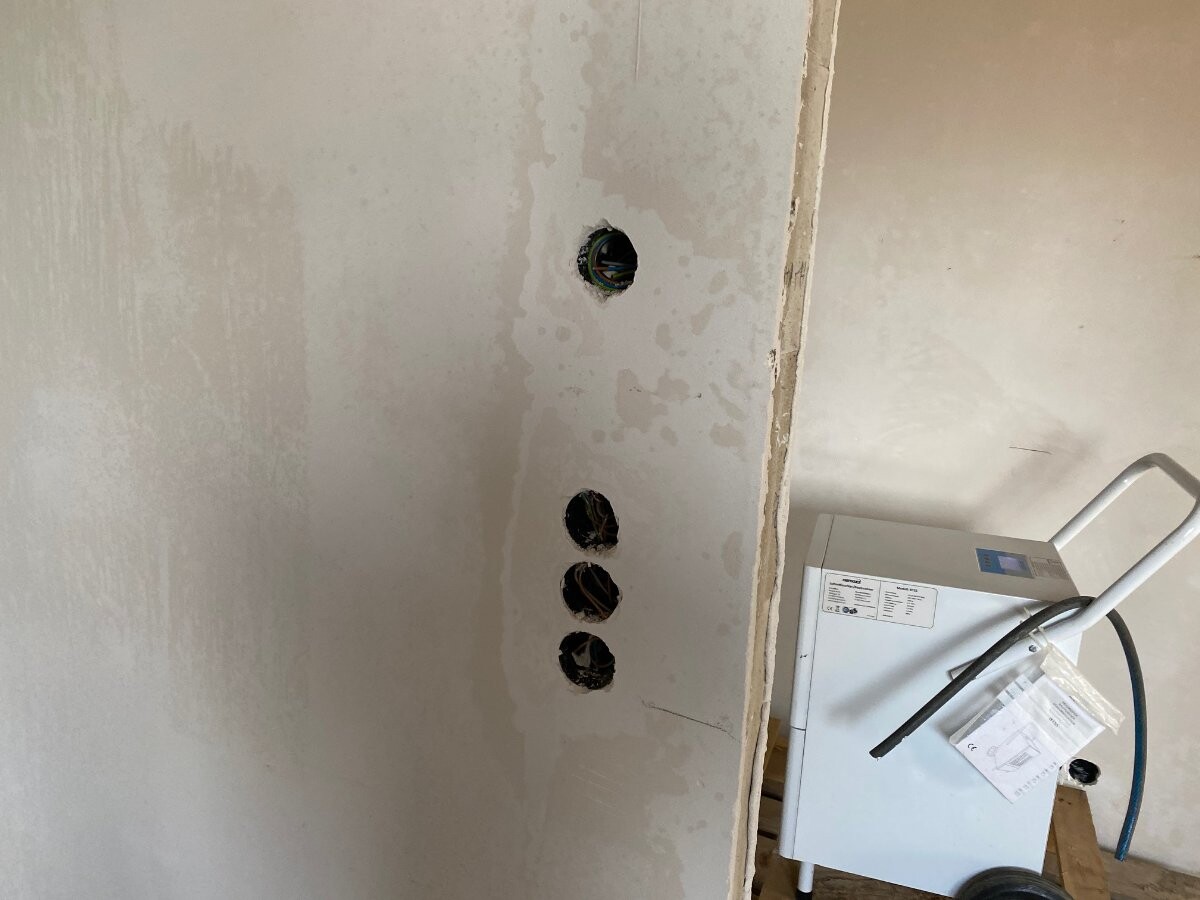
I am attaching a few pictures I have available.
Thank you in advance for your answers.
Regards,
Dennis
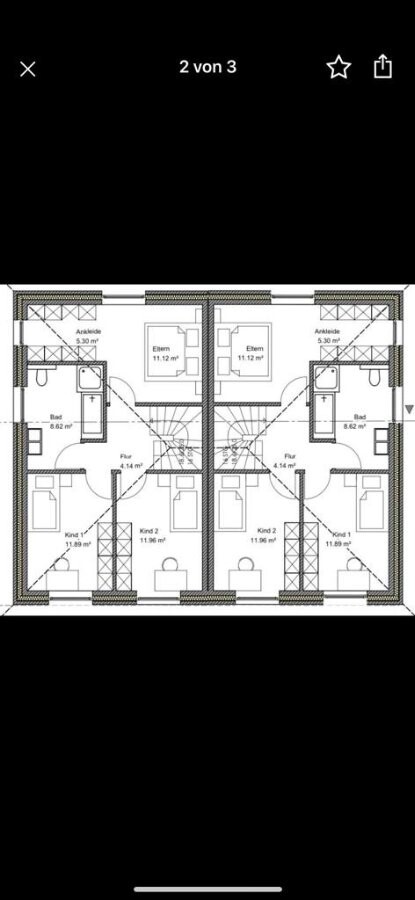
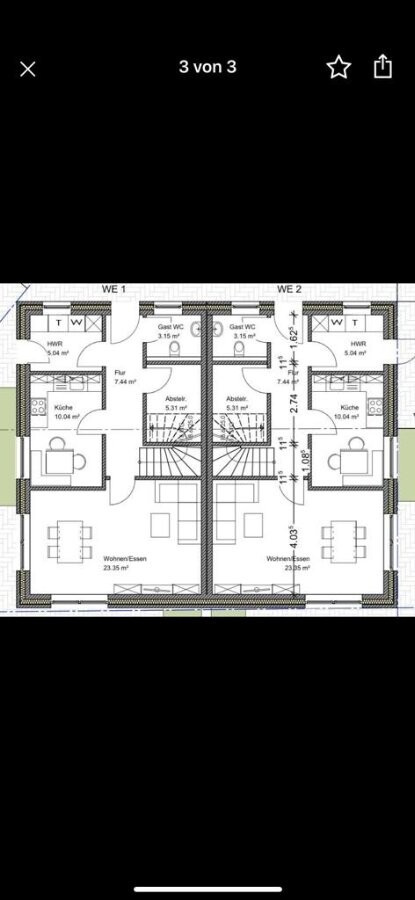
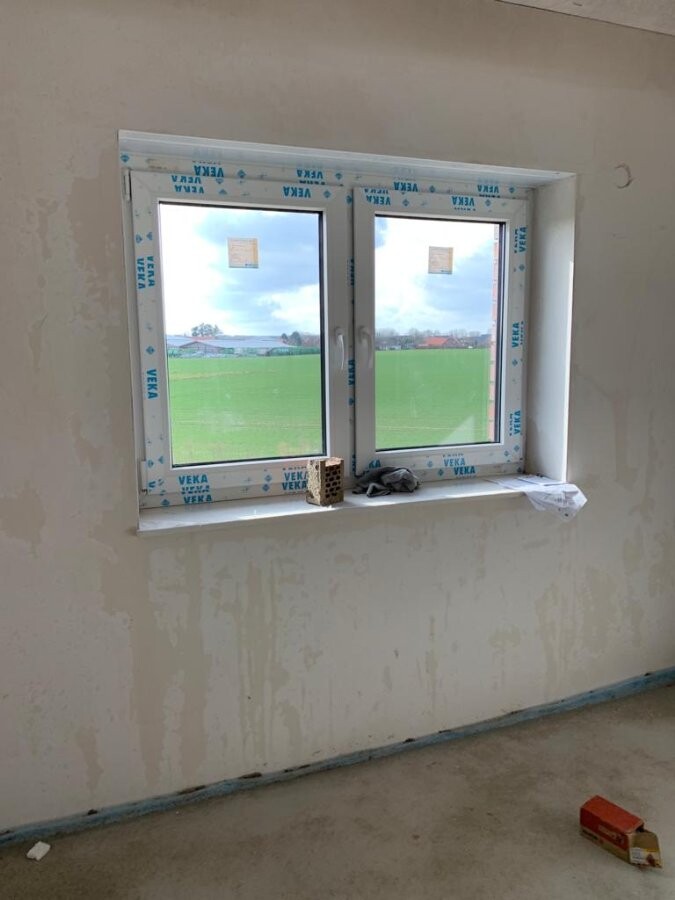
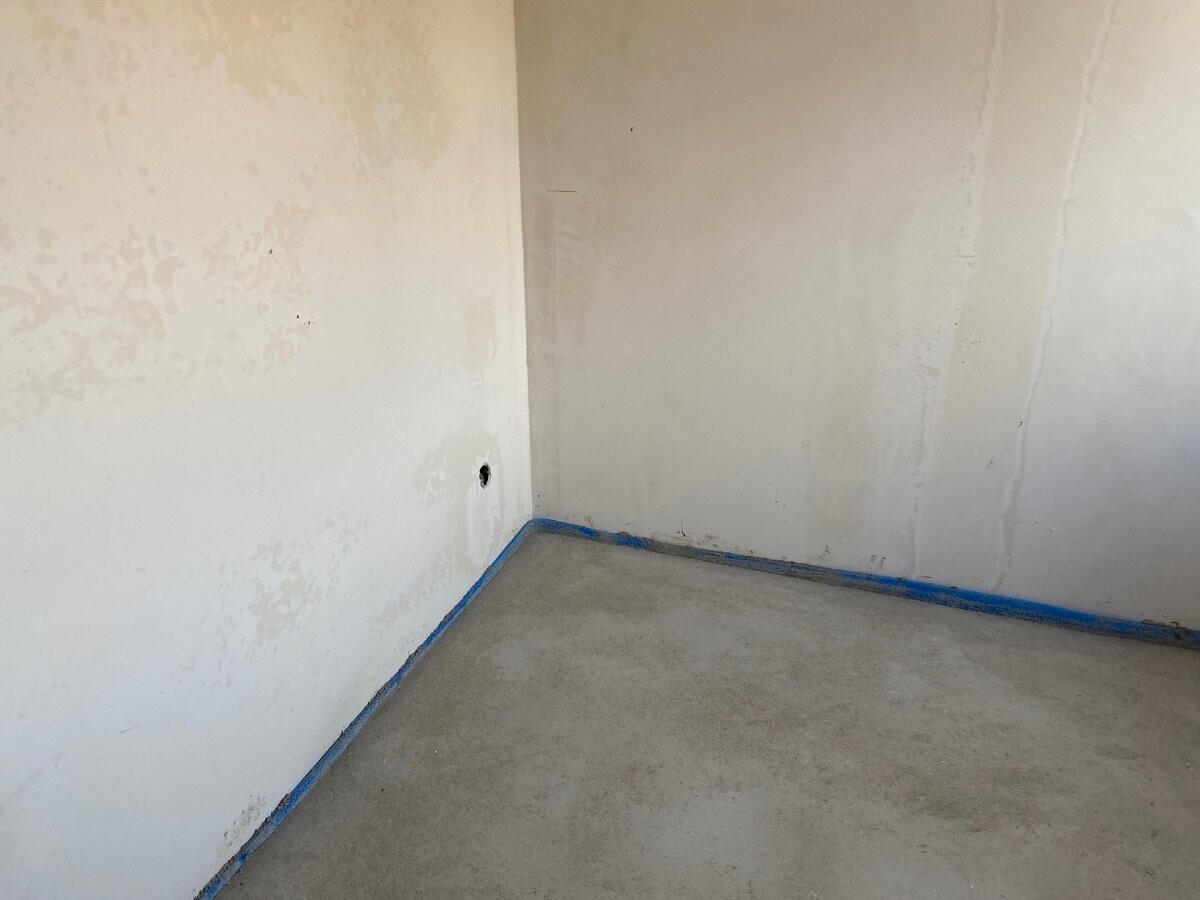
I have a few questions regarding sound insulation in a semi-detached house. I have already read a lot about noise issues in semi-detached homes.
The reason I need to deal with this is that after moving, we are now facing similar problems ourselves.
For the past two years, we lived in a semi-detached house (built in 2015) with neighbors who are a family with one child (2 years old). We did not have any noise problems there. Of course, you could hear the child crying loudly sometimes, but it was never really disturbing.
Now we have moved again, into another semi-detached house (built in 2020), and are plagued by many noise issues.
The house is very noisy. We hear a lot from the neighbors; here is what we hear from them:
- Normal conversations are sometimes audible (especially in the evening when everything is quiet, these can be heard very clearly)
- Loud conversations are clearly audible (disturbing even when the radio or TV is on)
- Very loud impact noise from footsteps (clearly audible, especially from the upper floor)
- Bed creaking noises
- Closing of doors (I can hear exactly which room the neighbors enter and where the door is being closed)
- Water sounds
- Setting down items on the floor or furniture
At first, we suspected the neighbors were very loud, but they have now even taken precautions (closing windows once we go to bed, closing room doors, they even bought a soundproofing panel). Unfortunately, these measures had little effect. Now both the neighbors and we suspect the issue lies with the building itself.
Together with the neighbors, we have already tried to locate the source of the noise transmission but without success. What stands out is that impact noise from the upper floor is the most noticeable; the staircase seems to cause fewer issues.
A few key facts about the building:
- New semi-detached house built in 2020, designed in an urban villa style
- Party wall is double-layered with a separating gap (on the outside you can see something in the gap)
- We suspect the roof beams run continuously through both units
- The entire house is tiled throughout
I also tried measuring decibel levels with an app but without much success. After talking to the neighbors, I was even allowed to try recording the noise, but that also did not help. Although the sound levels on the recordings showed peaks and changes, it does not sound like it does in reality.
We have now scheduled an appointment with the landlord for the upcoming weekend.
As preparation for this appointment, I am reaching out to you all to possibly get some tips on what exactly to pay attention to or what questions/points to raise.
Both parties in the house are interested in solving the problem (if it’s even possible) because we cannot live or sleep properly like this, and the other party of course also wants to live normally and not have me contacting them about noise every day.
I am attaching a few pictures I have available.
Thank you in advance for your answers.
Regards,
Dennis
Denex07 schrieb:
But hearing the creaking of the bed or the placing of glasses on the bedside tables from next door is not normal.Who installed the tiles? Is the mortar in contact with the walls?
ypg schrieb:
Who installed the tiles? Does the mortar have contact with the walls?I can’t say for sure, but it looks very neat. I also can’t say 100% if there is contact with the wall.Ysop*** schrieb:
A friend also had the problem of extreme noise transmission in a semi-detached house. If I remember correctly, it was due to the floor slab not being properly constructed. That couldn’t be changed afterwards.By now, I also believe that nothing can be done about the noise transmission. So, the only option left is probably to look for something new. I would have liked to have saved the money spent on living there for two months.
This explains the transmission of impact sound and similar noises, but does not account for overhearing conversations. Either the original poster has exceptionally sharp hearing, or the partition wall simply lacks sufficient sound insulation (aerated concrete, unfilled clay block?). But as I mentioned in my first post, there is no solution for this other than moving out. The partition wall could be lined from the inside. However, the landlord’s interest in doing this is likely limited, especially since the neighbors do not perceive it as a problem.
Denex07 schrieb:
I can’t say for sure, but it looks very neat. I also can’t say 100% if they have contact with the wall. That could be the reason! That’s why floating screed exists and why everything is installed as floating. Often, do-it-yourself work done by amateurs is to blame. However, the mentioned concrete slab could also be the cause. When a house is built only for rental purposes, the focus is often on costs, and good workmanship may be compromised.
Similar topics