
ᐅ Orient the House and Garage Differently? To Maximize Evening Sun?
Created on: 11 May 2020 16:01
S
s0nyHessHello,
together with my brother, we inherited a plot of land in beautiful Hesse and have now divided it fairly between us. After the division, I have a roughly square plot measuring about 32 x 32 m (105 x 105 ft). My brother took the western part, which narrows a bit, but that’s okay. Back to mine. We are planning a detached single-family house with a hipped roof and two floors. Additionally, a 50 sqm (540 sq ft) garage on the property boundary on the eastern side is to be built.
Would you always place your single-family house parallel to the boundary garage, or can it also be built at different angles on the plot without looking completely odd (we are not concerned about how it looks on Google Maps, only the view from the street matters)?
We have already thought a bit about the layout (a large open living kitchen and living room should face south), and the bathroom on the upper floor is planned in the southeast. If I get a chance over the weekend, I might create a layout thread as well.
But first, let’s focus on the property planning. What would you do? Parallel or slightly rotated to the west? By orienting it to the west, we expect longer evening sun on the terrace, which should be located south of the house. But do the rooms on the east side, like the bathroom and the open living kitchen, also get more sunlight because of the rotation? And does the living room with the large window front on the south side of the house also get more evening sun?
My wife’s main concern is that it might look strange from the street if the garage is aligned with the property boundary while the house is rotated slightly (12-17 °) to the west. Are there any architects or other building professionals here with experience who can assess this? Or what do other users say? Is this feasible, or does it look awkward and the few extra hours of sunlight don’t justify the effort or the visual downside?
Or maybe some of you would suggest a completely different approach?
Please let us know
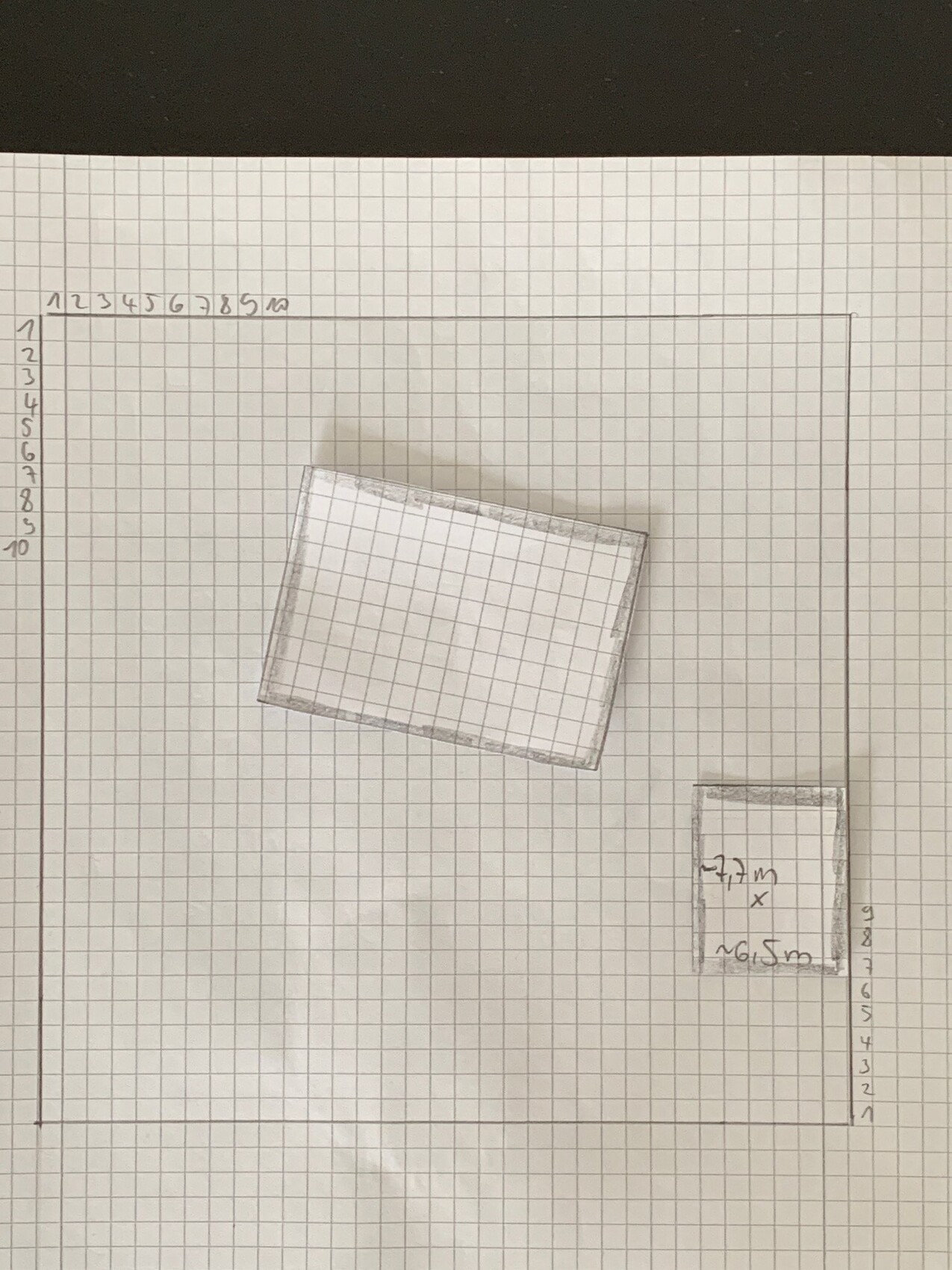
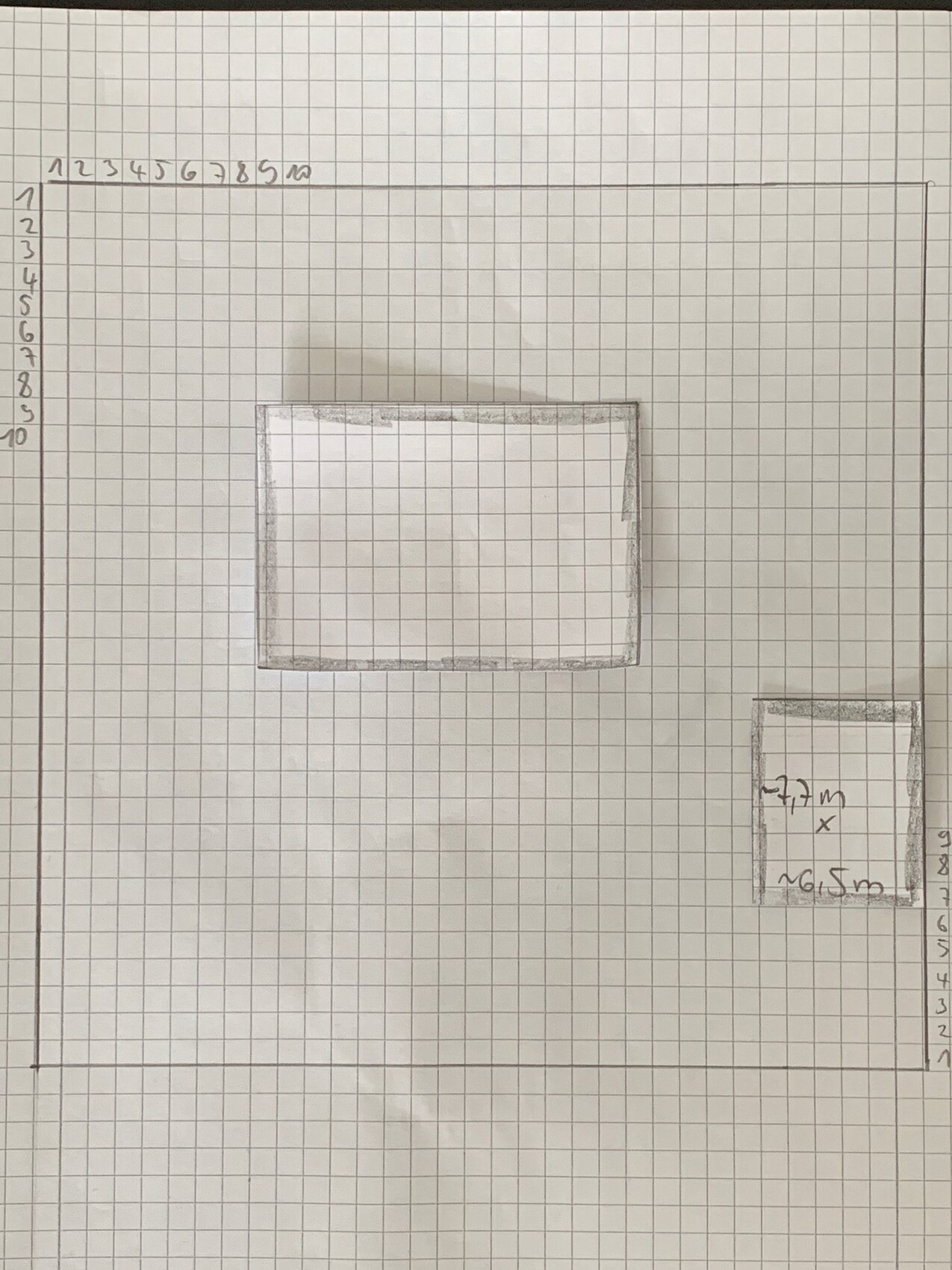
PS: The plot is fully aligned to the cardinal directions.
PPS: To the south, below the plot, is the street of the residential area, and to the north is a field. My brother plans to build a house to the west in a few years, but not as soon as I do. To the east, there is already a semi-detached house.
together with my brother, we inherited a plot of land in beautiful Hesse and have now divided it fairly between us. After the division, I have a roughly square plot measuring about 32 x 32 m (105 x 105 ft). My brother took the western part, which narrows a bit, but that’s okay. Back to mine. We are planning a detached single-family house with a hipped roof and two floors. Additionally, a 50 sqm (540 sq ft) garage on the property boundary on the eastern side is to be built.
Would you always place your single-family house parallel to the boundary garage, or can it also be built at different angles on the plot without looking completely odd (we are not concerned about how it looks on Google Maps, only the view from the street matters)?
We have already thought a bit about the layout (a large open living kitchen and living room should face south), and the bathroom on the upper floor is planned in the southeast. If I get a chance over the weekend, I might create a layout thread as well.
But first, let’s focus on the property planning. What would you do? Parallel or slightly rotated to the west? By orienting it to the west, we expect longer evening sun on the terrace, which should be located south of the house. But do the rooms on the east side, like the bathroom and the open living kitchen, also get more sunlight because of the rotation? And does the living room with the large window front on the south side of the house also get more evening sun?
My wife’s main concern is that it might look strange from the street if the garage is aligned with the property boundary while the house is rotated slightly (12-17 °) to the west. Are there any architects or other building professionals here with experience who can assess this? Or what do other users say? Is this feasible, or does it look awkward and the few extra hours of sunlight don’t justify the effort or the visual downside?
Or maybe some of you would suggest a completely different approach?
Please let us know
PS: The plot is fully aligned to the cardinal directions.
PPS: To the south, below the plot, is the street of the residential area, and to the north is a field. My brother plans to build a house to the west in a few years, but not as soon as I do. To the east, there is already a semi-detached house.
 Vicky Pedia11 May 2020 16:12
The development plan has probably already taken this decision off your hands. The ridge direction is usually specified there. What does it say?
Hello Vicky Pedia, the development plan doesn’t mention anything about ridge orientation. My brother says that gives a lot of freedom. And I can’t find anything about the orientation, only the maximum ridge height.
What do you think? Does it look strange if the ridges are not aligned the same way?
What do you think? Does it look strange if the ridges are not aligned the same way?

Without a specific house, it’s hard to say. For example (without a link), what is the name of the development plan?
I don’t see any difference in the visual impact on the landscape.
https://www.instagram.com/11antgmxde/
https://www.linkedin.com/company/bauen-jetzt/
s0nyHess schrieb:
We are not interested in Google Maps, only the view from the street
I don’t see any difference in the visual impact on the landscape.
https://www.instagram.com/11antgmxde/
https://www.linkedin.com/company/bauen-jetzt/
s0nyHess schrieb:
I haven’t started a floor plan discussion yet.
No, my main concern is really the appearance / the view from the street. Would it look odd if the two buildings are oriented differently? Are there any experiences with this? I rarely say this, but
Function > Appearance
I think it can actually look quite charming if the buildings are slightly offset. This kind of topic (especially the visualization) is probably interesting for an architect. The average, typical neighbor might of course be triggered by such a design.
Similar topics