
Hello,
We have the final inspection of our house next week. Today, we thoroughly examined the house and noticed that long cracks have appeared in the screed on the ground floor. Also, the corners at the patio doors are rounded.
The builder says these are normal stress cracks and nothing to worry about.
Do these cracks necessarily need to be repaired? What happens if we simply lay our vinyl flooring over them now?
Also, does anyone know what these 'cables' (last picture) in the screed are?
Thank you in advance
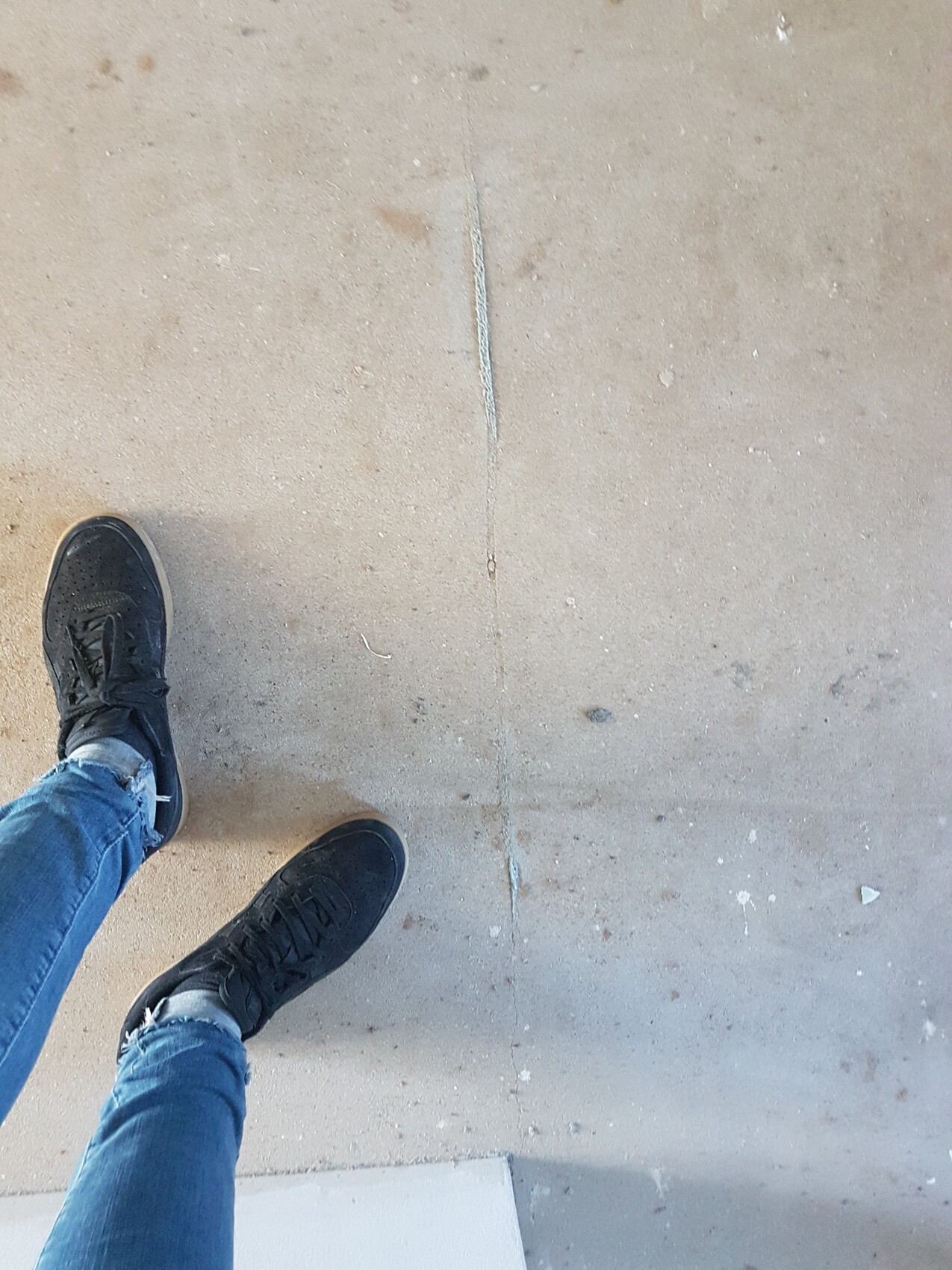
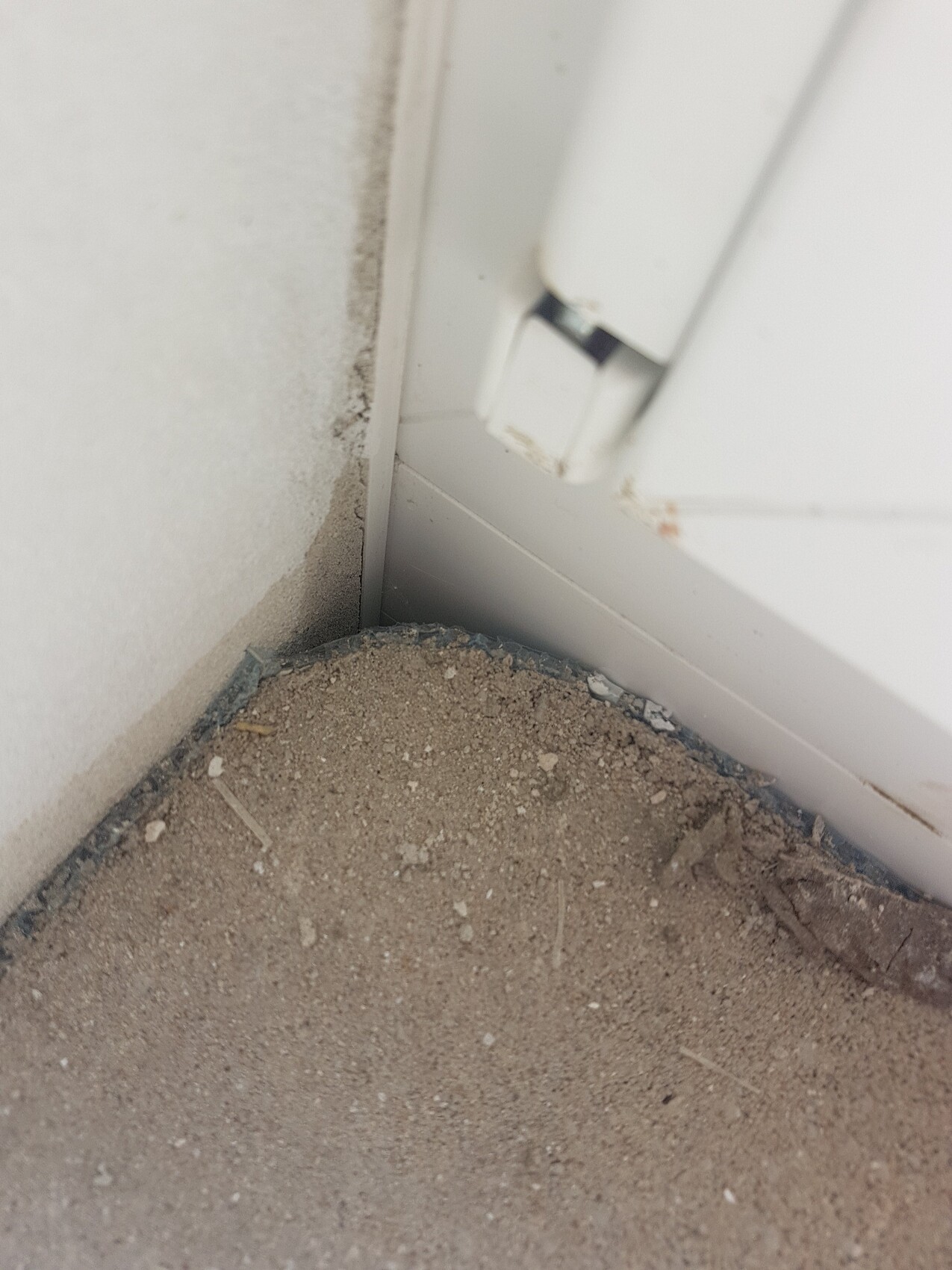
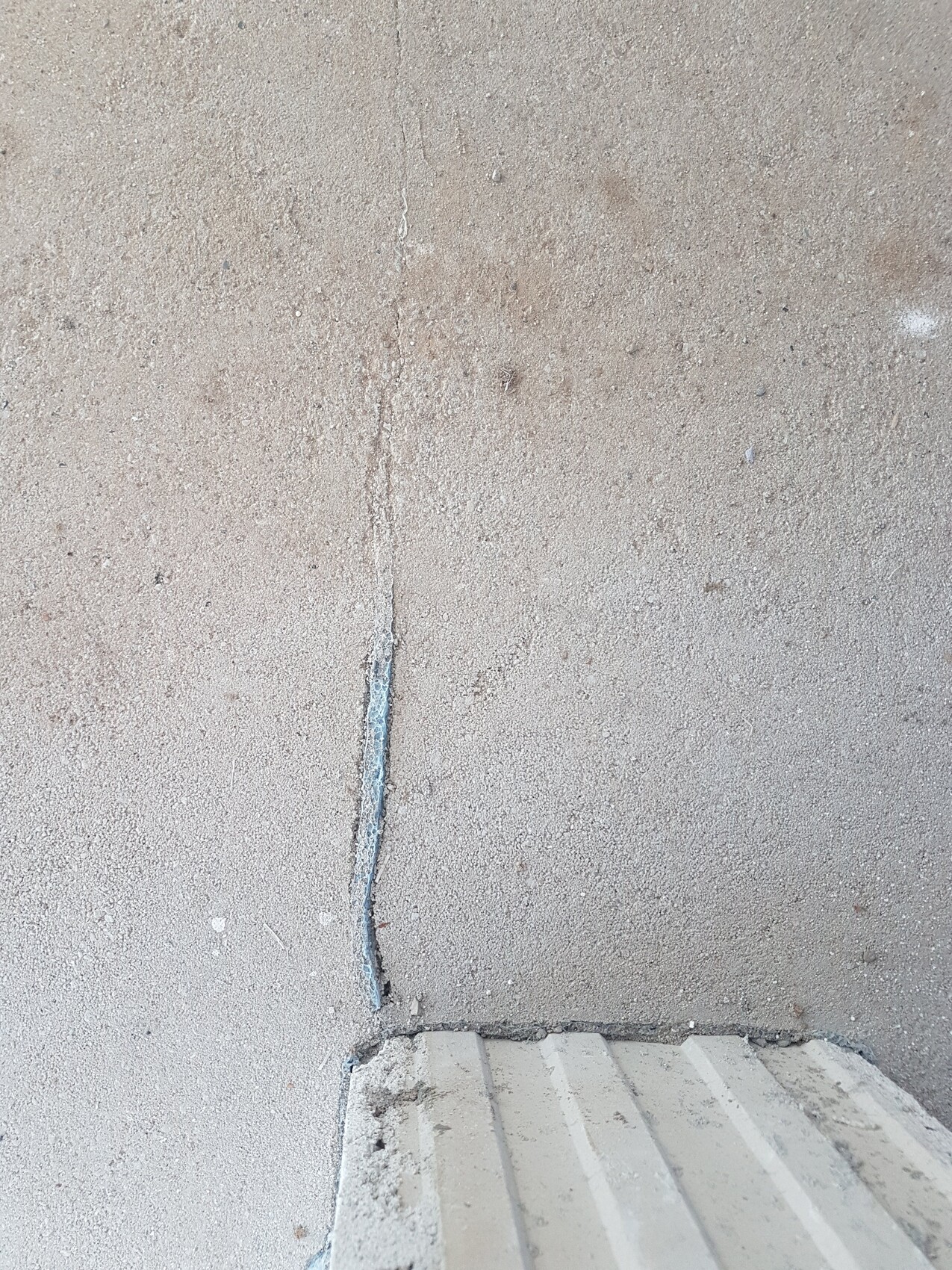
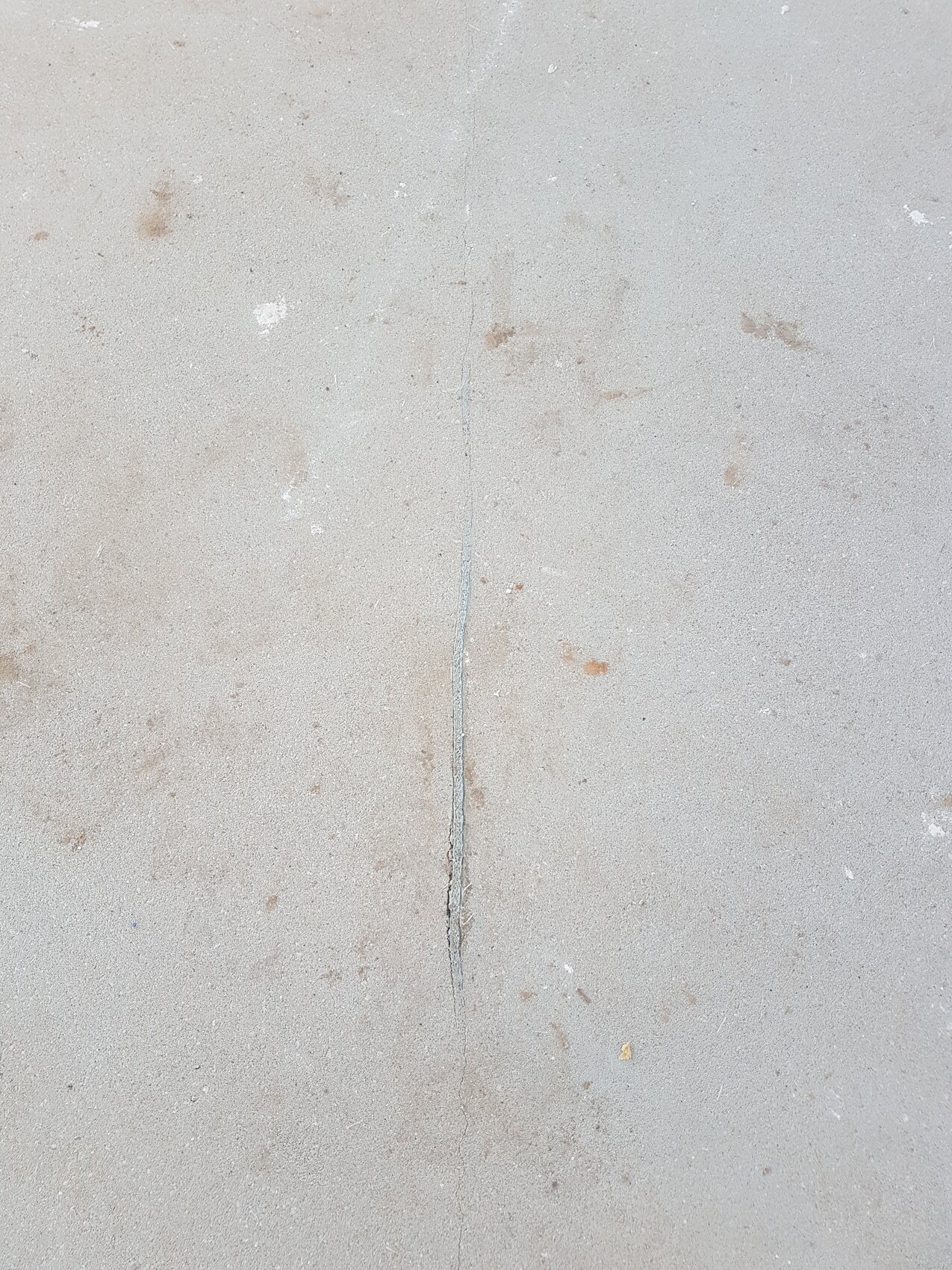

We have the final inspection of our house next week. Today, we thoroughly examined the house and noticed that long cracks have appeared in the screed on the ground floor. Also, the corners at the patio doors are rounded.
The builder says these are normal stress cracks and nothing to worry about.
Do these cracks necessarily need to be repaired? What happens if we simply lay our vinyl flooring over them now?
Also, does anyone know what these 'cables' (last picture) in the screed are?
Thank you in advance
N
nordanney6 May 2020 23:23KlaRa schrieb:
The screed standard clearly states that the edge strip must be flush. Also in the corners. If the edge strip had been cut in the corner before the screed was poured, and the adjoining (continuing) piece then positioned at a right angle and the edge strips secured against slipping, there would have been a sharp corner formation there. That’s what the theorist says.
KlaRa schrieb:
What is not acceptable, regardless of what some people shouted out, is the rounding in one of the corners. KlaRa schrieb:
Just lay tiles over it, please don’t take that answer seriously! That is common practice. If you find screed installers who create perfect 90-degree angles, then cherish them.

We want to provide technical advice in this forum.
This advice should not be based on speculation, incomplete knowledge, or do-it-yourself assumptions. If we do not want to take the questioner's responsibility lightly, we must consider the situation according to the applicable technical standards. This is important because careless statements that the questioner takes seriously might prevent them from rightfully criticizing or reporting a technically improper condition—one that could later cost them money (out of their own pocket) or leave them with work that does not comply with the standards.
This is not about nitpicking!
Of course, there are craftsmen who may overlook defects and cover up issues requiring correction within their scope of work.
However, this forum is intended to provide useful and actionable information for the questioner.
---------------------------
Addressing this again to “Onik900,” I could neither determine from the text nor the photos whether this is a heated screed or not, nor whether the movement joint (and it will be a movement joint due to the type of construction) is actually necessary, and furthermore, whether it runs straight (which would be mandatory in that case).
Perhaps you should add a brief comment to enable a reliable assessment of the situation.
Best regards, KlaRa
This advice should not be based on speculation, incomplete knowledge, or do-it-yourself assumptions. If we do not want to take the questioner's responsibility lightly, we must consider the situation according to the applicable technical standards. This is important because careless statements that the questioner takes seriously might prevent them from rightfully criticizing or reporting a technically improper condition—one that could later cost them money (out of their own pocket) or leave them with work that does not comply with the standards.
This is not about nitpicking!
Of course, there are craftsmen who may overlook defects and cover up issues requiring correction within their scope of work.
However, this forum is intended to provide useful and actionable information for the questioner.
---------------------------
Addressing this again to “Onik900,” I could neither determine from the text nor the photos whether this is a heated screed or not, nor whether the movement joint (and it will be a movement joint due to the type of construction) is actually necessary, and furthermore, whether it runs straight (which would be mandatory in that case).
Perhaps you should add a brief comment to enable a reliable assessment of the situation.
Best regards, KlaRa
Topic: Rounded Corners
The criticism is directed less at the screed installer and more at the heating engineer (in the case of heated screed). The edge insulation strip is installed by the heating engineer when laying the insulation and underfloor heating.
From my experience, screed installers work as pure crews. They come in quickly and leave just as fast to move on to the next job. Consequently, the price for a heated screed is quite low, making it one of the financially smallest trades on a construction site. So who inspects corners and fixes any imperfections?
The criticism is directed less at the screed installer and more at the heating engineer (in the case of heated screed). The edge insulation strip is installed by the heating engineer when laying the insulation and underfloor heating.
From my experience, screed installers work as pure crews. They come in quickly and leave just as fast to move on to the next job. Consequently, the price for a heated screed is quite low, making it one of the financially smallest trades on a construction site. So who inspects corners and fixes any imperfections?
@guckuck2:
The installation of perimeter strips clearly falls within the scope of "screed work" and is mentioned in the various screed standards, which I prefer not to list here. In my entire professional experience, I have never seen a tender where the placement of the screed with perimeter strips was assigned to an external trade. No, that assumption is not correct!
"Quick in, quick out" may, as I noted earlier, be the approach of some screed crews in certain cases. But here we are talking about technical regulations.
Furthermore, technical regulations cannot be overridden by price considerations. This remark alone seems inappropriate! Who is responsible for corrections? Always the trade within whose area of responsibility a violation of the rules occurred. The execution can (and this is standard practice) be taken over by the following trade (in this case, the floor layer) after agreement with the responsible preceding trade and with cost reimbursement. And who is in charge of the inspection? Well, that is quite obviously self-explanatory.
The installation of perimeter strips clearly falls within the scope of "screed work" and is mentioned in the various screed standards, which I prefer not to list here. In my entire professional experience, I have never seen a tender where the placement of the screed with perimeter strips was assigned to an external trade. No, that assumption is not correct!
"Quick in, quick out" may, as I noted earlier, be the approach of some screed crews in certain cases. But here we are talking about technical regulations.
Furthermore, technical regulations cannot be overridden by price considerations. This remark alone seems inappropriate! Who is responsible for corrections? Always the trade within whose area of responsibility a violation of the rules occurred. The execution can (and this is standard practice) be taken over by the following trade (in this case, the floor layer) after agreement with the responsible preceding trade and with cost reimbursement. And who is in charge of the inspection? Well, that is quite obviously self-explanatory.
N
nordanney7 May 2020 09:27KlaRa schrieb:
In my entire professional experience, I have never seen a contract where the installation of the screed with edge strips is left to a different trade. No, that assumption is not correct!From what I know, it is always the heating installer who sets the edge strips. With the stapler system, the edge strips are installed first – and in practice, this is always done by the heating installer. Contract specifications or theory aside. And that was also the case here. Want to bet?
In practice, I have never seen in a single-family house that the screed installer comes first to set the separating strips and then leaves. The screed installer arrives when applying the screed. Before and after that, they are not present (at most for moisture measurement, although that is better done by the floor installer).