
ᐅ Photovoltaic System: How Many kWp Are Sufficient for a House?
Created on: 19 Mar 2020 09:10
L
lin0r87
Hello everyone!
We are building a semi-detached house and want to install a photovoltaic system on the roof. The orientation would be south/west and north/east. We intend to use most of the electricity ourselves. A battery is not planned, as the cost is quite high for such a system and it probably doesn’t make financial sense.
We have received an offer that includes:
- 14x IBC MonoSol 360 (there is still space on the north/east side... does that make sense?)
- SMA SB 3.6-1AV-40 inverter
- DEHNcube YPV SCI 2MPP surge protection device
- Meter cabinet (+ accessories)
- Installation
The price is about 7,500€ gross.
The system will have a capacity of 5.04 kWp.
Currently, there are three people living in the house (2 adults, 1 child). Four are planned.
Our roof is quite simple but well oriented.
We are wondering if 5.04 kWp is sufficient?
Our electricity consumption in the apartment was always below 3,500 kWh per year, but we expect it to increase with the house. We estimate about 4,500 kWh.
Regarding the 24/7 electrical loads:
There will be an air-to-water heat pump from Novelan and a ventilation system with heat recovery.
I would really appreciate some advice.
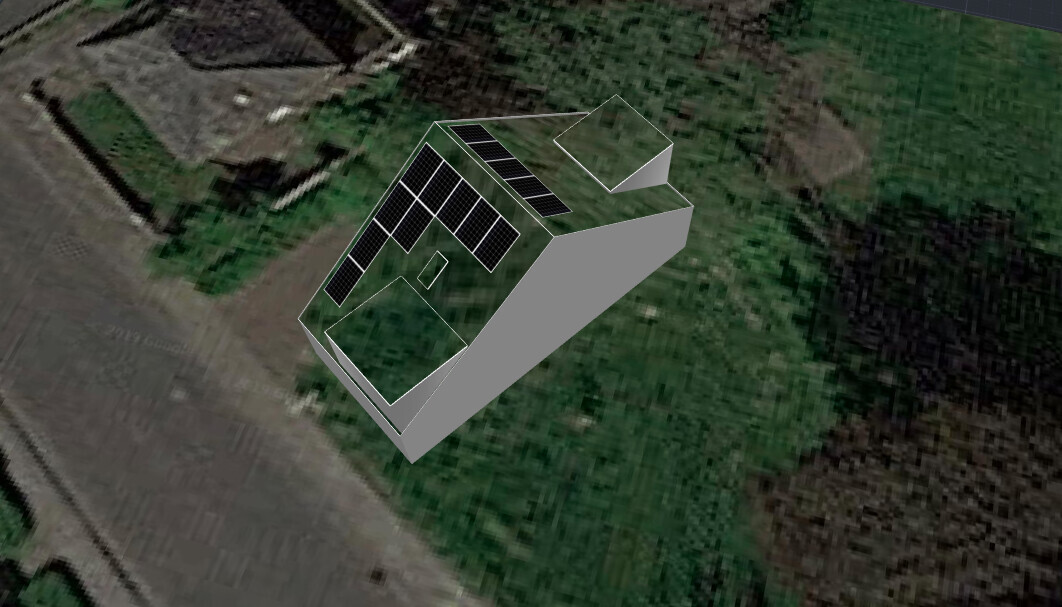
We are building a semi-detached house and want to install a photovoltaic system on the roof. The orientation would be south/west and north/east. We intend to use most of the electricity ourselves. A battery is not planned, as the cost is quite high for such a system and it probably doesn’t make financial sense.
We have received an offer that includes:
- 14x IBC MonoSol 360 (there is still space on the north/east side... does that make sense?)
- SMA SB 3.6-1AV-40 inverter
- DEHNcube YPV SCI 2MPP surge protection device
- Meter cabinet (+ accessories)
- Installation
The price is about 7,500€ gross.
The system will have a capacity of 5.04 kWp.
Currently, there are three people living in the house (2 adults, 1 child). Four are planned.
Our roof is quite simple but well oriented.
We are wondering if 5.04 kWp is sufficient?
Our electricity consumption in the apartment was always below 3,500 kWh per year, but we expect it to increase with the house. We estimate about 4,500 kWh.
Regarding the 24/7 electrical loads:
There will be an air-to-water heat pump from Novelan and a ventilation system with heat recovery.
I would really appreciate some advice.

Andre77 schrieb:
It seems I can’t send private messages… they probably get lost somewhere. I recently read about this problem with @11ant too. Maybe email?
[E-Mail]Lin0r@gmx.de[/E-Mail]
lin0r87 schrieb:
so..
we have upgraded the system to 6.84 kWp.
More probably wouldn’t fit on the roof unless we increase the output per module.
Now there are 19 modules, without storage.
1 kWp = €1345. If I did everything correctly.Hi 1. Since you would otherwise be required to install a smart meter from 7 kWp onwards, which costs more, a system just under 7 kWp is good because it helps you avoid this requirement.
2. The cost per kWp seems a bit high to me. It’s probably due to the small system size and high-performance modules. But this can be assessed much better in the forum already mentioned. You can also request alternative quotes there. I planned and ordered my photovoltaic system there myself.
3. The air source heat pump will increase your consumption, but the photovoltaic system will cover about 35% of your total energy demand (heating plus household electricity). If you know your heating load and the heat pump installed, the future need for purchased electricity can be estimated quite well. So please share those numbers. I started myself with a 7 kWp system and about a 6.5 kW heating load, so I can make a good estimate of what will end up happening for you.
4. Forgoing storage is exactly right unless you upgrade your house to KfW40 standard. With the current KfW subsidies, this is extremely attractive. In your case, the additional costs would almost certainly be more than compensated by the extra funding.
Best regards,
Niko
H
Heidi19656 May 2020 21:57blackm88 schrieb:
We have a 7.5 kWp system on the roof, plus a 7.7 kW battery storage. The heat pump heats the house during the day when there is surplus electricity (using the screed as a buffer) and raises the hot water temperature. The storage capacity is sufficient until the next morning.
Everyone has a different opinion: install the system to full capacity; go up to 9.9 kWp; install without storage; and so on...How large is the house? What is your annual electricity consumption?So, we have 28 modules with a total capacity of 8.68 kW peak on a pure south-facing roof.
Currently, electricity is produced until about 8:30 pm. After 6:45 pm, production drops below 1000 watts.
According to the smart meter, our house consumes approximately 250–300 watts when looking at live data (intermittently, the water heater switches on with a consumption of 4 kW). From 7:00 pm, the house draws power from the photovoltaic system and the battery storage.
Here’s the interesting part: since the day before yesterday, we have a BYD battery storage with 6.4 kW capacity installed. In the morning, depending on usage in the evening, the battery is still 30% charged (yesterday) or 20% charged (today).
The battery is sufficient for normal household consumption (at least currently). From October (or the start of the heating season) until the end of February, I do not expect us to remain fully self-sufficient.
Additionally, I have a small electric car, and considering that I can start charging at home from 5:00 pm (estimated need of 7 kW charging), the battery will definitely not be able to supply the house until the photovoltaic system starts up again in the morning after the pandemic / end of working from home. Fortunately, BYD’s battery can be expanded with an additional 4 modules of 1.28 kW each.
Here’s a practical report for those interested.
…and if I have mixed up kW and kWh, please excuse me. I believe it is still understandable!
P.S. The dehumidifier in the basement is currently running at full power in the screenshot.
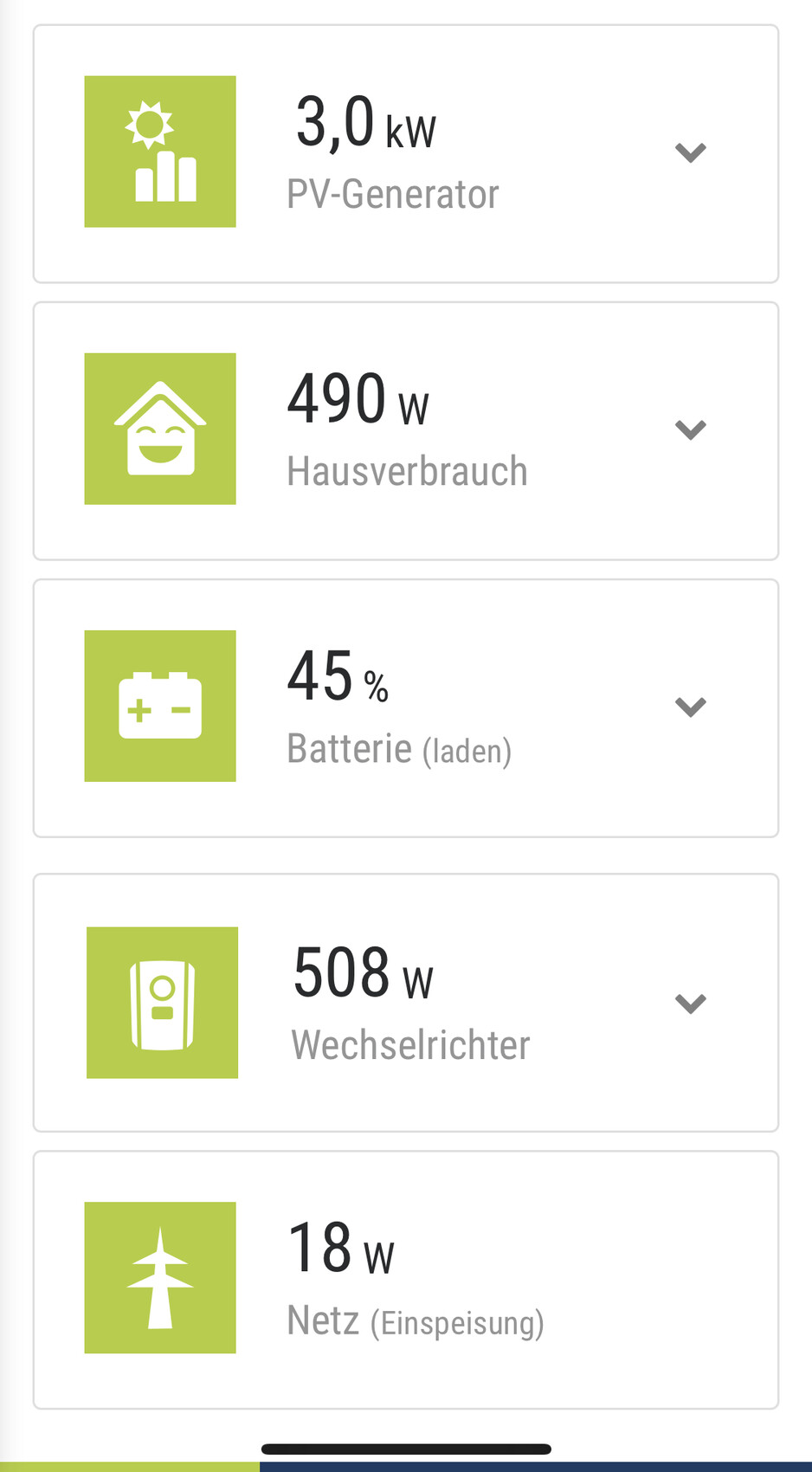
Currently, electricity is produced until about 8:30 pm. After 6:45 pm, production drops below 1000 watts.
According to the smart meter, our house consumes approximately 250–300 watts when looking at live data (intermittently, the water heater switches on with a consumption of 4 kW). From 7:00 pm, the house draws power from the photovoltaic system and the battery storage.
Here’s the interesting part: since the day before yesterday, we have a BYD battery storage with 6.4 kW capacity installed. In the morning, depending on usage in the evening, the battery is still 30% charged (yesterday) or 20% charged (today).
The battery is sufficient for normal household consumption (at least currently). From October (or the start of the heating season) until the end of February, I do not expect us to remain fully self-sufficient.
Additionally, I have a small electric car, and considering that I can start charging at home from 5:00 pm (estimated need of 7 kW charging), the battery will definitely not be able to supply the house until the photovoltaic system starts up again in the morning after the pandemic / end of working from home. Fortunately, BYD’s battery can be expanded with an additional 4 modules of 1.28 kW each.
Here’s a practical report for those interested.
…and if I have mixed up kW and kWh, please excuse me. I believe it is still understandable!
P.S. The dehumidifier in the basement is currently running at full power in the screenshot.
S
Stefan8907 May 2020 10:02@Zaba12 interesting report. My photovoltaic system is oriented east/west. The yield is somewhat lower than with a perfect south-facing orientation. However, electricity is generated from the roof a bit earlier. Since I also have a Kostal inverter, I am considering adding a BYD battery. There is even a subsidy from the government, but then I would probably only be allowed to feed a maximum of 50% into the grid, which would ruin the return on investment :-(
Stefan890 schrieb:
@Zaba12 interesting report. My photovoltaic system is oriented east/west. The yield is somewhat lower than with an ideal south-facing orientation. However, I start generating electricity from the roof a bit earlier. Since I also have a Kostal inverter, I’m considering adding a BYD battery. There is even a subsidy from the government, but then I would only be allowed to feed a maximum of 50% into the grid, and that ruins the return on investment :-( That’s why I installed it after 9 months in such an uneconomical way without subsidies. If you mean the 10,000 houses program in BY, then the subsidy is available only with a new overall system in the configuration of 1 kW photovoltaic = 1 kW storage.
Jokes aside – the battery simply was not planned from the start.
Similar topics