
ᐅ Breathable membrane at the ridge: open or closed with full rafter insulation?
Created on: 4 May 2020 18:43
H
hgerikeOur expandable attic was designed as a ventilated cold roof. In addition to ventilating the outer roofing layer, the not yet installed insulation layer is also ventilated. The underlay membrane was installed overlapping but open at the bottom of the eaves and at the ridge. This seems correct to me at first glance.
Conclusion
However, if I prevent ventilation of the insulation layer from below in the case of full rafter insulation, then the ridge must not remain open either. Otherwise, the moist air from the outer roofing layer would reach the insulation.
Questions
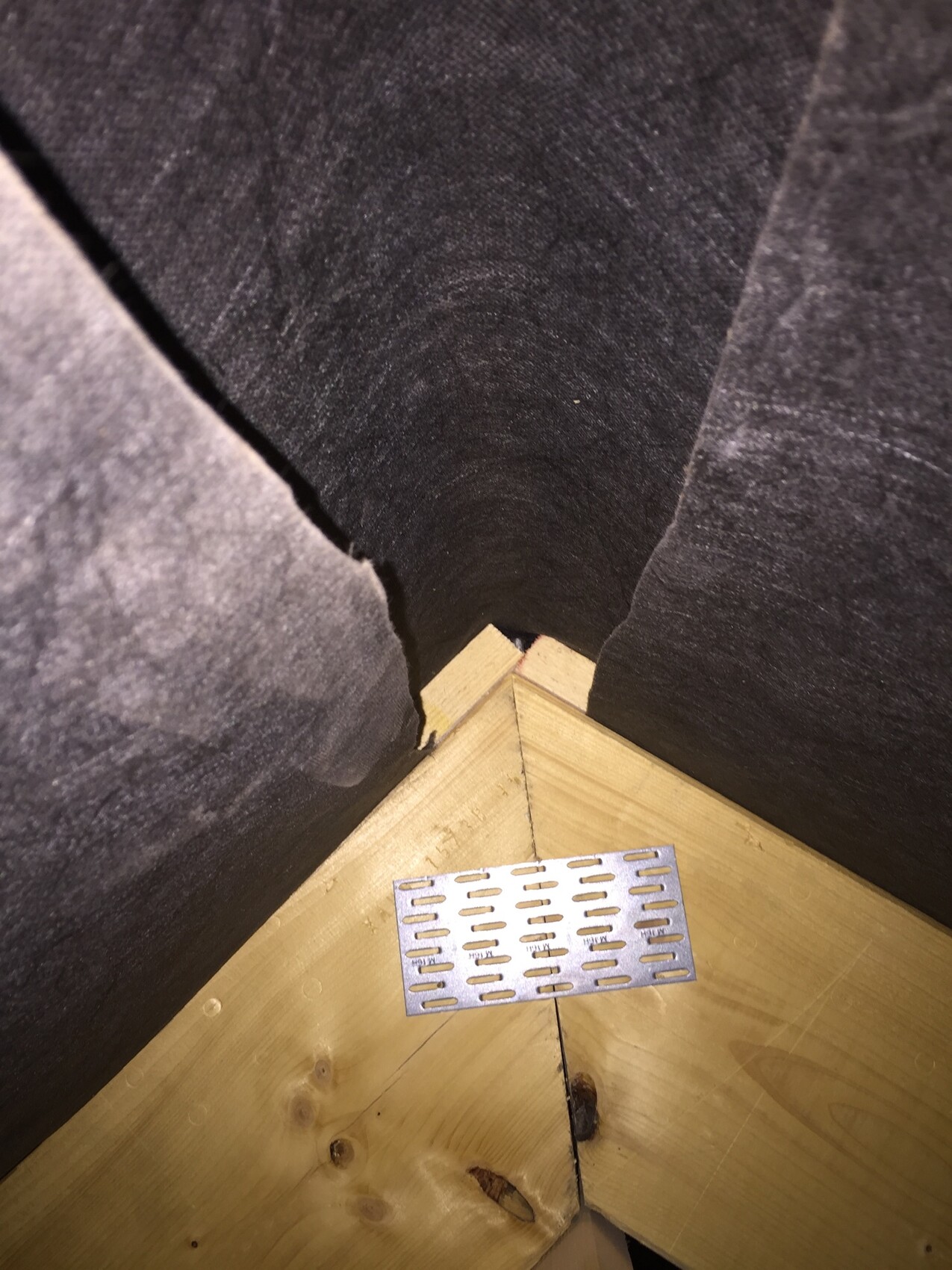
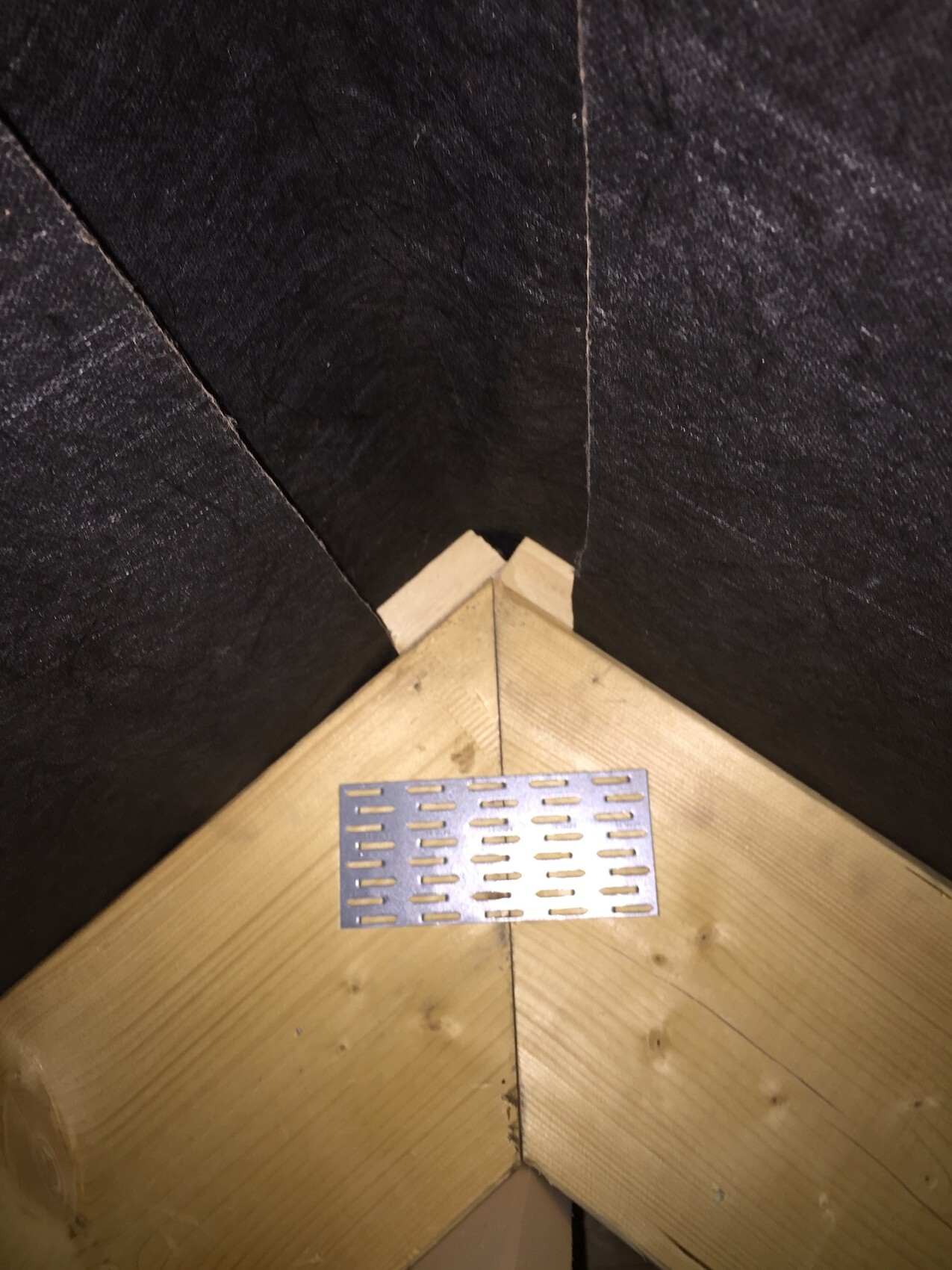
Conclusion
However, if I prevent ventilation of the insulation layer from below in the case of full rafter insulation, then the ridge must not remain open either. Otherwise, the moist air from the outer roofing layer would reach the insulation.
Questions
- Does the underlay membrane at the ridge need to be closed?
- If yes, how exactly? Should the overlapping parts be sealed with adhesive tape or should another layer of underlay membrane be adhered from below?
parcus schrieb:
How should the insulation be ventilated???
Either there is an air layer above the vapor control membrane or there isn’t.
Both situations are supposed to have an effect on adhesion from the INSIDE???The mineral wool insulation in a full rafter insulation system is not supposed to be ventilated at all. Moisture should escape through the vapor-permeable underlay membrane. However, due to the overlap at the ridge, some moist air would be redirected back inside below the vapor control membrane, coming into contact with the insulation. The moist air should remain above the vapor control membrane.H
hauspeter4 May 2020 21:59How is this statement supposed to help the person asking the question?
The current situation is certainly as shown in Graphic 1, with an open ridge vent, and only makes sense if the two ventilation layers from Graphic 2 are used. If the inner ventilation is lost due to full rafter insulation, the interruption at the ridge should be closed.
The question now is how?
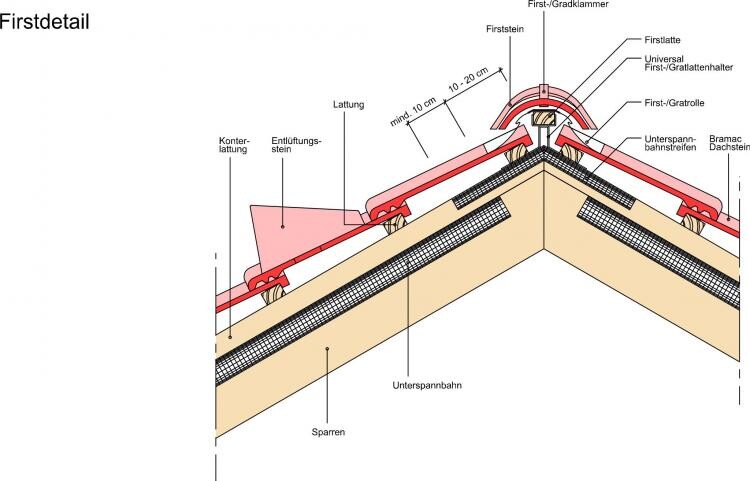
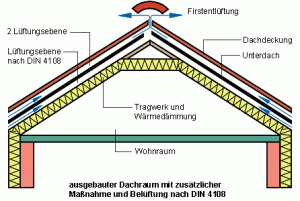
The current situation is certainly as shown in Graphic 1, with an open ridge vent, and only makes sense if the two ventilation layers from Graphic 2 are used. If the inner ventilation is lost due to full rafter insulation, the interruption at the ridge should be closed.
The question now is how?
Is it really not about moisture at all?
With the assumed slope, nothing would need to be glued, which also applies to the other membranes.
In addition, the ventilation cross-section would be too small if the two membranes were glued together.
Introducing a third membrane and cutting the upper one does not solve the gap at the batten...
The only proper solution is probably a complete dismantling.
With the assumed slope, nothing would need to be glued, which also applies to the other membranes.
In addition, the ventilation cross-section would be too small if the two membranes were glued together.
Introducing a third membrane and cutting the upper one does not solve the gap at the batten...
The only proper solution is probably a complete dismantling.
Similar topics