
ᐅ Floor Plan Design Basement and Ground Floor – Sloped Site
Created on: 21 Apr 2020 18:35
S
Sternchen31S
Sternchen3121 Apr 2020 18:35Hello everyone,
The floor plan is almost finished, and now I would like to hear your opinions. We can still make changes if needed.
Development Plan / Restrictions
Plot size: 717 sqm (7,716 sq ft)
Slope: downhill, 10% gradient
Building window, building line and boundary
Edge developments:
Number of parking spaces: prefabricated garage / double garage 6 x 7 m (20 x 23 ft)
Building levels: basement + ground floor
Roof style: gable roof
Client Requirements
Style, roof type, building type: gable roof
Basement, floors: basement + ground floor
Number of residents, age: 2 adults / 1 toddler
Space requirement on ground and upper floors: approx. 140 sqm (1,507 sq ft)
Office: children’s room / office / guest room combined
Number of overnight guests per year: 3
Fireplace: no
Terrace: yes
Garage, carport: double garage
Utility garden, greenhouse: no
House Design
Designer: planner from a construction company
What do you especially like? Why? Mostly drawn according to our wishes
What don’t you like? Why? Dining area too narrow between kitchen and living room (the left kitchen unit must be this long (from left to right: raised dishwasher, oven and microwave stacked, door to pantry, side-by-side refrigerator, tall cabinet). On the right side, we are considering shortening it a bit to gain more space in the dining area.
Estimated cost according to architect/planner: €400,000
Personal budget limit for the house including fittings: €410,000
Preferred heating system: air-to-water heat pump with underfloor heating
If you have to give up something, which details/expansions
- can you give up: open
- can’t you give up: open
Why is the design as it is now?
We spent a long time drawing, changing, and adapting ourselves. This is the result of collaboration between the planner and our wishes.
Which wishes were implemented by the architect? All
Information:
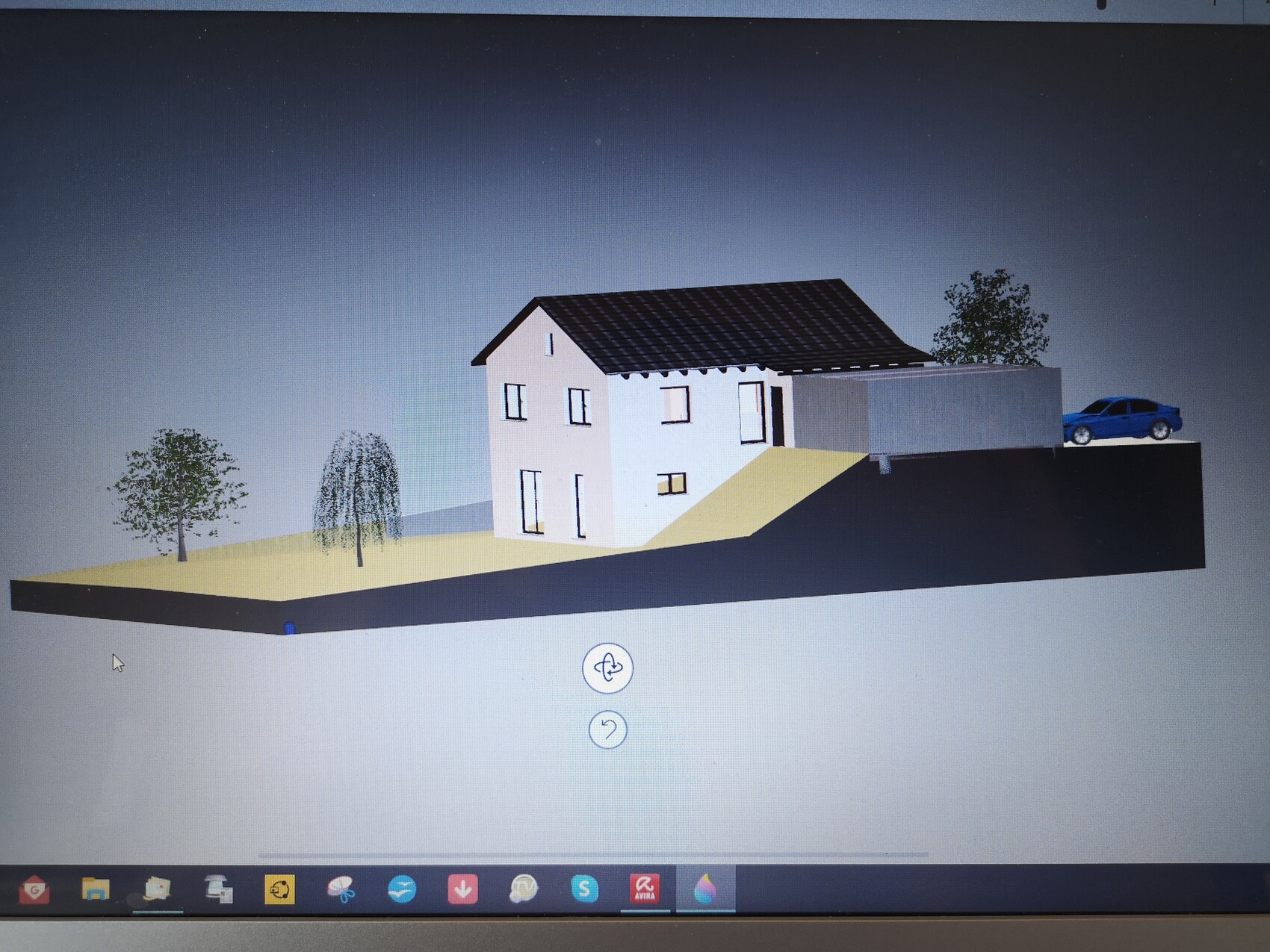
The house will be a single-family home built in solid construction, KFW55 standard, with photovoltaic system, underfloor heating, air-to-water heat pump, gable roof with a 22° pitch. The family planning is complete with 2 adults and 1 toddler. The house is built on a sloped hillside plot with a 10% gradient, accessed from the street. The basement parts fully covered by earth are made of waterproof concrete, the rest is masonry. The south side faces the street and thus has the main terrace. The passage between kitchen and pantry is hidden behind a concealed door in the kitchen wall unit. From the entrance area to the pantry, access is either via a sliding door or a regular door opening towards the pantry. A lifting system for the lower bathroom is not required since the slope from bathroom to sewer will be 2.8%. The sewer connection on our property is located at a depth of 3.39 meters (11 ft). The house will also be built slightly higher than the street level. A backflow valve is, of course, planned. From the lower bathroom, there is another door leading into the rear garden (north/east). Instead of a deeper foundation due to the slope, the double garage (prefabricated garage) will have a transverse utility garage with a side door, 3 x 7 m (10 x 23 ft), so it can be used as storage / cellar / garden equipment space. The terrace will not extend as much around the corner as in the plan, allowing the ground to slope down more quickly there.
After so much planning, thinking, and revising, it is easy to become blind to details and overlook some things. Therefore, we appreciate any criticism, tips, tricks, and suggestions
Fire away & thank you very much in advance.
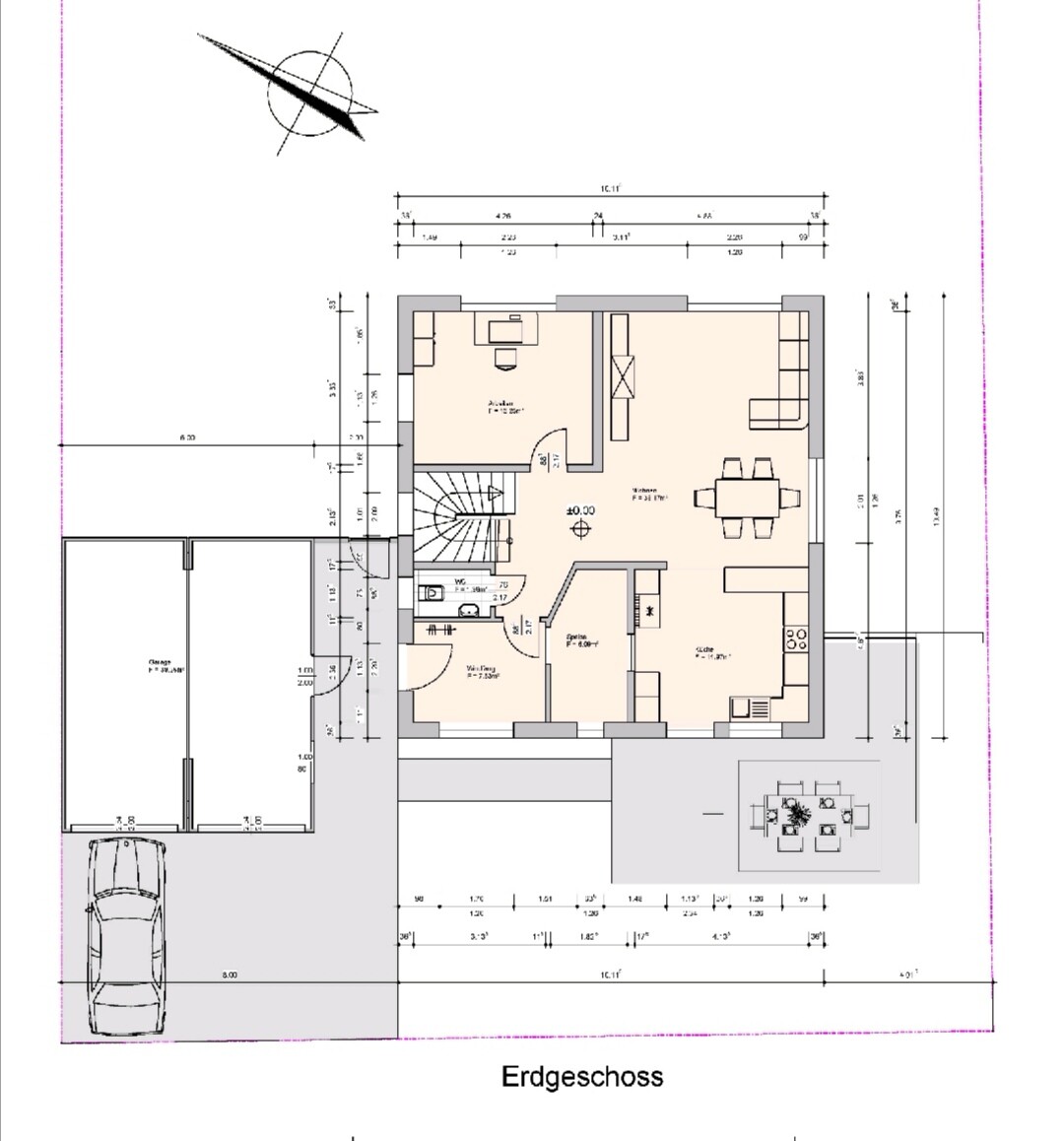
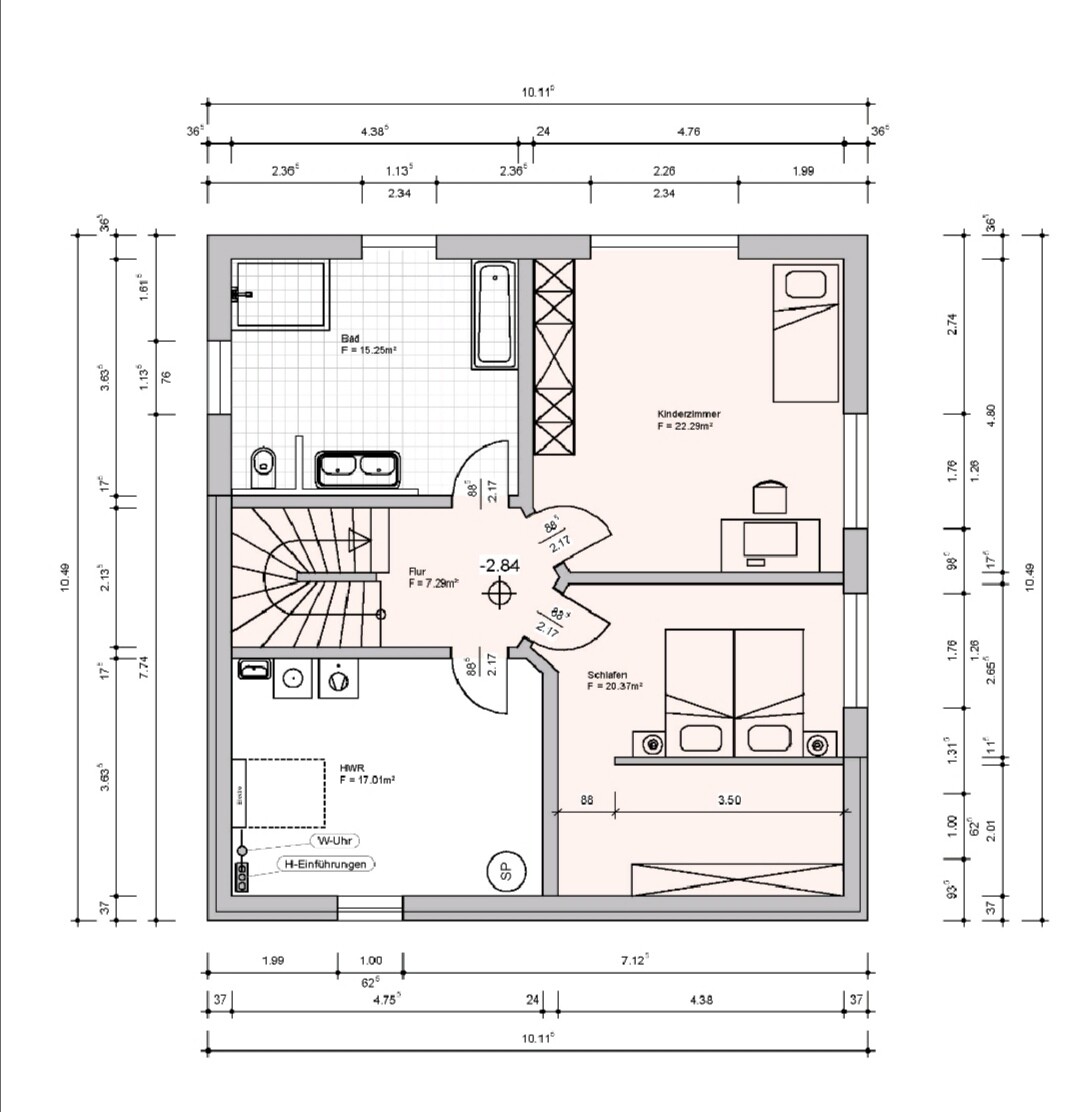
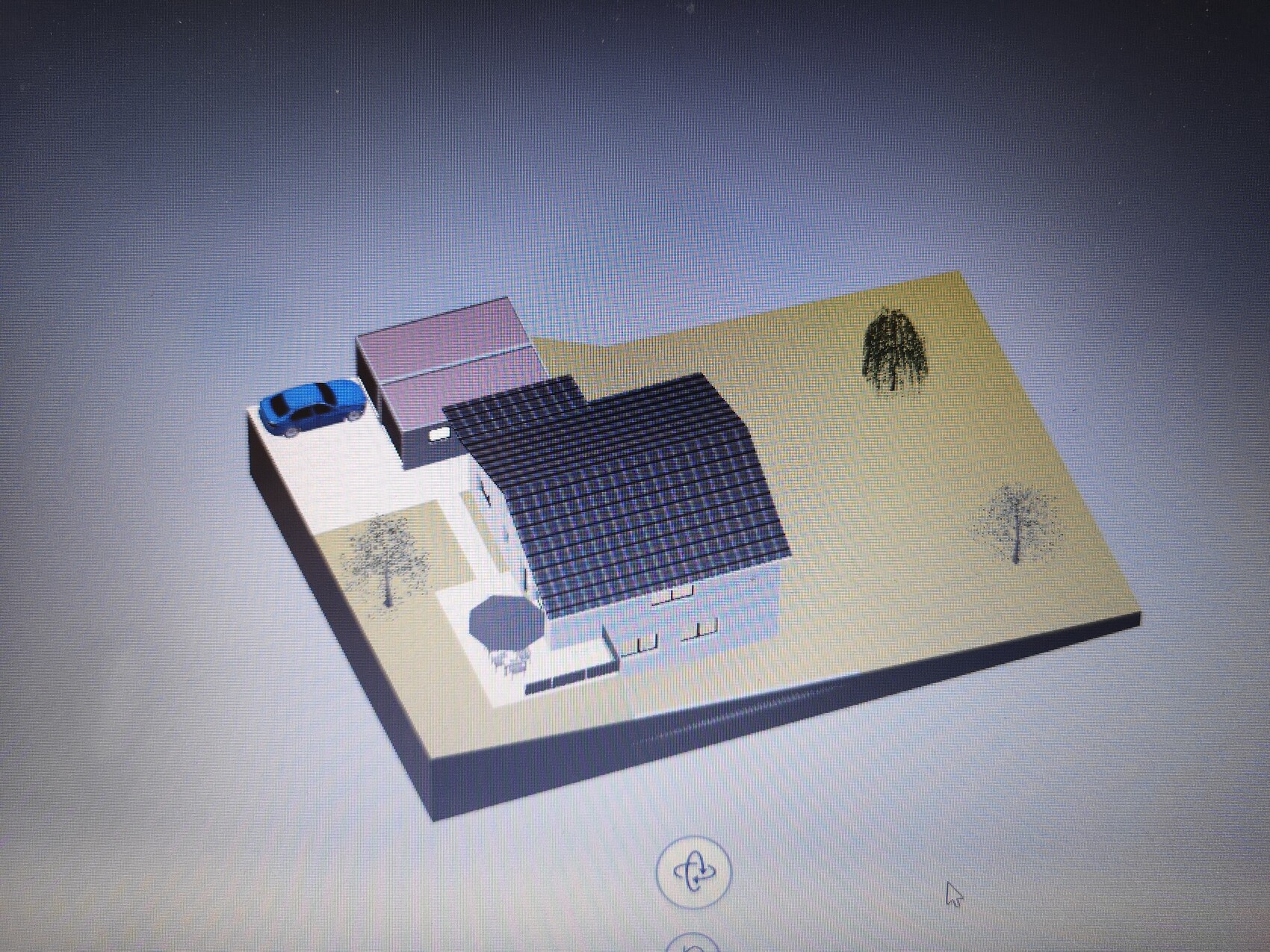
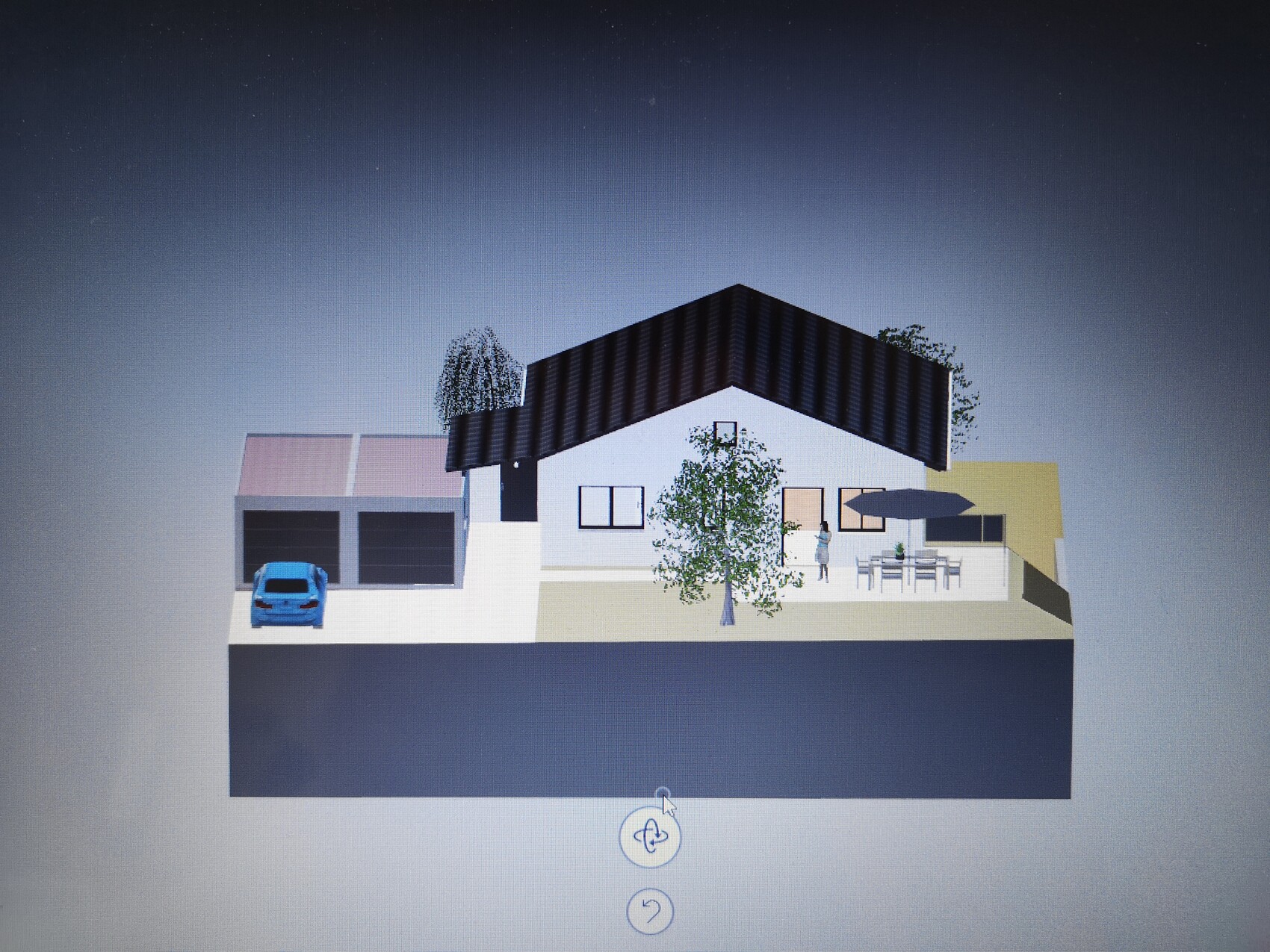
The floor plan is almost finished, and now I would like to hear your opinions. We can still make changes if needed.
Development Plan / Restrictions
Plot size: 717 sqm (7,716 sq ft)
Slope: downhill, 10% gradient
Building window, building line and boundary
Edge developments:
Number of parking spaces: prefabricated garage / double garage 6 x 7 m (20 x 23 ft)
Building levels: basement + ground floor
Roof style: gable roof
Client Requirements
Style, roof type, building type: gable roof
Basement, floors: basement + ground floor
Number of residents, age: 2 adults / 1 toddler
Space requirement on ground and upper floors: approx. 140 sqm (1,507 sq ft)
Office: children’s room / office / guest room combined
Number of overnight guests per year: 3
Fireplace: no
Terrace: yes
Garage, carport: double garage
Utility garden, greenhouse: no
House Design
Designer: planner from a construction company
What do you especially like? Why? Mostly drawn according to our wishes
What don’t you like? Why? Dining area too narrow between kitchen and living room (the left kitchen unit must be this long (from left to right: raised dishwasher, oven and microwave stacked, door to pantry, side-by-side refrigerator, tall cabinet). On the right side, we are considering shortening it a bit to gain more space in the dining area.
Estimated cost according to architect/planner: €400,000
Personal budget limit for the house including fittings: €410,000
Preferred heating system: air-to-water heat pump with underfloor heating
If you have to give up something, which details/expansions
- can you give up: open
- can’t you give up: open
Why is the design as it is now?
We spent a long time drawing, changing, and adapting ourselves. This is the result of collaboration between the planner and our wishes.
Which wishes were implemented by the architect? All
Information:
The house will be a single-family home built in solid construction, KFW55 standard, with photovoltaic system, underfloor heating, air-to-water heat pump, gable roof with a 22° pitch. The family planning is complete with 2 adults and 1 toddler. The house is built on a sloped hillside plot with a 10% gradient, accessed from the street. The basement parts fully covered by earth are made of waterproof concrete, the rest is masonry. The south side faces the street and thus has the main terrace. The passage between kitchen and pantry is hidden behind a concealed door in the kitchen wall unit. From the entrance area to the pantry, access is either via a sliding door or a regular door opening towards the pantry. A lifting system for the lower bathroom is not required since the slope from bathroom to sewer will be 2.8%. The sewer connection on our property is located at a depth of 3.39 meters (11 ft). The house will also be built slightly higher than the street level. A backflow valve is, of course, planned. From the lower bathroom, there is another door leading into the rear garden (north/east). Instead of a deeper foundation due to the slope, the double garage (prefabricated garage) will have a transverse utility garage with a side door, 3 x 7 m (10 x 23 ft), so it can be used as storage / cellar / garden equipment space. The terrace will not extend as much around the corner as in the plan, allowing the ground to slope down more quickly there.
After so much planning, thinking, and revising, it is easy to become blind to details and overlook some things. Therefore, we appreciate any criticism, tips, tricks, and suggestions
Fire away & thank you very much in advance.

Mmh. Interesting. I’ll just ask a few questions:
Basement:
The utility room seems huge to me. Over 17m² (about 183 sq ft) dedicated to technical equipment is quite a statement. I think I would reduce that significantly and instead create a separate walk-in closet.
Ground floor:
The sloped ceiling in the pantry makes it difficult to furnish, and the entrance area isn’t very well designed either. Consider swapping the entrance area with the guest toilet and slightly reducing the pantry.
For the open-plan living area, something is missing in terms of coziness and character. I can’t quite put my finger on what it is just by looking.
Have you intentionally decided against direct garden access and opted for a sunny spot facing the street instead? Is the street busy? Sitting by the street wouldn’t be my preference.
Basement:
The utility room seems huge to me. Over 17m² (about 183 sq ft) dedicated to technical equipment is quite a statement. I think I would reduce that significantly and instead create a separate walk-in closet.
Ground floor:
The sloped ceiling in the pantry makes it difficult to furnish, and the entrance area isn’t very well designed either. Consider swapping the entrance area with the guest toilet and slightly reducing the pantry.
For the open-plan living area, something is missing in terms of coziness and character. I can’t quite put my finger on what it is just by looking.
Have you intentionally decided against direct garden access and opted for a sunny spot facing the street instead? Is the street busy? Sitting by the street wouldn’t be my preference.
Which one is your plot? I can’t find any with 717 sqm (7,715 sq ft). However, I find the placement of the terrace right by the street quite unusual. You have such a nice, large garden at the back, yet you access it through the bathroom (!). Instead of enjoying the morning sun behind the house, and in midsummer also the evening sun, as well as a partly shaded spot during the midday heat, you’re “cooking” out front on the south-facing terrace by the street.
I would place the open-plan living area in the basement level facing the garden and put the bedrooms upstairs also facing the garden. At least then you can open the windows without worrying about insects crawling in or people walking inside.
I also think the floor plan itself is not optimal. When you enter, you run into a wall and then have to walk along a slanted wall to get into the living room. Everything there is much too cramped, as you yourself have correctly noted. Bedrooms facing south because it gets so warm there? Bathroom facing the quiet garden? I don’t find this well thought through. Improving the floor plan only makes sense once you explain why you want the room layout exactly as it is. I’m curious.
I would place the open-plan living area in the basement level facing the garden and put the bedrooms upstairs also facing the garden. At least then you can open the windows without worrying about insects crawling in or people walking inside.
I also think the floor plan itself is not optimal. When you enter, you run into a wall and then have to walk along a slanted wall to get into the living room. Everything there is much too cramped, as you yourself have correctly noted. Bedrooms facing south because it gets so warm there? Bathroom facing the quiet garden? I don’t find this well thought through. Improving the floor plan only makes sense once you explain why you want the room layout exactly as it is. I’m curious.
S
Sternchen3121 Apr 2020 20:03kaho674 schrieb:
Mmh. Interesting. Let me ask some questions:
Thank you for your thoughts. Yes, the utility room is "huge." We don’t have a basement in the house, which means that the utility room houses the air-to-water heat pump, the photovoltaic battery storage, the washing machine, dryer, countertop above the washer and dryer, several shelves, and a larger cabinet for items that would usually be stored in a basement. That’s why the room was deliberately made larger.
Yes, the sloped ceiling in the pantry bothers us too, but we weren’t sure how else to solve it to gain a bit more usable space for the pantry. The pantry is meant to hold everything that belongs there, plus a sorting system for recyclables like the yellow bag, paper, deposit glass containers, etc., as well as the vacuum cleaner, mop, water crates, and so on. Therefore, we tried to maximize space as much as possible.
Since it’s important to us that the entrance area (mudroom) can also be used as a dirty zone where shoes really stay, we wanted to avoid having to go through the entrance area to reach the guest toilet. Originally, the guest toilet was located where the entrance area is now, and the entrance area was upstairs. However, then it’s no longer possible to get from the entrance area to the pantry. We wanted to keep short distances. For example, if you’re about to leave and realize you forgot a drink, you can simply open the door and quickly get it from the pantry instead of having to go through the house to the kitchen, the same goes for groceries.
I’m currently considering moving the large countertop in the kitchen to become a kitchen island and removing a cabinet from the long cabinet wall, which could shorten the pantry from above by about 80cm (31 inches).
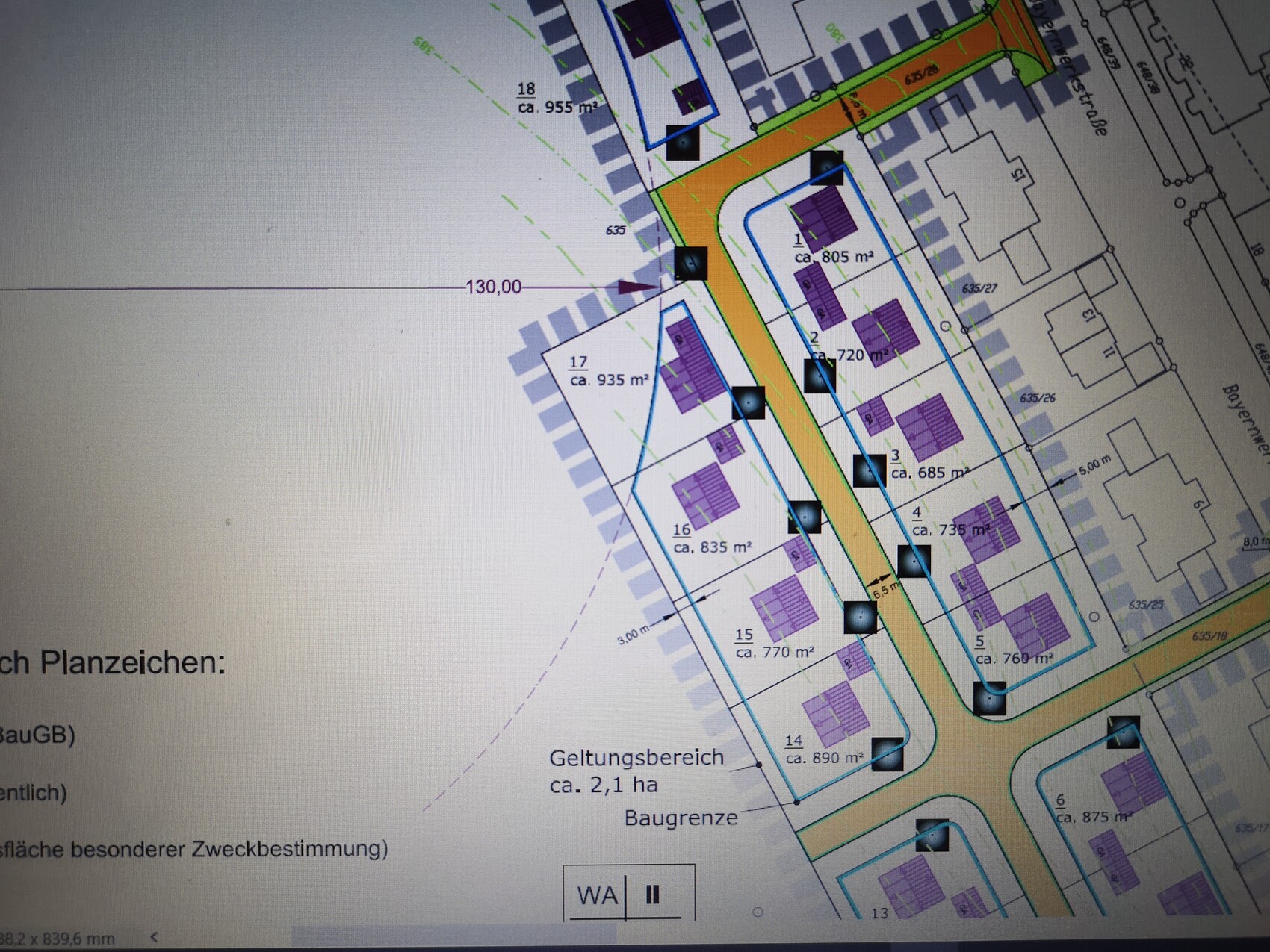
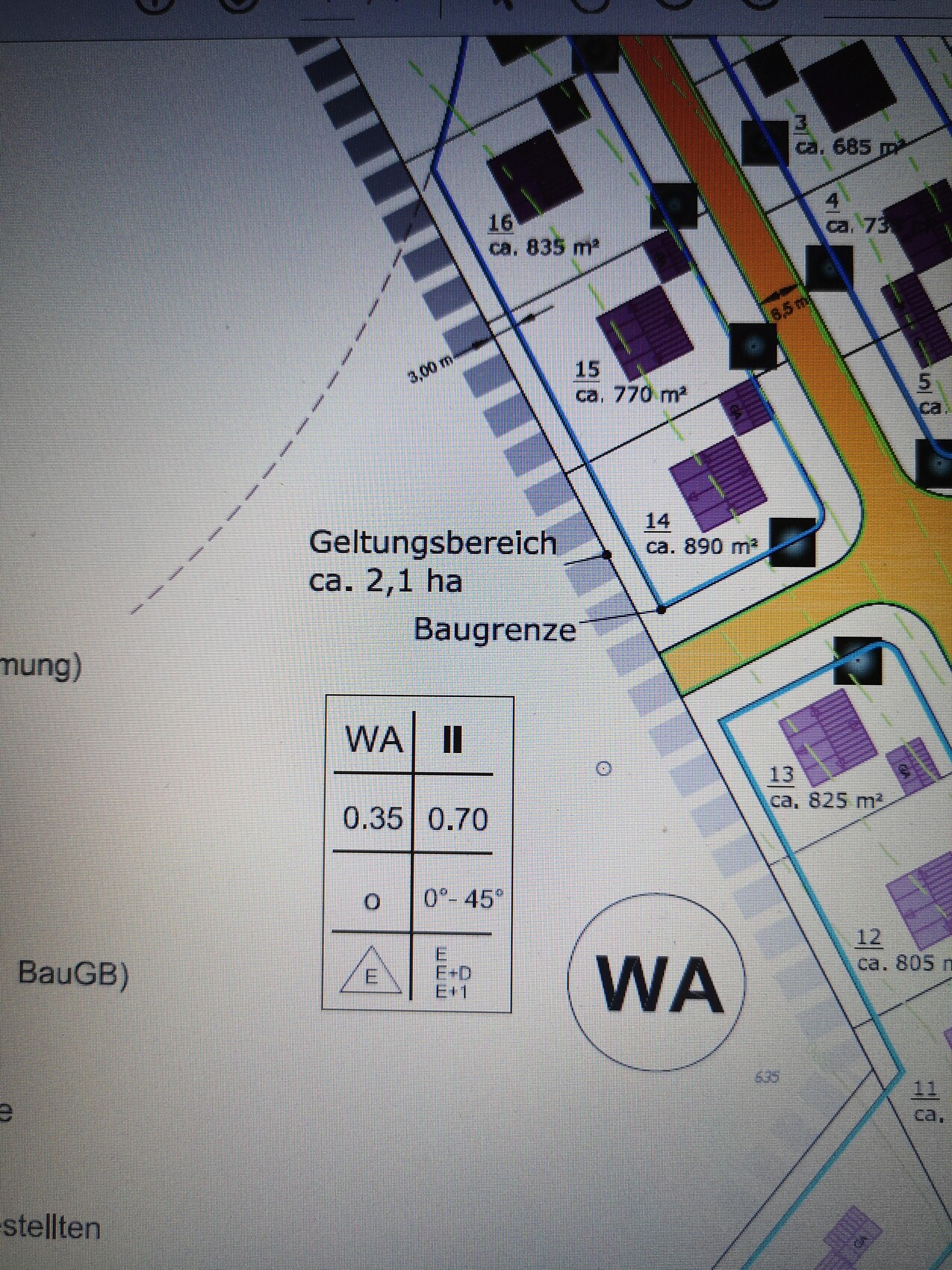
I’m still waiting for changes regarding the house positioning. The garage will be moved further into the property, and the house will also shift about 4 meters (13 feet) deeper into the lot, so it will start 10 meters (33 feet) from the street. This allows for more space in front for the terrace and lawn. A small terrace is also planned at the back, along with a climbing tower and other items for our son. So, it won’t just be lawn at the back. The street is quiet with light traffic, not a through road, only serving the other 10 houses in the new development (18 houses total), most of which can also be accessed via another driveway. Traffic shouldn’t be too much.
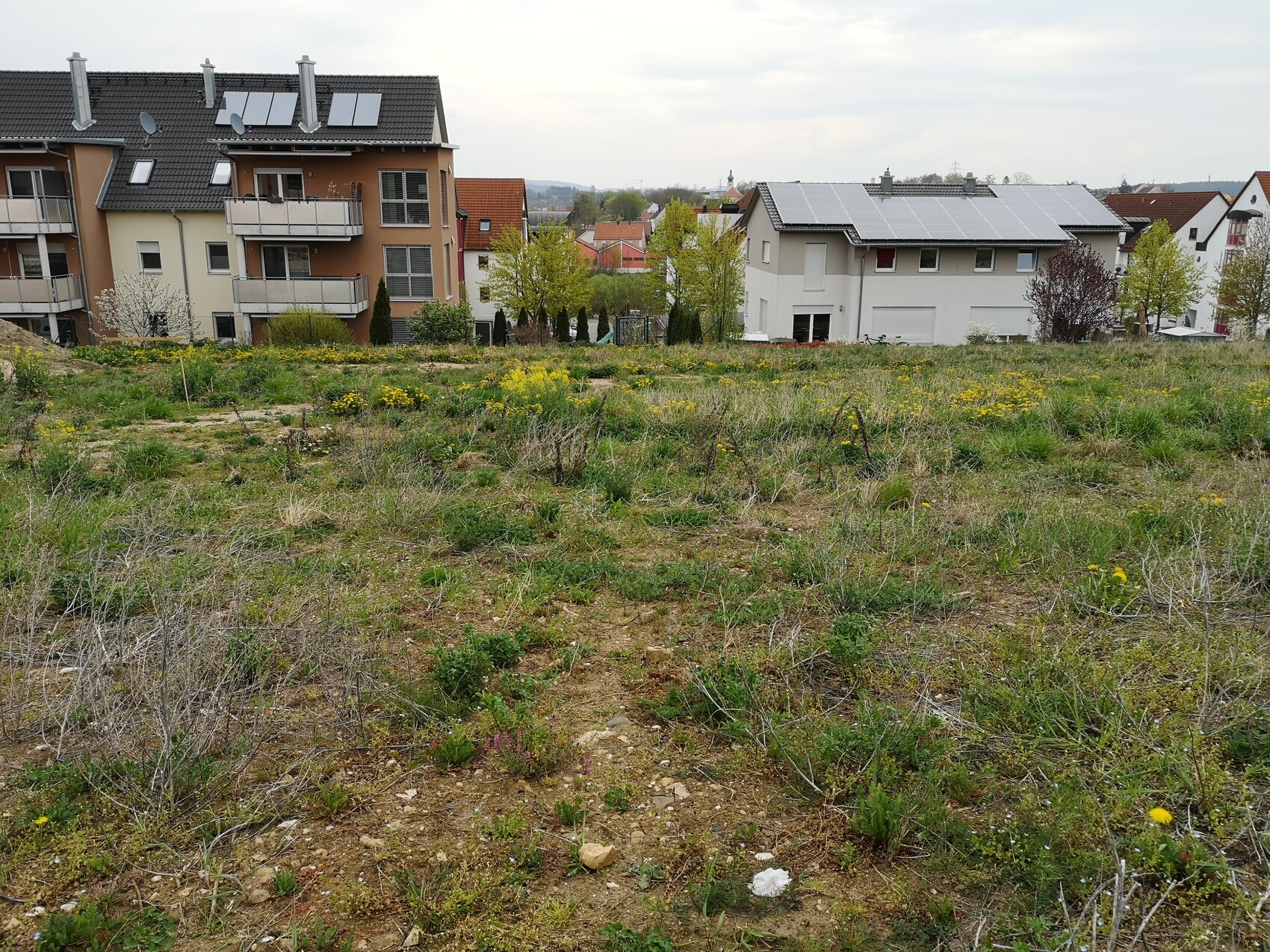
I will upload pictures of the plot shortly so you can better visualize it.
S
Sternchen3121 Apr 2020 20:29Würfel* schrieb:
Which one is your plot? ……..Hello, I’ll start from the beginning and explain.
Our plot is parcel 2, listed as 720 sqm (7,292 sq ft) on the plan, but it’s actually 717 sqm (7,713 sq ft). The house will be shifted on the site, which is not yet shown on the current plan. The double garage will start 7 meters (23 ft) back from the street, the house 10 meters (33 ft) into the plot. This will create space for the south-facing terrace and lawn. There’s also a terrace planned in the rear garden area, as well as a play and climbing tower for our son and a barbecue spot.
Why the door in the bathroom? We planned it this way because we thought it would be better for our son to come directly into the bathroom when he’s come in dirty and sandy from playing, to take off his clothes and shower. We wouldn’t want him having to go through our bedroom or the hallway first. Also, shoes can be worn in there, which wouldn’t be possible in the bedroom or hallway. We also wanted the option for friends or guests sitting in the rear garden to use the bathroom without having to go through our private rooms or upstairs to the guest bath. So that’s why we considered having a door there.
Why isn’t the multipurpose room in the basement? We thought about it a lot, but didn’t want to have to carry all groceries downstairs into the basement and then back up into the house on the main floor. Whether you carry them in through stairs outside or inside the house, it’s a hassle. Also, if someone rings the doorbell or guests arrive, having the multipurpose room upstairs means less frequent stair use. If someone is sleeping upstairs, in the private area, guests always use the main floor to go down to the basement, so the trips up and down are kept to a minimum. We also wanted to keep walking distances as short as possible for when we’re older.
Another idea was that, when our son is older, we could somewhat separate the basement and main floor. We could move our bedroom upstairs to a guest room, he would have his space downstairs. Our currently planned bedroom could become his bedroom, and the currently planned child’s room could be used as living space, for example. He would also have an indirect separate entrance through the bathroom in the basement, if needed. The door there would just have to be changed somehow.
Bedroom facing south: We arranged it this way, or had to, because we couldn’t put the bathroom where the bedroom is now. The path to the sewer would have been too long, meaning not enough slope, so a lift station would be needed. Also, the child’s room no longer faces south really, because the sun is usually gone from there after 2 p.m. Our bedroom’s basement level will be shaded by the neighbor’s house on the right side, as the neighbor is building a slab-on-grade house without a basement. So we assumed the rooms wouldn’t get too hot even in midsummer due to their basement position and layout.
Entrance hall / guest toilet / pantry and the rest on the main floor
We want to use the entrance hall as a "mudroom" for shoes, jackets, backpacks, etc. It’s important to us to separate this space from the main living area. We also didn’t want to have to go through the entrance hall to reach the guest toilet. We wanted a short, direct access from the entrance hall to the pantry, to put things like cases of water directly from the entrance hall into the pantry. The pantry will also be used for recycling items like paper, recycling bags, bottles. These can be taken out through the entrance hall on a short route, without having to go far outside. Even when already dressed, if you suddenly remember you need a drink, you can easily get it from the pantry. So that’s how the layout came about. No idea if it’s the wrong setup.
I’m currently thinking about removing the large countertop in the kitchen, which was meant to separate the kitchen and dining area, and instead putting a smaller kitchen island in the middle of the kitchen. This would make the dining area feel more spacious. Also, we might remove the left cabinet on the long kitchen wall (right by the terrace door), move the other cabinets over, and shorten the pantry by about 80 cm (32 inches). That would make the space less awkward.
S
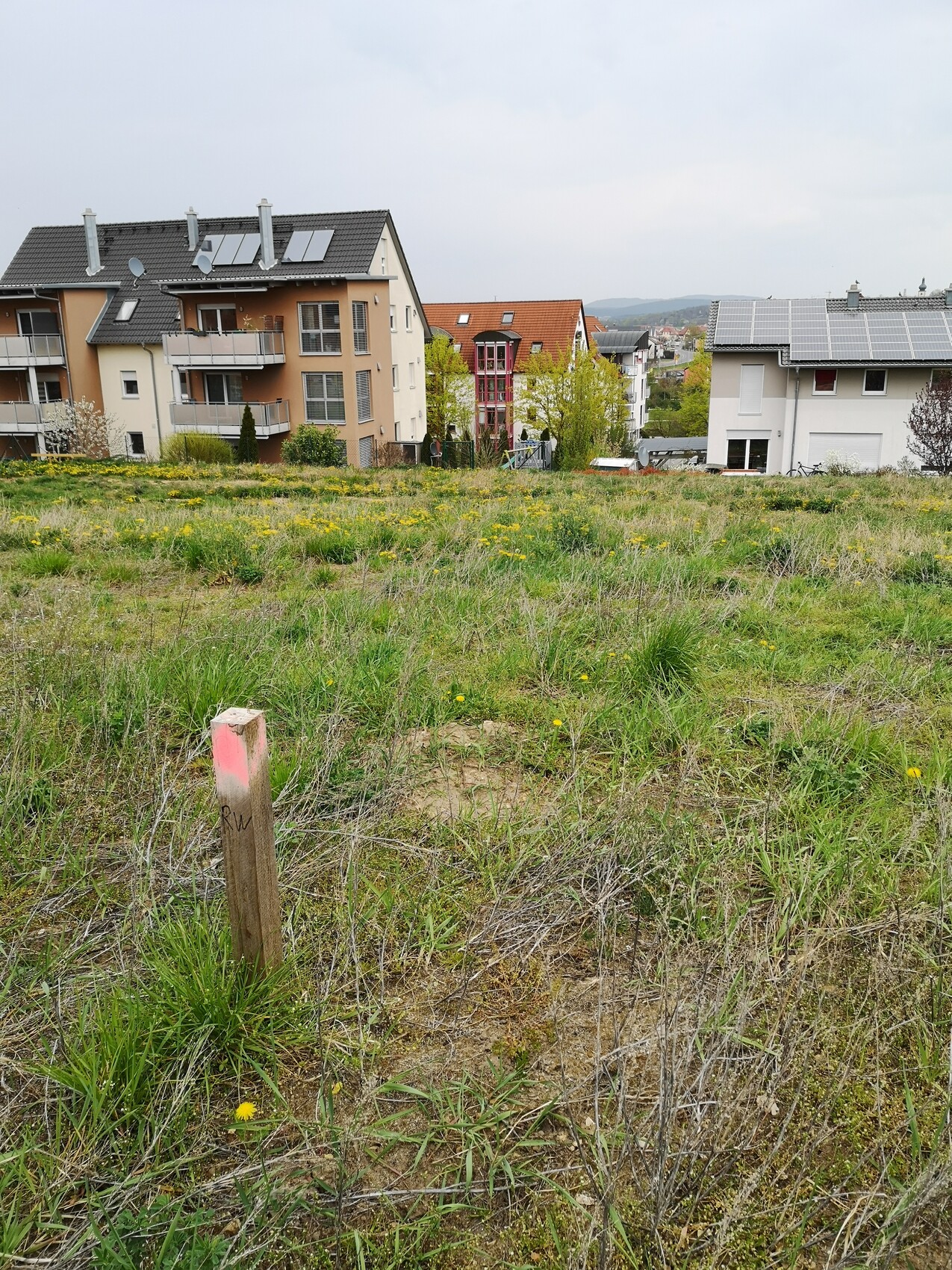
Sternchen3121 Apr 2020 20:53this would be our plot of land
Similar topics