
Dear forum members,
We bought a plot of land last autumn and are currently deep into the floor plan design. We would like to share our current draft with you and welcome any comments and opinions.
[F]irst some preliminary information about the plot and its buildability:[/F]
Best regards
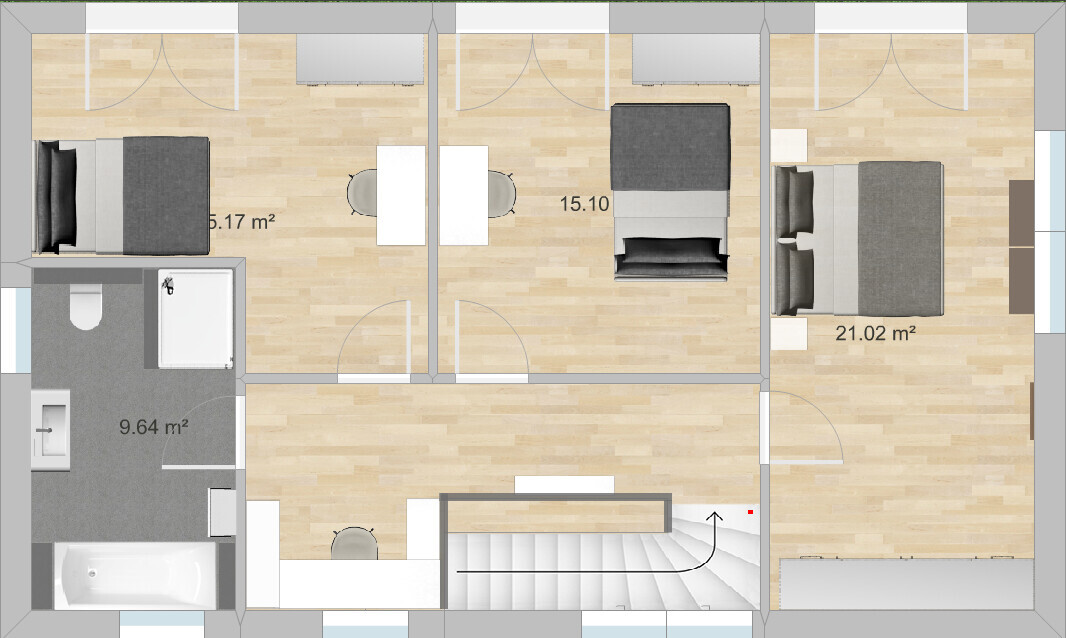
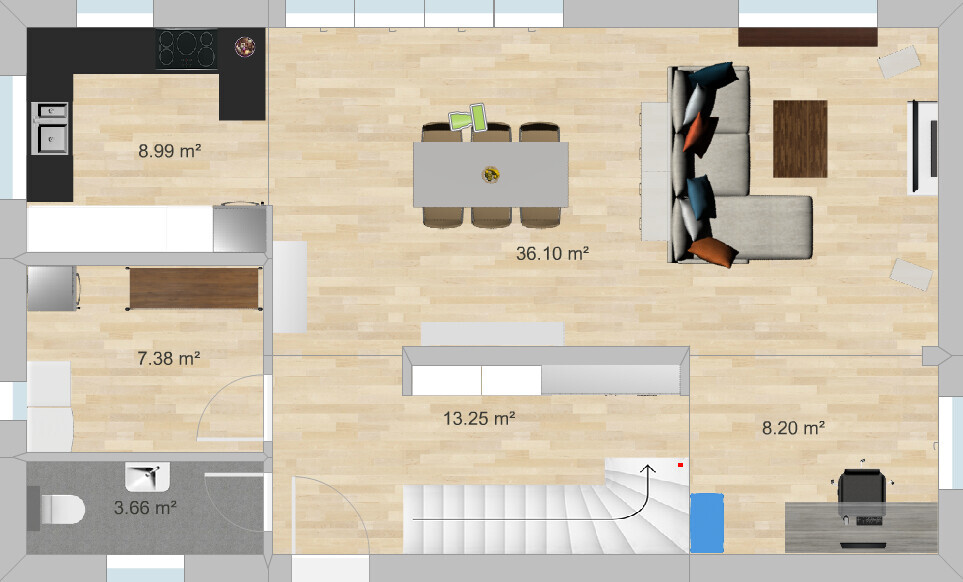
We bought a plot of land last autumn and are currently deep into the floor plan design. We would like to share our current draft with you and welcome any comments and opinions.
[F]irst some preliminary information about the plot and its buildability:[/F]
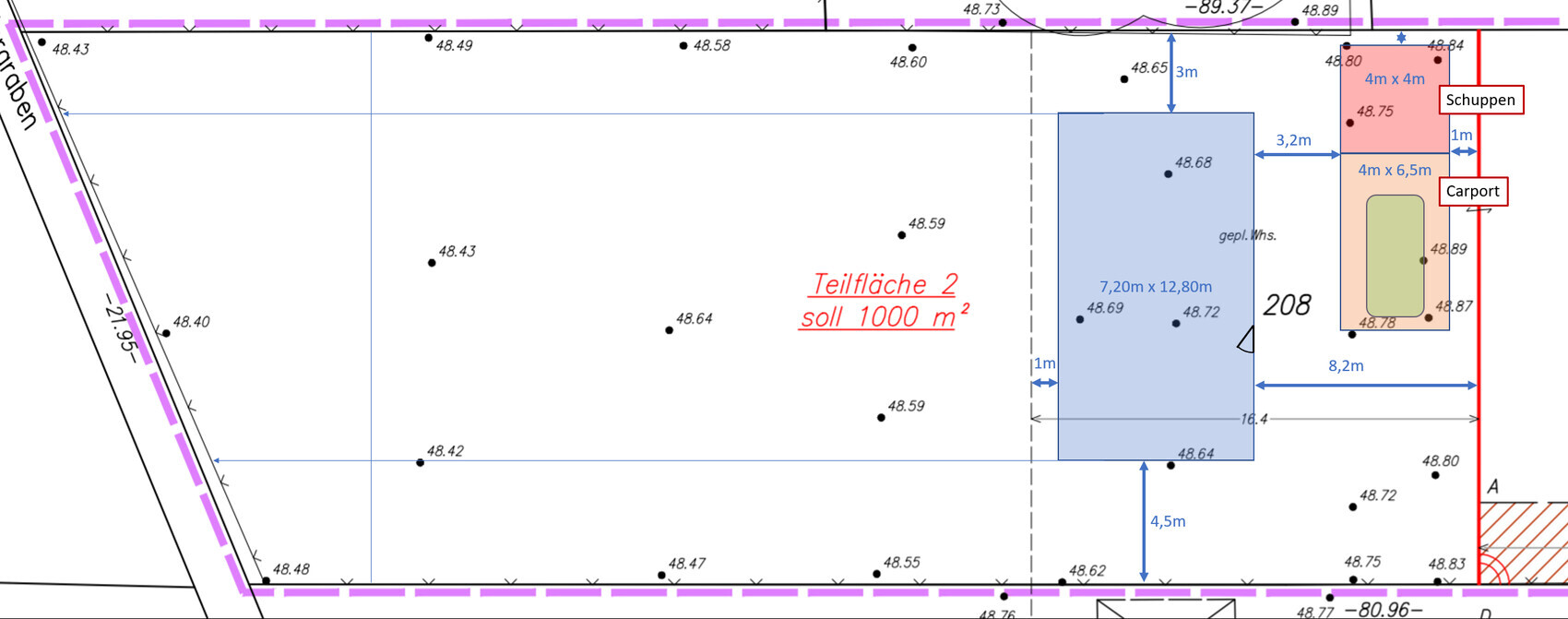
- 1000 m² (10,764 sq ft) rear plot, southwest facing (so southwest is on the left side of the site plan)
- Building boundary up to approx. 16 m (52 ft) behind the property line (up to the dashed line on the site plan)
- No zoning plan (construction according to § 34 of the Building Code)
- Groundwater at surface level and peaty soil (exact geotechnical report pending), so piled foundation required and no basement
- Affordable! (Our maximum budget for the house including foundation slab is €230,000)
- Country house style
- Bright, large windows facing south/garden
- Open living/dining/kitchen area
- Family of four, 1 bedroom and 2 children’s rooms
- Not oversized, max 150 m² (1,615 sq ft), preferably less
- Solid construction using Ytong blocks (for us the most cost-effective option, although we would have liked to build with wood as well).
- Developed ourselves after studying various floor plans (including from the book "Affordable Building with a Small Budget" by Achim Linhardt) with support from architect friends and our planner (an independent civil engineer).
- Dimensions 12.50 x 7.50 m (41 x 25 ft) (the measurements shown on the site plan are from an earlier draft).
- What we like: open living area, all main rooms have large windows facing the garden, efficient size, although the children’s and bedroom could be smaller, sewing/work nook behind the stairs upstairs, plenty of wall space for large wardrobes in the upstairs bedroom and hallway on the ground floor, light shaft in the stairwell, staircase (we originally wanted a straight run staircase but it would have taken too much space; the one with three quarter turns is also fine with us).
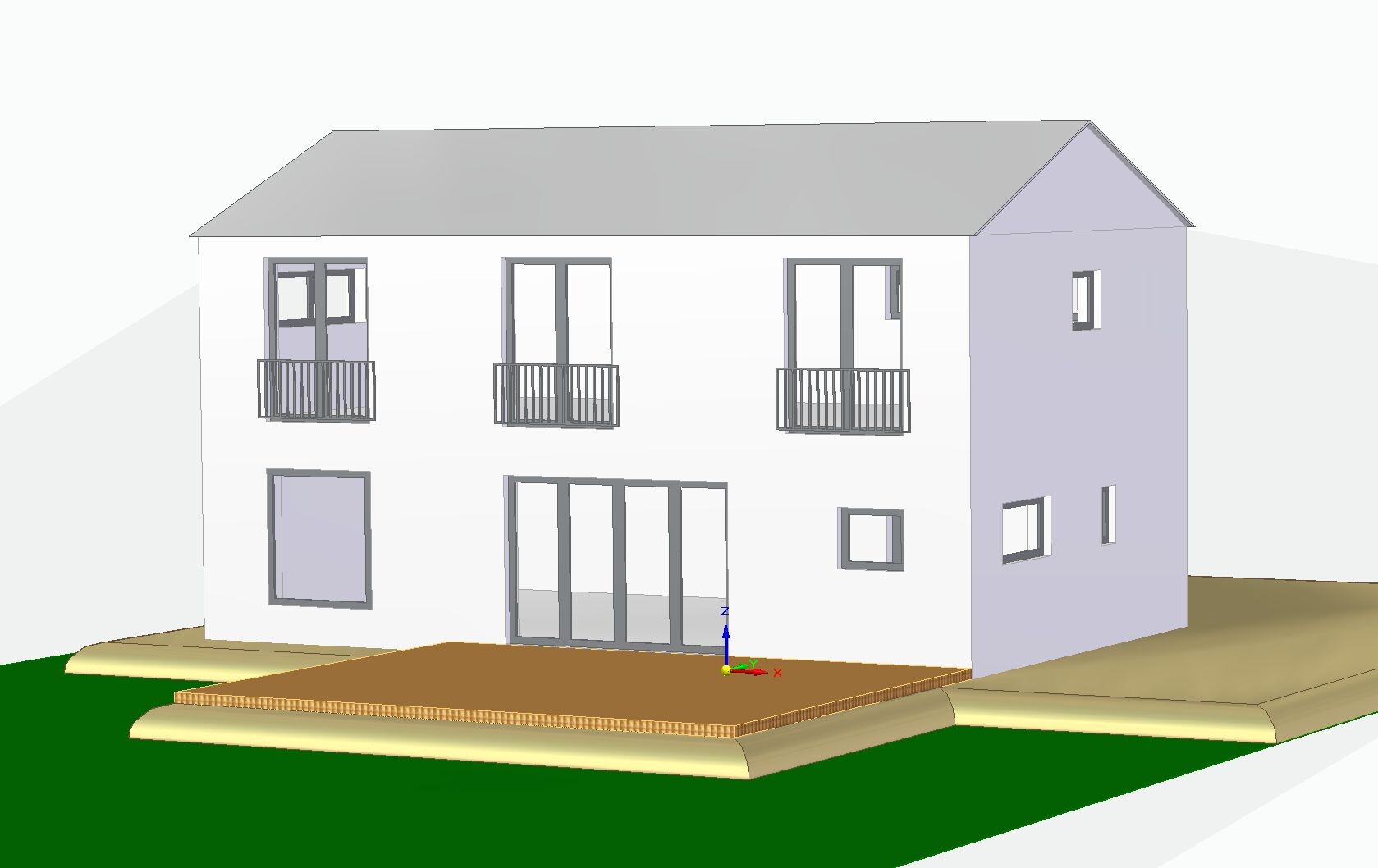
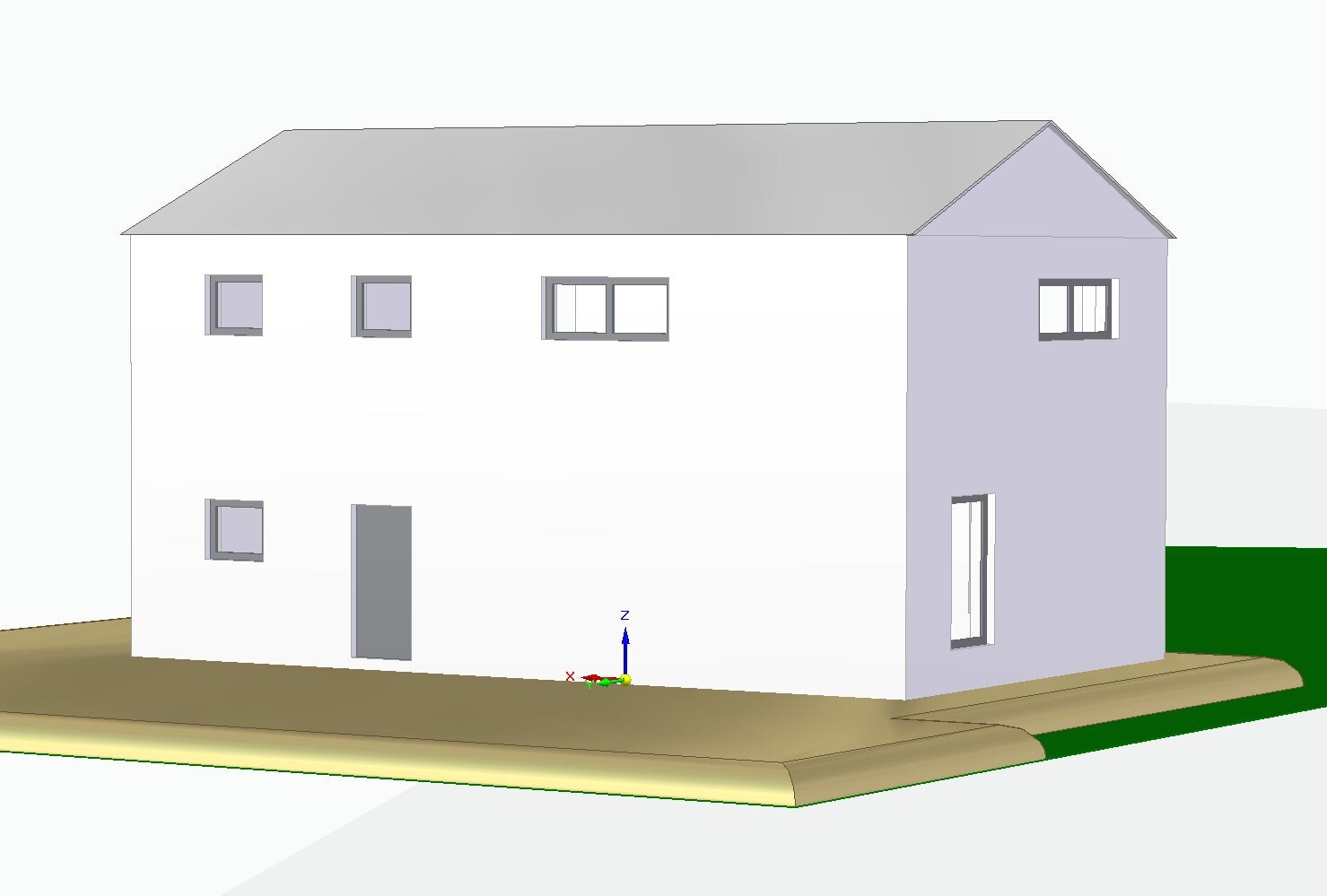
- What we don’t like 100% yet: the height of the house from the outside. It is currently planned as a two-story house with an eaves height of 6.2 m (20 ft), with the ground floor 2.84 m (9 ft 4 in) high and the upper floor 2.60 m (8 ft 6 in) high. The gable roof will be an uninsulated, unfinished cold roof, mainly because of the economical prefabricated truss construction method. This is a bit disappointing because I really like sloped ceilings and did not want the character of a townhouse. Lowering the roof with a knee wall of about 1.90 m (6 ft 3 in) and an insulated roof with open sloped ceilings would probably be more expensive due to the rafter/beam construction. We would also lose the garden view through the floor-to-ceiling bedroom windows.
- Simple: What do you think about the floor plan?
- Can you still imagine the relatively tall two-story house having a country house character? Maybe it depends on the facade design and choice of materials? Do you think it looks too “blocky,” especially from the front entrance side? Or would a lower eaves height with an attic conversion including a knee wall be preferable?
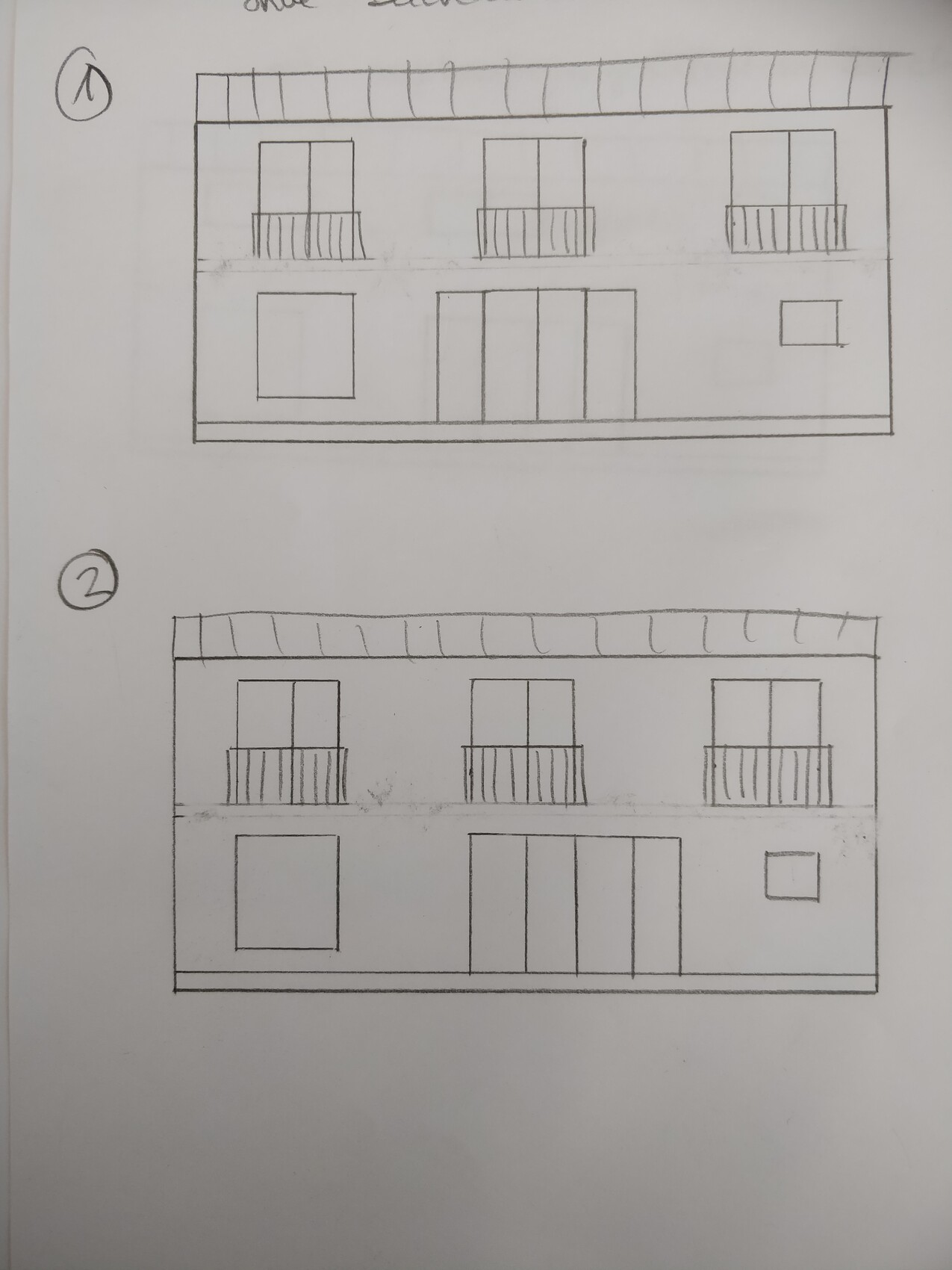
- We are still unsure how to arrange the windows on the garden side. The drawing with the elevations shows two possible versions. We actually prefer it when the upper floor window is centered over the lower window front. However, this does not align the interior line of sight from the entrance door to the garden/patio door (see ground floor plan). This represents version two; for version one, the window front would have to be shifted about one window width to the right, so that the patio door is behind the dining table. With the window front shifted left, the interior looks better to us, but from the outside it looks strange if it is offset from the upper floor window, right? What do you think?
Best regards
H
hampshire6 Mar 2020 23:39Yes, the cloakroom is really tight. The straight staircase does take up a lot of space. If you reverse it and have it ascend from the living area, there will also be space for the cloakroom. However, this changes the floor plan much more drastically. The long distances upstairs still remain, and the distance to the front door will also be longer.
la.schnute schrieb:
A subtle room division in the form of a staircase might not be such a bad idea after all. That’s more an argument in favor of variants with stairs in the living area.Using a staircase here as a focal point is a mistake. You’re not considering that your children need to become independent and contribute to family life together, rather than developing their own separate dynamics. They should also feel a sense of identity within the home.la.schnute schrieb:
And the missing coat rack there is really a problem. Under the stairs? Next to the stairs? Something is missing there.Sometimes a 30cm (12 inch) cabinet is enough for you, but not now. If you only have two jackets per person, it’s enough...I don’t want to discourage you, but if you want a spacious, airy feel in a tight space, you need enough storage to keep things out of sight and avoid clutter. Having airiness doesn’t mean much if everything is messy and lying around. A free wall creates more openness than a free corner piled with junk!!!
My list (@kaho674)
But what am I getting at here? The other everyday things.
And that’s why living in a house requires storage space for:
Broom, mop with bucket, vacuum cleaner, handheld vacuum, window cleaner, drying rack for wool/sports/hand wash, laundry hamper (some have three!), space for ironing board + iron and basket with clean laundry, washing machine, dryer (stacked dryers are fine), cleaning supplies, kitchen appliances (fondue set, roasting pan, deep fryer, baking molds, clay pot, champagne cooler), empty and filled canning jars, freezer or beverage cooler, shoe cleaning supplies, recycling bag, beverage bottles (cases of water, beer, and juice), a few staple foods like onions and potatoes, bags and sacks for shopping or gift wrapping, decoration stuff (2 boxes of Christmas decorations, 1 box Easter, 1 box general), wrapping paper, office folders, stationery, office supplies, craft supplies for kids (window paint, acrylic paint, brushes, paint jars), infrared lamp, medication, photo equipment, hobby stuff (badminton set, fishing rod and similar gear must stay outside), hand tools, drill, cordless screwdriver, a few paint cans, white paint, brushes and rollers, electrical components, light bulbs, batteries, vases, extra cutlery and dishes, picnic basket, small/large step ladder, 2-3 flower pots and plant fertilizer, empties, dog food, cat litter box, 15 liters (4 gallons) of emergency water, sewing machine, fabric scraps, sewing basket, spray bottle for plants, suitcase, travel and sports bags, cooler bag, carpet and tile leftovers, and so on.
You could probably cross off 2-3 items, but I have very likely forgotten some things.
Coat rack:
Man: work jacket, safety jacket, sports jacket, gardening jacket, common jackets for all seasons (biker jacket, all-purpose jacket, bomber jacket, winter coat, leather jacket), various shoes, headwear (caps and the like)
Child: fewer jackets, but rubber boots, outdoor boots, sports shoes, indoor shoes, 2 pairs of changing shoes, sandals, ballerinas...
Woman: winter jacket, winter coat, transitional jacket, summer bomber, summer coat, cardigan, fleece and garden jacket, going-out jacket, etc. (Shoes aren’t even worth starting on here...)
Seasonal items like scarves and hats for everyone
Bags: see storage list, also sports bags for all residents, backpacks, work bags, shopping bags, and the woman’s handbags...
Take some time this weekend to reflect on this!
H
hampshire7 Mar 2020 02:14ypg schrieb:
Airiness doesn’t help if everything is just lying around untidily. Absolutely right! Reducing clutter goes hand in hand with staying organized. Impressive list, by the way.
@la.schnute: The approach of thinking through what you need/want and assigning it to specific locations is the key when giving up storage space. A lot can go into a garden shed, but some things can’t. The real unknown is the children, who will have different space requirements and habits as they grow up.
Having some storage space under the roof, even if not walkable, would be desirable.
Or you could do like friends of ours, who have gradually added extensions themselves as their needs grew.

la.schnute schrieb:
There’s a potential conflict between my roommates’ need for quiet and my desire not to sit in a small, dark nook. In most new floor plans, however, the sewing corner is just in the bedroom and separated by a sliding door. Hopefully, that will be enough for my partner to sleep ops:.
Volume: TV addicts and music, yes, but not excessively. And who else should it bother except the kids? They close the door to their rooms and probably drown it out with their own shows and music … in about 8-10 years. But it’s true: for the rare occasion when one of us adults has friends over and the other wants to isolate themselves and watch TV or something, I’d still find doors too much, but a light room separation in the form of a staircase might not be such a bad idea after all. This somewhat supports the options with stairs in the living area.
I hope you have some sense of how open your floor plans really are. A staircase does not block sound. If you’re sewing upstairs, the person downstairs can’t watch TV, to put it bluntly. Even if you’re cooking downstairs and clattering dishes or playing music, the kids will wake up in their rooms despite the door. You would have to install soundproof doors (they exist), but you don’t have the budget for that.
Don’t get me wrong. You want it that way and you don’t mind. There are families who need constant noise around them, like Italians stereotypically do. I’m just not sure you’ve fully accepted it yet. And no, if you’re sewing next door, your partner probably won’t be able to sleep.

I also find a straight staircase the most attractive. However, that requires a correspondingly large house. In this case, where every square meter counts, it would probably be better to use a spiral or curved staircase to minimize the space needed.
Since the desired house is supposed to be rather narrow and elongated, how about enhancing a semi-detached house floor plan a bit?
Since the desired house is supposed to be rather narrow and elongated, how about enhancing a semi-detached house floor plan a bit?
Similar topics