
Hello everyone,
Yesterday, we were informed that gutters must be soldered, and that any other method is not considered proper or professional work. As shown in the following picture, our roofer sealed the gutter with silicone and secured it with three rivets. The rivets are apparently meant to prevent the gutter from moving and causing the silicone to crack, but according to our information, this is definitely incorrect, and over time, every joint will start to leak.
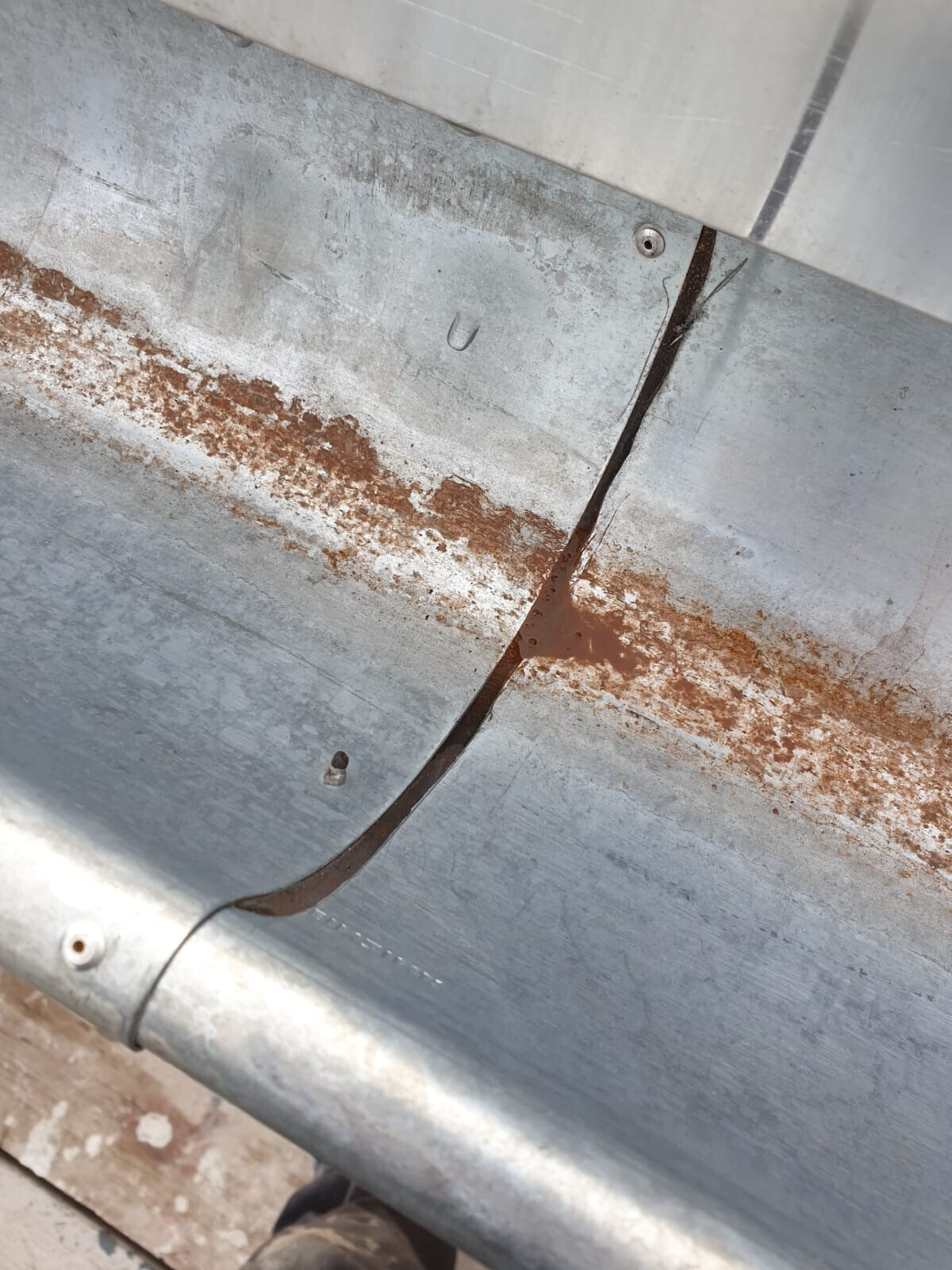
Before I go to my roofer and add this point to the list of defects, I just want to be sure that this is indeed poor workmanship. It might be that this has been a new and permitted option for the last three months.
Maybe someone has a source stating that this method is professionally acceptable or, on the contrary, clearly considers this work to be shoddy.
Thank you
Yesterday, we were informed that gutters must be soldered, and that any other method is not considered proper or professional work. As shown in the following picture, our roofer sealed the gutter with silicone and secured it with three rivets. The rivets are apparently meant to prevent the gutter from moving and causing the silicone to crack, but according to our information, this is definitely incorrect, and over time, every joint will start to leak.
Before I go to my roofer and add this point to the list of defects, I just want to be sure that this is indeed poor workmanship. It might be that this has been a new and permitted option for the last three months.
Maybe someone has a source stating that this method is professionally acceptable or, on the contrary, clearly considers this work to be shoddy.
Thank you

M. Gerd schrieb:
It seems to be PU, as it burned well with an orange flame. But... I did some further research, and thanks to you, I knew what to look for.
Riveting and sealing is one way to waterproof, which is especially necessary for aluminum and powder-coated gutters. However, according to the "Technical Rules for Metalwork in Roofing" in Section 3.2.4, the rivets must be installed in double rows, with a maximum spacing of 30mm (1.2 inches). In our case, only 3 rivets were used, which apparently is too few and therefore not professionally done. Don't stress about it, it’s just rainwater... Even if a drop manages to sneak through in five years... so what. Wherever that drop falls, the rain from above also falls.
seat88 schrieb:
Don’t worry, it’s just rainwater... Even if a drop manages to sneak through in five years... so what. Wherever it falls, rain from above also falls there....1. If it’s only rainwater, why have a gutter at all? 2. You don’t even know the situation or the circumstances that make me ask. The roofer did a poor job in many areas and was therefore replaced. The new roofer listed all the points that were not carried out properly, including the gutter. The other defects are obvious, but I wasn’t sure if the gutter issue might be unusual for the region but generally acceptable. Of course, I can leave the gutter as it is, but I want a complete list of defects and the associated risks. Then I can decide whether to accept the risk or not.
But hey, don’t worry... it’s just rainwater... so what... Does everyone really have to have an opinion today, even if they don’t know the circumstances?
@Nordlys
Thank you for your helpful and constructive contributions. They have been very helpful to us.
N
nordanney18 Feb 2020 09:26M. Gerd schrieb:
Does everyone really have to have an opinion today, even if they don’t know the circumstances?Since you didn’t explain the circumstances either, you have to accept this kind of response in a forum (which, by the way, I would have given as well—it’s really a minor issue by itself).P.S. If you already have a new roofer who has identified this defect, the question itself wouldn’t even have been necessary. It’s better to report one defect too many than too few.
H
hampshire18 Feb 2020 09:48I have learned that only rivets allow silicone to be used on the gutter.
M. Gerd schrieb:
1. If it’s only rainwater, why have a gutter at all?
2. You don’t even know the situation or the circumstances behind my question. The roofer did a poor job in many places and was therefore replaced. The new roofer pointed out all the issues that were not done correctly, including the gutter. The other defects are obvious, but I wasn’t sure if the gutter might be unusual for the region, yet generally allowed. Of course, I could leave the gutter as it is, but I want a complete list of defects and the associated risks. Then I can decide whether to accept the risk or not.
But hey, don’t freak out… it’s just rainwater… so what… Does everyone really have to have an opinion today, even if they don’t know the circumstances?
@Nordlys
Thanks for your helpful and constructive posts. They helped us a lot 1. I was talking about one or two droplets that might occasionally trickle through. If you want to let a summer thunderstorm downpour fall onto your lawn without a gutter, go ahead. But that’s not what I wrote.
2. This is a forum where everyone has the chance to respond, whether professionally or not. If you don’t like that, either you’re in the wrong place or just unlucky. There’s very little I can do about the situation your wannabe roofer got you into…
hampshire schrieb:
I have learned: Only rivets are used with silicone on the gutter.It’s not silicone, but polyurethane sealant. The same kind is used to bond your car windows. No rivets needed.Similar topics