
Hello everyone,
I have designed a ground floor plan and would appreciate tips for the layout of the ground floor of a city villa measuring 10.1 x 10.1 m (33.1 x 33.1 ft).
I’m not happy with the open kitchen with the island.
Maybe place the island against the wall and add a unit with three tall cabinets for oven, refrigerator, and pantry?
Should I move the entire kitchen forward and relocate the guest toilet? Or use that space as a small room? Please consider the compass orientation. Should one or two small windows be added in the living area (sofa)?
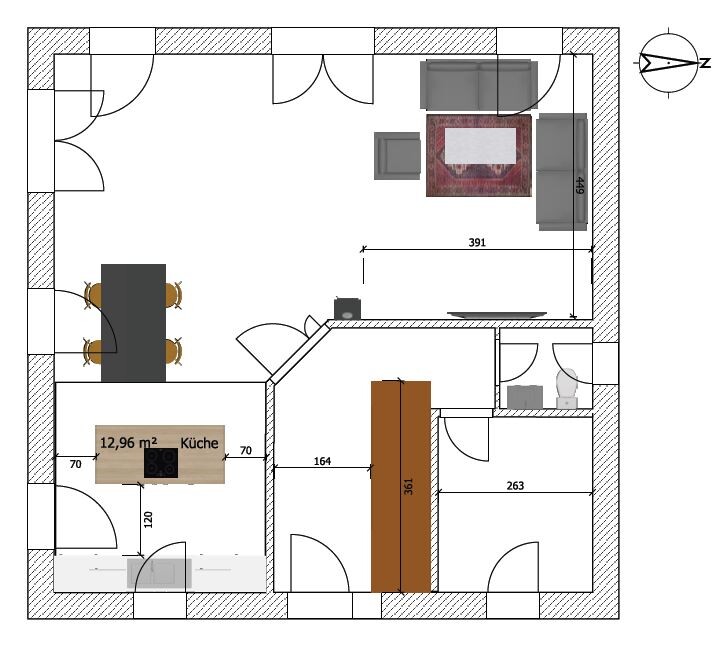
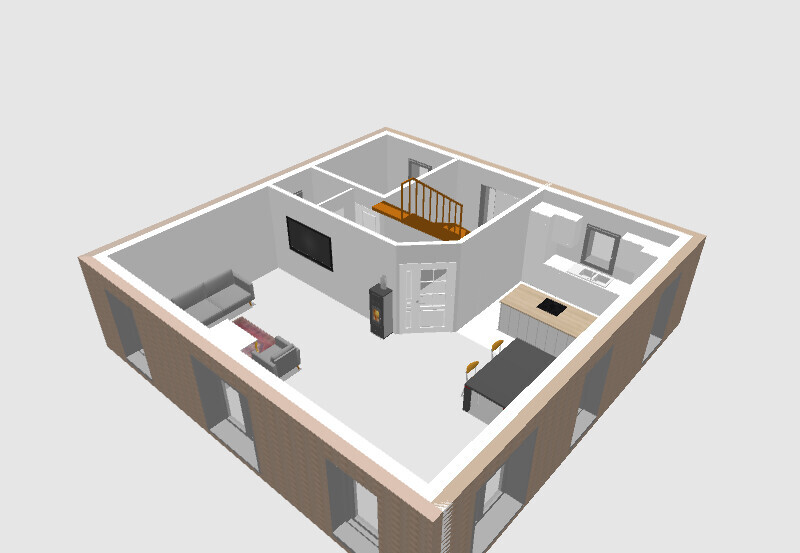
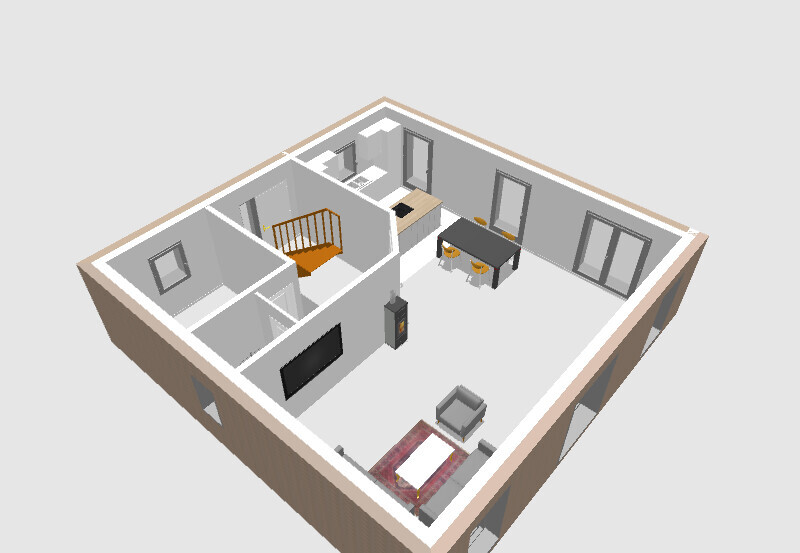
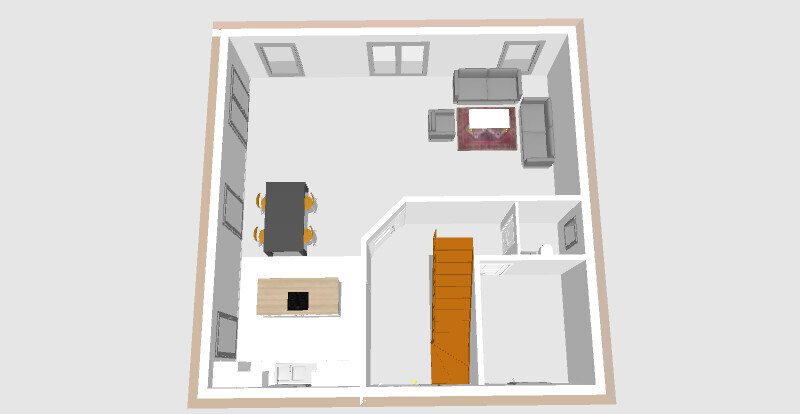
I have designed a ground floor plan and would appreciate tips for the layout of the ground floor of a city villa measuring 10.1 x 10.1 m (33.1 x 33.1 ft).
I’m not happy with the open kitchen with the island.
Maybe place the island against the wall and add a unit with three tall cabinets for oven, refrigerator, and pantry?
Should I move the entire kitchen forward and relocate the guest toilet? Or use that space as a small room? Please consider the compass orientation. Should one or two small windows be added in the living area (sofa)?
ltenzer schrieb:
Is there no universally accepted definition for the term longitudinal orientation?No.ltenzer schrieb:
What if there is no specification in the text section?There isn’t one. However, the legend for the drawing part clearly states the main ridge direction. The development plan is not yet legally binding, so the final version might include clarifying wording. If not, I would say: in dubio pro reo (when in doubt, rule in favor of the defendant). Since no roof type is prescribed, a square floor plan with a hip roof should be possible, as well as this one:ltenzer schrieb:
If the latter applies, then a gable roof with an east-west ridge orientation might be possible, even if the house has smaller dimensions in the east-west direction than in the north-south direction...A picture is worth a thousand words:

ltenzer schrieb:
Is there no universally accepted definition for the term longitudinal orientation if no specific clarification is provided in the text section?As far as I know, there is no standard definition for this term, so I would consider the regulation to be vague. Often, when a house axis is predetermined, the explanatory notes in the text section of the development plan specify that the municipality expects a minimum rectangular ratio of the floor plan of 5:4 as the smallest allowed difference between house depth and width. It is also quite common in practice to add a symbolic half-meter (about 2 feet) ridge length to hip roofs on square floor plans (which would otherwise essentially be pyramid roofs), requiring the side roof slopes to be about 2° steeper.https://www.instagram.com/11antgmxde/
https://www.linkedin.com/company/bauen-jetzt/
mondbau schrieb:
Unfortunately, the text section doesn’t say anything about that.I wouldn’t even say “unfortunately” here. What isn’t specifically defined actually gives you some freedom. So, a house with a wider frontage (from the street view) and less depth could be possible, giving you a larger garden area. The only requirement is that the ridge of the roof must run in an east-west direction.
Of course, it’s possible that the building official might object because it wasn’t the original intent of the authorities. However, if it’s not explicitly prohibited, it should be allowed.
Since I’m not an expert in building regulations, this is obviously not legal advice but just a personal opinion. If you want to hire a local architect to realize your ideas, you might want to ask them about this in advance.