
ᐅ The wall is not aligned properly with the concrete slab and extends about 2 cm beyond it.
Created on: 4 Jan 2020 09:37
B
Bauherr am LB
Bauherr am L4 Jan 2020 09:37Hello dear fellow builders,
We are currently at the shell construction stage. The workers on the lower floor have now set the walls onto the slab. Unfortunately, on one side of the house, the walls protrude about 2cm (0.8 inches) beyond the edge of the slab. That means the 20cm (8 inches) thick blocks sit roughly 18cm (7 inches) on the slab or waterproofing membrane, with 2cm (0.8 inches) overhanging. This 2cm (0.8 inches) gap was filled with mortar.
This can be seen in the attached photos. We visited the site with the construction manager (PS: our architect, not a general contractor, but individual contracts assigned through our architect) to inspect the situation. He said this is probably within acceptable tolerances and should not have major consequences. We all agreed on site that the slab is likely about 2cm (0.8 inches) too short and the workers set the walls according to the original plan dimensions.
Still, we wonder if we should address this again. Time is pressing since next week the formwork for the concrete ceiling, which will be placed on the walls, is scheduled to be installed.
Another point: A small section on the affected side was built with cast-in-place concrete. This piece fits exactly on the slab, so this wall section is offset by 2cm (0.8 inches) compared to the masonry parts on the same side of the house. This projection in alignment will need to be corrected at the latest during the exterior insulation and finishing system (EIFS) on the outside and plastering inside. We were told this should not be a major issue either.
How do you assess this situation? Are we being too picky, or is this a serious defect that must be fully corrected?
Thank you!
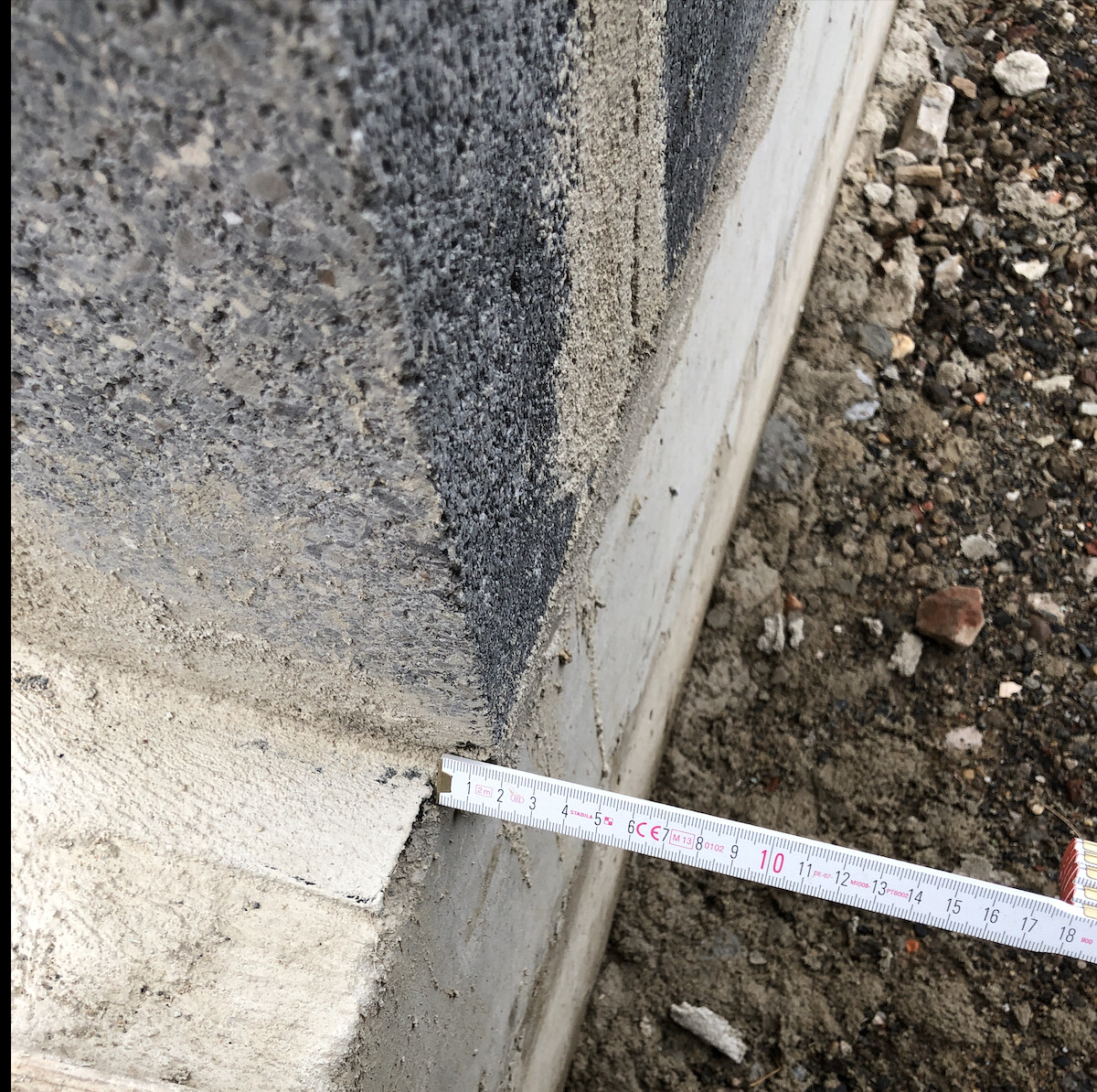
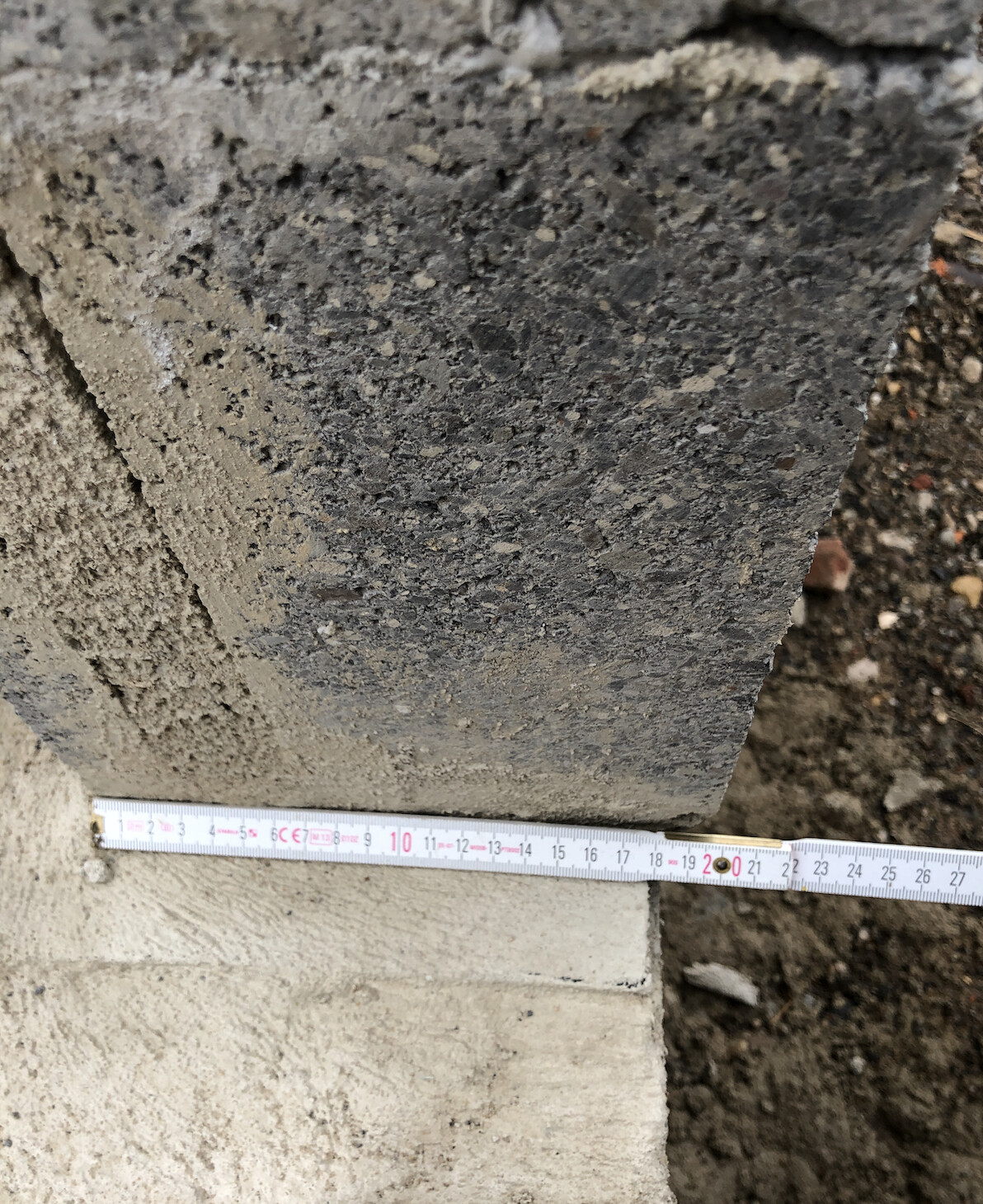
We are currently at the shell construction stage. The workers on the lower floor have now set the walls onto the slab. Unfortunately, on one side of the house, the walls protrude about 2cm (0.8 inches) beyond the edge of the slab. That means the 20cm (8 inches) thick blocks sit roughly 18cm (7 inches) on the slab or waterproofing membrane, with 2cm (0.8 inches) overhanging. This 2cm (0.8 inches) gap was filled with mortar.
This can be seen in the attached photos. We visited the site with the construction manager (PS: our architect, not a general contractor, but individual contracts assigned through our architect) to inspect the situation. He said this is probably within acceptable tolerances and should not have major consequences. We all agreed on site that the slab is likely about 2cm (0.8 inches) too short and the workers set the walls according to the original plan dimensions.
Still, we wonder if we should address this again. Time is pressing since next week the formwork for the concrete ceiling, which will be placed on the walls, is scheduled to be installed.
Another point: A small section on the affected side was built with cast-in-place concrete. This piece fits exactly on the slab, so this wall section is offset by 2cm (0.8 inches) compared to the masonry parts on the same side of the house. This projection in alignment will need to be corrected at the latest during the exterior insulation and finishing system (EIFS) on the outside and plastering inside. We were told this should not be a major issue either.
How do you assess this situation? Are we being too picky, or is this a serious defect that must be fully corrected?
Thank you!

Bauherr am L schrieb:
How do you assess the situation? Are we being too picky, or is this a serious defect that needs to be fully corrected?
Thanks!
You are being too picky. This is within any tolerance range—what could possibly go wrong? What do you hope to achieve by pointing it out? Just accept it as is. It will still be insulated and plastered, so your 2cm (about 1 inch) will disappear.
H
hampshire4 Jan 2020 10:13No need to worry, this is completely normal and not a defect. Masons are not tile installers and work with different tolerances. There are no disadvantages for structural stability or thermal insulation, and in the end, you won’t notice anything.
Such misunderstandings often occur with clients who lack practical knowledge of construction. This is common among detail-oriented professionals like business administrators, mechatronics engineers, or mechanical engineers—those who focus intensely on every cent or millimeter. In these cases, it’s important to stay calm and not panic when applying the precision standards from their own fields to their building project.
So take a deep breath and simply trust the expert (a self-hired architect who is essentially liable!).
So take a deep breath and simply trust the expert (a self-hired architect who is essentially liable!).
F
Fummelbrett!4 Jan 2020 11:02I don’t find the question here to be a problem. If you’re unsure, it’s better to ask about these things—that’s what forums like this are for. It’s better to address potential issues early on rather than having a defect cause bigger problems later, and then being asked why you didn’t raise it right away. Everything is fine.
Similar topics