
Hello everyone,
I hope I’m in the right place with my questions. First of all, I understand that no precise statements can be made based on descriptions or photos alone.
Here are some preliminary details:
I have a house built in 1938 with an extension from 1970, totaling 200 sqm (2,150 sq ft) of living space plus a 100 sqm (1,075 sq ft) basement.
The windows date from 1979 and are double-glazed.
The radiators are still 95% finned tube heaters installed in radiator niches.
The gas boiler in the basement is about 20-25 years old.
The roof and upper floor ceiling are uninsulated.
The attic will NEVER be converted, so we want to have the roof re-covered with just an underlay membrane and insulate the upper floor ceiling.
Now we are facing the question of what to do about the windows and facade.
Since I would say the facade area is quite large, insulation will be correspondingly expensive. So my question is how much additional savings in percentage terms can be achieved by using triple-glazed instead of double-glazed windows combined with external wall insulation? Is there perhaps a general reference value?
Also, is there a reference value for the potential savings compared to the current situation when upgrading to double-glazed thermal insulation windows, insulating the upper floor ceiling, closing the radiator niches, installing new radiators, and a new heating system? I have searched various websites but unfortunately found no clear guidance.
I just want to get a sense of what percentage savings can be expected from such measures.
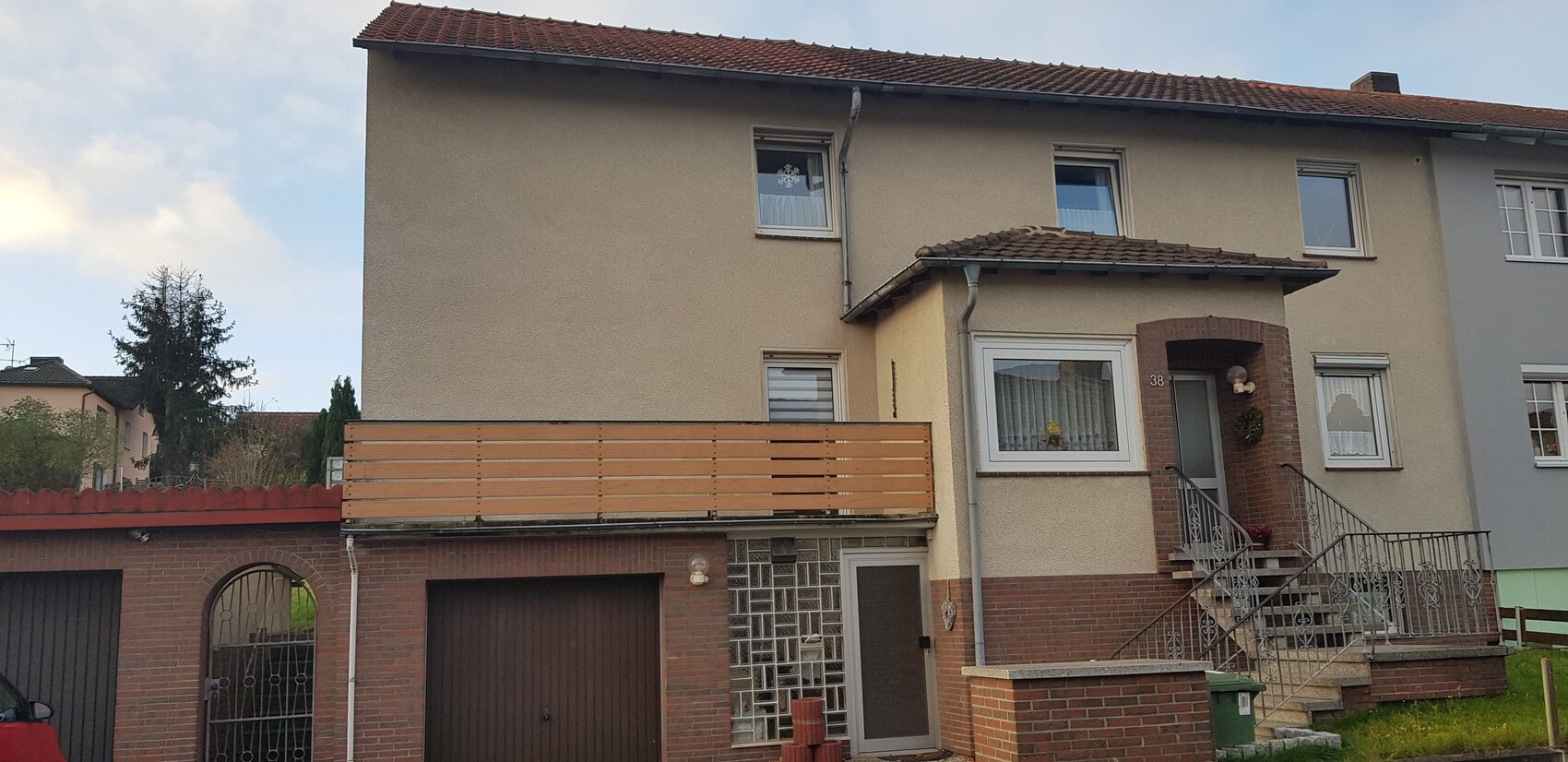
I hope I’m in the right place with my questions. First of all, I understand that no precise statements can be made based on descriptions or photos alone.
Here are some preliminary details:
I have a house built in 1938 with an extension from 1970, totaling 200 sqm (2,150 sq ft) of living space plus a 100 sqm (1,075 sq ft) basement.
The windows date from 1979 and are double-glazed.
The radiators are still 95% finned tube heaters installed in radiator niches.
The gas boiler in the basement is about 20-25 years old.
The roof and upper floor ceiling are uninsulated.
The attic will NEVER be converted, so we want to have the roof re-covered with just an underlay membrane and insulate the upper floor ceiling.
Now we are facing the question of what to do about the windows and facade.
Since I would say the facade area is quite large, insulation will be correspondingly expensive. So my question is how much additional savings in percentage terms can be achieved by using triple-glazed instead of double-glazed windows combined with external wall insulation? Is there perhaps a general reference value?
Also, is there a reference value for the potential savings compared to the current situation when upgrading to double-glazed thermal insulation windows, insulating the upper floor ceiling, closing the radiator niches, installing new radiators, and a new heating system? I have searched various websites but unfortunately found no clear guidance.
I just want to get a sense of what percentage savings can be expected from such measures.

What kind of front door do you have? – I can’t clearly tell from the photo. The side entrance door appears to be made of aluminum, likely from the generation without thermal break separating the inner and outer parts of the frame.
https://www.instagram.com/11antgmxde/
https://www.linkedin.com/company/bauen-jetzt/
https://www.instagram.com/11antgmxde/
https://www.linkedin.com/company/bauen-jetzt/
O
Oliver198911 Dec 2019 07:27Thank you for your responses.
The goal is to naturally improve the indoor climate, but everything also needs to be reasonably cost-effective. We are willing to invest a bit more for certain measures, but they have to be solid and worthwhile.
Not really, only the data mentioned above. Nothing has been done for years except maybe installing a new radiator or maintaining the 20-25 years old heating system. Otherwise, the last change must have been in 1979 with the windows.
We would like to replace the radiators mainly for aesthetic reasons.
I think insulating the basement ceiling will also be difficult due to the currently very low height.
We don’t intend to finance through the KfW; rather, we want to receive grants if it makes sense and is possible.
The goal is to naturally improve the indoor climate, but everything also needs to be reasonably cost-effective. We are willing to invest a bit more for certain measures, but they have to be solid and worthwhile.
Not really, only the data mentioned above. Nothing has been done for years except maybe installing a new radiator or maintaining the 20-25 years old heating system. Otherwise, the last change must have been in 1979 with the windows.
We would like to replace the radiators mainly for aesthetic reasons.
I think insulating the basement ceiling will also be difficult due to the currently very low height.
We don’t intend to finance through the KfW; rather, we want to receive grants if it makes sense and is possible.
O
Oliver198911 Dec 2019 07:2911ant schrieb:
What kind of front door do you have? I can’t clearly see it in the photo. The side entrance door looks like it’s made of aluminum — probably from an older generation without thermal breaks separating the interior and exterior profiles.Yes, exactly, it’s an aluminum door, both at the top and bottom (we have the front door upstairs by the stairs, and another one downstairs through the basement). They definitely need to be replaced, and the glass blocks will be removed as well to be replaced by windows.
O
Oliver198911 Dec 2019 07:44Winniefred schrieb:
Do you have more information on when different work was done on the house?
We renovated our house built in 1921, but our façade, roof, windows, and doors are from around 1992 and still in very good condition, and we have very low energy costs.
Also, make sure you check what legal obligations you have – some energy-related renovations become mandatory when ownership changes. I can’t give you exact details off the top of my head, for example, we didn’t insulate our basement ceiling or ground floor (above an uninsulated basement) (no complaints, no penalty...).
Personally, I think things like old radiator panels in niches should be renovated, but ultimately that’s up to each person. In your case, an energy advisor through the KfW program would definitely be worthwhile, since you will probably be financing it (?) and you’ll need their assessment anyway to get loan approval. They can also calculate the costs for you in exchange for their fee. What is your living area and consumption? As I said, I suspect the consumption was higher because the windows were often left slightly open, and the heating was on and often fairly high.
Yes, I have learned that if more than 10% of the façade is replastered, insulation becomes mandatory, so I would only paint if insulation of the façade is not an option.
H
HappyDee4511 Dec 2019 08:29... be careful when it comes to external insulation on old houses without ventilation systems, etc. I handled everything without KFW funding or similar because meeting their requirements and regulations was too complicated and expensive for me. However, I did a lot of the work myself, managing the project independently. Local craftsmen (mostly friends from the village) were involved as well.
My personal opinion on those online posts about indoor climate ... blah blah. Many DIY enthusiasts and people working independently with friendly craftsmen and knowledgeable mates often don’t frequent internet forums yet. It’s similar to the news ... you hear and read what the majority thinks and what you are meant to read. Don’t worry too much and work with local professionals instead of relying on internet comments and YouTube videos. An energy consultant is, of course, an option, but if you do everything yourself, it’s not mandatory. It becomes necessary when applying for subsidies. But even here, there are theoretical and practically oriented energy consultants. If you absolutely need one because you don’t have good contacts with local craftsmen and want to take advantage of subsidies, make sure it’s not just a pure energy consultant but perhaps a craftsman licensed to provide advice.
The focus here in this forum is more on new builds, financing, regulations, approvals, subcontractors, main contractors, etc., and less on doing things yourself.
Take a bucket of water and pour it down the facade. If the facade “absorbs” the water, a new coat of paint is needed. The paint isn’t just for aesthetics. We didn’t really want to do it, but since the scaffolding was already up for the roof, we went ahead with it. When I do the “water test” now, it’s clear why. However, once the external plaster has been painted, it should be refreshed approximately every 10-20 years.
My personal opinion on those online posts about indoor climate ... blah blah. Many DIY enthusiasts and people working independently with friendly craftsmen and knowledgeable mates often don’t frequent internet forums yet. It’s similar to the news ... you hear and read what the majority thinks and what you are meant to read. Don’t worry too much and work with local professionals instead of relying on internet comments and YouTube videos. An energy consultant is, of course, an option, but if you do everything yourself, it’s not mandatory. It becomes necessary when applying for subsidies. But even here, there are theoretical and practically oriented energy consultants. If you absolutely need one because you don’t have good contacts with local craftsmen and want to take advantage of subsidies, make sure it’s not just a pure energy consultant but perhaps a craftsman licensed to provide advice.
The focus here in this forum is more on new builds, financing, regulations, approvals, subcontractors, main contractors, etc., and less on doing things yourself.
Take a bucket of water and pour it down the facade. If the facade “absorbs” the water, a new coat of paint is needed. The paint isn’t just for aesthetics. We didn’t really want to do it, but since the scaffolding was already up for the roof, we went ahead with it. When I do the “water test” now, it’s clear why. However, once the external plaster has been painted, it should be refreshed approximately every 10-20 years.
O
Oliver198911 Dec 2019 11:31HappyDee45 schrieb:
... be careful when it comes to exterior wall insulation on older houses without ventilation systems and so on. I did everything without KfW [German development bank loans/grants], etc., because meeting their requirements or conditions was too complicated and expensive for me. However, I did a lot of the work myself, managing the project independently. Local craftsmen were involved as well—mostly friends from the village.
My personal opinion about those online discussions regarding indoor climate ... blah blah. Many DIYers and people working independently with trusted local craftsmen and knowledgeable friends often don’t participate in internet forums yet. It’s similar to the news ... you hear and read what the majority thinks and what you’re supposed to read. Don’t worry too much and work together with professionals on site instead of relying solely on internet comments and YouTube videos. An energy consultant is an option, but not a must if you do everything yourself. It becomes necessary when applying for subsidies. But there are theoretical as well as practical, hands-on energy consultants. If you really need one because you don’t have good contact with local tradespeople and want to claim subsidies, make sure you don’t get a pure energy consultant but perhaps a tradesperson licensed to provide consulting.
This forum tends to focus more on new builds, financing, regulations, permits/planning permission (building permits/planning permission), general contractors, subcontractors, etc., and less on DIY projects.
Take a bucket of water and pour it down the facade. If the facade "absorbs" the water, a new coat of paint is recommended. The paint is not just for aesthetic purposes. We didn’t initially plan to repaint, but since the scaffolding was already set up for the roof anyway, we went ahead with it. Now when I do the "water test," it’s clear why. However, once the exterior render has been applied, it should be refreshed approximately every 10-20 years. Let me put it this way, without meaning to offend anyone here. I don’t blindly trust comments or other sources. I try to gather collective knowledge and form my own opinion.
That’s exactly what concerns me about exterior wall insulation. Since my grandfather isn’t really one to manage ventilation (and I can’t teach him at his age), this also carries some risk. We definitely do a lot of work ourselves or at least prepare some trades ourselves in certain areas.
Repainting the facade is definitely planned as a minimum. Even if, technically speaking, it might still be in okay condition. I want to like the house, feel comfortable, and that definitely includes a fresh coat of paint for me.
Similar topics