
O
Oliver198910 Dec 2019 07:55Hello everyone,
I hope I’m in the right place with my questions. First of all, I understand that no precise statements can be made based on descriptions or photos alone.
Here are some preliminary details:
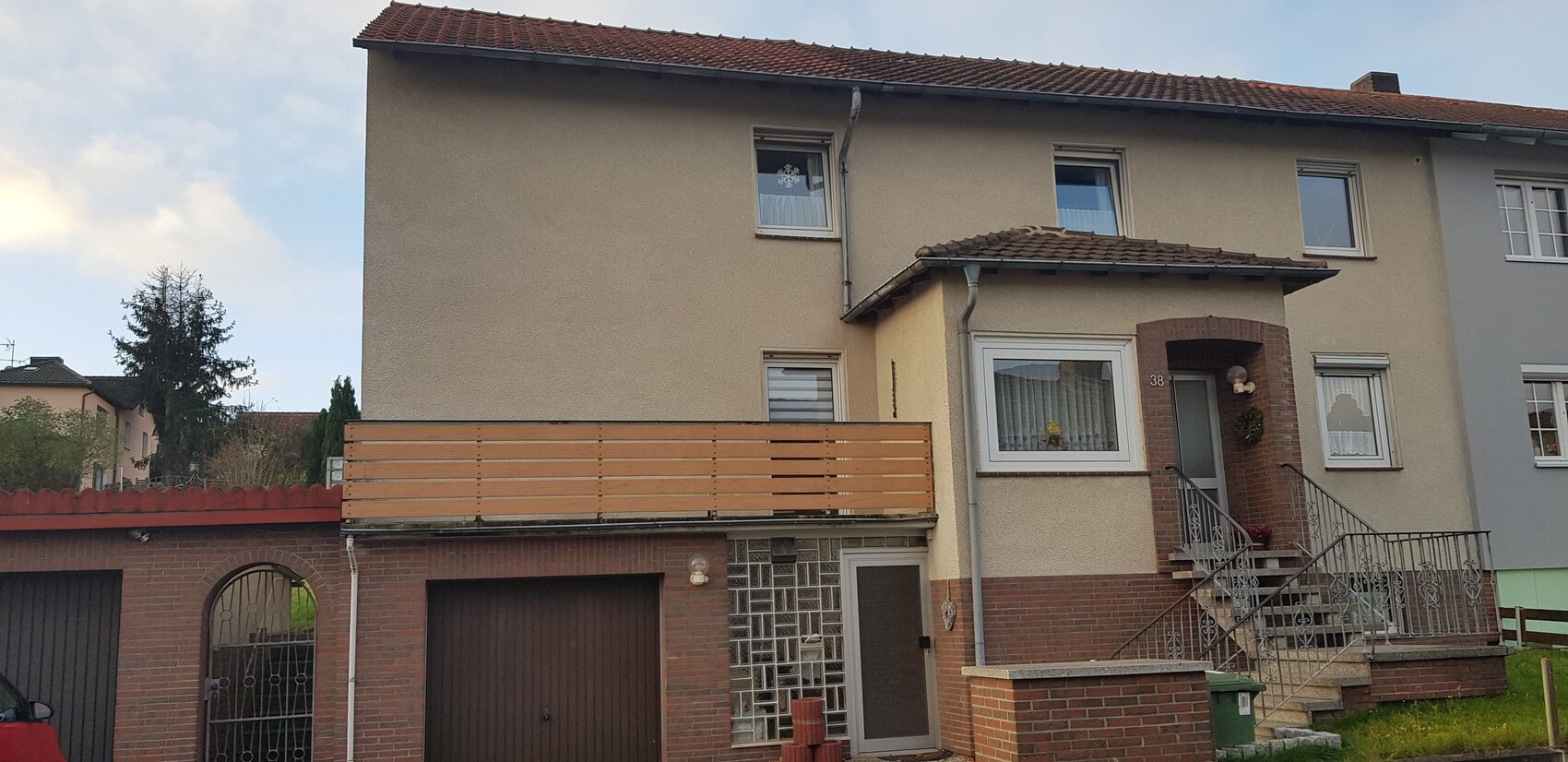
I have a house built in 1938 with an extension from 1970, totaling 200 sqm (2,150 sq ft) of living space plus a 100 sqm (1,075 sq ft) basement.
The windows date from 1979 and are double-glazed.
The radiators are still 95% finned tube heaters installed in radiator niches.
The gas boiler in the basement is about 20-25 years old.
The roof and upper floor ceiling are uninsulated.
The attic will NEVER be converted, so we want to have the roof re-covered with just an underlay membrane and insulate the upper floor ceiling.
Now we are facing the question of what to do about the windows and facade.
Since I would say the facade area is quite large, insulation will be correspondingly expensive. So my question is how much additional savings in percentage terms can be achieved by using triple-glazed instead of double-glazed windows combined with external wall insulation? Is there perhaps a general reference value?
Also, is there a reference value for the potential savings compared to the current situation when upgrading to double-glazed thermal insulation windows, insulating the upper floor ceiling, closing the radiator niches, installing new radiators, and a new heating system? I have searched various websites but unfortunately found no clear guidance.
I just want to get a sense of what percentage savings can be expected from such measures.
I hope I’m in the right place with my questions. First of all, I understand that no precise statements can be made based on descriptions or photos alone.
Here are some preliminary details:
I have a house built in 1938 with an extension from 1970, totaling 200 sqm (2,150 sq ft) of living space plus a 100 sqm (1,075 sq ft) basement.
The windows date from 1979 and are double-glazed.
The radiators are still 95% finned tube heaters installed in radiator niches.
The gas boiler in the basement is about 20-25 years old.
The roof and upper floor ceiling are uninsulated.
The attic will NEVER be converted, so we want to have the roof re-covered with just an underlay membrane and insulate the upper floor ceiling.
Now we are facing the question of what to do about the windows and facade.
Since I would say the facade area is quite large, insulation will be correspondingly expensive. So my question is how much additional savings in percentage terms can be achieved by using triple-glazed instead of double-glazed windows combined with external wall insulation? Is there perhaps a general reference value?
Also, is there a reference value for the potential savings compared to the current situation when upgrading to double-glazed thermal insulation windows, insulating the upper floor ceiling, closing the radiator niches, installing new radiators, and a new heating system? I have searched various websites but unfortunately found no clear guidance.
I just want to get a sense of what percentage savings can be expected from such measures.
H
HappyDee4510 Dec 2019 08:16Good morning,
I am in the final stages of a very similar project. First of all, the question is whether you want advice from the group of "new builds, KFW energy-saving regulations, and is there a standard for proper ventilation" or rather from the DIY self-build corner. I can offer some information from the DIY perspective.
Forget about external insulation for now.
In 1995, a new thermal insulation regulation was introduced — after that time, almost exclusively windows with double glazing and insulating gas were installed. Before then, most double-glazed windows did not have insulating gas. The significant improvement in the U-value from double glazing with insulating gas to triple glazing with insulating gas is rather small. However, from a noise insulation perspective, triple glazing does make a difference. You can either look for the manufacturer and model number on the window frame or simply hold a lit candle close to your window pane to find out if your windows have insulating gas (just search online — you’ll find explanations). If your windows are double glazed without insulating gas, replacing them could significantly improve the U-value. Whether to go for double or triple glazing then depends on your budget.
Looking at your windows, you have your roller shutter boxes on the inside. Consider insulating the roller shutter boxes from the inside. It’s a small effort with a big impact. It doesn’t cost much and you can easily do it yourself.
Below your windows are the panel radiators and the recesses. You can brick up the recesses and install newer radiators.
Depending on your interior floor plan, you might want to consider replacing the glass blocks in your front door.
For your living space, you can safely leave the cold roof as it is and simply insulate the ceiling of the top floor yourself. Possibly also insulate the basement ceiling.
If your gas heating system still works — leave it in place.
With these points, you will achieve a big effect with minimal financial investment… of course, you will still be far from the standard of modern low-energy houses, but one step at a time.
Also think about what you want to do with water, wastewater pipes, and electrical wiring if you decide to do a full renovation later. Heating pipes are usually very durable, but take a look at them anyway. Properly insulating water and heating pipes is another small effort with a big impact.
I am in the final stages of a very similar project. First of all, the question is whether you want advice from the group of "new builds, KFW energy-saving regulations, and is there a standard for proper ventilation" or rather from the DIY self-build corner. I can offer some information from the DIY perspective.
Forget about external insulation for now.
In 1995, a new thermal insulation regulation was introduced — after that time, almost exclusively windows with double glazing and insulating gas were installed. Before then, most double-glazed windows did not have insulating gas. The significant improvement in the U-value from double glazing with insulating gas to triple glazing with insulating gas is rather small. However, from a noise insulation perspective, triple glazing does make a difference. You can either look for the manufacturer and model number on the window frame or simply hold a lit candle close to your window pane to find out if your windows have insulating gas (just search online — you’ll find explanations). If your windows are double glazed without insulating gas, replacing them could significantly improve the U-value. Whether to go for double or triple glazing then depends on your budget.
Looking at your windows, you have your roller shutter boxes on the inside. Consider insulating the roller shutter boxes from the inside. It’s a small effort with a big impact. It doesn’t cost much and you can easily do it yourself.
Below your windows are the panel radiators and the recesses. You can brick up the recesses and install newer radiators.
Depending on your interior floor plan, you might want to consider replacing the glass blocks in your front door.
For your living space, you can safely leave the cold roof as it is and simply insulate the ceiling of the top floor yourself. Possibly also insulate the basement ceiling.
If your gas heating system still works — leave it in place.
With these points, you will achieve a big effect with minimal financial investment… of course, you will still be far from the standard of modern low-energy houses, but one step at a time.
Also think about what you want to do with water, wastewater pipes, and electrical wiring if you decide to do a full renovation later. Heating pipes are usually very durable, but take a look at them anyway. Properly insulating water and heating pipes is another small effort with a big impact.
O
Oliver198910 Dec 2019 08:53Thanks for the quick reply!
To put it this way, I do want to update and have some things done to the latest standards (windows, roof, heating), but it doesn't have to be as extensive as a passive house, which in my opinion would be too much for a house like this. We will do all the preliminary and other work ourselves as much as possible.
That was also my idea—the old windows should have a U-value of around 3.0, and the new double-glazed windows with low-emission glass should be about 1.1, which would definitely be an improvement. We hardly have any noise in our area, so soundproofing is not very important to us.
Exactly, I also wanted to address the roller shutter boxes while everything is open.
Okay, it sounds good that I am on the right track regarding insulation of the ceiling between floors. The basement ceiling is more difficult because we have very little room height there, and I don’t want to lose any more height.
Yes, the pipes should be checked and replaced if necessary.
Unfortunately, I don’t have a comparison for savings. Currently, my grandfather still lives in the lower apartment (the apartments are not separated from each other), and we would move into the upper floor. When my parents still lived in the house, they had an annual gas consumption of about 50,000 kWh over 200 square meters (about 2,150 square feet) including my grandfather. That seems very high to me personally. However, they were the type of people who usually kept the heating on and the windows tilted open.
If through more mindful heating and the renovation measures mentioned above I could reduce consumption to 30,000–40,000 kWh, I would be very satisfied.
To put it this way, I do want to update and have some things done to the latest standards (windows, roof, heating), but it doesn't have to be as extensive as a passive house, which in my opinion would be too much for a house like this. We will do all the preliminary and other work ourselves as much as possible.
That was also my idea—the old windows should have a U-value of around 3.0, and the new double-glazed windows with low-emission glass should be about 1.1, which would definitely be an improvement. We hardly have any noise in our area, so soundproofing is not very important to us.
Exactly, I also wanted to address the roller shutter boxes while everything is open.
Okay, it sounds good that I am on the right track regarding insulation of the ceiling between floors. The basement ceiling is more difficult because we have very little room height there, and I don’t want to lose any more height.
Yes, the pipes should be checked and replaced if necessary.
Unfortunately, I don’t have a comparison for savings. Currently, my grandfather still lives in the lower apartment (the apartments are not separated from each other), and we would move into the upper floor. When my parents still lived in the house, they had an annual gas consumption of about 50,000 kWh over 200 square meters (about 2,150 square feet) including my grandfather. That seems very high to me personally. However, they were the type of people who usually kept the heating on and the windows tilted open.
If through more mindful heating and the renovation measures mentioned above I could reduce consumption to 30,000–40,000 kWh, I would be very satisfied.
Sure, insulating the top floor ceiling can be completed over a weekend, and you’ll recover the costs within 2-3 years. It has by far the biggest impact.
If the windows are basically airtight now, replacing them won’t bring a significant improvement. However, if they are quite old, it can be worth doing since it’s also quick to accomplish and costs money, the same goes for the front door.
Keep the heating system and radiators as long as they are functioning. Fin-tube radiators are not worse than modern ones.
You can insulate alcoves if you want, but I skipped it for aesthetic and practical reasons. If you don’t need the space, go ahead and do it, but make sure the work is done properly. This means the insulation material must be fully and cleanly adhered. If moist, warm air gets behind the insulation and reaches the cold exterior wall, you will have mold in a very short time.
If the windows are basically airtight now, replacing them won’t bring a significant improvement. However, if they are quite old, it can be worth doing since it’s also quick to accomplish and costs money, the same goes for the front door.
Keep the heating system and radiators as long as they are functioning. Fin-tube radiators are not worse than modern ones.
You can insulate alcoves if you want, but I skipped it for aesthetic and practical reasons. If you don’t need the space, go ahead and do it, but make sure the work is done properly. This means the insulation material must be fully and cleanly adhered. If moist, warm air gets behind the insulation and reaches the cold exterior wall, you will have mold in a very short time.
The question for me would also be: Do you want to renovate purely for cost efficiency, or is improving living comfort also a priority? If it’s purely about cost efficiency, external wall insulation definitely needs to be carefully calculated (keep in mind that in addition to energy savings, it can also increase the property’s value in case of resale). However, a major advantage of insulated exterior walls is “warm” walls—in other words, no unpleasant cold radiation. This is a significant added benefit of new builds compared to uninsulated older buildings.
Before you start any work, I would definitely recommend finding a qualified energy consultant to develop a coherent overall plan. Individual measures can sometimes backfire (a typical example: windows insulated much more than the rest of the building, causing water to condense on the walls since they become the coldest spots → mold problems).
Before you start any work, I would definitely recommend finding a qualified energy consultant to develop a coherent overall plan. Individual measures can sometimes backfire (a typical example: windows insulated much more than the rest of the building, causing water to condense on the walls since they become the coldest spots → mold problems).
 Winniefred10 Dec 2019 14:07
Do you have more information about when specific work was done on the house?
We renovated our house, which was built in 1921, but the facade, roof, windows, and doors date from around 1992 and are still in very good condition. Our energy costs are very low.
Make sure to check what your legal obligations are—some energy efficiency upgrades become mandatory when ownership changes. I can’t give you exact details off the top of my head, for example, we did not insulate our basement ceiling or the ground floor above the uninsulated basement (no complaints, no problem...). Features like radiators in recessed areas are, in my personal opinion, worth upgrading, but ultimately that’s up to each individual. In your case, it would definitely be worth consulting an energy advisor through KFW, especially since you will likely be financing this, and you will need one anyway for loan approval. The advisor can also calculate everything for the fee charged.
We renovated our house, which was built in 1921, but the facade, roof, windows, and doors date from around 1992 and are still in very good condition. Our energy costs are very low.
Make sure to check what your legal obligations are—some energy efficiency upgrades become mandatory when ownership changes. I can’t give you exact details off the top of my head, for example, we did not insulate our basement ceiling or the ground floor above the uninsulated basement (no complaints, no problem...). Features like radiators in recessed areas are, in my personal opinion, worth upgrading, but ultimately that’s up to each individual. In your case, it would definitely be worth consulting an energy advisor through KFW, especially since you will likely be financing this, and you will need one anyway for loan approval. The advisor can also calculate everything for the fee charged.
Similar topics