
Hello dear house-building forum!
I have already done a lot of reading but still haven't found a suitable solution or optimization for our single-family home. Maybe you can help me further?!
First, some details about our single-family home:
Development plan/restrictions
Plot size – 890 sqm (9579 sq ft)
Slope – no
Site coverage ratio – ?
Floor area ratio – 0.4
Building envelope, building line, and boundary – building line is 6 m (20 ft)
Edge development?
Number of parking spaces – garage for 1 car
Number of floors – 1
Roof type – any
Architectural style – bungalow area, old house still standing, will be completely demolished
Orientation – ?
Maximum heights/limits:
- Ridge height max. 9 m (29.5 ft) measured from the top of the foundation
- Eaves height of the single-story main structures must not exceed 2.75–3.00 m (9.0–9.8 ft) (measured from top of foundation to bottom edge of gutter)
- Roof extensions allowed up to max. 2/5 of the eaves length
Other requirements – originally a designated bungalow area
Client requirements
Style, roof shape, building type – single-family home modern, pitched roof, solid construction
Basement, floors – no basement, ground floor, first floor, finished attic
Number of people, ages – 3–4 / 30, 31, 1 year
Space needed on ground and upper floors – 80–90 sqm (860–970 sq ft)
Office: family use or home office? No office but a guest room with a desk
Number of overnight guests per year – 20–30
Open or closed layout? ?
Conservative or modern construction? Rather modern
Open kitchen, kitchen island? Both
Number of dining seats – 6–8
Fireplace – yes
Music/stereo wall – yes, in a small version
Balcony, roof terrace – no
Garage, carport – garage with sauna and small lounge area, space for DIY/workshop
Utility garden, greenhouse – no
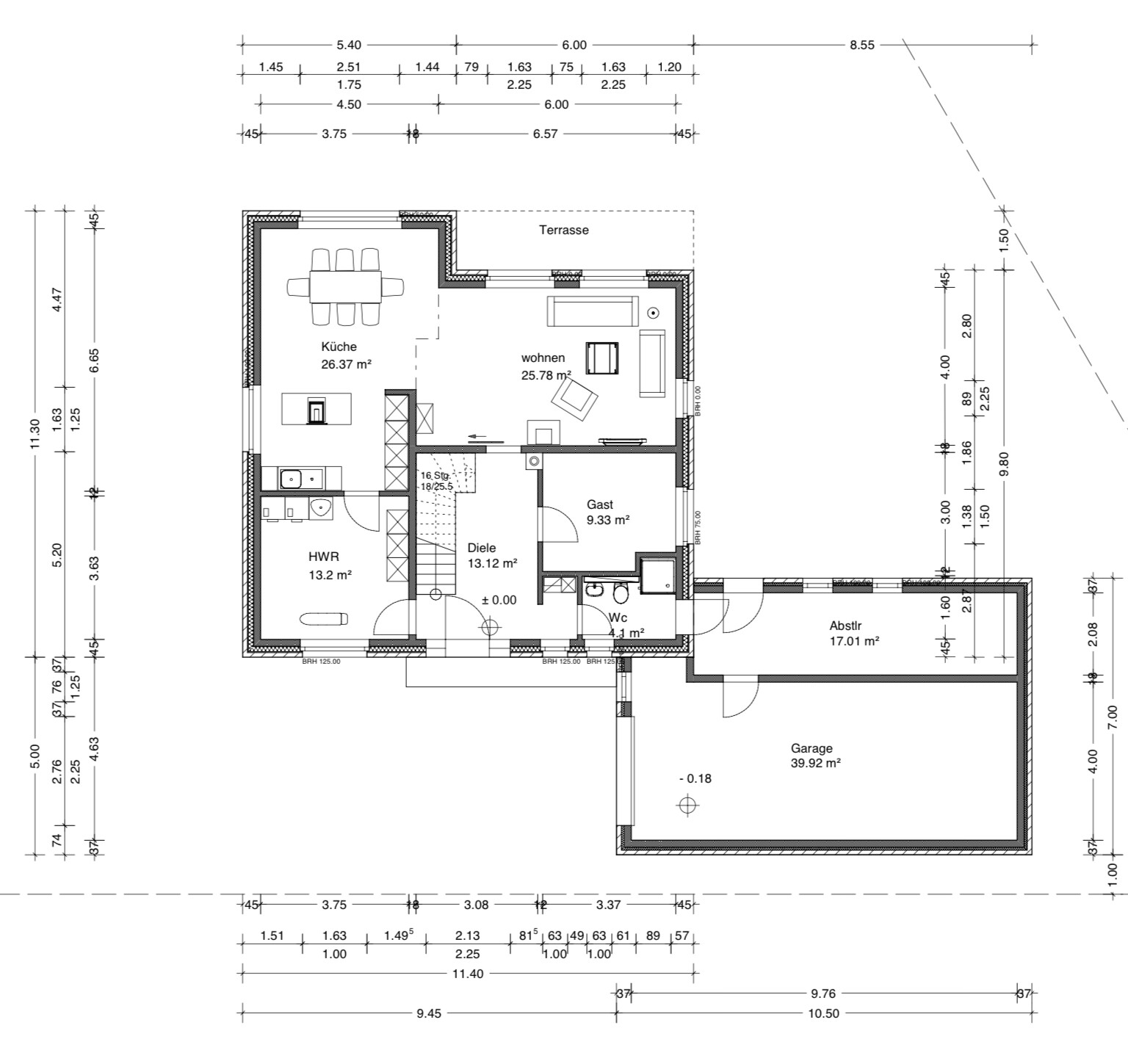
Other wishes/special features/daily routine, including reasons why this or that should or should not be included: Utility room is intentionally on the east side because daylight in the guest room and guest bathroom was more important to us. The sauna is intentionally located in the 2.20 m (7.2 ft) high garage because we want direct access to the garden.
House design
Who planned it: self-drawn, architect digitized. BUT: so far only the dimensions are set, interior walls, windows, and furniture are partially not yet in the correct positions!
-Planner from a construction company: no
-Architect: yes
-Do-it-yourself: all
What do you particularly like? Why? We think we have a coherent flow for everyday living but are still open to improvements and tips for saving space
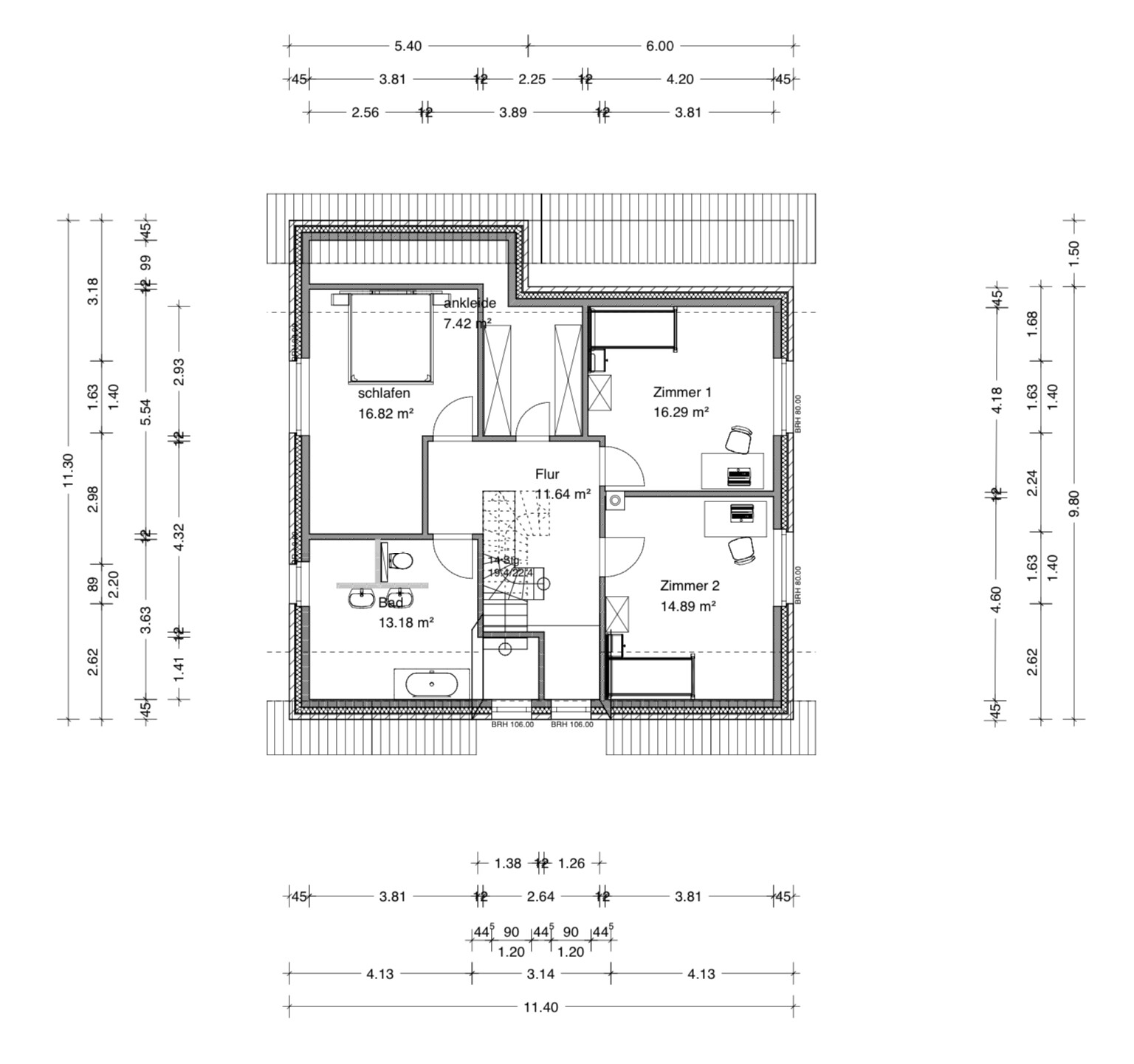
What don’t you like? Why? Solution in the garage with sauna, first floor: master bedroom with dressing room, which should be able to fit at least 2 wardrobes of 3 m (10 ft) each
Price estimate according to architect/planner: 320,000
Personal price limit for the house, including equipment: 300,000
Preferred heating technology: heat pump with photovoltaics
If you had to give up something, which details/extensions
-Can you live without: we are open to suggestions
-Can’t live without: guest room, sauna, size of utility room
Why is the design the way it is now? E.g.
Standard design from the planner? Inspired by Viebrockhaus Maxime 800
Which wishes have been implemented by the architect? So far everything exactly as we drew it...
A mix of many examples from various magazines... no
What makes it in your view particularly good or bad? Good everyday workflow, short distances, all the rooms we want are accommodated
What is the most important/fundamental question about the floor plan summarized in 130 characters?
Can the rooms in the house still be optimized, e.g. on the first floor?
How can I fit a sauna with a small lounge area in the garage without feeling cramped?
I have already done a lot of reading but still haven't found a suitable solution or optimization for our single-family home. Maybe you can help me further?!
First, some details about our single-family home:
Development plan/restrictions
Plot size – 890 sqm (9579 sq ft)
Slope – no
Site coverage ratio – ?
Floor area ratio – 0.4
Building envelope, building line, and boundary – building line is 6 m (20 ft)
Edge development?
Number of parking spaces – garage for 1 car
Number of floors – 1
Roof type – any
Architectural style – bungalow area, old house still standing, will be completely demolished
Orientation – ?
Maximum heights/limits:
- Ridge height max. 9 m (29.5 ft) measured from the top of the foundation
- Eaves height of the single-story main structures must not exceed 2.75–3.00 m (9.0–9.8 ft) (measured from top of foundation to bottom edge of gutter)
- Roof extensions allowed up to max. 2/5 of the eaves length
Other requirements – originally a designated bungalow area
Client requirements
Style, roof shape, building type – single-family home modern, pitched roof, solid construction
Basement, floors – no basement, ground floor, first floor, finished attic
Number of people, ages – 3–4 / 30, 31, 1 year
Space needed on ground and upper floors – 80–90 sqm (860–970 sq ft)
Office: family use or home office? No office but a guest room with a desk
Number of overnight guests per year – 20–30
Open or closed layout? ?
Conservative or modern construction? Rather modern
Open kitchen, kitchen island? Both
Number of dining seats – 6–8
Fireplace – yes
Music/stereo wall – yes, in a small version
Balcony, roof terrace – no
Garage, carport – garage with sauna and small lounge area, space for DIY/workshop
Utility garden, greenhouse – no
Other wishes/special features/daily routine, including reasons why this or that should or should not be included: Utility room is intentionally on the east side because daylight in the guest room and guest bathroom was more important to us. The sauna is intentionally located in the 2.20 m (7.2 ft) high garage because we want direct access to the garden.
House design
Who planned it: self-drawn, architect digitized. BUT: so far only the dimensions are set, interior walls, windows, and furniture are partially not yet in the correct positions!
-Planner from a construction company: no
-Architect: yes
-Do-it-yourself: all
What do you particularly like? Why? We think we have a coherent flow for everyday living but are still open to improvements and tips for saving space
What don’t you like? Why? Solution in the garage with sauna, first floor: master bedroom with dressing room, which should be able to fit at least 2 wardrobes of 3 m (10 ft) each
Price estimate according to architect/planner: 320,000
Personal price limit for the house, including equipment: 300,000
Preferred heating technology: heat pump with photovoltaics
If you had to give up something, which details/extensions
-Can you live without: we are open to suggestions
-Can’t live without: guest room, sauna, size of utility room
Why is the design the way it is now? E.g.
Standard design from the planner? Inspired by Viebrockhaus Maxime 800
Which wishes have been implemented by the architect? So far everything exactly as we drew it...
A mix of many examples from various magazines... no
What makes it in your view particularly good or bad? Good everyday workflow, short distances, all the rooms we want are accommodated
What is the most important/fundamental question about the floor plan summarized in 130 characters?
Can the rooms in the house still be optimized, e.g. on the first floor?
How can I fit a sauna with a small lounge area in the garage without feeling cramped?
M
Matthew036 Nov 2019 10:10The:
however contradicts the:
Melo_36 schrieb:
Hmm... now you have painted a small “P” in front of my eyes
however contradicts the:
Melo_36 schrieb:
I have since been reading diligently
11ant schrieb:
Explain to us: what exactly is the point of a transit guest bathroom?
I recommend moving away from just copying a template. As you can see, that doesn’t work.
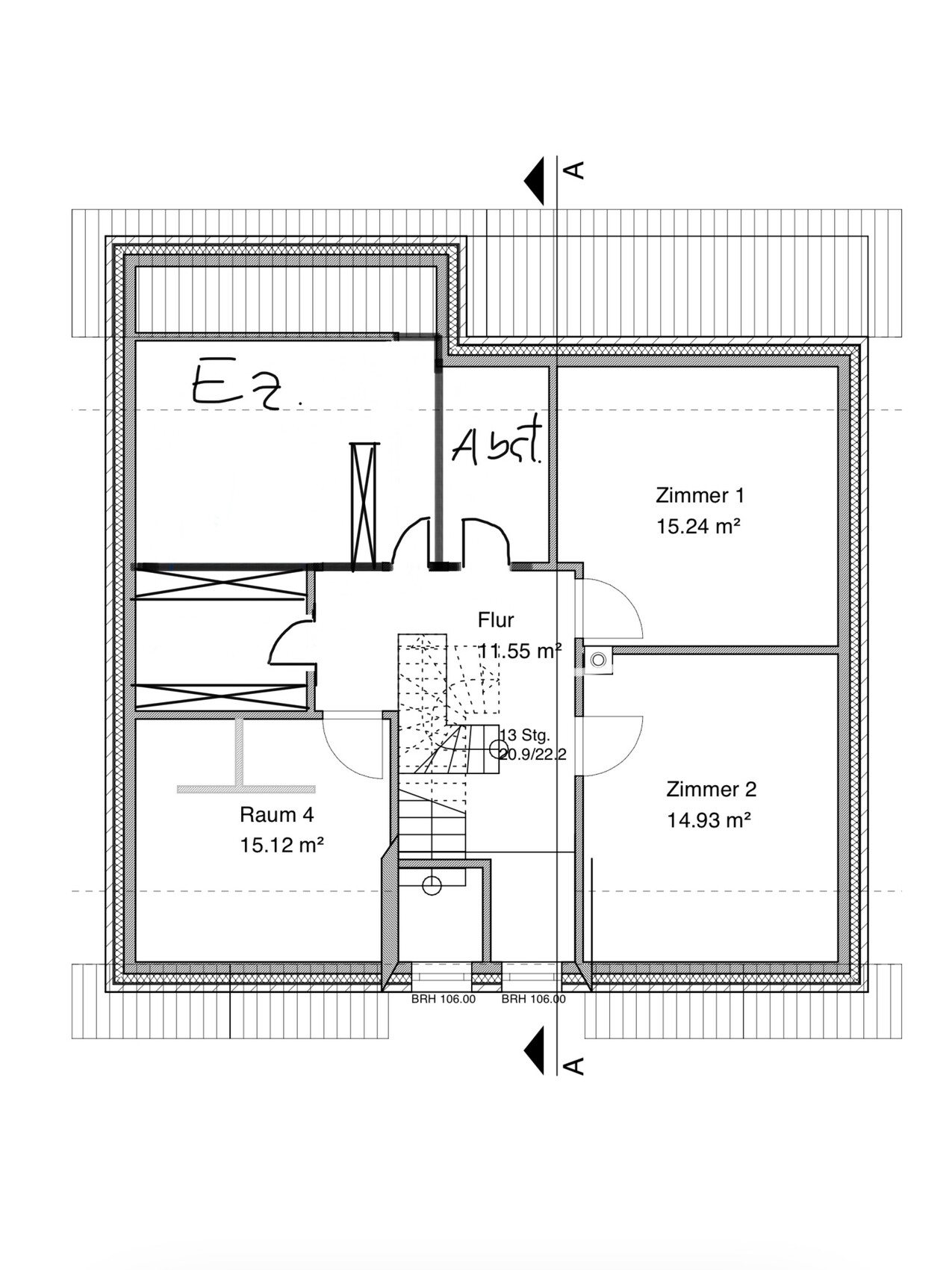
More likely, it’s about avoiding the cookie-cutter approach of a general contractor. Any independent architect would advise (meaning also discourage) if the client has planned something unreasonable instead of simply replicating it. At least in the knee wall space behind the bedroom, this should be obvious even to non-experts—unless there is a lack of spatial imagination. About the bathroom: we wanted to be able to use the shower in the guest bathroom also for the sauna area and to access the sauna from inside the house (without going outside). A steel door in the guest room (i.e., a sleeping area where people potentially stay longer) seemed even less appealing to us.
The knee wall in the dining room is the so-called “abseite” and is not used as living space; instead, it is where the lean-to roof for the dining room is carried over. If we close it off with a wall, we have a knee wall height of 1.85 m (6 ft 1 in) there!

The "transit toilet," as 11ant so nicely calls it, is quite the knee-slapper!
I've seen a lot here already, but never this before. I’m just imagining the guest sitting on the toilet while the kids have (responsibly) parked their bikes in the storage room and walk through the transit toilet into the house – that must lead to some funny moments. At least you'll always have a good story to tell, like "remember when Uncle Fritz had diarrhea here and Tom quickly ran from outside to the bathroom and..."
*LOL*
No, I rarely see something so... uh... original!
I'm missing the north arrow again, and I assume the kids’ rooms are either on the east or west side, while the parents enjoy the south side. Why?
I would reconsider the entire upper floor layout and definitely move the washer and dryer upstairs. Option 1 with the weird, unusable backpack-shaped space next to the master bedroom is a wasted room.
I've seen a lot here already, but never this before. I’m just imagining the guest sitting on the toilet while the kids have (responsibly) parked their bikes in the storage room and walk through the transit toilet into the house – that must lead to some funny moments. At least you'll always have a good story to tell, like "remember when Uncle Fritz had diarrhea here and Tom quickly ran from outside to the bathroom and..."
*LOL*
No, I rarely see something so... uh... original!
I'm missing the north arrow again, and I assume the kids’ rooms are either on the east or west side, while the parents enjoy the south side. Why?
I would reconsider the entire upper floor layout and definitely move the washer and dryer upstairs. Option 1 with the weird, unusable backpack-shaped space next to the master bedroom is a wasted room.
11ant schrieb:
Does the bungalow have a basement? I would seriously reconsider a deep demolition. With such a low eaves height, it will be tight for the garage to fit easily under the roof overhang if it’s only one step lower. From the demolition, I infer that this is not about infilling gaps but maintaining the character of the area, so there are probably slim chances for exemptions that would go against that.The bungalow has a masonry basement, which is damp and crumbling.
The property will stay within the family, so we would proceed with demolition.
Matthew03 schrieb:
This:
contradicts this:
Our architect has estimated 350€ per cubic meter (m³).
Similar topics