
I am interested in what are called window-connecting transverse elements in my new build (I can’t find another term for it).
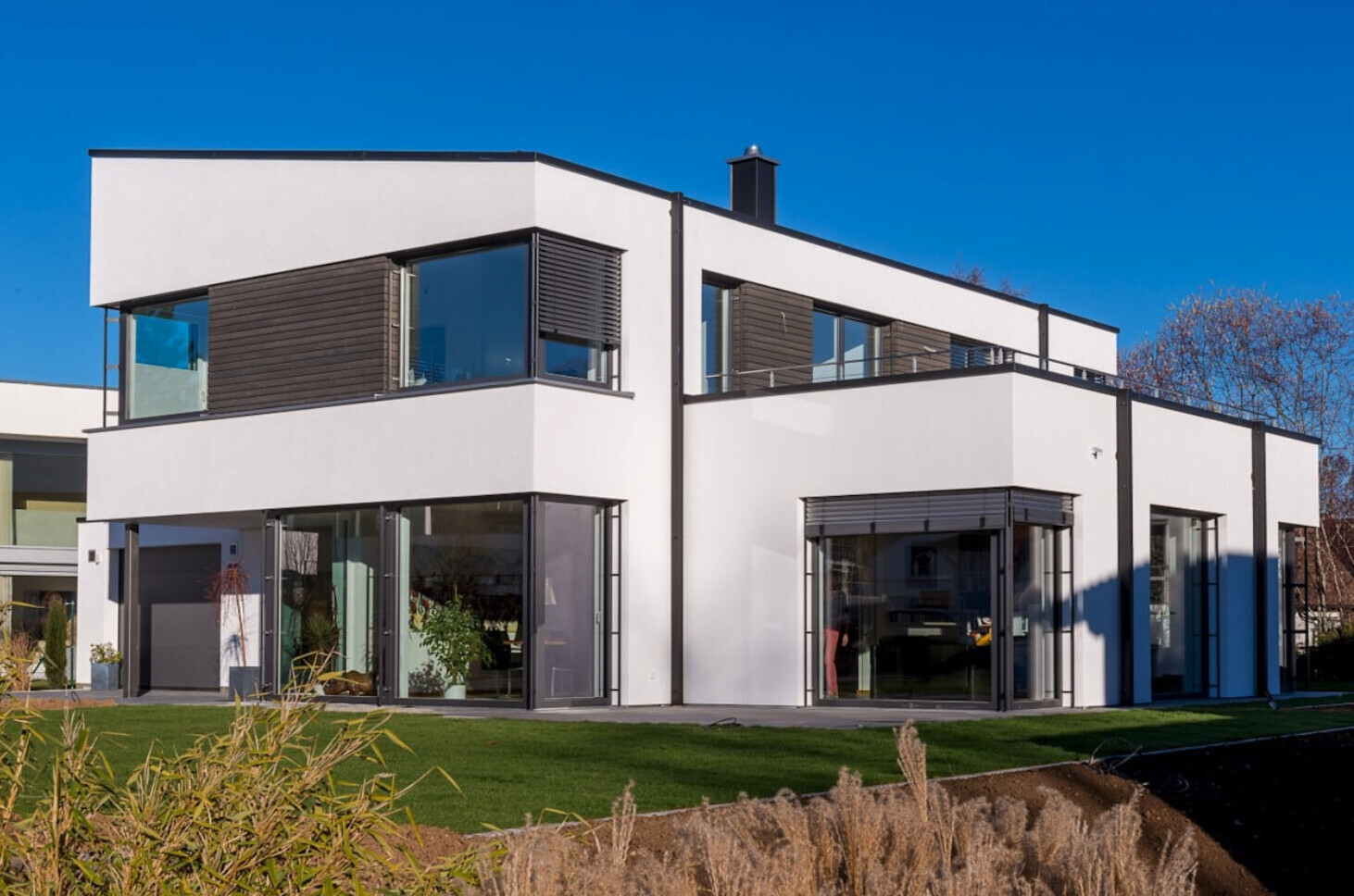

Source: Pinterest
Here as examples, one made of wood and in the second image with slate panels.
Can someone explain the building technology of how this is implemented in a construction method without external thermal insulation composite system (ETICS) / external wall insulation, and how the depth differences are adjusted? Can the elements be attached directly to the exterior wall and the rest simply plastered, or how should this be understood?
Thanks in advance for the answers!
Source: Pinterest
Here as examples, one made of wood and in the second image with slate panels.
Can someone explain the building technology of how this is implemented in a construction method without external thermal insulation composite system (ETICS) / external wall insulation, and how the depth differences are adjusted? Can the elements be attached directly to the exterior wall and the rest simply plastered, or how should this be understood?
Thanks in advance for the answers!
benediktr schrieb:
Maybe another point: Are there any issues with monolithic construction combined with large window areas?What kind of issues would arise from that?
With monolithic construction, you will inevitably need to insulate the lintels and ring beams. I haven’t seen it done any other way since 2002. With a 40cm (16 inch) wall, there is enough space next to the lintel for insulation.
The size of the window areas does not affect compliance with energy saving regulations (energy codes or building regulations). Although you will have higher heating demand with larger window areas, depending on their orientation, the regulations compare, simply put, only the building components’ properties—not the window sizes or the overall dimensions/volume of your building.
This only becomes relevant with KfW40+ and Passive House standards.
I also have reservations about having a flush wood facade. It should work with slate elements. Thin brick slips or tile veneers usually have thicknesses under 2cm (about 0.8 inch), so they should fit in place of plaster.
B
benediktr26 Oct 2019 19:22guckuck2 schrieb:
Why not ask the architect how he plans to implement this? A wooden facade less than 6cm (2.4 inches) including battens won’t work. The architect doesn’t know anything about that. It was a question from my side.
dertill schrieb:
What kind of problems should arise from that? Because of the low density of the aerated concrete, I thought the bearing points of the lintel might need to be made from a different material.
dertill schrieb:
Thin brick slips Today I saw a very nice house in a new development area with large-format thin brick slips.
B
benediktr5 Jan 2020 14:43I have now discussed the topic with the architect, and the proposed solution was to create a thinner wall structure in the area between the connecting windows in order to achieve at least a flush finish or even a slight offset.
Unfortunately, this idea was quickly postponed again due to its complexity. I have reconsidered and come up with the following approach:
Exterior walls:
Aerated concrete 36.5 cm (14.4 inches) → U-value: approx. 0.18 W/m²K
Wall sections between the windows:
Aerated concrete 17.5 cm (6.9 inches), 12 cm (4.7 inches) Multipor insulation board → U-value: approx. 0.23 W/m²K
What do you think about this in terms of cost-benefit ratio?
Unfortunately, this idea was quickly postponed again due to its complexity. I have reconsidered and come up with the following approach:
Exterior walls:
Aerated concrete 36.5 cm (14.4 inches) → U-value: approx. 0.18 W/m²K
Wall sections between the windows:
Aerated concrete 17.5 cm (6.9 inches), 12 cm (4.7 inches) Multipor insulation board → U-value: approx. 0.23 W/m²K
What do you think about this in terms of cost-benefit ratio?
Similar topics