
ᐅ Single-family house (2 floors + finished basement + converted attic), approximately 200 sqm – modifications
Created on: 20 Oct 2019 21:50
G
grericht
Hello,
We are currently working with an architect on the design of our single-family home. Since we have three children, the house should accommodate several future scenarios. These include:
Plot:
Since the plot already has a building, and we want to keep the rear building (it is fully shaded by the apartment building, is in reasonable condition, and might provide future expansion potential—at least suitable for workshops and storage), and since the plot is not very large, we decided on a tall house with a small footprint.
About the house
We have already developed a fairly comfortable floor plan with our chosen architect. Our biggest concern is accidentally planning a wall or something else 5 cm (2 inches) too far to the left or right and then being unable to fit our furniture. I would appreciate it if you would be interested in looking over the current design and giving feedback.
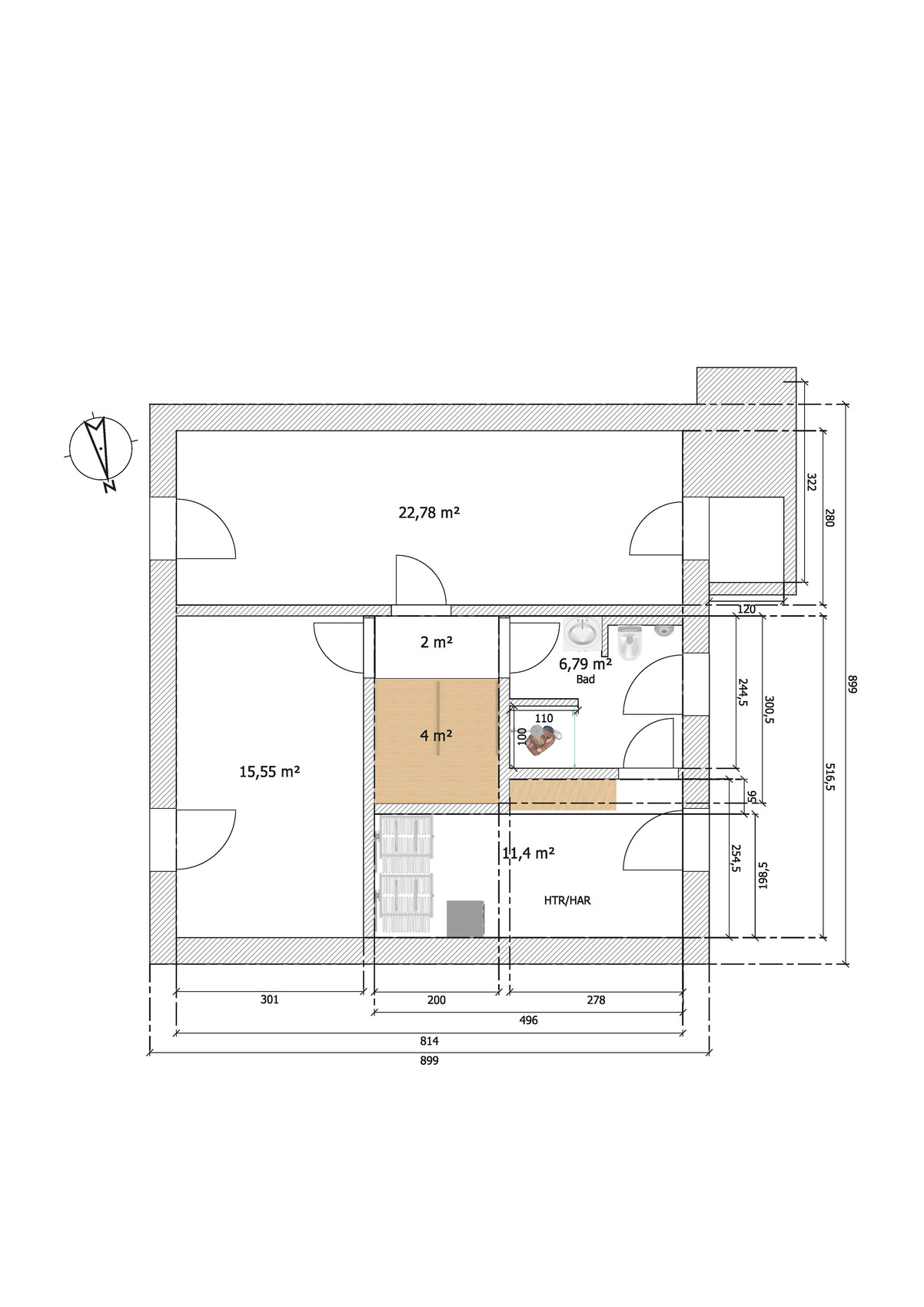
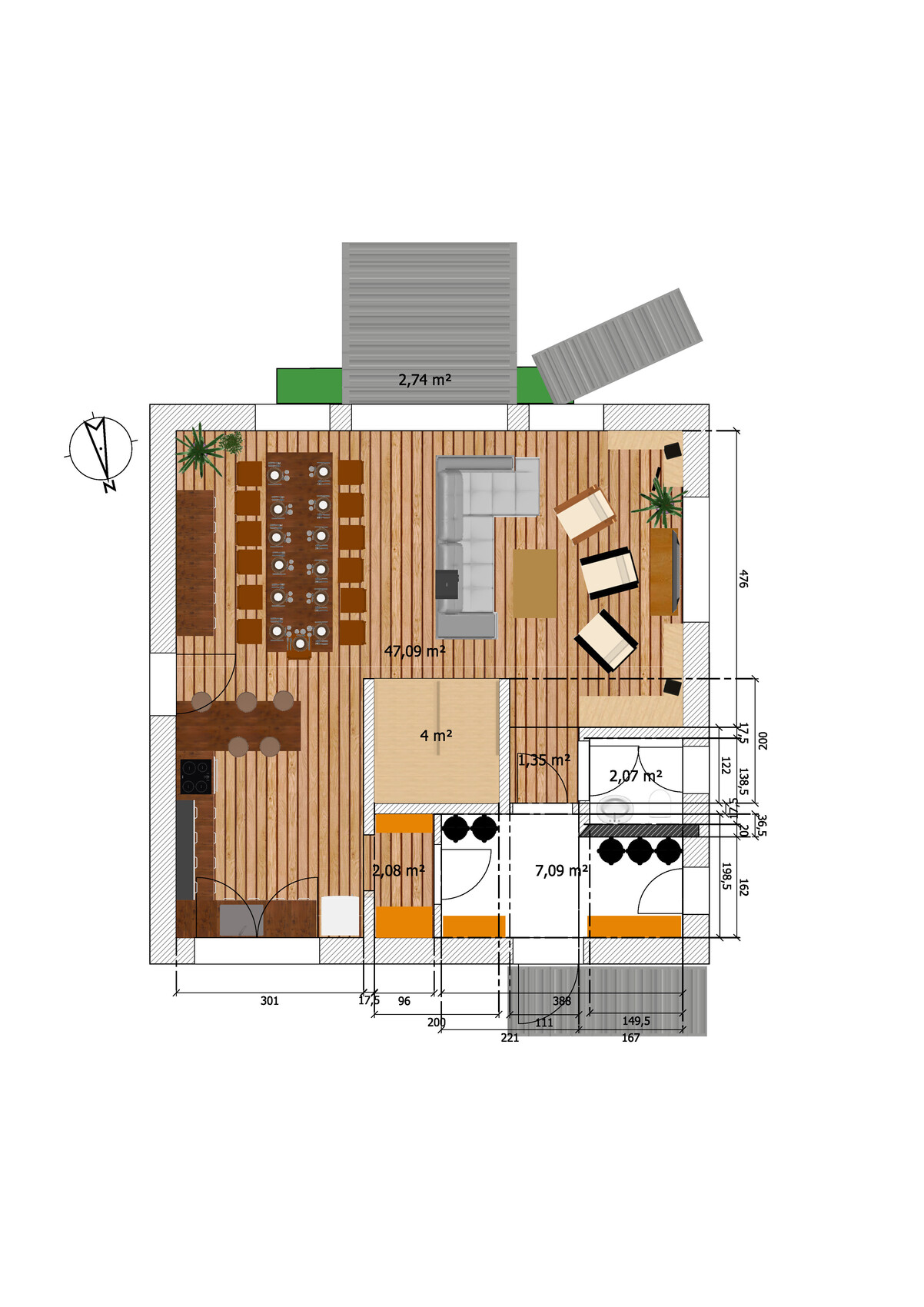
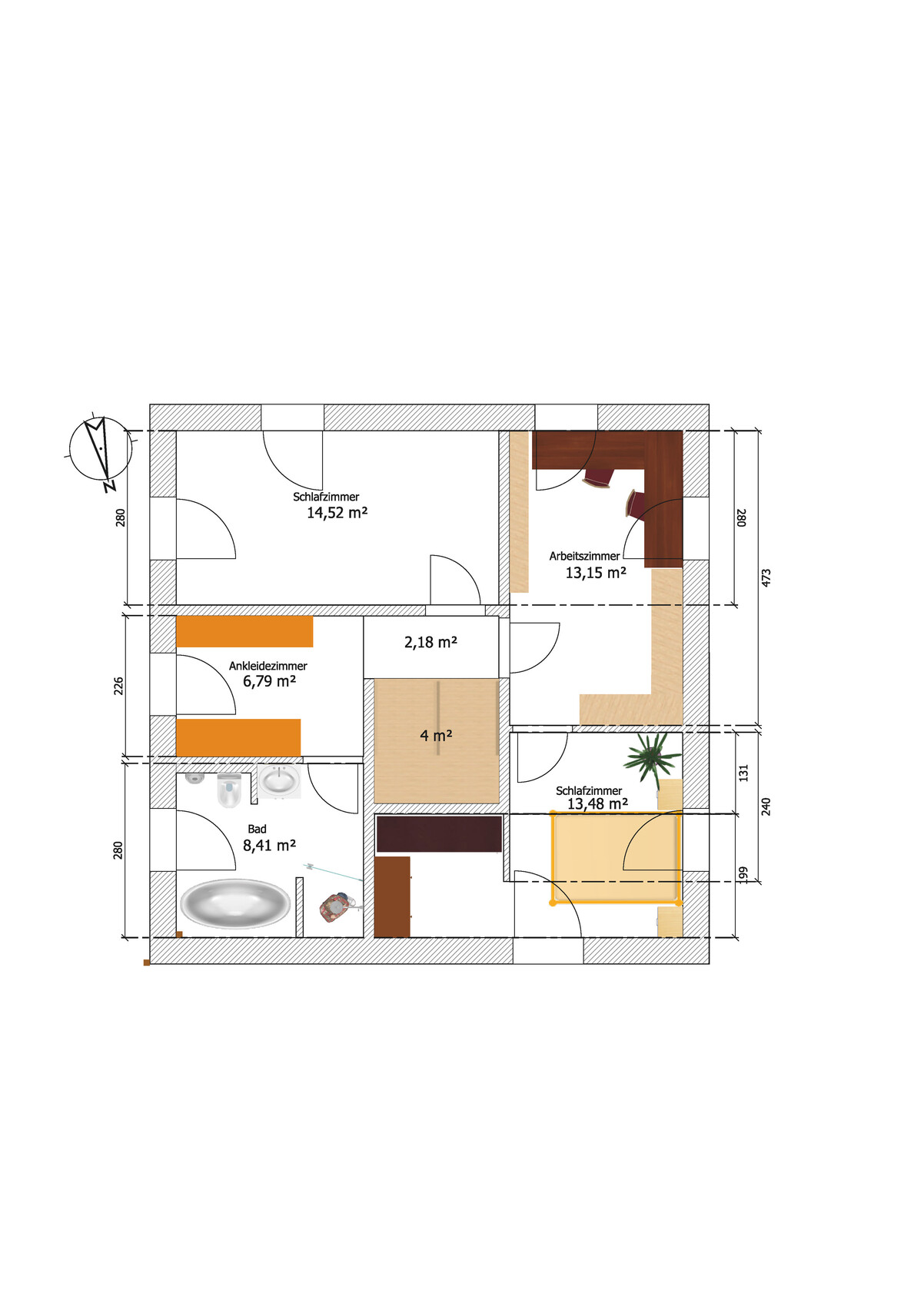
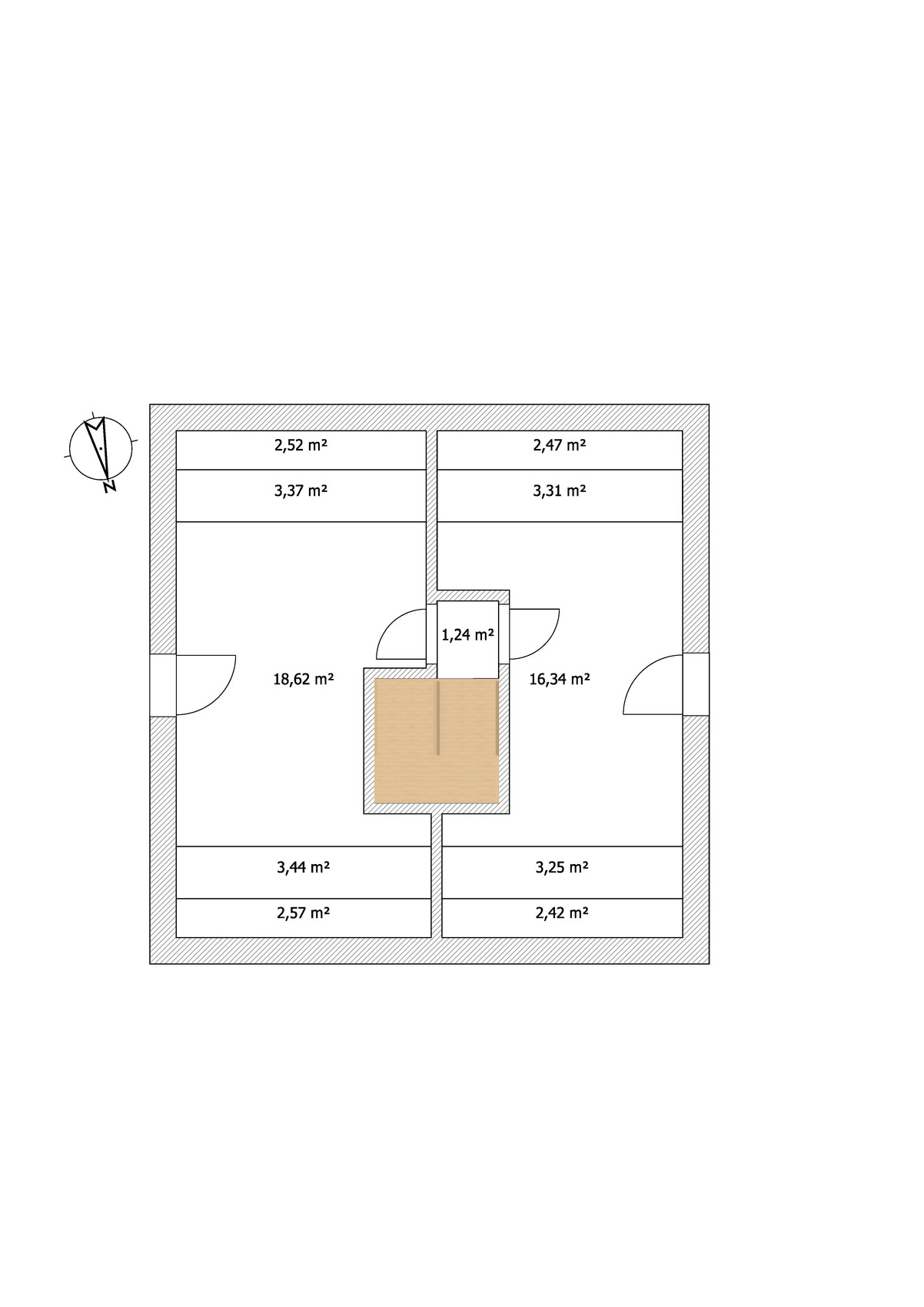
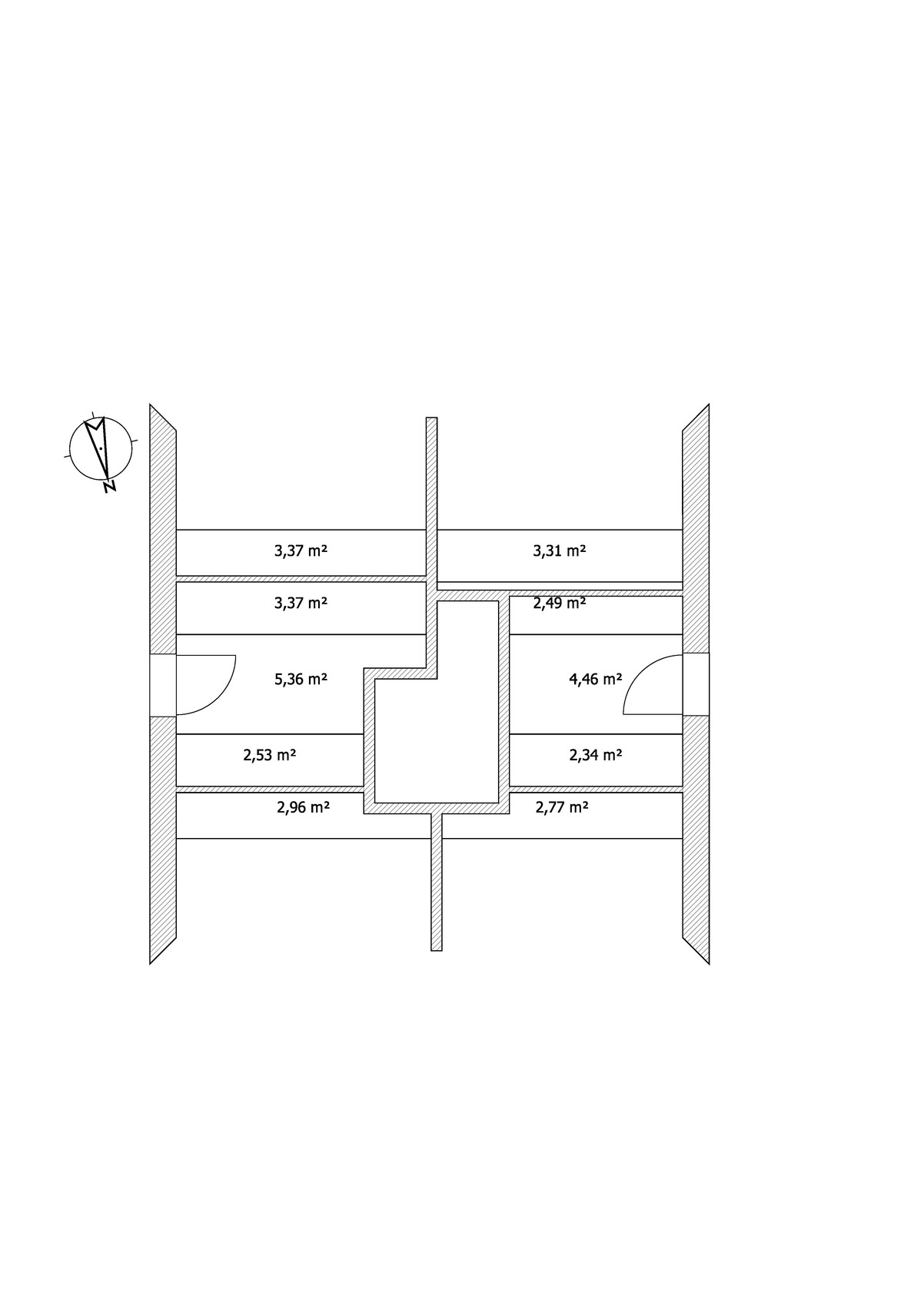
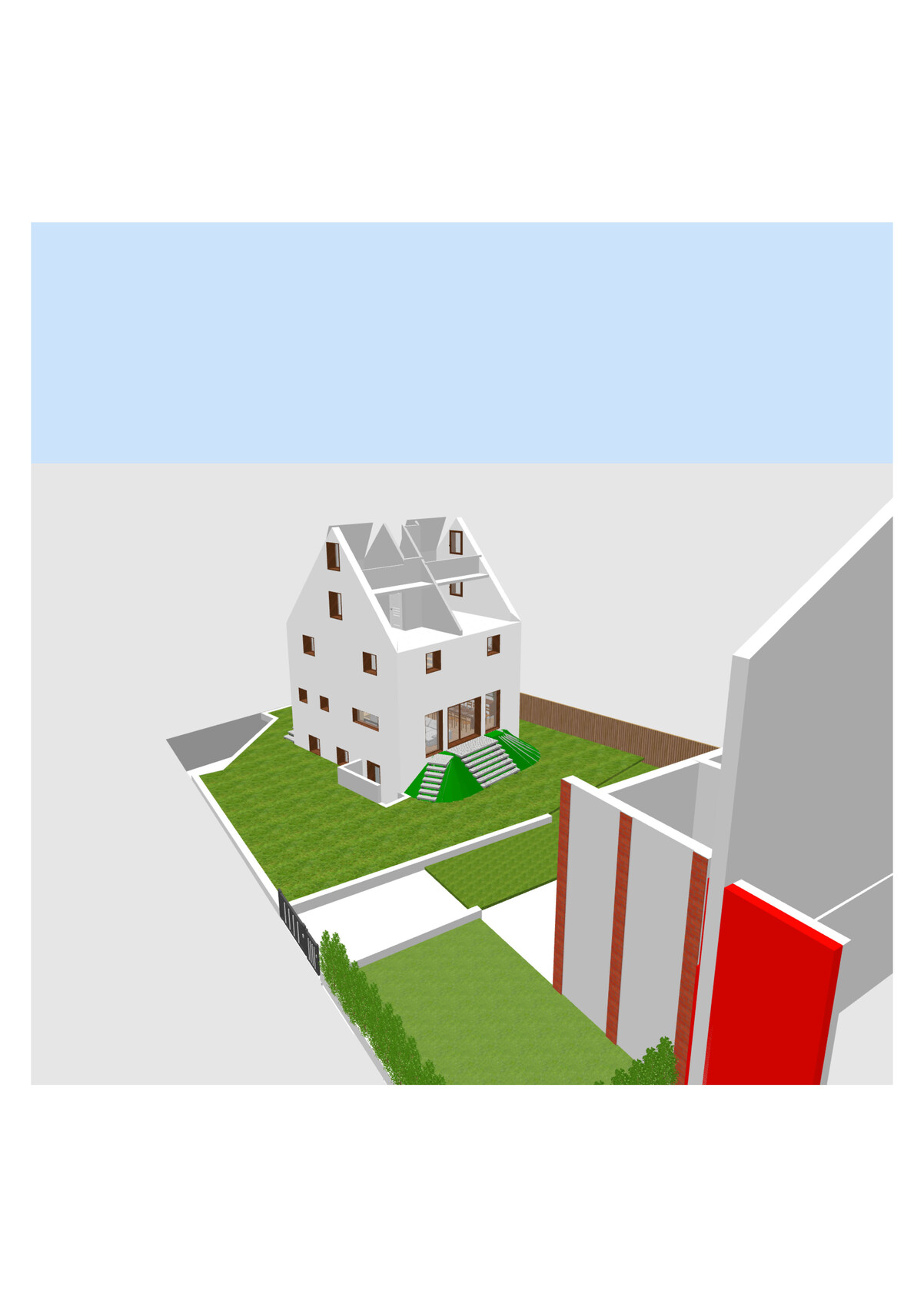
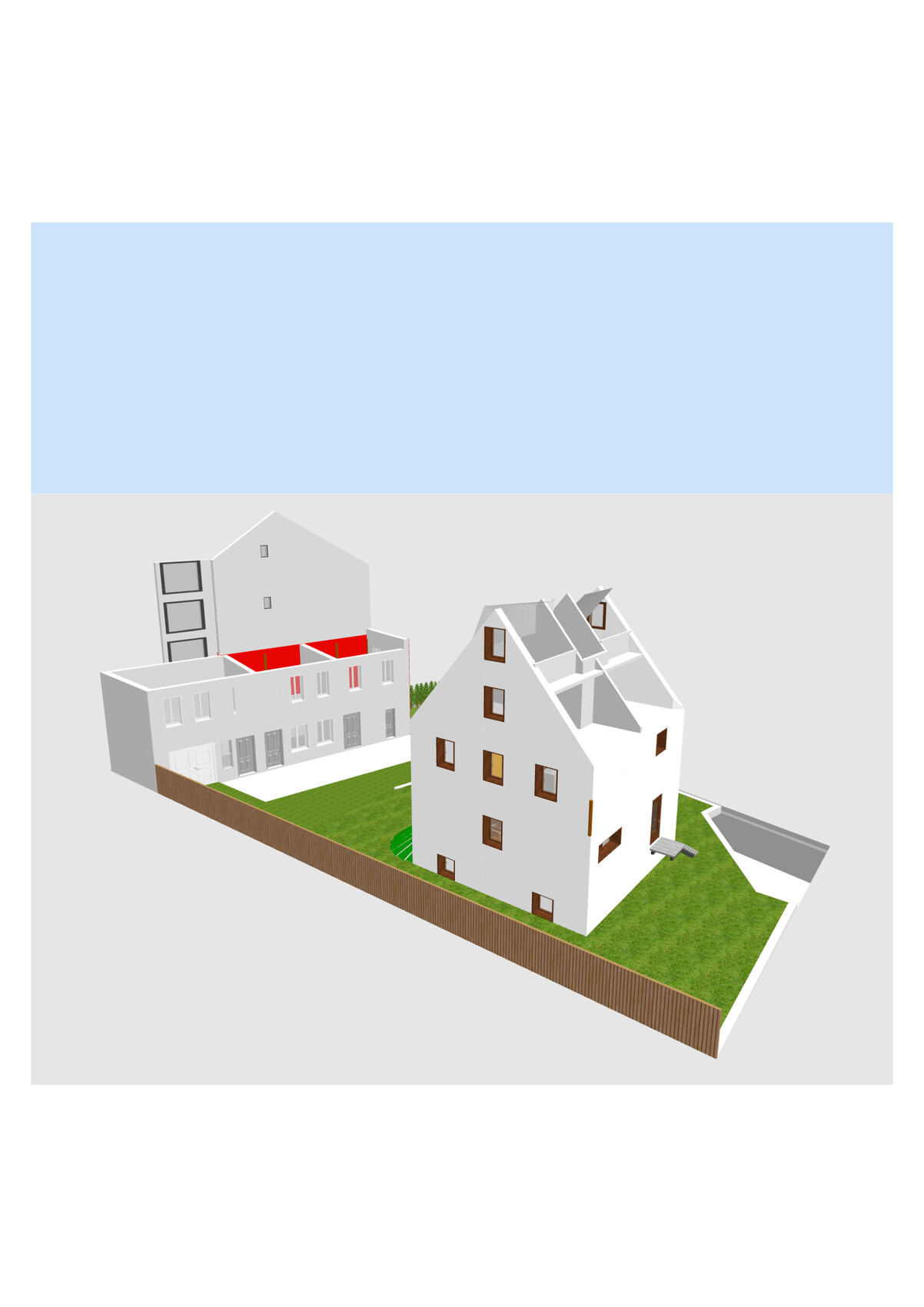
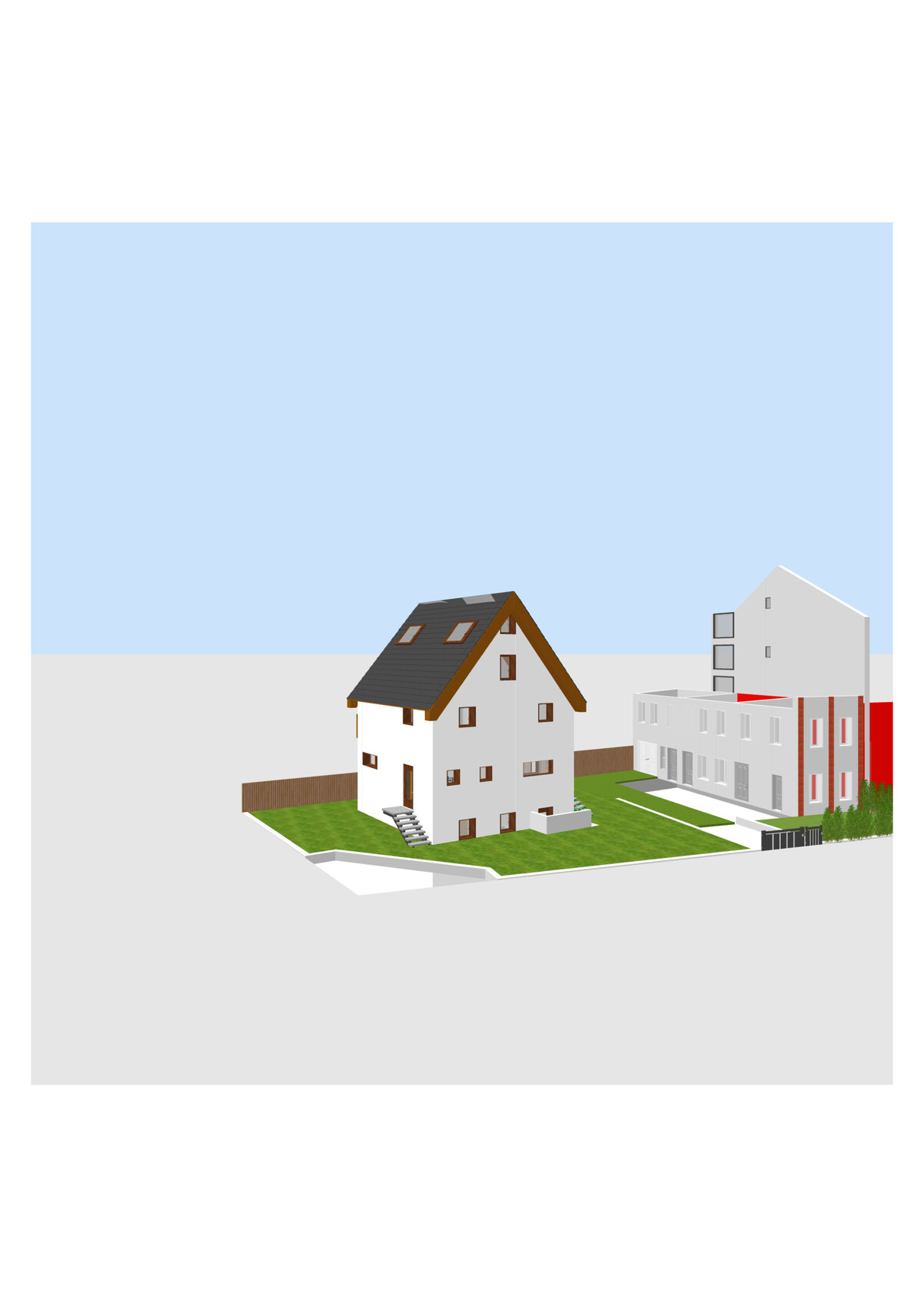
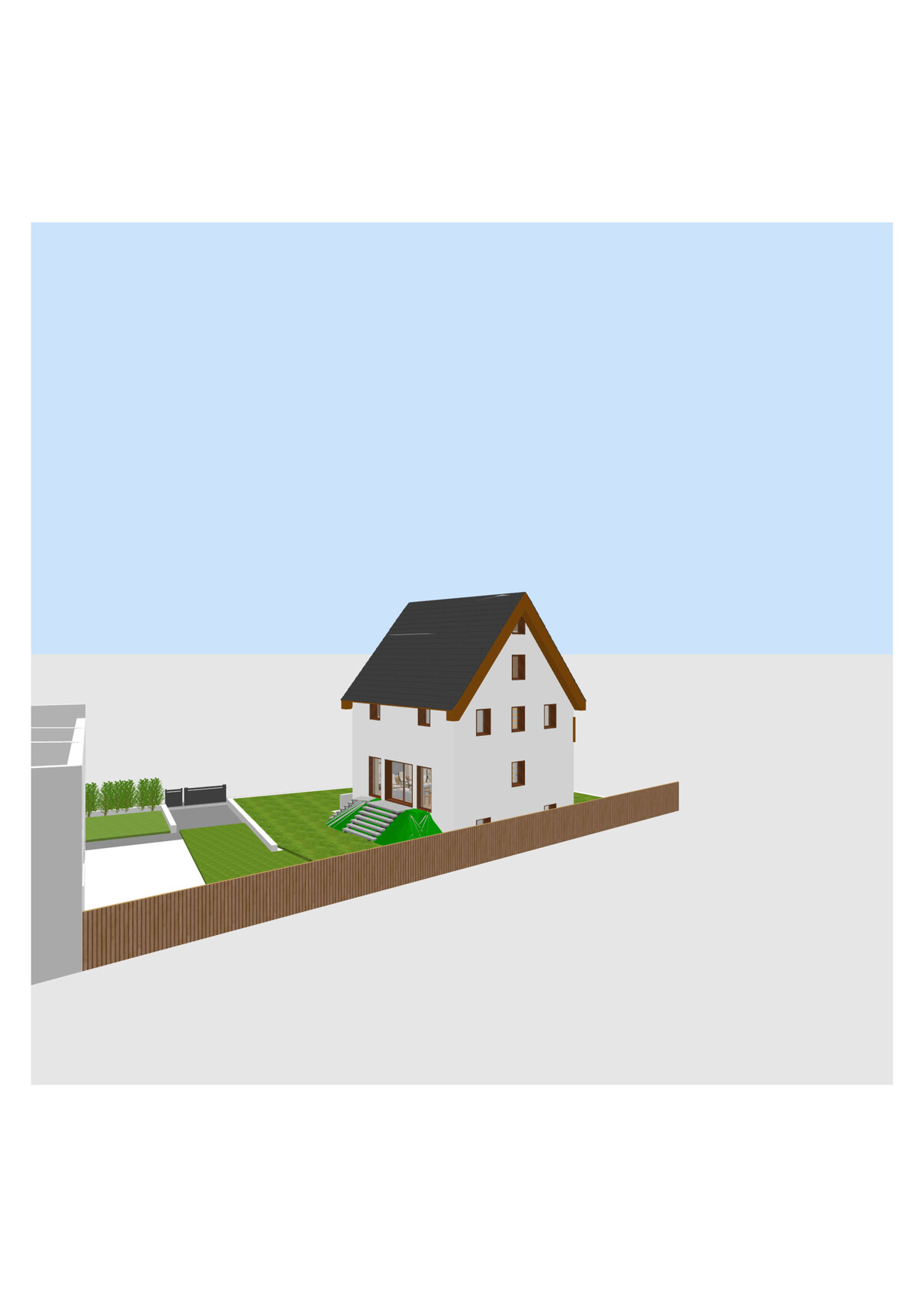
We are currently working with an architect on the design of our single-family home. Since we have three children, the house should accommodate several future scenarios. These include:
- Enough space for everyone
- At some point, the children will move out, and we will downsize to the living basement while renting out the rest
- One or two children might continue living with us (multi-generational living) – possibly in the basement with a separate entrance
- Possibly one child even starts a family in the house, and we move to the basement
Plot:
- 710 sqm (8,000 sq ft) close to the city center
- To the south is our rear building (two stories) attached to a 3.5-story apartment building (boundary development)
- To the north and west are the streets (a corner plot)
- Behind to the west is a large green plot with a single-family house
- To the north beyond the street are apartment buildings
- To the east there is a narrow parking lot followed by a green recreational garden area
- We have to keep a 6 m (20 ft) setback to the streets and the usual 3 m (10 ft) to the parking lot
Since the plot already has a building, and we want to keep the rear building (it is fully shaded by the apartment building, is in reasonable condition, and might provide future expansion potential—at least suitable for workshops and storage), and since the plot is not very large, we decided on a tall house with a small footprint.
About the house
- Eder XP9 or 10 (timber frame) in 42.5 or 49 cm (17 or 19 inches) thickness
- Living basement (150 cm (5 ft) below ground / 100 cm (3 ft) above ground) – if affordable (this allows for the utility room in the basement and more space on the ground floor for a large open-plan living/dining/kitchen area as the main living space)
- Knee wall either 150 cm (5 ft) or, if not much more expensive, a dormer wall above the full upper floor (both options allow the roof space to be used for two rooms; with the dormer, these rooms are very large and could even accommodate an attic instead of bunk beds)
- 50-degree roof pitch (for solar energy efficiency in winter)
- The basement should be designed to eventually allow for a small separate living unit
- Both bathrooms should have a standing toilet or urinal
- We definitely want a windbreak/entry vestibule
- The terrace should be raised with fill
- Underfloor heating with geothermal energy
- Solar energy planned for the future
We have already developed a fairly comfortable floor plan with our chosen architect. Our biggest concern is accidentally planning a wall or something else 5 cm (2 inches) too far to the left or right and then being unable to fit our furniture. I would appreciate it if you would be interested in looking over the current design and giving feedback.
Be sure to check the finance section.
https://www.hausbau-forum.de/threads/liste-der-anfallenden-Baunebenkosten-bauseits-teurer.9737/
https://www.hausbau-forum.de/threads/warum-ein-Hausbau-fast-immer-teurer-kommt-als-kalkuliert.16237/
https://www.hausbau-forum.de/threads/kostenanschlag-ueberschreitung-möglich.32463/
These two have written openly here. You can also search for sichtbeton82.
https://www.hausbau-forum.de/threads/baukostenentwicklung-noch-normal.28743/
https://www.hausbau-forum.de/threads/Bauvorhaben-Neubau-Budget-gesprengt-Erfahrungen.28751/
Regarding prefabricated house offers, there is much more to consider:
- costs borne by the builder
- hidden costs, for example, gutters ending 30cm (12 inches) above the ground
- upgrades (like outdated electronics from 1965, terrible standard design, etc.)
- additional construction-related costs
And although it might be possible to move into the granny flat in case of immobility, it is not really suitable for use. Just a heads-up.
A thought – there are still many multi-generation houses out there –
How separated does a living unit need to be if only family members live in the house? The old “knock before entering” still works. Everything functions, even if rooms like bathrooms have to be shared.
Do you really want to rent out the house and live only in the granny flat? In that case, it might be better to sell and buy a nice, modern bungalow instead. One that might even be connected to a senior care center and can gradually transition into assisted living if needed.
I would build now, as large as necessary.
https://www.hausbau-forum.de/threads/liste-der-anfallenden-Baunebenkosten-bauseits-teurer.9737/
https://www.hausbau-forum.de/threads/warum-ein-Hausbau-fast-immer-teurer-kommt-als-kalkuliert.16237/
https://www.hausbau-forum.de/threads/kostenanschlag-ueberschreitung-möglich.32463/
These two have written openly here. You can also search for sichtbeton82.
https://www.hausbau-forum.de/threads/baukostenentwicklung-noch-normal.28743/
https://www.hausbau-forum.de/threads/Bauvorhaben-Neubau-Budget-gesprengt-Erfahrungen.28751/
Regarding prefabricated house offers, there is much more to consider:
- costs borne by the builder
- hidden costs, for example, gutters ending 30cm (12 inches) above the ground
- upgrades (like outdated electronics from 1965, terrible standard design, etc.)
- additional construction-related costs
And although it might be possible to move into the granny flat in case of immobility, it is not really suitable for use. Just a heads-up.
A thought – there are still many multi-generation houses out there –
How separated does a living unit need to be if only family members live in the house? The old “knock before entering” still works. Everything functions, even if rooms like bathrooms have to be shared.
Do you really want to rent out the house and live only in the granny flat? In that case, it might be better to sell and buy a nice, modern bungalow instead. One that might even be connected to a senior care center and can gradually transition into assisted living if needed.
I would build now, as large as necessary.

Just as a side note: there is no such thing as a "full" knee wall. You probably mean a full story.
The term knee wall refers (correct me if I’m wrong) to the wall height below the roof slope. In many cases, it corresponds to the wall height between the floor and the point where the roof slope rests on the exterior wall.
I don’t want to repeat everything, but just the price difference between a finished basement and a basic cellar alone makes your calculation unrealistic. You absolutely need to look at concrete figures and quotes for your project.
Regarding the individual points (it would be helpful if you quoted correctly, otherwise nobody here can follow or wants to):
If everything seems so practical to you and you think a glass door makes the hallway look wider, it’s your house. You don’t have to convince me.
In any case, this has nothing to do with an original architect’s design. Whether a professional once sketched the house from Nicolaus and said it might work has nothing to do with a real plan including dimensionally accurate walls, stairs, roof slopes, etc.
What you should mainly ask yourselves is what you really need RIGHT NOW. Which rooms are essential? Get rid of wishful thinking and daydreaming!
Where your children might want to live in the future is uncertain. Whether you might sell the house later in life is also unclear. So forget about a finished basement and attic space. A proper ground floor plus first floor. A cellar only if the footprint is small and there are construction requirements—but not finished living space.
The term knee wall refers (correct me if I’m wrong) to the wall height below the roof slope. In many cases, it corresponds to the wall height between the floor and the point where the roof slope rests on the exterior wall.
I don’t want to repeat everything, but just the price difference between a finished basement and a basic cellar alone makes your calculation unrealistic. You absolutely need to look at concrete figures and quotes for your project.
Regarding the individual points (it would be helpful if you quoted correctly, otherwise nobody here can follow or wants to):
If everything seems so practical to you and you think a glass door makes the hallway look wider, it’s your house. You don’t have to convince me.
In any case, this has nothing to do with an original architect’s design. Whether a professional once sketched the house from Nicolaus and said it might work has nothing to do with a real plan including dimensionally accurate walls, stairs, roof slopes, etc.
What you should mainly ask yourselves is what you really need RIGHT NOW. Which rooms are essential? Get rid of wishful thinking and daydreaming!
Where your children might want to live in the future is uncertain. Whether you might sell the house later in life is also unclear. So forget about a finished basement and attic space. A proper ground floor plus first floor. A cellar only if the footprint is small and there are construction requirements—but not finished living space.
Honestly, I don’t understand why someone would build a roughly 70,000 (currency not translated) basement just to avoid having a utility room on the ground floor.
Living areas on the upper floors are usually designed very compactly, probably to keep the total living space manageable. Each floor requires storage space, and stairs are simply exhausting when doing laundry.
Building an accessible floor requires more effort to achieve something that is basically on one level. In this case, it would be impossible to open or close a window from a wheelchair. But okay... let’s put aside the buzzwords. Still: do you really want to move into a basement apartment in your retirement while other tenants live above you? Definitely not! No one is that cruel.
A centrally located staircase is not suitable for creating a sensible separation of living areas. And the idea of having to use several barrier-free steps every day at both the entrance and the garden is something else. This should always be avoided in new construction.
Regarding the floor plan: having to walk through the entire ground floor just to put away groceries, and having almost only passage rooms on the upper floor that depend on each other, is far from ideal. This layout only allows one room to be used properly as a private bedroom.
From the outside, this tower-like house doesn’t look attractive either, but well, some people don’t care about that.
Still, I would advise simply adding about 10 sqm (107.6 sq ft) more floor space, integrating a utility room, and placing the children’s bedrooms on the upper floor. Put the parents’ suite with a small bathroom under the roof. Later on, an adult child can also live there while staying with their parents. The other rooms will surely soon be filled with hobbies and visiting grandchildren.
That’s true.
By the way: solar power is no longer worthwhile at this point, so there’s no need to upgrade. After all, you already have to build according to the energy saving regulations.
If you want a vestibule, use it to replace the stairwell.
The price does not include natural insulation materials.
Living areas on the upper floors are usually designed very compactly, probably to keep the total living space manageable. Each floor requires storage space, and stairs are simply exhausting when doing laundry.
Building an accessible floor requires more effort to achieve something that is basically on one level. In this case, it would be impossible to open or close a window from a wheelchair. But okay... let’s put aside the buzzwords. Still: do you really want to move into a basement apartment in your retirement while other tenants live above you? Definitely not! No one is that cruel.
A centrally located staircase is not suitable for creating a sensible separation of living areas. And the idea of having to use several barrier-free steps every day at both the entrance and the garden is something else. This should always be avoided in new construction.
Regarding the floor plan: having to walk through the entire ground floor just to put away groceries, and having almost only passage rooms on the upper floor that depend on each other, is far from ideal. This layout only allows one room to be used properly as a private bedroom.
From the outside, this tower-like house doesn’t look attractive either, but well, some people don’t care about that.
Still, I would advise simply adding about 10 sqm (107.6 sq ft) more floor space, integrating a utility room, and placing the children’s bedrooms on the upper floor. Put the parents’ suite with a small bathroom under the roof. Later on, an adult child can also live there while staying with their parents. The other rooms will surely soon be filled with hobbies and visiting grandchildren.
Crossy schrieb:
Calculate at least 2000 EUR per sqm (approx. per sq ft) of living space plus all other costs (additional construction costs + earthworks + garage/carport + landscaping + kitchen + other furniture + minor items like lamps, etc.)
That’s true.
By the way: solar power is no longer worthwhile at this point, so there’s no need to upgrade. After all, you already have to build according to the energy saving regulations.
If you want a vestibule, use it to replace the stairwell.
The price does not include natural insulation materials.
I can only agree that the house is not affordable at the intended price. €400,000 plus all additional building-related costs is more realistic.
Something that hasn’t been mentioned yet, or maybe I overlooked it... you still have the rear house, right? Are you not planning to include it in your considerations? Is it going to remain empty for now? That wouldn’t be good for the house either; it should at least be heated to some extent. Perhaps it could be used as a holiday or guest apartment? Or for large family gatherings, so you don’t have to fit a table for 20 people in the main house? Do you need an office?
If you are planning “for later,” maybe for a child to live on the property... think about this building—and reduce your “main house” to the necessary size for now! Given the budget, you should be aiming for around 150m² (1,615 sq ft).
Or reconsider your overall concept, that is, how to integrate the existing building. The square meters of living space are already there and paid for (subject to any conversions or renovations).
Something that hasn’t been mentioned yet, or maybe I overlooked it... you still have the rear house, right? Are you not planning to include it in your considerations? Is it going to remain empty for now? That wouldn’t be good for the house either; it should at least be heated to some extent. Perhaps it could be used as a holiday or guest apartment? Or for large family gatherings, so you don’t have to fit a table for 20 people in the main house? Do you need an office?
If you are planning “for later,” maybe for a child to live on the property... think about this building—and reduce your “main house” to the necessary size for now! Given the budget, you should be aiming for around 150m² (1,615 sq ft).
Or reconsider your overall concept, that is, how to integrate the existing building. The square meters of living space are already there and paid for (subject to any conversions or renovations).
kaho674 schrieb:
Well, maybe it’s also a kind of confusion that nobody really understands.
I see the knee wall twice at 150cm (59 inches). Then people talk about a "full" dwarf wall (what is that supposed to mean?). I specifically searched for it, I NEVER talk about a "full dwarf wall" before, but that currently a 150cm (59 inches) knee wall is planned on the upper floor and we are considering raising the dwarf wall above the full upper floor. See:
grericht schrieb:
about the house
- ...
- Knee wall either 150cm (59 inches) or, if it doesn’t cost much extra, a dwarf wall above the full upper floor (in both cases the roof can be used for 2 rooms) ...
grericht schrieb:
So the house with a 150cm (59 inches) knee wall and basement is our idea as planned by the architect. It is currently being calculated and, without additional construction costs, we were shown a price around 300,000 (based on other plans). We are curious as well! Raising the dwarf wall will need to be recalculated. The dwarf wall construction is cheaper than reinforcing the 150cm (59 inches) knee wall with concrete columns. It won’t lift the structure but could give us about 10-20 square meters (108-215 square feet) more space and cost less than 1,000€ per square meter (less than about 93 USD per square foot).
... kaho674 schrieb:
Just by the way: a "full" dwarf wall doesn’t exist. You probably mean just a full story.
A dwarf wall means (correct me if I’m wrong) the wall height under the roof slope. In many cases, it corresponds to the knee wall, which is the wall height between the floor and the roof slope bearing point on the exterior wall.
...
The price makes no sense. Or do you plan to build everything yourselves?
Why should the basement cost only 70,000? That might be feasible for a raw utility basement. But you want to use it as living space (or at least prepare it accordingly) – so room height, windows, underfloor heating, fittings, etc. just like normal above-ground living space. So your 55 square meters (592 square feet) of basement living area would probably cost around 110€ per square meter (about 10 USD per square foot).
Calculate at least 2,000€ per square meter (about 185 USD per square foot) of living space plus all other costs (additional construction costs / incidental costs + earthworks + garage/carport + landscaping + kitchen + other furnishings + small items like lamps, etc.)
That’s a common estimate and you will end up well above the stated 300,000 and even 400,000 will probably not be enough. I don’t know why this turned into a financial discussion from the first post (I suspect the comment from kaho674 set the tone). If I wanted to clarify finances, I would have gone to the finance section. There are simply many different ways to describe things here. When I say 60-70k for the basement costs, I do not mean the price the basement would cost if I just built it “bare,” but rather the difference in building the house with and without a basement. You have to dig a foundation pit anyway, pour a slab, do waterproofing... In our case, the foundation depth is quite deep anyway, so the price difference between basement and no basement becomes even smaller. The finished basement costs about 70,000 extra. That results in an additional cost per square meter for the basement of about 1,300€ (about 121 USD), which we find very affordable.
There were countless descriptions of how unrealistic our price expectations are. Yes, I initially mentioned the architect’s first rough estimate of about 300,000 for the house plus all incidental costs, as I considered it usual. Then we changed the design again and again, so it was clear we wouldn’t make that budget. I still mentioned the number. We are talking about 3 floors with about 55 square meters (592 square feet) each = 165 square meters (1,775 square feet), of which 55 square meters (592 square feet) are in a somewhat cheaper basement and another 55 square meters (592 square feet) have sloped ceilings. In addition, there are about 20-30 square meters (215-323 square feet) in the attic, where all rooms have sloped ceilings. Together, that makes about 190 square meters (2,045 square feet). With an assumed cost of 330,000, that results in roughly 1,700€ per square meter (about 158 USD per square foot), with about one-third of the area being the cheaper basement. This is all WITHOUT additional construction costs! We deliberately waived all extras and are approaching an extremely cost-focused plan per square meter. So, it’s not that far off, I think.
We are building with a small but well-established local builder. A family business with a network of firms that have reliably been used for decades. Also, the proximity to the Czech border might reduce hourly labor costs somewhat. Anyway, we now have the offer, and it is not as crazy as everyone here thinks.
Offer to follow...
kaho674 schrieb:
Regarding the individual points (It would be nice if you quoted correctly, otherwise no one here can or wants to follow the discussion):Where did I quote incorrectly? I’m sorry about that anyway! ypg schrieb:
Honestly, I don’t understand why someone would build a basement of around 70,000 (currency) just to avoid having a utility room on the ground floor.
In the living floors, everything tends to be built very compactly, probably to still keep an overview of the living area.
Every floor needs storage space. Also, carrying laundry up and down stairs is just exhausting.There is no development plan for the plot, but it still has to fit into the residential zone. There are setback lines of 6 m (20 feet) to both streets which we should at least roughly adhere to. This rules out a larger footprint to the east, west, and north. Only the south side would be left and that would reduce our garden size. We don’t want that, so we are aiming for the smallest possible footprint. The point about climbing stairs is certainly valid, but this is partly offset by having bathrooms on every floor and short distances to reach them on the upper floors. In summer, laundry goes outside anyway, which is very easily accessible via the external entrance of the garden. ypg schrieb:
Building an accessible floor requires more effort; it’s important to have at least some level access. Here the issue would be that one couldn’t even open or close a window from a wheelchair.
But okay… let’s put aside buzzwords. Still: would anyone want to move into a basement apartment in retirement while other tenants live above? Definitely not! No one is that cruel.Yes, the accessibility comment was really an inappropriate offhand remark. Of course, much more is involved. Still, I think a 1.50 m (5 feet) staircase is manageable, and we are talking about a daylight basement with a ceiling height of 2.4 m (8 feet), all on one level. I don’t know, but I find this feasible for students, a young couple, or an elderly couple if the family lives in the house as well currently. ypg schrieb:
A centrally located staircase is not suitable for meaningful separation. And the idea of having several barrier-free steps at the entrance and garden every day is quite another thing. That is something new builds should always try to avoid.
Regarding the layout: having to go through the entire ground floor to put away groceriesThere is a door to the pantry from the entrance hall. Whether it will be just a frame or an actual door is still unclear. ypg schrieb:
and having almost only walk-through rooms on the upper floor, which depend on each other, is truly not ideal. You can really only use one room properly as a private room.We don’t see an alternative to a central staircase without increasing corridor space and thus building more square meters that would not be livable. But we are very open to ideas. Actually, I had hoped for such suggestions with this post instead of everyone pointing out what we supposedly haven’t considered—although we’ve included all those factors in our considerations so far. Walk-through rooms on the upper floor: Of all the rooms in the house, there are only two walk-through rooms in my opinion. That’s the bathroom in the basement, for which we are open to suggestions, and the office room through the bedroom. The path to the bedroom is still not too long. Probably, nearly all doors will be kept open in our house anyway—at least that’s current practice—except for the door of the big child’s room and the master bedroom. I find the idea of having a separate parents’ area with two rooms where the bedroom is not accessed directly from the corridor practical.
ypg schrieb:
From the outside, this tower-like house doesn’t look attractive either, but okay, some people don’t mind that.ypg schrieb:
Still, I would advise simply taking 10 m² (about 108 sq ft) more floor area,
including a utility room and placing the children’s rooms on the upper floor. The parents’ suite with a small bathroom would be under the roof. Later, even an adult child could live in the “mama hotel.” The other rooms would fill up quickly with hobbies and visiting grandchildren.As mentioned above, we hardly have room for a larger footprint, and above all that would mean wider corridors. Also, leaving out the basement would mean a cost saving of about 70,000 (currency), whereas the additional 10 m² (about 108 sq ft) floor area would be spread over three floors, costing roughly 60,000 (currency), and would add about 25 m² (about 270 sq ft) of living space (less than 3×10 due to sloped roofs). So, we would save 10,000 (currency), have no basement—which can never be built later under the house—use more footprint, and end up with approximately 30 m² (about 325 sq ft) less living space. (Yes, these are rough estimates, but the general trend should hold.) ypg schrieb:
By the way: solar panels are no longer worthwhile; there’s no reason to upgrade since you have to build according to current energy saving regulations anyway.The XP9 with 42.5 cm (16.7 inches) thickness doesn’t pay off compared to the XP10. We won’t recover that in 100 years! But that is our understanding of sustainable building. If with a pitched roof at a 50° angle we can significantly reduce heating energy demand or even cover it entirely, we’ll be happy. We don’t ask whether it financially pays off since we can afford it. We still want to wait a bit, though, as developments in other countries are currently advancing rapidly. ypg schrieb:
If you want an entrance hall, use it to replace the stairwell.For us, an entrance hall primarily means keeping dirt out—not just cold air. We really belong to those people who take their shoes off when entering a house or apartment. It is out of the question for us to use this area where shoes and jackets from outside are stored as a thoroughfare all day long. ypg schrieb:
Biological insulation materials are not included in the price.That’s why we want to forgo insulation almost entirely except in the basement and roof. The extra cost for bio-based roof insulation compared to mineral wool is actually fairly limited.Similar topics