
ᐅ Single-family house (2 floors + finished basement + converted attic), approximately 200 sqm – modifications
Created on: 20 Oct 2019 21:50
G
grericht
Hello,
We are currently working with an architect on the design of our single-family home. Since we have three children, the house should accommodate several future scenarios. These include:
Plot:
Since the plot already has a building, and we want to keep the rear building (it is fully shaded by the apartment building, is in reasonable condition, and might provide future expansion potential—at least suitable for workshops and storage), and since the plot is not very large, we decided on a tall house with a small footprint.
About the house
We have already developed a fairly comfortable floor plan with our chosen architect. Our biggest concern is accidentally planning a wall or something else 5 cm (2 inches) too far to the left or right and then being unable to fit our furniture. I would appreciate it if you would be interested in looking over the current design and giving feedback.
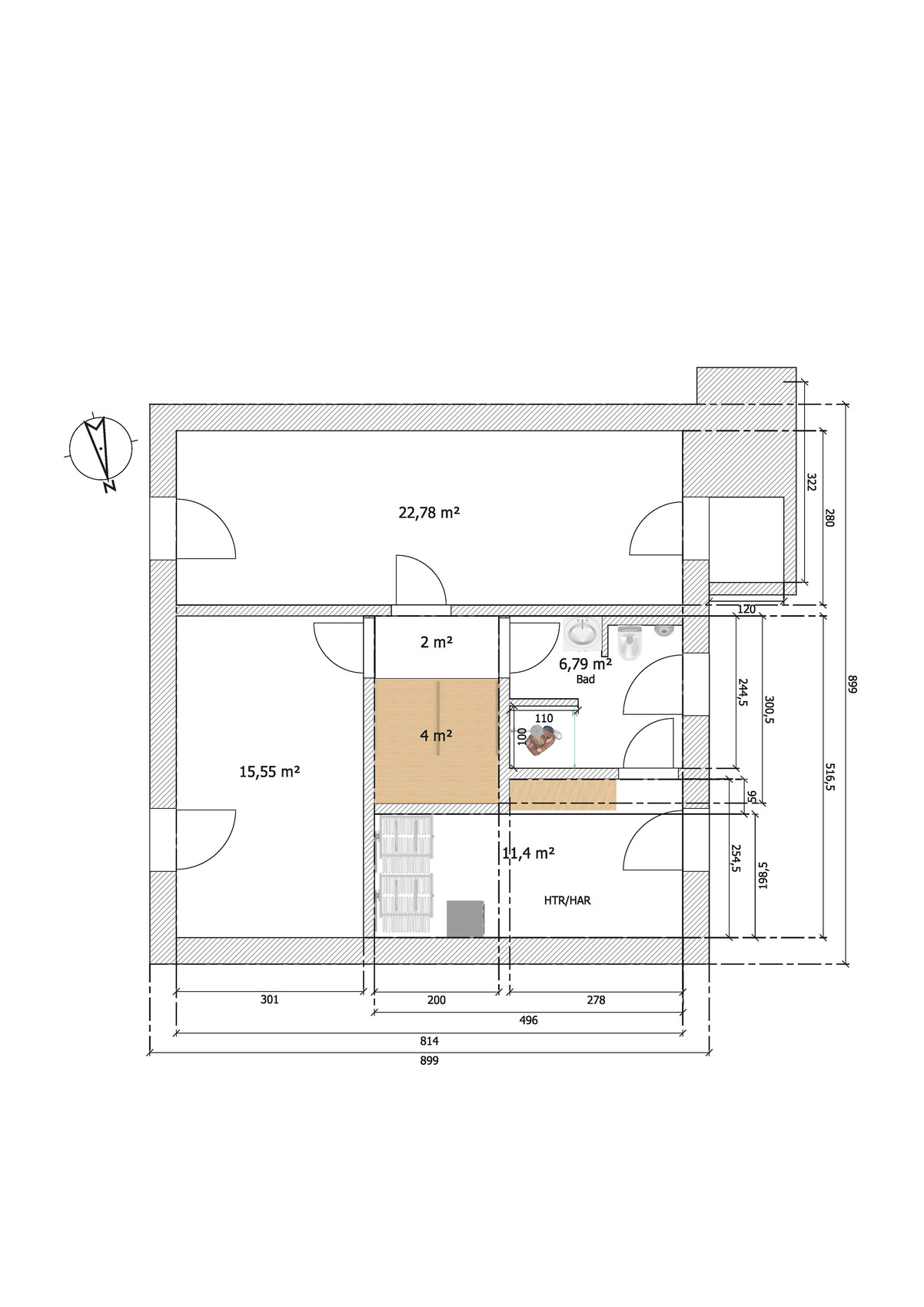
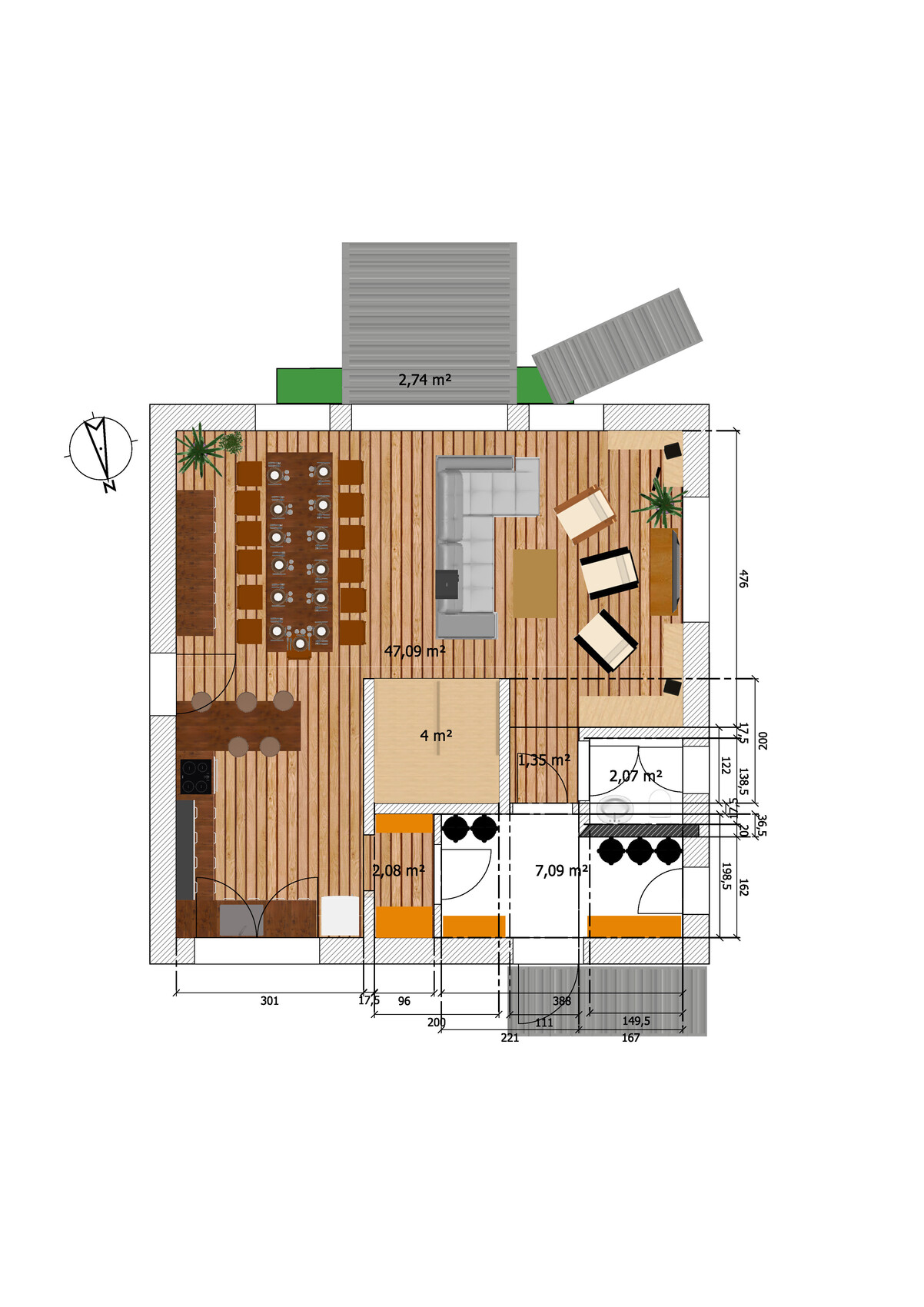
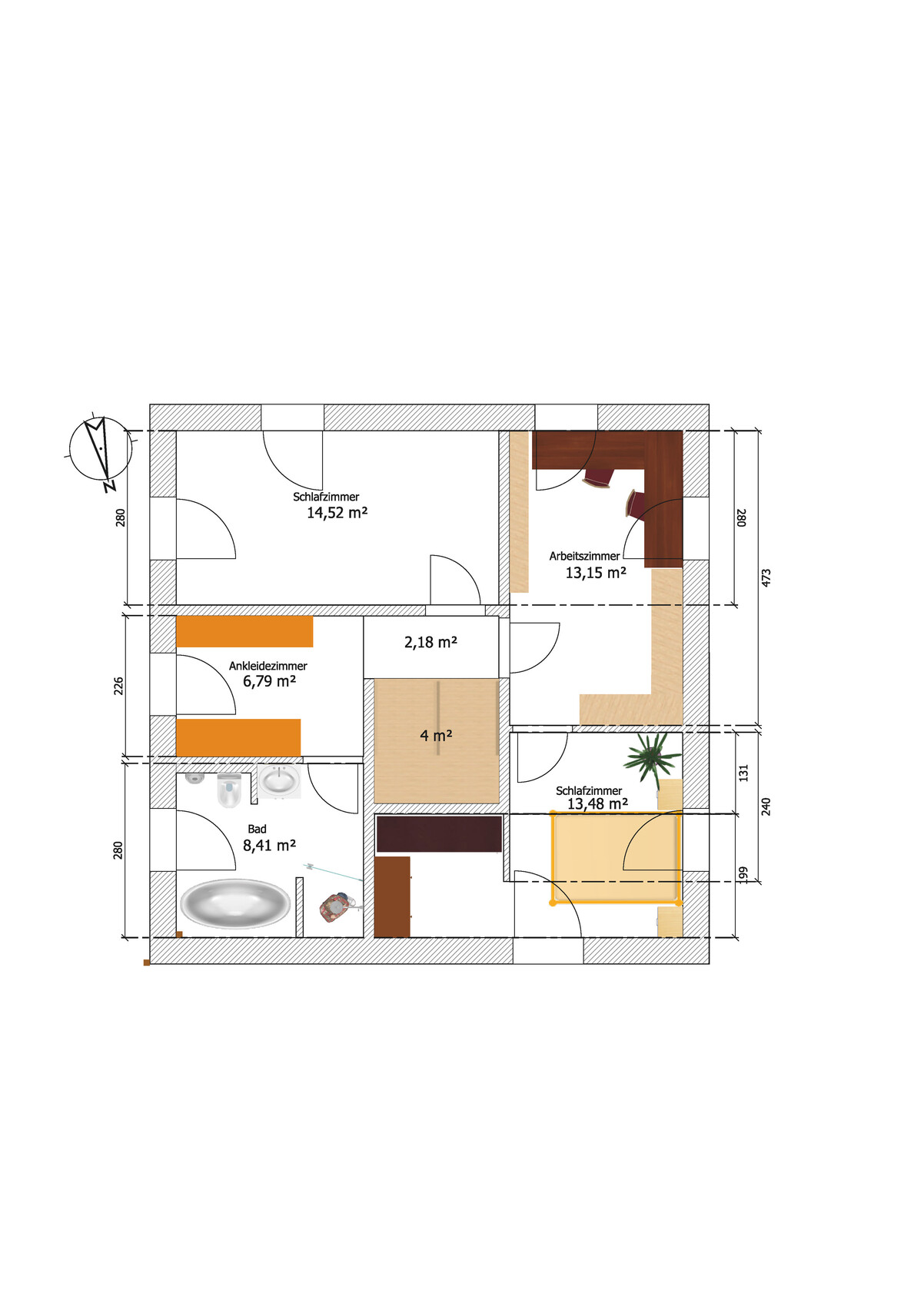
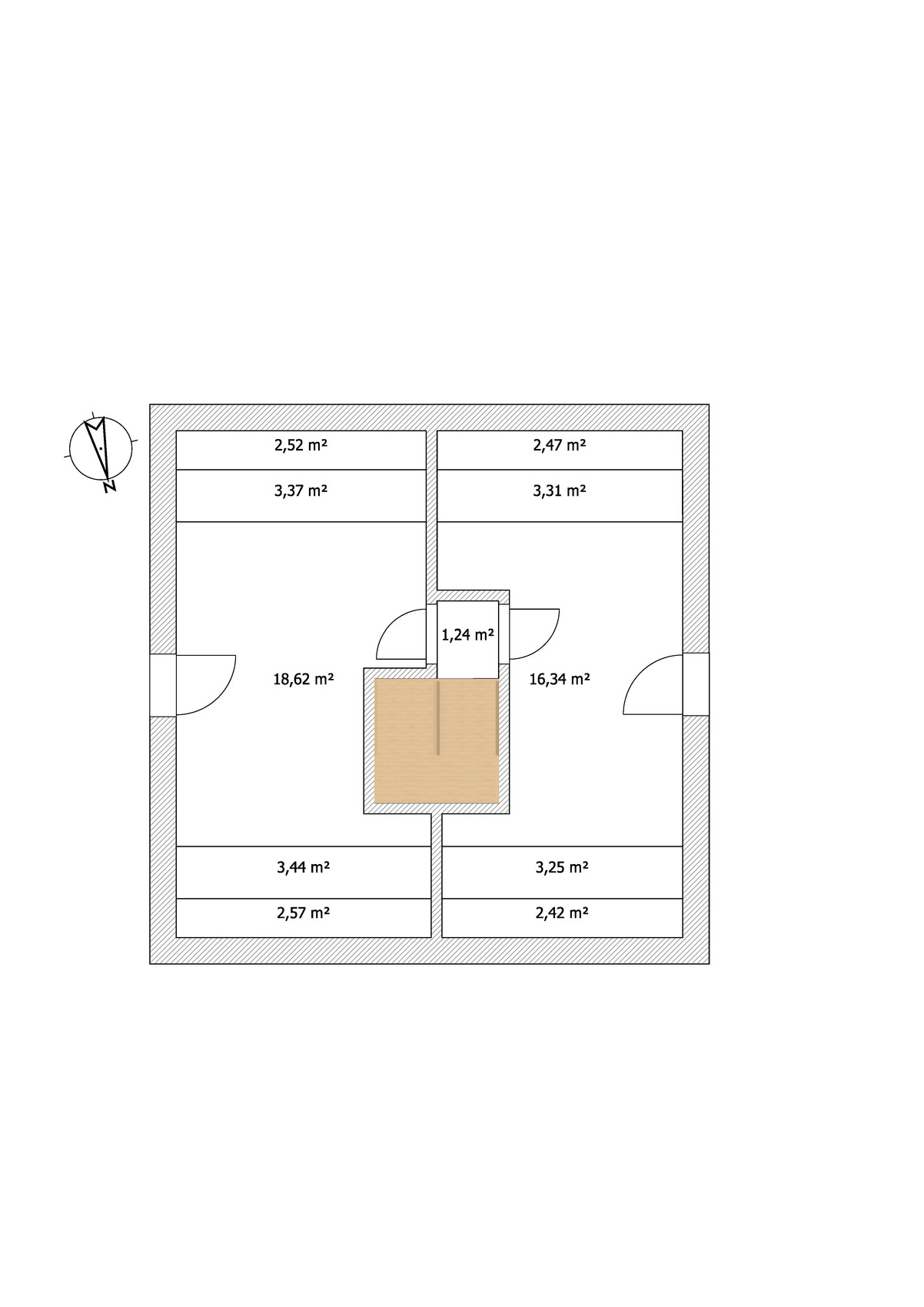
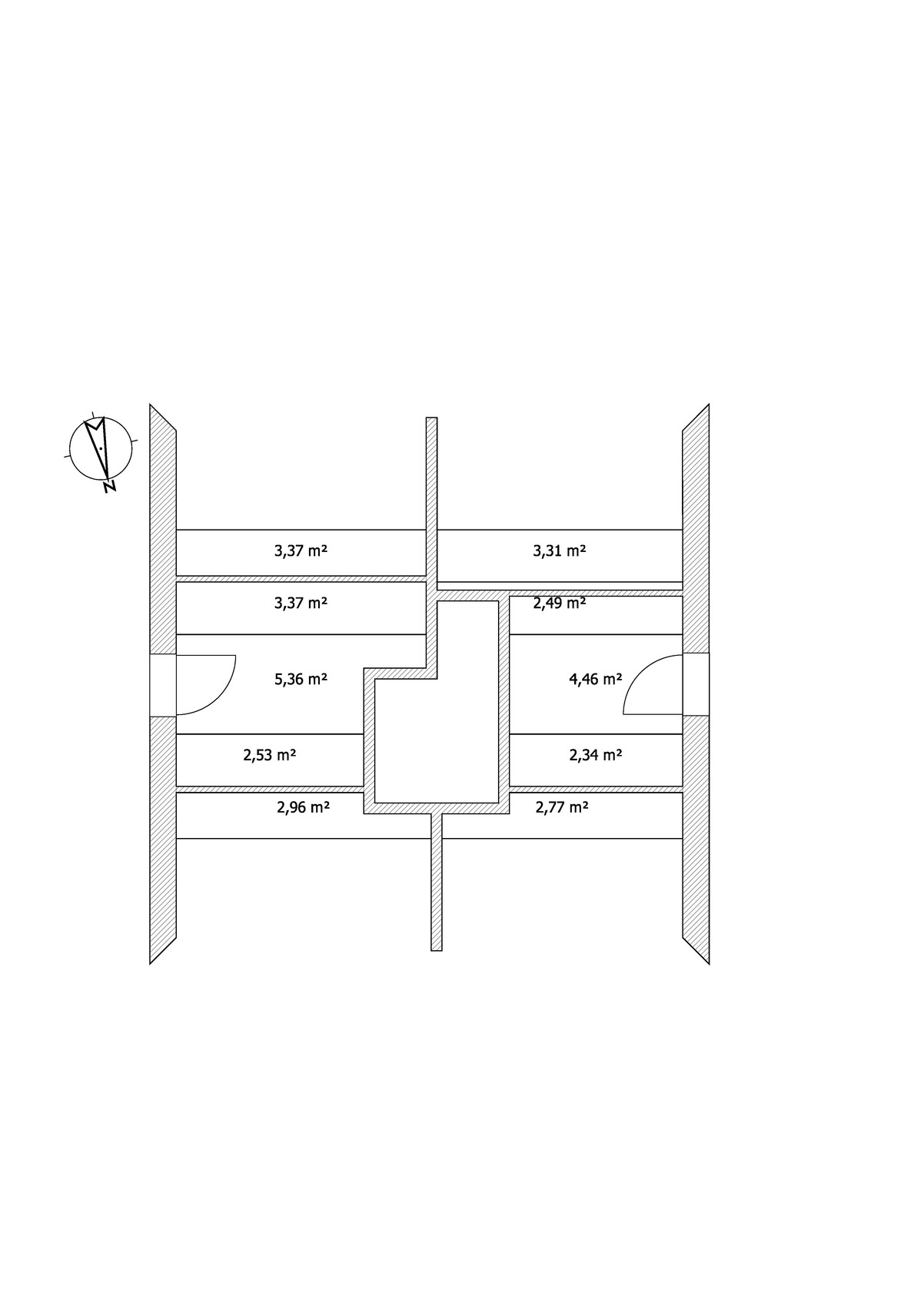
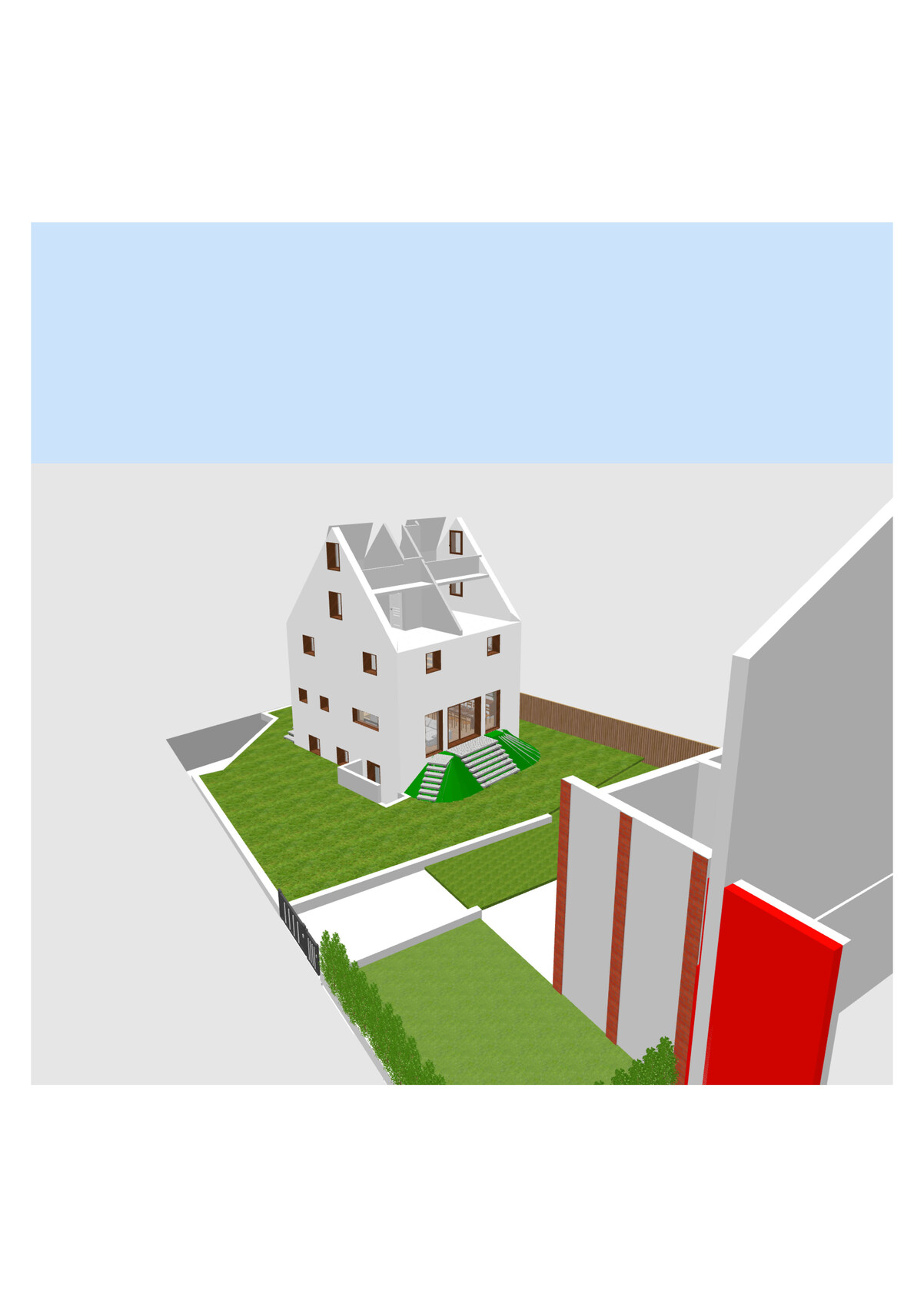
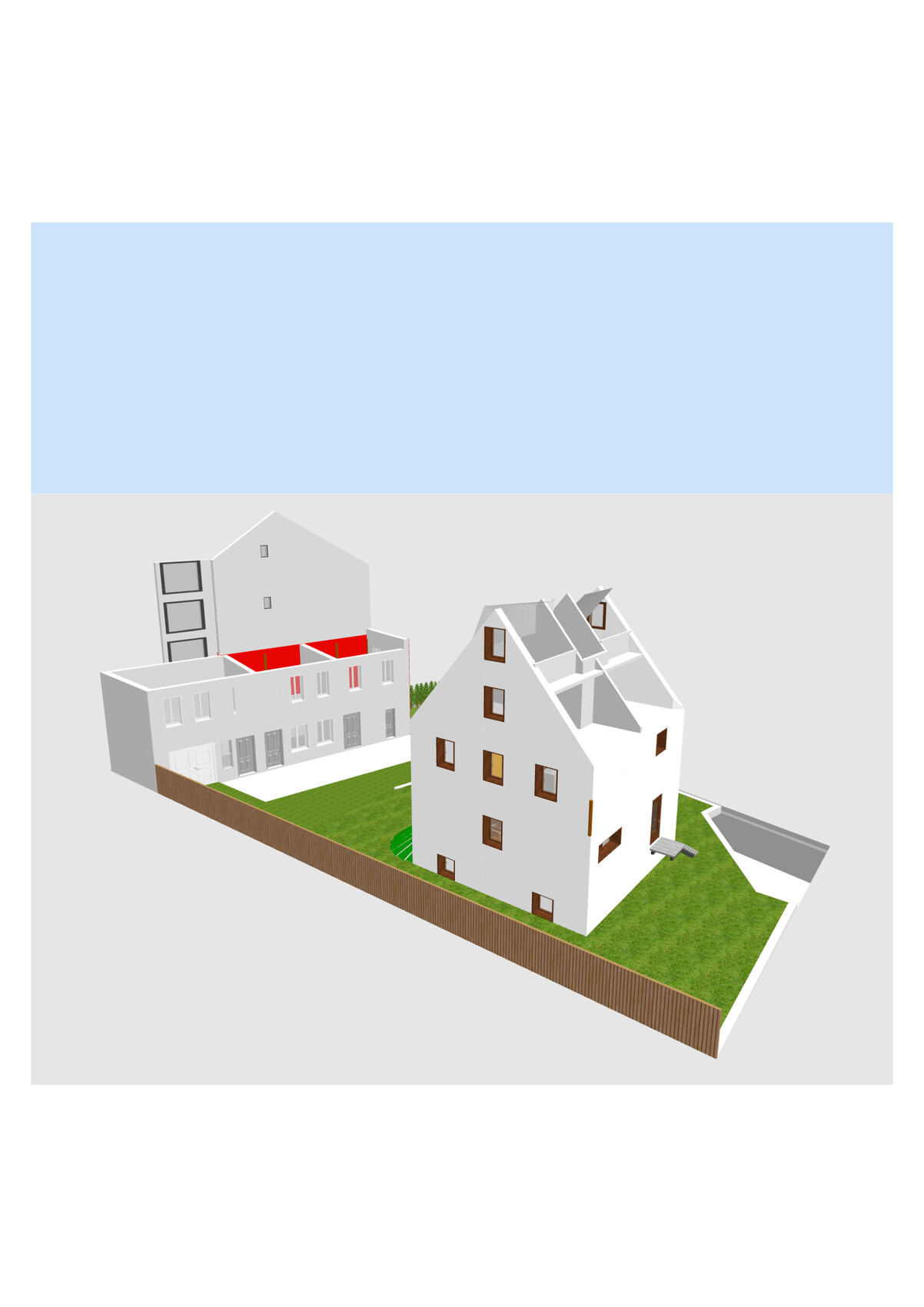
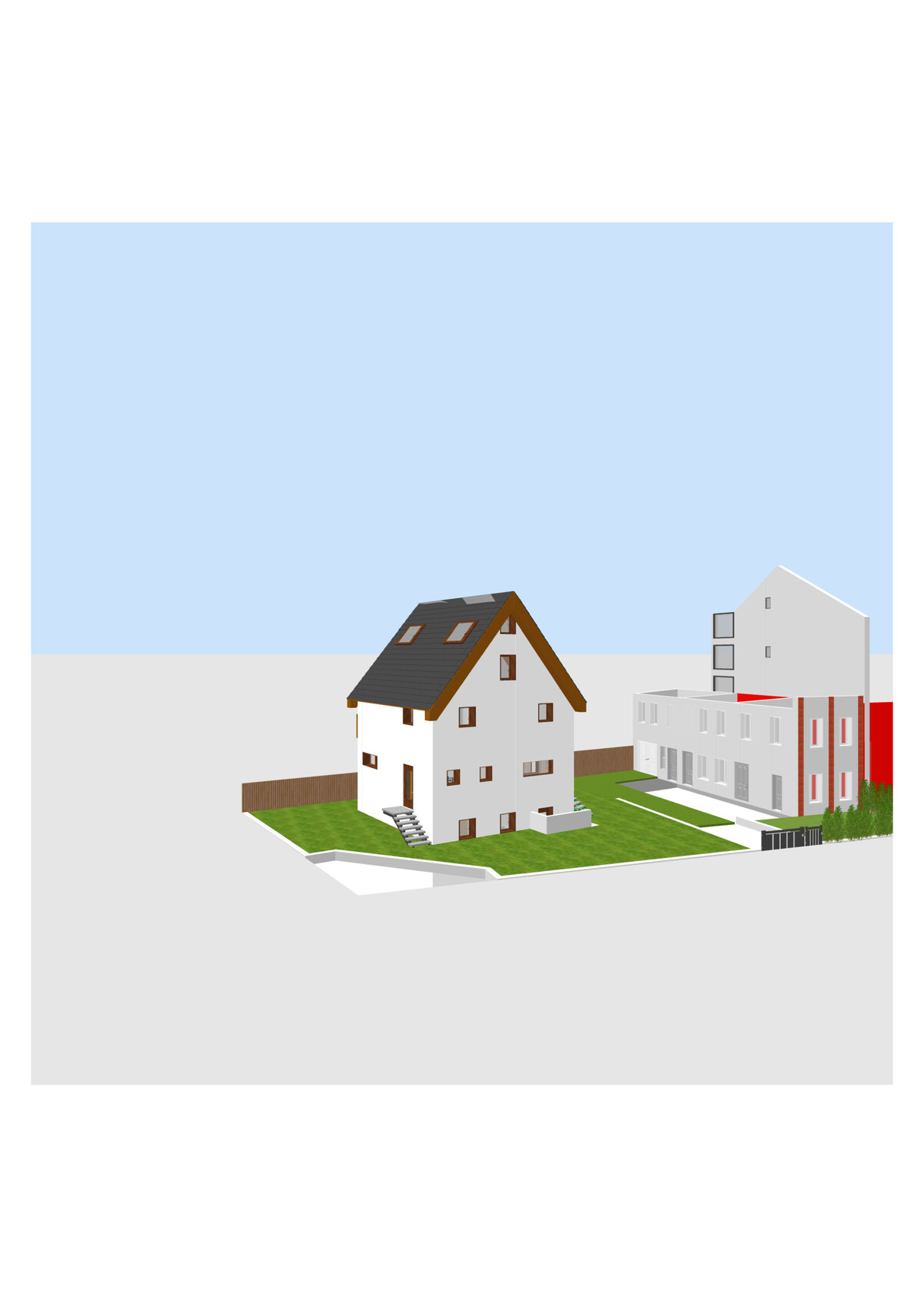
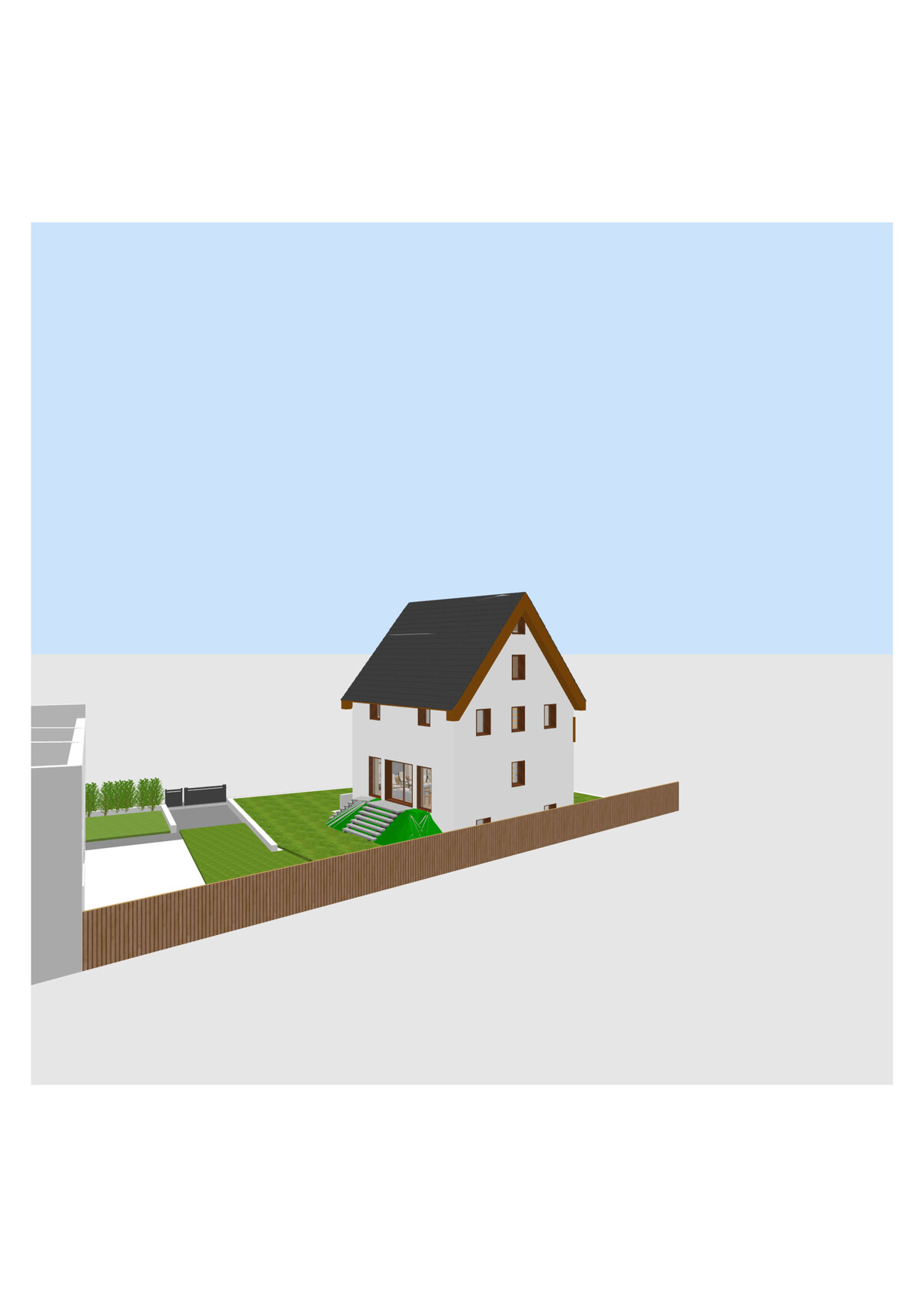
We are currently working with an architect on the design of our single-family home. Since we have three children, the house should accommodate several future scenarios. These include:
- Enough space for everyone
- At some point, the children will move out, and we will downsize to the living basement while renting out the rest
- One or two children might continue living with us (multi-generational living) – possibly in the basement with a separate entrance
- Possibly one child even starts a family in the house, and we move to the basement
Plot:
- 710 sqm (8,000 sq ft) close to the city center
- To the south is our rear building (two stories) attached to a 3.5-story apartment building (boundary development)
- To the north and west are the streets (a corner plot)
- Behind to the west is a large green plot with a single-family house
- To the north beyond the street are apartment buildings
- To the east there is a narrow parking lot followed by a green recreational garden area
- We have to keep a 6 m (20 ft) setback to the streets and the usual 3 m (10 ft) to the parking lot
Since the plot already has a building, and we want to keep the rear building (it is fully shaded by the apartment building, is in reasonable condition, and might provide future expansion potential—at least suitable for workshops and storage), and since the plot is not very large, we decided on a tall house with a small footprint.
About the house
- Eder XP9 or 10 (timber frame) in 42.5 or 49 cm (17 or 19 inches) thickness
- Living basement (150 cm (5 ft) below ground / 100 cm (3 ft) above ground) – if affordable (this allows for the utility room in the basement and more space on the ground floor for a large open-plan living/dining/kitchen area as the main living space)
- Knee wall either 150 cm (5 ft) or, if not much more expensive, a dormer wall above the full upper floor (both options allow the roof space to be used for two rooms; with the dormer, these rooms are very large and could even accommodate an attic instead of bunk beds)
- 50-degree roof pitch (for solar energy efficiency in winter)
- The basement should be designed to eventually allow for a small separate living unit
- Both bathrooms should have a standing toilet or urinal
- We definitely want a windbreak/entry vestibule
- The terrace should be raised with fill
- Underfloor heating with geothermal energy
- Solar energy planned for the future
We have already developed a fairly comfortable floor plan with our chosen architect. Our biggest concern is accidentally planning a wall or something else 5 cm (2 inches) too far to the left or right and then being unable to fit our furniture. I would appreciate it if you would be interested in looking over the current design and giving feedback.

kaho674 schrieb:
I think with your 4 finished floors and 400K, you should first check in the F i n a n c e forum what something like that actually costs. I consider both the floor plan and the budget unrealistic. An architect definitely didn’t design that. So the house with a knee wall height of 150cm (60 inches) and a basement is our idea as planned by the architect. It is currently being calculated, and without ancillary construction costs, we were shown a price in the range of 300k based on other plans. We are curious too! Increasing the knee wall height will need to be recalculated. Building with a knee wall is cheaper than reinforcing the 150cm (60 inches) knee wall with concrete columns. It won’t add living space but could potentially give us around 10-20sqm (100-215 sq ft) and cost less than 1000€ per sqm (less than $100 per sq ft).
Since the soil report indicates we need deep excavation or deep strip foundations anyway, it will be the basement. That costs approximately 70k and adds about 55sqm (590 sq ft) of living space. That also reduces the overall price. Apart from the basement and the higher knee wall, it is a SMALL standard house which, from prefabricated builders, costs under 200k with the equipment (geothermal heating, etc.) listed here, so about 220k. Then you add the basement. So the price is pretty much exactly what you would get from other house suppliers, just optimized from a practical (price/living space) perspective.
Pinky0301 schrieb:
I am not a fan of building a house for “maybe it might be needed later.” Why limit yourself now for something that might never happen? And do you seriously want to live in the basement later? I see it the same way. But with children, major changes can happen within the next 5-13 years. So we want to stay flexible. A granny flat or separate apartment makes sense here. We first considered basement+ground floor and first floor+attic. But that was difficult to separate. It’s not ideal at the moment, but the possibility to offer a child their own apartment in the basement during vocational training or university seems appealing to us (basement living space with proper windows and 240cm (95 inches) ceiling height). Whether we will actually move down there someday into 55sqm (590 sq ft) is open. But the access could certainly be made wheelchair accessible and usable even during times of limited mobility.
kaho674 schrieb:
I consider both the floor plan and the budget unrealistic. An architect definitely didn’t draw that. What exactly is unrealistic about the floor plan?
And is the assumption that the plan wasn’t created by an architect based solely on the financial aspect, or also on concerns about the floor plan itself? As I mentioned, I tried to recreate the floor plan exactly 1:1 using Sweet Home 3D. I was VERY precise in doing so. Of course, mistakes may still have happened. I would be very interested to know how you justify your assumption, because it is (if anything, provably) wrong!

Well, perhaps it’s some kind of confusion trick that nobody can really follow.
I see the knee wall height mentioned twice as 150cm (59 inches). Then someone talks about a "full" knee wall (what exactly is that supposed to mean?).
It would be helpful to know the external dimensions and, in general, which floor we are actually looking at.
Just a brief note on the individual floors, something a (real) architect normally wouldn’t do without having all the facts, and without claiming completeness, hoping I assigned the floors correctly at all:
Basement:
- Access to the utility room through the bathroom
- Stair exit too narrow – you basically run into the wall
- Narrow room at the top of the plan
Ground floor:
- Front door opens outwards
- Stairs lead to the lounge area
- Stairs are undersized (80cm to 90cm (31 to 35 inches) tread width = ladder-like)
Upper floor:
- Stair exit again too narrow (same as basement)
- Bedroom — dimensions too small, hard to tell since no measurements are given
- Access to the bedroom through the office is quite unusual (two walk-through rooms)
- Access to the walk-in closet under the sloped ceiling would, in my opinion, not work as it is less than 2m (6 ft 7 in) high
Attic:
- Third stair exit too narrow
- I would like to see the floor-to-ceiling heights for all levels
What almost seems naïve to me is the assumption that the "locked-in prices" have anything to do with reality. Especially with all the additional requests and earthworks – the construction site would almost have to be in Romania for that to make sense.
I see the knee wall height mentioned twice as 150cm (59 inches). Then someone talks about a "full" knee wall (what exactly is that supposed to mean?).
It would be helpful to know the external dimensions and, in general, which floor we are actually looking at.
Just a brief note on the individual floors, something a (real) architect normally wouldn’t do without having all the facts, and without claiming completeness, hoping I assigned the floors correctly at all:
Basement:
- Access to the utility room through the bathroom
- Stair exit too narrow – you basically run into the wall
- Narrow room at the top of the plan
Ground floor:
- Front door opens outwards
- Stairs lead to the lounge area
- Stairs are undersized (80cm to 90cm (31 to 35 inches) tread width = ladder-like)
Upper floor:
- Stair exit again too narrow (same as basement)
- Bedroom — dimensions too small, hard to tell since no measurements are given
- Access to the bedroom through the office is quite unusual (two walk-through rooms)
- Access to the walk-in closet under the sloped ceiling would, in my opinion, not work as it is less than 2m (6 ft 7 in) high
Attic:
- Third stair exit too narrow
- I would like to see the floor-to-ceiling heights for all levels
What almost seems naïve to me is the assumption that the "locked-in prices" have anything to do with reality. Especially with all the additional requests and earthworks – the construction site would almost have to be in Romania for that to make sense.
kaho674 schrieb:
Well, maybe it’s some kind of confusion where no one really follows.
I read twice about a knee wall height of 150cm (5 feet). Then there’s talk of a "full" knee wall (what exactly does that mean?).
It would be nice to know the exterior dimensions and at least which floor we are currently looking at.
Quick thoughts on the individual floors, which a (proper) architect usually wouldn’t do this way, no claim to completeness, and hoping I assigned the floors correctly:
Basement:
- Utility room access through bathroom
- Stair exit too narrow – you run into the wall
- Narrow room at the top of the plan
Ground floor:
- Front door opens outwards
- Staircase oriented towards chill room
- Staircase undersized (80 to 90cm (31 to 35 inches) tread width = ladder-like)
Upper floor:
- Stair exit again too narrow (see basement)
- Bedroom – dimensions too small – hard to tell without measurements
- Bedroom access through office is quite unusual (two walk-through rooms)
- Access to the walk-in closet under the sloped ceiling would, in my opinion, not work as it’s under 2m (6.5 feet)
Attic:
- Third stair exit
- Would like to see the floor heights here as well
What strikes me as almost naïve is assuming that the "lock-in prices" have anything to do with reality. Especially with custom requests and earthworks – the site would almost have to be in Romania for that to work.
Knee wall / Drempel: The current plan includes a knee wall height of 150cm (5 feet) on the upper floor. Once the cost calculation is finished, we might consider going for a full knee wall above the upper floor.
The exterior dimensions are marked on the basement plan – 899cm (29 feet 6 inches).
The pictures are sorted bottom to top. For the 150cm (5 feet) knee wall option, the basement and ground floor are not included as they are identical in height (building height/floor-to-floor + insulation approximately): Basement with outside access (250/230cm (8’2”/7’7”)) – Ground floor with entrance and large chill room (275/265cm (9’/8’8”)) – Upper floor with bathroom and two bedrooms (250/240cm (8’2”/7’10”)) – Attic (knee wall: 235/225cm (7’9”/7’5”) – 150cm knee wall: 210/200cm (6’11”/6’7”)) – Loft (remaining space).
Regarding the remarks – thanks for the feedback:
Basement:
- Utility room access through the bathroom – saves a corridor. Good price/performance ratio. Currently, the technical equipment and laundry will be located there. The bathroom in front is no problem. Maybe later a small workspace will be added there. With a 55sqm (592 sqft) separate apartment, this is a compromise. Open to suggestions.
- Stair exit too narrow – you run into the wall – price/performance compromise. The door will be glass.
- Narrow room at the top of the plan – see the previous point.
Ground floor:
- Front door opens outward – I changed that without consulting the architect. Is this not allowed?
- Staircase oriented towards the chill room – what is wrong with that?
- Staircase undersized (80 to 90cm (31 to 35 inches) tread width = ladder-like) – the staircase has been the big problem due to the small footprint. I am open to any practical alternative that doesn’t result in just corridors.
Upper floor:
- Stair exit again too narrow (see basement) – as above.
- Bedroom – dimensions too small – hard to assess without measurements.
- Bedroom access through office is unusual (two walk-through rooms) – see walk-through bathroom in basement. For us, this works as a separate parents’ area (both rooms connected but separated).
- Access to the walk-in closet under the slope would not work as it is under 2m (6.5 feet) – this is still just my idea.
Attic:
- Third stair exit – see other remarks (the architect had a slightly wider corridor matching the stair width here).
- Would like to see the floor heights – I described those above.
EDIT on price: I’ve mentioned quite a bit. The current design is a small house regarding size but with a basement as the ground must be excavated anyway. The roof instead of standard will be about 1m (3’3”) knee wall or possibly a full knee wall at 1.50m (5 feet). 300k WITHOUT additional construction costs is very low for us, but we hope to stay in that range. The comparison offer was somewhat larger, also with basement, many tiling works included, and geothermal heating. We want smaller but a heated roof space and (significantly) higher walls.
The price makes no sense. Or are you planning to build everything yourselves?
Why should the basement cost only 70k? That might be possible for a purely utility basement. But since you want to use it as living space (or at least prepare it for that), with ceiling height, windows, underfloor heating, fixtures, etc., like a regular above-ground living area, the 55sqm (590 sq ft) of living space in the basement alone should cost around 110 EUR per sqm (approximately 10.2 USD per sq ft).
Expect at least 2000 EUR per sqm (approximately 186 USD per sq ft) of living space, plus all additional costs (ancillary construction costs, earthworks, garage/carport, landscaping, kitchen, other furniture, small items like lamps, etc.).
This is a common calculation, and you will end up far above the quoted 300k, and even 400k will never be enough.
Why should the basement cost only 70k? That might be possible for a purely utility basement. But since you want to use it as living space (or at least prepare it for that), with ceiling height, windows, underfloor heating, fixtures, etc., like a regular above-ground living area, the 55sqm (590 sq ft) of living space in the basement alone should cost around 110 EUR per sqm (approximately 10.2 USD per sq ft).
Expect at least 2000 EUR per sqm (approximately 186 USD per sq ft) of living space, plus all additional costs (ancillary construction costs, earthworks, garage/carport, landscaping, kitchen, other furniture, small items like lamps, etc.).
This is a common calculation, and you will end up far above the quoted 300k, and even 400k will never be enough.
Similar topics