
ᐅ Finalizing the floor plan for a 130 m² bungalow designed for 4 people
Created on: 23 Jul 2019 08:00
M
micric3
Hello,
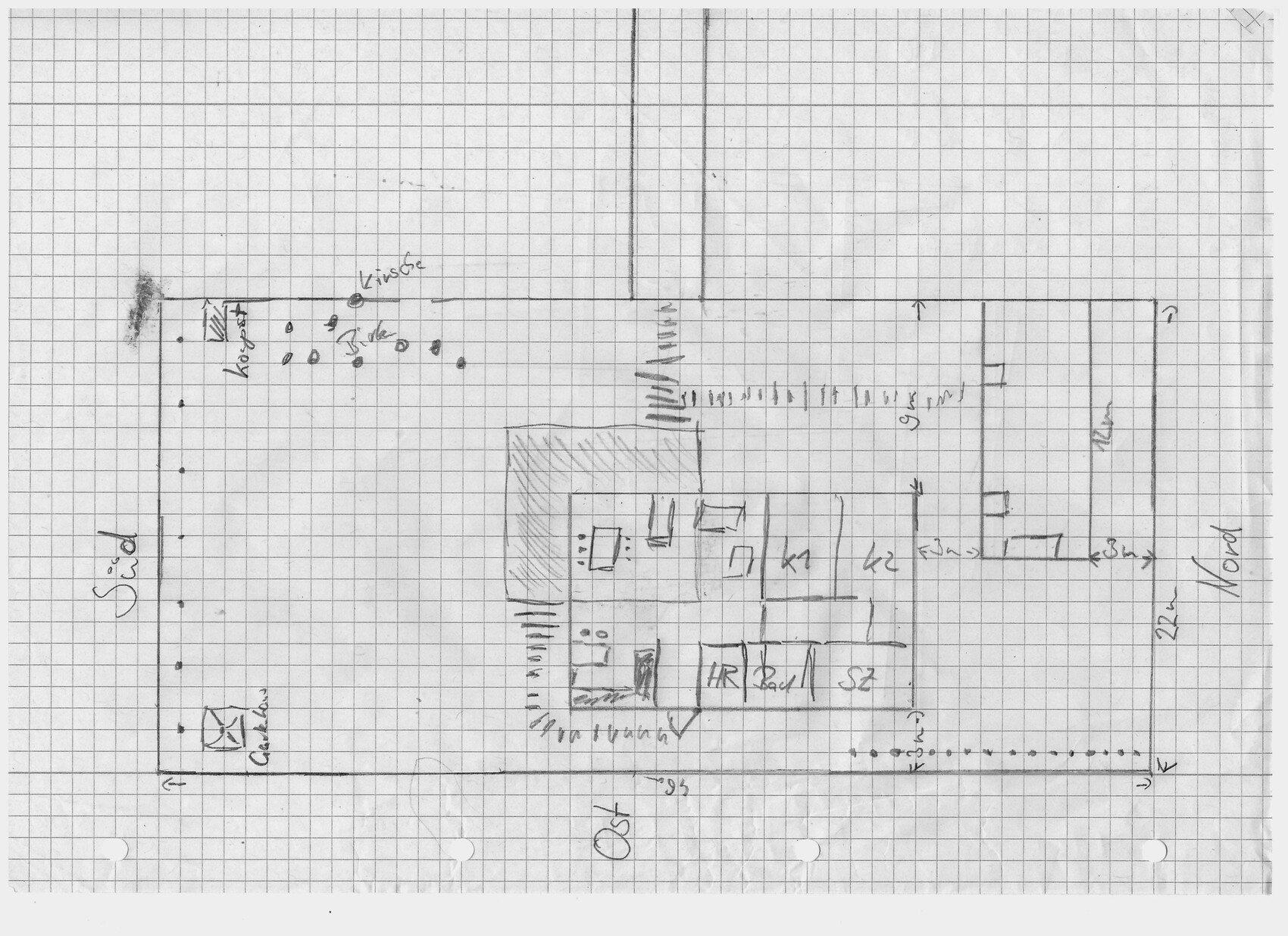
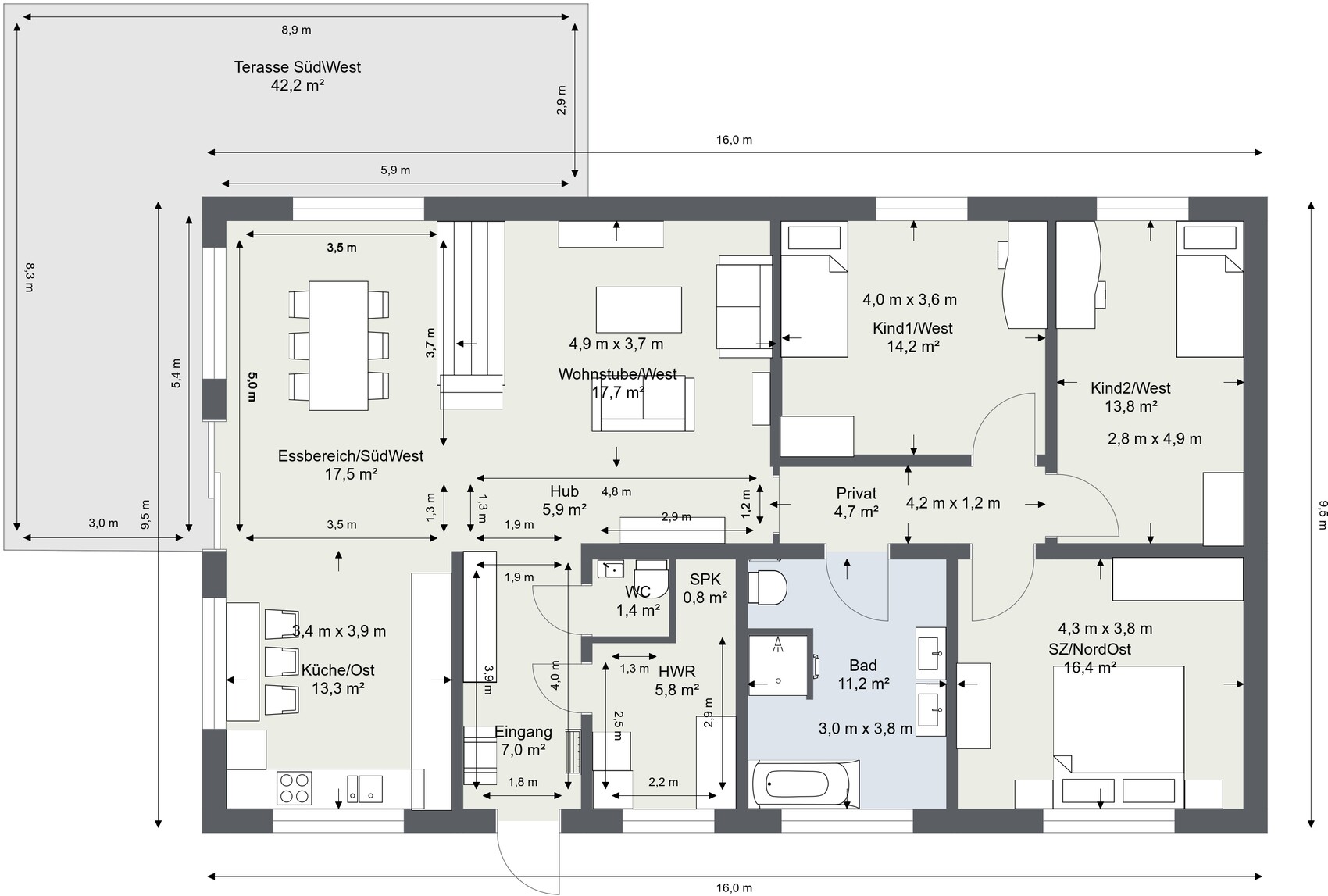
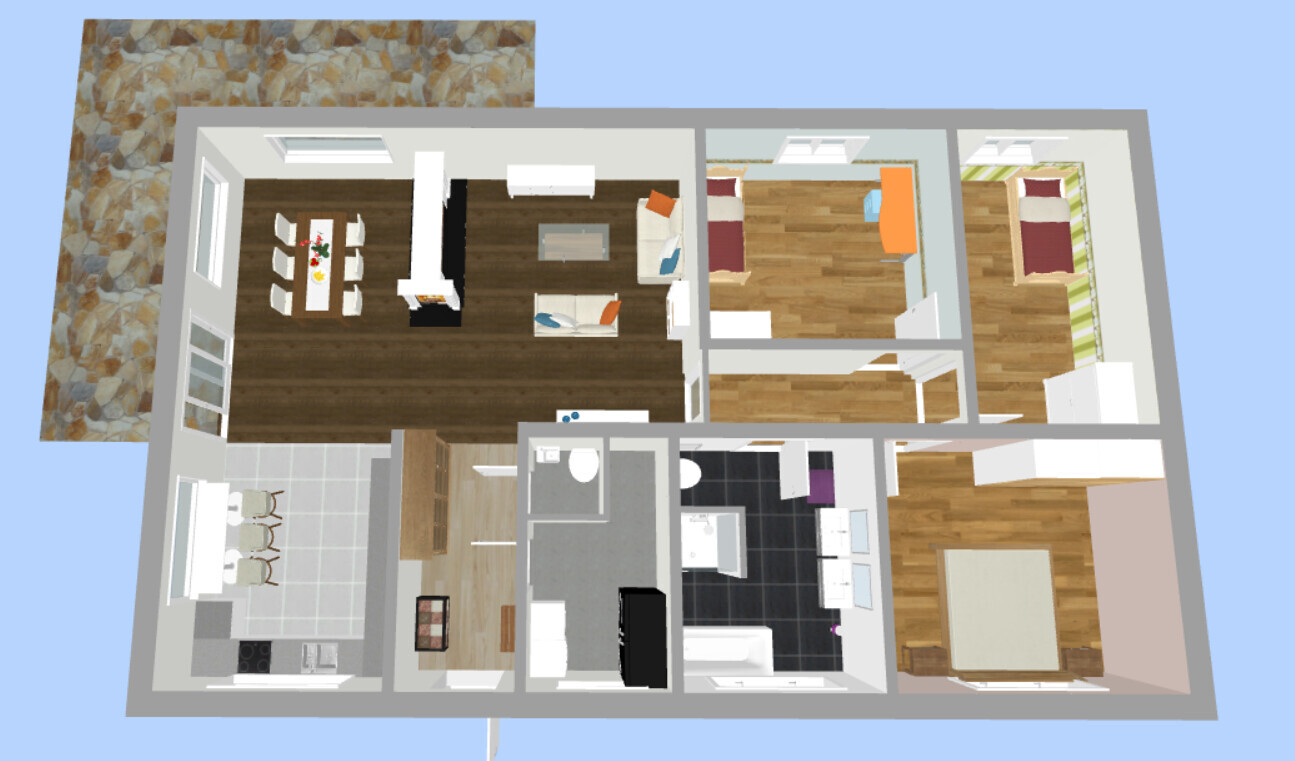
we have finalized the floor plan for our project and tried to incorporate feedback/criticism from the previous thread. A new thread was also necessary to include relevant information in the initial post.
Development plan/restrictions
Plot size: 1000 m² (10,764 sq ft)
External dimensions of the house: 16 m x 9.5 m (52.5 ft x 31.2 ft) (these were specified by the construction company to stay as close as possible to the budget)
Slope: No
Number of parking spaces: 0
Number of floors: Bungalow
Roof type: Hip roof, gable roof, or shed roof
Orientation: Entrance on the east, living room facing west, dining room facing southwest
Additional requirements: Must blend in with the existing building
Utility connections: Electricity and wastewater/water connections come from the driveway on the west side
Client requirements
Number of people, ages: 4 people (2 x 40 years, 2 x 3 years)
Office: In the outbuilding
Guests per year: Maximum 2
Open or closed layout: Open
Conservative or modern architectural style: Either
Open kitchen, kitchen island: Probably U-shaped kitchen, open to alternatives
Number of dining seats: Possibly 2–4 casual spots in the kitchen; otherwise 6–8 in the dining room
Fireplace: Yes, as a room divider between dining and living room
Garage, carport: On the driveway
House design
Who designed it:
- Based on the bungalow 131 floor plan from Town & Country
- Design planned independently using RoomSketcher
What do you particularly like? Why?
- Room layout (size)
- Room divider between kitchen, dining room, and living room (L-shape)
- No hallway
- Open area as a transition space between kitchen and living room
Cost estimate from architect/planner: 215,000
Personal budget limit for the house, including fittings: 250,000
Preferred heating system: Air-to-water heat pump (either Vaillant aroSplit or Vaillant FlexoCompact)
Why is the design as it is now?
- Dissatisfaction with the designs created in the old thread
Link to original thread: https://www.hausbau-forum.de/threads/Bungalow-Grundriss-16x9-5m-aussen-in-1000m-mit-Altbestand.31485/
we have finalized the floor plan for our project and tried to incorporate feedback/criticism from the previous thread. A new thread was also necessary to include relevant information in the initial post.
Development plan/restrictions
Plot size: 1000 m² (10,764 sq ft)
External dimensions of the house: 16 m x 9.5 m (52.5 ft x 31.2 ft) (these were specified by the construction company to stay as close as possible to the budget)
Slope: No
Number of parking spaces: 0
Number of floors: Bungalow
Roof type: Hip roof, gable roof, or shed roof
Orientation: Entrance on the east, living room facing west, dining room facing southwest
Additional requirements: Must blend in with the existing building
Utility connections: Electricity and wastewater/water connections come from the driveway on the west side
Client requirements
Number of people, ages: 4 people (2 x 40 years, 2 x 3 years)
Office: In the outbuilding
Guests per year: Maximum 2
Open or closed layout: Open
Conservative or modern architectural style: Either
Open kitchen, kitchen island: Probably U-shaped kitchen, open to alternatives
Number of dining seats: Possibly 2–4 casual spots in the kitchen; otherwise 6–8 in the dining room
Fireplace: Yes, as a room divider between dining and living room
Garage, carport: On the driveway
House design
Who designed it:
- Based on the bungalow 131 floor plan from Town & Country
- Design planned independently using RoomSketcher
What do you particularly like? Why?
- Room layout (size)
- Room divider between kitchen, dining room, and living room (L-shape)
- No hallway
- Open area as a transition space between kitchen and living room
Cost estimate from architect/planner: 215,000
Personal budget limit for the house, including fittings: 250,000
Preferred heating system: Air-to-water heat pump (either Vaillant aroSplit or Vaillant FlexoCompact)
Why is the design as it is now?
- Dissatisfaction with the designs created in the old thread
Link to original thread: https://www.hausbau-forum.de/threads/Bungalow-Grundriss-16x9-5m-aussen-in-1000m-mit-Altbestand.31485/
J
j.bautsch16 Oct 2019 10:45Our kitchen is 10 square meters (108 square feet) in size and includes everything you need, with no connection to social housing. But now that we’re expecting a child, I would prefer it to be open. I don’t have space to keep a baby rocker, bassinet, or similar in the kitchen (it’s just a simple two-wall layout, no corners, which as mentioned is impractical). So the child or baby would have to stay alone in the dining area? That doesn’t really appeal to me, but since I live in a rental apartment, I can hardly change it. In a house, such compromises shouldn’t be necessary.
So, really think carefully about what you want, need, don’t need, and don’t want. Now! Not after the shell construction is finished.
The kitchen has become much more central in recent years, and it can significantly influence the overall floor plan.
So, really think carefully about what you want, need, don’t need, and don’t want. Now! Not after the shell construction is finished.
The kitchen has become much more central in recent years, and it can significantly influence the overall floor plan.

Just a quick sketch to explain what I mean.
In option 2 (the first image here, but note that a "1" is painted over the second image, so that’s option 1), you could, if you want, add a pantry directly accessible from the kitchen—but I wouldn’t recommend it (and I say this as a self-confessed pantry fan). The path to the utility room isn’t that long, so it’s manageable, and by skipping the extra door you gain a lot of space.
In option 1, you can fairly easily open up the kitchen if you decide to—simply omit the wall between the dining area and kitchen and plan the second row of cabinets as a peninsula. I’d find that very practical, so I wouldn’t have to make an extra trip into the kitchen with groceries; I could just unload them on the island.
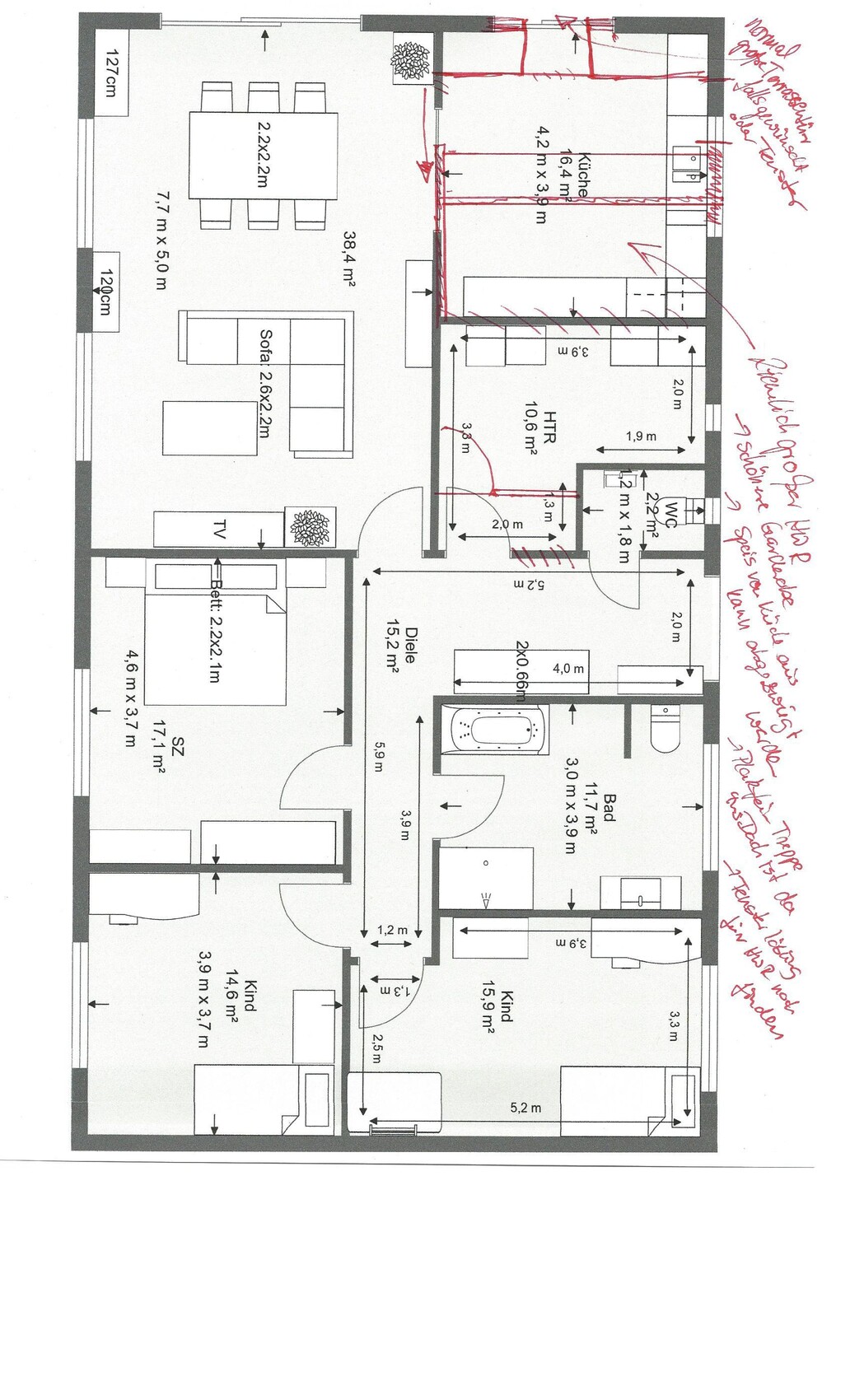
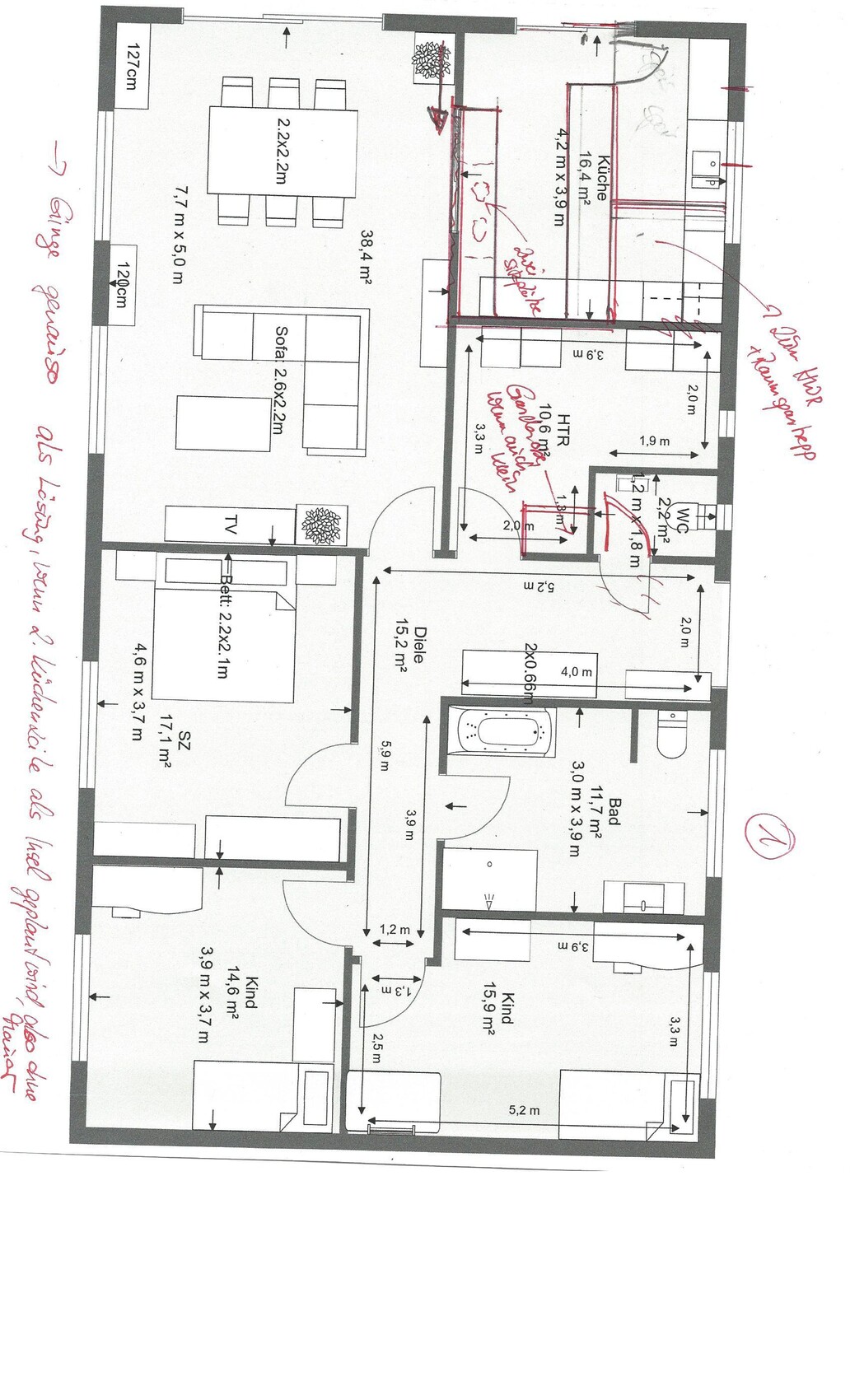
With both options, you gain significant storage space without losing kitchen functionality. The only thing you lose is the second dining spot, but as mentioned, you can easily compensate for that by placing two stools under the countertop.
Think about that.
In option 2 (the first image here, but note that a "1" is painted over the second image, so that’s option 1), you could, if you want, add a pantry directly accessible from the kitchen—but I wouldn’t recommend it (and I say this as a self-confessed pantry fan). The path to the utility room isn’t that long, so it’s manageable, and by skipping the extra door you gain a lot of space.
In option 1, you can fairly easily open up the kitchen if you decide to—simply omit the wall between the dining area and kitchen and plan the second row of cabinets as a peninsula. I’d find that very practical, so I wouldn’t have to make an extra trip into the kitchen with groceries; I could just unload them on the island.
With both options, you gain significant storage space without losing kitchen functionality. The only thing you lose is the second dining spot, but as mentioned, you can easily compensate for that by placing two stools under the countertop.
Think about that.
In option 2 (as shown in the first picture), it would even be possible to give the guest toilet a bit more width. I would definitely plan the door to the guest toilet to open into the toilet itself, not into the hallway. With a widening, there would also be enough space left for a proper washbasin.
haydee schrieb:
Never a closed kitchen again with kids.
I'm so glad that phase is finally over.Looking for experience reports. Maybe there are good arguments for my wife ^^
My personal favorite is option 1, here drawn a bit more clearly:
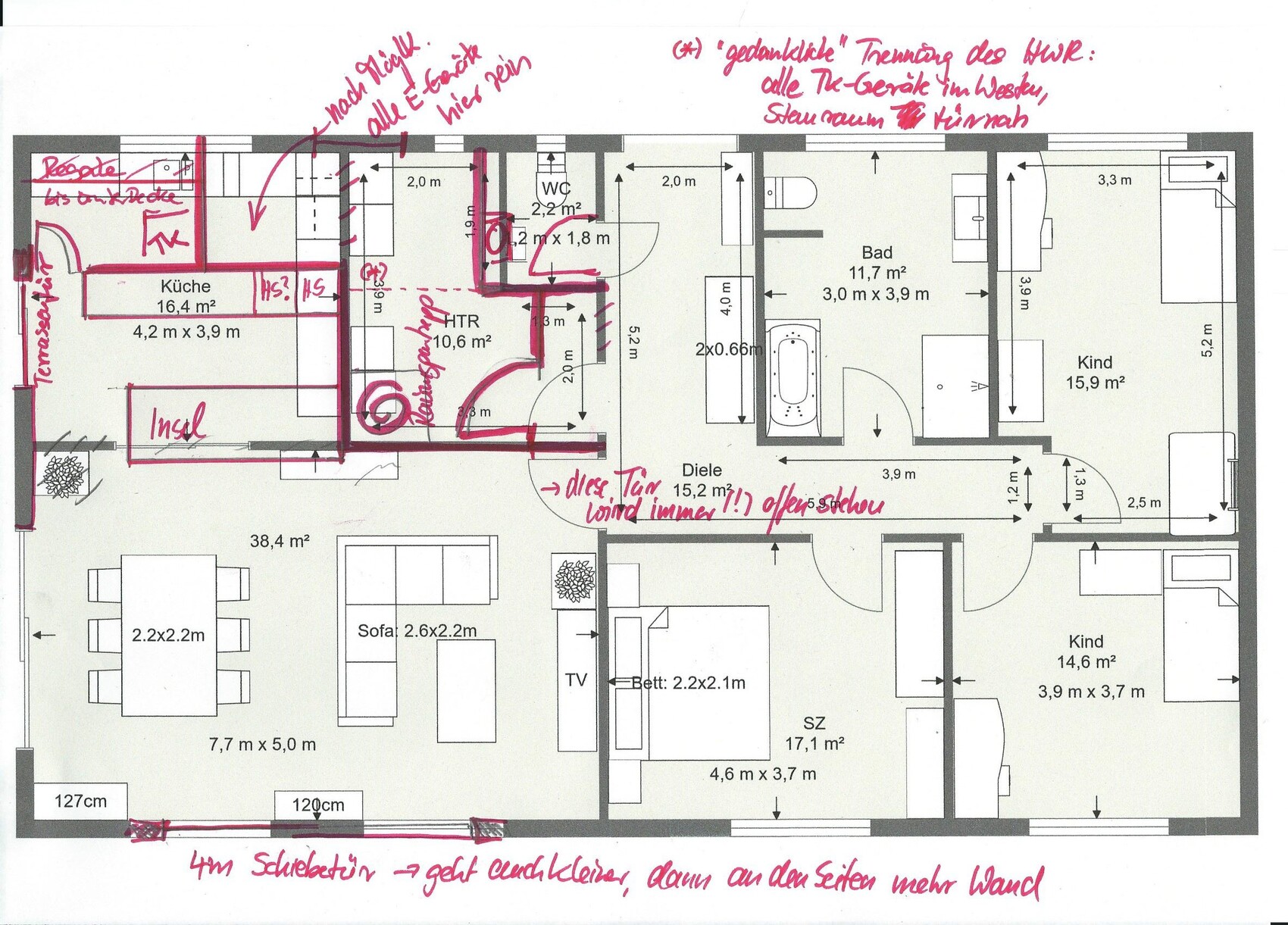
A small pantry accessible directly from the kitchen, with a small window facing west or no window at all. I’m almost leaning towards no window because west- or south-facing windows can heat up the pantry. A windowless pantry with motion sensor lighting and controlled ventilation should keep the temperature stable. Of course, the orientation isn’t ideal for a pantry, but it’s still helpful. You can store a freezer chest there, saving space in the kitchen. Simple and affordable shelves on the wall allow easy storage of pasta, flour, and other dry goods. There is also enough room for various beverage crates and cartons, which is not insignificant for a family of four. If there is a window, it should have automatically controlled shading, otherwise the pantry will become too hot.
The utility room takes the remaining saved kitchen space. I would put all technical appliances on the west side and use the front of the utility room for storage. This is for items you need frequently: vacuum cleaner, cleaning supplies, kids’ rubber boots, etc. Otherwise, place the space-saving staircase as centrally as possible in the house. This has the advantage that you can stand upright in the attic when coming up.
Widen the guest toilet a bit and install a proper washbasin, with the door opening into the toilet. A slight setback in the entrance to the utility room makes the cloakroom area feel more open. Here, hooks can be placed on the wall for hanging frequently used jackets quickly; above that, a shelf for motorcycle helmets, hats, etc. Coats, hats, and gloves can go in the closet. Shoes can simply be taken off in the niche and left there, or you could put a small low shoe rack there. With four people, quite a lot of shoes accumulate, and tell me one kid who always tidies theirs up—they don’t exist. So at least I get the kids to take off their shoes in the niche and leave them there, instead of having shoes scattered around the hallway where everyone can trip.
I would reconsider the door into the living area. From experience (we had it that way in the previous apartment), the door is always open. Possibly choose an opening that allows you to try it without a door initially, and if needed, a door can be installed later without much hassle.
Now I’m hoping for a convincing experience report from haydee and that your wife can be convinced of an open kitchen. Then, as shown above, I would widen the island a bit and let it extend into the living/dining area. This provides extra storage (narrow base cabinets or open shelves) accessible from the front (e.g., for table linens, napkins, writing materials needed in the living room, etc.). That way, the small cabinet shown there can be omitted. A good argument for your wife: with full shopping bags, you immediately have a great place to set things down!
From the kitchen, a standard terrace door would be ideal, which can also be wider (ours is 120cm (47 inches)), so you can pass through easily with a tray, for example. Sliding doors aren’t necessary, but I would definitely keep the access to the terrace. The short partition wall currently on the south wall between the kitchen and dining area obviously has to go.
Again: instead of two windows, install a large sliding door. That makes the space more livable and open—even if it just faces a green wall (consider yourself lucky it’s a green wall; we face the neighbor...).
Then plan the kitchen. Usually, people place the stove/ceramic or induction cooktop on the island. I wouldn’t recommend that—you rarely stand at the stove; you mostly prepare food at the cutting board and stay by the sink. If technically possible, I would put the sink on the island (not centered, as that wastes workspace, more in the third of the island toward the wall) and the stove along the wall. But that’s just my advice. Over the next few weeks, observe your kitchen workflows consciously as you currently use them—this will give you insight into how you should design your new kitchen.
With the kitchen planned this way, your wife is somewhat separated but still has the living and dining area fully in view (and therefore the children). Here, I would completely skip adding a second dining spot in the kitchen (also the bar solution would only be in the way here). You can grab a quick coffee while standing at the island, and otherwise, the table is conveniently nearby.
A small pantry accessible directly from the kitchen, with a small window facing west or no window at all. I’m almost leaning towards no window because west- or south-facing windows can heat up the pantry. A windowless pantry with motion sensor lighting and controlled ventilation should keep the temperature stable. Of course, the orientation isn’t ideal for a pantry, but it’s still helpful. You can store a freezer chest there, saving space in the kitchen. Simple and affordable shelves on the wall allow easy storage of pasta, flour, and other dry goods. There is also enough room for various beverage crates and cartons, which is not insignificant for a family of four. If there is a window, it should have automatically controlled shading, otherwise the pantry will become too hot.
The utility room takes the remaining saved kitchen space. I would put all technical appliances on the west side and use the front of the utility room for storage. This is for items you need frequently: vacuum cleaner, cleaning supplies, kids’ rubber boots, etc. Otherwise, place the space-saving staircase as centrally as possible in the house. This has the advantage that you can stand upright in the attic when coming up.
Widen the guest toilet a bit and install a proper washbasin, with the door opening into the toilet. A slight setback in the entrance to the utility room makes the cloakroom area feel more open. Here, hooks can be placed on the wall for hanging frequently used jackets quickly; above that, a shelf for motorcycle helmets, hats, etc. Coats, hats, and gloves can go in the closet. Shoes can simply be taken off in the niche and left there, or you could put a small low shoe rack there. With four people, quite a lot of shoes accumulate, and tell me one kid who always tidies theirs up—they don’t exist. So at least I get the kids to take off their shoes in the niche and leave them there, instead of having shoes scattered around the hallway where everyone can trip.
I would reconsider the door into the living area. From experience (we had it that way in the previous apartment), the door is always open. Possibly choose an opening that allows you to try it without a door initially, and if needed, a door can be installed later without much hassle.
Now I’m hoping for a convincing experience report from haydee and that your wife can be convinced of an open kitchen. Then, as shown above, I would widen the island a bit and let it extend into the living/dining area. This provides extra storage (narrow base cabinets or open shelves) accessible from the front (e.g., for table linens, napkins, writing materials needed in the living room, etc.). That way, the small cabinet shown there can be omitted. A good argument for your wife: with full shopping bags, you immediately have a great place to set things down!
From the kitchen, a standard terrace door would be ideal, which can also be wider (ours is 120cm (47 inches)), so you can pass through easily with a tray, for example. Sliding doors aren’t necessary, but I would definitely keep the access to the terrace. The short partition wall currently on the south wall between the kitchen and dining area obviously has to go.
Again: instead of two windows, install a large sliding door. That makes the space more livable and open—even if it just faces a green wall (consider yourself lucky it’s a green wall; we face the neighbor...).
Then plan the kitchen. Usually, people place the stove/ceramic or induction cooktop on the island. I wouldn’t recommend that—you rarely stand at the stove; you mostly prepare food at the cutting board and stay by the sink. If technically possible, I would put the sink on the island (not centered, as that wastes workspace, more in the third of the island toward the wall) and the stove along the wall. But that’s just my advice. Over the next few weeks, observe your kitchen workflows consciously as you currently use them—this will give you insight into how you should design your new kitchen.
With the kitchen planned this way, your wife is somewhat separated but still has the living and dining area fully in view (and therefore the children). Here, I would completely skip adding a second dining spot in the kitchen (also the bar solution would only be in the way here). You can grab a quick coffee while standing at the island, and otherwise, the table is conveniently nearby.
Similar topics