
Hello everyone,
in most constructions, you can see that a "membrane" (I can’t recall the exact technical term right now) is placed between the concrete slab and the masonry to prevent rising dampness.
In our shell construction, from what I could observe, this seems to have been omitted. Before I discuss this with the site manager, I wanted to ask for your collective knowledge to find out if this is normal, what the possible reasons might be, or other relevant information. Maybe my concerns will be resolved already.
I’ve attached a photo. If it had been done, you would see it, right?
Best regards
in most constructions, you can see that a "membrane" (I can’t recall the exact technical term right now) is placed between the concrete slab and the masonry to prevent rising dampness.
In our shell construction, from what I could observe, this seems to have been omitted. Before I discuss this with the site manager, I wanted to ask for your collective knowledge to find out if this is normal, what the possible reasons might be, or other relevant information. Maybe my concerns will be resolved already.
I’ve attached a photo. If it had been done, you would see it, right?
Best regards
Excerpt from the construction specification:
"The foundation slab will be constructed as a reinforced concrete base according to the structural engineer’s design and sealed on the top surface. An 8 cm (3 inch) insulation layer will be installed beneath the foundation slab. Installation of a grounding flat steel strip."
If the black material is a membrane, then it should be placed beneath the slab, not sealed on the top surface. Or am I misunderstanding?
"The foundation slab will be constructed as a reinforced concrete base according to the structural engineer’s design and sealed on the top surface. An 8 cm (3 inch) insulation layer will be installed beneath the foundation slab. Installation of a grounding flat steel strip."
If the black material is a membrane, then it should be placed beneath the slab, not sealed on the top surface. Or am I misunderstanding?
Why below? Isn’t it actually placed on top of the slab?
Don’t you have a schedule for the different trades?
I assume the waterproofing membrane is still to be installed. In our case, it was applied shortly before the window installation. The joint is coated with bitumen, Remmers 2K waterproofing or a similar product.
Between which ground? Your future floor? Yes, where else would it go?
Edit: Here is a photo from our start.
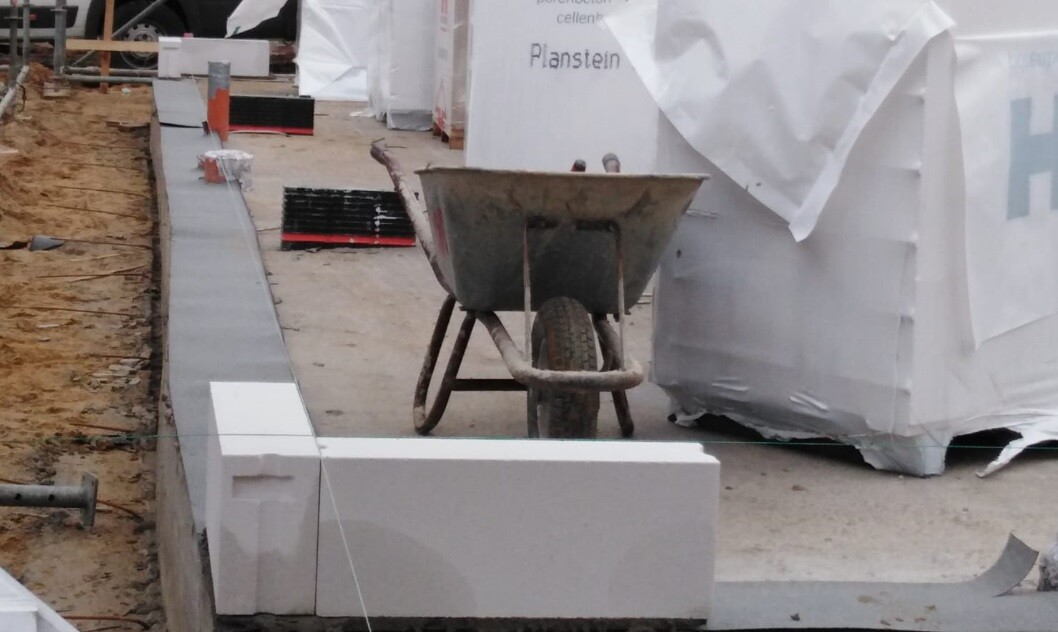
Don’t you have a schedule for the different trades?
I assume the waterproofing membrane is still to be installed. In our case, it was applied shortly before the window installation. The joint is coated with bitumen, Remmers 2K waterproofing or a similar product.
AnSe2019 schrieb:
Is the membrane really installed between the ground and the slab?
Between which ground? Your future floor? Yes, where else would it go?
Edit: Here is a photo from our start.
Okay. I think I had mistaken a dark spot for a membrane. Specifically, the one on the right in the photo (under the slab). But now I see that something is also sticking out on the left between the slab and the wall. That makes me feel reassured for now. Thanks for your sharp eyes and professional expertise.
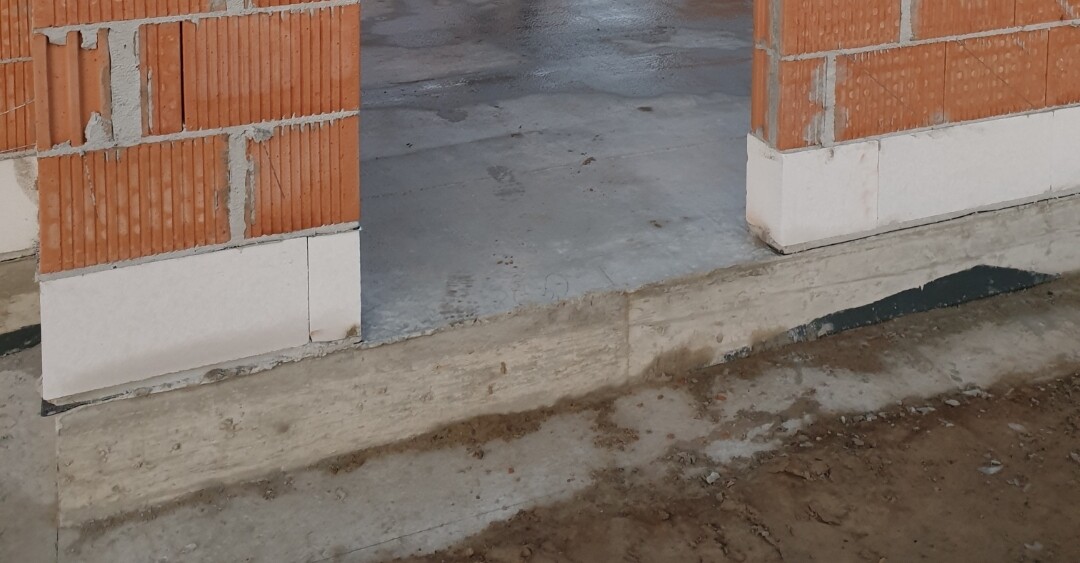
M
Mottenhausen1 Oct 2019 12:18Even better, your foundation slab is already sealed from below and therefore dry because of the Styrodur
and similar products are waterproof by design. Additionally, there is probably a membrane underneath the slab insulation as well. So everything is fine. As long as no mistakes are made during the exterior plastering, moisture should stay outside.
AnSe2019 schrieb:
An 8cm (3 inches) layer of insulation is installed below the foundation slab
and similar products are waterproof by design. Additionally, there is probably a membrane underneath the slab insulation as well. So everything is fine. As long as no mistakes are made during the exterior plastering, moisture should stay outside.
Similar topics