
ᐅ Interior Wall: Aerated Concrete or Lightweight Construction?
Created on: 17 Aug 2019 10:56
R
RowingpartnerR
Rowingpartner17 Aug 2019 10:56Hello community,
I am currently facing a problem and hope you can offer some advice! Here is the situation:
I am building a four-unit house with a contractor to rent it out afterwards. I will not be living in it myself. There is a general contractor agreement (fixed price) with contractor XY in which all specifications were defined. Among other things, it states that all interior walls are to be built using solid construction methods (calcium silicate or aerated concrete blocks).
The house is currently at an advanced stage of construction. However, some partition walls still need to be installed in the attic. This will create two rooms there: a bedroom and a study/storage room/walk-in closet, or something similar. The contractor now wants to build these partition walls in the attic using lightweight construction methods (stud framing, insulation, etc.) instead of solid construction as specified in the contract. However, I insist that it be executed in aerated concrete as stated in the contract.
I can, of course, imagine why the contractor prefers to build with lightweight construction, as the costs for a lightweight wall can be significantly lower than for a solid wall. The contractor claims that the lightweight wall is actually much better than an aerated concrete wall. This discussion has been going back and forth for about two weeks, and I have repeatedly said I want a solid wall. The contractor doesn’t seem entirely happy with this and has tried several times to convince me to choose the other type of wall. So far, without success.
In a phone call yesterday, I was told that it is structurally impossible to install an aerated concrete wall there and that they therefore have to use a lightweight wall. However, I believe this is absolutely wrong since aerated concrete is quite light, and the floor slab below is also a solid concrete slab. The span lengths there are also very small. Of course, one would have to look at the structural calculations in detail, but I will leave that aside for now.
For me, the solid wall is simply much higher quality and better. Just thinking about the noise a lightweight wall makes when you knock on it makes me definitely prefer the solid wall. On the other hand, I can stay relaxed since I will not be living in the apartments myself...
I would like to hear your opinions on this. Which type of wall would you prefer? Are there advantages or disadvantages? Could it possibly even be a good idea to install a lightweight wall?
I look forward to your feedback!
I am currently facing a problem and hope you can offer some advice! Here is the situation:
I am building a four-unit house with a contractor to rent it out afterwards. I will not be living in it myself. There is a general contractor agreement (fixed price) with contractor XY in which all specifications were defined. Among other things, it states that all interior walls are to be built using solid construction methods (calcium silicate or aerated concrete blocks).
The house is currently at an advanced stage of construction. However, some partition walls still need to be installed in the attic. This will create two rooms there: a bedroom and a study/storage room/walk-in closet, or something similar. The contractor now wants to build these partition walls in the attic using lightweight construction methods (stud framing, insulation, etc.) instead of solid construction as specified in the contract. However, I insist that it be executed in aerated concrete as stated in the contract.
I can, of course, imagine why the contractor prefers to build with lightweight construction, as the costs for a lightweight wall can be significantly lower than for a solid wall. The contractor claims that the lightweight wall is actually much better than an aerated concrete wall. This discussion has been going back and forth for about two weeks, and I have repeatedly said I want a solid wall. The contractor doesn’t seem entirely happy with this and has tried several times to convince me to choose the other type of wall. So far, without success.
In a phone call yesterday, I was told that it is structurally impossible to install an aerated concrete wall there and that they therefore have to use a lightweight wall. However, I believe this is absolutely wrong since aerated concrete is quite light, and the floor slab below is also a solid concrete slab. The span lengths there are also very small. Of course, one would have to look at the structural calculations in detail, but I will leave that aside for now.
For me, the solid wall is simply much higher quality and better. Just thinking about the noise a lightweight wall makes when you knock on it makes me definitely prefer the solid wall. On the other hand, I can stay relaxed since I will not be living in the apartments myself...
I would like to hear your opinions on this. Which type of wall would you prefer? Are there advantages or disadvantages? Could it possibly even be a good idea to install a lightweight wall?
I look forward to your feedback!
If using a lightweight partition wall, please make sure it is double-layered with OSB or engineered wood panels and gypsum board (especially since it will be a rental apartment).
There isn’t much against using lightweight construction at first glance; how soundproof it is, in my opinion, largely depends on how skilled the drywall installer is. Aerated concrete is also not exactly a soundproofing champion. As a timber house owner, I don’t have much to say against drywall partitions.
Are these walls between two apartments? If so, the builder should calculate the sound insulation proof for them!
There isn’t much against using lightweight construction at first glance; how soundproof it is, in my opinion, largely depends on how skilled the drywall installer is. Aerated concrete is also not exactly a soundproofing champion. As a timber house owner, I don’t have much to say against drywall partitions.
Are these walls between two apartments? If so, the builder should calculate the sound insulation proof for them!
G
goalkeeper17 Aug 2019 16:25Ask him about gypsum wallboards – they are only 10mm (0.4 inches) thick but offer good sound insulation and don’t need to be plastered, just filled with joint compound.

Rowingpartner schrieb:
I would like to hear your opinions on this. Better not: there will be many, and the majority will say that only calcium silicate bricks are suitable, and not even aerated concrete. However, in my view, lightweight partitions are only suitable for the walls between the bedrooms and storage rooms of the same maisonette; and here I see no advantage, because the benefit would only come into play parallel to the roof slope, while the affected walls are almost completely perpendicular to it.
Rowingpartner schrieb:
since the costs for a lightweight partition can be significantly lower than for a solid wall. Not in this case, as the advantage is on the labor cost level—specifically where the wall is angled at the top.
Based on my experience in this forum, this topic was probably already settled for you long ago, especially when the disagreements between the factions flared up again on page 14 in 2021.
https://www.instagram.com/11antgmxde/
https://www.linkedin.com/company/bauen-jetzt/
R
Rowingpartner19 Aug 2019 06:53Hello everyone, and thank you in advance for your feedback,
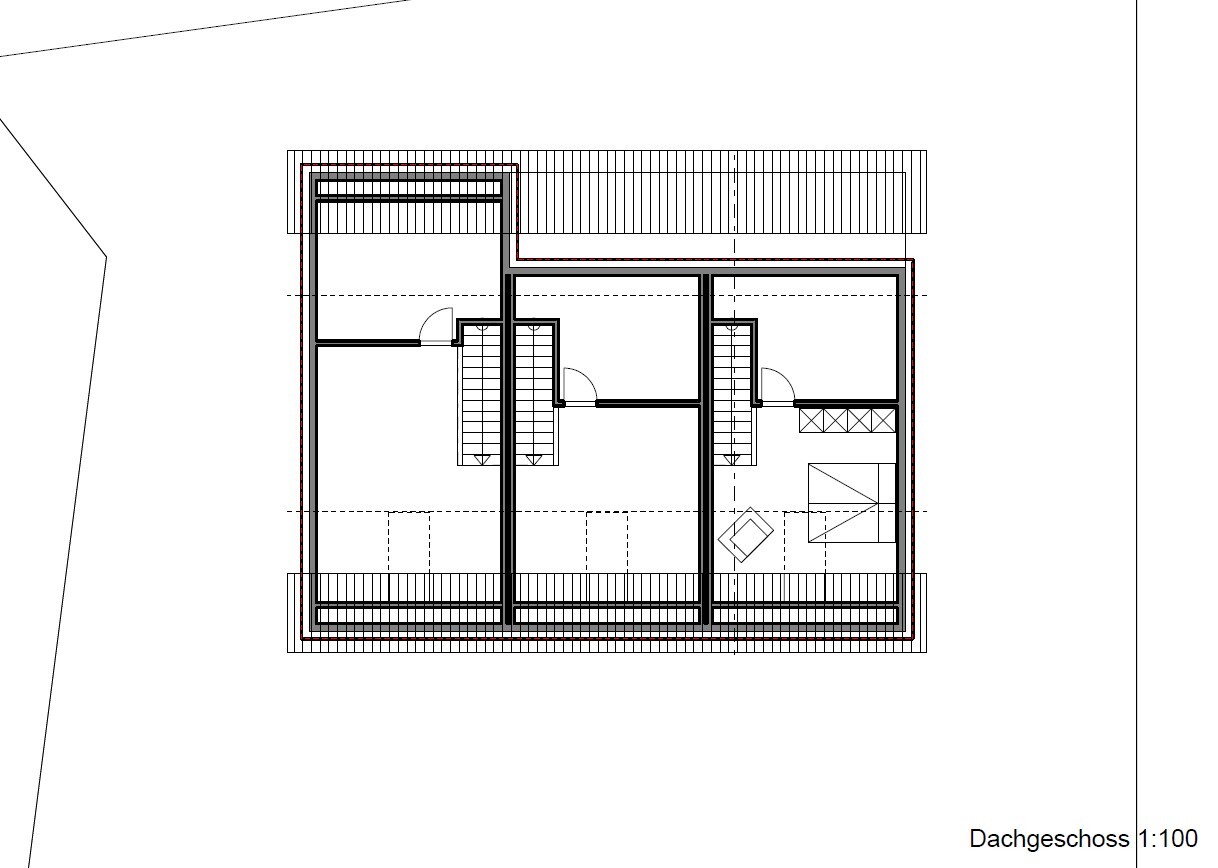
to explain the attachment: These are three duplex apartments separated from each other by a solid 24.5cm (10 inch) calcium silicate brick wall. The focus here is only on the walls inside the apartments. From what I understand, a lightweight partition wall can also provide a certain level of sound insulation and be of high quality. I will speak with the builder again today and then make a decision.
to explain the attachment: These are three duplex apartments separated from each other by a solid 24.5cm (10 inch) calcium silicate brick wall. The focus here is only on the walls inside the apartments. From what I understand, a lightweight partition wall can also provide a certain level of sound insulation and be of high quality. I will speak with the builder again today and then make a decision.
Similar topics