
Hello everyone!
My husband and I are in the early stages of planning our house. We had to submit a preliminary house plan to our local municipality (Salzburg Land/Austria) on short notice due to certain requirements. We developed this plan together with our designer with very little preparation time.
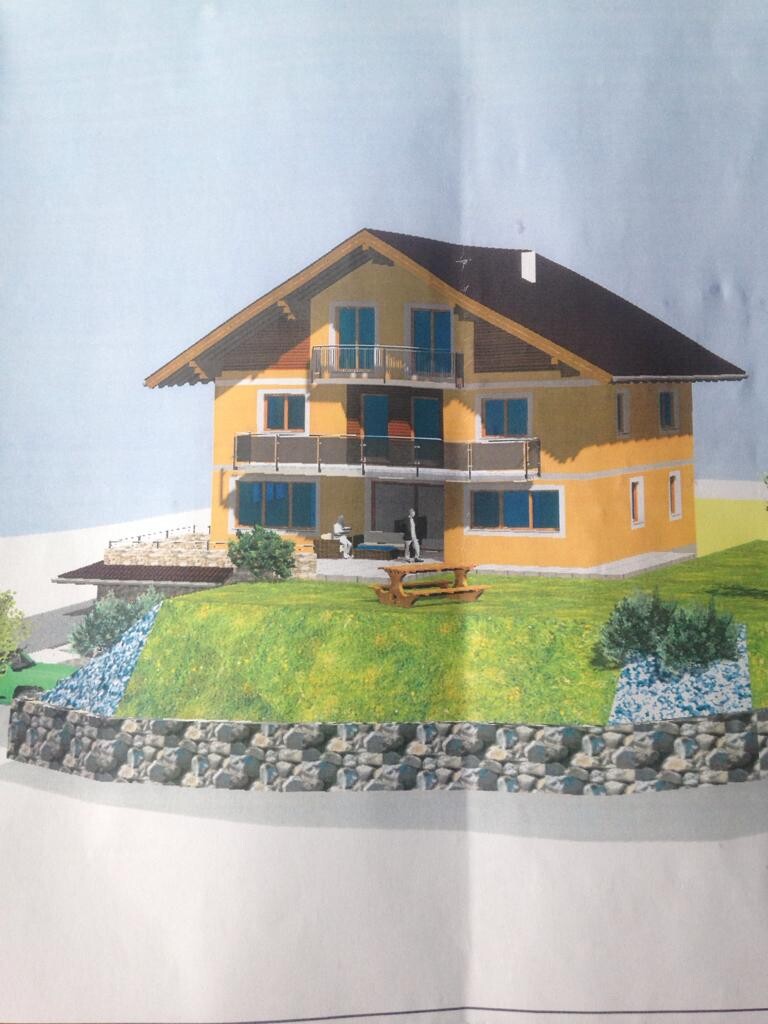
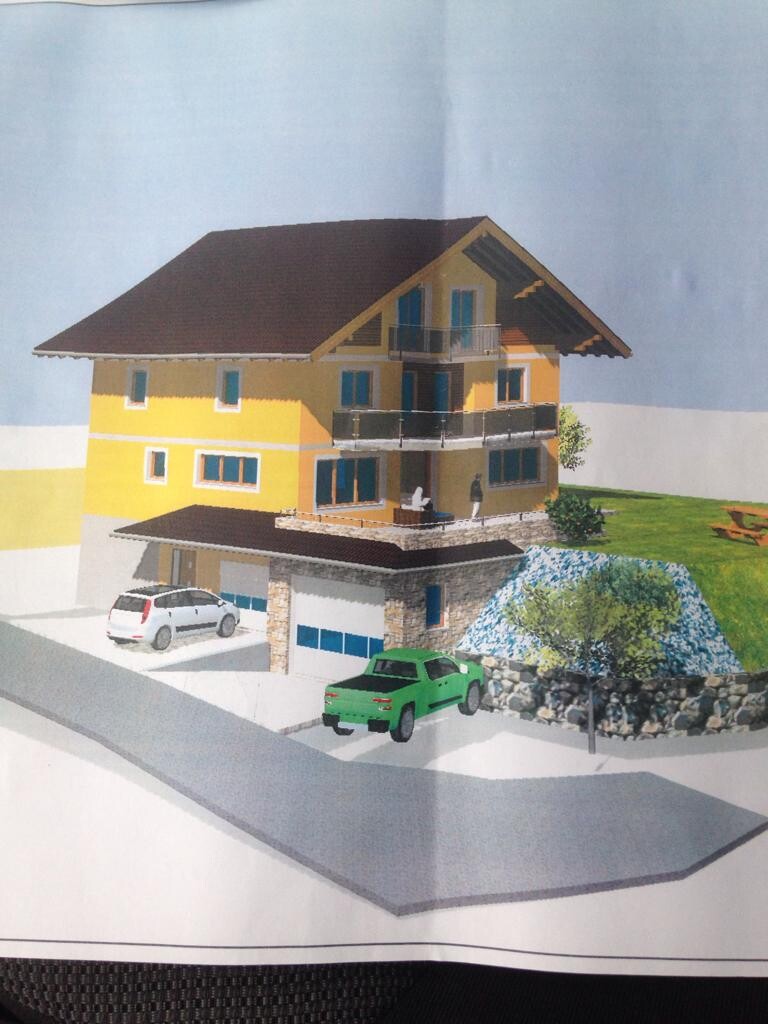
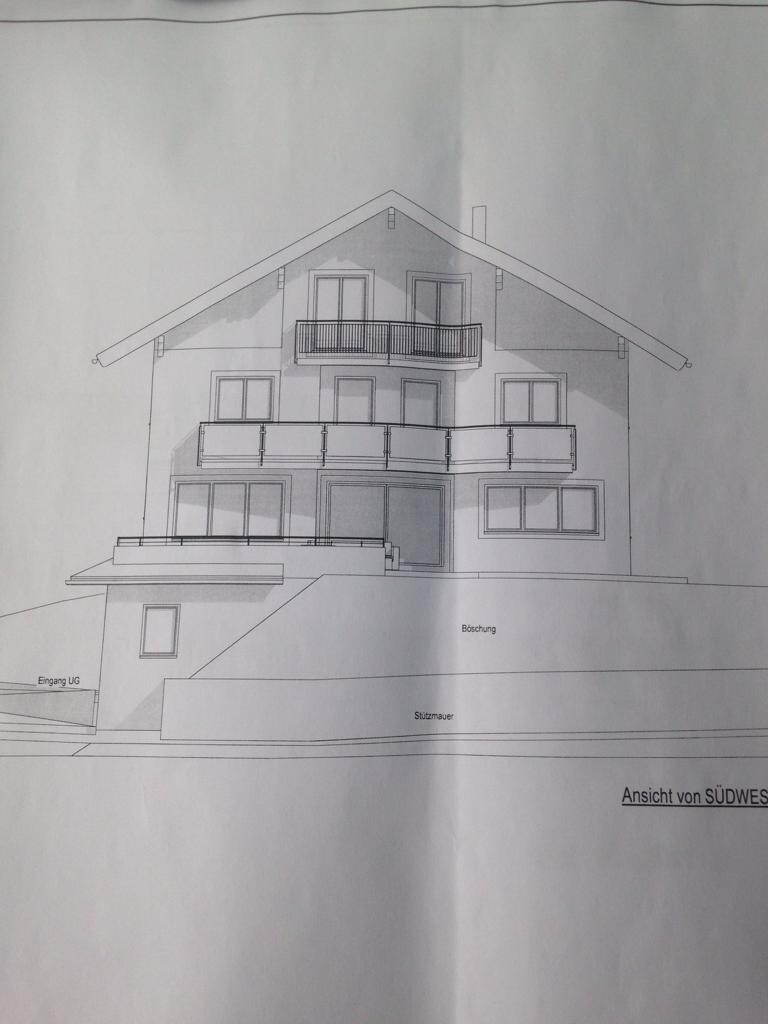
We have a somewhat unusual floor plan, in our opinion, featuring a setback on the ground floor, and we mainly want to hear your opinions about this. Our primary concern is whether we have taken a completely absurd approach or if we can build on this basic idea. Our biggest issue is that so far we haven’t seen a single house with this type of floor plan (neither online nor in real life, at least around Salzburg and nearby ...) and naturally, we wonder why. Does it have any significant disadvantages? Does it look strange in any way?
We look forward to your feedback and are already very grateful for your constructive criticism and especially your time to help us.
Now to the questionnaire:
Development plan / Restrictions
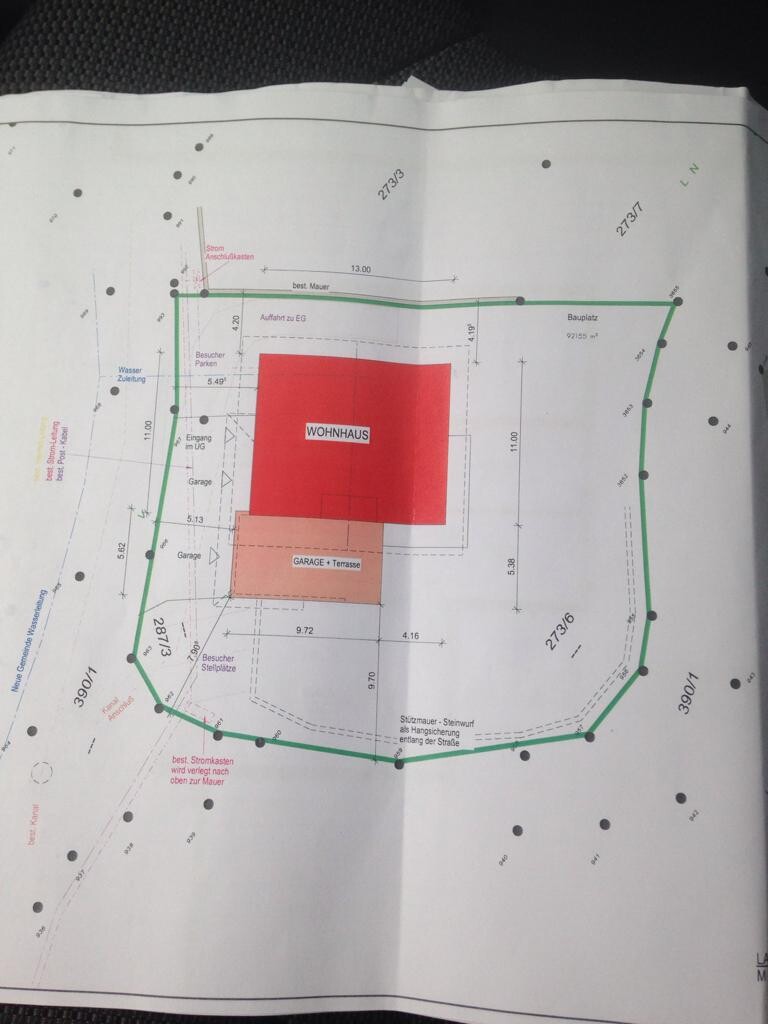
Plot size 920 m² (9,900 sq ft)
Slope Elevated plot, gently sloping on three sides
Owners’ requirements
Style, roof type, building type rural-modern, gable roof, two-family house
Basement, floors Basement, 2 full floors, attic
Number of occupants, ages Currently three (28, 29, and 8 months old) with 1-2 more children planned
Space requirements on ground and upper floors
Ground floor: spacious open kitchen with integrated pantry, dining area, living room, WC, bathroom, office (later a bedroom)
Upper floor: 3 children’s bedrooms, family bathroom, WC
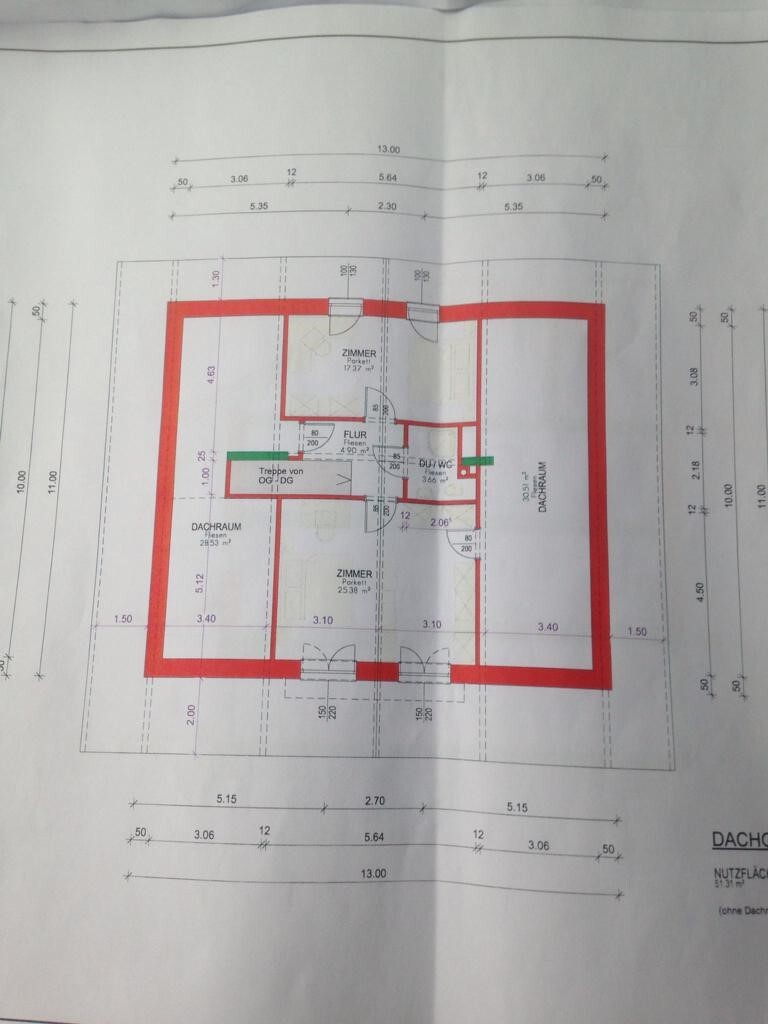
Attic: master bedroom with bathroom and an additional room (extra bedroom / hobby room)
Ground floor + upper floor approx. 200 m² (2,150 sq ft); attic size not yet finalized
Office For family use and later bedroom
Kitchen L-shaped with cooking island and wood stove
Number of dining seats 6-8, possibly extendable table for more space
Fireplace Yes – planned as a room divider between living room and "common room"
Balcony Balcony on the first floor – should eventually be large enough for the second family
Garage Small garage for 1 vehicle and a larger garage for 2 vehicles
House design
Planned by:
Designer from a construction company
What do you particularly like? Why?
Cost estimate according to architect/designer not yet available – only a preliminary draft
Personal budget for house including fixtures and fittings 350,000 € (with a lot of personal labor)
Preferred heating technology Heat pump
If you had to give up something, which features/finishes
- Could give up: attic expansion initially, but want to keep the possibility for future use
- Cannot give up: a cozy and large kitchen/dining area is very important to us
Why does the design look the way it does?
The most important aspect of our planning is that the house can be converted into a two-family home in the future when one of our children would need it, earliest in 20–25 years. That would mean one living unit on the ground floor and a second on the first floor plus the attic.
The office planned on the ground floor would then be used as a bedroom. The staircase can be completely separated with a (already marked) wall but is intended to remain open until then.
The attic is planned to house the master bedroom with bathroom. This is where the plan shows the biggest weaknesses for us: the bedroom is too large, and the bathroom is too small. This definitely needs to be changed.
Why sleep in the attic? There is not enough space on the ground floor, and we want to keep privacy from the children’s bedrooms so that when our kids are older and have friends/partners visiting, everyone can have their own space. We know this might be inconvenient with small children/babies due to additional distances, but since children’s bedrooms 1 and 2 are relatively large, siblings could share a room, and bedroom 3 could serve as a “backup bedroom” for us. We are only planning for two children but you never know!
If later children’s bedrooms 1 and 2 become kitchen/living areas, there would then be one bedroom on the first floor and two more in the attic.
What we particularly like is the idea of the split-level living room. We are aware that opinions on this are very divided and most experts discourage it. However, the level difference is only 36 cm (2 steps), and we believe it will be manageable even as we get older.
What is the most important/basic question about the floor plan in 130 characters?
We would really like to know from you:
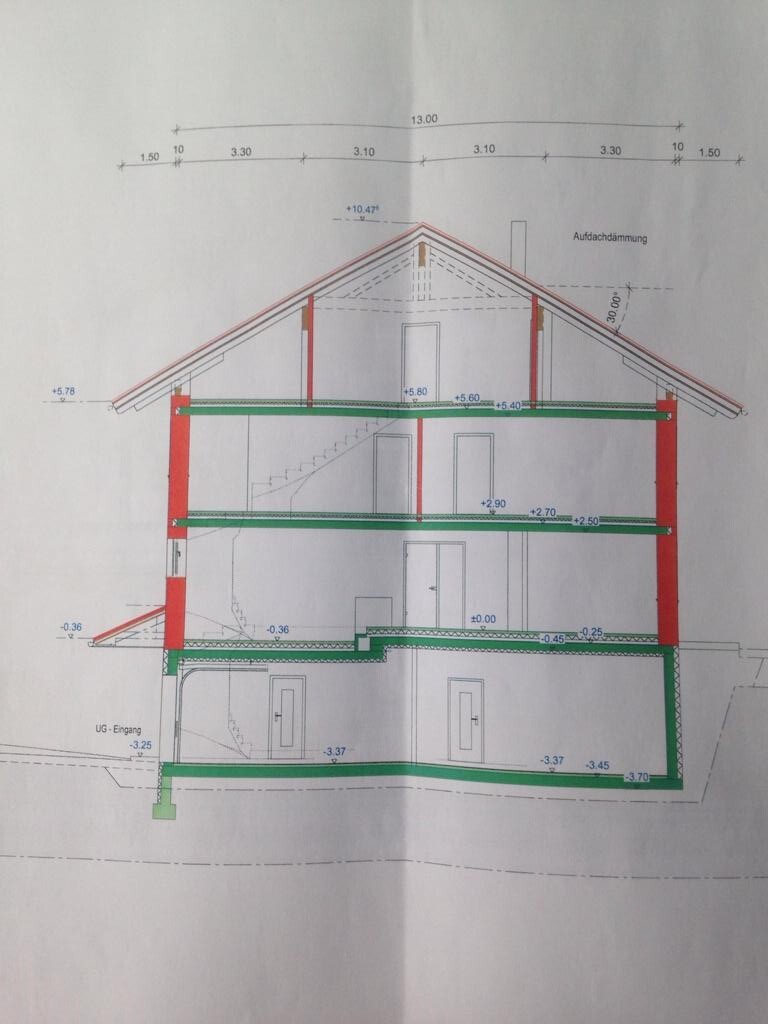
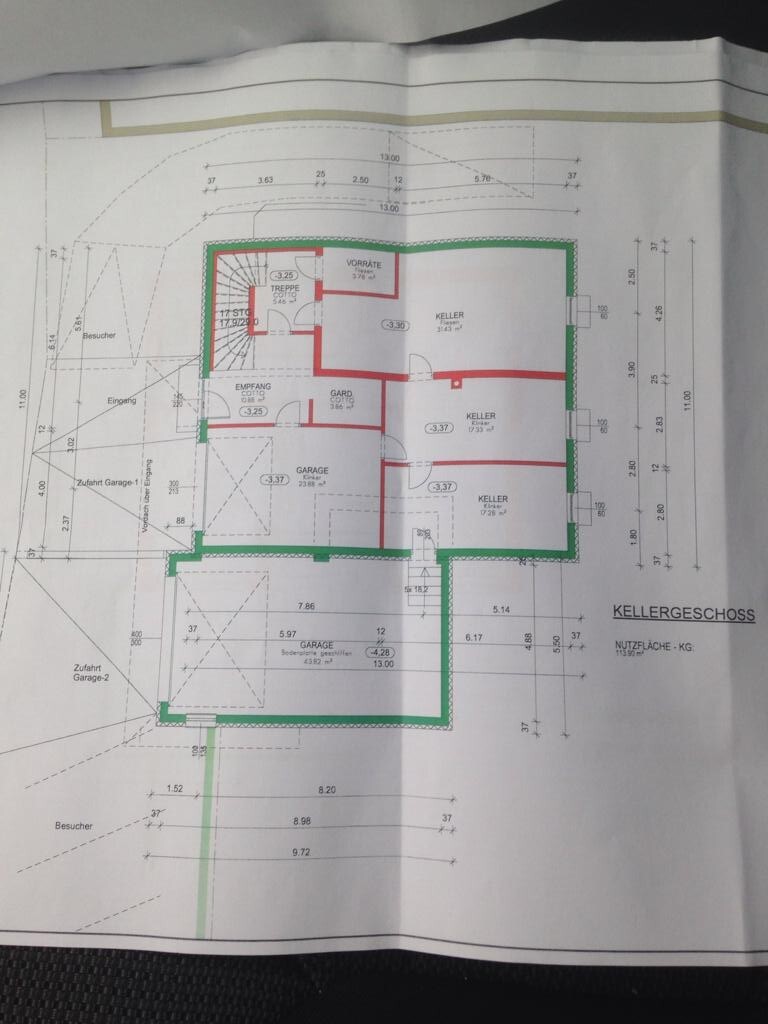
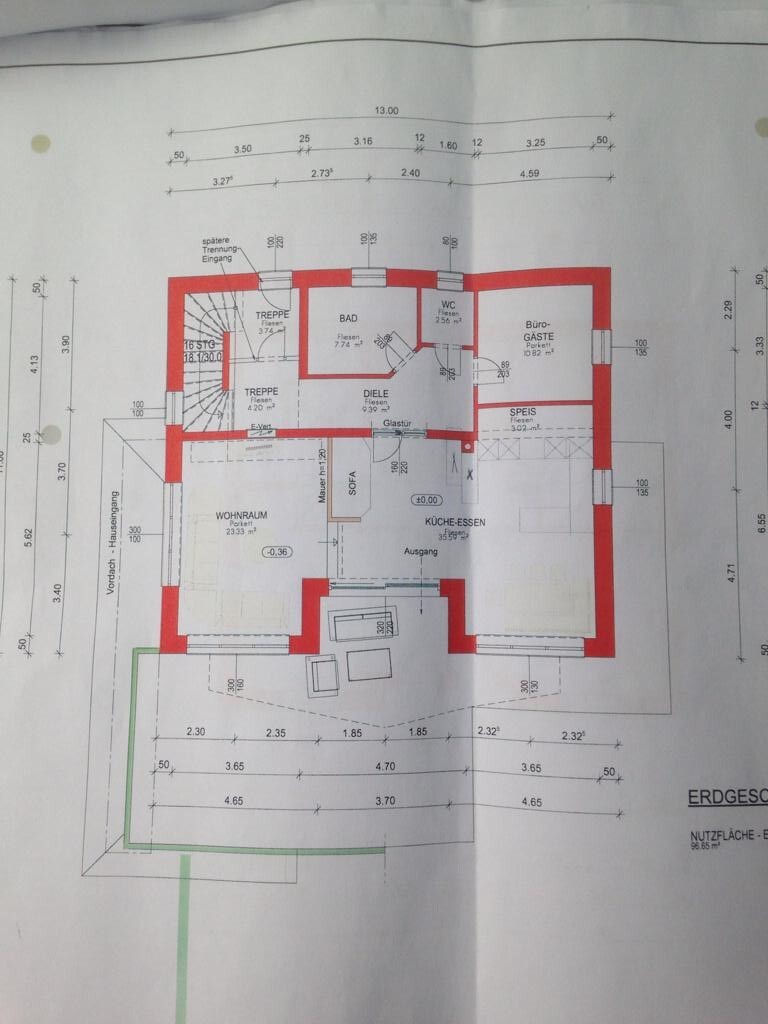
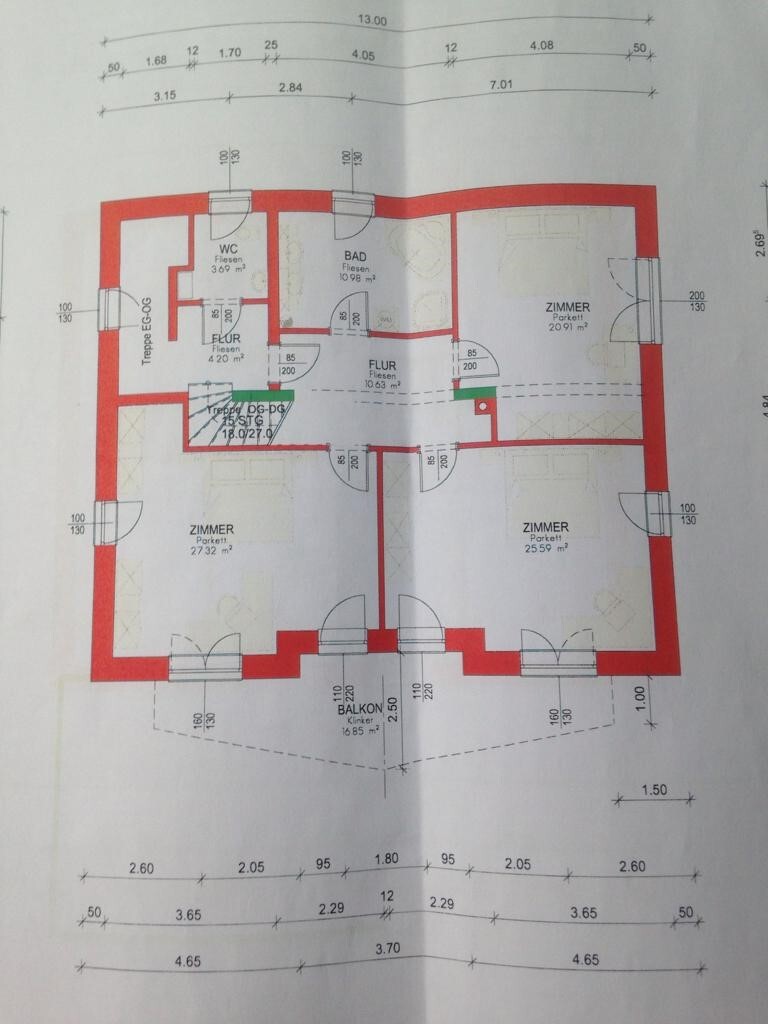
My husband and I are in the early stages of planning our house. We had to submit a preliminary house plan to our local municipality (Salzburg Land/Austria) on short notice due to certain requirements. We developed this plan together with our designer with very little preparation time.
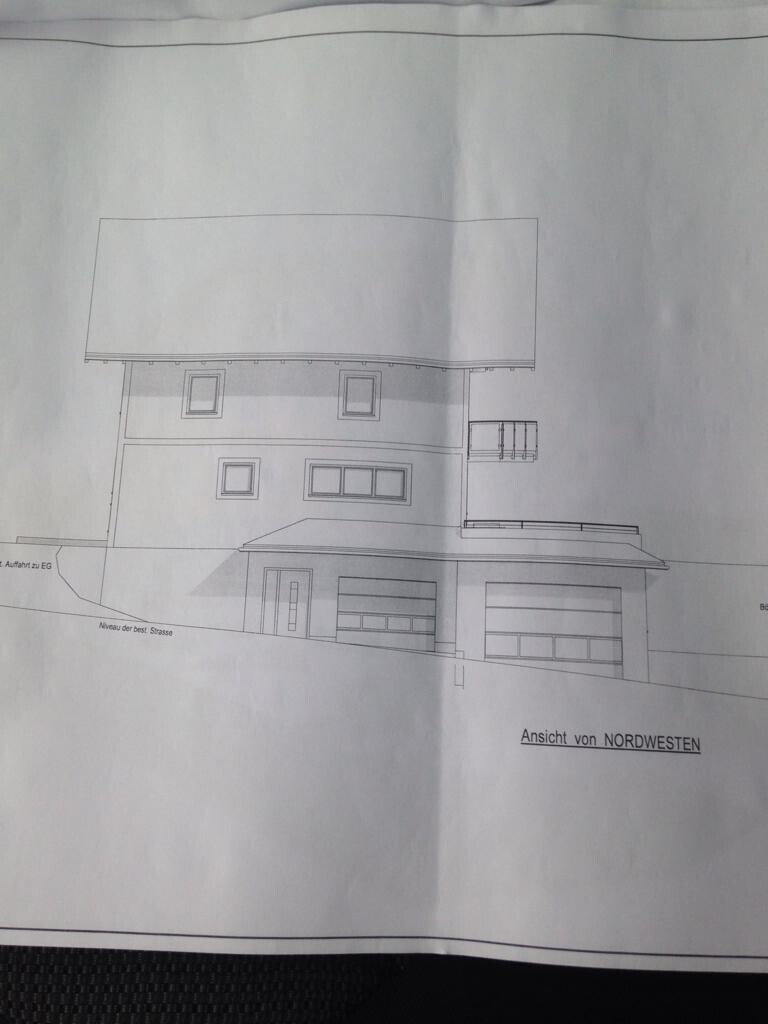
We have a somewhat unusual floor plan, in our opinion, featuring a setback on the ground floor, and we mainly want to hear your opinions about this. Our primary concern is whether we have taken a completely absurd approach or if we can build on this basic idea. Our biggest issue is that so far we haven’t seen a single house with this type of floor plan (neither online nor in real life, at least around Salzburg and nearby ...) and naturally, we wonder why. Does it have any significant disadvantages? Does it look strange in any way?
We look forward to your feedback and are already very grateful for your constructive criticism and especially your time to help us.
Now to the questionnaire:
Development plan / Restrictions
Plot size 920 m² (9,900 sq ft)
Slope Elevated plot, gently sloping on three sides
Owners’ requirements
Style, roof type, building type rural-modern, gable roof, two-family house
Basement, floors Basement, 2 full floors, attic
Number of occupants, ages Currently three (28, 29, and 8 months old) with 1-2 more children planned
Space requirements on ground and upper floors
Ground floor: spacious open kitchen with integrated pantry, dining area, living room, WC, bathroom, office (later a bedroom)
Upper floor: 3 children’s bedrooms, family bathroom, WC
Attic: master bedroom with bathroom and an additional room (extra bedroom / hobby room)
Ground floor + upper floor approx. 200 m² (2,150 sq ft); attic size not yet finalized
Office For family use and later bedroom
Kitchen L-shaped with cooking island and wood stove
Number of dining seats 6-8, possibly extendable table for more space
Fireplace Yes – planned as a room divider between living room and "common room"
Balcony Balcony on the first floor – should eventually be large enough for the second family
Garage Small garage for 1 vehicle and a larger garage for 2 vehicles
House design
Planned by:
Designer from a construction company
What do you particularly like? Why?
- “Split-level” living room – in our opinion, this creates a visual separation between the kitchen/dining area and is our little “highlight.” The living room remains a distinct living space and doesn’t get cluttered with toys because the common room offers plenty of space.
- “Common room” – this refers to the area between the living room and kitchen in front of the terrace door – lots of space for children to play and creates an open atmosphere while keeping the living room somewhat separated. Where a sofa is drawn, a fireplace with a reading corner as a room divider is also planned.
- Setback at the terrace – seating area covered and wind-protected with privacy screening. The resulting floor plan (where the living room is not directly adjacent to the kitchen and dining area as in many open-concept designs) is something we like.
- The office is intended to become our bedroom later, but in our opinion, it is currently too small for that.
- Main entrance is in the basement – spatially, the floor plan doesn’t allow for another solution; otherwise, the entrance would be on the back of the house, which we do not like. However, there is certainly another entrance on the ground floor for easier access when bringing in groceries, so you don’t have to carry everything through the basement.
- The cloakroom in the basement is still too small but can be easily enlarged – just mentioning this in case someone notices.
Cost estimate according to architect/designer not yet available – only a preliminary draft
Personal budget for house including fixtures and fittings 350,000 € (with a lot of personal labor)
Preferred heating technology Heat pump
If you had to give up something, which features/finishes
- Could give up: attic expansion initially, but want to keep the possibility for future use
- Cannot give up: a cozy and large kitchen/dining area is very important to us
Why does the design look the way it does?
The most important aspect of our planning is that the house can be converted into a two-family home in the future when one of our children would need it, earliest in 20–25 years. That would mean one living unit on the ground floor and a second on the first floor plus the attic.
The office planned on the ground floor would then be used as a bedroom. The staircase can be completely separated with a (already marked) wall but is intended to remain open until then.
The attic is planned to house the master bedroom with bathroom. This is where the plan shows the biggest weaknesses for us: the bedroom is too large, and the bathroom is too small. This definitely needs to be changed.
Why sleep in the attic? There is not enough space on the ground floor, and we want to keep privacy from the children’s bedrooms so that when our kids are older and have friends/partners visiting, everyone can have their own space. We know this might be inconvenient with small children/babies due to additional distances, but since children’s bedrooms 1 and 2 are relatively large, siblings could share a room, and bedroom 3 could serve as a “backup bedroom” for us. We are only planning for two children but you never know!
If later children’s bedrooms 1 and 2 become kitchen/living areas, there would then be one bedroom on the first floor and two more in the attic.
What we particularly like is the idea of the split-level living room. We are aware that opinions on this are very divided and most experts discourage it. However, the level difference is only 36 cm (2 steps), and we believe it will be manageable even as we get older.
What is the most important/basic question about the floor plan in 130 characters?
We would really like to know from you:
- Is there a name for this floor plan style (like L-shaped or U-shaped)?
- What do you think in general about the idea of the setback? We like the idea of having a covered terrace area and the resulting floor plan. We haven’t seen houses or floor plans like this before (if at all, only with bungalows) and wonder why? Does nobody like it, or are there disadvantages we are overlooking? Do you have experiences with sunlight exposure – will it be a problem that the setback measures 3.5 m (11.5 ft) from the balcony edge to the terrace door?
- Even though we love the idea, we would appreciate experiences and opinions on the split-level living room.
- Would you build the wall separating the common room from the living room (shown as 1.20 m (4 ft) high in the plan) all the way to the ceiling?
- Suggestions and ideas for the office/bedroom on the ground floor – how could the layout be changed to make the room at least 5 m² (54 sq ft) larger?
You need to consider what you need now and what you can afford. It doesn’t make sense to limit yourself financially just because you might have a child living here someday.
There are also stylish extensions. Often conflicts arise because pseudo-Bauhaus from 2018 clashes with an 80s style.
Take a look at town villa floor plans (not because you should build one, but these are relatively well-thought-out family layouts over two floors). Just think about having 2-3 children now.
The staircase should be more central in the house (so there is a continuous connection all the way to the attic), and in the basement, a room with daylight can be created.
Upstairs, one side for the children, one side for the parents.
On the ground floor, a nice large open kitchen with a dining area for 10 to 12 people, a fireplace, and a play area separated from the living room by a sliding door.
So rather a classic 180 m² (1,938 sq ft) layout with two full floors.
The attic receives utility lines; the rafters are insulated, not the floor; screed is poured. Nice large storage space, and in winter you can store a ride-on car and trampoline up there.
What I no longer want to be without is a laundry room on the sleeping level – that’s where the laundry naturally accumulates.
Now come the questions:
3rd child – the oldest has to move out.
1st option: the older child moves to the basement and gets the nicely lit room facing the street and some peace.
2nd option: the child moves into the ground floor study (which I would remove).
3rd option: you finish the attic.
2 children are already older and stay.
One gets the attic with dormers and remodels it as needed.
One gets the room with a bathroom in the basement facing the street.
One simply gets the children’s area.
1 child wants to move in with a family.
You take the ground floor and partition off the living room as a bedroom.
The large open kitchen remains.
Upstairs stay the bedrooms, and the attic is redesigned for cooking, living, and dining.
The upper apartment can, for example, be accessed via an external staircase with a large balcony (which you don’t need now).
There are many possibilities and solutions. You can’t plan everything now.
Remove unnecessary rooms from your floors and give the basement more purpose than just an entrance and storage room.
You can create a nice large room there that can be used flexibly. For now, just as a gaming/office/guest room; later, as a small apartment.
There are also stylish extensions. Often conflicts arise because pseudo-Bauhaus from 2018 clashes with an 80s style.
Take a look at town villa floor plans (not because you should build one, but these are relatively well-thought-out family layouts over two floors). Just think about having 2-3 children now.
The staircase should be more central in the house (so there is a continuous connection all the way to the attic), and in the basement, a room with daylight can be created.
Upstairs, one side for the children, one side for the parents.
On the ground floor, a nice large open kitchen with a dining area for 10 to 12 people, a fireplace, and a play area separated from the living room by a sliding door.
So rather a classic 180 m² (1,938 sq ft) layout with two full floors.
The attic receives utility lines; the rafters are insulated, not the floor; screed is poured. Nice large storage space, and in winter you can store a ride-on car and trampoline up there.
What I no longer want to be without is a laundry room on the sleeping level – that’s where the laundry naturally accumulates.
Now come the questions:
3rd child – the oldest has to move out.
1st option: the older child moves to the basement and gets the nicely lit room facing the street and some peace.
2nd option: the child moves into the ground floor study (which I would remove).
3rd option: you finish the attic.
2 children are already older and stay.
One gets the attic with dormers and remodels it as needed.
One gets the room with a bathroom in the basement facing the street.
One simply gets the children’s area.
1 child wants to move in with a family.
You take the ground floor and partition off the living room as a bedroom.
The large open kitchen remains.
Upstairs stay the bedrooms, and the attic is redesigned for cooking, living, and dining.
The upper apartment can, for example, be accessed via an external staircase with a large balcony (which you don’t need now).
There are many possibilities and solutions. You can’t plan everything now.
Remove unnecessary rooms from your floors and give the basement more purpose than just an entrance and storage room.
You can create a nice large room there that can be used flexibly. For now, just as a gaming/office/guest room; later, as a small apartment.
G
goldmarieeeee6 Jun 2019 10:44ypg schrieb:
I don’t think it works well—especially considering your points.
Regarding the staircase placement: the corner solution creates a long hallway. In a household with many children, the kitchen, which should usually be centrally located, ends up with the longest traffic route. Everything has to pass through the living room, even though you want privacy.
Your recessed area is neither one thing nor the other and restricts a terrace in a high-traffic zone.
There’s no cloakroom or enough space at the entrance for 4-5 people. Where less space is required, a turning circle has been created, which feels like a dead end. The pantry is too narrow to use comfortably. A corner bench might work at the edge, but there’s no room for a freestanding table. The countertop is narrow at only 60 cm (24 inches).
I’ve already mentioned the central open area: you don’t plan building blocks in front of the patio door or in a passageway.
A bathroom should be sufficient for visitors and later serve as a master bathroom. The room intended to become a bedroom later should be planned with at least 12 sqm (130 sq ft) and positioned so it can function as a playroom initially. Thanks for your very helpful thoughts—you’re certainly right about some things.
I had also considered swapping the living room and kitchen/dining areas completely. But even then, it probably wouldn’t be ideal.
I just find it very difficult… I’m not a fan of a bay window or projection either because it divides the terrace area. And a simple rectangular house feels boring to me; it lacks something special. We searched for a long time for a floor plan that’s open but doesn’t awkwardly line up all the areas. We really thought we found it here—I’m just running out of ideas for how else to solve it. Modern show homes always feature completely open living spaces, and I’m just not a fan of that. But having the living room as a fully separate room feels like something from 1990.

Mmmhh... so you actually don’t like the exterior of the house, you don’t like the bay window, you’re unsure about one or two things, and you understand the criticism on some points.
Honestly? Crumple it up or give it a quick “three-point toss” at the sponge—or if it hurts more, a slightly frustrated paper bin dunk is also fine. Write down (in text, not drawings) what you did like… take to heart the various approaches described (budget, expectations, etc.) and start over.
Trying to adjust the proposal to the “corners” you already mentioned will only make a mess out of it.
By the way… whether you only build once in your life—there are certainly differing opinions here. Some users reasonably think that in the future people will likely build more than once. This may vary by region and might not yet be the case in more rural or traditional areas. But you shouldn’t hold too tightly to the idea of building today for 2–3 generations. First, see what fits your needs now or at least in the near future. Everything else is a bonus. There are not only bad examples when it comes to later extensions or renovations.
Honestly? Crumple it up or give it a quick “three-point toss” at the sponge—or if it hurts more, a slightly frustrated paper bin dunk is also fine. Write down (in text, not drawings) what you did like… take to heart the various approaches described (budget, expectations, etc.) and start over.
Trying to adjust the proposal to the “corners” you already mentioned will only make a mess out of it.
By the way… whether you only build once in your life—there are certainly differing opinions here. Some users reasonably think that in the future people will likely build more than once. This may vary by region and might not yet be the case in more rural or traditional areas. But you shouldn’t hold too tightly to the idea of building today for 2–3 generations. First, see what fits your needs now or at least in the near future. Everything else is a bonus. There are not only bad examples when it comes to later extensions or renovations.
Over the weekend, I also saw a solution where a child (with partner) builds a duplex together with their parents. The parents’ half was slightly smaller, but both halves were stylistically identical. The entire building was harmonious. In my opinion, only the "child’s section" (which is already adult) could have been improved a bit.
The parents had a living area, bedroom, bathroom, and unfortunately only a very narrow kitchen without natural light, which I didn’t like. Otherwise, it was an 80m² (860 sq ft) two-room apartment.
Perhaps it’s worth considering whether such a solution is feasible? Building the family home you need now, while also planning the retirement residence in terms of location on the plot, etc., and then constructing it when the time comes?
The parents had a living area, bedroom, bathroom, and unfortunately only a very narrow kitchen without natural light, which I didn’t like. Otherwise, it was an 80m² (860 sq ft) two-room apartment.
Perhaps it’s worth considering whether such a solution is feasible? Building the family home you need now, while also planning the retirement residence in terms of location on the plot, etc., and then constructing it when the time comes?
G
goldmarieeeee6 Jun 2019 11:24haydee schrieb:
You need to figure out what you need now and what you can afford. It doesn’t help to restrict yourself financially just because a child might live there someday.
There are also stylish extensions available. Often conflicts arise because pseudo-Bauhaus style from 2018 clashes with 1980s aesthetics.
Take a look at town villa floor plans (not because you have to build one, but these are relatively well-thought-out family layouts over two floors).
Just think about 2-3 children for now.
Place the staircase more centrally in the house (then it can run continuously up to the attic), and create a room with daylight in the basement.
Upstairs, have one side for the children and one side for the parents.
On the ground floor, a nice large open-plan kitchen with a dining area for 10 to 12 people, a fireplace, and a play area separated from the living room by a sliding door.
So more of a classic 180 m² (1,940 sq ft) layout with two full floors.
The attic gets supply lines; rafters are insulated, but not the floor; screed is applied. A nice large storage area, and in winter you can store things like a ride-on toy or trampoline there.
What I wouldn't want to miss anymore is a laundry room on the sleeping level – that's where the laundry actually accumulates.
Now, some question marks:
3rd child – the oldest needs to move out.
Option 1: The older child moves to the basement and gets a nice bright room facing the street and can have their peace and quiet.
Option 2: The child moves into the ground floor office (which I would remove).
Option 3: You convert the attic.
2 children are already older and staying.
One gets the attic with dormer windows, renovated as needed.
One gets the basement room with a bathroom facing the street.
One simply gets the children's area.
1 child wants to move in with their own family.
You move to the ground floor and separate the living room as a bedroom.
The large open-plan kitchen remains.
Sleeping areas stay upstairs, and the attic is redesigned for cooking, living, and dining.
The upper apartment can, for example, be accessed via an outdoor staircase with a large balcony (which you don’t need right now).
There are many possibilities and solutions. You can’t plan everything.
Remove unnecessary rooms from your levels and give the basement more purpose than just an entrance and storage area.
You can put in a nice large room there that can be used flexibly. Right now as a gamer workspace/guest room; later as a small apartment.Great ideas and valuable input – many thanks for that!
We will take a close look at your suggestions – for example, I really like the idea of the outdoor staircase and also the basement room – maybe I can plan the office there too. I’m a bit of a DIY enthusiast and would love to have a room for my creative chaos.
The only thing I’m a bit unsure about is separating the bedroom and living room... If you think ahead and grandchildren are visiting, Sundays with family or Christmas/Easter might get cramped again... I see that now with my in-laws (in whose house we live, and who only have the ground floor now) – when all the children with their partners and kids gather, it gets really crowded. Our family gets together quite often, and I hope it will be the same for us!
How can we approach this concretely now? Do we have to discard this plan completely or can we already build on the basement if, for example, the staircase is rearranged? I’ve heard that you should plan a house around the kitchen since it’s the most important and central point, which makes sense. I’m unsure whether to start a completely new design or continue working with what we have?
G
goldmarieeeee6 Jun 2019 11:36face26 schrieb:
Mmmhh... so basically, you don’t really like the house from the outside, you don’t like the bay window, you’re uncertain about one or two things, and you understand the criticism on some points.
Honestly? You can either crumple it up and toss it as a three-point shot at the trash can, or if it stings more, a slightly frustrated paper bin dunk is also fine. Write down (in words, not drawings) what you liked… take to heart the approaches described by others (budget, ideas, etc.) and start again from scratch.
Trying to adjust the proposal to the already mentioned “corners” will just make a mess.
By the way… whether you only build once in your life… there are definitely differing opinions here. Some users reasonably believe that in the future people will build more than once. This might vary depending on the region and might not yet be common in more rural or traditional areas. But you shouldn’t hold too tightly to the idea of building now for 2 or 3 generations. First, see what fits you today or at least in the near future. Everything else is extra. There are not only bad examples when it comes to later extensions or renovations.Well, I do like the house from the outside but with some changes… for example, in the attic just one large (triangular) window (more as a decorative element) plus a roof window for ventilation, redesign the entrance area, and so on…
You misunderstood the bay window part. I don’t like that standard bay window you see on almost every new house (at least in our area), because it makes the terrace area look so divided. I find that with our recessed section the terrace looks much more harmonious, and at the same time, the balcony already creates a sheltered area. What I also don’t like about the protruding bay windows is that you sit kind of like in a display window—we face exactly towards the street where all the (albeit not heavy) traffic passes by. I don’t want a bay window and then have to cover everything up constantly with curtains or blinds so that no one can see into the house… I thought the recessed design worked better for this!
Thanks for your tips on further planning—it looks like it really might be better to start over…
Similar topics