
Hello everyone,
After building the terrace last year, we are now about to start with the lawn and some shrubs.
We are now considering whether to plan for garden irrigation.
Our old garden was much larger and we rarely watered it at all.
But now we have a southwest-facing garden, so it probably makes sense to water it to prevent damage.
We have an outdoor tap, and next to it there is a cistern water tap.
From there, a conduit runs to the lawn.
But what next?
Should we install pop-up lawn sprinklers, or just a water outlet where the existing sprinkler can be connected as needed?
Do you use drip irrigation for the shrubs?
What systems do you have? And are you satisfied with them?
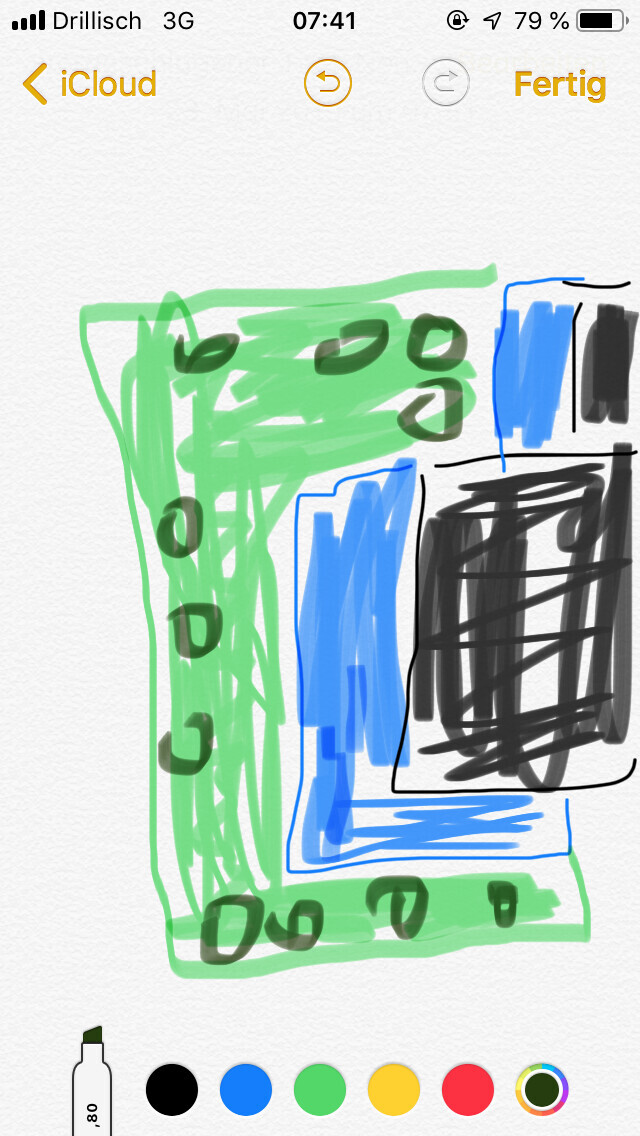
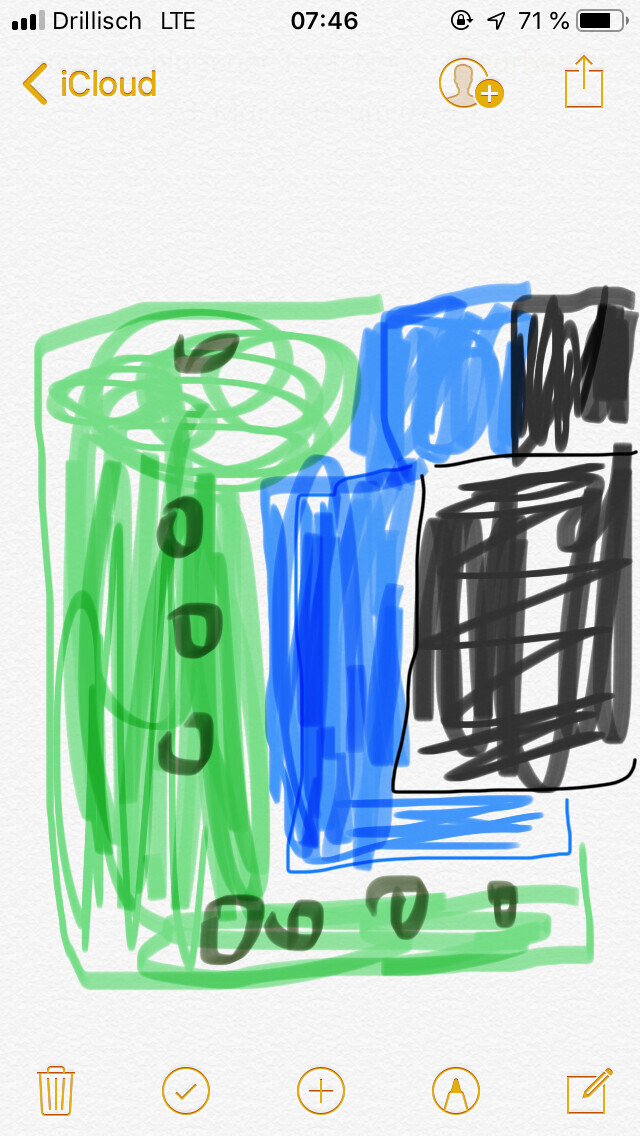
I made a rough sketch, unfortunately not very good since I’m on the go. But it should give you an idea of the situation.
Black is house and garage, blue is terrace, green will be the lawn, and the dark shading is the rough plan for the shrubs.
Our lawn is about 20 meters (65.6 feet) wide and 5–7 meters (16.4–23 feet) deep.
Best regards,
Birgit
After building the terrace last year, we are now about to start with the lawn and some shrubs.
We are now considering whether to plan for garden irrigation.
Our old garden was much larger and we rarely watered it at all.
But now we have a southwest-facing garden, so it probably makes sense to water it to prevent damage.
We have an outdoor tap, and next to it there is a cistern water tap.
From there, a conduit runs to the lawn.
But what next?
Should we install pop-up lawn sprinklers, or just a water outlet where the existing sprinkler can be connected as needed?
Do you use drip irrigation for the shrubs?
What systems do you have? And are you satisfied with them?
I made a rough sketch, unfortunately not very good since I’m on the go. But it should give you an idea of the situation.
Black is house and garage, blue is terrace, green will be the lawn, and the dark shading is the rough plan for the shrubs.
Our lawn is about 20 meters (65.6 feet) wide and 5–7 meters (16.4–23 feet) deep.
Best regards,
Birgit
Oh man
The more I look into this topic, the more confused I get.
What I don’t understand right now:
Why do I need so many things, some of which are really expensive?
I thought I would do it similarly to how I did it in the old garden.
A sprinkler in the middle, connected to the water supply line, and a controller at the faucet.
To make it look better and suitable for a robot lawn mower, I figured a pop-up sprinkler would be better.
The controller manages the watering schedule, and that’s it.
There are controllers available with two outlets if I need a second separate line.
Are pop-up sprinklers really that limited in range?
In the old garden, I had the Gardena square sprinkler, and that was enough.
The more I look into this topic, the more confused I get.
What I don’t understand right now:
Why do I need so many things, some of which are really expensive?
I thought I would do it similarly to how I did it in the old garden.
A sprinkler in the middle, connected to the water supply line, and a controller at the faucet.
To make it look better and suitable for a robot lawn mower, I figured a pop-up sprinkler would be better.
The controller manages the watering schedule, and that’s it.
There are controllers available with two outlets if I need a second separate line.
Are pop-up sprinklers really that limited in range?
In the old garden, I had the Gardena square sprinkler, and that was enough.

Pop-up sprinklers are available with very long reach. However, your water flow rate is not sufficient for that, and your lawn is not circular. Take a look at what is used on golf courses.
If you don’t mind uneven watering, you could also bury some Gardena rectangular sprinklers. Then use the battery-operated controller with two outlets. But this is not really a "proper" irrigation system.
Since you have to dig anyway for the sprinklers, you could run pipes to the edges of the lawn and install, for example, Hunter sprinklers there. The piping costs almost nothing. The control unit (unless you choose the high-end version) is not more expensive than a Gardena controller. This way, you get a robust system with all the possibilities.
I think you are still stuck in an old mindset. You can’t achieve good and uniform coverage with just one sprinkler. Some areas will be too dry, others will have puddles... Not to mention the water consumption...
If you don’t mind uneven watering, you could also bury some Gardena rectangular sprinklers. Then use the battery-operated controller with two outlets. But this is not really a "proper" irrigation system.
Since you have to dig anyway for the sprinklers, you could run pipes to the edges of the lawn and install, for example, Hunter sprinklers there. The piping costs almost nothing. The control unit (unless you choose the high-end version) is not more expensive than a Gardena controller. This way, you get a robust system with all the possibilities.
I think you are still stuck in an old mindset. You can’t achieve good and uniform coverage with just one sprinkler. Some areas will be too dry, others will have puddles... Not to mention the water consumption...
Hello Rick2018,
I spent quite some time yesterday reading up on the whole topic.
You’re right, Gardena seems to really do double work since everything breaks quickly.
So it probably makes sense to invest directly in something durable.
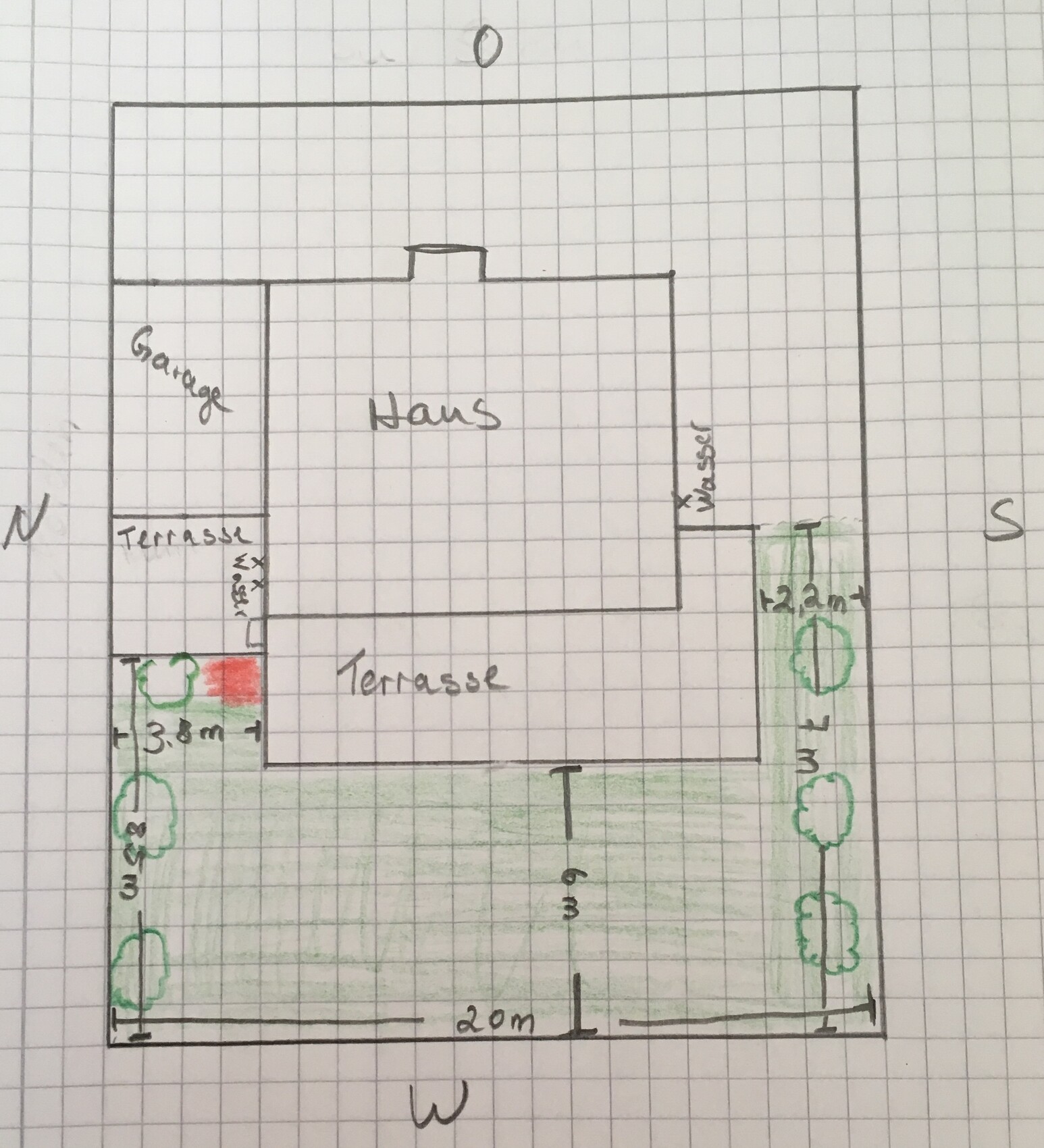
I’ve attached a proper plan again.
For now, I just want to install lawn sprinklers and water outlets on both the left and right at the planted shrubs, so later I can decide whether to set up drip irrigation from there.
Our garden is still a complete blank slate. The landscaping company is coming the week after next to design everything and lay down the sod.
We plan to do the irrigation ourselves.
Where I marked the red spot on the plan, I want to install the water manifold, an electrical distribution box, and the garage for the robotic lawn mower. Whether there will still be room for a plant there remains to be seen.
Could you maybe help me with the planning?
I saw in the other thread that you did a great job with this.
I want to keep it as inexpensive as possible for now. We just finished building.
At the water connection, I would like a flexible hose that allows me to feed water either from the rainwater tank or from the house supply.
Is it possible to connect the irrigation controller directly to the tap like with Gardena? Or how does that work exactly?
Irrigation of the front yard doesn’t matter for now since no work will be done there yet. That’s planned for next year once the road is finished.
Best regards,
Birgit
I spent quite some time yesterday reading up on the whole topic.
You’re right, Gardena seems to really do double work since everything breaks quickly.
So it probably makes sense to invest directly in something durable.
I’ve attached a proper plan again.
For now, I just want to install lawn sprinklers and water outlets on both the left and right at the planted shrubs, so later I can decide whether to set up drip irrigation from there.
Our garden is still a complete blank slate. The landscaping company is coming the week after next to design everything and lay down the sod.
We plan to do the irrigation ourselves.
Where I marked the red spot on the plan, I want to install the water manifold, an electrical distribution box, and the garage for the robotic lawn mower. Whether there will still be room for a plant there remains to be seen.
Could you maybe help me with the planning?
I saw in the other thread that you did a great job with this.
I want to keep it as inexpensive as possible for now. We just finished building.
At the water connection, I would like a flexible hose that allows me to feed water either from the rainwater tank or from the house supply.
Is it possible to connect the irrigation controller directly to the tap like with Gardena? Or how does that work exactly?
Irrigation of the front yard doesn’t matter for now since no work will be done there yet. That’s planned for next year once the road is finished.
Best regards,
Birgit
The irrigation controller is not connected to the water supply or faucet.
Only the control wiring from the valves runs to the controller. This means you could place the controller indoors near a power outlet and run the control wiring to that location.
A flexible hose for switching connections is possible. However, it should be ensured that water is available when the cycle starts. Depending on the irrigation controller, the watering cycle may start automatically if the soil is too dry.
Only the control wiring from the valves runs to the controller. This means you could place the controller indoors near a power outlet and run the control wiring to that location.
A flexible hose for switching connections is possible. However, it should be ensured that water is available when the cycle starts. Depending on the irrigation controller, the watering cycle may start automatically if the soil is too dry.
Similar topics