
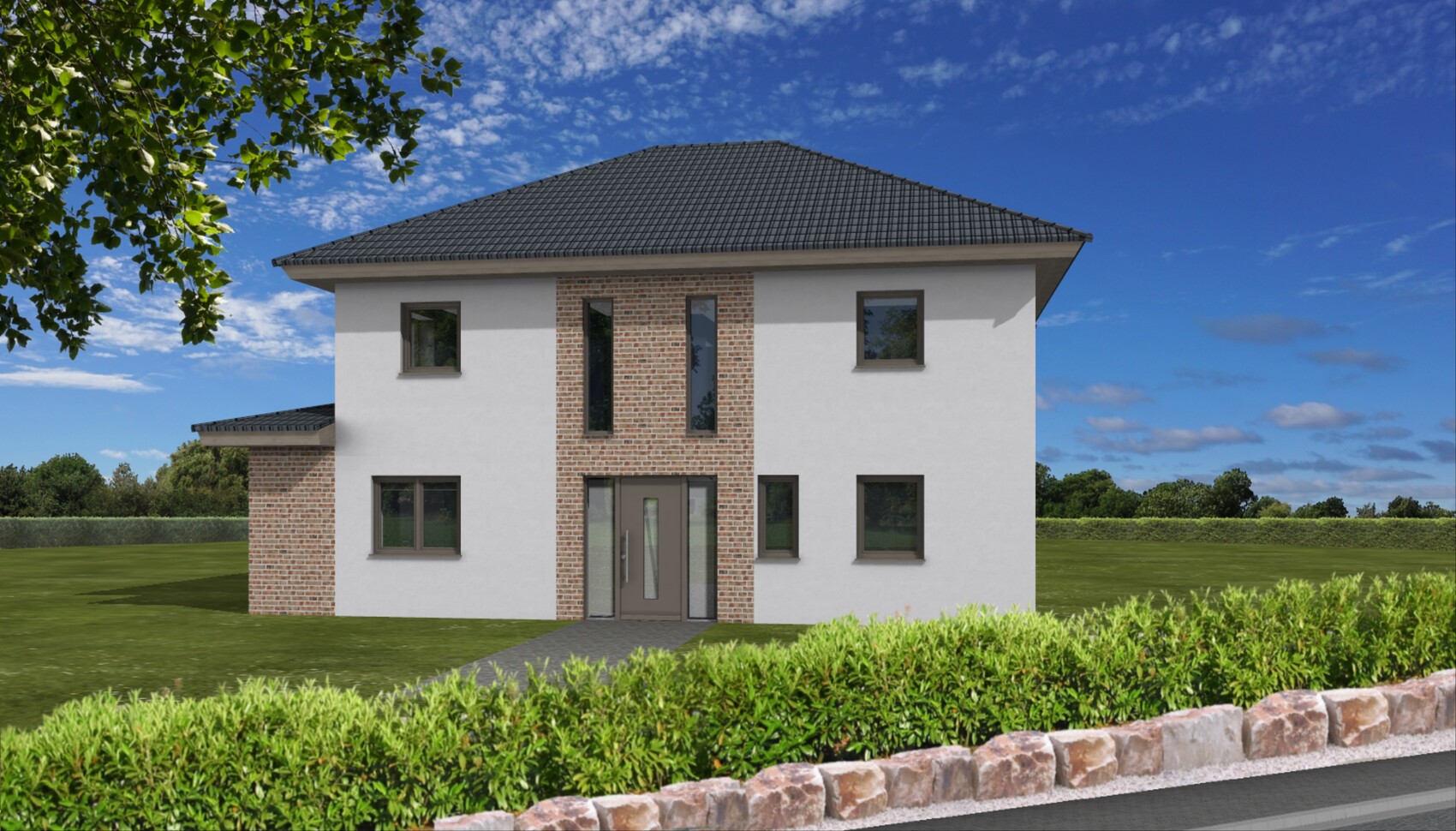
ᐅ Floor plan of an urban villa with a hip roof, approximately 170 square meters
Created on: 18 May 2019 15:35
D
Danvane
Hello everyone,
My wife and I have been considering building a house for quite some time now. As a result, I have been reading this forum for a while. First of all, thank you very much for your many helpful tips, which have already helped us tremendously. Many compliments to the numerous users who actively participate here and share their knowledge with others.
Now the time has come for us as well. We have purchased a plot of land in Lower Saxony and are currently working with an architect to develop an optimal floor plan for us.
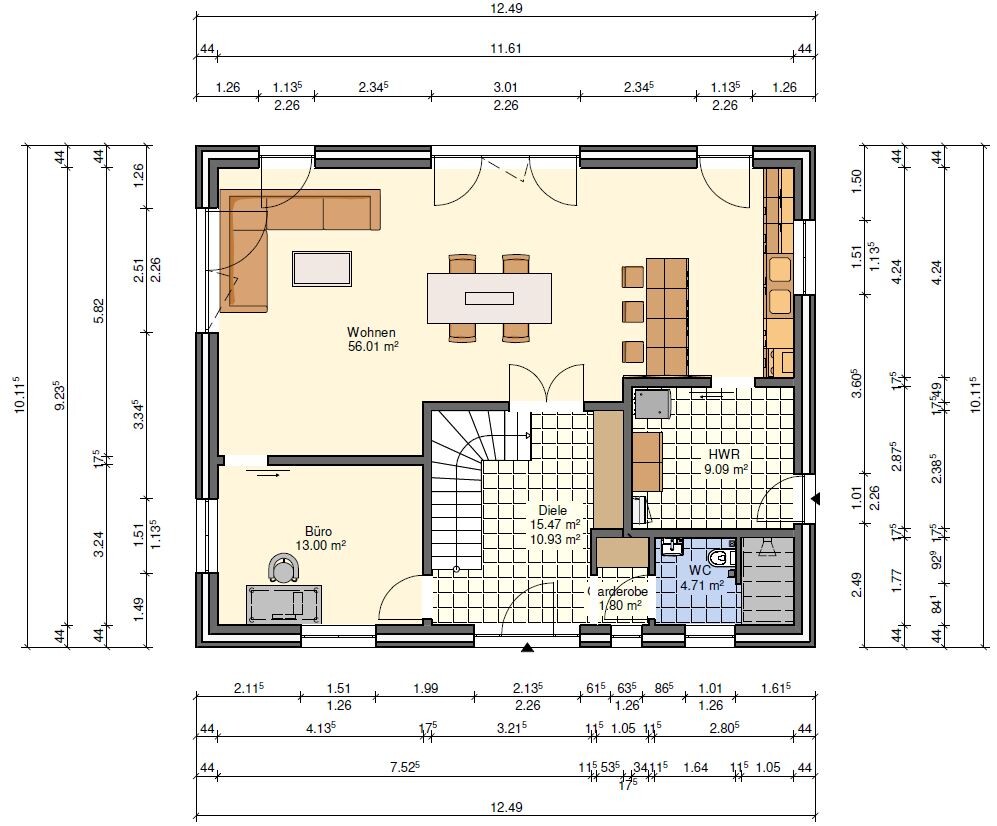
We have now received a draft, which we think could still be improved in some areas. For this reason, I have decided to share the floor plan here for discussion and hope to get some suggestions or ideas on what we can improve. Perhaps you will also spot things that “just don’t work” or are not practical for everyday use.
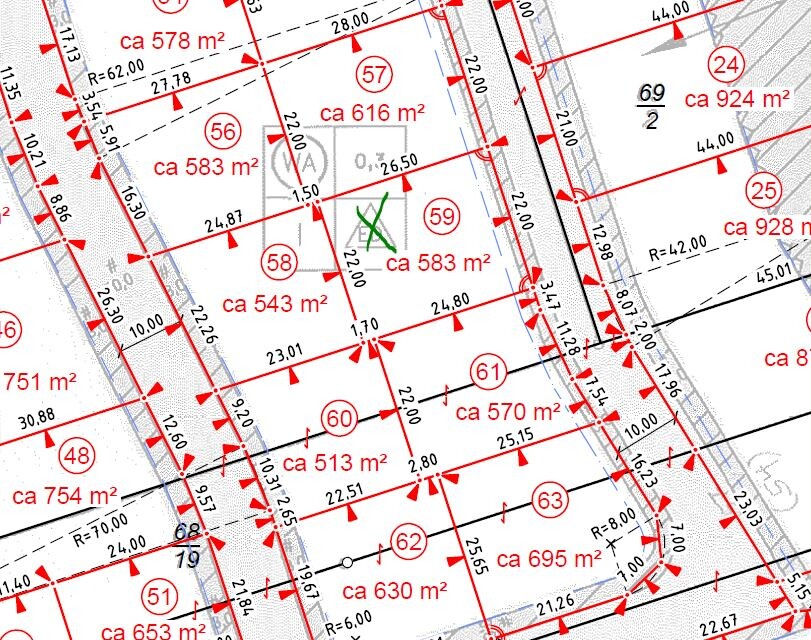
Note: The subdivision plan showing the plot (green cross) is oriented to north.
I look forward to any feedback! Here is the questionnaire:
Development plan/restrictions
Plot size: 583 sqm
Slope: no
Floor area ratio (FAR): 0.3
Plot coverage ratio (site occupancy): no requirement
Building envelope, building line, and boundaries:
The plot is 22 m wide and 24.8 m to 26.5 m deep depending on the side. The house should ideally extend more in width than in depth to leave as much garden space as possible on the southwest side. Maximum house width: 22 m (plot width) – 6 m (width of double carport) – 3 m (building boundary where the carport is not located) = 13 m. As for depth, depending on the layout, we are considering between 9 m and a maximum of 11 m.
Setback/building margin: 3 m
Number of parking spaces: no requirement
Number of floors: one full floor
Roof pitch: minimum 15 degrees
Architectural style: no requirement
Orientation: no requirement
Maximum height/limitations: no requirement
Homeowners' requirements
Architectural style, roof type, building type:
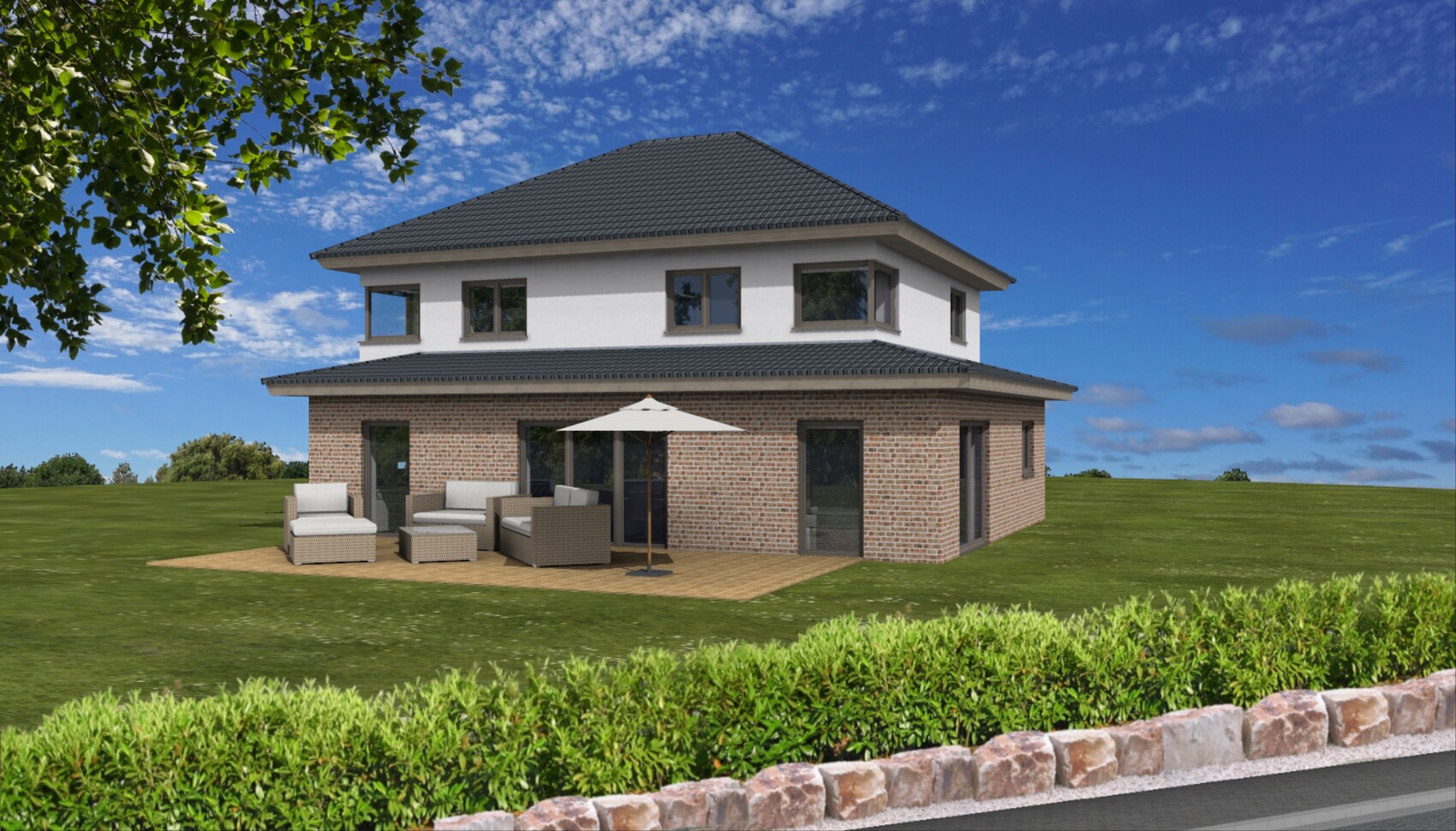
Preferred style: townhouse villa with only one full floor (ground floor) and a hip roof on the upper floor; the upper floor may only cover 2/3 of the ground floor area to meet the full-floor condition; whether the ground floor has a projection on two sides or a symmetrical projection on all four sides is initially not decisive and should result from the floor plan; the ground floor projection should be covered with a roof like the upper floor — no balconies or similar.
Basement, floors:
No basement, ground floor is full floor + upper floor as a recessed floor with a maximum of 2/3 of the ground floor area
Number of occupants, ages:
3 people aged 30 (female), 29 (male), and 8 months (child)
Space requirements on ground floor and upper floor:
Ground floor: living/dining/kitchen as one room, utility room, guest WC with shower, office/guest room, entrance hallway with wardrobe
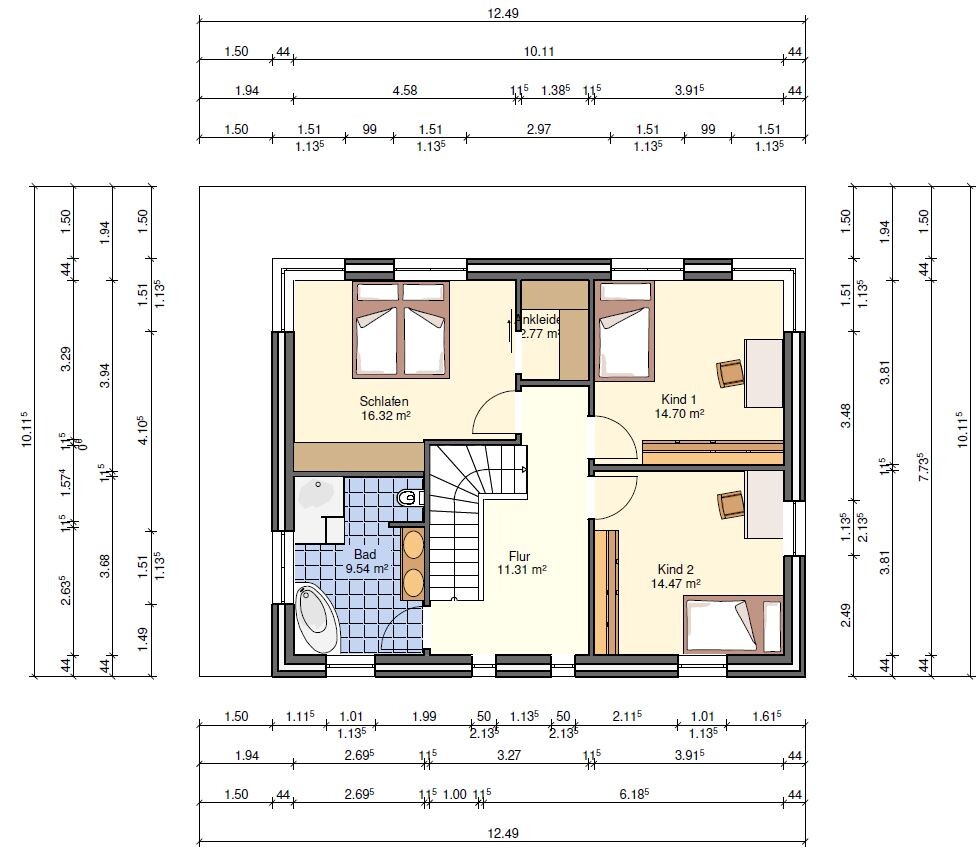
Upper floor: bedroom, dressing room, 2 x children’s rooms, gallery (hallway)
Office: family use or home office:
Primarily home office, but must also provide sleeping space for guests; in younger years, possibly used as a playroom for children on the ground floor
Number of overnight guests per year: <5
Open or closed architecture:
Open concept in the main living area on the ground floor; however, the staircase to the upper floor should be closed off — in other words, we definitely do not want a staircase in the main living space leading upstairs (although stylish, it is not ideal with children’s rooms upstairs)
Conservative or modern construction: modern
Open kitchen, kitchen island: open kitchen with island
Number of dining seats: 6 with option for up to 12 (for visitors, etc.)
Fireplace: no
Music/stereo wall: no, only a sideboard or similar for TV
Balcony, roof terrace: no
Garage, carport:
Double carport with storage room (6 m x 9 m) on the northeast side of the plot at the building boundary
Utility garden, greenhouse: no
Additional wishes/special features/daily routine, also reasons why certain things should or should not be included:
It is important for us to have a generous wardrobe near the front door that allows jackets, shoes, etc., to be dropped off immediately upon entering the house — this keeps dirt from spreading further inside and prevents tripping over shoes, bags, etc., all the time.
House design
Planning by:
The design was created by an architect.
What do you particularly like? Why?
What do you dislike? Why?
Preferred heating system: gas
If you have to do without, which details/extras can you live without / which can you not live without?
Basically, we would very reluctantly deviate from the presented architectural style (“concealed” townhouse villa).
Why did the design turn out the way it is now?
Our wish was a house without sloped ceilings on the upper floor, which of course has to comply with the development plan. Accordingly, the architect designed a form of townhouse villa with a sufficiently large projection on the ground floor as the basic concept. Regarding the room program, it’s probably standard for a house of this size, and we have no special demands in this regard. Some ideas, like connecting the office to the main living area, also came from this forum. In particular, the floor plans by kaho674 have always been very inspiring for new ideas (many thanks for that!).
What is the main/basic question about the floor plan summed up in 130 characters?
We are looking for ideas on how to improve the floor plan and better tailor it to our requirements (e.g., room orientation upstairs, see generally “dislikes”) without increasing the house’s footprint.
My wife and I have been considering building a house for quite some time now. As a result, I have been reading this forum for a while. First of all, thank you very much for your many helpful tips, which have already helped us tremendously. Many compliments to the numerous users who actively participate here and share their knowledge with others.
Now the time has come for us as well. We have purchased a plot of land in Lower Saxony and are currently working with an architect to develop an optimal floor plan for us.
We have now received a draft, which we think could still be improved in some areas. For this reason, I have decided to share the floor plan here for discussion and hope to get some suggestions or ideas on what we can improve. Perhaps you will also spot things that “just don’t work” or are not practical for everyday use.
Note: The subdivision plan showing the plot (green cross) is oriented to north.
I look forward to any feedback! Here is the questionnaire:
Development plan/restrictions
Plot size: 583 sqm
Slope: no
Floor area ratio (FAR): 0.3
Plot coverage ratio (site occupancy): no requirement
Building envelope, building line, and boundaries:
The plot is 22 m wide and 24.8 m to 26.5 m deep depending on the side. The house should ideally extend more in width than in depth to leave as much garden space as possible on the southwest side. Maximum house width: 22 m (plot width) – 6 m (width of double carport) – 3 m (building boundary where the carport is not located) = 13 m. As for depth, depending on the layout, we are considering between 9 m and a maximum of 11 m.
Setback/building margin: 3 m
Number of parking spaces: no requirement
Number of floors: one full floor
Roof pitch: minimum 15 degrees
Architectural style: no requirement
Orientation: no requirement
Maximum height/limitations: no requirement
Homeowners' requirements
Architectural style, roof type, building type:
Preferred style: townhouse villa with only one full floor (ground floor) and a hip roof on the upper floor; the upper floor may only cover 2/3 of the ground floor area to meet the full-floor condition; whether the ground floor has a projection on two sides or a symmetrical projection on all four sides is initially not decisive and should result from the floor plan; the ground floor projection should be covered with a roof like the upper floor — no balconies or similar.
Basement, floors:
No basement, ground floor is full floor + upper floor as a recessed floor with a maximum of 2/3 of the ground floor area
Number of occupants, ages:
3 people aged 30 (female), 29 (male), and 8 months (child)
Space requirements on ground floor and upper floor:
Ground floor: living/dining/kitchen as one room, utility room, guest WC with shower, office/guest room, entrance hallway with wardrobe
Upper floor: bedroom, dressing room, 2 x children’s rooms, gallery (hallway)
Office: family use or home office:
Primarily home office, but must also provide sleeping space for guests; in younger years, possibly used as a playroom for children on the ground floor
Number of overnight guests per year: <5
Open or closed architecture:
Open concept in the main living area on the ground floor; however, the staircase to the upper floor should be closed off — in other words, we definitely do not want a staircase in the main living space leading upstairs (although stylish, it is not ideal with children’s rooms upstairs)
Conservative or modern construction: modern
Open kitchen, kitchen island: open kitchen with island
Number of dining seats: 6 with option for up to 12 (for visitors, etc.)
Fireplace: no
Music/stereo wall: no, only a sideboard or similar for TV
Balcony, roof terrace: no
Garage, carport:
Double carport with storage room (6 m x 9 m) on the northeast side of the plot at the building boundary
Utility garden, greenhouse: no
Additional wishes/special features/daily routine, also reasons why certain things should or should not be included:
It is important for us to have a generous wardrobe near the front door that allows jackets, shoes, etc., to be dropped off immediately upon entering the house — this keeps dirt from spreading further inside and prevents tripping over shoes, bags, etc., all the time.
House design
Planning by:
The design was created by an architect.
What do you particularly like? Why?
- The entrance hall does not feel narrow but opens comparatively wide
- The wardrobe provides enough space to store jackets, shoes, etc.
- Connection between kitchen and utility room
- Connection between living area and office — the office is not isolated but integrated into the main living area (also usable as a play area for children, for example)
What do you dislike? Why?
- Staircase located in the “dirty” area is not optimal
- Utility room only accessible through the kitchen — potentially inconvenient in everyday life
- Kitchen might be difficult to furnish (storage space issue)
- The entire upper floor needs improvement:
- Both children’s rooms should face southwest with a view of the garden
- Bedroom should be in the north / east
- Dressing room is integrated as requested but is not really usable due to its size
- Bathroom on the upper floor is not connected to the bathroom on the ground floor — probably not ideal
Preferred heating system: gas
If you have to do without, which details/extras can you live without / which can you not live without?
Basically, we would very reluctantly deviate from the presented architectural style (“concealed” townhouse villa).
Why did the design turn out the way it is now?
Our wish was a house without sloped ceilings on the upper floor, which of course has to comply with the development plan. Accordingly, the architect designed a form of townhouse villa with a sufficiently large projection on the ground floor as the basic concept. Regarding the room program, it’s probably standard for a house of this size, and we have no special demands in this regard. Some ideas, like connecting the office to the main living area, also came from this forum. In particular, the floor plans by kaho674 have always been very inspiring for new ideas (many thanks for that!).
What is the main/basic question about the floor plan summed up in 130 characters?
We are looking for ideas on how to improve the floor plan and better tailor it to our requirements (e.g., room orientation upstairs, see generally “dislikes”) without increasing the house’s footprint.
apokolok schrieb:
I think too much space is wasted in the hallway upstairs.
Is there a planned use for it?
Since the upper floor is going to be redesigned anyway, I would reduce some square meters from there and add them to the rooms. That’s the issue with the upper floor. We don’t have a lot of space for the rooms—bedroom including walk-in closet, two children’s rooms, and bathroom—so the hallway, as you said, can’t be too large. At the same time, we would like natural daylight in the hallway upstairs. Perhaps in the end, that will lead to a compromise: larger rooms but a hallway without natural light, allowing the staircase to be positioned centrally.
So, the wish is: as little hallway space upstairs as possible, but ideally with daylight in the hallway.
Danvane schrieb:
In retrospect, I wonder if I should have set more conditions from the start, such as wanting the children's bedrooms to face southwest towards the garden.Better not. Put a creative mind in a cage – and it will become stubborn! Wishes expressed as "it would be nice if..." are welcomed.
Danvane schrieb:
the desire for more house width than depth (resulting in a bigger garden) I find this statement somewhat borderline: obviously, an architect or planner knows that the front yard should not be larger than the garden, but besides the layperson’s ideas, there are other aspects the professional sees more clearly. For example, creating storage space and a carport so that they form a coherent unit on the plot, the house adapting to the site through its position, and enough room in the front yard or forecourt for everyday living situations. The idea of just attaching the carport to the house usually comes from a layperson, whereas the expert integrates it more thoughtfully into the plot for a balanced overall design.
Also, the plan develops in the creative mind based on exploring the property and the wishes long before drawing begins – if a good approach is blocked early on by "I want it this way and no other," then the optimal design might not be achievable simply because the layperson’s perspective isn’t broad enough.
Danvane schrieb:
where our need for a relatively small upper floor compared to a large ground floor is not so easy to find.You say that so easily... although it’s not true.
For example, the option with an L-shape on the ground floor and an I-shape upstairs would be possible – of course not if you insist on "definitely wider than deep"... The garden size remains the same in both cases, the L-shape just makes it more interesting.
Danvane schrieb:
The result is the design I posted here.I don’t see the problem with discussing it with her, pointing out what doesn’t work, and waiting for a new draft. A house design is not created by a single drawing, but through ongoing collaboration between client and architect. Several sketches and plans can easily end up discarded along the way.
ypg schrieb:
Better not. Put a creative mind in a cage, and it will become stubborn! Wishes expressed as “it would be nice if…” are welcome.
I find this statement already borderline: of course, an architect or planner will know that the front yard should not be larger than the garden, but besides the common layperson’s ideas, there are other aspects that the professional notices more than the layperson. For example, creating storage space and a carport alongside the house so that a cohesive unit forms on the property, the house adapts to the site through its location, and there are enough possibilities in the front yard/forecourt to accommodate everyday situations. This tacking a carport onto the house usually comes from the layperson, while the professional integrates it in a more sensible way on the property so that the whole area is designed consistently.
And it is exactly like this: the design is created in the creative mind by exploring the site and the wishes in detail before the architect even starts drawing. If a promising path is cut off by “I want it this way and no other,” then the optimal design might no longer be achievable simply because the layperson’s perspective isn’t broad enough.
You say it so easily… although it’s not true.
For example, the option of a lower floor shaped like an L and an upper floor shaped like an I would be possible… of course not if you absolutely want a “wider than deep” shape… the garden size remains the same in both cases, but with the L-shape it just becomes more interesting.
I don’t see any problem now with talking to her, explaining what doesn’t work, and waiting for a new design from her.
A house design is not created with a single drawing but through continuous collaboration between client and architect. Several sketches and plans might end up discarded along the way. Maybe we already said too much and should have left things more open. Your definition of a “good” architect makes sense to us so far.
Of course, we will tell her again what we don’t like, and we understand that a “perfect” floor plan for us doesn’t come on the first try. I never expected that.
The reason I shared the floor plan here was simply to a) have major mistakes pointed out, like the issue with the utility room and the kitchen’s circulation paths (which worked well ), and b) to hopefully collect ideas on how to successfully realize such a less common floor plan like the one we’re aiming for. There are plenty of floor plans available for gable roof houses or cube-shaped urban villas to get inspired by.
For example, I will definitely keep your suggestion of having the ground floor as an L-shape and the upper floor as an I-shape in mind for the next appointment. It’s something I probably wouldn’t have thought of on my own.
For the next meeting, I’d just like to be a bit better prepared—not to hand over the floor plan and have it copied by the architect, but to get a better feeling for what might still be possible (like your suggestion with the L and I shapes) and not simply accept everything because it seems like “it can’t get better,” when maybe there are still options that would be more attractive to us.
The L/I-shaped floor plan appears in almost every second floor plan discussion here – not that they are always good. But they are very common.
You will hardly find a rare floor plan, probably because it is less effective or practical. Everything that is common has proven to work.
See you soon
You will hardly find a rare floor plan, probably because it is less effective or practical. Everything that is common has proven to work.
See you soon

Danvane schrieb:
We will continue searching for floor plans, although our need for a relatively small upper floor compared to a large ground floor is not that easy to find. [...]
Basically, I understood that [...] the structural engineering needs to be examined very carefully again. A recessed top floor is not unusual. A timber frame construction instead of masonry makes the structural engineering simpler here, in my opinion.
In the next attempt, I would start with the upper floor and then develop the ground floor underneath, rather than the other way around.
https://www.instagram.com/11antgmxde/
https://www.linkedin.com/company/bauen-jetzt/
ypg schrieb:
The L/I-shape appears in almost every second floor plan discussion here – not that they are necessarily good. But they are very common.
And a rare floor plan is unlikely because it probably works less well or isn’t as functional. Everything that is common has proven itself.
See you soon I will take another look at one or two threads here.
Thanks so far!
Similar topics