
ᐅ Floor plan of an urban villa with a hip roof, approximately 170 square meters
Created on: 18 May 2019 15:35
D
DanvaneHello everyone,
My wife and I have been considering building a house for quite some time now. As a result, I have been reading this forum for a while. First of all, thank you very much for your many helpful tips, which have already helped us tremendously. Many compliments to the numerous users who actively participate here and share their knowledge with others.
Now the time has come for us as well. We have purchased a plot of land in Lower Saxony and are currently working with an architect to develop an optimal floor plan for us.
We have now received a draft, which we think could still be improved in some areas. For this reason, I have decided to share the floor plan here for discussion and hope to get some suggestions or ideas on what we can improve. Perhaps you will also spot things that “just don’t work” or are not practical for everyday use.
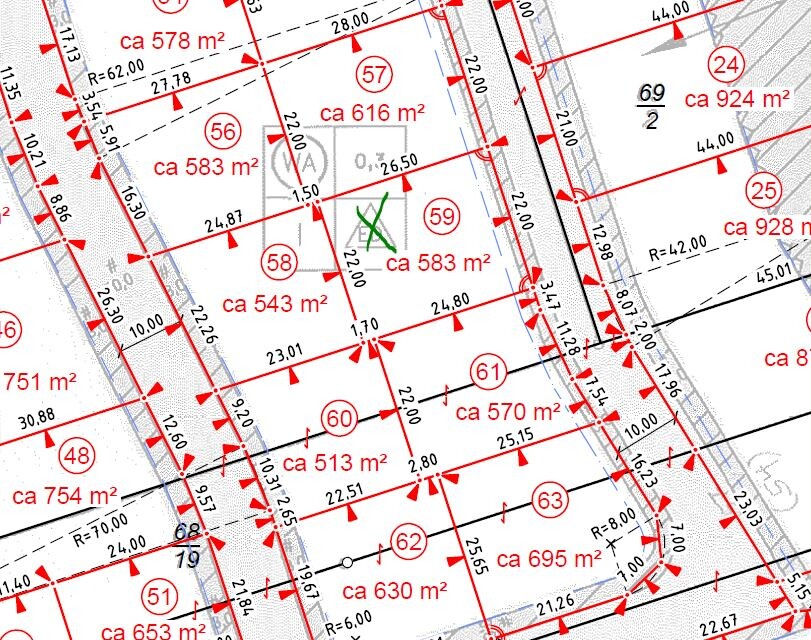
Note: The subdivision plan showing the plot (green cross) is oriented to north.
I look forward to any feedback! Here is the questionnaire:
Development plan/restrictions
Plot size: 583 sqm
Slope: no
Floor area ratio (FAR): 0.3
Plot coverage ratio (site occupancy): no requirement
Building envelope, building line, and boundaries:
The plot is 22 m wide and 24.8 m to 26.5 m deep depending on the side. The house should ideally extend more in width than in depth to leave as much garden space as possible on the southwest side. Maximum house width: 22 m (plot width) – 6 m (width of double carport) – 3 m (building boundary where the carport is not located) = 13 m. As for depth, depending on the layout, we are considering between 9 m and a maximum of 11 m.
Setback/building margin: 3 m
Number of parking spaces: no requirement
Number of floors: one full floor
Roof pitch: minimum 15 degrees
Architectural style: no requirement
Orientation: no requirement
Maximum height/limitations: no requirement
Homeowners' requirements
Architectural style, roof type, building type:
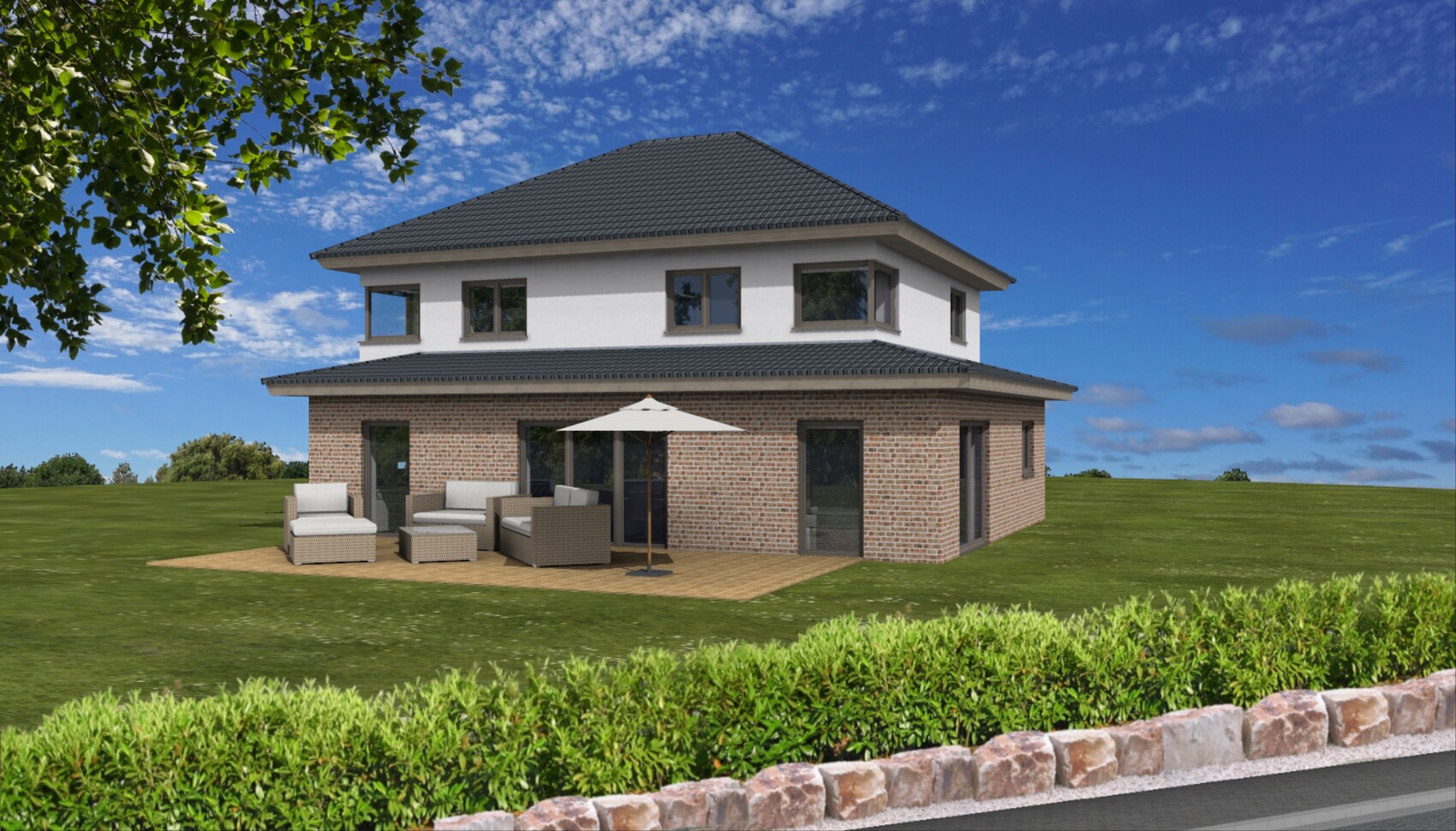
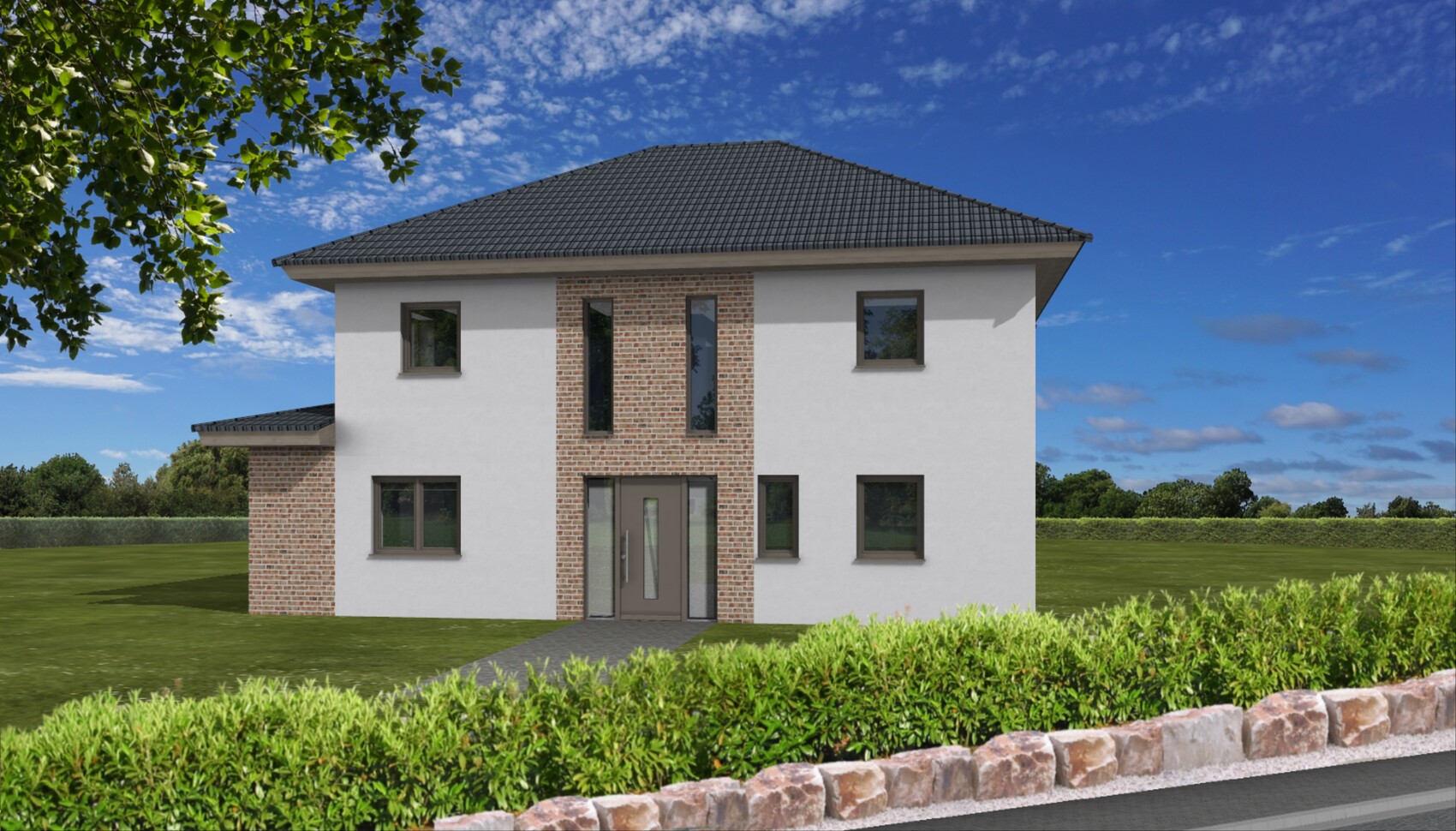
Preferred style: townhouse villa with only one full floor (ground floor) and a hip roof on the upper floor; the upper floor may only cover 2/3 of the ground floor area to meet the full-floor condition; whether the ground floor has a projection on two sides or a symmetrical projection on all four sides is initially not decisive and should result from the floor plan; the ground floor projection should be covered with a roof like the upper floor — no balconies or similar.
Basement, floors:
No basement, ground floor is full floor + upper floor as a recessed floor with a maximum of 2/3 of the ground floor area
Number of occupants, ages:
3 people aged 30 (female), 29 (male), and 8 months (child)
Space requirements on ground floor and upper floor:
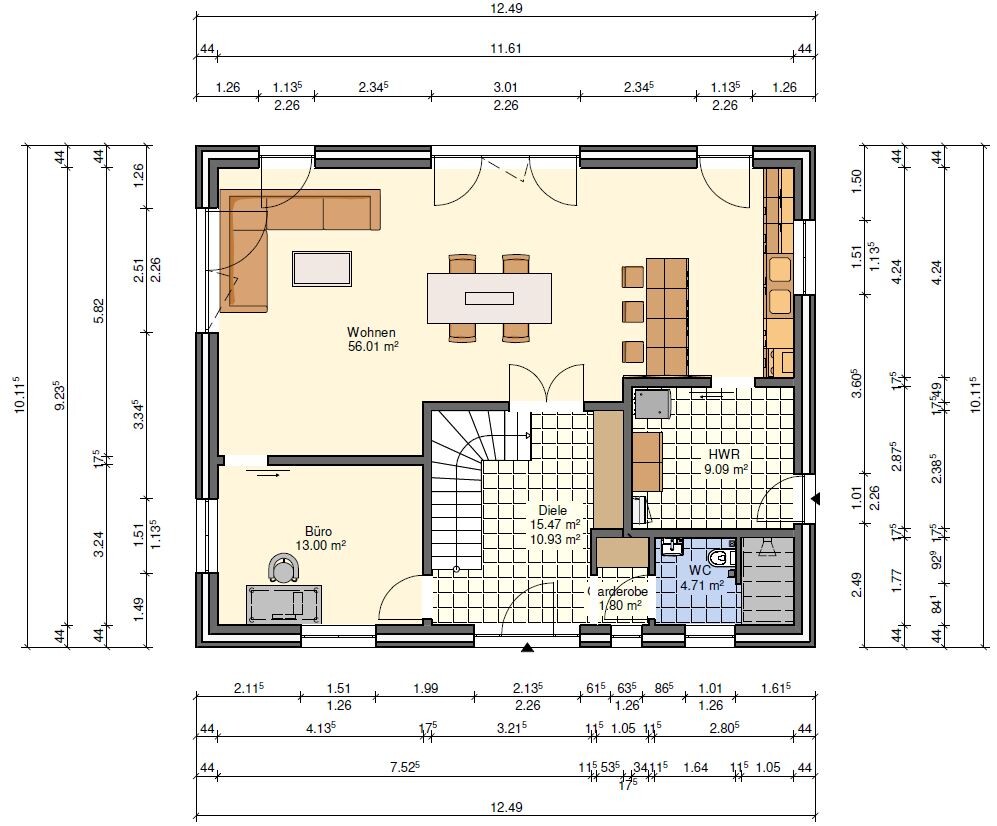
Ground floor: living/dining/kitchen as one room, utility room, guest WC with shower, office/guest room, entrance hallway with wardrobe
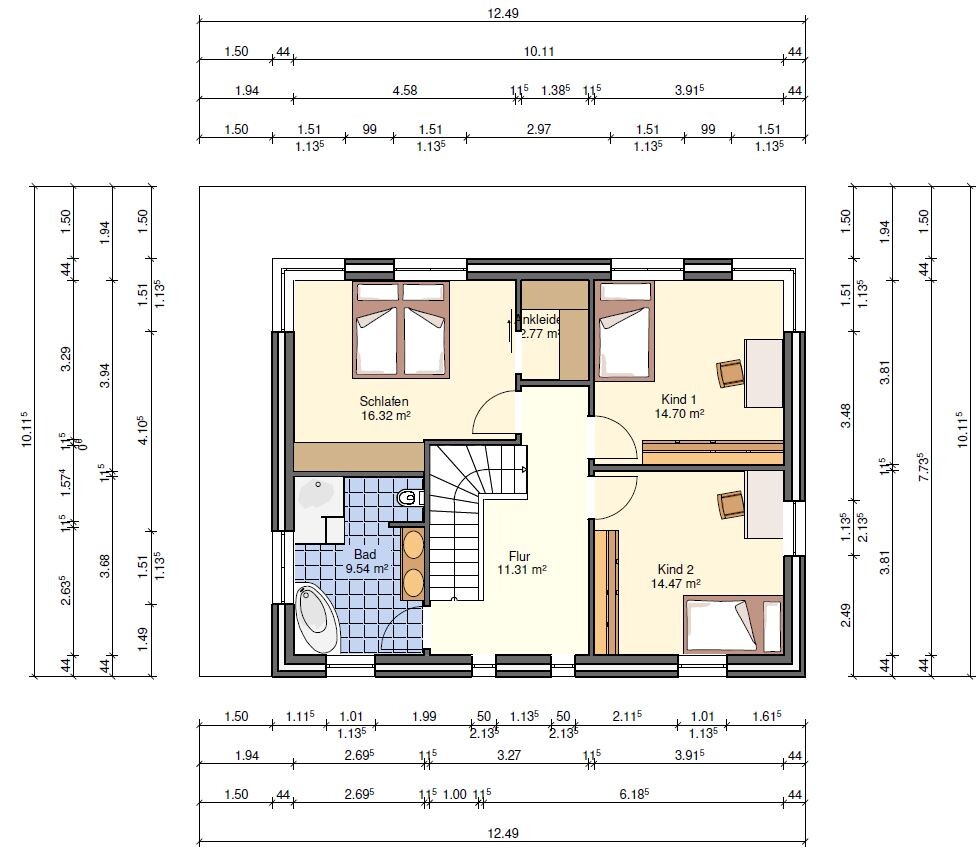
Upper floor: bedroom, dressing room, 2 x children’s rooms, gallery (hallway)
Office: family use or home office:
Primarily home office, but must also provide sleeping space for guests; in younger years, possibly used as a playroom for children on the ground floor
Number of overnight guests per year: <5
Open or closed architecture:
Open concept in the main living area on the ground floor; however, the staircase to the upper floor should be closed off — in other words, we definitely do not want a staircase in the main living space leading upstairs (although stylish, it is not ideal with children’s rooms upstairs)
Conservative or modern construction: modern
Open kitchen, kitchen island: open kitchen with island
Number of dining seats: 6 with option for up to 12 (for visitors, etc.)
Fireplace: no
Music/stereo wall: no, only a sideboard or similar for TV
Balcony, roof terrace: no
Garage, carport:
Double carport with storage room (6 m x 9 m) on the northeast side of the plot at the building boundary
Utility garden, greenhouse: no
Additional wishes/special features/daily routine, also reasons why certain things should or should not be included:
It is important for us to have a generous wardrobe near the front door that allows jackets, shoes, etc., to be dropped off immediately upon entering the house — this keeps dirt from spreading further inside and prevents tripping over shoes, bags, etc., all the time.
House design
Planning by:
The design was created by an architect.
What do you particularly like? Why?
What do you dislike? Why?
Preferred heating system: gas
If you have to do without, which details/extras can you live without / which can you not live without?
Basically, we would very reluctantly deviate from the presented architectural style (“concealed” townhouse villa).
Why did the design turn out the way it is now?
Our wish was a house without sloped ceilings on the upper floor, which of course has to comply with the development plan. Accordingly, the architect designed a form of townhouse villa with a sufficiently large projection on the ground floor as the basic concept. Regarding the room program, it’s probably standard for a house of this size, and we have no special demands in this regard. Some ideas, like connecting the office to the main living area, also came from this forum. In particular, the floor plans by kaho674 have always been very inspiring for new ideas (many thanks for that!).
What is the main/basic question about the floor plan summed up in 130 characters?
We are looking for ideas on how to improve the floor plan and better tailor it to our requirements (e.g., room orientation upstairs, see generally “dislikes”) without increasing the house’s footprint.
My wife and I have been considering building a house for quite some time now. As a result, I have been reading this forum for a while. First of all, thank you very much for your many helpful tips, which have already helped us tremendously. Many compliments to the numerous users who actively participate here and share their knowledge with others.
Now the time has come for us as well. We have purchased a plot of land in Lower Saxony and are currently working with an architect to develop an optimal floor plan for us.
We have now received a draft, which we think could still be improved in some areas. For this reason, I have decided to share the floor plan here for discussion and hope to get some suggestions or ideas on what we can improve. Perhaps you will also spot things that “just don’t work” or are not practical for everyday use.
Note: The subdivision plan showing the plot (green cross) is oriented to north.
I look forward to any feedback! Here is the questionnaire:
Development plan/restrictions
Plot size: 583 sqm
Slope: no
Floor area ratio (FAR): 0.3
Plot coverage ratio (site occupancy): no requirement
Building envelope, building line, and boundaries:
The plot is 22 m wide and 24.8 m to 26.5 m deep depending on the side. The house should ideally extend more in width than in depth to leave as much garden space as possible on the southwest side. Maximum house width: 22 m (plot width) – 6 m (width of double carport) – 3 m (building boundary where the carport is not located) = 13 m. As for depth, depending on the layout, we are considering between 9 m and a maximum of 11 m.
Setback/building margin: 3 m
Number of parking spaces: no requirement
Number of floors: one full floor
Roof pitch: minimum 15 degrees
Architectural style: no requirement
Orientation: no requirement
Maximum height/limitations: no requirement
Homeowners' requirements
Architectural style, roof type, building type:
Preferred style: townhouse villa with only one full floor (ground floor) and a hip roof on the upper floor; the upper floor may only cover 2/3 of the ground floor area to meet the full-floor condition; whether the ground floor has a projection on two sides or a symmetrical projection on all four sides is initially not decisive and should result from the floor plan; the ground floor projection should be covered with a roof like the upper floor — no balconies or similar.
Basement, floors:
No basement, ground floor is full floor + upper floor as a recessed floor with a maximum of 2/3 of the ground floor area
Number of occupants, ages:
3 people aged 30 (female), 29 (male), and 8 months (child)
Space requirements on ground floor and upper floor:
Ground floor: living/dining/kitchen as one room, utility room, guest WC with shower, office/guest room, entrance hallway with wardrobe
Upper floor: bedroom, dressing room, 2 x children’s rooms, gallery (hallway)
Office: family use or home office:
Primarily home office, but must also provide sleeping space for guests; in younger years, possibly used as a playroom for children on the ground floor
Number of overnight guests per year: <5
Open or closed architecture:
Open concept in the main living area on the ground floor; however, the staircase to the upper floor should be closed off — in other words, we definitely do not want a staircase in the main living space leading upstairs (although stylish, it is not ideal with children’s rooms upstairs)
Conservative or modern construction: modern
Open kitchen, kitchen island: open kitchen with island
Number of dining seats: 6 with option for up to 12 (for visitors, etc.)
Fireplace: no
Music/stereo wall: no, only a sideboard or similar for TV
Balcony, roof terrace: no
Garage, carport:
Double carport with storage room (6 m x 9 m) on the northeast side of the plot at the building boundary
Utility garden, greenhouse: no
Additional wishes/special features/daily routine, also reasons why certain things should or should not be included:
It is important for us to have a generous wardrobe near the front door that allows jackets, shoes, etc., to be dropped off immediately upon entering the house — this keeps dirt from spreading further inside and prevents tripping over shoes, bags, etc., all the time.
House design
Planning by:
The design was created by an architect.
What do you particularly like? Why?
- The entrance hall does not feel narrow but opens comparatively wide
- The wardrobe provides enough space to store jackets, shoes, etc.
- Connection between kitchen and utility room
- Connection between living area and office — the office is not isolated but integrated into the main living area (also usable as a play area for children, for example)
What do you dislike? Why?
- Staircase located in the “dirty” area is not optimal
- Utility room only accessible through the kitchen — potentially inconvenient in everyday life
- Kitchen might be difficult to furnish (storage space issue)
- The entire upper floor needs improvement:
- Both children’s rooms should face southwest with a view of the garden
- Bedroom should be in the north / east
- Dressing room is integrated as requested but is not really usable due to its size
- Bathroom on the upper floor is not connected to the bathroom on the ground floor — probably not ideal
Preferred heating system: gas
If you have to do without, which details/extras can you live without / which can you not live without?
Basically, we would very reluctantly deviate from the presented architectural style (“concealed” townhouse villa).
Why did the design turn out the way it is now?
Our wish was a house without sloped ceilings on the upper floor, which of course has to comply with the development plan. Accordingly, the architect designed a form of townhouse villa with a sufficiently large projection on the ground floor as the basic concept. Regarding the room program, it’s probably standard for a house of this size, and we have no special demands in this regard. Some ideas, like connecting the office to the main living area, also came from this forum. In particular, the floor plans by kaho674 have always been very inspiring for new ideas (many thanks for that!).
What is the main/basic question about the floor plan summed up in 130 characters?
We are looking for ideas on how to improve the floor plan and better tailor it to our requirements (e.g., room orientation upstairs, see generally “dislikes”) without increasing the house’s footprint.
H
hampshire18 May 2019 17:35A practical and straightforward design. Your dressing room is more like a walk-in closet. There is not enough space for dressing and undressing. That wouldn’t bother me, but if you want more room, consider making the bedroom a bit smaller.
In the living area, no one faces the windows. It’s a matter of preference.
The utility room with external access and the kitchen are very conveniently arranged. This way, the utility room can also serve as a “mudroom” when children come home happy and dirty from playing in or with water. It’s also great for dog owners.
In the living area, no one faces the windows. It’s a matter of preference.
The utility room with external access and the kitchen are very conveniently arranged. This way, the utility room can also serve as a “mudroom” when children come home happy and dirty from playing in or with water. It’s also great for dog owners.

I fully agree with your self-criticism regarding the upper floor, and I would also prefer having wet rooms stacked on top of each other for efficiency. For structural reasons, I would move away from masonry construction in this case.
https://www.instagram.com/11antgmxde/
https://www.linkedin.com/company/bauen-jetzt/
https://www.instagram.com/11antgmxde/
https://www.linkedin.com/company/bauen-jetzt/
Danvane schrieb:
whether a projection on two sides of the building or a symmetrical projection (with the ground floor protruding equally on all four sides) is initially not decisive and should be determined by the floor plan; Actually, the stair location determines the relationship between the ground floor and the upper floor.
I’m not a fan of a recessed upper floor. I generally avoid recessed floors, but only having them on two sides might make the house look unbalanced.
I would rather suggest an extension on the ground floor, which creates a charming corner that can be nicely used as a sheltered terrace.
But well, the main thing is that you like it.
Speaking of imbalance: the windows on the front elevation also contribute to that. I would adjust the lower windows there. The pseudo-closet in that area doesn’t need a window.
Danvane schrieb:
connection between kitchen and utility room You have already noticed that the recessed utility room is poorly positioned.
It’s not just awkward; you turn the kitchen workspace into a major traffic route. You could mitigate this somewhat by placing the island against the exterior wall. Still, any path to the utility room or refrigerator falls directly into the line of sight from the sofa users...
Also, having the sofa in front of the windows isn’t ideal, especially since these are floor-to-ceiling windows…
Danvane schrieb:
Some ideas, like attaching the office to the open-plan living area, also came from this forum. Hmm, that’s new to me, but never mind.
The second door makes the office almost impossible to furnish.
Take a look at the Maxime 610 by Viebrockhaus… this was discussed here just a few weeks ago, without knowing it was the Maxime.
Maybe mirror the upper floor and move the staircase to the other side below.
By the way: I expect more creativity from an architect, even if in the end it looks standard—the design should at least make sense. Squeezing the utility room into a corner is not a clever solution. Most likely, in the standard design, the utility room had a door to the hallway before you changed things and wanted that large hallway cupboard. The original small cloakroom could also have been removed.
ypg schrieb:
Hmm, that would be new to me, but never mind. Well, I’ve also raised an eyebrow about that once to four times.
ypg schrieb:
My issue isn’t with the recessed upper floor. I’m generally against recessed floors, but having it only on two sides might make the house look crooked. I’d rather say: at least from one corner and two wings, it doesn’t look as skewed in perspective as with setbacks on all sides.
https://www.instagram.com/11antgmxde/
https://www.linkedin.com/company/bauen-jetzt/
Good morning everyone,
First of all, thank you very much for the quick and insightful feedback. I will respond to each of the answers below.
@hampshire
It will probably come down to reducing the bedroom size in favor of the dressing room. But as mentioned, we are not really satisfied with the upper floor yet anyway. So there will likely be some adjustments there as well.
The point about the window in the living area is correct. That is really a matter of personal taste. For us, it is not a must to be able to look out the window from the sofa—at most, a "nice to have" if it works out.
I also see the connection between the utility room and the kitchen as practical. Only the lack of a connection to the hallway—as ypg also mentioned—could be suboptimal.
@11ant
What exactly do you mean by “moving away from the masonry construction”? Is your concern mainly about the structural integrity of the open plan area?
Otherwise, the upper floor definitely still needs adjustments, and the bathroom would probably be moved again in the process (wet rooms issue).
@ypg
We are completely open as to how the “2/3 solution” is ultimately implemented. If it ends up being an extension—as you suggest—and that fits with the rest of the requirements, then that is fine too. This solution with the tiered design on only two sides is just a proposal from the architect that we wouldn’t reject but is not set in stone.
I forgot to write that I don’t like the window at the front. I completely agree with you on that.
Docking the island against the exterior wall was already an idea. Still, you are right about the traffic flow. I think there needs to be a smarter solution for the utility room.
We will take a closer look at the Maxime610, thanks for the tip!
The connection of the office to the open plan area is used, for example, here by @kaho674:
https://www.hausbau-forum.de/threads/grundrissentwurf-für-220m-Einfamilienhaus.24702/page-34#lg=post-214845&slide=0 (post #200)
https://www.hausbau-forum.de/threads/grundrissplanung-Einfamilienhaus-mit-rund-150-m.26772/page-13 (post #78)
There was also one with a separate hallway for the office/guest WC/utility room, but accessed from the kitchen. Like the one in the link below, only the kitchen unit was shorter, and the small hallway was connected to the kitchen. Unfortunately, I can’t find that one right now (I only have a screenshot on my PC).
https://www.hausbau-forum.de/threads/verbesserungsvorschlaege-für-Grundriss-efh-Ideen.29192/page-4 (post #19)
A similar solution can also be found in the Edition 425 (LIVING IDEA house) by Viebrockhaus (with a playroom for children).
But in the end, it doesn't really matter; we just found the idea quite charming.
First of all, thank you very much for the quick and insightful feedback. I will respond to each of the answers below.
@hampshire
It will probably come down to reducing the bedroom size in favor of the dressing room. But as mentioned, we are not really satisfied with the upper floor yet anyway. So there will likely be some adjustments there as well.
The point about the window in the living area is correct. That is really a matter of personal taste. For us, it is not a must to be able to look out the window from the sofa—at most, a "nice to have" if it works out.
I also see the connection between the utility room and the kitchen as practical. Only the lack of a connection to the hallway—as ypg also mentioned—could be suboptimal.
@11ant
What exactly do you mean by “moving away from the masonry construction”? Is your concern mainly about the structural integrity of the open plan area?
Otherwise, the upper floor definitely still needs adjustments, and the bathroom would probably be moved again in the process (wet rooms issue).
@ypg
We are completely open as to how the “2/3 solution” is ultimately implemented. If it ends up being an extension—as you suggest—and that fits with the rest of the requirements, then that is fine too. This solution with the tiered design on only two sides is just a proposal from the architect that we wouldn’t reject but is not set in stone.
I forgot to write that I don’t like the window at the front. I completely agree with you on that.
Docking the island against the exterior wall was already an idea. Still, you are right about the traffic flow. I think there needs to be a smarter solution for the utility room.
We will take a closer look at the Maxime610, thanks for the tip!
The connection of the office to the open plan area is used, for example, here by @kaho674:
https://www.hausbau-forum.de/threads/grundrissentwurf-für-220m-Einfamilienhaus.24702/page-34#lg=post-214845&slide=0 (post #200)
https://www.hausbau-forum.de/threads/grundrissplanung-Einfamilienhaus-mit-rund-150-m.26772/page-13 (post #78)
There was also one with a separate hallway for the office/guest WC/utility room, but accessed from the kitchen. Like the one in the link below, only the kitchen unit was shorter, and the small hallway was connected to the kitchen. Unfortunately, I can’t find that one right now (I only have a screenshot on my PC).
https://www.hausbau-forum.de/threads/verbesserungsvorschlaege-für-Grundriss-efh-Ideen.29192/page-4 (post #19)
A similar solution can also be found in the Edition 425 (LIVING IDEA house) by Viebrockhaus (with a playroom for children).
But in the end, it doesn't really matter; we just found the idea quite charming.
Similar topics