
ᐅ Single-family home with a basement apartment on a hillside, designed for flexible use
Created on: 26 Mar 2019 15:02
K
kinderpingui
Hello everyone,
I have been mostly a silent reader here for several years and have gained many ideas and suggestions. I have followed many projects here since we started planning our own house build and have benefited greatly, incorporating many considerations into our planning. After purchasing a plot about 2 years ago, our own house construction is now getting closer, with the goal to start next year.
So far, we have worked with 2 different general contractors (GCs), who provided similar concepts but different designs due to the placement of the stairs. We have made some independent changes to the design we preferred.
Due to professional priorities, the project did not have top priority since the beginning of this year. This will change from April, and we will consult several more GCs. Since we have an upcoming appointment with a GC soon, I would like to hear your critical and honest opinions about our concept and design beforehand.
Thank you in advance for your help.
Zoning Plan / Restrictions
Plot size: 600 m² (22 m wide x 27 m deep) (72 ft x 89 ft)
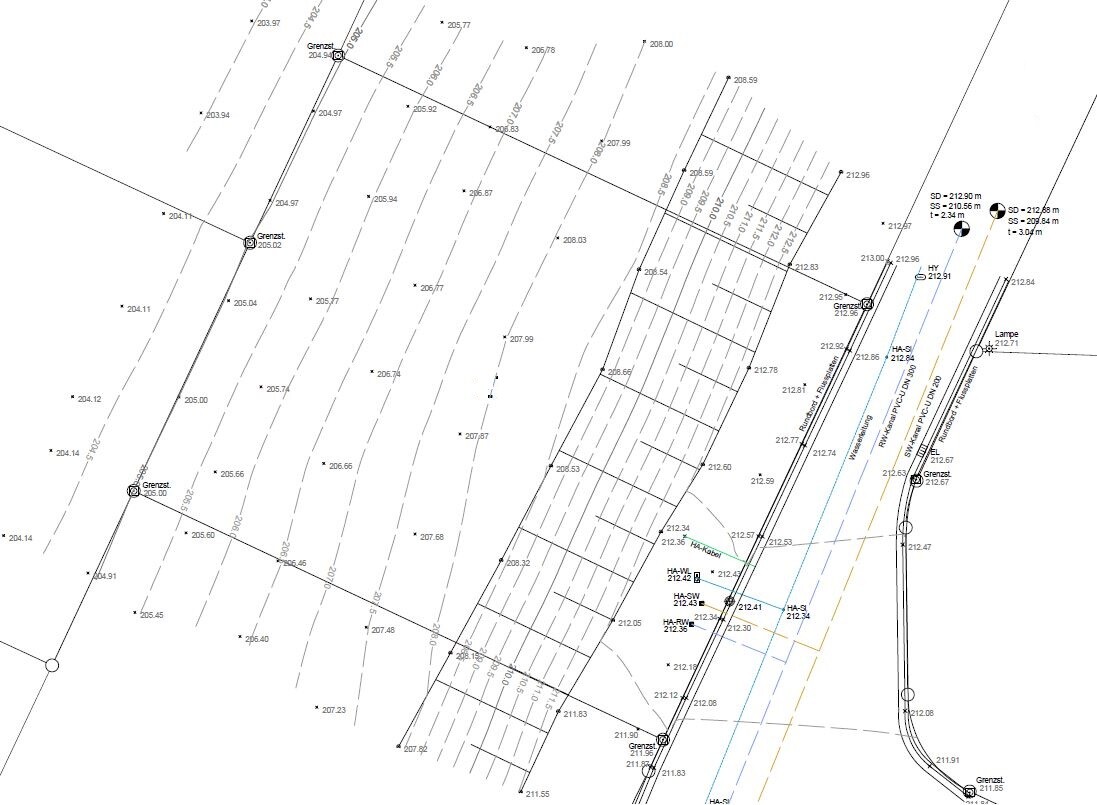
Slope: yes, steep slope (approx. 8 m on the north side and 7 m on the south side; see attached leveling plan)
Site coverage ratio: 0.4
Floor area ratio: 1
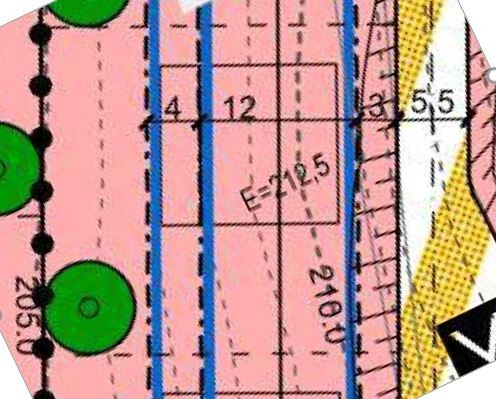
Building envelope, building line and boundary: see zoning plan excerpt
Edge development: no, 3 m setback; garage allowed; 5 m setback required from the street side
Number of parking spaces: 2 per housing unit, one of which must be covered
Number of floors: max. 2 full stories + half / stepped floor
Roof type: no restriction
Architectural style: no restriction, except no log houses
Orientation: west
Maximum heights / limits: eaves height max., parapet top max. 4 m (13 ft) on street side; eaves height max., parapet top max. 7 m (23 ft) above ground height on garden side
Other requirements:
Owners’ Requirements
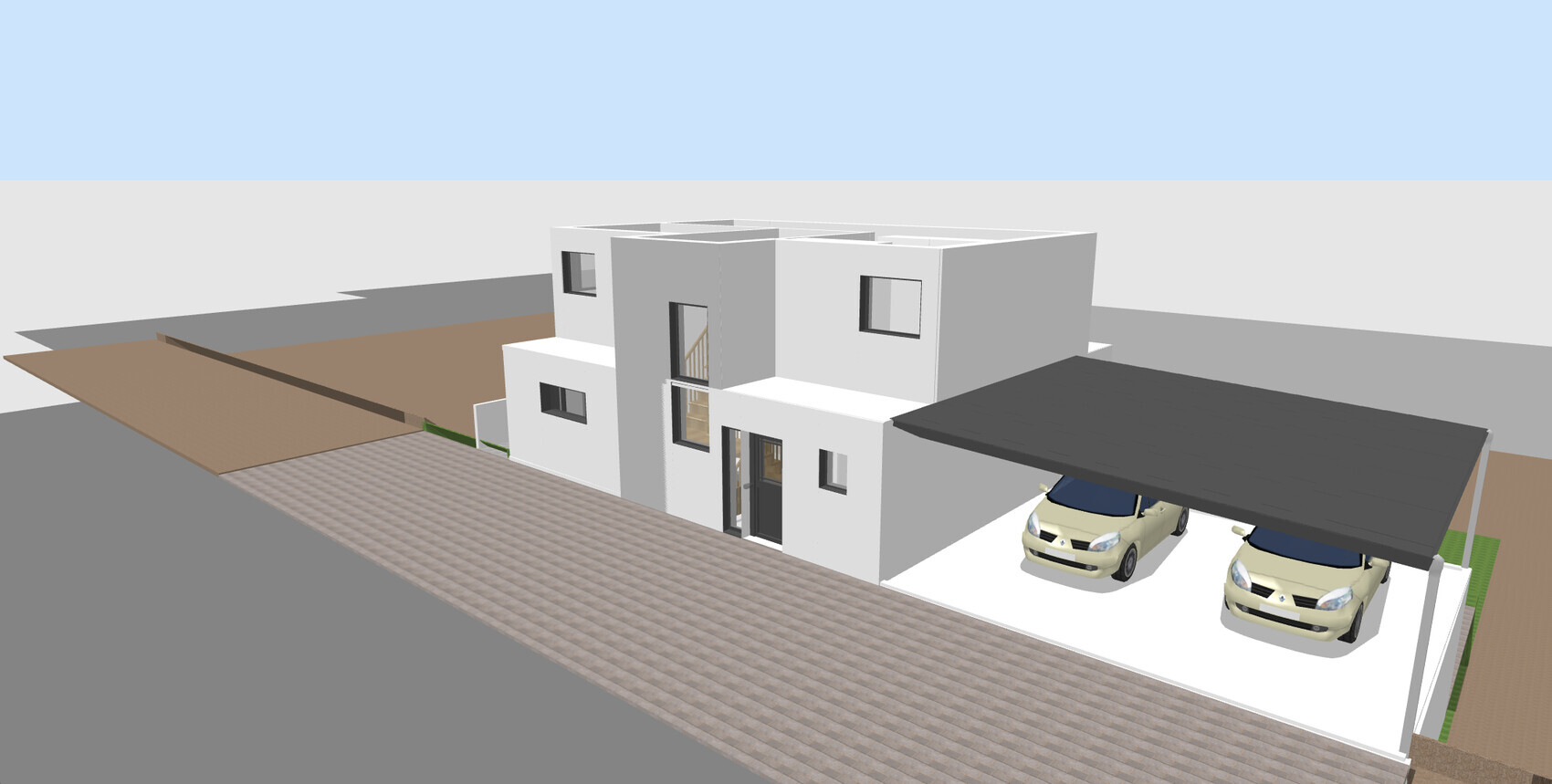
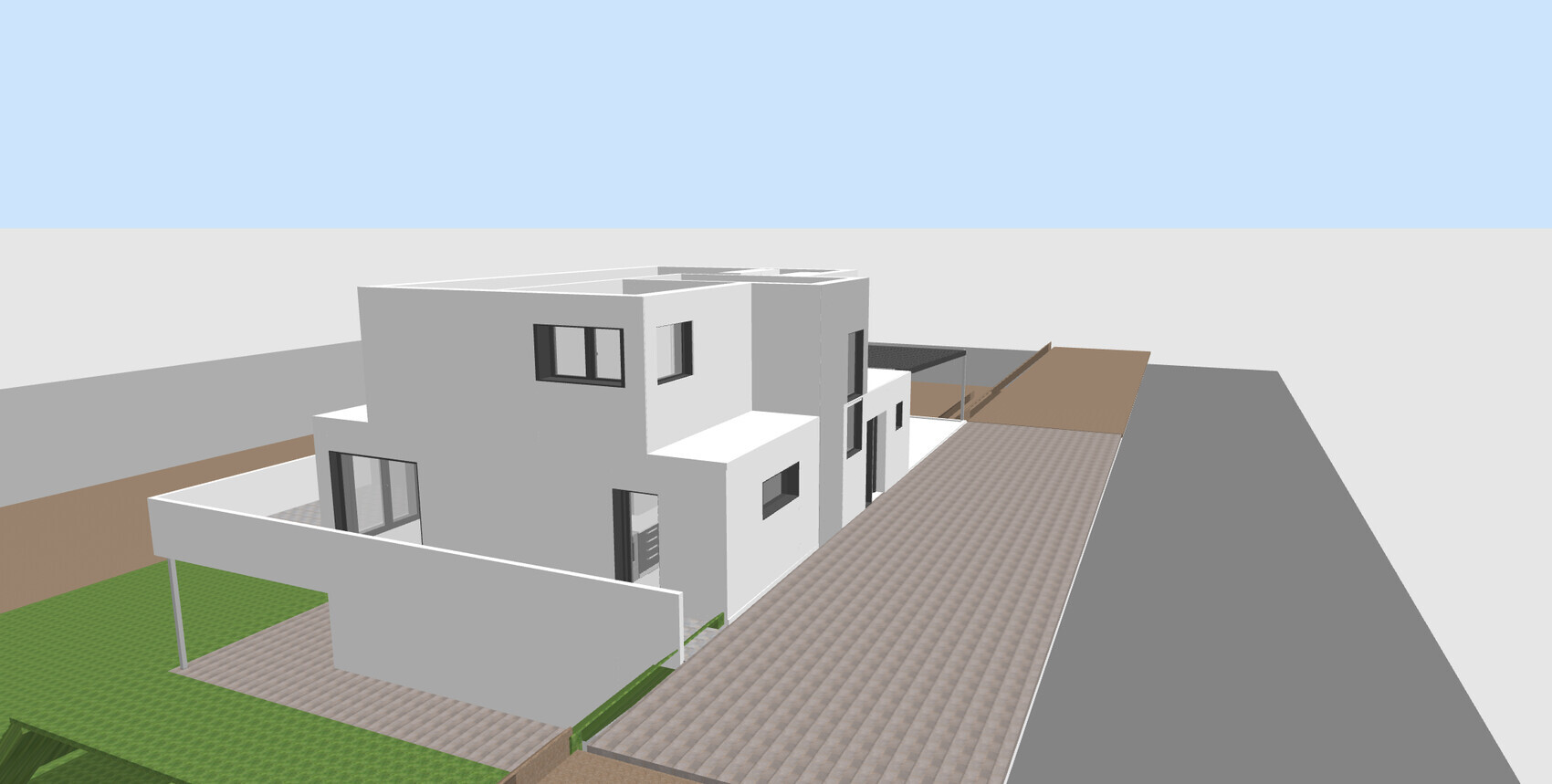
Style, roof form, building type: Bauhaus, flat roof, solid construction, single-family house with a granny flat
Basement, stories: total 2.5 stories: basement: living cellar/granny flat + utility room; ground floor: living area + office; upper floor (stepped floor): sleeping area
Number and age of people: 28 (female), 30 (male); planning for 2-3 children in about 3-4 years
Office: home office for wife
Overnight guests per year: 3–5
Open kitchen, kitchen island: open plan, preferably kitchen island (if budget allows)
Number of dining seats: 6
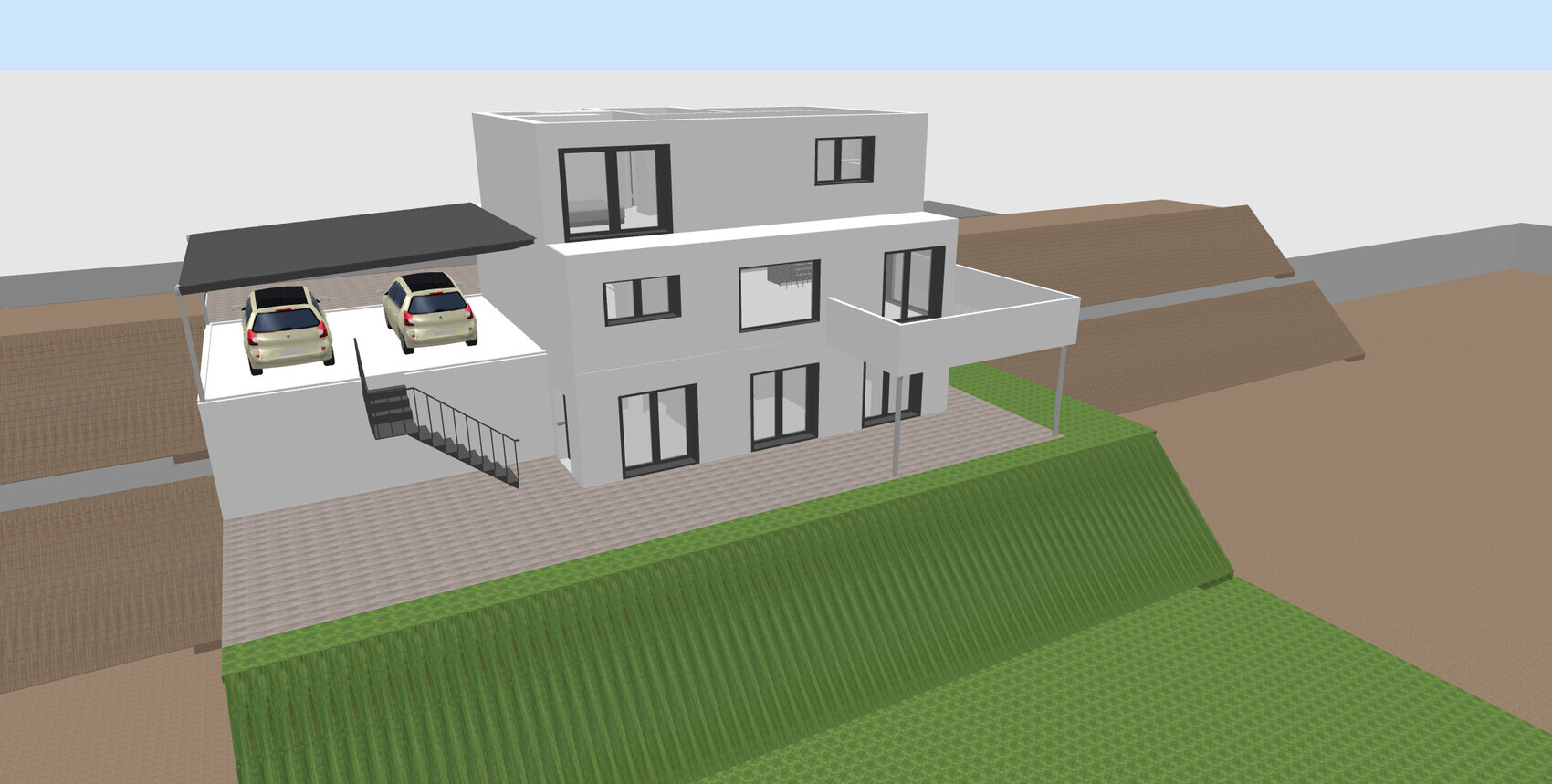
Balcony, roof terrace: yes, large balcony on supports connected to ground floor with garden access (depending on budget)
Garage, carport: basement carport; due to zoning plan and granny flat, 2 vehicles must fit under carport
Utility garden, greenhouse: undecided yet
House Design
Designer:
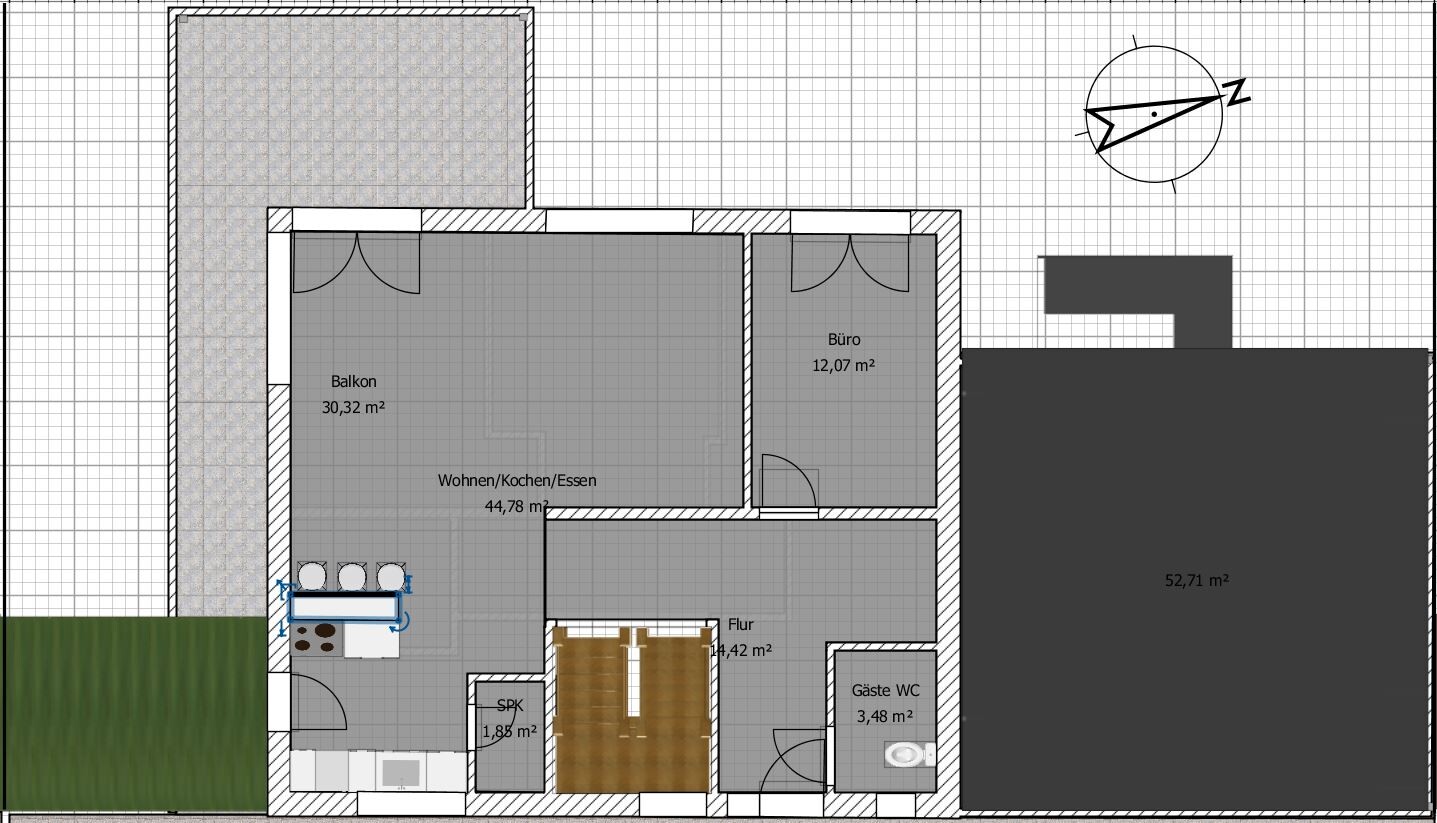
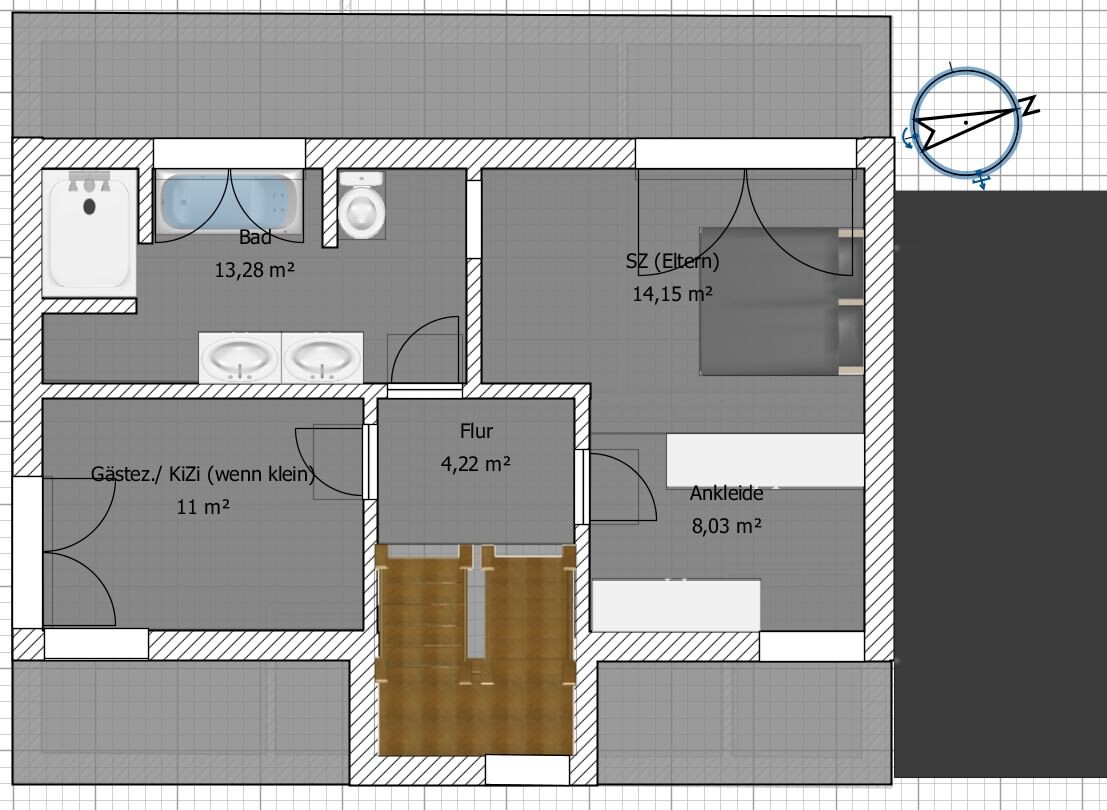
Basic design by planner from a construction company, but revised by us. Hence, the less polished own design created by me using Sweet Home 3D.
Please initially disregard the arrangement of windows, furniture, and bathroom fittings. Our main focus is on the layout and distribution of rooms across the various floors, as well as the overall concept.
About our concept:
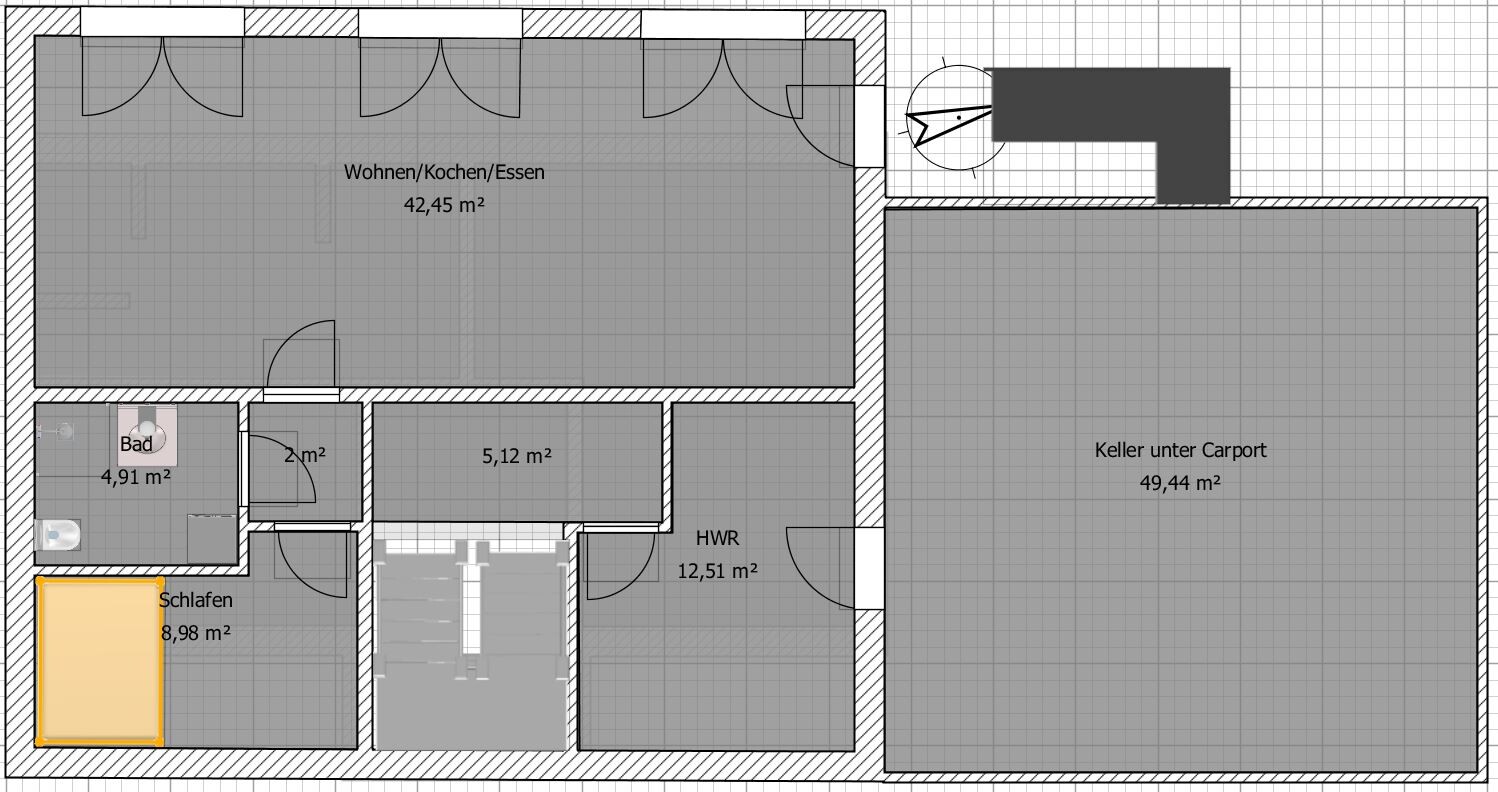
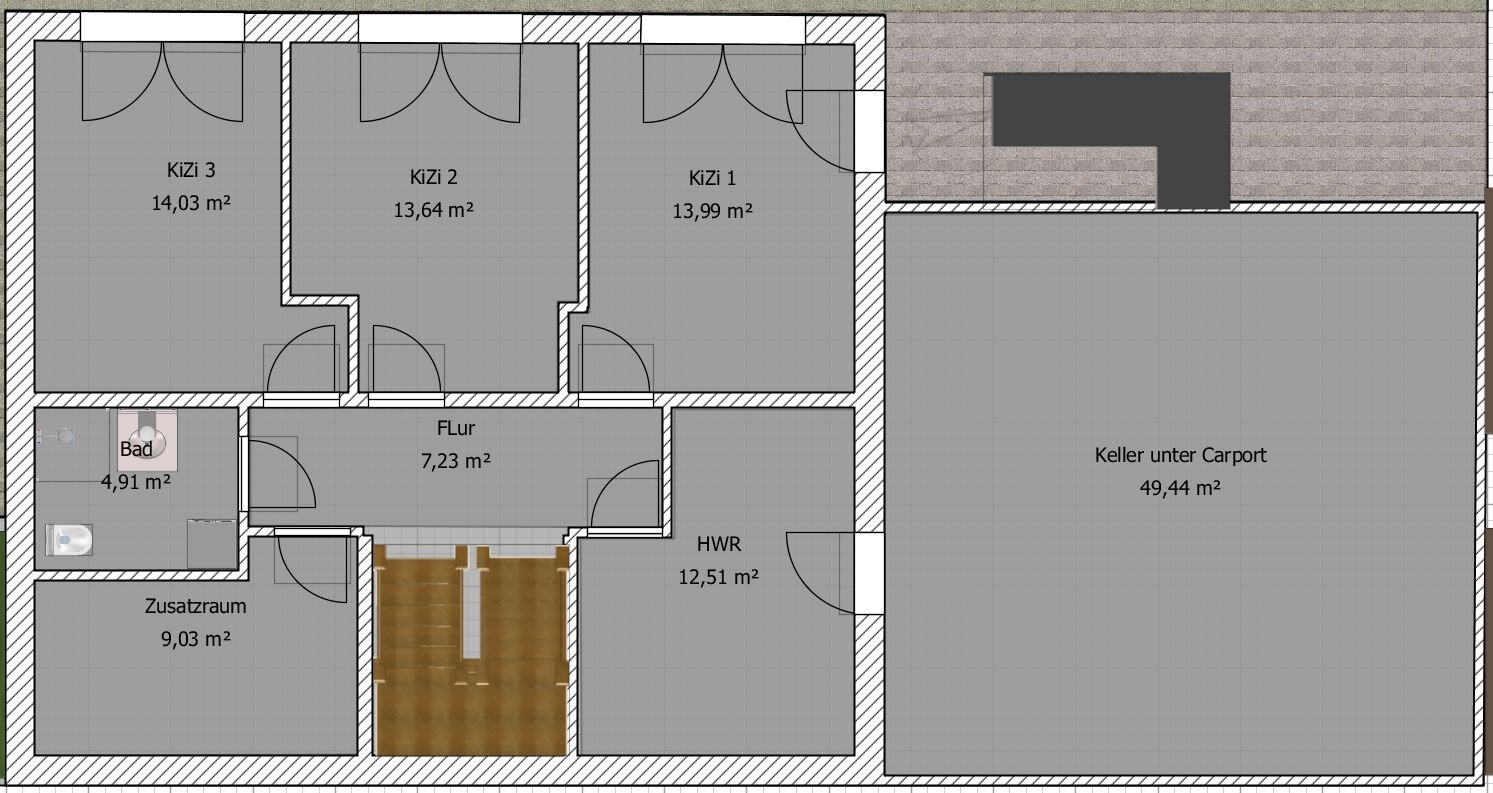
Flexibility is one of the most important aspects of our plan. We want to use the basement initially as a granny flat and later convert it into living space for the children (hence 2 versions of the basement plan). The granny flat would be used for about 10 years before the kids move down there. When the children later leave the house and we no longer need a house of this size, it should revert back into a granny flat. Possibly later, we may also live in the granny flat ourselves and rent the upper area, but that is far in the future. The idea behind this is to alleviate the mortgage payments especially during the first 10 years, when the children are still small and one of us may not be working full-time.
What do you particularly like? Why?
The stepped floor as the parents’ area, or initially a room also for children while they are small. The layout and orientation of the kitchen/living/dining area (maybe a bit small?) facing the sun.
What do you dislike? Why?
Basement: the layout in the rear area of the granny flat (basement version 1): bathroom and bedroom are too small... Any ideas on how to gain space or redesign the granny flat so that the effort to convert to basement version 2 stays minimal.
Cost Estimate according to Architect/Planner:
440k for the house (without fittings) + 20k for balcony,
62k for garage (which was a proper garage, basemented and connected to the house on the lower ground floor)
30k for earthworks (excluding removal of excavated material)
Personal Price Limit for House including Fittings:
450k for house + fittings + ?? balcony (what more affordable options are possible for execution)
+ 30k for basement carport (self-build possible)
+ 30k earthworks (+? removal)
+ 15k landscaping
Preferred heating system: geothermal (ideally combined with photovoltaic system but probably not feasible within budget)
Why is the design as it is now? / If you had to give up, on which details or extensions
Can give up: living area size, currently approx. 195 m² (2100 sq ft). We want to reduce this somewhat to save costs. Staircase from balcony to garden.
Cannot give up: Basically, this is our dream house. If the budget isn’t enough, we will have to build significantly smaller, especially without a granny flat. The question I ask myself: How much smaller can I go with the wish for rather 3 than 2 children? Does a much smaller house justify leaving out the granny flat (granny flat = relief in the beginning when salaries are lower)? We will still need the rooms from the granny flat for the future children…
What is your most important / fundamental question about the floor plan in 130 characters?
Does our project make sense in terms of flexibility or is it nonsense and difficult to plan due to many unknowns? Did we miss fundamental things in our concept?
Thank you very much for your help

I have been mostly a silent reader here for several years and have gained many ideas and suggestions. I have followed many projects here since we started planning our own house build and have benefited greatly, incorporating many considerations into our planning. After purchasing a plot about 2 years ago, our own house construction is now getting closer, with the goal to start next year.
So far, we have worked with 2 different general contractors (GCs), who provided similar concepts but different designs due to the placement of the stairs. We have made some independent changes to the design we preferred.
Due to professional priorities, the project did not have top priority since the beginning of this year. This will change from April, and we will consult several more GCs. Since we have an upcoming appointment with a GC soon, I would like to hear your critical and honest opinions about our concept and design beforehand.
Thank you in advance for your help.
Zoning Plan / Restrictions
Plot size: 600 m² (22 m wide x 27 m deep) (72 ft x 89 ft)
Slope: yes, steep slope (approx. 8 m on the north side and 7 m on the south side; see attached leveling plan)
Site coverage ratio: 0.4
Floor area ratio: 1
Building envelope, building line and boundary: see zoning plan excerpt
Edge development: no, 3 m setback; garage allowed; 5 m setback required from the street side
Number of parking spaces: 2 per housing unit, one of which must be covered
Number of floors: max. 2 full stories + half / stepped floor
Roof type: no restriction
Architectural style: no restriction, except no log houses
Orientation: west
Maximum heights / limits: eaves height max., parapet top max. 4 m (13 ft) on street side; eaves height max., parapet top max. 7 m (23 ft) above ground height on garden side
Other requirements:
Owners’ Requirements
Style, roof form, building type: Bauhaus, flat roof, solid construction, single-family house with a granny flat
Basement, stories: total 2.5 stories: basement: living cellar/granny flat + utility room; ground floor: living area + office; upper floor (stepped floor): sleeping area
Number and age of people: 28 (female), 30 (male); planning for 2-3 children in about 3-4 years
Office: home office for wife
Overnight guests per year: 3–5
Open kitchen, kitchen island: open plan, preferably kitchen island (if budget allows)
Number of dining seats: 6
Balcony, roof terrace: yes, large balcony on supports connected to ground floor with garden access (depending on budget)
Garage, carport: basement carport; due to zoning plan and granny flat, 2 vehicles must fit under carport
Utility garden, greenhouse: undecided yet
House Design
Designer:
Basic design by planner from a construction company, but revised by us. Hence, the less polished own design created by me using Sweet Home 3D.
Please initially disregard the arrangement of windows, furniture, and bathroom fittings. Our main focus is on the layout and distribution of rooms across the various floors, as well as the overall concept.
About our concept:
Flexibility is one of the most important aspects of our plan. We want to use the basement initially as a granny flat and later convert it into living space for the children (hence 2 versions of the basement plan). The granny flat would be used for about 10 years before the kids move down there. When the children later leave the house and we no longer need a house of this size, it should revert back into a granny flat. Possibly later, we may also live in the granny flat ourselves and rent the upper area, but that is far in the future. The idea behind this is to alleviate the mortgage payments especially during the first 10 years, when the children are still small and one of us may not be working full-time.
What do you particularly like? Why?
The stepped floor as the parents’ area, or initially a room also for children while they are small. The layout and orientation of the kitchen/living/dining area (maybe a bit small?) facing the sun.
What do you dislike? Why?
Basement: the layout in the rear area of the granny flat (basement version 1): bathroom and bedroom are too small... Any ideas on how to gain space or redesign the granny flat so that the effort to convert to basement version 2 stays minimal.
Cost Estimate according to Architect/Planner:
440k for the house (without fittings) + 20k for balcony,
62k for garage (which was a proper garage, basemented and connected to the house on the lower ground floor)
30k for earthworks (excluding removal of excavated material)
Personal Price Limit for House including Fittings:
450k for house + fittings + ?? balcony (what more affordable options are possible for execution)
+ 30k for basement carport (self-build possible)
+ 30k earthworks (+? removal)
+ 15k landscaping
Preferred heating system: geothermal (ideally combined with photovoltaic system but probably not feasible within budget)
Why is the design as it is now? / If you had to give up, on which details or extensions
Can give up: living area size, currently approx. 195 m² (2100 sq ft). We want to reduce this somewhat to save costs. Staircase from balcony to garden.
Cannot give up: Basically, this is our dream house. If the budget isn’t enough, we will have to build significantly smaller, especially without a granny flat. The question I ask myself: How much smaller can I go with the wish for rather 3 than 2 children? Does a much smaller house justify leaving out the granny flat (granny flat = relief in the beginning when salaries are lower)? We will still need the rooms from the granny flat for the future children…
What is your most important / fundamental question about the floor plan in 130 characters?
Does our project make sense in terms of flexibility or is it nonsense and difficult to plan due to many unknowns? Did we miss fundamental things in our concept?
Thank you very much for your help
K
kinderpingui27 Mar 2019 14:43First of all, thank you to everyone for your feedback. That’s exactly why I wanted to get your opinion (even though I’m not happy with the judgments and feel like our dream home is slipping away).
I hope I’m not making a ridiculous question, but what exactly do you mean by the statement
If so, I already asked: How much smaller can we really go? I assume it’s not possible to have 3 children’s rooms plus an office in under 160 sqm (1,722 sq ft). What savings would that actually bring? The conditions like difficult terrain and a basement garage wouldn’t change either. Also, we won’t need such a large house in the beginning, when children are young or absent, nor when we are older and just the two of us again. Then, 130 sqm (1,399 sq ft) split between the ground and upper floors would be enough. If necessary, in old age just the ground floor, if stairs become a problem.
Are our thoughts really that unusual or off track? Isn’t it sensible to only meet those needs that are truly necessary at different life stages?
I didn’t want to start a new fundamental discussion or come across as resistant to advice. I have read all the posts on this topic and discussed it extensively with my partner and other homebuilders. I was aware of many opinions here on this issue. That’s why I expected this and even considered asking in my first post not to start a discussion about it.
Still, I am curious if there are people in this forum who have built similar to our plans and later regretted it?
Are there people who built this way and say they would do it again?
Do supporters of living in the basement level themselves have sloped lots and can speak from experience? Do they also consider the disadvantages that come with having the main living area in the basement?
I find your arguments partly very understandable, but in our assessment the disadvantages outweigh the benefits, so we decided against this solution.
And even if we were to build two floors, we would keep the living area facing the street. That’s also what most people are doing in this building area who have already started (and there are architect-designed homes among them).
I hope I’m not making a ridiculous question, but what exactly do you mean by the statement
kaho674 schrieb:Do you mean significantly reducing the size?
best with measurements on the building.
If so, I already asked: How much smaller can we really go? I assume it’s not possible to have 3 children’s rooms plus an office in under 160 sqm (1,722 sq ft). What savings would that actually bring? The conditions like difficult terrain and a basement garage wouldn’t change either. Also, we won’t need such a large house in the beginning, when children are young or absent, nor when we are older and just the two of us again. Then, 130 sqm (1,399 sq ft) split between the ground and upper floors would be enough. If necessary, in old age just the ground floor, if stairs become a problem.
Are our thoughts really that unusual or off track? Isn’t it sensible to only meet those needs that are truly necessary at different life stages?
haydee schrieb:
A balcony is not a substitute for a garden.
You pack a diaper, burp cloth, play mat, rattle, and drink for the toddler. You go to the garden loaded like a mule. You wish you were an octopus with Hulk’s strength. After 15 minutes, you realize you forgot your water. Baby is crawling, toddler climbing. You have to leave your children alone now. No quick trips to the kitchen and watching the kids.
bortel schrieb:
Such terrain just screams for living on the basement level with direct garden access!
And it can look really nice. I think you need to consult a good architect. Houses built on slopes are not easy...
I didn’t want to start a new fundamental discussion or come across as resistant to advice. I have read all the posts on this topic and discussed it extensively with my partner and other homebuilders. I was aware of many opinions here on this issue. That’s why I expected this and even considered asking in my first post not to start a discussion about it.
Still, I am curious if there are people in this forum who have built similar to our plans and later regretted it?
Are there people who built this way and say they would do it again?
Do supporters of living in the basement level themselves have sloped lots and can speak from experience? Do they also consider the disadvantages that come with having the main living area in the basement?
I find your arguments partly very understandable, but in our assessment the disadvantages outweigh the benefits, so we decided against this solution.
And even if we were to build two floors, we would keep the living area facing the street. That’s also what most people are doing in this building area who have already started (and there are architect-designed homes among them).
What are the disadvantages you mentioned regarding the living area in the basement level?
One disadvantage might be that you have to carry all groceries down one floor. I consider that negligible. We have to carry all groceries up half a floor, which was an absolute no-go for us at the beginning of the planning. Eventually, I had to accept that compromises are necessary with a sloped lot.
After almost 1.5 years living in the house, it has become so normal for me that I don't see it as a disadvantage at all.
On the other hand, I can go straight from the kitchen onto the terrace and into the garden.
One disadvantage might be that you have to carry all groceries down one floor. I consider that negligible. We have to carry all groceries up half a floor, which was an absolute no-go for us at the beginning of the planning. Eventually, I had to accept that compromises are necessary with a sloped lot.
After almost 1.5 years living in the house, it has become so normal for me that I don't see it as a disadvantage at all.
On the other hand, I can go straight from the kitchen onto the terrace and into the garden.
We live on a hillside in the basement level.
My brother, just like you are planning, has many people running through the house during parties or other times to get to the garden, which would annoy me.
We haven’t regretted it so far. I was initially a bit "worried" about carrying groceries, but you also have your peace and quiet at the front/upstairs.
My brother, just like you are planning, has many people running through the house during parties or other times to get to the garden, which would annoy me.
We haven’t regretted it so far. I was initially a bit "worried" about carrying groceries, but you also have your peace and quiet at the front/upstairs.

Hi, as the owner of a sloped plot of land that will likely remain undeveloped for a few more years, I have already given it some thought. There are both advantages and disadvantages to having living space on the ground floor as well as in the basement.
A newer idea is a combined kitchen and dining area ("eat-in kitchen") in the basement with garden access, and a smaller, separate living room on the ground floor with views and evening sun.
I haven’t progressed beyond this idea yet—so there isn’t a sketch.
You could later use this eat-in kitchen in the basement along with two children’s bedrooms as a self-contained unit (eat-in kitchen, living room, bedroom, shower room), and plan living, sleeping, one children’s bedroom, and an office on the upper floor.
A newer idea is a combined kitchen and dining area ("eat-in kitchen") in the basement with garden access, and a smaller, separate living room on the ground floor with views and evening sun.
I haven’t progressed beyond this idea yet—so there isn’t a sketch.
You could later use this eat-in kitchen in the basement along with two children’s bedrooms as a self-contained unit (eat-in kitchen, living room, bedroom, shower room), and plan living, sleeping, one children’s bedroom, and an office on the upper floor.
I live in a hillside house and I have lived in one before. I know what it’s like to live with or without children without direct garden access.
Never ever
No disadvantage of living in the basement with garden access could outweigh the advantages. Although I can’t think of any disadvantages.
My parents knew the disadvantages and therefore moved the living areas to the upper floor so they would have direct garden access; friends of ours knew the disadvantages and moved the living areas to the basement (a situation like yours).
By the way, we had an architect’s design that built a living tower. The garage was tucked under the house because that’s how it’s usually done on a hillside. Our plot has access from below—opposite to your situation.
The slope remains a problem you can’t solve.
The slope costs money, and you can’t change that either.
You have a large cellar under the carport (which should remain there) that could get daylight from the front.
If you use the cellar as living space and forgo the secondary apartment, you could save the top step floor. And with that, also the drainage planning that Matte mentioned.
Your children’s room layout is suboptimal. I have already given reasons.
Regarding the future and separation: if the sleeping rooms are on the ground floor, you need to design the entrance and wardrobe differently. You don’t want the mail carrier to see you walking lightly dressed from the bedroom to the bathroom. Nor do you want visitors instinctively to open the bedroom door first because they expect the living room there. In friends’ houses, you enter on the ground floor, which has a guest toilet, wardrobe, stairs down, and a door leading to the corridor with the bedrooms.
A normal room door was replaced by an apartment door, and a drywall partition inserted downstairs, creating two separate apartments.
Never ever
No disadvantage of living in the basement with garden access could outweigh the advantages. Although I can’t think of any disadvantages.
My parents knew the disadvantages and therefore moved the living areas to the upper floor so they would have direct garden access; friends of ours knew the disadvantages and moved the living areas to the basement (a situation like yours).
By the way, we had an architect’s design that built a living tower. The garage was tucked under the house because that’s how it’s usually done on a hillside. Our plot has access from below—opposite to your situation.
The slope remains a problem you can’t solve.
The slope costs money, and you can’t change that either.
You have a large cellar under the carport (which should remain there) that could get daylight from the front.
If you use the cellar as living space and forgo the secondary apartment, you could save the top step floor. And with that, also the drainage planning that Matte mentioned.
Your children’s room layout is suboptimal. I have already given reasons.
Regarding the future and separation: if the sleeping rooms are on the ground floor, you need to design the entrance and wardrobe differently. You don’t want the mail carrier to see you walking lightly dressed from the bedroom to the bathroom. Nor do you want visitors instinctively to open the bedroom door first because they expect the living room there. In friends’ houses, you enter on the ground floor, which has a guest toilet, wardrobe, stairs down, and a door leading to the corridor with the bedrooms.
A normal room door was replaced by an apartment door, and a drywall partition inserted downstairs, creating two separate apartments.

kinderpingui schrieb:
Well, I hope I’m not making a fool of myself with the question, but what exactly do you mean by that statement Your sketches don’t include any measurements. The graph paper behind them suggests a rough size, but theoretically, it could also be a house measuring 20m x 17m (65.6ft x 55.8ft).
You come across with your wishes like a hermit crab. The house constantly has to adapt to your life situation. Basically, I don’t think it’s wrong to cover a few contingencies. But it can also be overdone.
Do you really want to let someone live in your house? They would be running around your garden all the time. And that is with a definitely questionable effort-benefit ratio.
I understand wanting three children. We also built two children’s rooms but couldn’t have any. Do you think we’re going to sell the house now or let someone live there? Absurd.
How is the financing planned anyway? What happens when the first child arrives? Are you going to handle all of that alone? Or do you have money hidden under your pillow?
A living room/kitchen without garden access is a bad idea. I see it at my dad’s place. He built a second kitchen on the ground floor so he wouldn’t have to carry everything up to the first floor on the terrace side (old building). His neighbor opted for a balcony instead (new building). They never sit on it. That says it all.
Similar topics