
--- Please hold off on your replies for now, I accidentally clicked publish while writing ---
Hello everyone,
My wife and I signed the purchase agreement for our little house in September last year – a gable-roof bungalow built in 1975. Since the previous owner is still waiting for her condominium to be completed, the handover of the keys is not scheduled until early May.
So, we’re currently on pins and needles, thinking daily about how we want to renovate and furnish the house. On top of that, we are expecting a child at the end of August 2019. This has shuffled our renovation priorities and, of course, means my wife probably won’t be able to help as much as planned during the move and renovation.
Hello everyone,
My wife and I signed the purchase agreement for our little house in September last year – a gable-roof bungalow built in 1975. Since the previous owner is still waiting for her condominium to be completed, the handover of the keys is not scheduled until early May.
So, we’re currently on pins and needles, thinking daily about how we want to renovate and furnish the house. On top of that, we are expecting a child at the end of August 2019. This has shuffled our renovation priorities and, of course, means my wife probably won’t be able to help as much as planned during the move and renovation.
Apparently, I can no longer edit the first post, so I’ll continue here...
The house is in very good condition and has been continuously renovated. Therefore, we don’t want to make many changes initially.
Some key data:
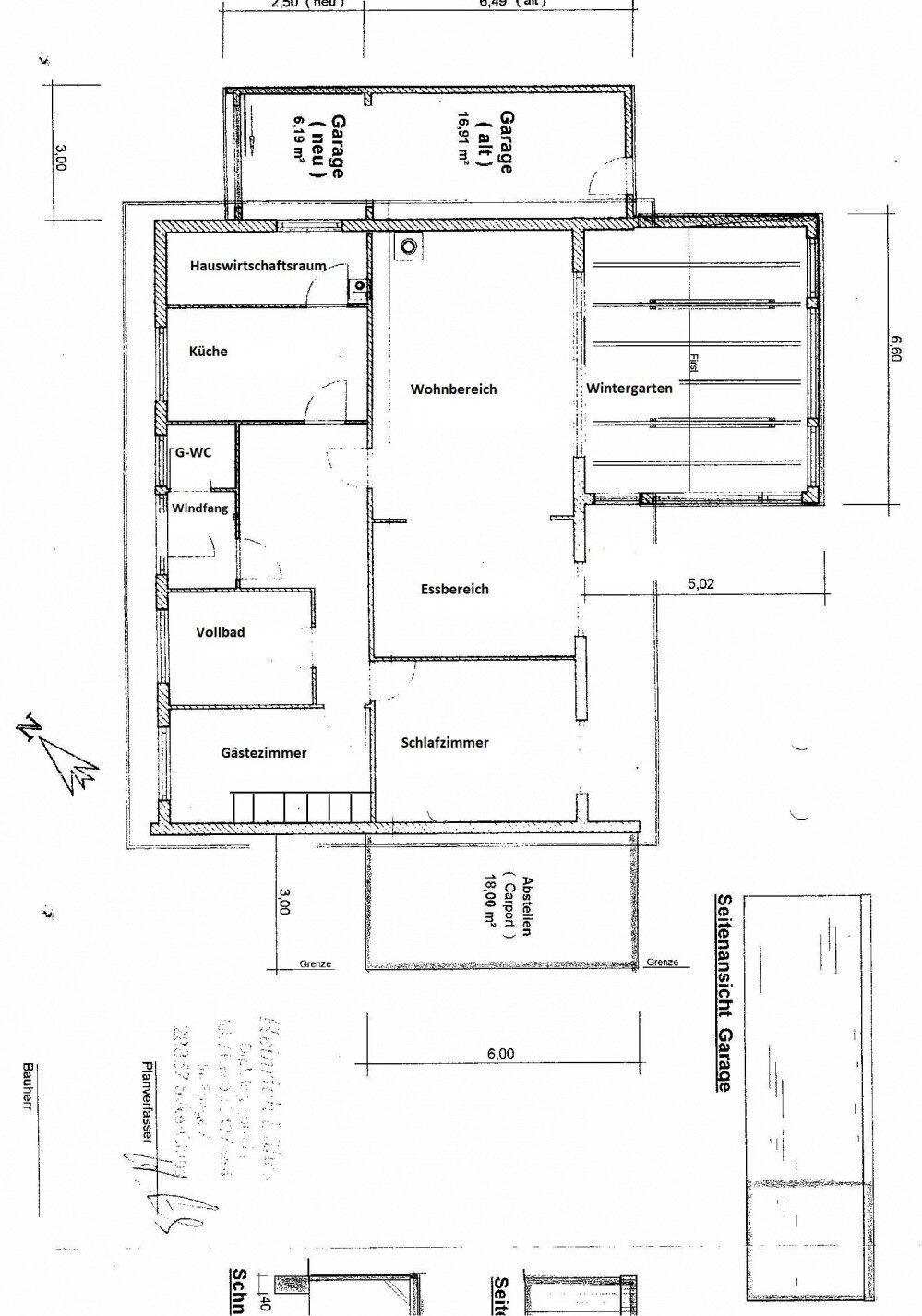
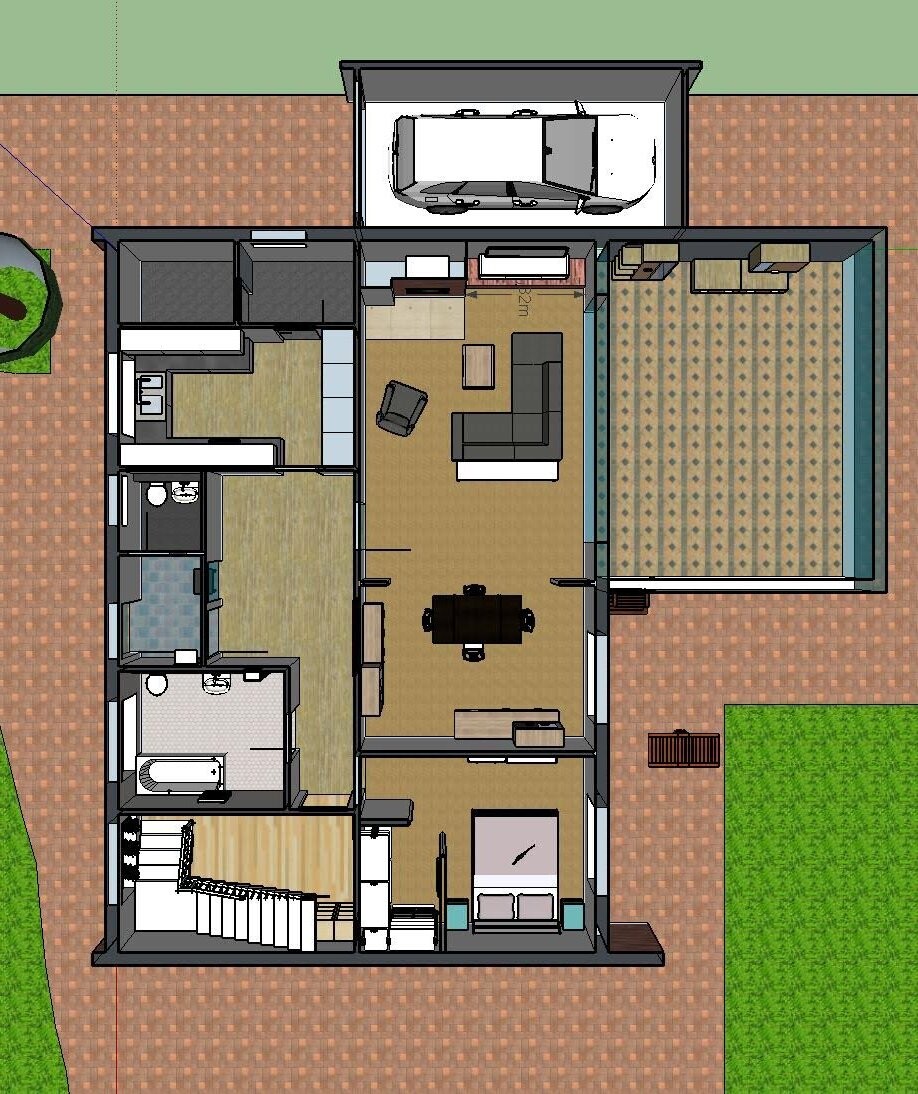
Currently, there are two topics where I would appreciate some input.
Floor coverings
Since the house, corresponding to its build year, does not have underfloor heating (except in the later added conservatory and an electric floor warming in the bathroom), the goal is to have a floor covering that feels warm underfoot but is also visually appealing.
At the moment, there are carpets in the living, dining, and bedrooms, and laminate flooring in the hallway, kitchen, and guest room.
My dream is oiled oak plank flooring. The problem is that our cat sometimes makes a mess while eating. If this happens during work hours, the exposure time can negatively affect the condition of the flooring.
If no one has a tip on how to completely remove such stains without residue, this option is probably off the table.
Alternatively, we are currently considering glued vinyl sheets. The key advantage here would be that glued vinyl can be laid continuously without expansion joints (except for existing screed joints). We could also extend this flooring continuously into the conservatory and bathroom. I was thinking of simply covering the tiles with leveling compound before gluing the vinyl.
My main concern with this option is the low overall floor height. While vinyl is relatively warm underfoot, its thermal resistance offers no insulation against the screed.
According to the building description:
"Slab foundation with frost skirts, building floor slab 10 cm (4 inches) thick on continuous foil, above that 5 cm (2 inches) of pearl foam screed (k=0.9)"
Do you think this is a problem?
Or are the differences in thermal resistance of the various floor coverings negligible, as long as a comprehensive renovation with modern floor insulation and/or underfloor heating is not carried out?
I also briefly considered installing underfloor heating using a dry screed system but fear that the effort and cost would be too high for now.
Attic/Staircase
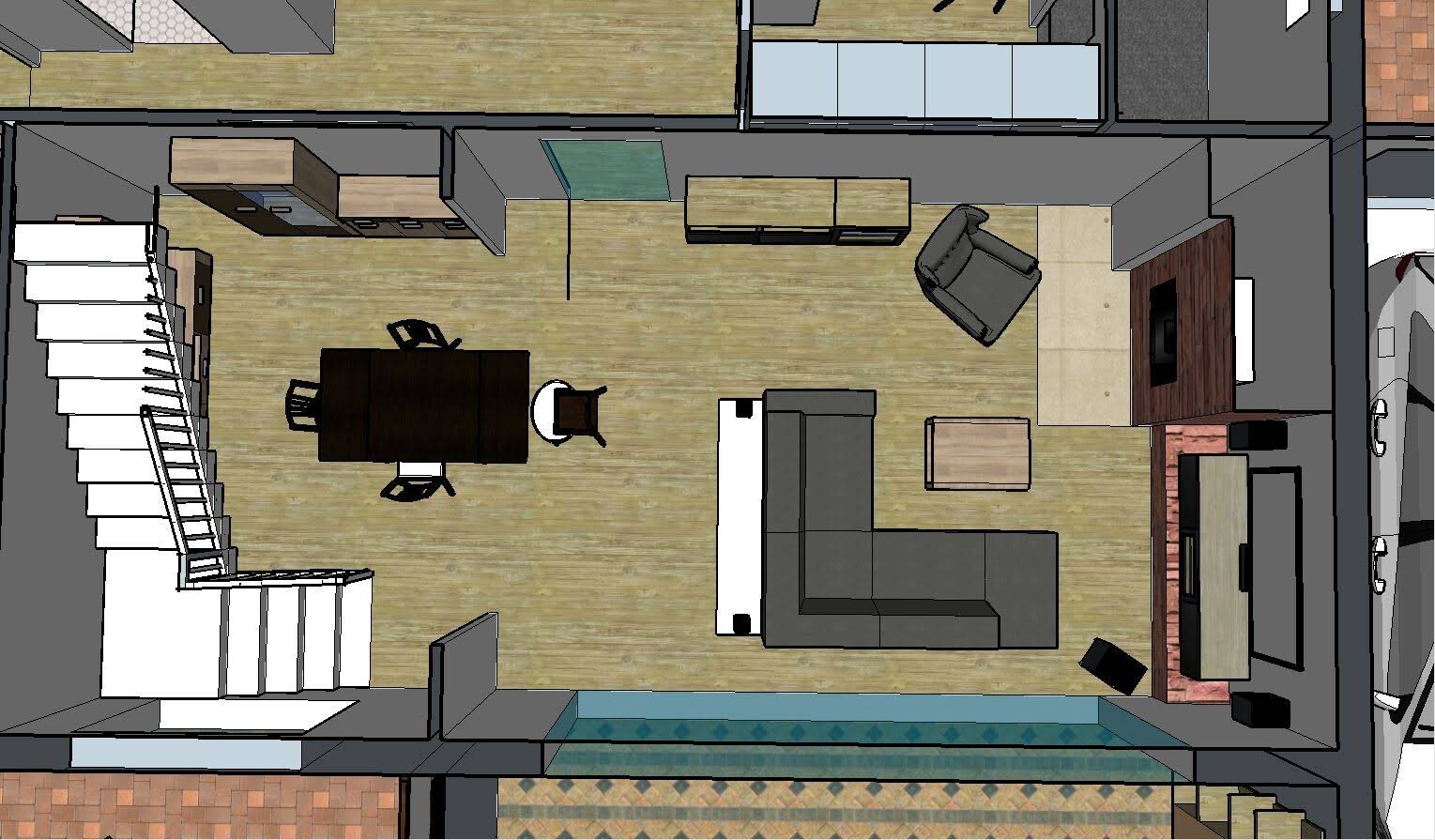
On the ground floor, besides the master bedroom, there is currently only one other bedroom measuring 2.50 x 4.25 meters (8 x 14 feet). Half of this room is blocked by the staircase leading to the attic, making it a walkthrough room—more like an extended hallway.
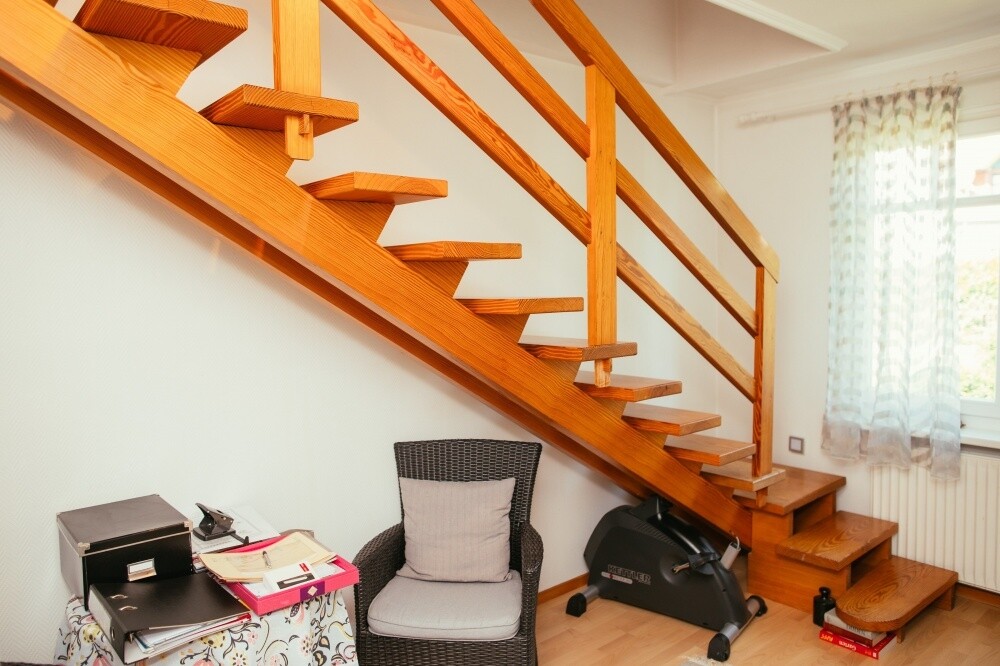
The staircase shown in the 3D plan does not correspond to the actual measurements; we have not measured it exactly yet.
Our plan is to move the staircase into the dining room.
Apparently, the staircase was once installed there before, and with the identical wall length, it fits perfectly. This would free up the walkthrough room for a nursery and give us 2-3 years to fully renovate and finish the partially developed attic as a children’s room.
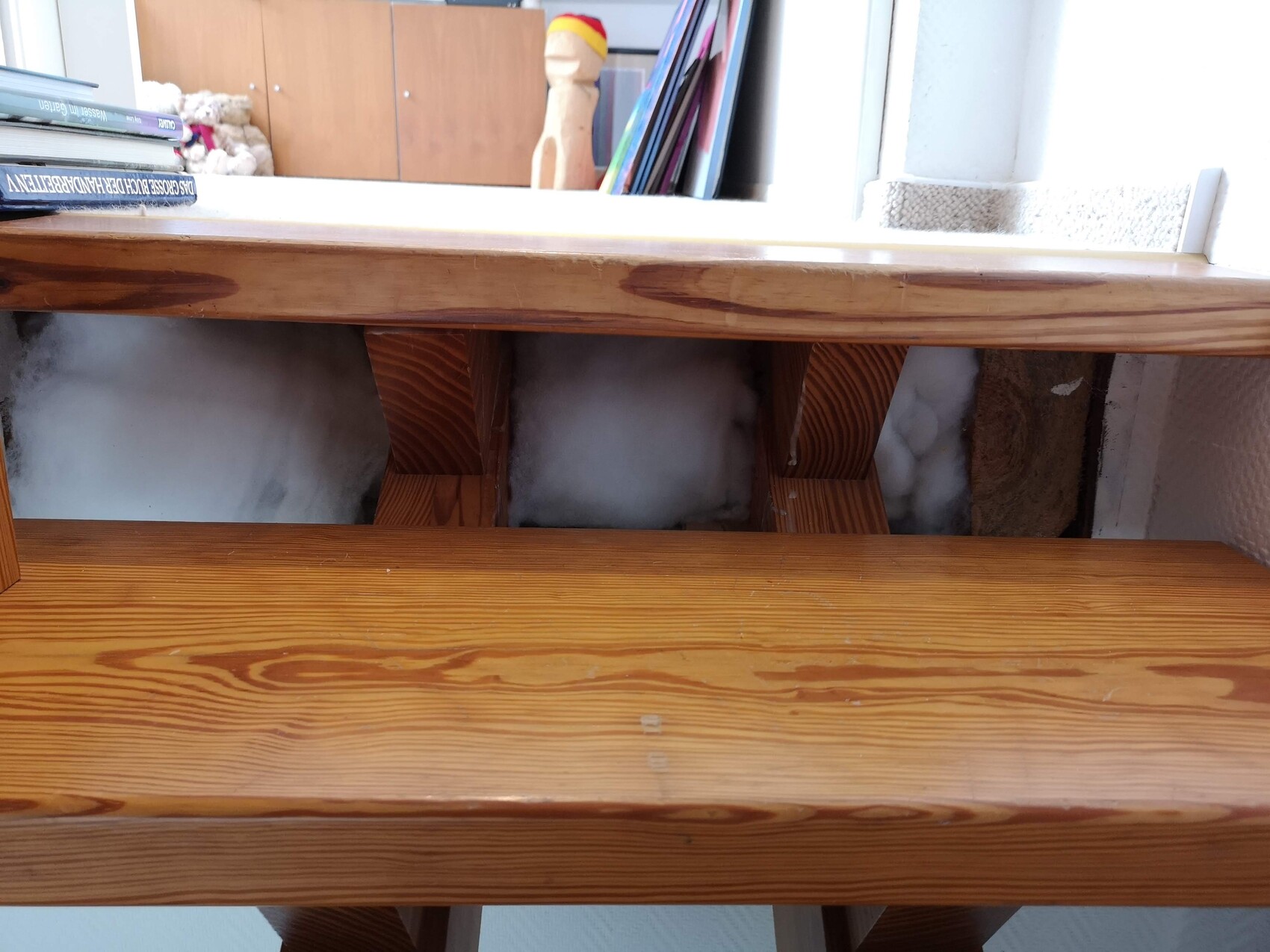
Since the staircase was formerly in that location, I hope the ceiling opening can be restored easily. On the other hand, I have no idea yet how to properly close the current ceiling opening.
It is a wooden beam ceiling, and at least one beam was cut in the existing opening. Can I simply extend it again with metal brackets and screws, or would that not provide sufficient load-bearing capacity?
These are currently the most pressing issues on our minds.
I would be glad if this thread finds some interest; more questions will certainly follow later.
If desired, I can also move the questions into separate topics in the respective subforums, but from my point of view, it makes more sense to handle the project collectively in one thread.
The house is in very good condition and has been continuously renovated. Therefore, we don’t want to make many changes initially.
Some key data:
- 13.33 x 10.32 meters (44 x 34 feet) footprint = 137.57 sqm (1,480 sqft)
- Single-story
- Gable roof with 28° pitch
- Attached conservatory with 5 x 6.60 meters (16 x 22 feet) = 33 sqm (355 sqft) built in 1999 with double glazing
- Wooden windows and doors with triple glazing from 2006
- Oil condensing boiler Buderus Logano plus sb105 from 2012
Currently, there are two topics where I would appreciate some input.
Floor coverings
Since the house, corresponding to its build year, does not have underfloor heating (except in the later added conservatory and an electric floor warming in the bathroom), the goal is to have a floor covering that feels warm underfoot but is also visually appealing.
At the moment, there are carpets in the living, dining, and bedrooms, and laminate flooring in the hallway, kitchen, and guest room.
My dream is oiled oak plank flooring. The problem is that our cat sometimes makes a mess while eating. If this happens during work hours, the exposure time can negatively affect the condition of the flooring.
If no one has a tip on how to completely remove such stains without residue, this option is probably off the table.
Alternatively, we are currently considering glued vinyl sheets. The key advantage here would be that glued vinyl can be laid continuously without expansion joints (except for existing screed joints). We could also extend this flooring continuously into the conservatory and bathroom. I was thinking of simply covering the tiles with leveling compound before gluing the vinyl.
My main concern with this option is the low overall floor height. While vinyl is relatively warm underfoot, its thermal resistance offers no insulation against the screed.
According to the building description:
"Slab foundation with frost skirts, building floor slab 10 cm (4 inches) thick on continuous foil, above that 5 cm (2 inches) of pearl foam screed (k=0.9)"
Do you think this is a problem?
Or are the differences in thermal resistance of the various floor coverings negligible, as long as a comprehensive renovation with modern floor insulation and/or underfloor heating is not carried out?
I also briefly considered installing underfloor heating using a dry screed system but fear that the effort and cost would be too high for now.
Attic/Staircase
On the ground floor, besides the master bedroom, there is currently only one other bedroom measuring 2.50 x 4.25 meters (8 x 14 feet). Half of this room is blocked by the staircase leading to the attic, making it a walkthrough room—more like an extended hallway.
The staircase shown in the 3D plan does not correspond to the actual measurements; we have not measured it exactly yet.
Our plan is to move the staircase into the dining room.
Apparently, the staircase was once installed there before, and with the identical wall length, it fits perfectly. This would free up the walkthrough room for a nursery and give us 2-3 years to fully renovate and finish the partially developed attic as a children’s room.
Since the staircase was formerly in that location, I hope the ceiling opening can be restored easily. On the other hand, I have no idea yet how to properly close the current ceiling opening.
It is a wooden beam ceiling, and at least one beam was cut in the existing opening. Can I simply extend it again with metal brackets and screws, or would that not provide sufficient load-bearing capacity?
These are currently the most pressing issues on our minds.
I would be glad if this thread finds some interest; more questions will certainly follow later.
If desired, I can also move the questions into separate topics in the respective subforums, but from my point of view, it makes more sense to handle the project collectively in one thread.
It is a solid concrete house.
Exterior walls:
10cm (4 inches) Thermocrete concrete as the inner shell (floor-height prefabricated elements), 5-7cm (2-3 inches) insulation, outer shell made of brick slips with Thermocrete concrete, maximum heat requirement 130 kcal/m²h.
Total thickness 24cm (9.5 inches).
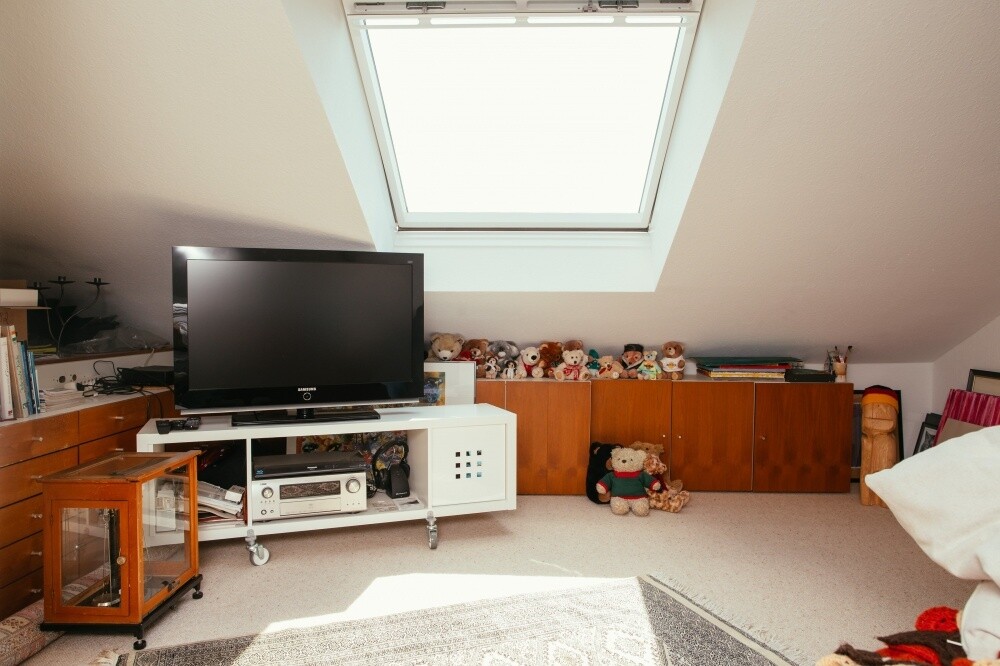
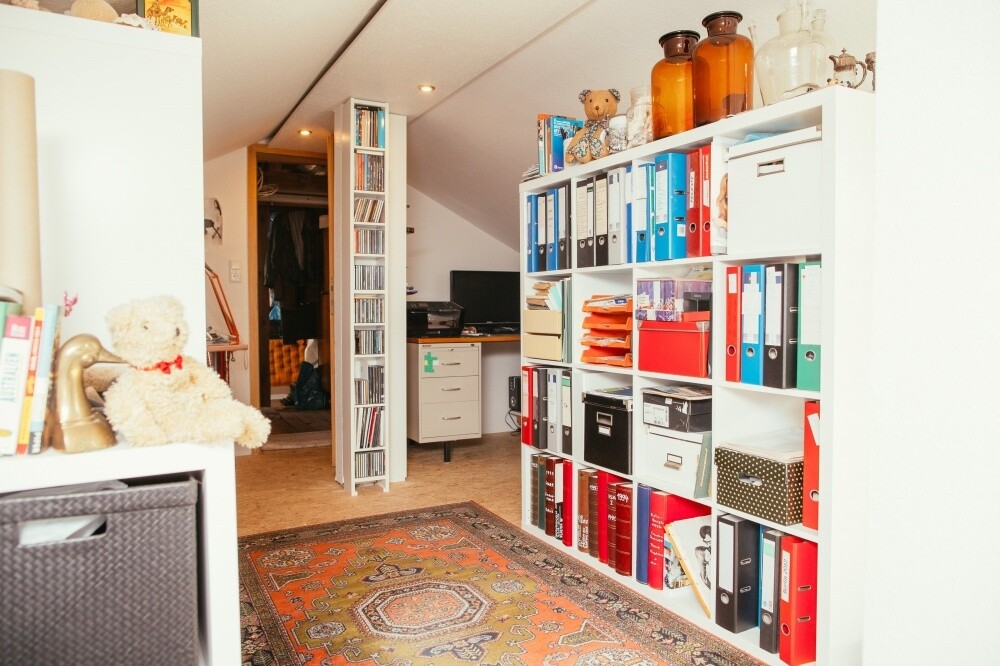
The plan is to set up two rooms upstairs. Due to a maximum ceiling height of only 2m (6.6 feet) and sloped ceilings, this is of course not that easy, but I think it can be arranged nicely for children’s or guest rooms.
There are already two roof windows, one large one in the finished area and a smaller one in the unfinished part. Both windows are from 2012, the large one has a shutter and electronic adjustment.
A picture of the planned location of the staircase:
Exterior walls:
10cm (4 inches) Thermocrete concrete as the inner shell (floor-height prefabricated elements), 5-7cm (2-3 inches) insulation, outer shell made of brick slips with Thermocrete concrete, maximum heat requirement 130 kcal/m²h.
Total thickness 24cm (9.5 inches).
The plan is to set up two rooms upstairs. Due to a maximum ceiling height of only 2m (6.6 feet) and sloped ceilings, this is of course not that easy, but I think it can be arranged nicely for children’s or guest rooms.
There are already two roof windows, one large one in the finished area and a smaller one in the unfinished part. Both windows are from 2012, the large one has a shutter and electronic adjustment.
A picture of the planned location of the staircase:
Stairs and ceiling beams. A carpenter should discuss this with you. As a forum advisor, I would find that too delicate. For flooring, choose cork, sealed to protect against cat vomit. It’s foot-warm like underfloor heating and also has a slight cushioning effect when walking.
toimabo schrieb:
Our plan now is to relocate the staircase to the dining room.The staircase has its turn on the other side. But probably the lower part can be designed flexibly?
Are you sure it was there and not along the load-bearing wall, so in the middle of the house?
In my opinion, it would fit better there – it wouldn’t block any windows and is close to the room door.
You could have a room divider toward the living room/sofa for a bit more privacy later on, when the children are older.
Regarding the upper floor: it looks very bright up there. For an adequate ceiling height, dormer windows could be added later if the budget allows. What does the development plan say about that? Or can you tell from the surrounding buildings whether this is permitted?
I would skip a walk-in closet and instead create it in the current stairwell room. There’s enough space for movement as well as sufficient room for wardrobes and such.
Do you have photos of the exterior area?
Similar topics