
ᐅ First Floor Plan for a Single-Family House – Your Ideas Including the Plot
Created on: 11 Jan 2019 21:48
M
MRN2018
Hello everyone,
We are still quite early in the process and hope to summarize everything important for you. We are looking forward to your ideas, especially regarding the best way to position the house including a garage or carport (currently undecided due to cost) on the plot to minimize the space needed for driveway and yard. The house can be freely placed on the property, respecting the standard 3-meter (10 ft) setback. We have already visited a few general contractors and received one proposal so far. We weren’t quite satisfied with it and have made some adjustments ourselves. We have attached a rough sketch of our idea for you. Windows have not yet been considered. So far, the suggestions from the contractors have been limited, especially regarding the basic placement. We would like to enter further discussions with more precise floor plan ideas and hope for some input from you.
Development plan/restrictions
Plot size: 1040 sqm (11,200 sq ft)
Slope: 3 meters (10 ft) rise across the entire plot
Site coverage ratio: 0.4
Floor area ratio: 0.5
Building envelope, building line, and boundaries:
Edge development: garage or carport
Number of parking spaces: 2
Number of floors: 1.5
Roof style: gable roof
Architectural style: modern
Orientation
Maximum height/limits
Other requirements
Homeowners’ requirements
Style, roof shape, building type: gable roof
Basement, floors: with basement and 1.5 - 2 floors (depending on what makes sense)
Number of occupants, ages: 2 adults, 1 baby
Space requirements:
Ground floor: living-dining area, kitchen with pantry, study, guest bathroom, storage under stairs
Upper floor: 2 children’s rooms, bathroom, master bedroom with walk-in closet
Office: family use or home office? Home office
Guest overnight stays per year: not relevant
Open or closed layout: rather open
Traditional or modern construction: modern
Open kitchen, cooking island: cooking island
Number of dining seats: 6
Fireplace: yes
Music/sound system wall: no
Balcony, roof terrace: no
Garage, carport: preference for a double garage with storage room—ideally with direct access to the house. However, due to the shape of the land, this might be difficult. For cost reasons, a carport with adjoining storage room is also conceivable.
Utility garden, greenhouse: both
Other wishes/particulars/daily routine, with explanations for preferences: fireplace as a "divider" between dining and living areas
House design
Origin of the plan: our own and the general contractor’s
What do you like most? Why?
Ground floor: kitchen area is not visible from the living room, separation of living/dining areas by fireplace, relatively spacious living room, guest bathroom shower not directly visible from the door, bright study room, stairway is a half-landing design and not immediately next to the front door.
Upper floor: equally sized children’s rooms, T-shaped bathroom layout, walk-in closet not directly visible from the bedroom door.
What do you dislike? Why?
The hallway is uninspired, and when room doors are open, one can look directly from the front door into the living room. Overall, the floor plan still feels incomplete.
Price estimate according to architect/planner: –
Personal budget limit for the house, including fittings: 350,000
Preferred heating system: air source heat pump
If you have to compromise on details/extra features
- What you can give up:
* Basement (but then a suitable technical room would need to be included on the ground floor. The idea here is to simply attach the garage directly and locate the technical room—including a windbreak area—between the garage and house.)
* Double garage replaced by carport (each with storage room)
- What you cannot give up:
So, we hope we have covered everything and are very excited to hear your thoughts.
Best regards from the Rhön
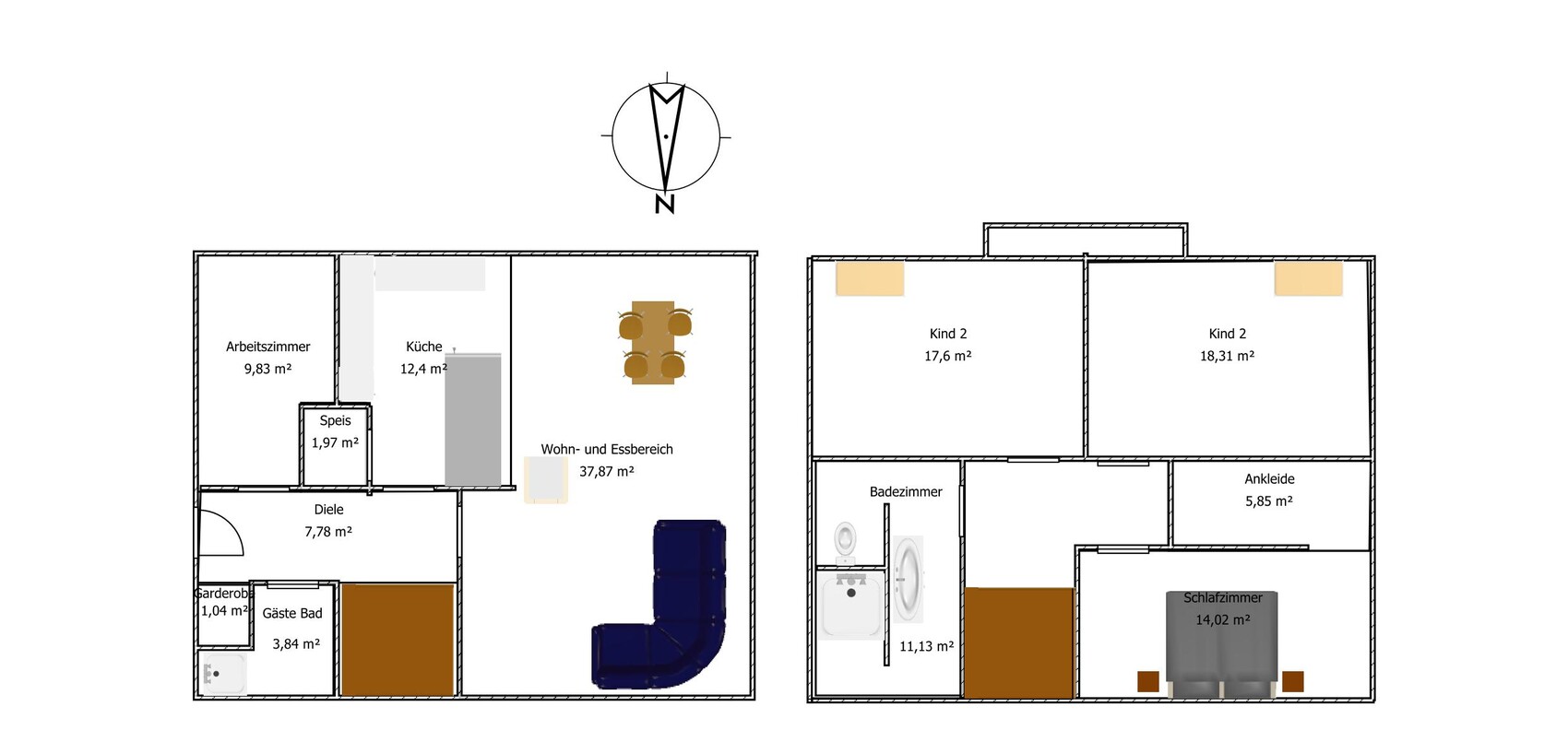
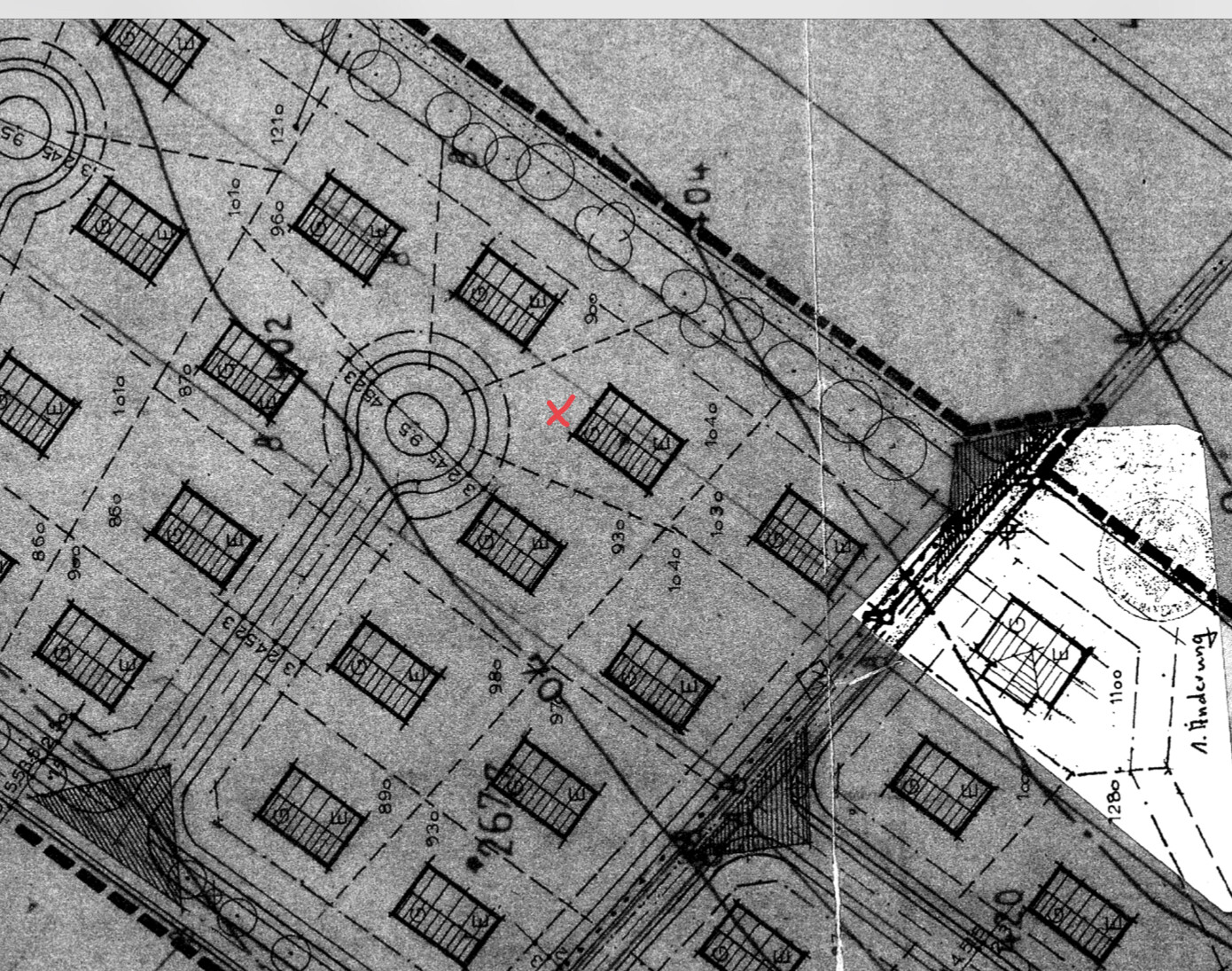
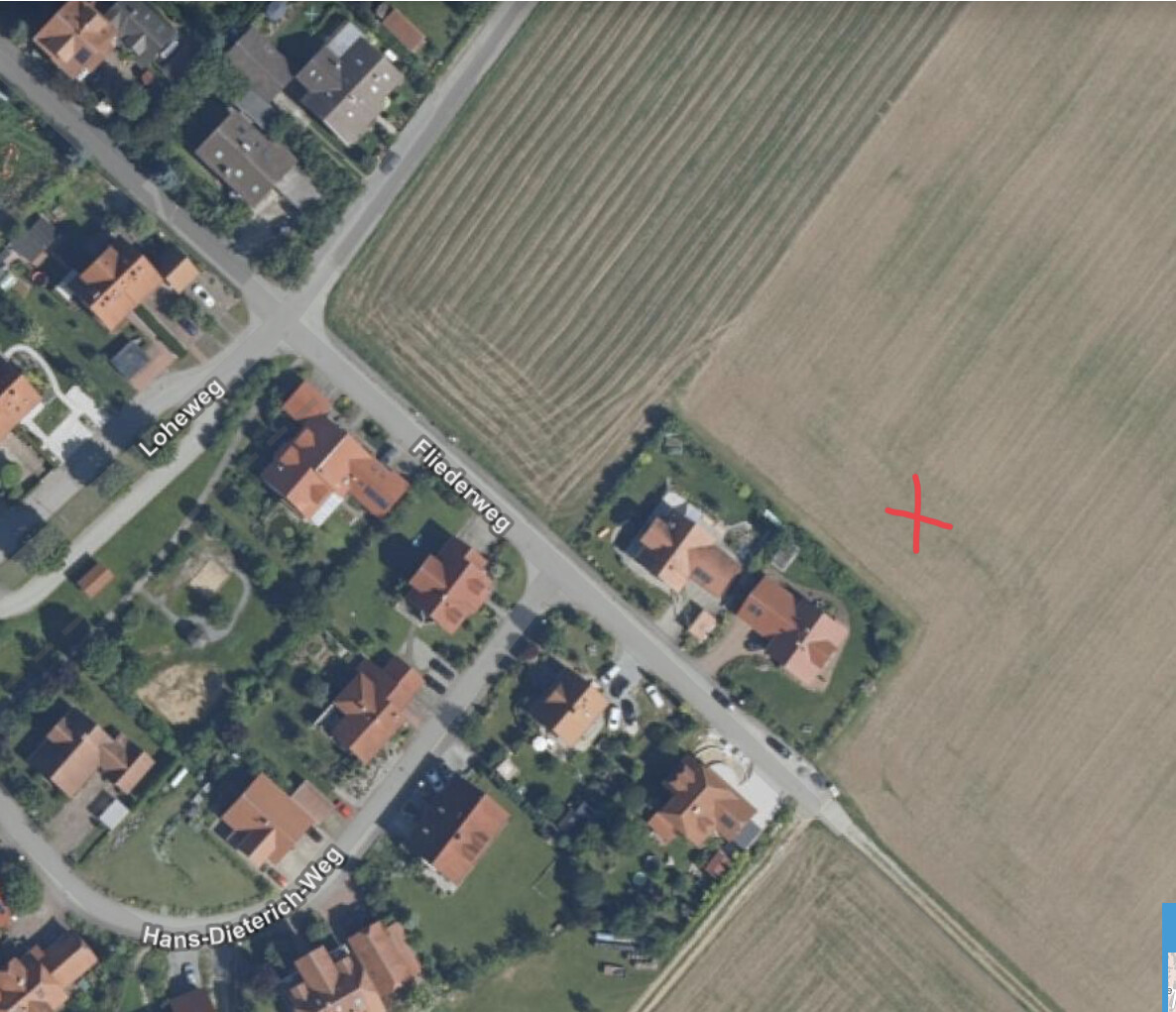
We are still quite early in the process and hope to summarize everything important for you. We are looking forward to your ideas, especially regarding the best way to position the house including a garage or carport (currently undecided due to cost) on the plot to minimize the space needed for driveway and yard. The house can be freely placed on the property, respecting the standard 3-meter (10 ft) setback. We have already visited a few general contractors and received one proposal so far. We weren’t quite satisfied with it and have made some adjustments ourselves. We have attached a rough sketch of our idea for you. Windows have not yet been considered. So far, the suggestions from the contractors have been limited, especially regarding the basic placement. We would like to enter further discussions with more precise floor plan ideas and hope for some input from you.
Development plan/restrictions
Plot size: 1040 sqm (11,200 sq ft)
Slope: 3 meters (10 ft) rise across the entire plot
Site coverage ratio: 0.4
Floor area ratio: 0.5
Building envelope, building line, and boundaries:
Edge development: garage or carport
Number of parking spaces: 2
Number of floors: 1.5
Roof style: gable roof
Architectural style: modern
Orientation
Maximum height/limits
Other requirements
Homeowners’ requirements
Style, roof shape, building type: gable roof
Basement, floors: with basement and 1.5 - 2 floors (depending on what makes sense)
Number of occupants, ages: 2 adults, 1 baby
Space requirements:
Ground floor: living-dining area, kitchen with pantry, study, guest bathroom, storage under stairs
Upper floor: 2 children’s rooms, bathroom, master bedroom with walk-in closet
Office: family use or home office? Home office
Guest overnight stays per year: not relevant
Open or closed layout: rather open
Traditional or modern construction: modern
Open kitchen, cooking island: cooking island
Number of dining seats: 6
Fireplace: yes
Music/sound system wall: no
Balcony, roof terrace: no
Garage, carport: preference for a double garage with storage room—ideally with direct access to the house. However, due to the shape of the land, this might be difficult. For cost reasons, a carport with adjoining storage room is also conceivable.
Utility garden, greenhouse: both
Other wishes/particulars/daily routine, with explanations for preferences: fireplace as a "divider" between dining and living areas
House design
Origin of the plan: our own and the general contractor’s
What do you like most? Why?
Ground floor: kitchen area is not visible from the living room, separation of living/dining areas by fireplace, relatively spacious living room, guest bathroom shower not directly visible from the door, bright study room, stairway is a half-landing design and not immediately next to the front door.
Upper floor: equally sized children’s rooms, T-shaped bathroom layout, walk-in closet not directly visible from the bedroom door.
What do you dislike? Why?
The hallway is uninspired, and when room doors are open, one can look directly from the front door into the living room. Overall, the floor plan still feels incomplete.
Price estimate according to architect/planner: –
Personal budget limit for the house, including fittings: 350,000
Preferred heating system: air source heat pump
If you have to compromise on details/extra features
- What you can give up:
* Basement (but then a suitable technical room would need to be included on the ground floor. The idea here is to simply attach the garage directly and locate the technical room—including a windbreak area—between the garage and house.)
* Double garage replaced by carport (each with storage room)
- What you cannot give up:
So, we hope we have covered everything and are very excited to hear your thoughts.
Best regards from the Rhön
Timber frame construction is also possible on a basement.
Whether a basement makes sense or not depends on the plot of land, not the construction method.
A slab foundation also incurs costs. You may need to add fill, slope the ground away, or find other ways to support it.
Of course, we don’t have prices like in Ingolstadt, Munich, and similar areas. However, our prices are still miles away from those in Mecklenburg. After all, we are not far from high-price regions.
The Ypg cost breakdown isn’t too far off. You might not need 2,000 euros per square meter (approximately $215 per square foot), but with a lot of your own labor, giving up extras, using a low standard, time, and some luck, you might get to around 1,600 euros per square meter (approximately $172 per square foot). Then there are additional construction costs, which should not be underestimated—especially earthworks.
Whether a basement makes sense or not depends on the plot of land, not the construction method.
A slab foundation also incurs costs. You may need to add fill, slope the ground away, or find other ways to support it.
Of course, we don’t have prices like in Ingolstadt, Munich, and similar areas. However, our prices are still miles away from those in Mecklenburg. After all, we are not far from high-price regions.
The Ypg cost breakdown isn’t too far off. You might not need 2,000 euros per square meter (approximately $215 per square foot), but with a lot of your own labor, giving up extras, using a low standard, time, and some luck, you might get to around 1,600 euros per square meter (approximately $172 per square foot). Then there are additional construction costs, which should not be underestimated—especially earthworks.

MRN2018 schrieb:
-> Conclusion on the budget:
Please ignore it for now – there is still some room to increase it. The main idea is to plan the house as efficiently as possible while keeping costs in mind.That makes any further discussion unnecessary. On one hand, you say there is still room to increase the budget, to ignore it for now, but on the other hand, you want to build efficiently and claim that solid construction is cheaper locally, while almost ignoring the slope of the land, which affects both efficiency and costs.
How is this supposed to work? Planning freely, then after two weeks, 25 posts and 15 pages, you have a design, then you calculate and realize, OOPS, it’s 100,000 too expensive.
Honestly, I think you’re heading in the wrong direction. The budget should be defined clearly from the start, aligned with your space requirements, take the plot into account (keyword: slope), and then roughly calculate whether it’s feasible.
Just as an example, simply leaving out the basement and increasing the floor area upstairs might work and save money on an optimal plot, but on a sloped lot, the incline has to be balanced somehow without a basement. A 1-meter (3 ft) difference over a 10-meter (33 ft) house already makes a big difference.
The idea of using excavated soil for backfilling can work in some cases, but you also have neighbors and property boundaries. Building a few meters of natural stone wall along the boundary plus earthworks easily amounts to significant five-figure expenses.
A general contractor who just delivers a floor plan without considering the plot? I’m not sure if that would be my trusted person.
At the moment, this feels like using a sledgehammer to crack a nut.

I can’t make any sense of post #1: I don’t see how the aerial photo and site plan relate to each other. What might "G/E" stand for, which is marked on the roof areas of the house symbols? Also, what kind of smoking balcony is that on the eaves side of the children’s rooms?
The floor plan seems to be sketched without any sense of scale; the children’s beds (?) would definitely need plenty of knee wall space (and so on).
The wishful idea of saving money by awarding contracts individually will spectacularly fail; anyone who really wants to save invests in thorough detailed planning. Honestly, how is a layperson supposed to handle the process of collecting bids?
Without experience (and knowledge) in tendering, they will probably just copy building plans and send them to potential contractors. Without a structured common basis, it will be almost impossible to compare the offers properly. On the construction site, the seventh contractor ends up working before the third simply because they happened to be available earlier. Then they drill through the wall where the mason could have left an opening. After the third contractor arrives, the second one (who should have come earlier) awkwardly has to work around the existing construction, causing expensive overtime and, not to mention, warranty problems. The client won’t notice roughly estimated quantities in the offers (quantities are just about manageable for a layperson to oversee), and later will have to pay dearly.
Conclusion: the crazy idea of “individual contracting as a layperson” will cost a small fortune — but every cloud has a silver lining: with the gained experience, you can use it as “capital” to switch careers professionally to construction consulting.
https://www.instagram.com/11antgmxde/
https://www.linkedin.com/company/bauen-jetzt/
The floor plan seems to be sketched without any sense of scale; the children’s beds (?) would definitely need plenty of knee wall space (and so on).
The wishful idea of saving money by awarding contracts individually will spectacularly fail; anyone who really wants to save invests in thorough detailed planning. Honestly, how is a layperson supposed to handle the process of collecting bids?
Without experience (and knowledge) in tendering, they will probably just copy building plans and send them to potential contractors. Without a structured common basis, it will be almost impossible to compare the offers properly. On the construction site, the seventh contractor ends up working before the third simply because they happened to be available earlier. Then they drill through the wall where the mason could have left an opening. After the third contractor arrives, the second one (who should have come earlier) awkwardly has to work around the existing construction, causing expensive overtime and, not to mention, warranty problems. The client won’t notice roughly estimated quantities in the offers (quantities are just about manageable for a layperson to oversee), and later will have to pay dearly.
Conclusion: the crazy idea of “individual contracting as a layperson” will cost a small fortune — but every cloud has a silver lining: with the gained experience, you can use it as “capital” to switch careers professionally to construction consulting.
https://www.instagram.com/11antgmxde/
https://www.linkedin.com/company/bauen-jetzt/
haydee schrieb:
ypg’s cost breakdown is not far off. You might not need 2,000 euros per square meter (about 186 USD per square foot); with a lot of your own work, giving up on high-end features, a lower standard, time, and some luck, you could get it down to 1,600 euros per square meter (about 149 USD per square foot).Thanks. These figures are just confirmed numbers I’ve read here in the forum.
We built in 2013 in affordable Lower Saxony for 1,600 euros per square meter (about 149 USD per square foot)! The value of own labor wasn’t included in that.
Calculate how much own work you would need to contribute to save 400 euros per square meter (about 37 USD per square foot).
I based this on our house and deducted possible savings, then added own labor— a lot depends on Nordlys settings and time, but it could work.
Neighbors are roughly within the same budget, but they have a straight plot and incredible self-help. Every evening with brother-in-law and father-in-law, just simple. I don’t like the floorboards, but which laminate do you have that is good and affordable?
Neighbors are roughly within the same budget, but they have a straight plot and incredible self-help. Every evening with brother-in-law and father-in-law, just simple. I don’t like the floorboards, but which laminate do you have that is good and affordable?
haydee schrieb:
The neighbors are roughly within the same budget, but they have a straightforward plot and a huge amount of own work. Every evening with brother-in-law and father-in-law, just simple. I don’t like the floorboards, but which laminate flooring have you found to be good and affordable? differs greatly with
MRN2018 schrieb:
and doing some of the rest yourself (floors, painting, interior doors). By the way, my calculation is always without floors and painting, since those are usually done as part of owner labor.
Similar topics