
ᐅ New Construction – Energy Consumption of the Heat Pump / Electric Auxiliary Heater
Created on: 8 Nov 2018 19:08
J
Jan Latta
We built a solid single-family house with a heat pump. We moved in on September 1 of this year. I am quite concerned about our heat pump, as it has consumed 1500 kWh in just two months. Today the consumption has increased by nearly another 200 kWh. September and October were unusually mild, with only two days experiencing frost on the ground. Both the heating technician and the construction company consider this usage reasonable, so I have not discussed it with them again.
I researched how these heat pumps operate and took a closer look at the energy consumption of my unit (see photo). I found that the highest consumption is attributed to the electric auxiliary heater—1288 kWh.
What do you think about this? Could there be something wrong with the settings? Is the compressor not working efficiently? Shouldn’t the auxiliary heater only activate at significantly lower temperatures?
The heat pump is an air-to-water Logatherm WPLS 8kW from the company Buderus.
Thank you for your opinions.
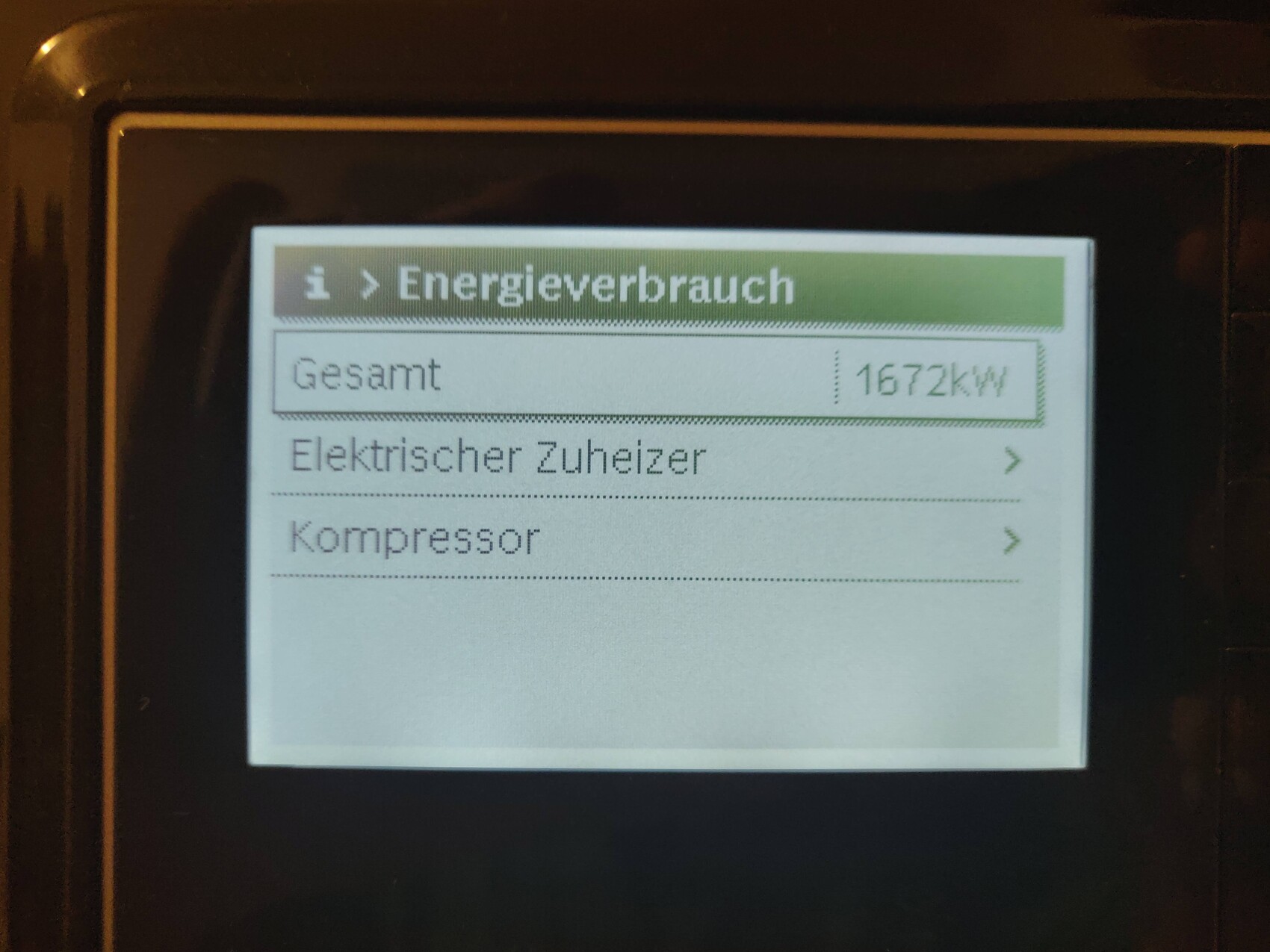
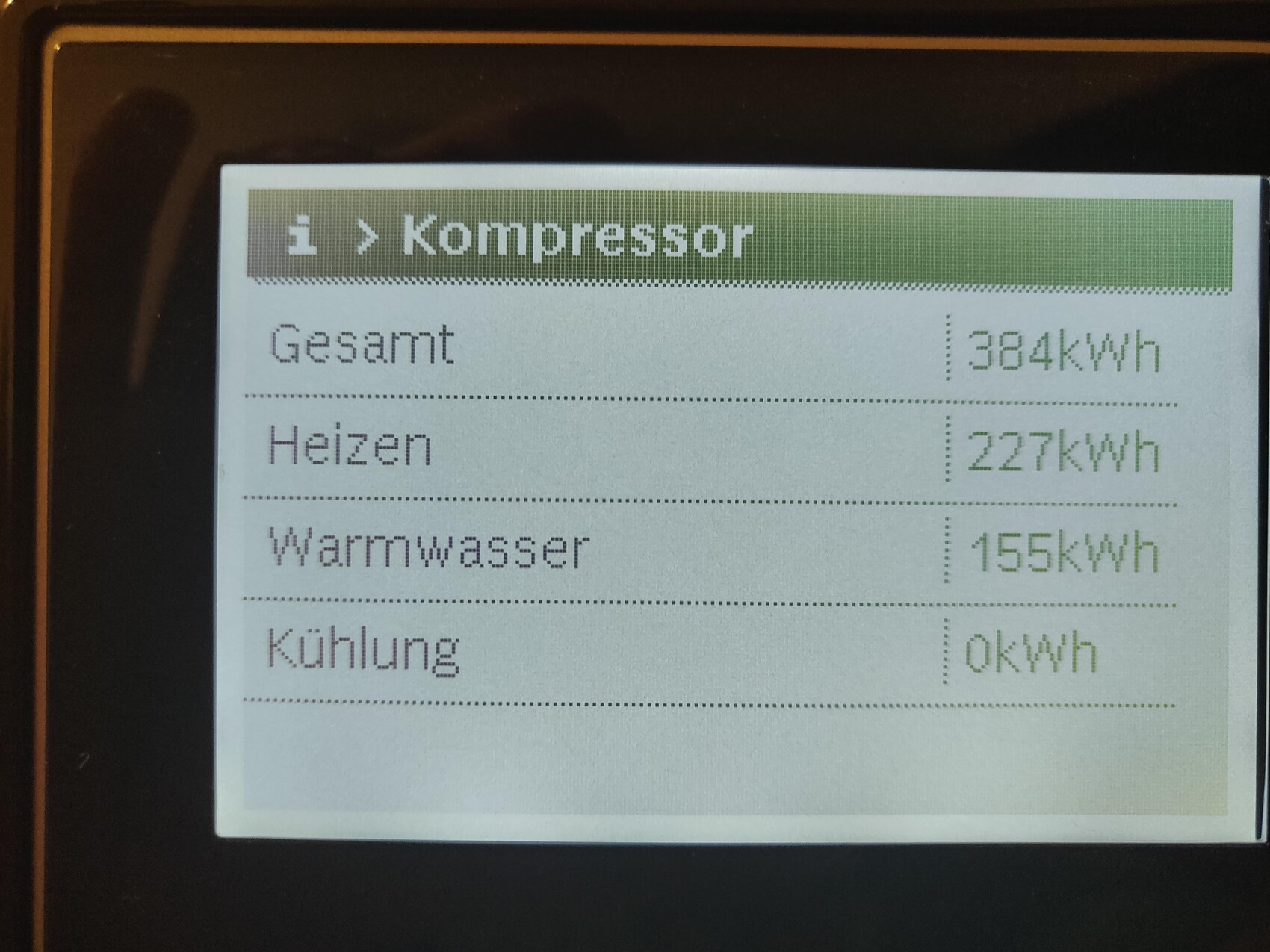
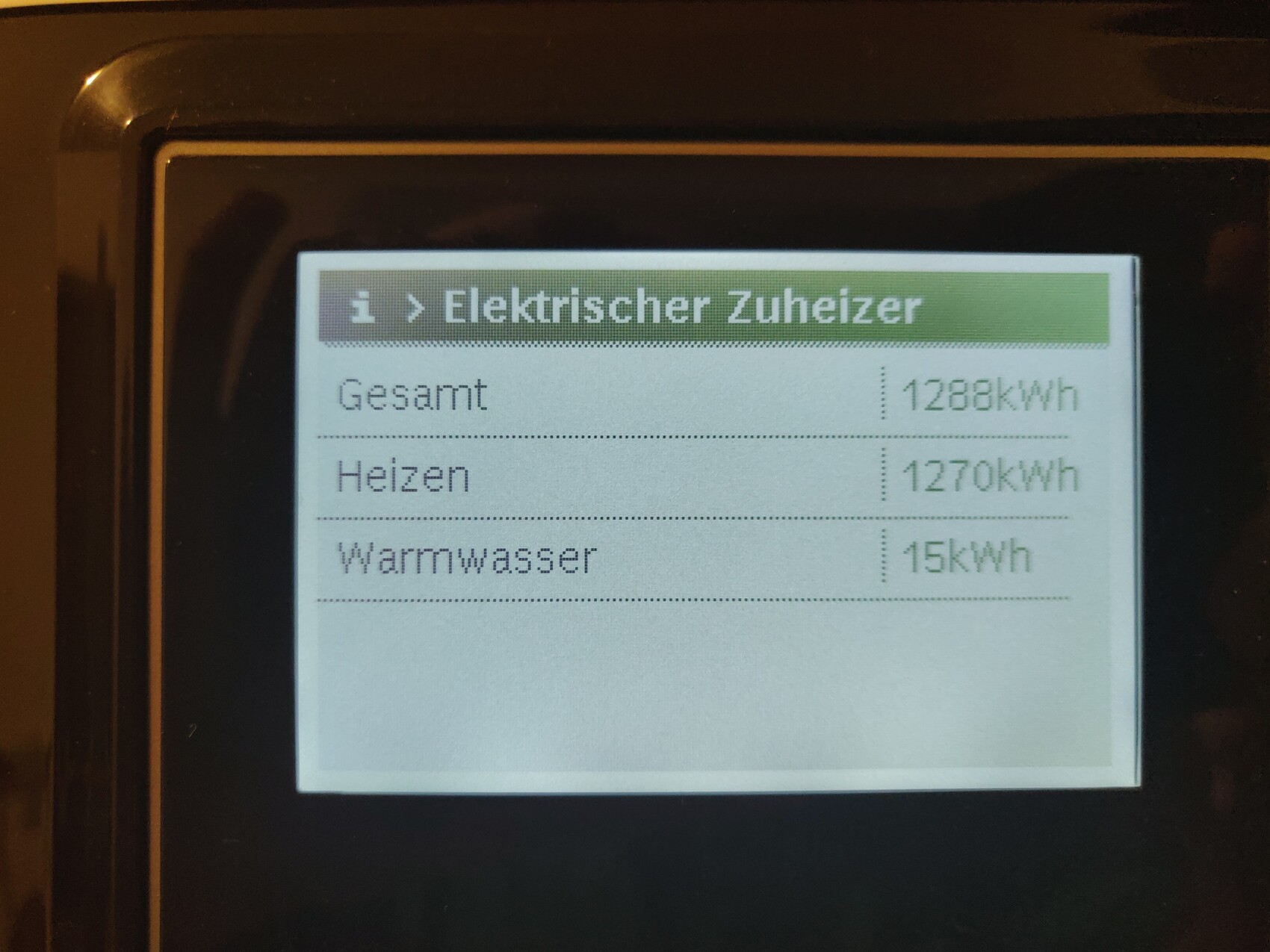
I researched how these heat pumps operate and took a closer look at the energy consumption of my unit (see photo). I found that the highest consumption is attributed to the electric auxiliary heater—1288 kWh.
What do you think about this? Could there be something wrong with the settings? Is the compressor not working efficiently? Shouldn’t the auxiliary heater only activate at significantly lower temperatures?
The heat pump is an air-to-water Logatherm WPLS 8kW from the company Buderus.
Thank you for your opinions.
D
Deliverer11 Jan 2019 08:52Well – I’m not familiar with heating systems, so I can’t offer any help regarding the settings.
From an outside perspective, the situation hasn’t changed at all, so most of the recommendations here will likely remain the same.
If the heating installer is uncooperative, unfortunately there are only two options left: have someone else do it at your own expense, or follow the defect claim process through to the end...
From an outside perspective, the situation hasn’t changed at all, so most of the recommendations here will likely remain the same.
If the heating installer is uncooperative, unfortunately there are only two options left: have someone else do it at your own expense, or follow the defect claim process through to the end...

Jan Latta schrieb:
This reduces energy consumption, although it still remains around 180 kWh per week, which is more than expected. That sounds like something is still not quite right. You should definitely adjust the heating curve yourself, as only you can tell if it feels too cold or too warm. The heating engineer should have set it roughly right (which apparently didn’t work out), and then you need to fine-tune the settings until the heat pump just barely keeps the house warm enough. Check the manual for terms like heating curve, base temperature, and slope. For our Tecalor unit, it specifically says, "If it’s too cold during the transitional season, adjust it like this..." You then make these adjustments every few days, always observing the effects of each change. Your heat pump currently has a seasonal performance factor (SPF) of about 3.0, which isn’t very impressive, but depending on the heating demand, annual consumption should not exceed 4000 kWh. Also, take a look at the hot water temperature—heat pumps tend to lose efficiency when set close to 50°C (122°F). For example, we manage perfectly well with 43°C (109°F).
O
Obstlerbaum11 Jan 2019 09:18Take a look at the target parameters—that’s usually where the main issue lies. What supply temperatures are you using for the underfloor heating and domestic hot water? What is your target temperature for the living areas? Additionally, you can set the threshold at which the electric heating element is allowed to activate. Naturally, setting this threshold at a certain outdoor temperature might lead to some loss of comfort, but every system can only be optimized within specific parameters.
Oh-oh: I just noticed that you’re using the very old Buderus model. That could definitely be part of the problem. Why didn’t you get the much newer "WPL AR" model, which has been available for several years?
Oh-oh: I just noticed that you’re using the very old Buderus model. That could definitely be part of the problem. Why didn’t you get the much newer "WPL AR" model, which has been available for several years?
B
boxandroof11 Jan 2019 10:45Jan Latta schrieb:
I was told that the bivalence point is not mandatory and it’s a matter of comfort. The connection box was handled by the guys. I would only let them into the house again if serious defects are proven and under professional supervision.
Jan Latta schrieb:
After further inquiries, I received a written reply saying that I should adjust the bivalence point myself if I am so knowledgeable about the technical details.
Is this a statement I am supposed to accept? From the "user" level, this is not possible. Neither this company nor a lawyer will set up your heating correctly for you.
You now have it in writing that you have to make the adjustments yourself. Either work your way through it independently or pay someone knowledgeable to do the basic settings and explain everything to you, including the special menus. My first point of contact would be the manufacturer. If necessary, ask them for several contacts.
Jan Latta schrieb:
I was able to assign a fixed program to the electric auxiliary heater at the "user" level, telling it to turn on from 00:00 to 23:45 if the outside temperature is below -7°C (19°F) (recommendation for my location). This reduces energy consumption, although it still remains around 180 kWh per week, which is more than expected. Is the heating element still running significantly? Start recording all consumption, meter readings, and any changes in the settings regularly—preferably daily at the same time. But only change what you really understand and not several things at once.
A heat pump is not a gas boiler. To operate it efficiently, you have to adjust it yourself; no customer service will do this: keep all room thermostats fully open, make sure the hydraulic balancing is done, lower the flow temperature via the heating curve as much as possible, and set appropriate temperatures and schedules for domestic hot water. It’s not unlikely that you will encounter further issues like undersized radiators or counterproductive hydraulics.
It’s best to do some online research; you’re surely not the first with this heat pump model. As a rough target: the consumption should end up below 3000 kWh of electricity per year.
boxandroof schrieb:
As a small goal: the energy consumption should ultimately be below 3000 kWh electricity per year For a standard house according to the Energy Saving Ordinance with a heat pump that has a seasonal performance factor of 3, that’s quite ambitious. With KfW 55 and a seasonal performance factor of 4, we barely get below that, but we also like it a bit warmer.
Maybe request the documentation regarding the flow rates of the heating circuits, since in our case about a quarter of the heating circuits had incorrect flow rates. It’s quick and easy to adjust by yourself.
But these are actually minor details. In any case, the backup heater must be monitored; it shouldn’t consume electricity above -7°C (19°F). If it’s still running, you basically have an electric kettle instead of a heat pump. That means 1 kW electricity produces 1 kW heat instead of 3 kW heat from 1 kW electricity. And even if it is only allowed to run below -7°C (19°F), it doesn’t necessarily have to run—it should only activate if the heat pump alone cannot keep up. Ours is set to activate at -10°C (14°F), and it didn’t turn on even during a night at -12°C (10°F).
That is by far the biggest lever for reducing electricity consumption initially.
B
boxandroof11 Jan 2019 12:51Yes, you're right, I thought it was a modern modulating heat pump from Buderus. Let's say 3500 kWh.
Similar topics